
Conestoga Wagon in Henry Ford Museum, circa 1941
THF716708 / Conestoga Wagon in Henry Ford Museum, circa 1941
01
Artifact Overview
Irving Bacon, a Ford Motor Company employee and Henry Ford's personal artist, created pen-and-ink drawings to illustrate guidebooks for the Edison Institute Museum and Greenfield Village (now The Henry Ford) when they officially opened to the public in 1933. An illustrated souvenir guidebook helped visitors navigate the exhibits and grounds. Ford also used these drawings in other company publications.
Artifact Details
Artifact
Drawing (Visual work)
Subject Date
circa 1941
Collection Title
Location
By Request in the Benson Ford Research Center
Object ID
EI.174.122
Credit
From the Collections of The Henry Ford.
Material
Cardboard
illustration board
Technique
Drawing (Image-making)
Color
Black-and-white (Colors)
Dimensions
Height: 15 in
Width: 20 in
Keywords |
|---|
02
Related Artifacts
 Artifact
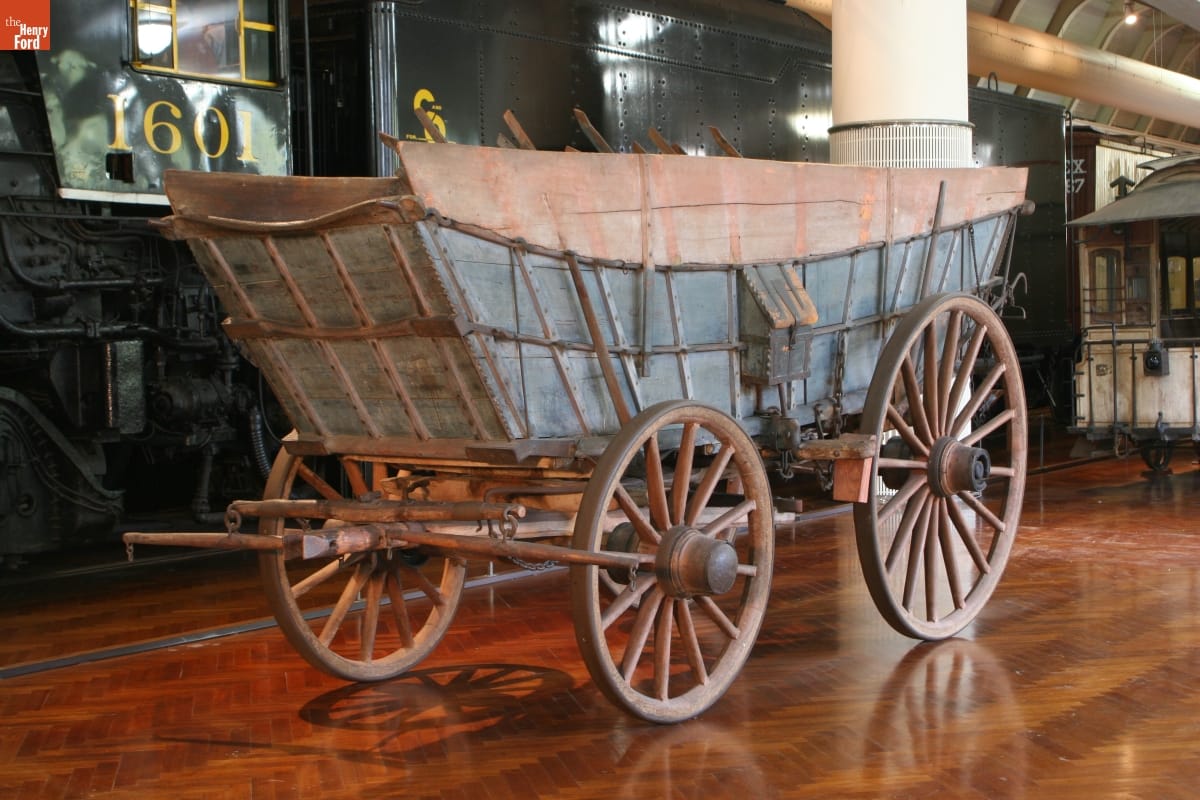
Conestoga Wagon, circa 1840
Conestoga wagons first appeared in Pennsylvania's Conestoga River valley about 1750. Designed for freight, the Conestoga's curved body tended to keep the load in the center, rather than shifting it toward the rear. The Conestoga's popularity peaked in the first half of the 19th century -- before railroads replaced it for hauling agricultural products and manufactured goods.