
Sugar Bowl and Creamer Set Used by the Jackson Family, Selma, Alabama
THF372053 / Sugar Bowl and Creamer Set Used by the Jackson Family, Selma, Alabama / view
01
Artifact Overview
In 2023, The Henry Ford acquired the Selma, Alabama, home of Dr. Sullivan and Richie Jean Sherrod Jackson, where Dr. Martin Luther King and Civil Rights leaders planned the 1965 Selma-to-Montgomery Voting Rights marches. The Jackson Home opened in Greenfield Village in 2026. The home and its contents not only document the voting rights struggle but also shed light on 20th-century Black American middle-class life.
Artifact Details
Artifact
Sugar and creamer set
Date Made
circa 1958
Creators
Place of Creation
Location
Not on exhibit to the public.
Object ID
2023.50.182.2
Credit
From the Collections of The Henry Ford.
Material
Silver (Metal)
Copper (Metal)
Color
Silver (Color)
Dimensions
Height: 2.25 in (Sugar bowl)
Width: 3.5 in (Sugar bowl)
Length: 2.75 in (Sugar bowl)
Height: 2.25 in (Creamer)
Width: 5 in (Creamer)
Length: 3.25 in (Creamer)
Inscriptions
underneath:
Trademark / [crown maker mark] / 1883 / FB ROGERS SILVER CO / Silver on Copper
Keywords |
|---|
02
Related Artifacts
 Artifact
Dr. Sullivan & Mrs. Richie Jean Sherrod Jackson Home
The home of Dr. Sullivan and Richie Jean Jackson, originally located in Selma, Alabama, is a Civil Rights Movement landmark. The home served as a refuge where Dr. Martin Luther King, Jr. and other leaders worked, collaborated, strategized, and planned the 1965 Selma-to-Montgomery marches. These marches led to the signing of the Voting Rights Act on August 6, 1965.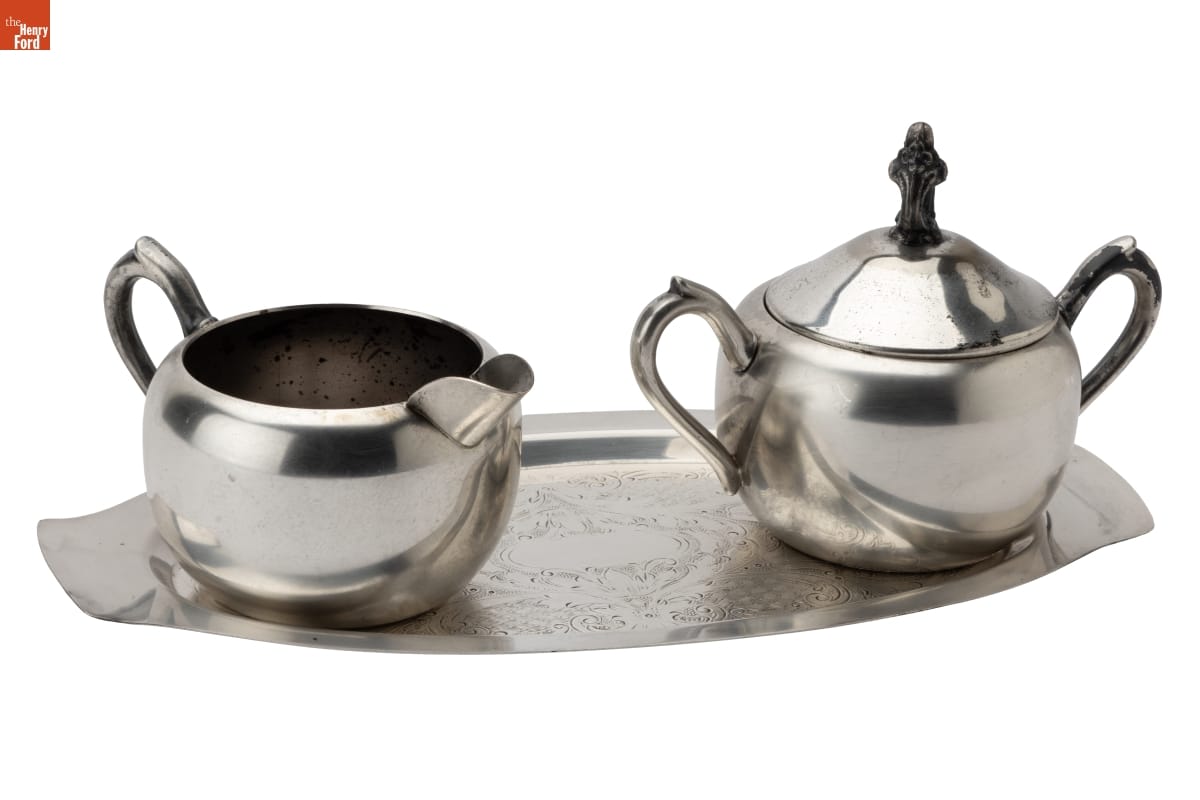 Artifact
Sugar and Creamer Set with Tray Used by the Jackson Family, Selma, Alabama
In 2023, The Henry Ford acquired the Selma, Alabama, home of Dr. Sullivan and Richie Jean Sherrod Jackson, where Dr. Martin Luther King and Civil Rights leaders planned the 1965 Selma-to-Montgomery Voting Rights marches. The Jackson Home opened in Greenfield Village in 2026. The home and its contents not only document the voting rights struggle but also shed light on 20th-century Black American middle-class life.