
1937 Lincoln Brunn Touring Car
THF88915 / 1937 Lincoln Brunn Touring Car
01
Artifact Overview
This Lincoln Model K is one of ten 1937 cabriolets with a body built by Brunn & Company of Buffalo, New York. It's distinguished by the tinted glass skylights above the windshield, and by the convertible rear roof section that folds down to expose rear passengers to the sun. Inside, a hand-cranked divider window separates passengers from the driver.
Artifact Details
Artifact
Automobile
Date Made
1937
Place of Creation
Creator Notes
Body built by Brunn & Company in Buffalo, New York; chassis manufactured by the Lincoln Division of Ford Motor Company in Detroit, Michigan.
Location
Not on exhibit to the public.
Object ID
73.32.1
Credit
From the Collections of The Henry Ford. Gift of C. Barry Randell.
Material
Steel (Alloy)
Metal
Glass (Material)
Rubber (Material)
Wood (Plant material)
Upholstery
Nickel (Metal)
Color
Gray (Color)
Red
Black (Color)
Beige (Color)
Blue
Dimensions
Height: 71 in
Width: 74 in
Length: 222 in
Weight: 6020 lbs
Wheelbase: 139 in
Inscriptions
Blue plate on radiator: V12 / Lincoln
Blue circular emblem on hubcaps: V12 / Lincoln
Keywords |
|---|
02
Related Content
 Set
SetConvertibles
- 22 Artifacts
This car symbolizes 1950s America: a time of exuberance, self-confidence, excess, and self-indulgence. Cadillac designers drew on jet aircraft for ideas, from the sharp, swept-back tailfins to the front parking lights that resemble B-52 bomber air intakes. Under that jet-inspired skin is a 345 horsepower engine, air suspension, and a host of luxury options, including an automatic headlight dimmer. We are unlikely to ever see such cars again. Set
SetArt Deco – Behind the Scenes
- 15 Artifacts
The skyscraper, ship, airplane, train, and automobile -- these streamlined forms signified modernity for Americans during the inter-war years. The Art Deco movement, an artistic style prominent during this period, celebrated the technological advancements that modern transportation embodied. The Art Deco aesthetic was applied to all areas life; from skyscrapers to dinnerware, airplanes to Christmas cards.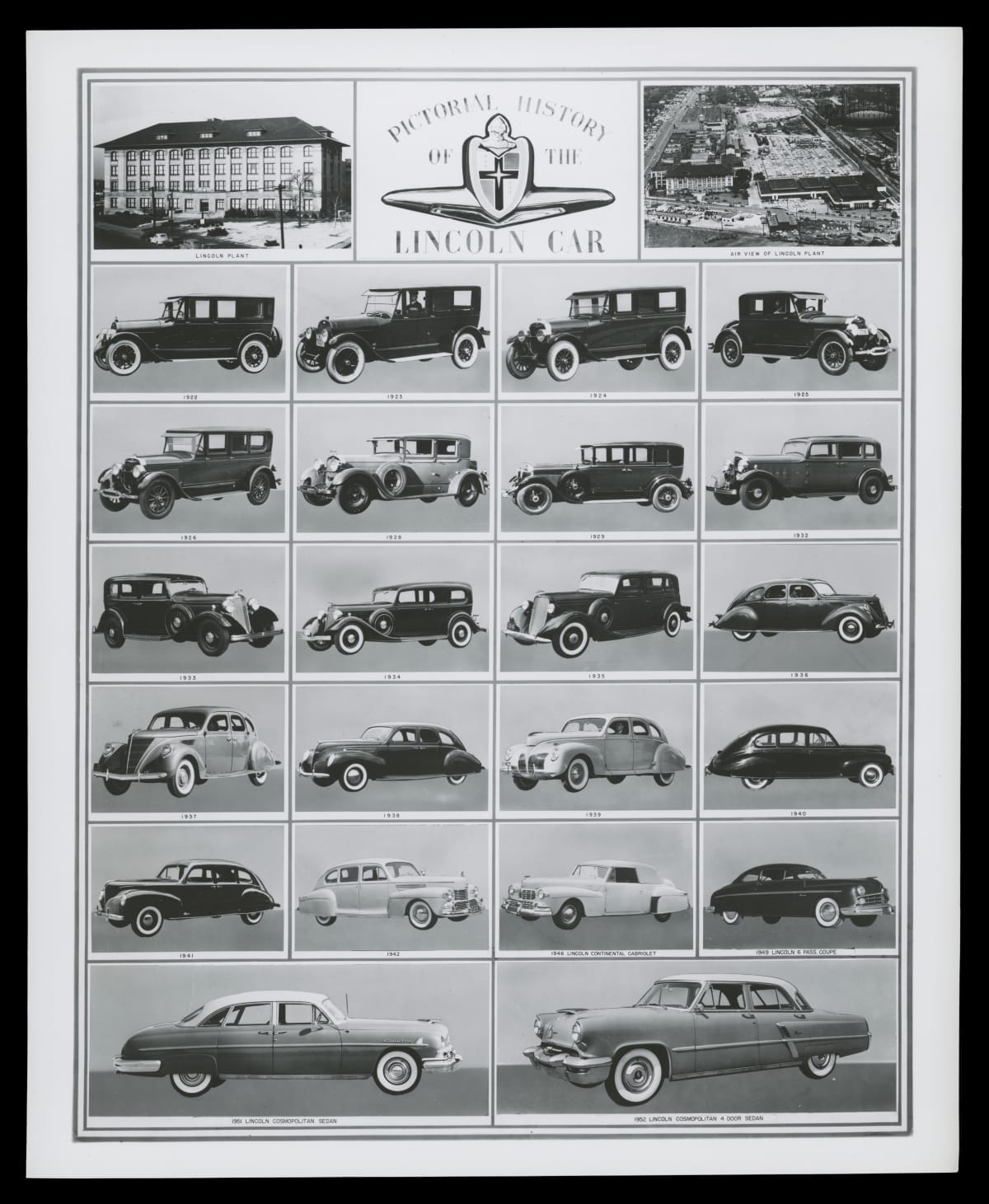 Set
SetLincoln - Birth and Rebirth
- 23 Artifacts
Lincoln Motor Company was born in 1917 out of Henry Leland's patriotic desire to build airplane engines for the allied forces in World War I. After the armistice, Leland and his son Wilfred refashioned Lincoln into a high-end automaker. But a postwar recession forced the Lelands to sell to another father-son duo, Henry and Edsel Ford. Over the next 20 years, Lincoln grew into one of America's most admired luxury marques. Set
SetLandmark Lincolns
- 16 Artifacts
Henry Leland established Lincoln Motor Company in 1917 and, with his son Wilfred, built allied aircraft engines during World War I. When peace returned, Lincoln reinvented itself as a luxury automaker. But a poor postwar economy forced the Lelands to sell to another father-son duo, Henry and Edsel Ford. Lincoln thrived under Ford ownership, surviving depression and war, and introducing designs and nameplates that continue to inspire.