
1926 Ford Model T Fire Truck
THF811570 / 1926 Ford Model T Fire Truck
01
Artifact Overview
The versatile Model T could be modified for firefighting. Affordable T-based fire trucks were popular for small towns with modest budgets. This 1926 truck, adapted by American LaFrance, served Milan, Michigan, for 12 years. Henry Ford saw the truck in Milan, requested it for his museum, and gave the community a new 1938 truck in trade for it.
Artifact Details
Artifact
Fire engine
Date Made
1926
Place of Creation
Creator Notes
Model T made by Ford Motor Company; customized into fire engine by American LaFrance.
Location
On Loan - Savoy Automobile Museum (Cartersville, GA)
Object ID
38.337.1
Credit
From the Collections of The Henry Ford.
Material
Metal
Steel (Alloy)
Wood (Plant material)
Leather
Gold leaf
Color
Red
Black (Color)
Gold (Color)
Dimensions
Height: 7.6 ft
Width: 5.5 ft
Length: 16.1 ft
Wheelbase: 10.3 ft
Inscriptions
Sides of truck marked in gold: MILAN FIRE DEPT.
Sides of seat marked : MILAN / VOL. FIRE DEPT. / (followed by list of names of officers.)
Plate on dash marked: AMERICAN-LA FRANCE FIRE ENGINE CO. / CHICAGO, ILL.
Chemical tanks: AMERICAN-LA FRANCE FIRE ENGINE CO. INC. / ELMIRA, N.Y.
Hood marked twice: M.F.D.
Keywords |
|---|
02
Related Content
 Set
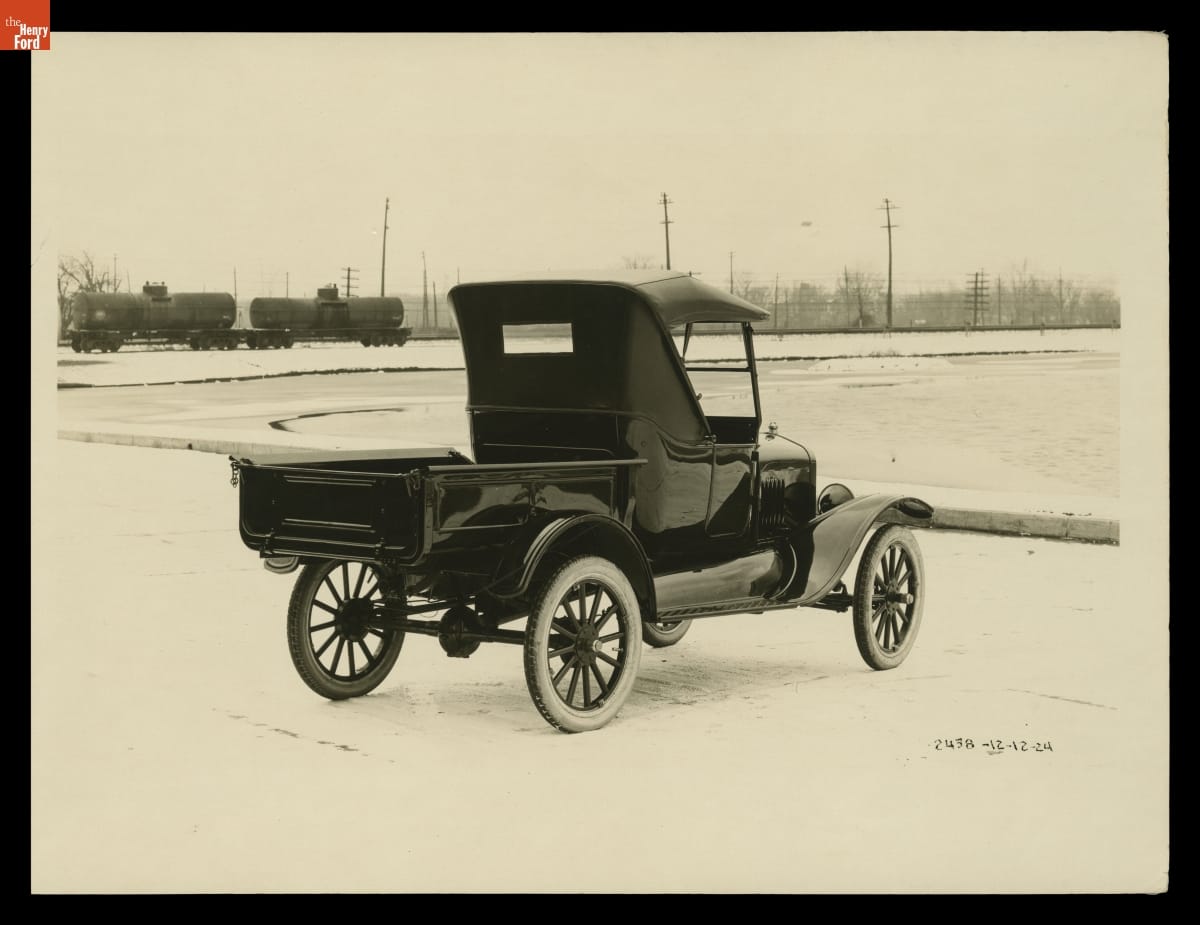
SetEarly Ford Trucks
- 25 Artifacts
Trucks have been a regular part of Ford Motor Company's lineup since 1917. The earliest models were utilitarian with chassis and bodies based on the company's automobiles. But their low cost and reliable service made Ford trucks popular with farmers and business owners, and with municipal and military operators too. Over time, Ford trucks evolved into distinct products with a look and a following all their own.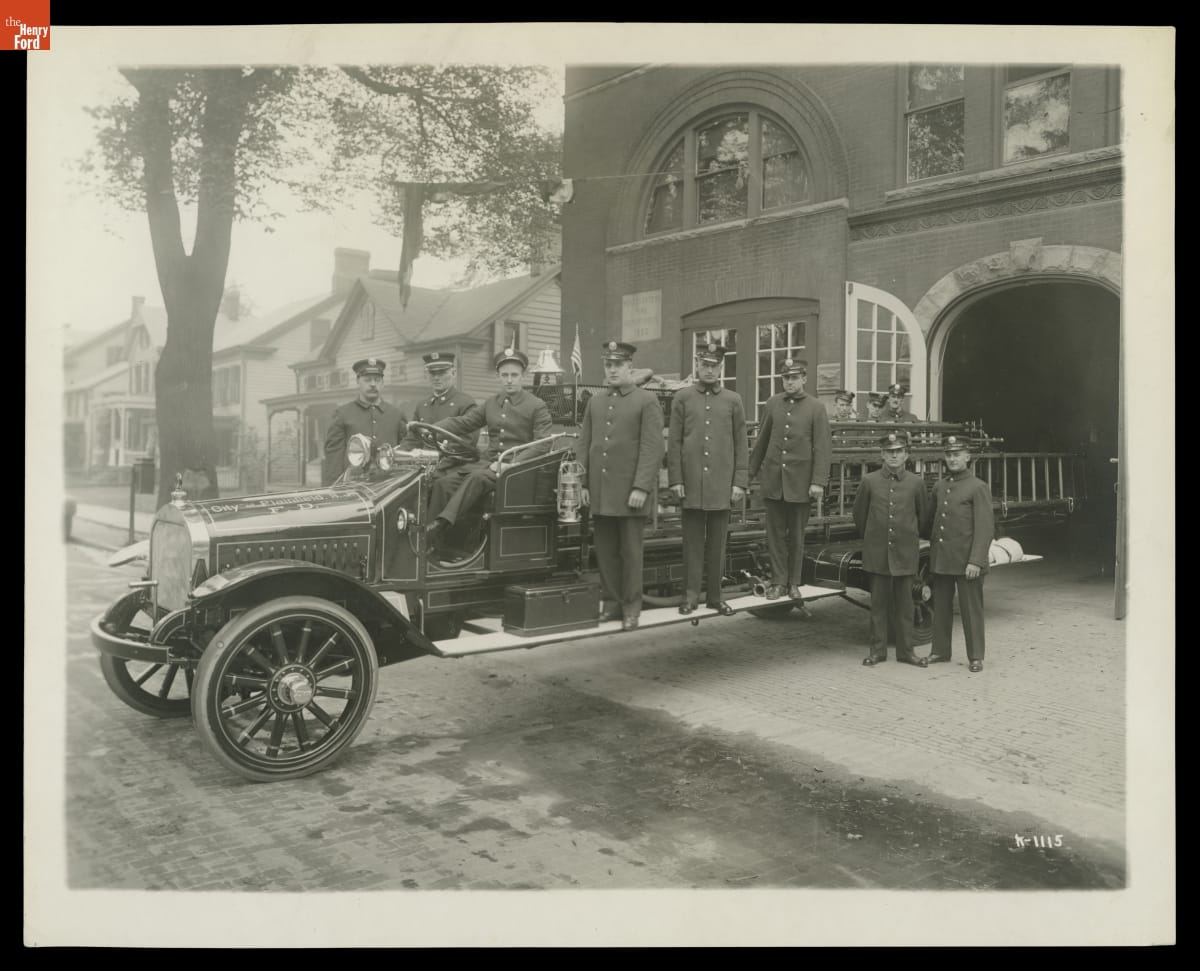 Set
SetEarly Firefighting
- 32 Artifacts
Fire was a constant menace to American cities well into the 20th century, when most buildings were made of wood and firefighting equipment was underpowered and overmatched. Firefighters risked their own lives to save those of others, to protect property, and to constrain and contain blazes before they grew into uncontrollable conflagrations. Early firefighting relied on mettle, muscle, and machinery that improved slowly but steadily over time.