
Assembling Ford V-8 Engines at Ford Rouge Plant, Dearborn, Michigan, 1934
THF98597 / Assembling Ford V-8 Engines at Ford Rouge Plant, Dearborn, Michigan, 1934
01
Artifact Overview
Henry Ford's last great automotive innovation was his introduction of a low-priced V-8 engine for 1932. Starting under $500, it was an exceptional value. Ford Motor Company's V-8 outsold its four-cylinder engine by a wide margin, and the four-cylinder unit was retired for 1935. The 1932 V-8 engine design remained in production until 1953.
Artifact Details
Artifact
Photographic print
Subject Date
1934
Place of Creation
Collection Title
Location
By Request in the Benson Ford Research Center
Object ID
84.1.1660.P.833.59545
Credit
From the Collections of The Henry Ford. Gift of Ford Motor Company.
Material
Paper (Fiber product)
Technique
Gelatin silver process
Color
Black-and-white (Colors)
Dimensions
Height: 8.25 in
Width: 10.5 in
Keywords |
|---|
02
Related Content
 Set
SetThe Rouge
- 22 Artifacts
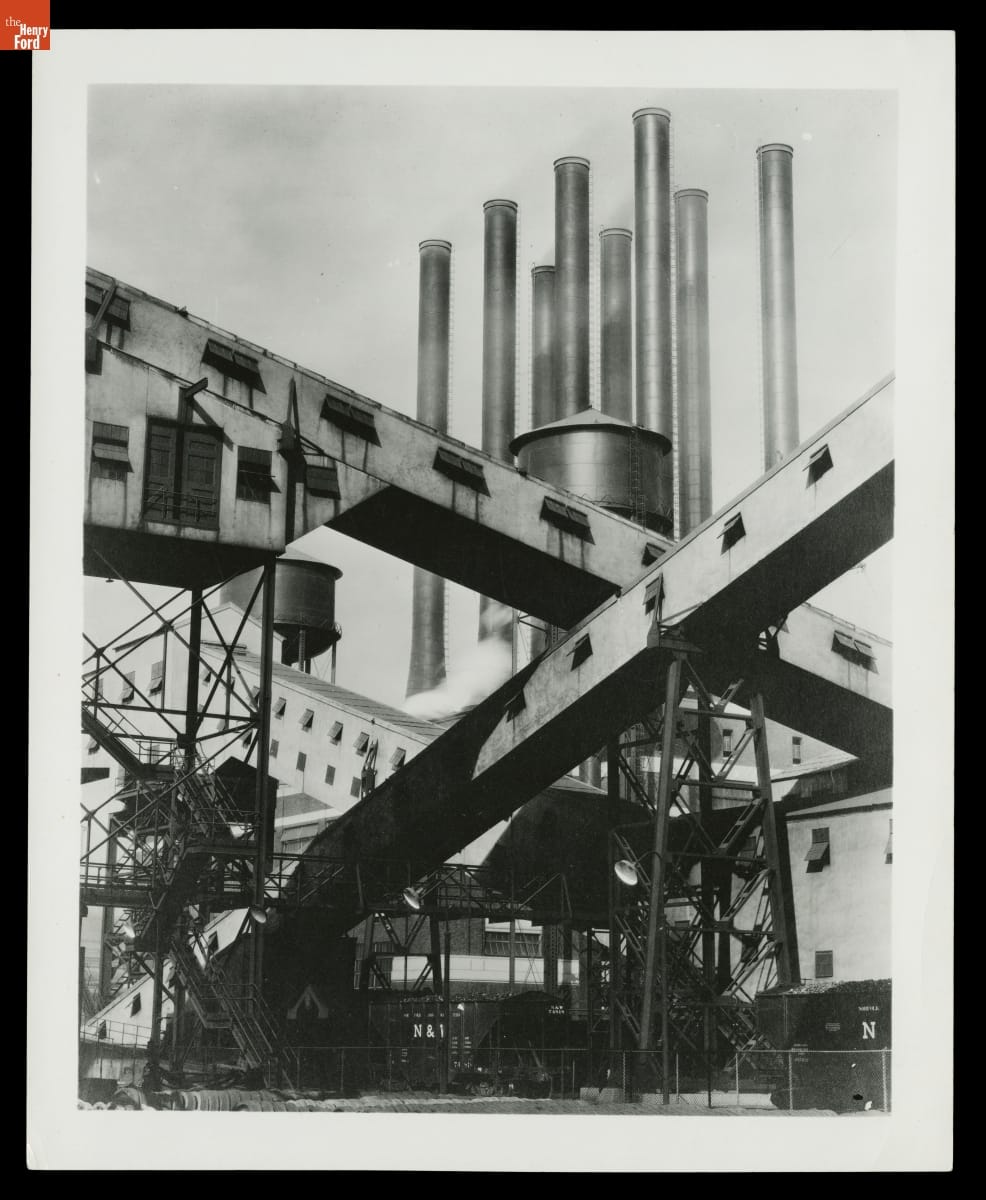
In 1927, Ford Motor Company commissioned Charles Sheeler to do a series of documentary photographs of its River Rouge industrial complex near Dearborn, Michigan. The conveyors moved coal and coke to the pulverizing building and screening stations. Coke made from coal was used in the steelmaking process of the blast furnaces. This vigorous photograph shows Sheeler's ability to form a compelling image from a complicated scene.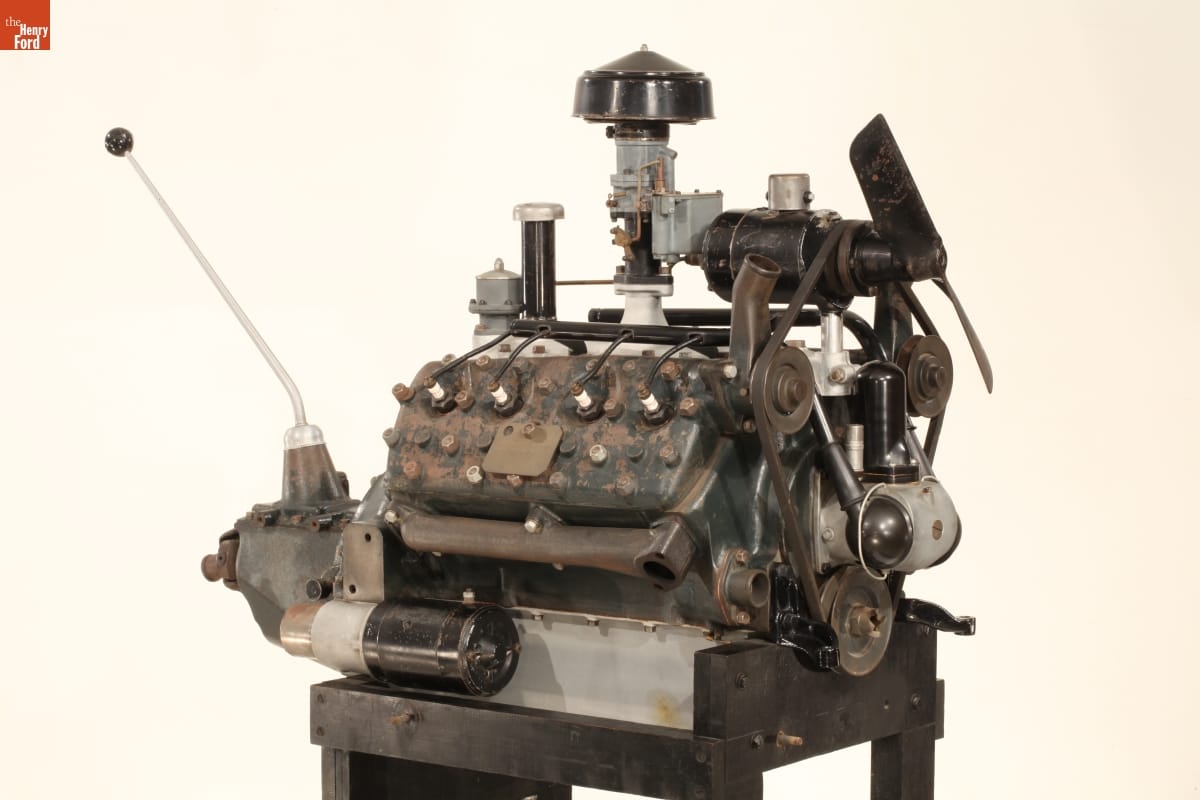 Set
SetThe Ford V-8
- 20 Artifacts
Henry Ford and Ford Motor Company revolutionized the auto industry once again in 1932 with the introduction of a low-priced V-8 engine. By casting the crankcase and cylinder banks as a single unit, Ford cut manufacturing costs and could offer its V-8 in a car starting under $500. Ford's original V-8 design remained in production, with modifications, until 1953.