
Catalin Bracelet Set, 1928-1940
THF151581 / Catalin Bracelet Set, 1928-1940
01
Artifact Overview
Catalin, a hardy plastic, had mass appeal during the 1930s. Catalin jewelry was inexpensive to make, easy to work with, and versatile -- which meant that it was widely available in a variety of fashionable colors appealing to Depression-weary Americans. These bracelets were likely produced for mass merchandisers, but retailers offered Catalin jewelry at every price point.
Artifact Details
Artifact
Bracelets (Jewelry)
Date Made
1928-1940
Place of Creation
Creator Notes
Attributed to an American maker.
Location
Not on exhibit to the public.
Object ID
81.24.7
Credit
From the Collections of The Henry Ford. Gift of Apple Annie's
Material
Catalin
Plastic
Color
Orange yellow
Brown
Tan (Color)
Keywords |
|---|
02
Related Content
 Set
SetBakelite, “The Material of a Thousand Uses”
- 14 Artifacts
When Leo Baekeland finally succeeded in developing the first chemically synthetic plastic in 1907, he knew he'd created a versatile material with broad appeal. Indeed, "Bakelite" proved suitable for a wide range of industrial and commercial applications. Touted as "the material of a thousand uses," Bakelite became a household name and helped usher in the age of plastics. Set
Set20th-Century Jewelry: Innovation in Design and Materials
- 10 Artifacts
This rhinestone-encrusted bangle bracelet was purchased in a second-hand boutique in the Haight-Ashbury district of San Francisco in the late 1960s, when the area was known as the center of the "hippie" counterculture. Self-described hippies sought to break with mainstream America and create their own society. This garishly decorated bracelet is a good example of hippie aesthetics.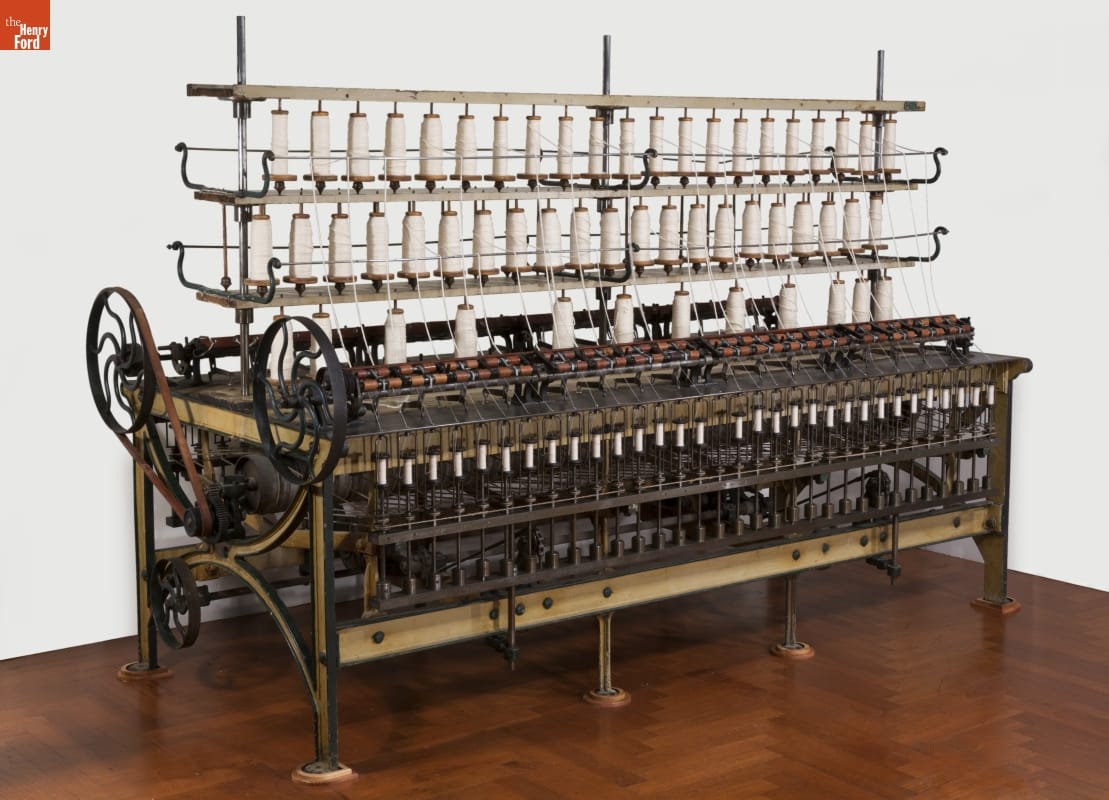 Set
SetFeatured on The Henry Ford's Innovation Nation: Season 8
- 26 Artifacts
Spinning frames spin cotton fiber into yarn and then wind it onto a bobbin. This throstle spinning frame could simultaneously spin 64 strands of yarn. (Throstle -- an old name for a song thrush -- refers to the bird-like sounds the machine made.) Machines like this helped produce the large quantities of yarn that growing industrial weaving operations needed in the early and mid-1800s.