
Wood Engraving, "View of the Public Landing at Louisville, Kentucky," 1850-1855
THF204241 / Wood Engraving, "View of the Public Landing at Louisville, Kentucky," 1850-1855
01
Artifact Overview
By the 1850s, Louisville, Kentucky, was the nation's tenth largest city and the largest Ohio River port between Pittsburgh and St. Louis. Manually operated flatboats and steam-powered riverboats carried freight and passengers up and down the river. Louisville was also the largest slave trading center in the country, with between 2,500 and 4,000 enslaved people passing through each year.
Artifact Details
Artifact
Print (Visual work)
Date Made
1856
Subject Date
1850-1855
Creators
Creator Notes
Engraved by N. Johnson
Collection Title
Location
Not on exhibit to the public.
Object ID
82.129.452
Credit
From the Collections of The Henry Ford.
Material
Paper (Fiber product)
Cardboard
Technique
Wood engraving (Process)
Color
Black-and-white (Colors)
Dimensions
Height: 6 in
Width: 9.5 in
Inscriptions
Printed below image:
Engraved expressly for the Progress of the Republic, and entered according to Act of Congress / VIEW OF THE PUBLIC LANDING AT LOUISVILLE, KY.
Typewritten on sheet on back:
Louisville, Kentucky. / Print entitled "View of the Public Landing at Lousiville, Ky." A view showing the / levee and Ohio River traffic. / Wood engraving. / Date: about 1850-1855
Handwritten in pencil on upper right hand corner of backing board: #452
Keywords |
|---|
02
Related Content
 Set
SetLesson: Transportation of Goods and Consumption
- 8 Artifacts
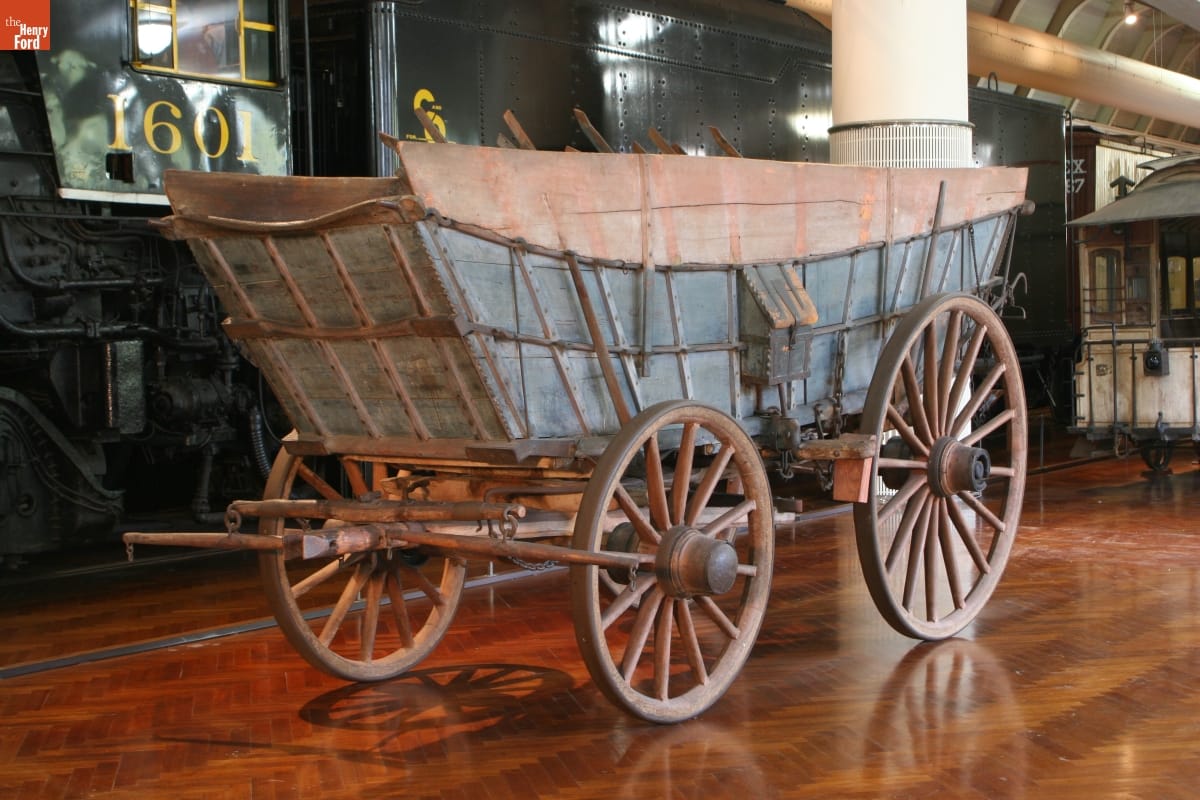
Conestoga wagons first appeared in Pennsylvania's Conestoga River valley about 1750. Designed for freight, the Conestoga's curved body tended to keep the load in the center, rather than shifting it toward the rear. The Conestoga's popularity peaked in the first half of the 19th century -- before railroads replaced it for hauling agricultural products and manufactured goods. Set
SetBefore Cars
- 23 Artifacts
Abbot, Downing & Company of Concord, New Hampshire, was the largest and best-known maker of stagecoaches. Sturdy, durable, and comfortable, Concord coaches were shipped by rail all over the country. Set
SetTransportation Networks
- 5 Artifacts
Canals opened new lands to settlement and commerce in the first half of the 19th century. New York's Erie Canal, completed in 1825, connected Albany with Buffalo. It also joined with other canals to make more areas of the state accessible. This print shows the junction of the "Northern" (Champlain) and the "Western" (Erie) canals.