
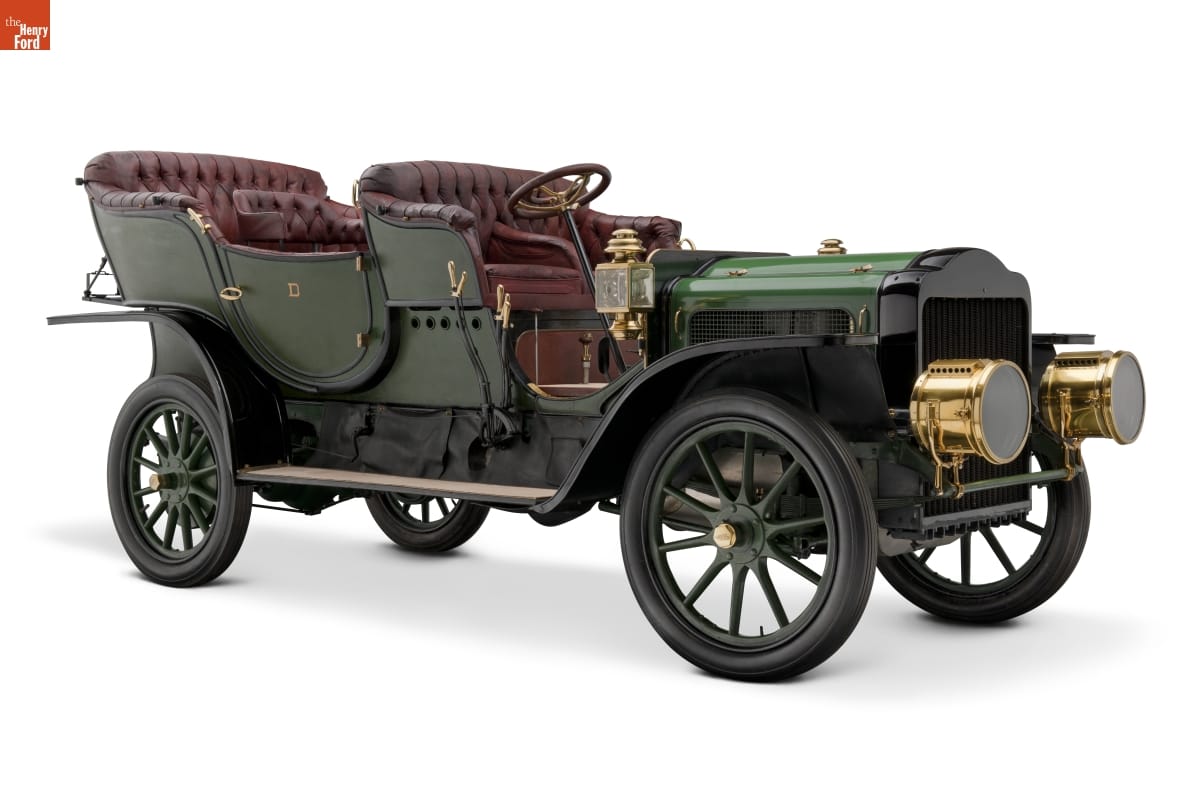
1899 Locomobile Runabout
THF90342 / 1899 Locomobile Runabout
01
Artifact Overview
This steam-powered runabout, by Locomobile, was built from designs by twin brothers F.E. and F.O. Stanley. These early vehicles were fast, cheap, and relatively uncomplicated. However, fuel needs, excessive water consumption, and other inherent problems dogged the lightweight steamer. In 1902 Locomobile began production of a gasoline internal combustion engine. The company phased out its steam-powered vehicles in 1904.
Artifact Details
Artifact
Automobile
Date Made
1899
Creators
Creator Notes
Designed by the Stanley Brothers, Francis and Freelan in Newton, Massachusetts and produced in Watertown, Massachusetts by Locomobile Company of America.
Location
at Henry Ford Museum in Driving America
Object ID
86.141.1
Credit
From the Collections of The Henry Ford.
Material
Metal
Wood (Plant material)
Rubber (Material)
Color
Red
Green
White (Color)
Specifications
Make & Model: 1899 Locomobile runabout
Maker: Locomobile Company of America, Watertown, Massachusetts
Engine: 2-cylinder steam, double acting, 2.5 inch bore x 3.5 inch stroke
Height: 72 inches
Wheelbase: 58 inches
Width: 63 inches
Overall length: 114.5 inches
Weight: 700 pounds
Horsepower: 4 at 150 psi
Pounds per horsepower: 175
Price: $600
Average 1899 wage: $428 per year
Time you'd work to buy this car: about 1 year, 5 months
Keywords |
|---|
02
Related Content
 Set
SetSteam Cars
- 11 Artifacts
Steam powered 19th-century America. Some early car manufacturers used this familiar technology to power their vehicles. The White Company was one of the best. Several well-known Americans purchased White steamers and President Taft included one in the first presidential car fleet. White, unlike other manufacturers of steam cars, shifted to gasoline-powered automobiles. It made its last steamer in 1911. Set
SetAmerican Auto Industry, 1805-2010
- 21 Artifacts
This vehicle is the oldest surviving American automobile. In the 1860s, a small steam carriage running under its own power -- without horses! -- was so startling that people paid to see it driven. It was a curiosity, not transportation. By the time its inventor, Sylvester Roper, died in 1896, new innovators were transforming horseless carriages from curiosities into practical vehicles. Set
SetVehicle Viewer
- 99 Artifacts
Americans didn't invent the automobile, but we embraced it and quickly made it our own. Cars cruise through our music, movies, and dreams. They drive innovation and create frustration. They are objects of beauty and sources of blight. The vehicles in the "Driving America" exhibit reveal how the car reshaped our culture and landscape. The decisions we make now, individually and collectively, will define our automotive future. Set
SetAuto Pioneers
- 33 Artifacts
Sylvester Roper built steam carriages and motorcycles during the latter half of the nineteenth century. His vehicles were not considered practical but became popular attractions at circuses and fairs. Roper had a heart attack at age 73 while riding one of his steam motorcycles. His death made front-page news in Boston, where he lived and worked.