
School Desks, circa 1900
THF97016 / School Desks, circa 1900
01
Artifact Overview
The importance that nineteenth-century Americans put on the technology of education is indicated by the hundreds of patents on school furniture between 1860 and 1900. Desks designed to be in rows facing the teacher reveal the teacher-centered classrooms of the era. These cast iron and wood school desks and benches were manufactured in Buffalo, New York, in about 1900.
Artifact Details
Artifact
School desk
Date Made
circa 1900
Creators
Place of Creation
Location
Not on exhibit to the public.
Object ID
55.37.6
Credit
From the Collections of The Henry Ford.
Material
Wood (Plant material)
Cast iron
Keywords |
|---|
02
Related Content
 Set
SetDesks for Every Need
- 30 Artifacts
The importance that nineteenth-century Americans put on the technology of education is indicated by the hundreds of patents on school furniture between 1860 and 1900. Desks designed to be in rows facing the teacher reveal the teacher-centered classrooms of the era. These cast iron and wood school desks and benches were manufactured in Buffalo, New York, in about 1900. Set
SetChildren and Desks
- 19 Artifacts
Henry Ford's original vision for his museum and "early American village" was to provide hands-on learning opportunities for students. Ford's educational philosophy was "learn to do by doing." In the experimental Edison Institute Schools he founded in 1929, students learned not only from books, but also from objects and hands-on experiences. Many attended classes in Greenfield Village's historic buildings.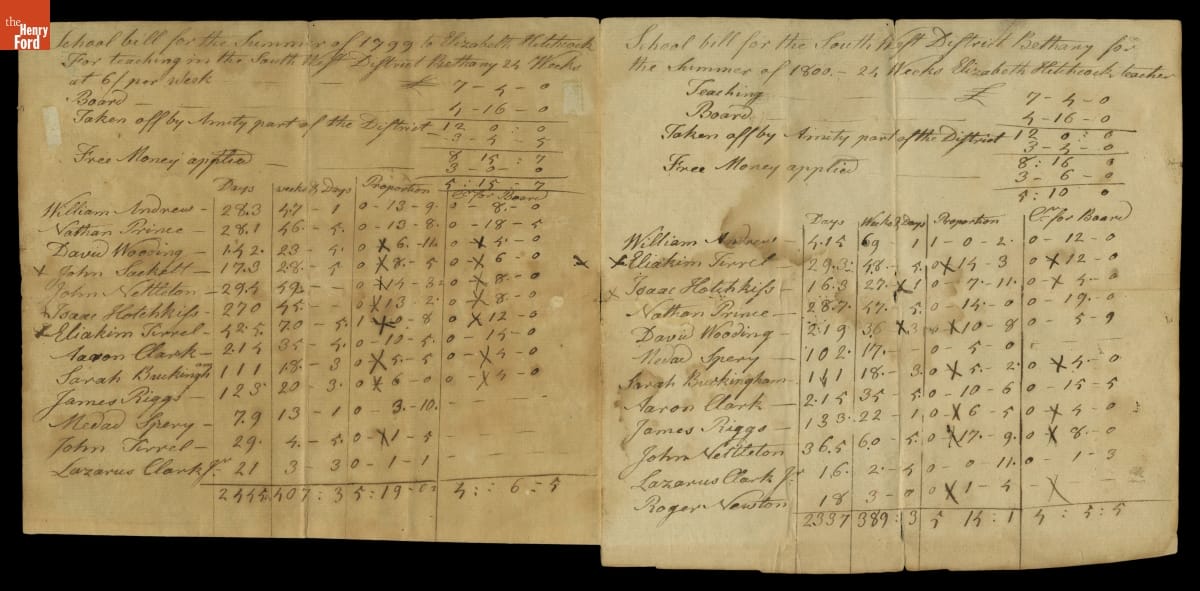 Set
SetOne-Room Schools
- 42 Artifacts
In the early United States, schools were organized if the local community desired them, and generally parents had to pay for their children to attend. This is a hand-written bill from a teacher in Bethany, Connecticut. Parents were billed for their children's education as well as the teacher's board (food and shelter). article
One-Room School: The Tradition Is Updated
Learn about updates to the teacher's guide for One-Room School, one of The Henry Ford’s longest-running educational programs.