
Lunch Wagons: The Business of Mobile Food
Share
share
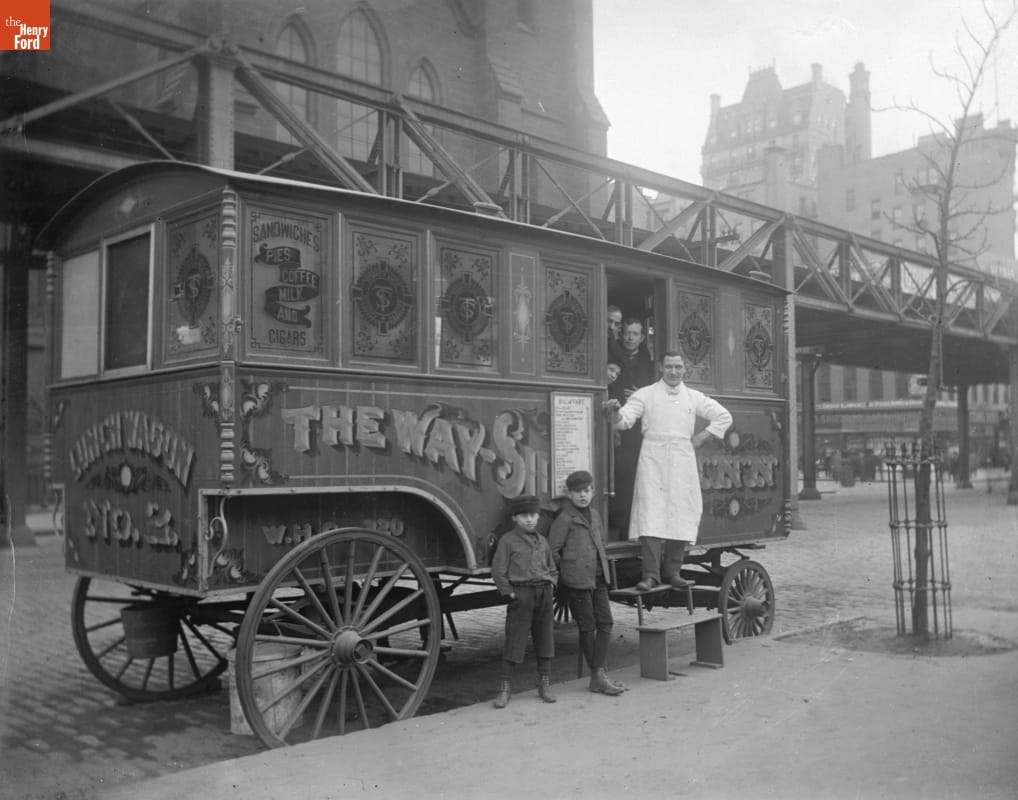
In the 1890s, night lunch wagons became popular in cities nationwide. These horse-drawn “restaurants on wheels” offered simple, affordable food after regular restaurants closed for the night.
THF38078
Lunch Wagon, the "Way-Side Inn," 1890-1915
Horse-drawn lunch wagons, brought out onto city streets at night, served simple, affordable food after regular restaurants closed for the night. This night lunch wagon, established by the Church Temperance Society in New York City, attempted to discourage patrons from frequenting nighttime saloons by offering food and drink in a convenient location and attractive setting.
View ArtifactStreet Scenes, Lunch Cart on New Street, 1890-1915
Immigrants in New York City could make a modest living by selling fresh produce, baked goods, or hand-held lunch foods from a pushcart. Lunch carts like this one were the predecessors to horse-drawn lunch wagons with enclosed tops and expanded menus. Eventually these lunch wagons evolved into diners.
View ArtifactOwl Night Lunch Wagon Used by Henry Ford, circa 1890
The Henry Ford's Owl Night Lunch wagon is thought to be the last remaining horse-drawn lunch wagon in America. It served food to nighttime workers in downtown Detroit, and attracted such diverse clientele as reporters, politicians, policemen, factory workers, and supposedly even underworld characters! Among its customers was Henry Ford, a young engineer working at Edison Illuminating Company during the 1890s.
View ArtifactLunch Wagon by the Railroad Depot, Fitchburg, Massachusetts, circa 1916
Wheeled, horse-drawn lunch wagons served simple, affordable food to customers on the go. Intended to be brought out onto city streets at night after regular restaurants closed, some -- like this lunch wagon in Fitchburg, Massachusetts -- became permanent fixtures, open day and night. These were the forerunners of diners.
View ArtifactBusiness Card for J. M. Colquhoun, Central Night Lunch Wagon, Detroit, Michigan, 1901-1927
John Colquhoun operated a night lunch wagon in Detroit. He offered simple, affordable food to hungry customers after regular restaurants closed for the night. Henry Ford patronized Colquhoun's wagon while working at the Edison Illuminating Company in the 1890s. After a city ordinance banned lunch wagons in 1926, Ford acquired the fondly remembered wagon from Colquhoun for use in Greenfield Village.
View Artifact

