
Tees-R-Us: From Underwear to Everywhere
| Written by | |
|---|---|
| Published | 8/28/2026 |
Tees-R-Us: From Underwear to Everywhere
| Written by | |
|---|---|
| Published | 8/28/2026 |
The t-shirt — a short-sleeved, collarless garment with a t-shaped body and sleeves — is one of the most universal items of clothing in the world. What began as practical undergarments, t-shirts have evolved into an essential wardrobe staple with deep cultural significance and personal meaning. T-shirts serve as wearable canvases for self-expression, offering a glimpse into the wearer’s personality, values, interests, and beliefs. They communicate passions, preserve memories, and help shape identity
Tees-R-Us: From Underwear to Everywhere


T-shirts can reflect a lifelong interest, commemorate meaningful moments, or embrace current cultural trends. Personal yet instantly recognizable and relatable, T-shirts have a unique ability to connect people to broader communities. Whether displaying allegiance to a favorite band, sports team, movement, or fandom, T-shirts create a shared visual language representing individuality and a sense of belonging.
The T-shirt’s Humble Beginnings
The story of T-shirts begins with underwear. In the late 19th century, workers and members of the military commonly wore one-piece “union suits” — a type of long underwear. During hot weather, some started cutting this garment in half, creating the first clothing to resemble the modern T-shirt.
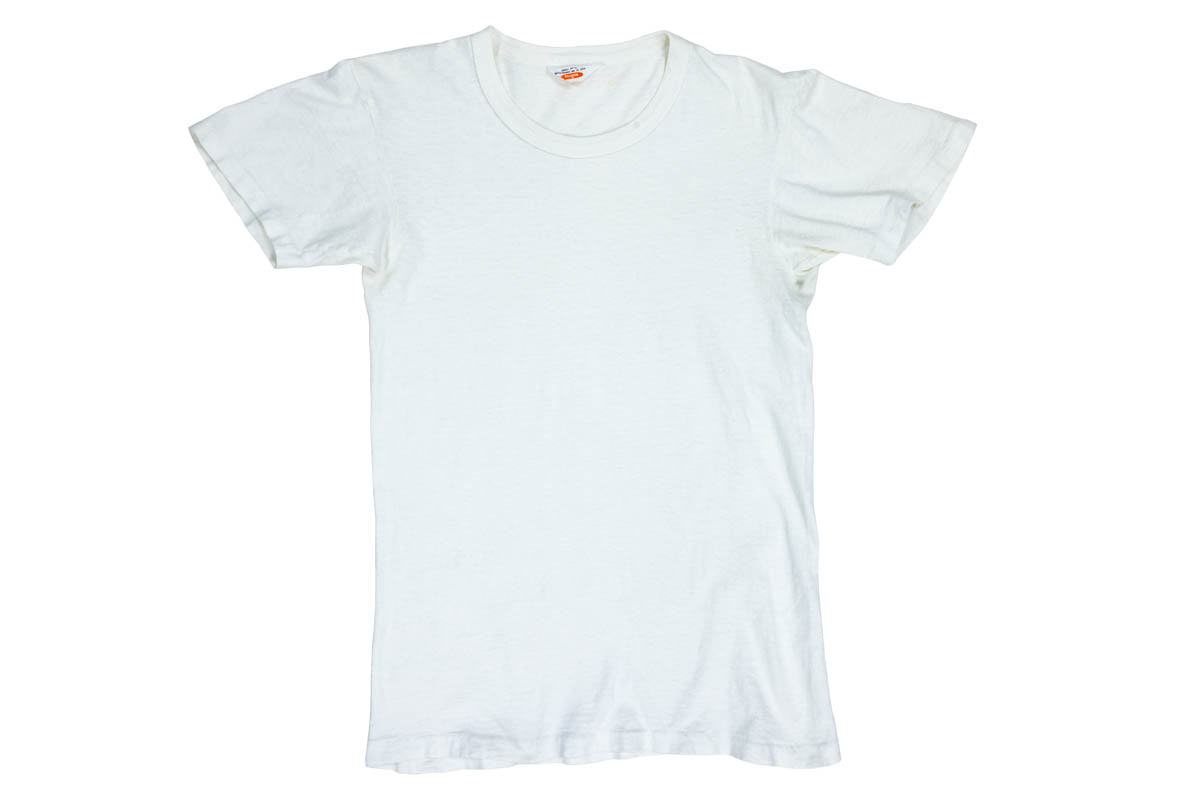
The plain, white T-shirt — a blank slate with infinite possibilities — has become a universal icon. / THF810225
In 1913, the U.S. Navy began issuing white, short-sleeved, crew-neck cotton undershirts to be worn under uniforms. By the 1930s and '40s, T-shirts were becoming increasingly common as standalone garments among soldiers, laborers, and college athletes. During World War II, American servicemen stationed in the Pacific started wearing their standard-issue T-shirts as outerwear to cope with the heat. While most remained plain white, some were printed with the names of military units, camps, or bases — a precursor to the graphic T-shirts that would follow.
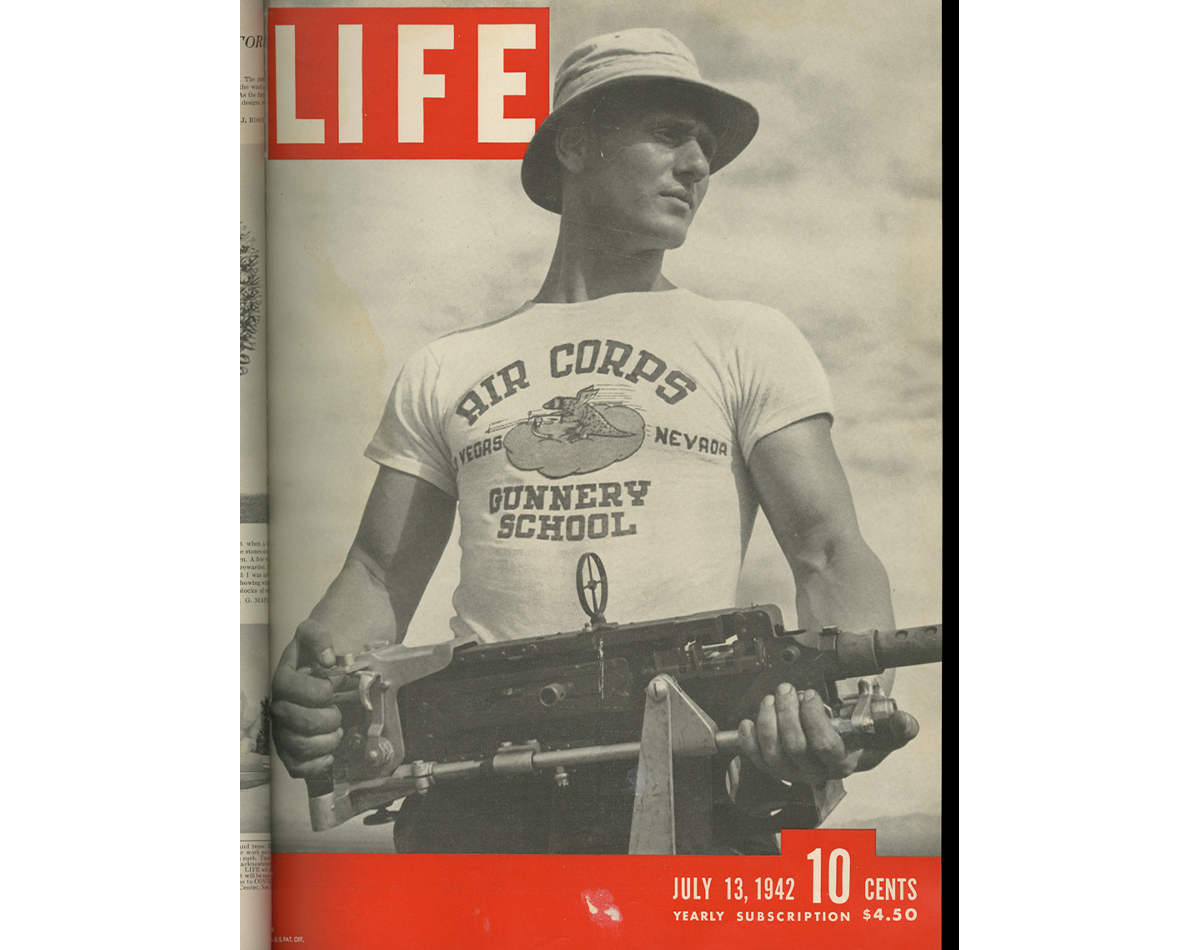
This image of Corporal Alexander Le Gerda from LIFE magazine’s June 13, 1942, issue is the first instance of a person wearing a graphic T-shirt in a popular magazine. / THF735188
The T-shirt’s rise as fashionable outerwear was cemented in the 1950s. Marlon Brando’s appearance in A Streetcar Named Desire (1951), followed by James Dean’s iconic look in Rebel Without a Cause (1955), transformed the T-shirt into a symbol of youthful confidence and rebellion.
After the war, veterans brought home their new ideas about decorating T-shirts. Among them was hot rod enthusiast Ed “Big Daddy” Roth, whose colorful airbrushed designs became wildly popular within car culture. Demand grew so quickly that Roth started silk-screening his designs on T-shirts, a technology that accelerated this new era of graphic T-shirts.
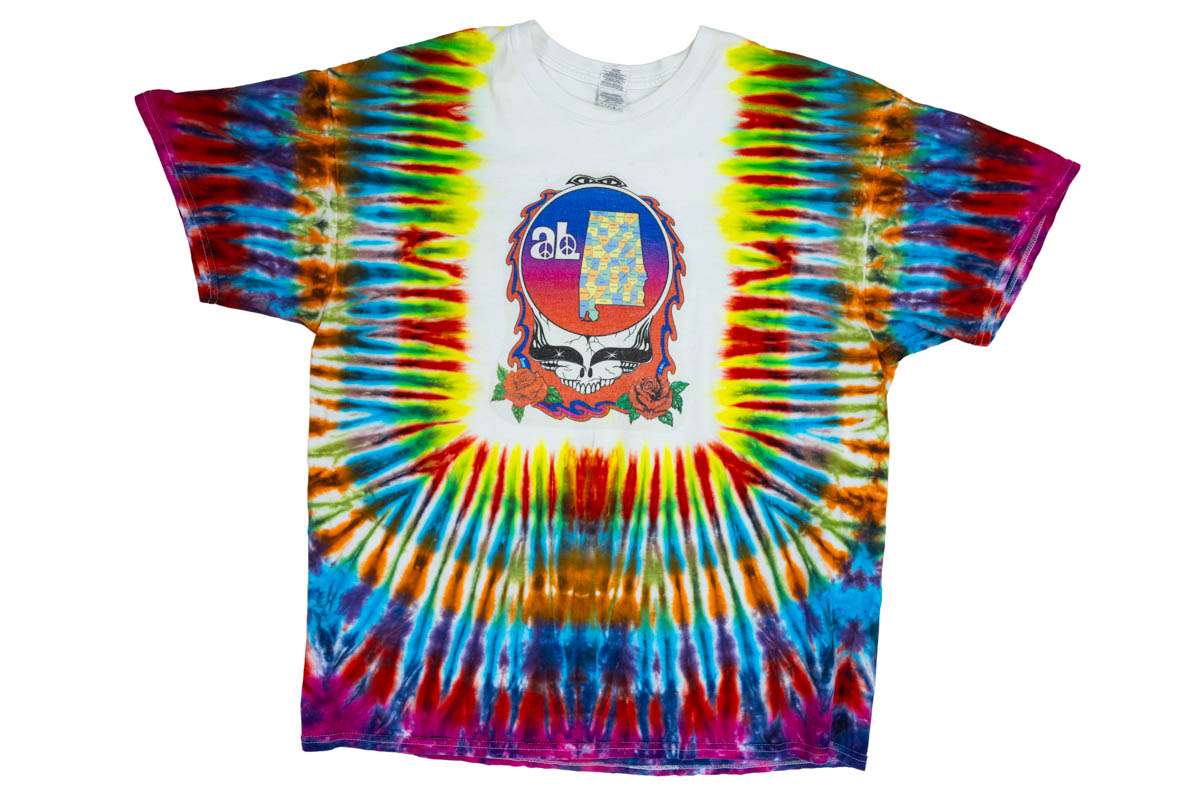
This 2000s era tie-dye T-shirt is a "parking lot" shirt — unofficial merchandise created and sold by Grateful Dead fans outside of the main concert venue before and after shows. / THF810209
By the 1960s and '70s, the T-shirt had become a powerful medium for expression, protest, and advertising. Advances in screen-printing technology made it possible to mass-produce graphic designs featuring band logos, political slogans, pop art, and corporate branding. In 1965, Budweiser was among the first major corporations to use promotional T-shirts as a marketing tool. Iron-on transfers also became widely available, allowing people to represent favorite bands, vacation destinations, causes, and hobbies on T-shirts of their choosing.
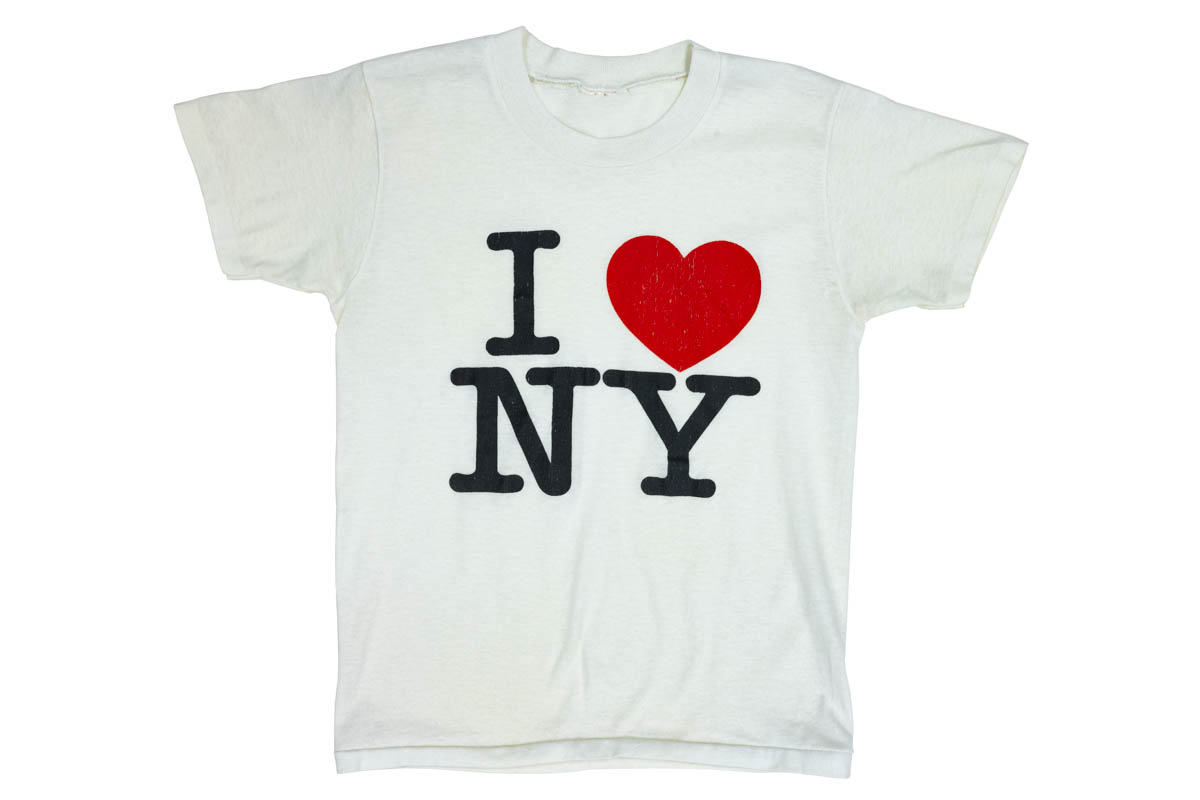
This T-shirt, often cited as the best-selling T-shirt of all time, features the "I ♥NY" slogan designed by American graphic designer Milton Glaser for a New York tourism campaign launched in 1977. / THF810213
In the late 1970s and early 1980s, T-shirts became inseparable from streetwear, youth culture, and global fashion. The rise of punk rock, hip-hop, and MTV elevated the graphic T-shirt to new cultural prominence. English fashion designer Katharine Hamnett’s political T-shirts reached millions when members of the pop group Wham! wore her anti-drug and anti-suicide “CHOOSE LIFE” T-shirt in one of their music videos. Artists including Robert Crumb and Keith Haring also recognized the T-shirt’s potential to bring their work beyond galleries and into everyday life.
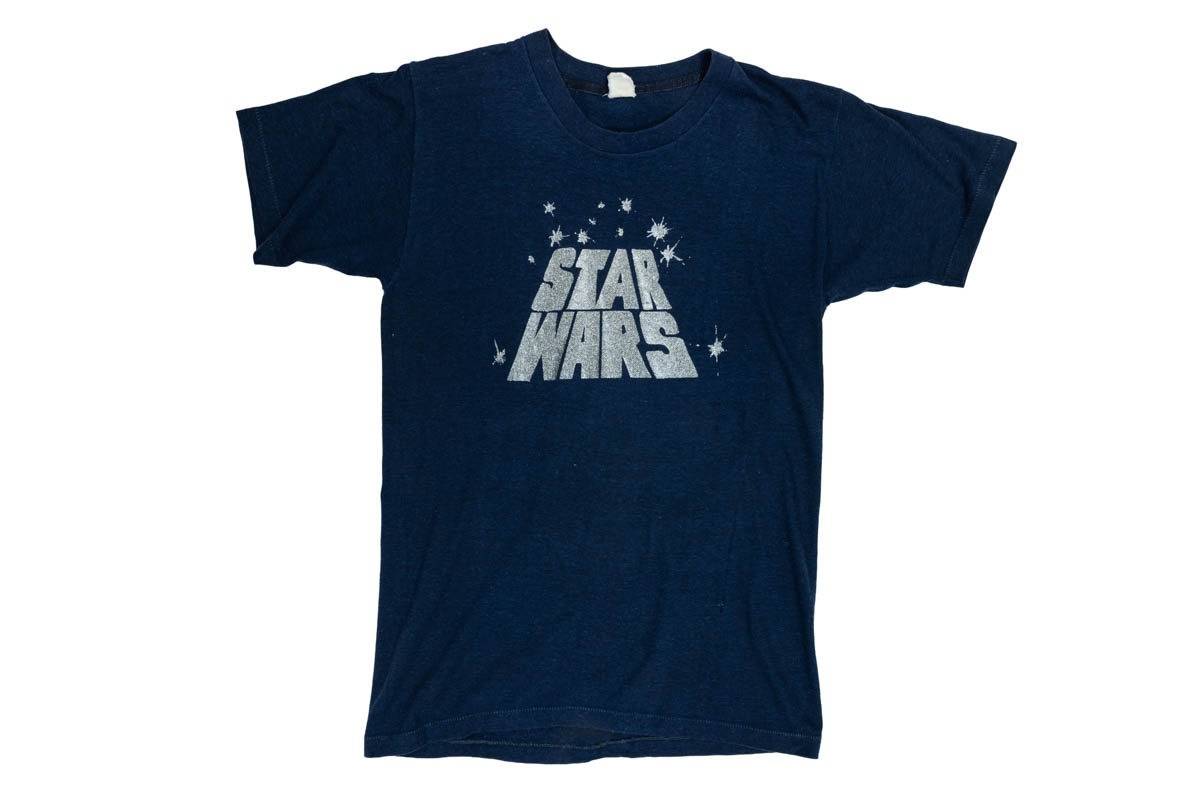
Star Wars became a pop culture phenomenon following the release of the first film in 1977, and this T-shirt features the 1977 graphic design of the famous logo. / THF810206
Since then, designer labels, fast-fashion retailers, luxury labels, and independent creators alike have continually reinvented the T-shirt. Digital printing and online marketplaces now allow anyone — from recognized artists to first-time designers — to create, share, and sell original designs to audiences around the world. Today, T-shirts are worn by people of every age and background, and they continue to evolve in materials, cuts, and styles while remaining one of the most accessible forms of personal expression.
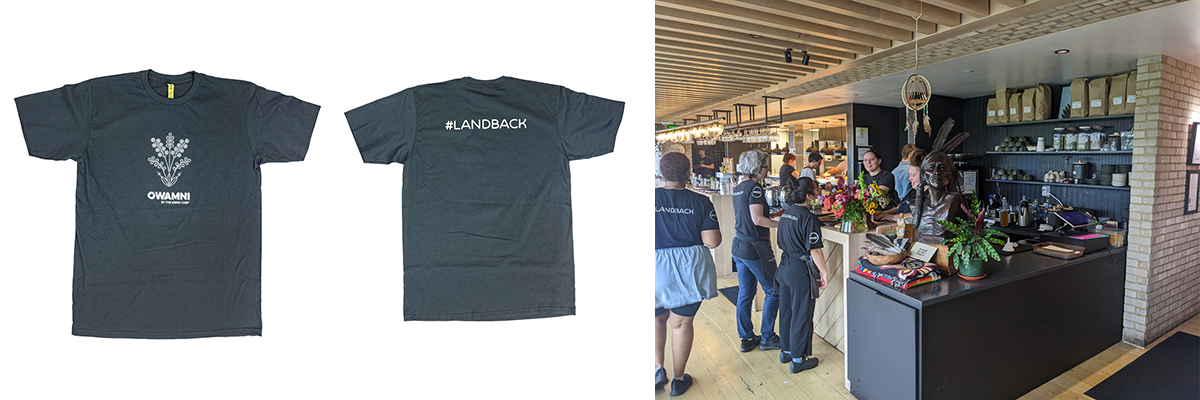 Front (left) and back (middle) of T-shirt available for purchase and worn by staff at Owamni (now known as Indigena by Owamni), an Indigenous cuisine restaurant established by chef Sean Sherman (Oglala Lakota Sioux) in Minneapolis, Minnesota. / THF806944 (left), THF806945 (middle), THF732575 (right)
Think about your favorite T-shirts. Why are they your favorites? Is it the comfort? The memories they carry? The message they send? Explore the stories behind this everyday garment in Fabric of America, on view June 7, 2026-September 13, 2026, in the The Gallery by General Motors in Henry Ford Museum of American Innovation.
Aimee Burpee is an associate curator at The Henry Ford who rarely wears anything that isn’t some kind of T-shirt.
Themes |
|---|