
Search
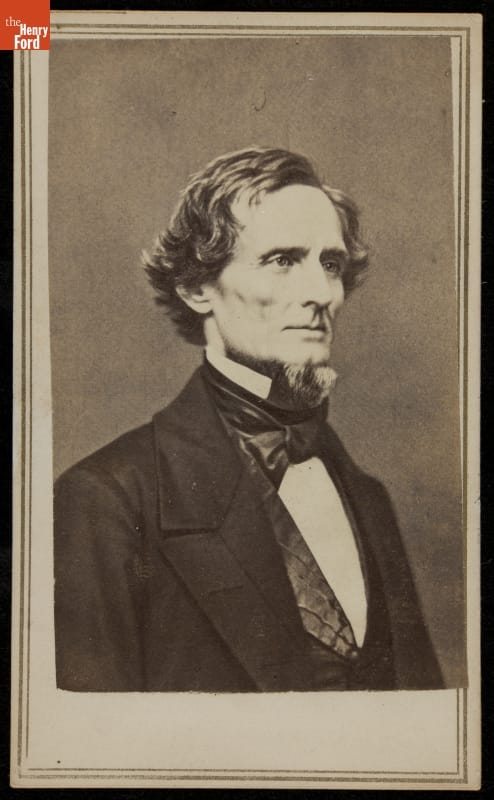
- U.S. Senator Jefferson Davis, 1858-1860 - U.S. Congressman Jefferson Davis of Mississippi posed for this portrait at Mathew Brady's Washington, D.C., studio. In early 1861, Davis resigned from the Senate, becoming president of the newly formed Confederate States of America. During the Civil War, a New York firm sold Brady photographs of military figures, battlefields, and politicians -- as well as this image of Jefferson Davis.
- 1858-1860
- Collections - Artifact
U.S. Senator Jefferson Davis, 1858-1860
U.S. Congressman Jefferson Davis of Mississippi posed for this portrait at Mathew Brady's Washington, D.C., studio. In early 1861, Davis resigned from the Senate, becoming president of the newly formed Confederate States of America. During the Civil War, a New York firm sold Brady photographs of military figures, battlefields, and politicians -- as well as this image of Jefferson Davis.
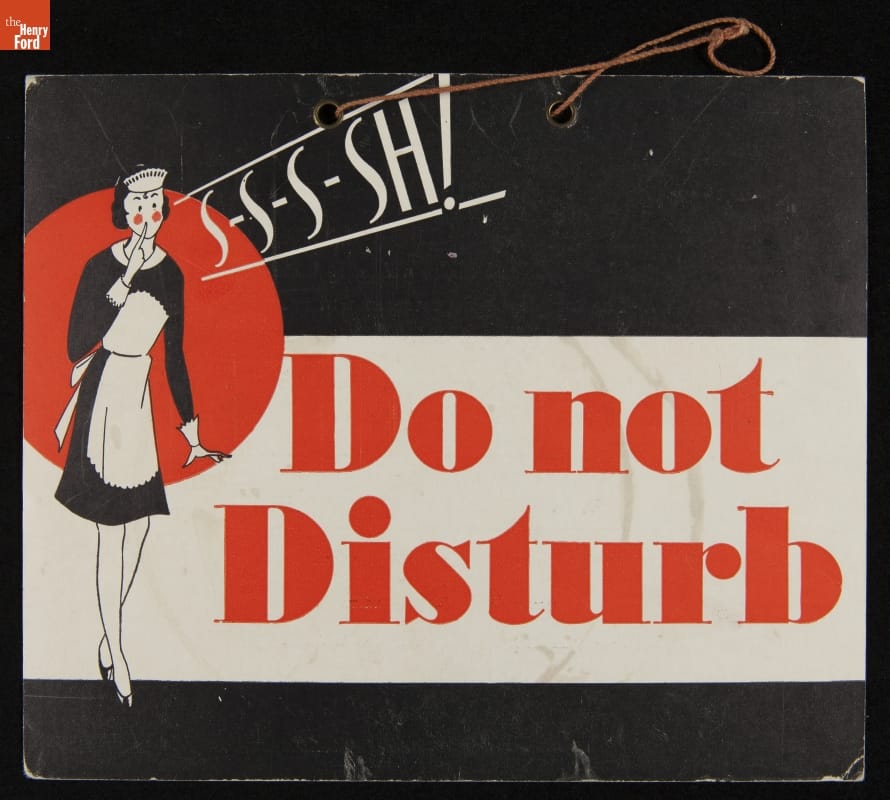
- Sign, "S-S-S-SH! Do Not Disturb," 1930-1945 - Like today, proprietors of mid-20th century hotels, motels and inns provided "Do Not Disturb" signs for weary travelers who wanted a restful stay. Guests placed the sign outside on their door to alert staff to please be quiet and not enter the room. This sign even included instructions that guests could use to stop unwanted telegrams or telephone calls.
- 1930-1945
- Collections - Artifact
Sign, "S-S-S-SH! Do Not Disturb," 1930-1945
Like today, proprietors of mid-20th century hotels, motels and inns provided "Do Not Disturb" signs for weary travelers who wanted a restful stay. Guests placed the sign outside on their door to alert staff to please be quiet and not enter the room. This sign even included instructions that guests could use to stop unwanted telegrams or telephone calls.
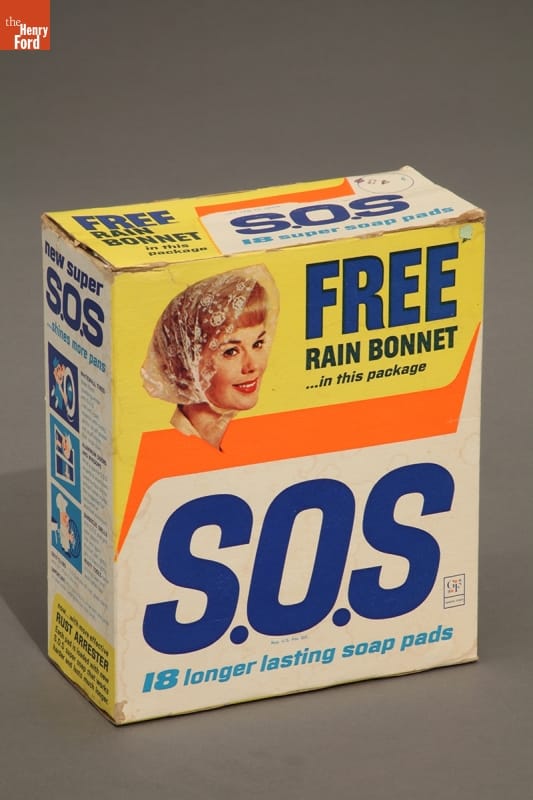
- S.O.S. Soap Pads, 1962-1968 -
- 1962-1968
- Collections - Artifact
S.O.S. Soap Pads, 1962-1968
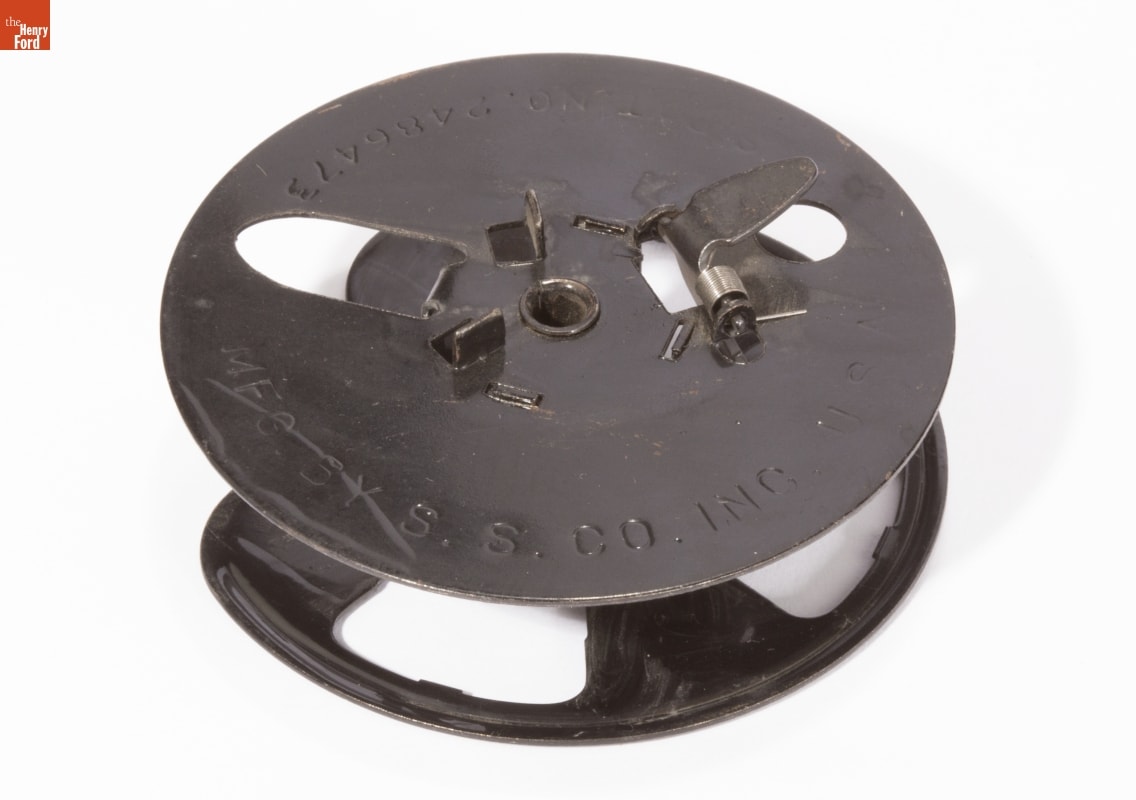
- S.S. Company Typewriter Spool, circa 1950 -
- circa 1950
- Collections - Artifact
S.S. Company Typewriter Spool, circa 1950
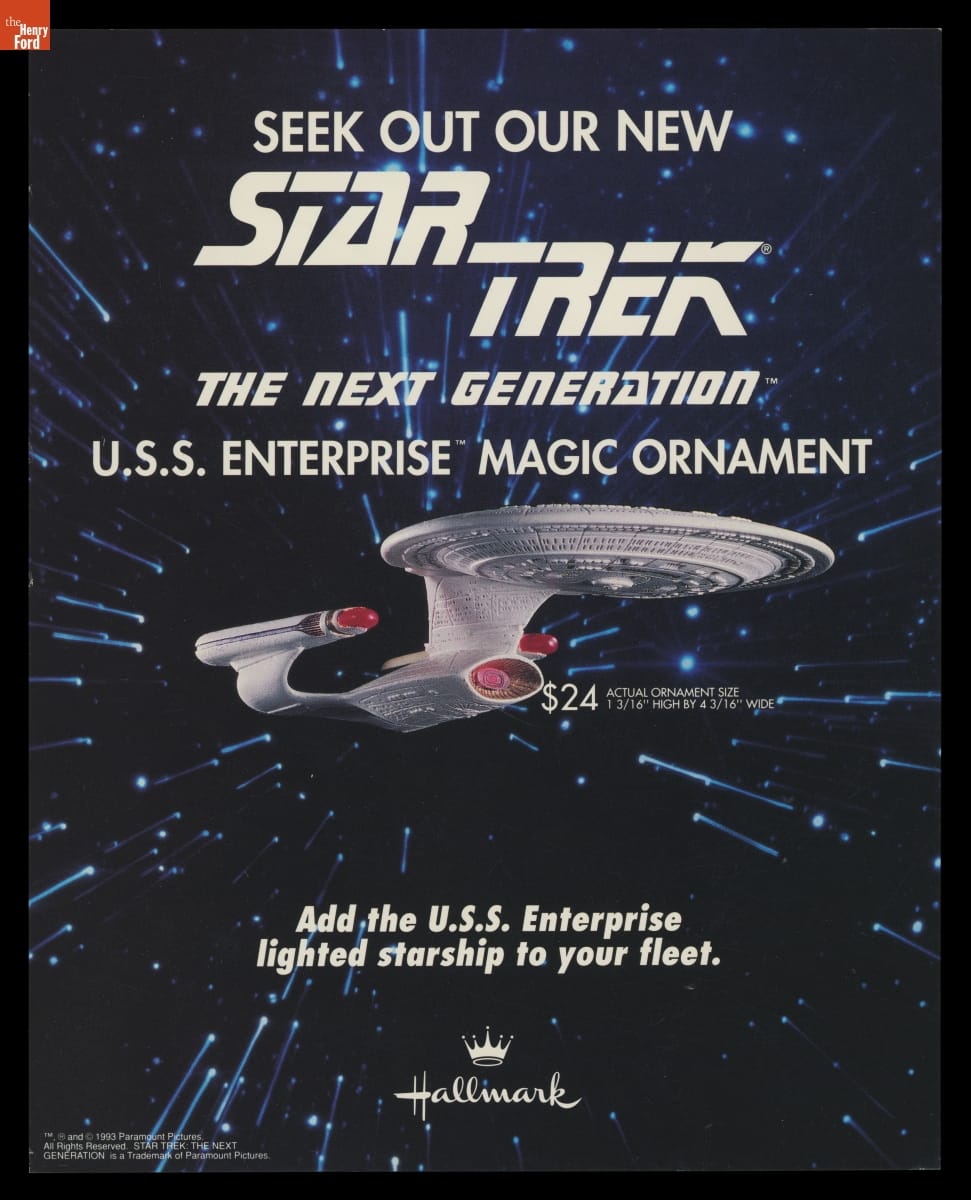
- Hallmark "U.S.S. Enterprise Magic" Poster, 1993 -
- 1993
- Collections - Artifact
Hallmark "U.S.S. Enterprise Magic" Poster, 1993
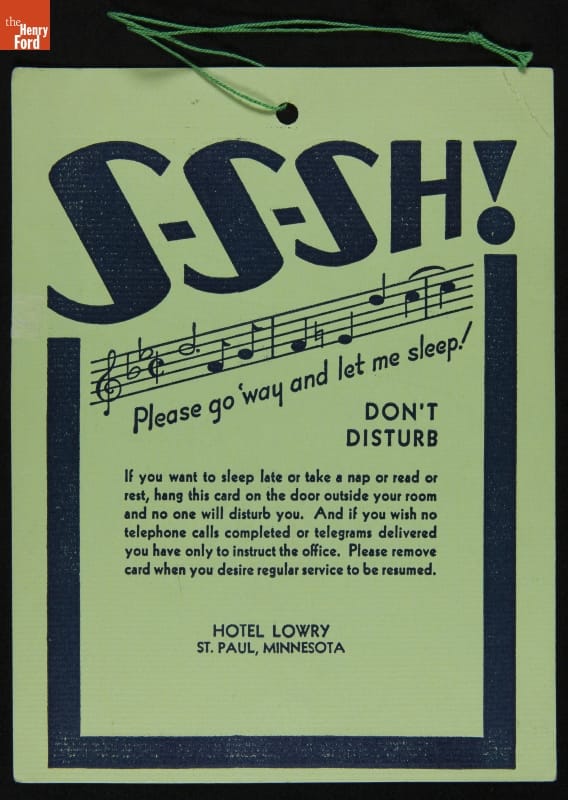
- Sign, "S-S-S-H! Please Go 'Way and Let Me Sleep!" 1938-1950 - Like today, proprietors of mid-20th century hotels, motels and inns provided "Do Not Disturb" signs for weary travelers who wanted a restful stay. Guests placed the sign outside on their door to alert staff to please be quiet and not enter the room. This sign even included instructions that guests could use to stop unwanted telegrams or telephone calls.
- 1938-1950
- Collections - Artifact
Sign, "S-S-S-H! Please Go 'Way and Let Me Sleep!" 1938-1950
Like today, proprietors of mid-20th century hotels, motels and inns provided "Do Not Disturb" signs for weary travelers who wanted a restful stay. Guests placed the sign outside on their door to alert staff to please be quiet and not enter the room. This sign even included instructions that guests could use to stop unwanted telegrams or telephone calls.
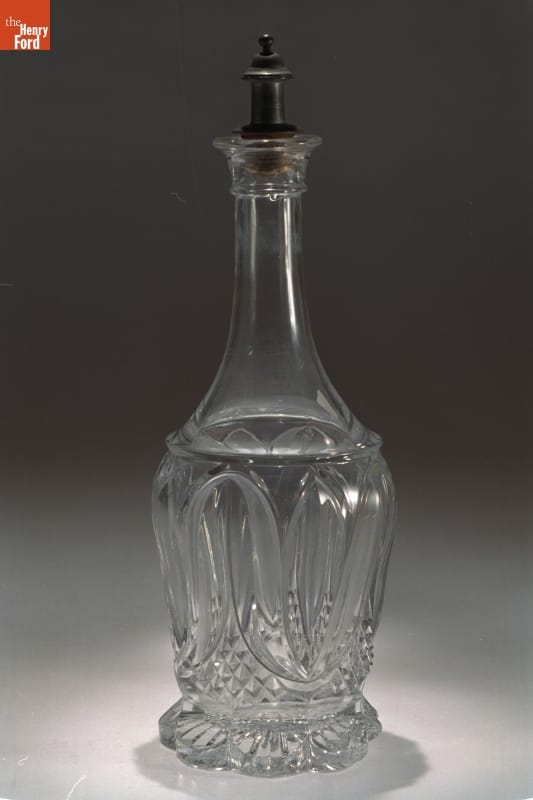
- Decanter, 1860-1870 - Nineteenth-century American glassmakers experimented with new methods to create products for a growing consumer market. In the 1820s, pressing glass into metal molds by machine was perfected, and by the mid-1800s, manufacturers were creating a variety of inexpensive pressed glass housewares. America's middle-class consumers could now decorate their homes with attractive glass bowls, creamers, dishes, plates, vases, and other tableware.
- 1860-1870
- Collections - Artifact
Decanter, 1860-1870
Nineteenth-century American glassmakers experimented with new methods to create products for a growing consumer market. In the 1820s, pressing glass into metal molds by machine was perfected, and by the mid-1800s, manufacturers were creating a variety of inexpensive pressed glass housewares. America's middle-class consumers could now decorate their homes with attractive glass bowls, creamers, dishes, plates, vases, and other tableware.
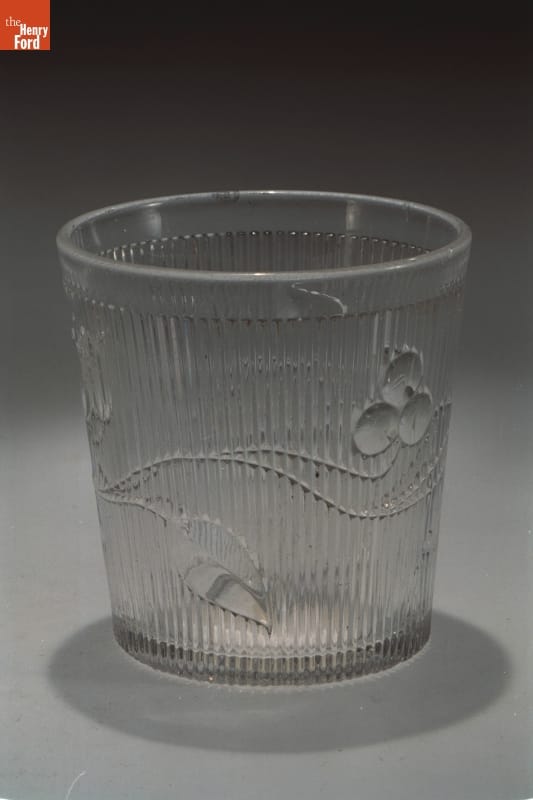
- Tumbler, 1860-1870 - Nineteenth-century American glassmakers experimented with new methods to create products for a growing consumer market. In the 1820s, pressing glass into metal molds by machine was perfected, and by the mid-1800s, manufacturers were creating a variety of inexpensive pressed glass housewares. America's middle-class consumers could now decorate their homes with attractive glass bowls, creamers, dishes, plates, vases, and other tableware.
- 1860-1870
- Collections - Artifact
Tumbler, 1860-1870
Nineteenth-century American glassmakers experimented with new methods to create products for a growing consumer market. In the 1820s, pressing glass into metal molds by machine was perfected, and by the mid-1800s, manufacturers were creating a variety of inexpensive pressed glass housewares. America's middle-class consumers could now decorate their homes with attractive glass bowls, creamers, dishes, plates, vases, and other tableware.
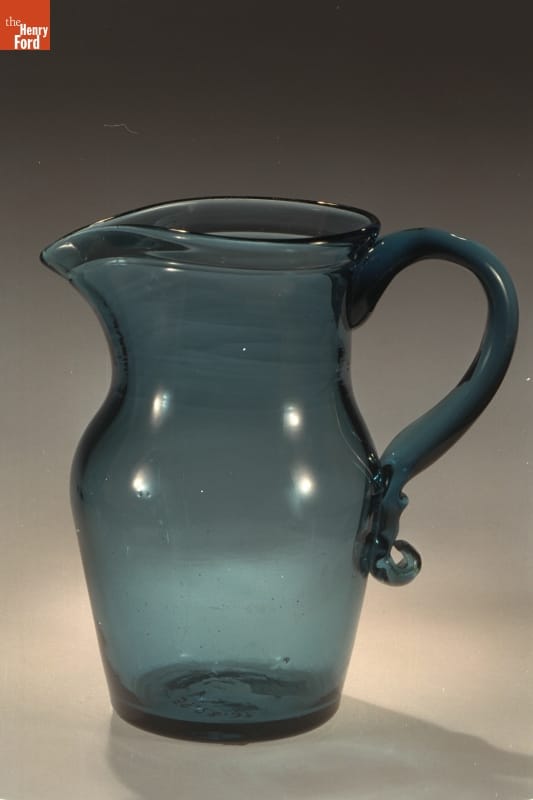
- Pitcher, 1840-1860 - American glass factories made a variety of glass products for the early-nineteenth-century consumer. Glassblowers turned out bottles, flasks, tableware and other household items. Earlier products were affordable only to the well-to-do. But by the second quarter of the 19th century, a growing number of manufacturers made reasonably priced blown-glass items available to the expanding middle class.
- 1840-1860
- Collections - Artifact
Pitcher, 1840-1860
American glass factories made a variety of glass products for the early-nineteenth-century consumer. Glassblowers turned out bottles, flasks, tableware and other household items. Earlier products were affordable only to the well-to-do. But by the second quarter of the 19th century, a growing number of manufacturers made reasonably priced blown-glass items available to the expanding middle class.
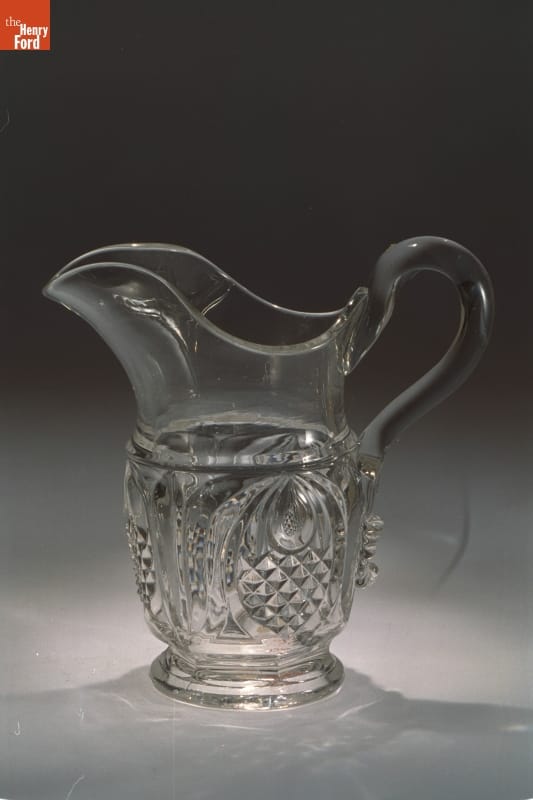
- Pitcher, 1860-1870 - Nineteenth-century American glassmakers experimented with new methods to create products for a growing consumer market. In the 1820s, pressing glass into metal molds by machine was perfected, and by the mid-1800s, manufacturers were creating a variety of inexpensive pressed glass housewares. America's middle-class consumers could now decorate their homes with attractive glass bowls, creamers, dishes, plates, vases, and other tableware.
- 1860-1870
- Collections - Artifact
Pitcher, 1860-1870
Nineteenth-century American glassmakers experimented with new methods to create products for a growing consumer market. In the 1820s, pressing glass into metal molds by machine was perfected, and by the mid-1800s, manufacturers were creating a variety of inexpensive pressed glass housewares. America's middle-class consumers could now decorate their homes with attractive glass bowls, creamers, dishes, plates, vases, and other tableware.