
Search
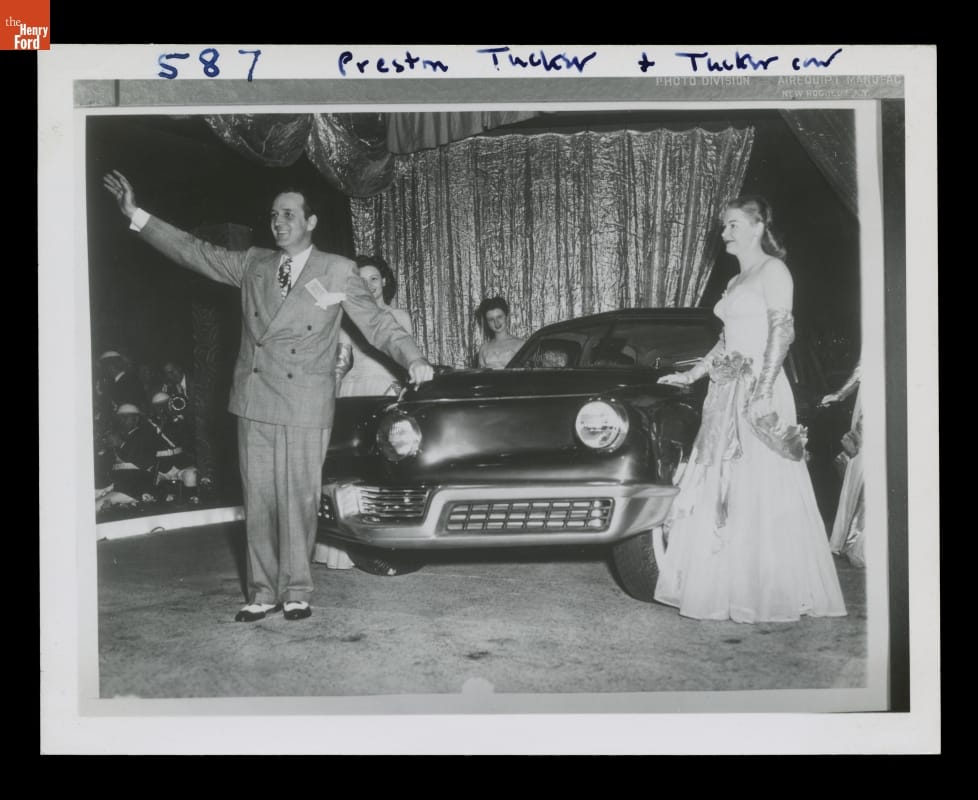
- Preston Tucker Presenting the 1948 Tucker Sedan - Preston Tucker unveiled his Tucker 48 prototype in a glitzy ceremony at the Tucker Corporation's Chicago plant on June 19, 1947. Some 5,000 people came to see the car Mr. Tucker had been promoting in newspapers and magazines for months. The crowd loved it. In the following weeks, many investors and dealers signed on with Tucker based on that enthusiasm.
- 1947-1948
- Collections - Artifact
Preston Tucker Presenting the 1948 Tucker Sedan
Preston Tucker unveiled his Tucker 48 prototype in a glitzy ceremony at the Tucker Corporation's Chicago plant on June 19, 1947. Some 5,000 people came to see the car Mr. Tucker had been promoting in newspapers and magazines for months. The crowd loved it. In the following weeks, many investors and dealers signed on with Tucker based on that enthusiasm.
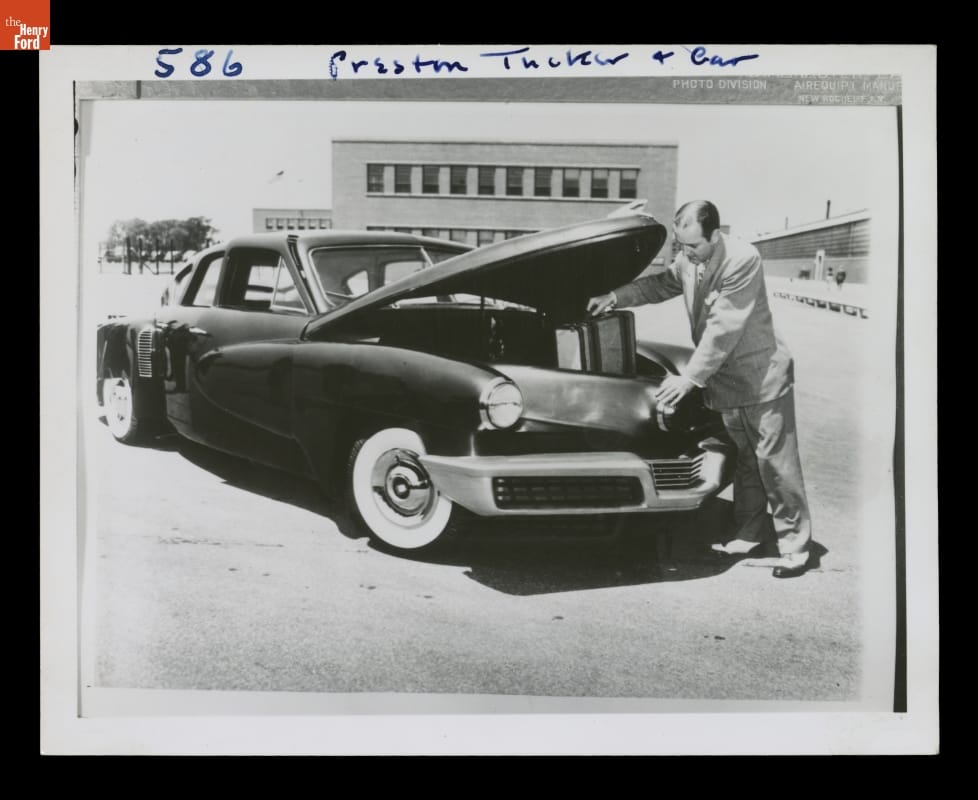
- Preston Tucker with 1948 Tucker Sedan - In this 1948 publicity photograph, Preston Tucker shows off the large trunk of his new automotive creation. Tucker promoted the car himself and attracted much interest. However, his company built only 51 cars before financial troubles killed the company -- and Tucker's innovative automobile along with it.
- 1947-1948
- Collections - Artifact
Preston Tucker with 1948 Tucker Sedan
In this 1948 publicity photograph, Preston Tucker shows off the large trunk of his new automotive creation. Tucker promoted the car himself and attracted much interest. However, his company built only 51 cars before financial troubles killed the company -- and Tucker's innovative automobile along with it.
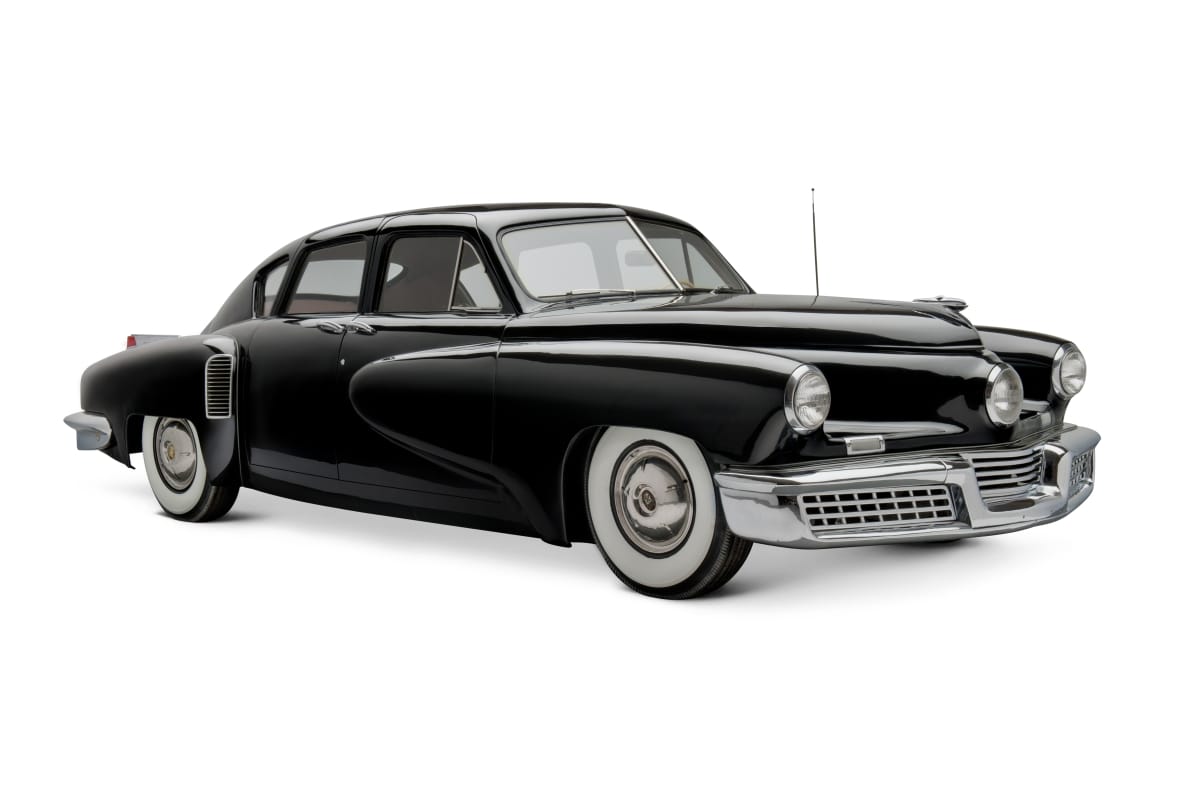
- 1948 Tucker 48 Sedan - Swooping fenders and six exhaust pipes make the Tucker look like a rocket ship. But Preston Tucker's car mixes fantasy with practicality. The center light turns with the front wheels to cast light around corners. Taillights are visible from the side for safety. Doors curve into the roof for easier entry and exit, while grilles on the rear fenders feed cooling air to the rear-mounted engine.
- 1948
- Collections - Artifact
1948 Tucker 48 Sedan
Swooping fenders and six exhaust pipes make the Tucker look like a rocket ship. But Preston Tucker's car mixes fantasy with practicality. The center light turns with the front wheels to cast light around corners. Taillights are visible from the side for safety. Doors curve into the roof for easier entry and exit, while grilles on the rear fenders feed cooling air to the rear-mounted engine.
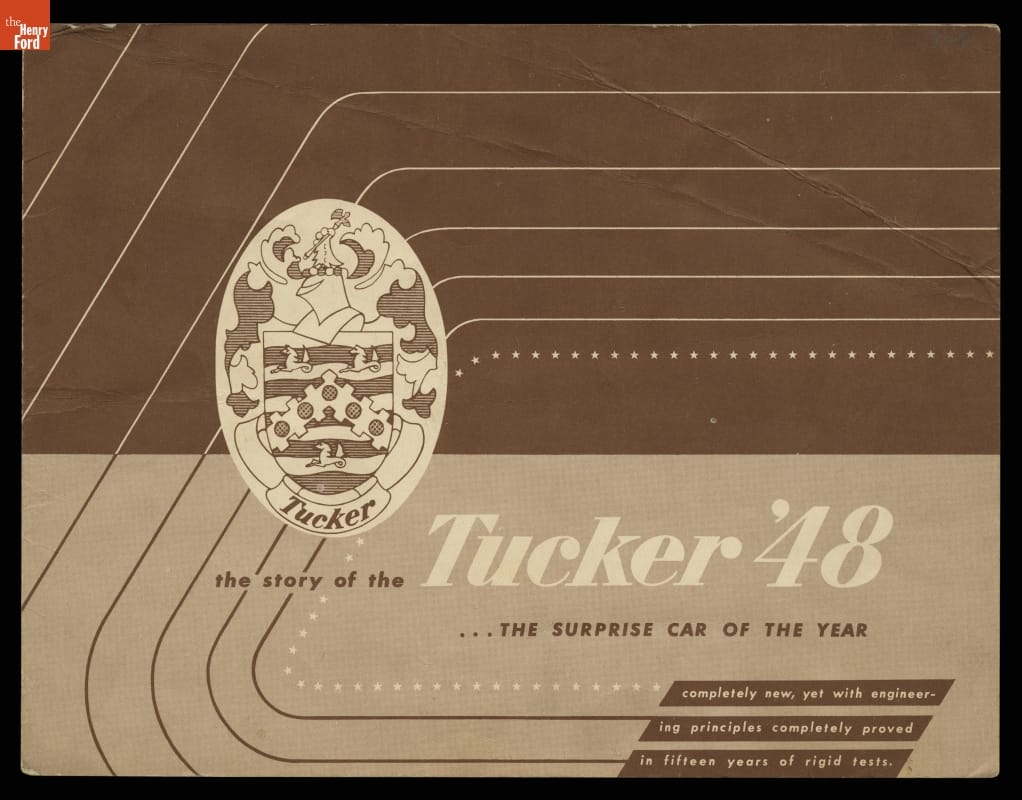
- 1948 Tucker Sales Brochure, "The Story of the Tucker '48" - Preston Tucker heralded his Tucker 48 as "the car you have been waiting for." From its three headlights to its rear-mounted engine, the Tucker certainly was unique. But some of its promised innovations, like the torque-converter transmission and disc brakes, never made it into production. Fifty-one Tuckers were built before the company went out of business.
- 1948
- Collections - Artifact
1948 Tucker Sales Brochure, "The Story of the Tucker '48"
Preston Tucker heralded his Tucker 48 as "the car you have been waiting for." From its three headlights to its rear-mounted engine, the Tucker certainly was unique. But some of its promised innovations, like the torque-converter transmission and disc brakes, never made it into production. Fifty-one Tuckers were built before the company went out of business.
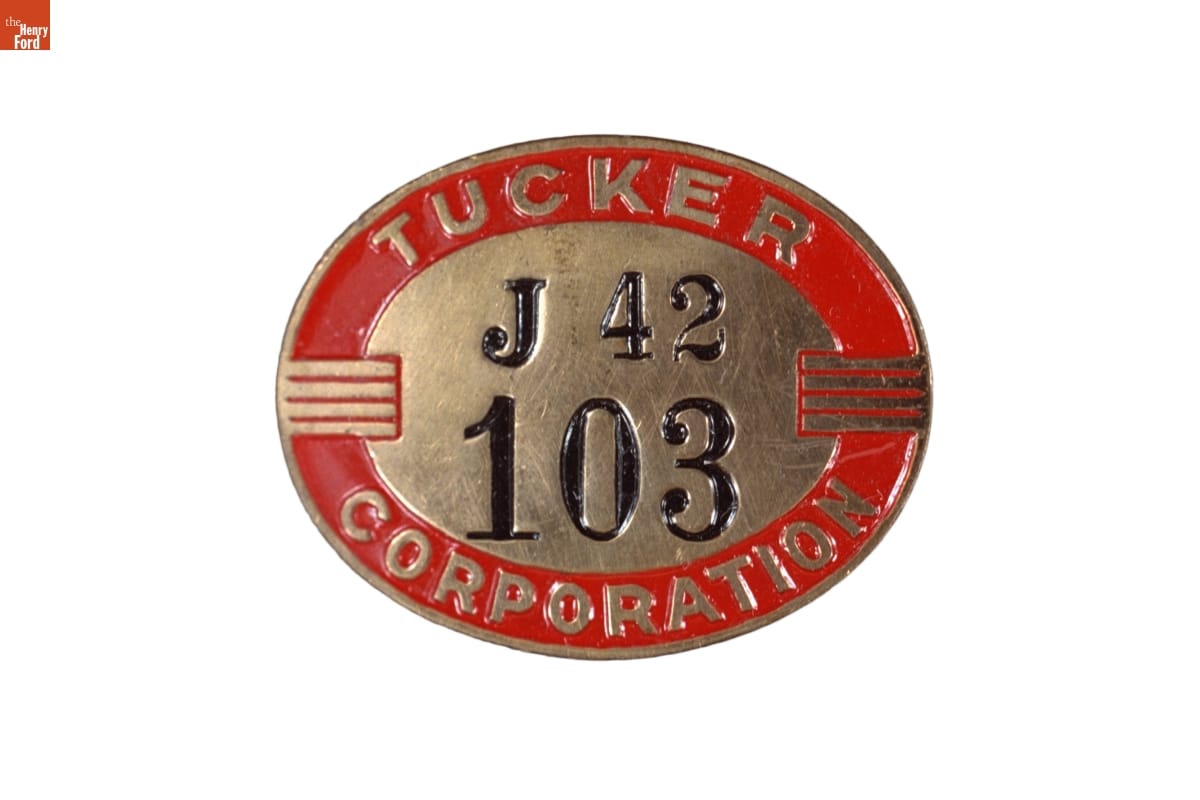
- Tucker Corporation Employee Badge, circa 1948 - The Tucker Corporation based itself in Chicago in a war-surplus factory that had produced engines for B-29 bomber airplanes. At its peak, Tucker employed some 1,600 people. The company anticipated having 35,000 employees once it reached full production. But it wasn't to be. Financial and legal problems closed Tucker in 1950 after only 51 cars were built.
- circa 1948
- Collections - Artifact
Tucker Corporation Employee Badge, circa 1948
The Tucker Corporation based itself in Chicago in a war-surplus factory that had produced engines for B-29 bomber airplanes. At its peak, Tucker employed some 1,600 people. The company anticipated having 35,000 employees once it reached full production. But it wasn't to be. Financial and legal problems closed Tucker in 1950 after only 51 cars were built.
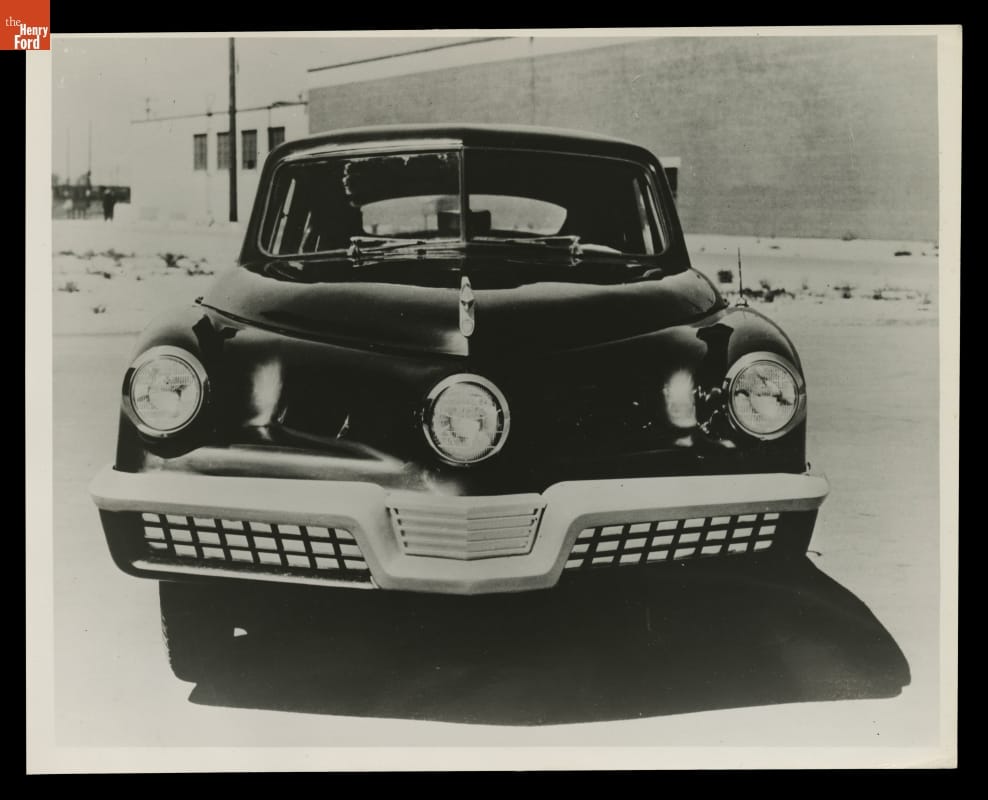
- Front View of a 1948 Tucker Sedan - Preston Tucker's futuristic Tucker 48 was unlike anything else on the road in the late 1940s. The final body design was by Alex Tremulis who, in a long career, also produced designs for Auburn-Cord-Duesenberg, American Bantam, Packard, Ford, and others. Tucker hallmarks included its three headlights, rear fender vents (for the rear-mounted engine), and doors cutting into the roof.
- June 23, 1947
- Collections - Artifact
Front View of a 1948 Tucker Sedan
Preston Tucker's futuristic Tucker 48 was unlike anything else on the road in the late 1940s. The final body design was by Alex Tremulis who, in a long career, also produced designs for Auburn-Cord-Duesenberg, American Bantam, Packard, Ford, and others. Tucker hallmarks included its three headlights, rear fender vents (for the rear-mounted engine), and doors cutting into the roof.
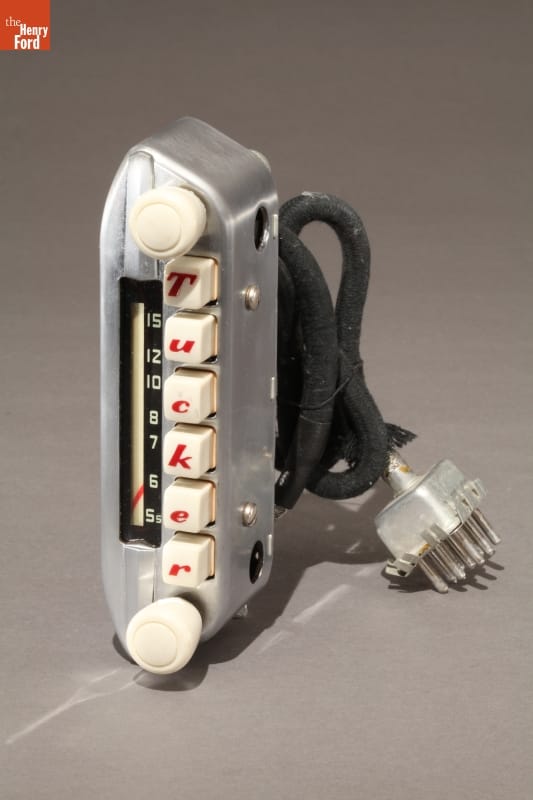
- Car Radio for 1948 Tucker Automobile - Promotional giveaways can place advertising messages deeper into people's lives than billboards or magazine ads. The power of branding -- coupled with consumer brand loyalty -- has also led to the creation of promotional items designed for sale to the public. This Tucker-branded radio could be purchased prior to owning the car. Many radios were sold but only 51 cars were built.
- 1947
- Collections - Artifact
Car Radio for 1948 Tucker Automobile
Promotional giveaways can place advertising messages deeper into people's lives than billboards or magazine ads. The power of branding -- coupled with consumer brand loyalty -- has also led to the creation of promotional items designed for sale to the public. This Tucker-branded radio could be purchased prior to owning the car. Many radios were sold but only 51 cars were built.
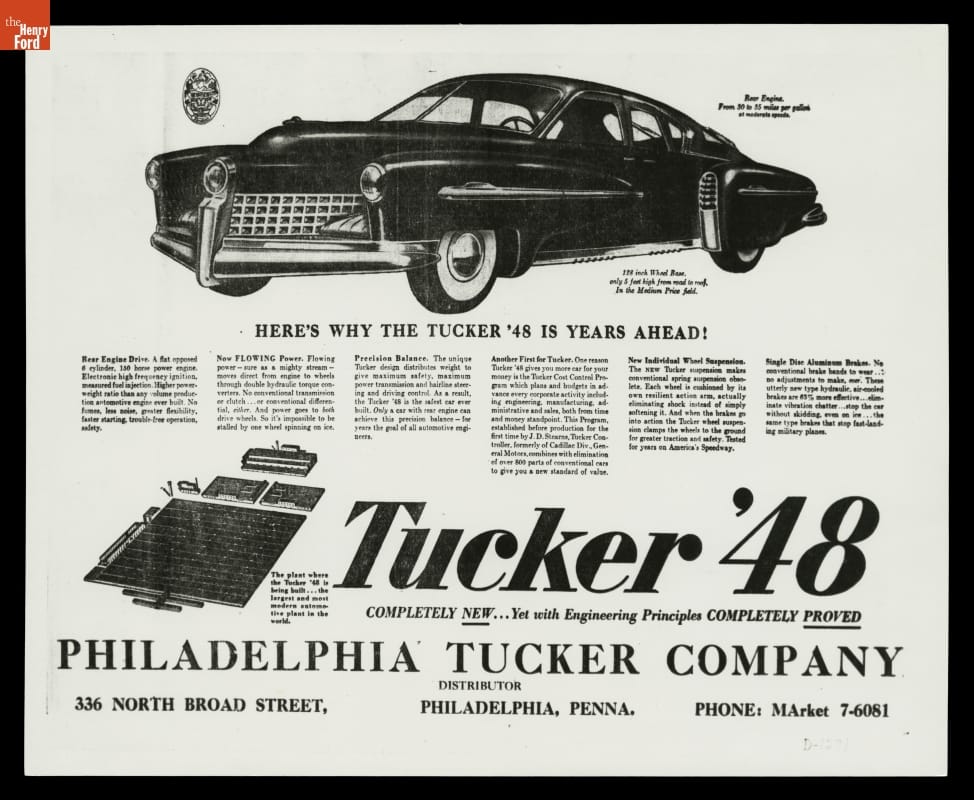
- 1948 Tucker Advertisement, "Here's Why the Tucker '48 is Years Ahead!" - Preston Tucker promoted his Tucker 48 sedan heavily to interest investors as well as would-be customers. His claims sometimes got ahead of reality. While some of the features in this ad -- rear engine, four-wheel independent suspension -- made it into Tucker's production cars, others -- fuel injection, torque-converter transmission, disc brakes -- were dropped due to engineering or manufacturing difficulties.
- April 18, 1947
- Collections - Artifact
1948 Tucker Advertisement, "Here's Why the Tucker '48 is Years Ahead!"
Preston Tucker promoted his Tucker 48 sedan heavily to interest investors as well as would-be customers. His claims sometimes got ahead of reality. While some of the features in this ad -- rear engine, four-wheel independent suspension -- made it into Tucker's production cars, others -- fuel injection, torque-converter transmission, disc brakes -- were dropped due to engineering or manufacturing difficulties.
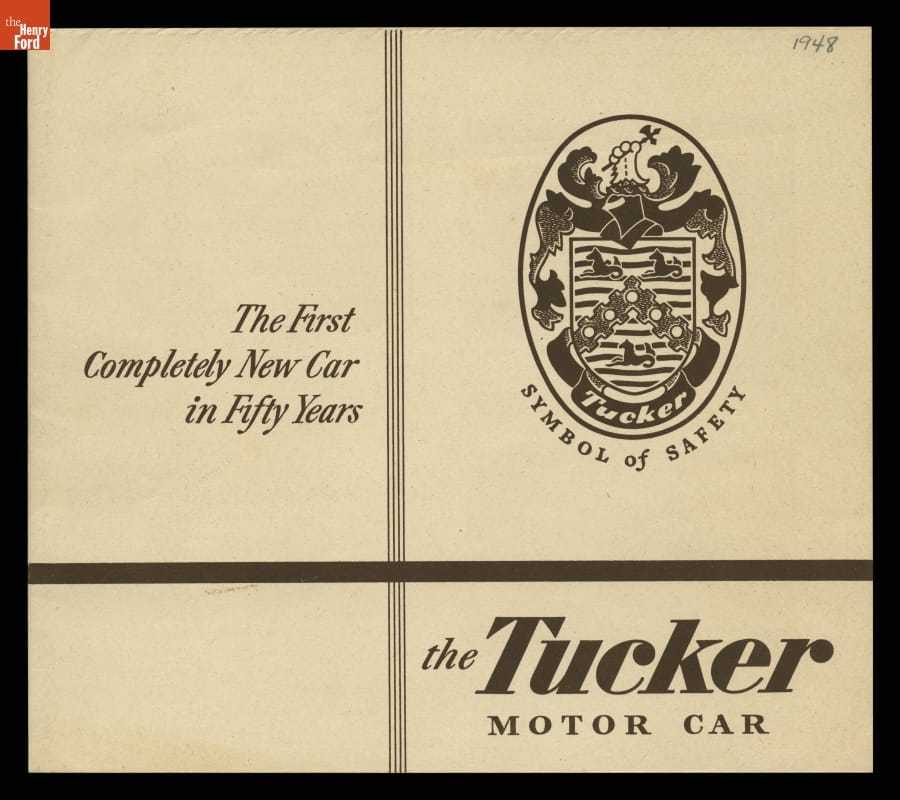
- 1948 Tucker Motor Car Sales Brochure - This sales brochure highlights the engineering, safety and styling features of the 1948 Tucker. Some of the Tucker's features, like moving headlights, are found on some high-end cars today.
- 1948
- Collections - Artifact
1948 Tucker Motor Car Sales Brochure
This sales brochure highlights the engineering, safety and styling features of the 1948 Tucker. Some of the Tucker's features, like moving headlights, are found on some high-end cars today.
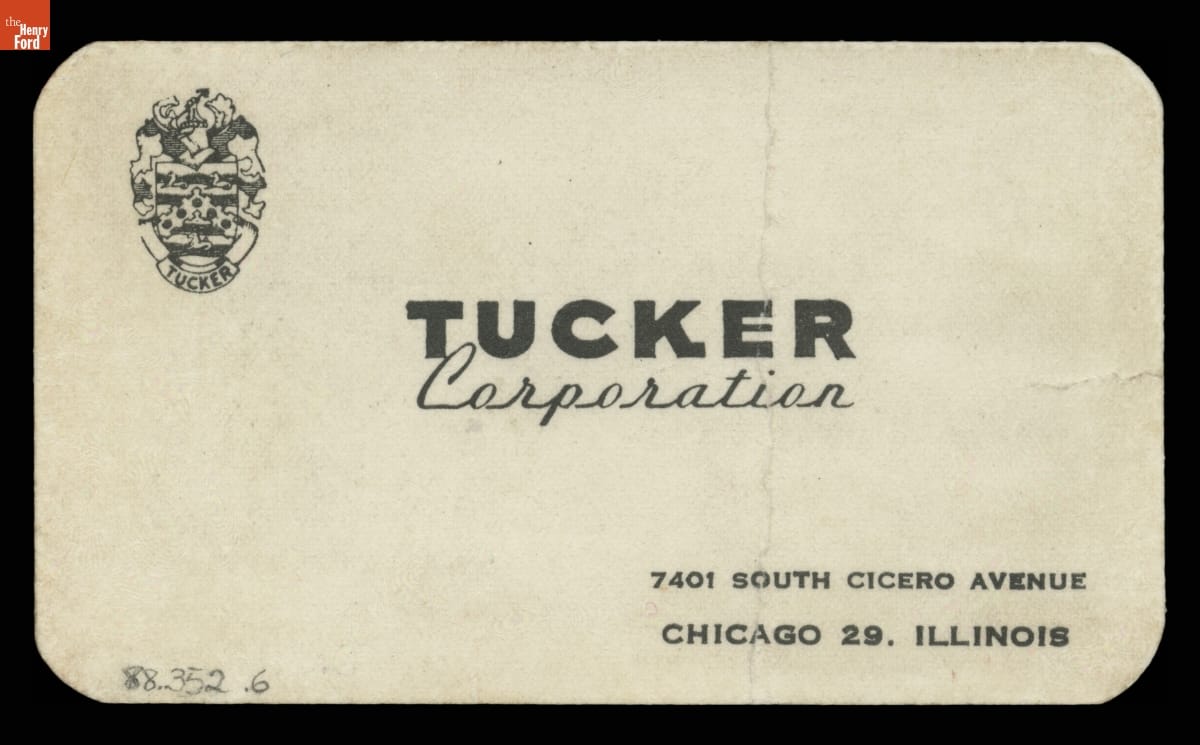
- Tucker Corporation Business Card, circa 1948 - Preston Tucker took advantage of the postwar seller's market to launch his all-new Tucker 48 sedan for 1948. The company operated out of a war-surplus aircraft engine plant in Chicago, described by Tucker as the largest factory in the world at the time. Legal and financial problems brought an early end to the Tucker Corporation in 1950.
- circa 1948
- Collections - Artifact
Tucker Corporation Business Card, circa 1948
Preston Tucker took advantage of the postwar seller's market to launch his all-new Tucker 48 sedan for 1948. The company operated out of a war-surplus aircraft engine plant in Chicago, described by Tucker as the largest factory in the world at the time. Legal and financial problems brought an early end to the Tucker Corporation in 1950.