
Search
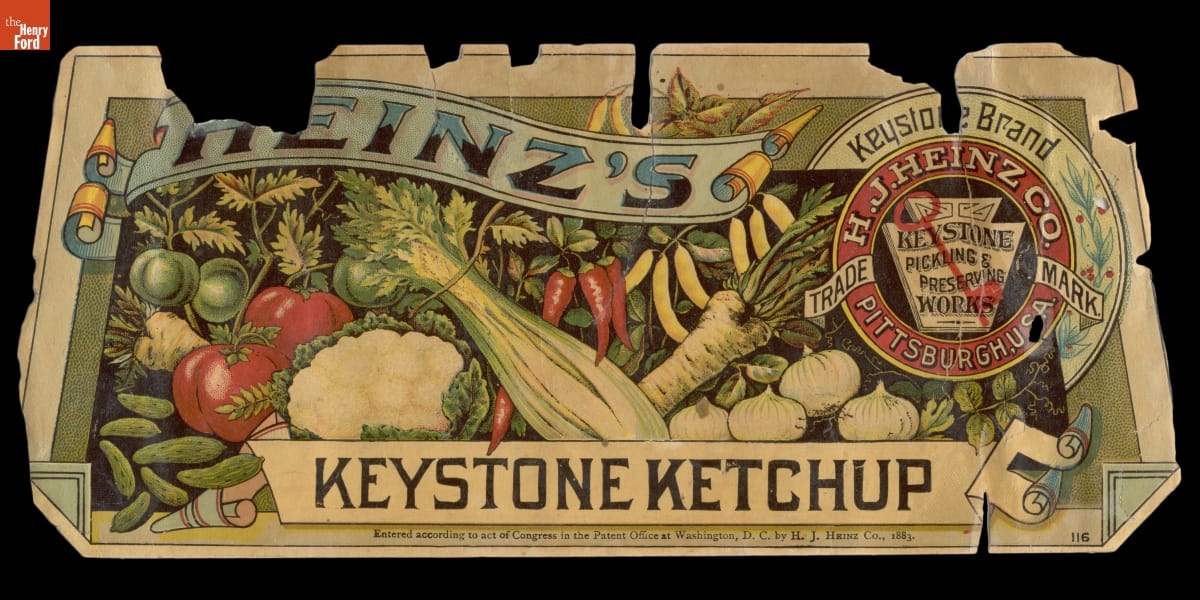
- Product Label, "Heinz's Keystone Ketchup," 1883 - The H.J. Heinz Company pioneered the concept of prepared and packaged foods and brand name identification. Attractive labels, such as this colorful design for "Heinz's Keystone Ketchup," helped catch the attention of potential customers--hopefully encouraging them to purchase Heinz products rather than those of a competitor.
- 1883
- Collections - Artifact
Product Label, "Heinz's Keystone Ketchup," 1883
The H.J. Heinz Company pioneered the concept of prepared and packaged foods and brand name identification. Attractive labels, such as this colorful design for "Heinz's Keystone Ketchup," helped catch the attention of potential customers--hopefully encouraging them to purchase Heinz products rather than those of a competitor.
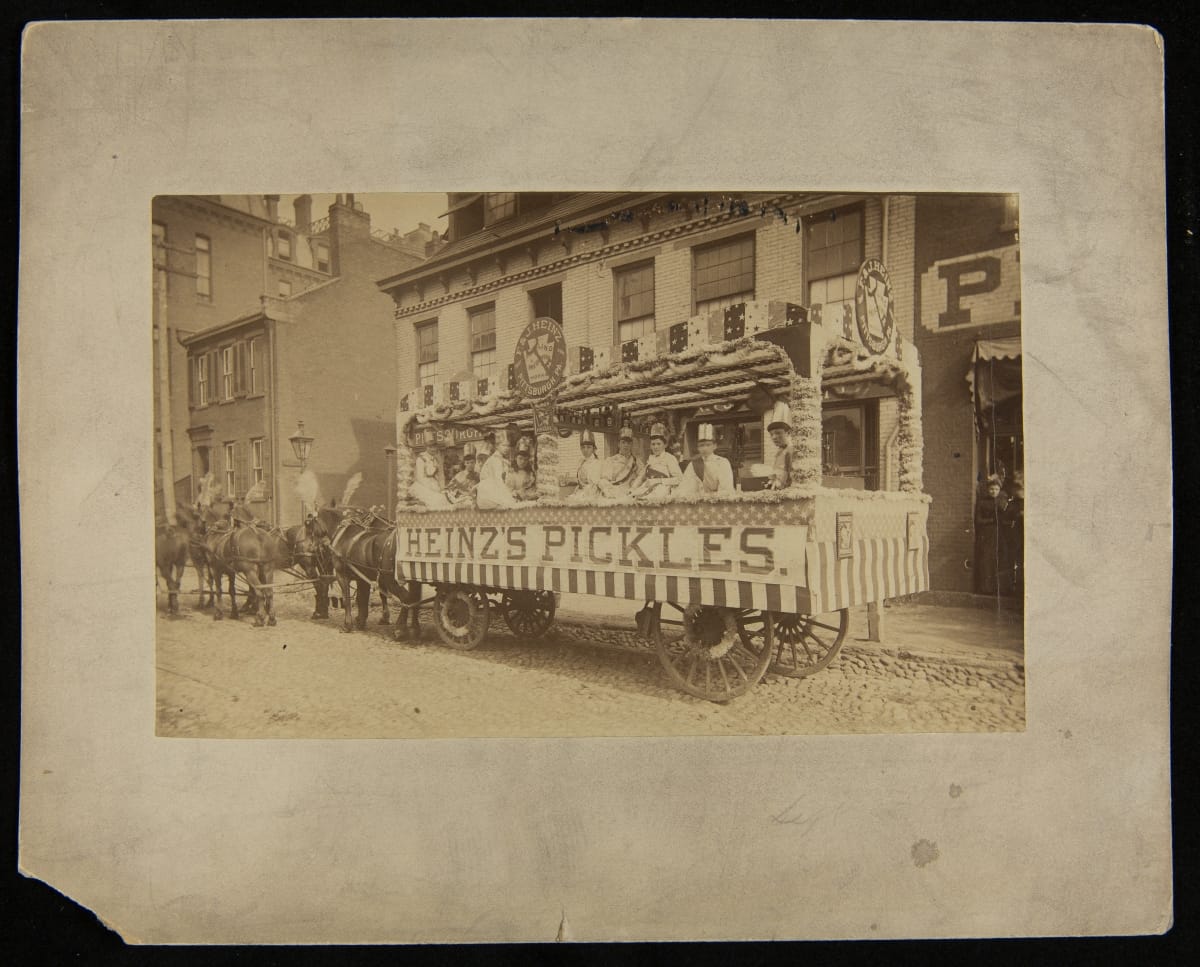
- "Heinz's Pickles" Parade Float, circa 1885 - After a disappointing setback with his first business, entrepreneur H.J. Heinz went to work for his brother and cousin at the F. & J. Heinz Company. A skilled salesman, H.J. Heinz helped promote the company's products. He was so successful that by 1888, H.J. Heinz had taken over the company, changing its name to the H.J. Heinz Company. This parade float advertises F. & J. Heinz Company pickles.
- circa 1885
- Collections - Artifact
"Heinz's Pickles" Parade Float, circa 1885
After a disappointing setback with his first business, entrepreneur H.J. Heinz went to work for his brother and cousin at the F. & J. Heinz Company. A skilled salesman, H.J. Heinz helped promote the company's products. He was so successful that by 1888, H.J. Heinz had taken over the company, changing its name to the H.J. Heinz Company. This parade float advertises F. & J. Heinz Company pickles.
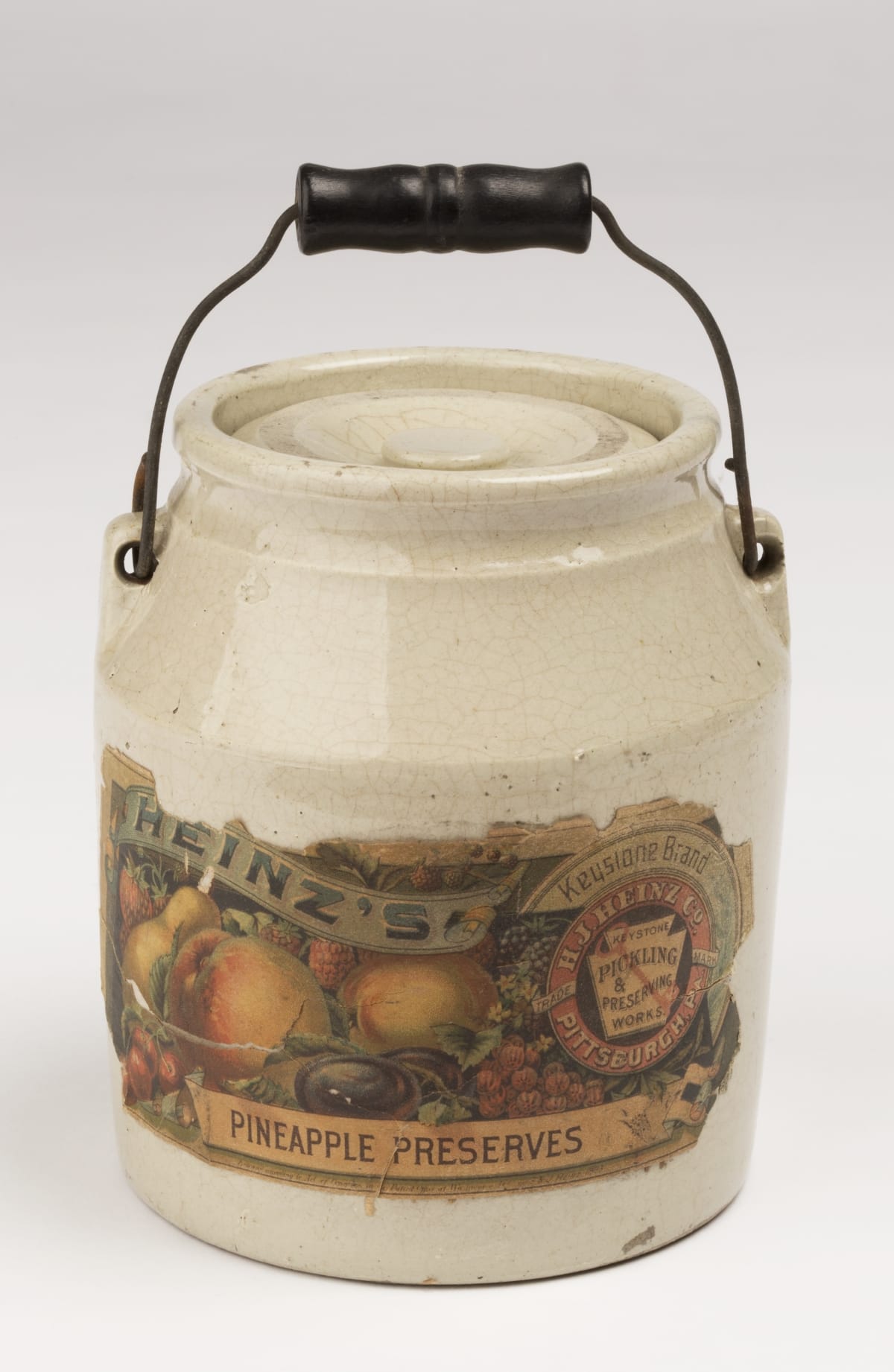
- Heinz's Pineapple Preserves Crock, 1890-1920 - H.J. Heinz entered the processed food industry in 1869 when he began selling horseradish out of his family home. Upon achieving success his product line quickly expanded to include other products such as pickled foods, condiments, and preserves. Of his many varieties several were preserves, which were sold in jars or crocks like the one seen here.
- 1890-1920
- Collections - Artifact
Heinz's Pineapple Preserves Crock, 1890-1920
H.J. Heinz entered the processed food industry in 1869 when he began selling horseradish out of his family home. Upon achieving success his product line quickly expanded to include other products such as pickled foods, condiments, and preserves. Of his many varieties several were preserves, which were sold in jars or crocks like the one seen here.
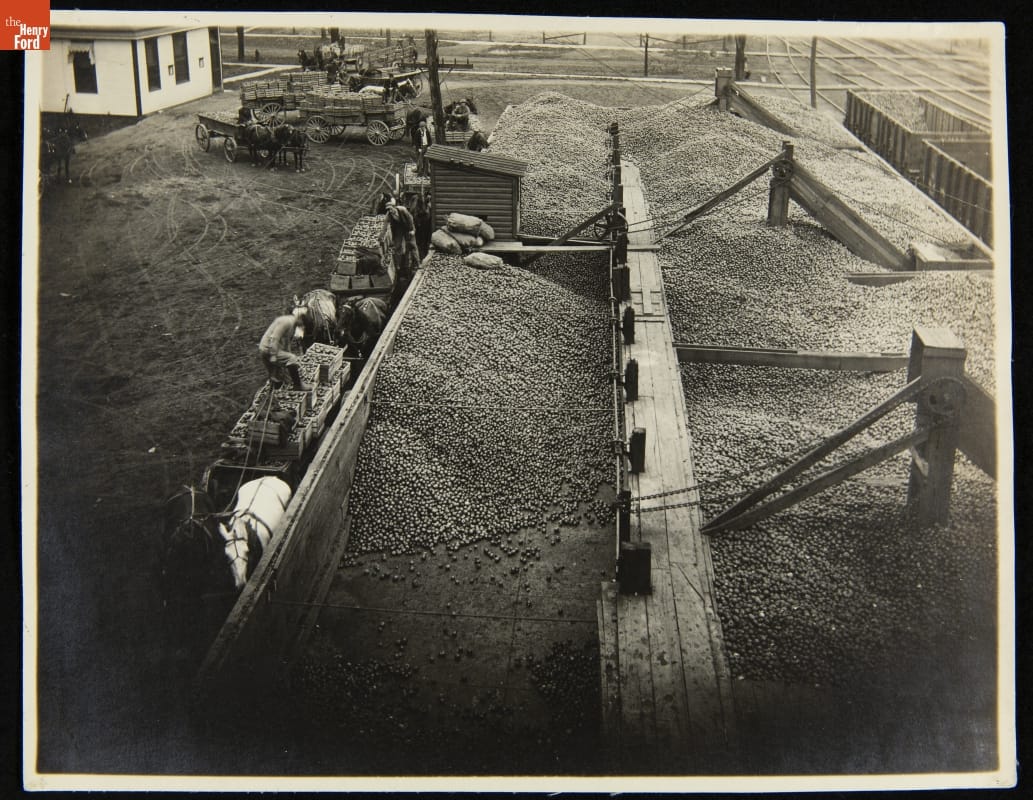
- Heinz Apples - Entrepreneur H.J. Heinz recognized that producing high-quality products began with growing the best ingredients. He managed every aspect of the process from seed selection to harvest to ensure that only the best ingredients became Heinz pickled foods, preserves, and condiments. This photograph, apple crates are loaded onto horse-drawn carts to be transported to the factory for processing.
- August 26, 2021
- Collections - Set
Heinz Apples
Entrepreneur H.J. Heinz recognized that producing high-quality products began with growing the best ingredients. He managed every aspect of the process from seed selection to harvest to ensure that only the best ingredients became Heinz pickled foods, preserves, and condiments. This photograph, apple crates are loaded onto horse-drawn carts to be transported to the factory for processing.
- H. J. Heinz's First Desk, circa 1923 - The H.J. Heinz Company employed ambitious and comprehensive advertising strategies to meet consumers at home, in stores, and everywhere in between. Photographs of buildings, employees, and the manufacturing process were often taken and then modified for use in advertisements or publications. This modified photograph shows H.J. Heinz's first desk, with stenography equipment attached.
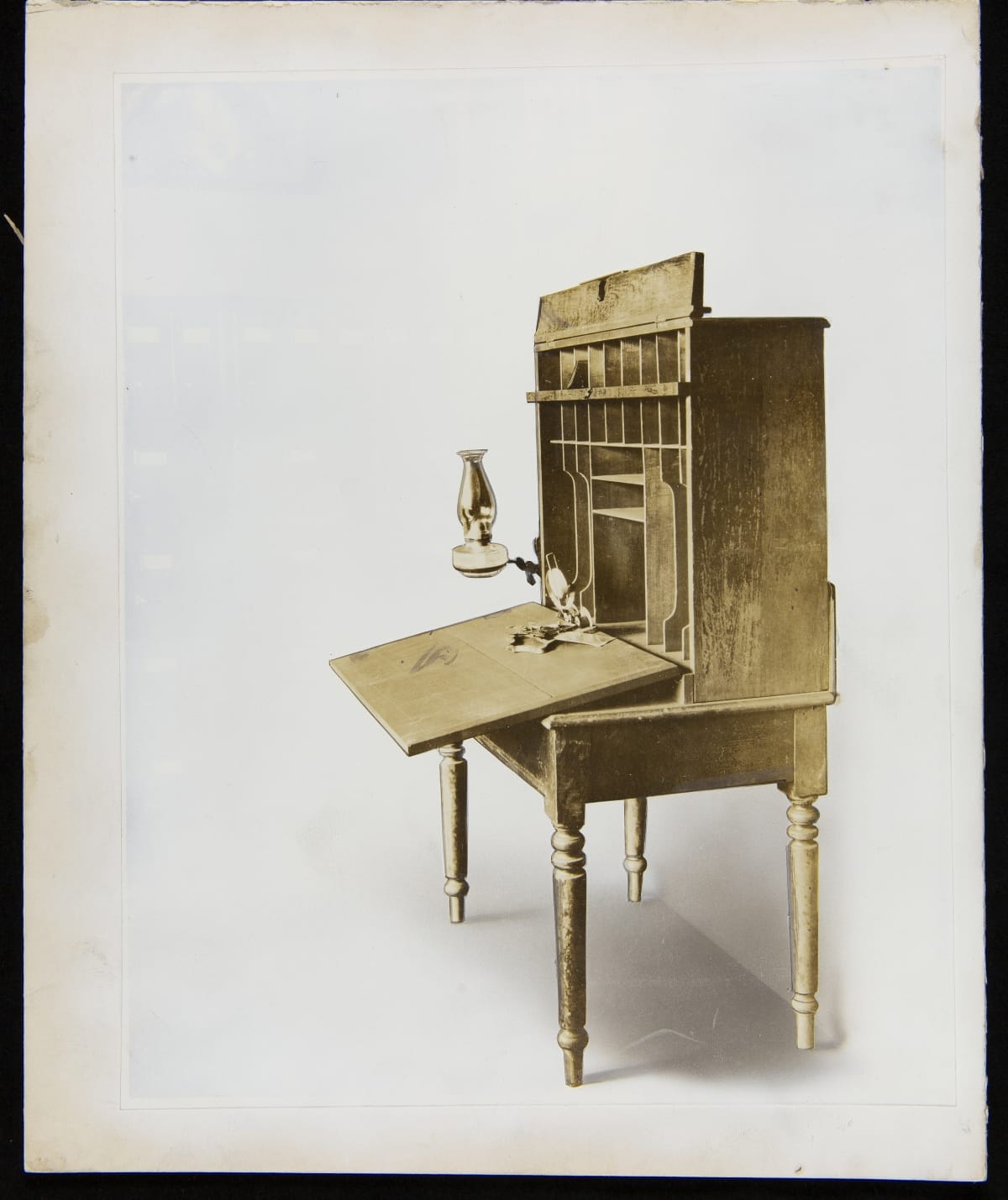
- circa 1923
- Collections - Artifact
H. J. Heinz's First Desk, circa 1923
The H.J. Heinz Company employed ambitious and comprehensive advertising strategies to meet consumers at home, in stores, and everywhere in between. Photographs of buildings, employees, and the manufacturing process were often taken and then modified for use in advertisements or publications. This modified photograph shows H.J. Heinz's first desk, with stenography equipment attached.
- Illustration of the Heinz Company "57" Logo for Heinz's "Spice of Life" Booklet, 1915-1925 - The H.J. Heinz Company marketed its products everywhere from stores to various publications and even on streetcars. This layout represents one of the steps in the marketing process in which the drawing or illustration, size, color, and arrangement are taken into consideration before the final product is created. This illustration was used in the H.J. Heinz Company publication, "The Spice of Life."
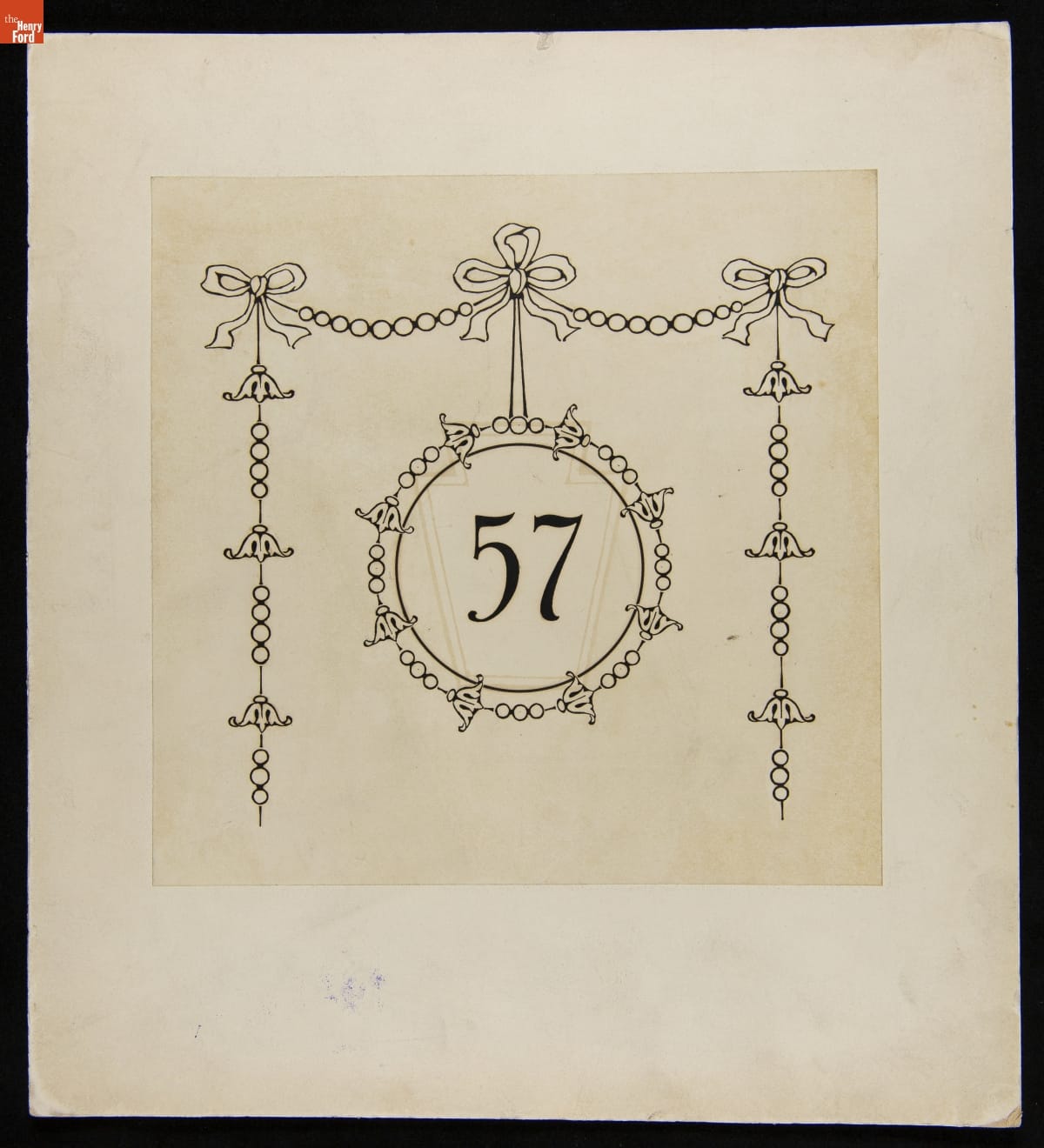
- 1915-1925
- Collections - Artifact
Illustration of the Heinz Company "57" Logo for Heinz's "Spice of Life" Booklet, 1915-1925
The H.J. Heinz Company marketed its products everywhere from stores to various publications and even on streetcars. This layout represents one of the steps in the marketing process in which the drawing or illustration, size, color, and arrangement are taken into consideration before the final product is created. This illustration was used in the H.J. Heinz Company publication, "The Spice of Life."
- H.J. Heinz's Malt Vinegar Storage Building, circa 1904 - Photographs of the H.J. Heinz factory -- including buildings, employees, and the manufacturing process -- were often taken and then modified for advertising and publications. This advertising layout shows the Heinz Malt Vinegar Storage Building.
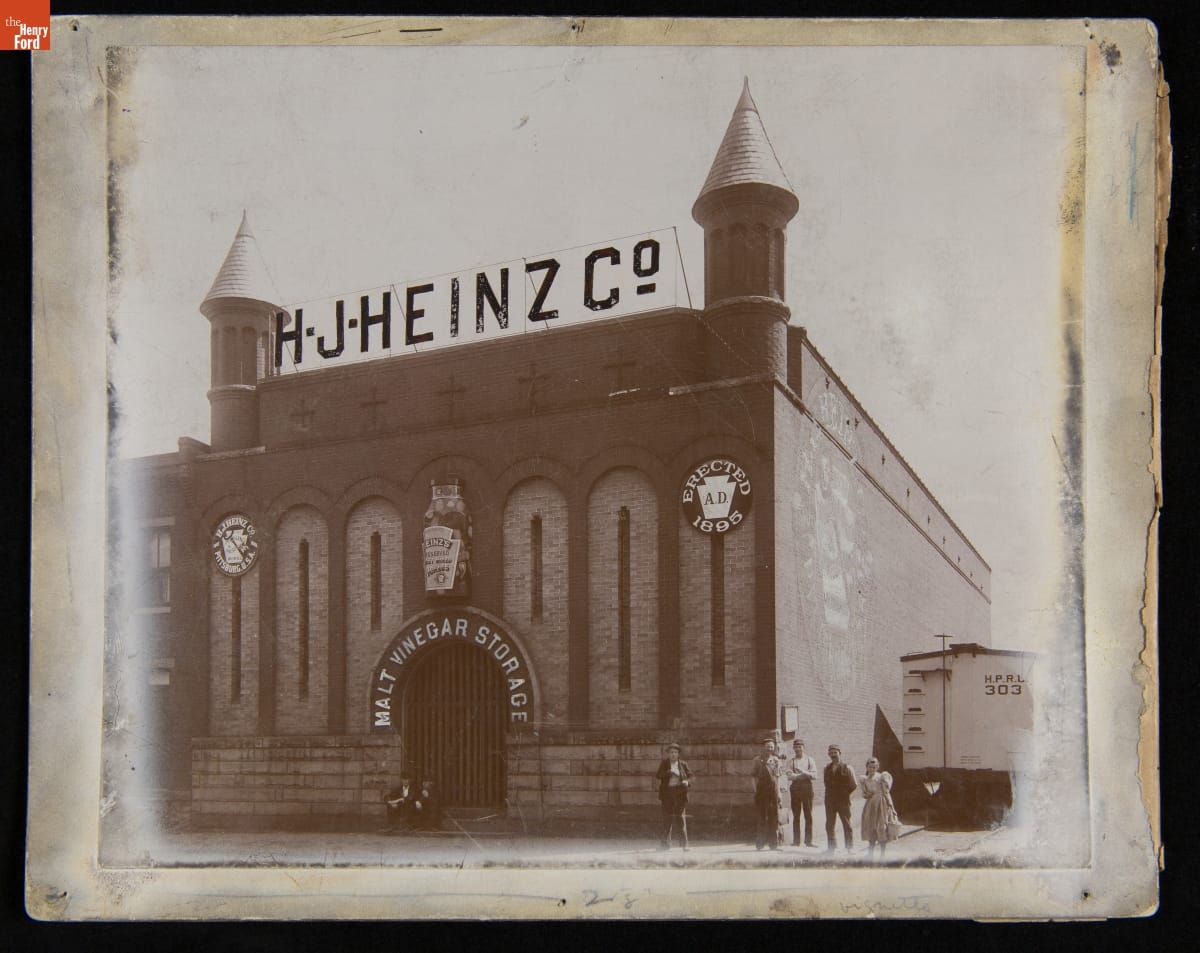
- circa 1904
- Collections - Artifact
H.J. Heinz's Malt Vinegar Storage Building, circa 1904
Photographs of the H.J. Heinz factory -- including buildings, employees, and the manufacturing process -- were often taken and then modified for advertising and publications. This advertising layout shows the Heinz Malt Vinegar Storage Building.
- Heinz House - Enterprising Henry J. Heinz began his successful business by bottling horseradish in the basement of his parents' home in Sharpsburg, Pennsylvania. From this house, he sold a growing variety of pickles and relishes to neighbors before moving his operation to Pittsburgh. This house currently features an exhibit on the H.J. Heinz Company's innovative business practices and marketing techniques.
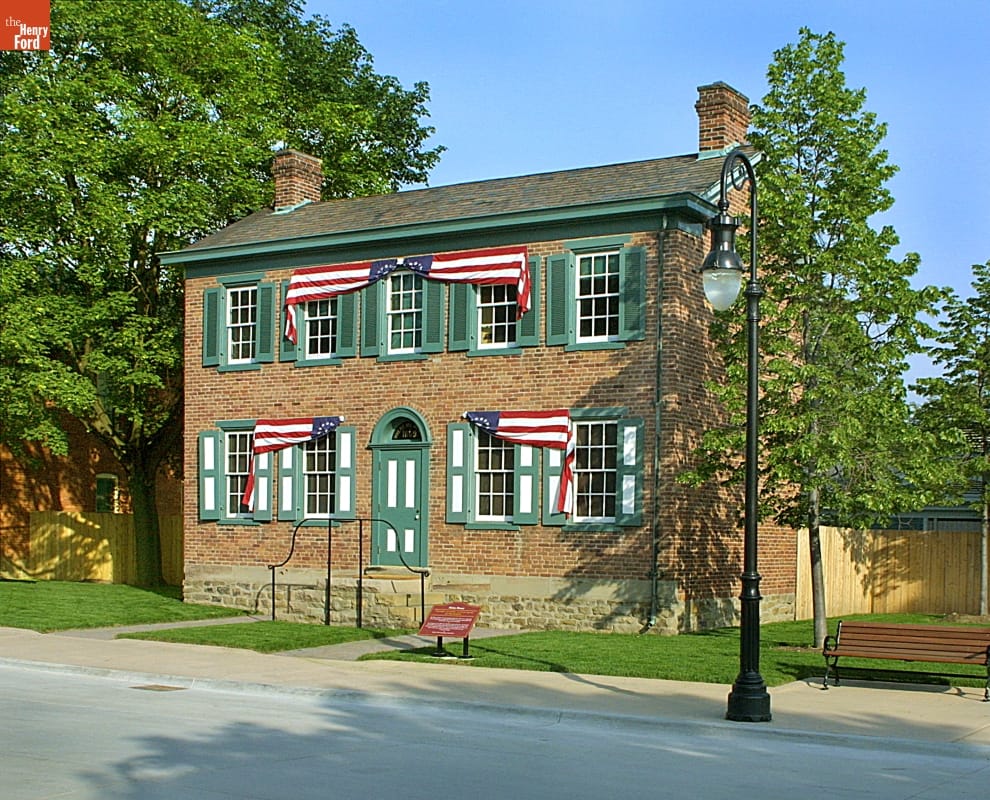
- 1854
- Collections - Artifact
Heinz House
Enterprising Henry J. Heinz began his successful business by bottling horseradish in the basement of his parents' home in Sharpsburg, Pennsylvania. From this house, he sold a growing variety of pickles and relishes to neighbors before moving his operation to Pittsburgh. This house currently features an exhibit on the H.J. Heinz Company's innovative business practices and marketing techniques.
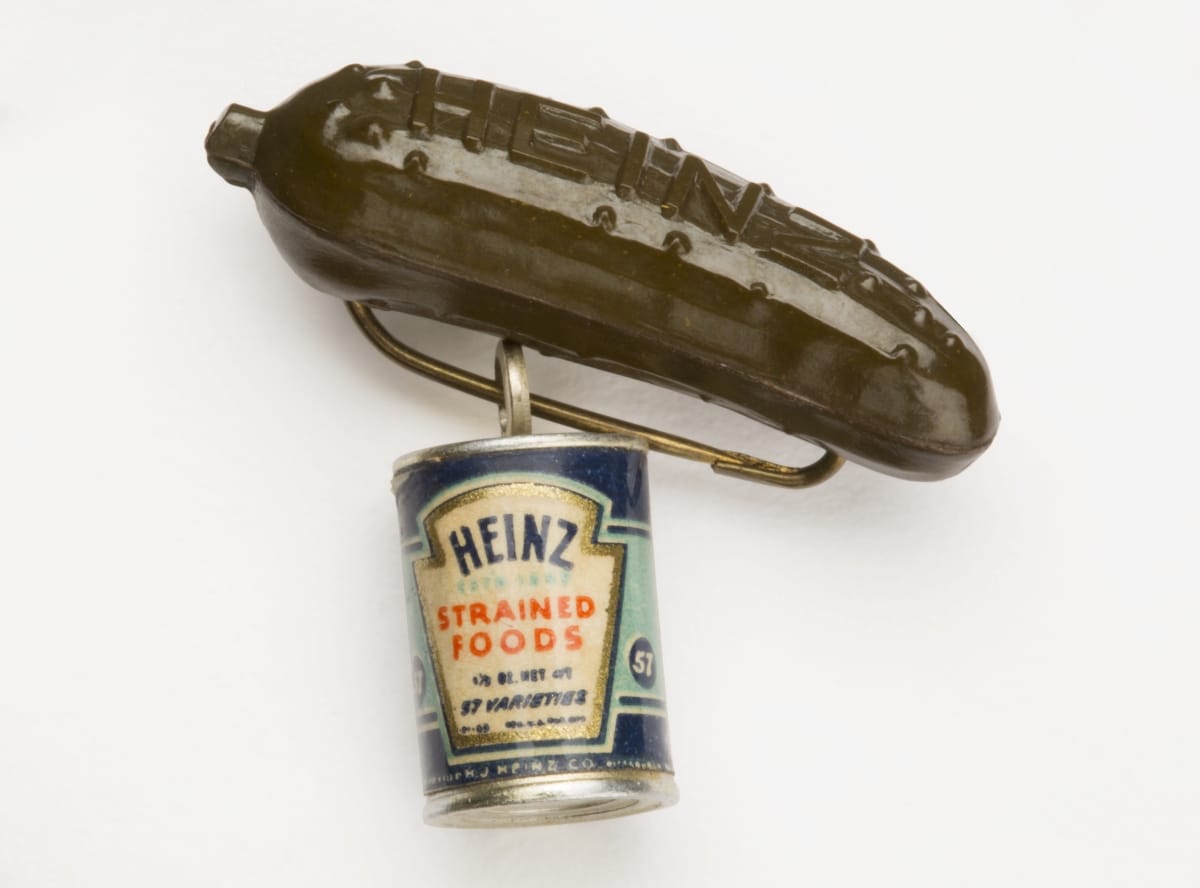
- Heinz Pickle Pin "Heinz Strained Foods," 1939-1940 - The pickle charm, introduced in the 1890s, was H. J. Heinz's most successful promotion and giveaway. The charm eventually evolved into a lapel pin, allowing customers to wear their souvenirs in public -- a simple, yet extremely effective marketing strategy. At the 1939-1940 New York World's Fair, charms of other products, like the Heinz Strained Foods can seen here, were introduced as giveaways to adorn pickle pins and bracelets.
- 1939-1940
- Collections - Artifact
Heinz Pickle Pin "Heinz Strained Foods," 1939-1940
The pickle charm, introduced in the 1890s, was H. J. Heinz's most successful promotion and giveaway. The charm eventually evolved into a lapel pin, allowing customers to wear their souvenirs in public -- a simple, yet extremely effective marketing strategy. At the 1939-1940 New York World's Fair, charms of other products, like the Heinz Strained Foods can seen here, were introduced as giveaways to adorn pickle pins and bracelets.
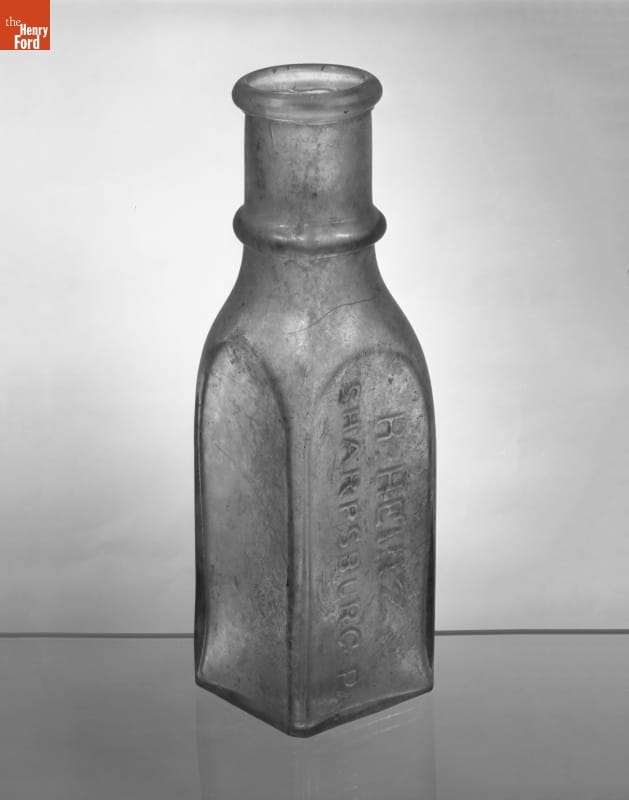
- Heinz Bottle, 1869 - When Henry J. Heinz started his processed food business in 1869, he believed that consumers deserved only the best in quality. His competitors often used colored glass containers to hide impurities and disguise attempts to stretch the product. Heinz sold his goods in clear glass containers to show the purity and superiority of his products.
- circa 1869
- Collections - Artifact
Heinz Bottle, 1869
When Henry J. Heinz started his processed food business in 1869, he believed that consumers deserved only the best in quality. His competitors often used colored glass containers to hide impurities and disguise attempts to stretch the product. Heinz sold his goods in clear glass containers to show the purity and superiority of his products.