
Search
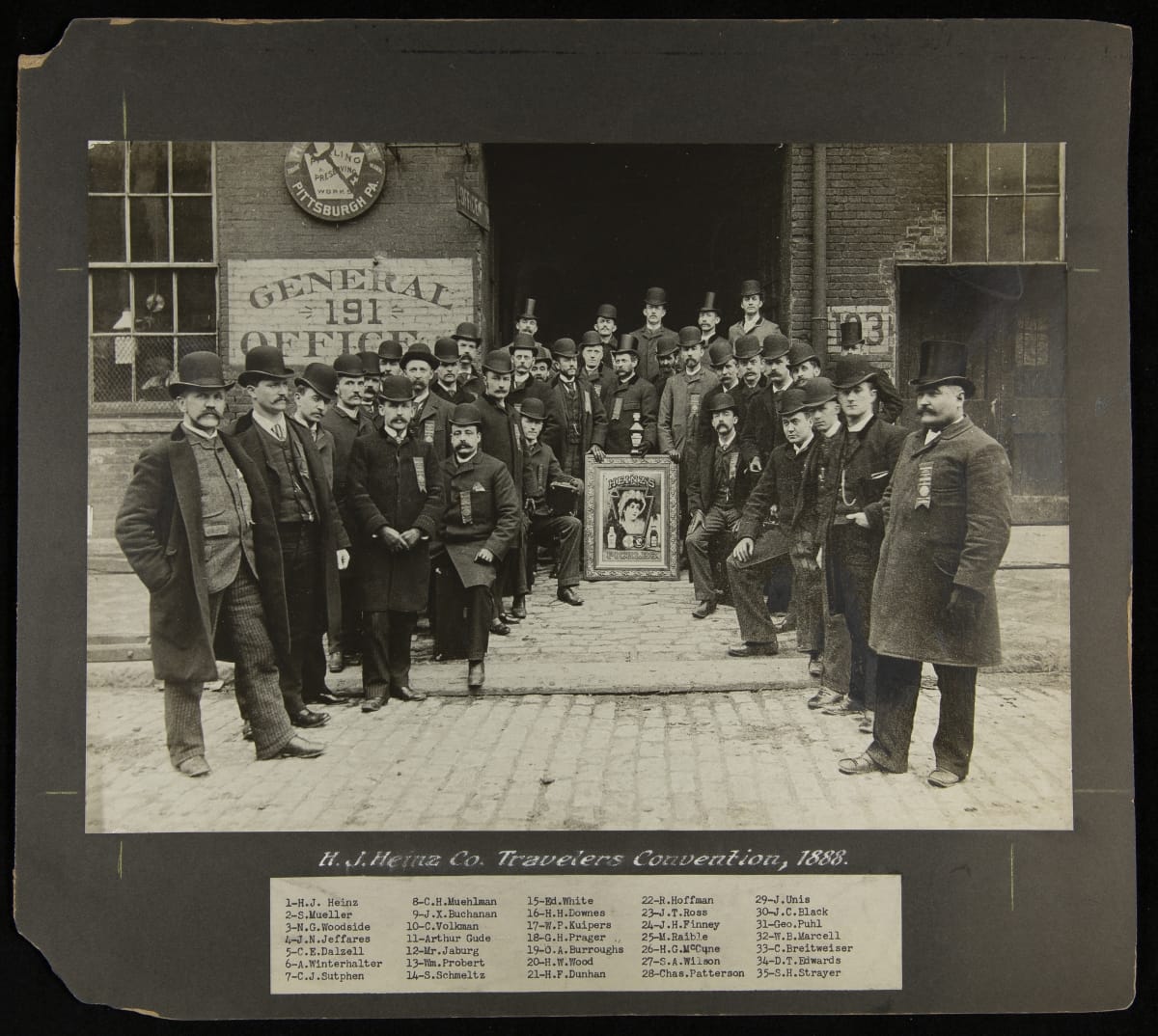
- H. J. Heinz at Heinz Company's Travelers Convention in Pittsburgh, Pennsylvania, 1888 - To promote his products to grocery stores and individual households, H.J. Heinz employed salespeople, referred to as "Travelers." Travelers were trained in product knowledge and attended conventions to learn new sales techniques. They also designed and built point-of-sale displays in grocery stores and set up demonstration tables for sampling the products. This photograph shows Travelers at a convention in Pittsburgh, Pennsylvania.
- 1888
- Collections - Artifact
H. J. Heinz at Heinz Company's Travelers Convention in Pittsburgh, Pennsylvania, 1888
To promote his products to grocery stores and individual households, H.J. Heinz employed salespeople, referred to as "Travelers." Travelers were trained in product knowledge and attended conventions to learn new sales techniques. They also designed and built point-of-sale displays in grocery stores and set up demonstration tables for sampling the products. This photograph shows Travelers at a convention in Pittsburgh, Pennsylvania.
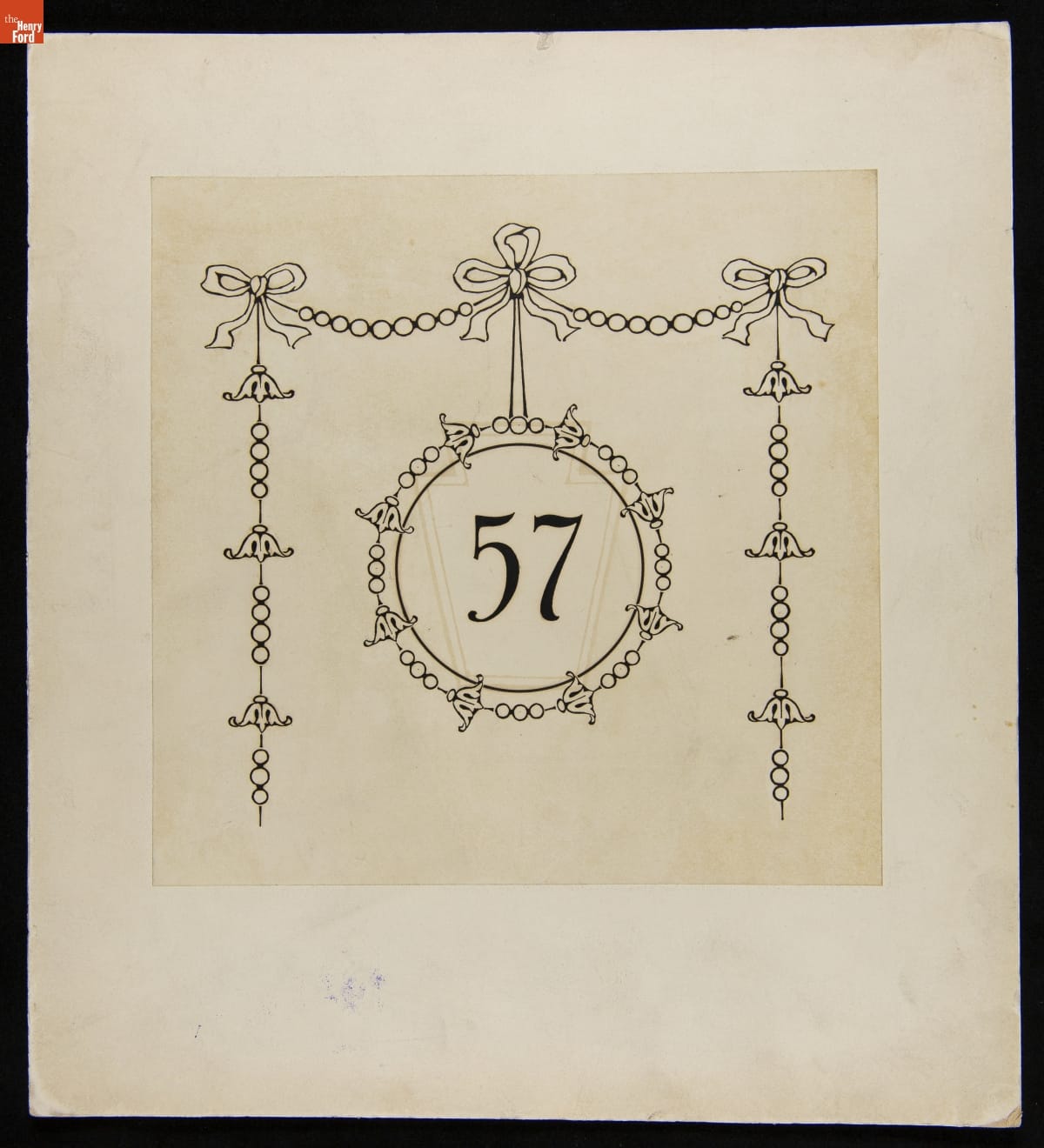
- Illustration of the Heinz Company "57" Logo for Heinz's "Spice of Life" Booklet, 1915-1925 - The H.J. Heinz Company marketed its products everywhere from stores to various publications and even on streetcars. This layout represents one of the steps in the marketing process in which the drawing or illustration, size, color, and arrangement are taken into consideration before the final product is created. This illustration was used in the H.J. Heinz Company publication, "The Spice of Life."
- 1915-1925
- Collections - Artifact
Illustration of the Heinz Company "57" Logo for Heinz's "Spice of Life" Booklet, 1915-1925
The H.J. Heinz Company marketed its products everywhere from stores to various publications and even on streetcars. This layout represents one of the steps in the marketing process in which the drawing or illustration, size, color, and arrangement are taken into consideration before the final product is created. This illustration was used in the H.J. Heinz Company publication, "The Spice of Life."
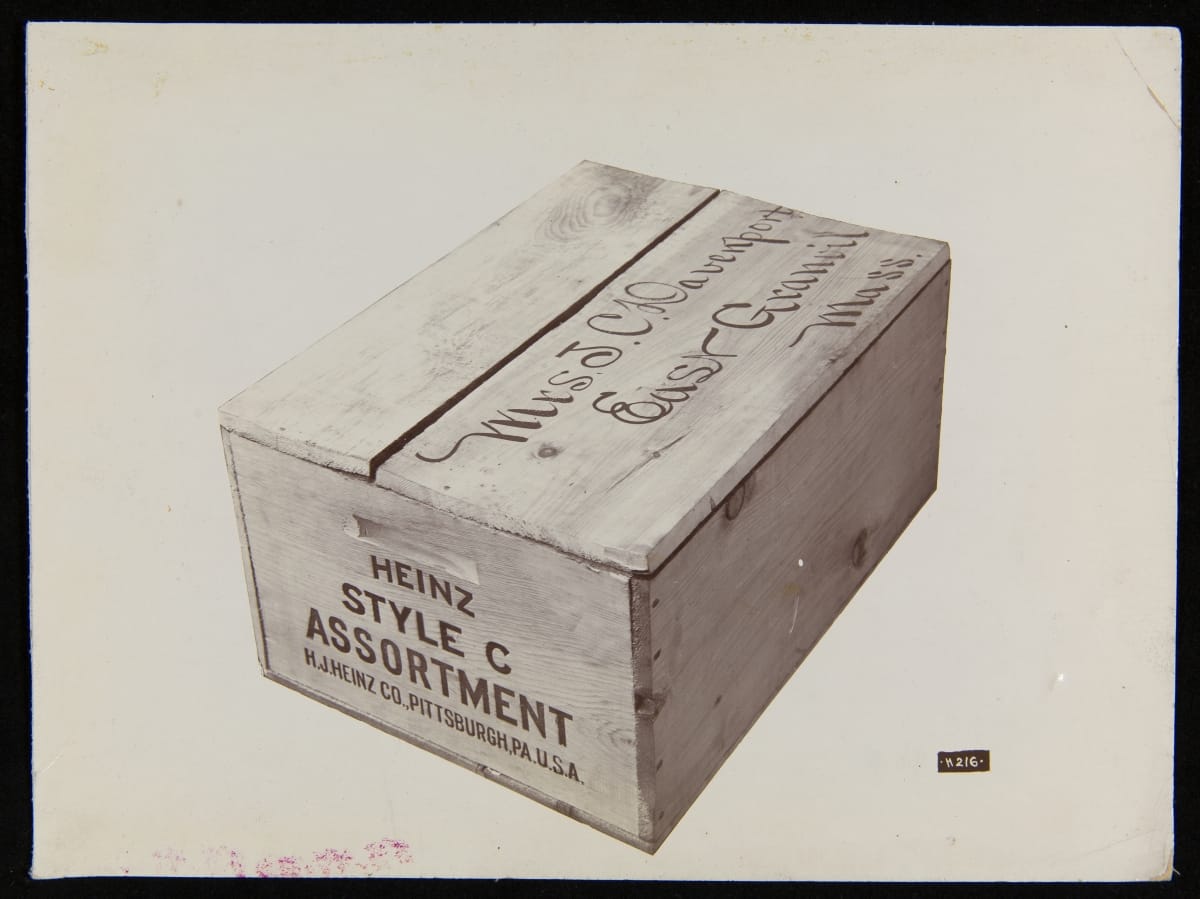
- H. J. Heinz Company Shipping Crate - With comprehensive marketing strategies, the H.J. Heinz Company became a household name, sending its products across the country. The company made its own boxes, glassware, cans, advertisements, and labels, allowing most production to be completed in-house. This photograph shows a Heinz shipping crate for "Style C Assortment" of Heinz products, ready to be shipped from Pennsylvania to Massachusetts.
- Collections - Artifact
H. J. Heinz Company Shipping Crate
With comprehensive marketing strategies, the H.J. Heinz Company became a household name, sending its products across the country. The company made its own boxes, glassware, cans, advertisements, and labels, allowing most production to be completed in-house. This photograph shows a Heinz shipping crate for "Style C Assortment" of Heinz products, ready to be shipped from Pennsylvania to Massachusetts.
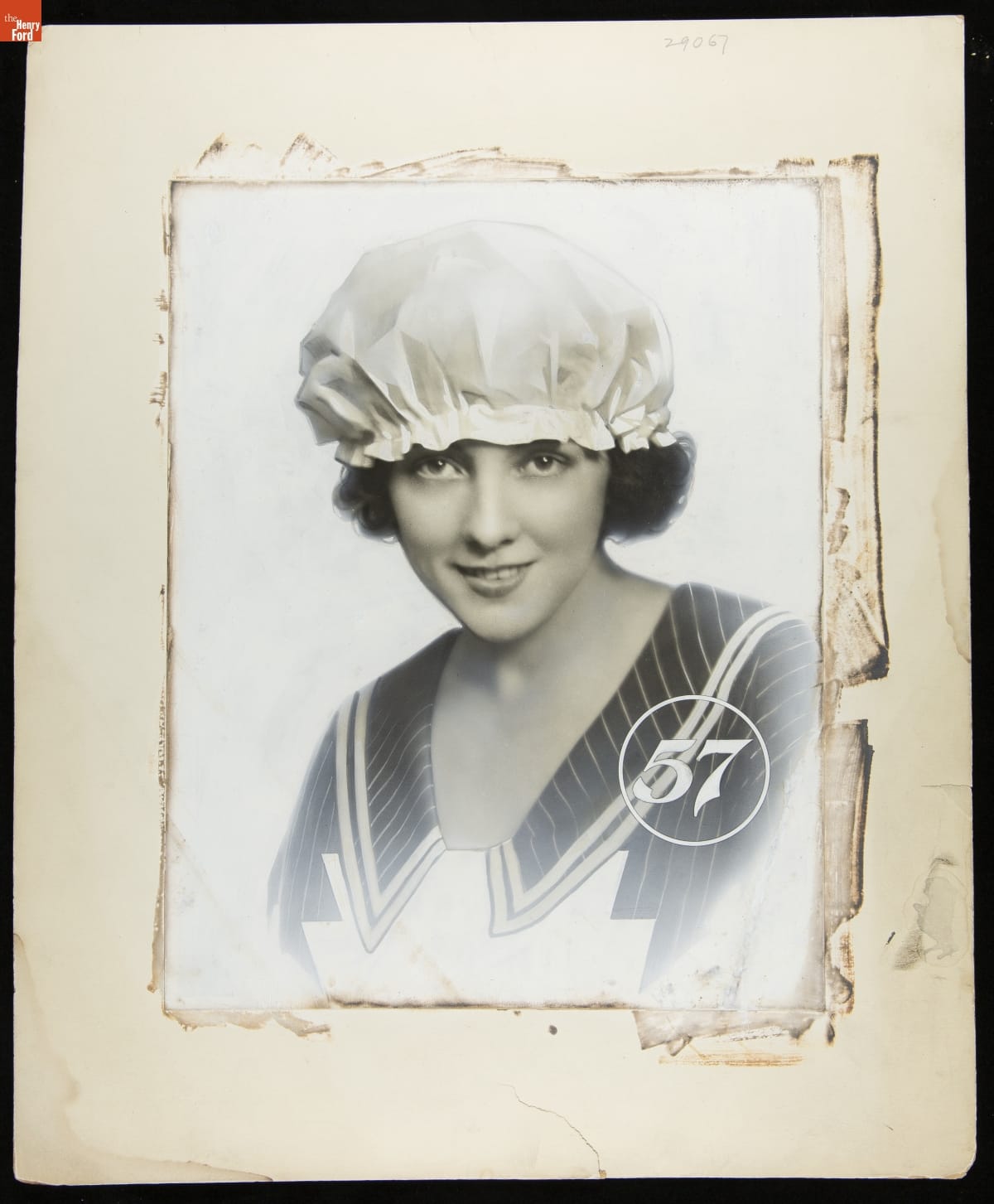
- Portrait of an H. J. Heinz Company "Heinz Girl," circa 1910 - Female employees working for the H.J. Heinz Company were often referred to as "Heinz Girls." They were revered for their dexterity and skill in packing pickles and their meticulous work with other products. The "Heinz Girl" -- adorned with a white cap and apron with a blue striped dress -- became a symbol of the company's ideals of cleanliness and efficiency.
- circa 1910
- Collections - Artifact
Portrait of an H. J. Heinz Company "Heinz Girl," circa 1910
Female employees working for the H.J. Heinz Company were often referred to as "Heinz Girls." They were revered for their dexterity and skill in packing pickles and their meticulous work with other products. The "Heinz Girl" -- adorned with a white cap and apron with a blue striped dress -- became a symbol of the company's ideals of cleanliness and efficiency.
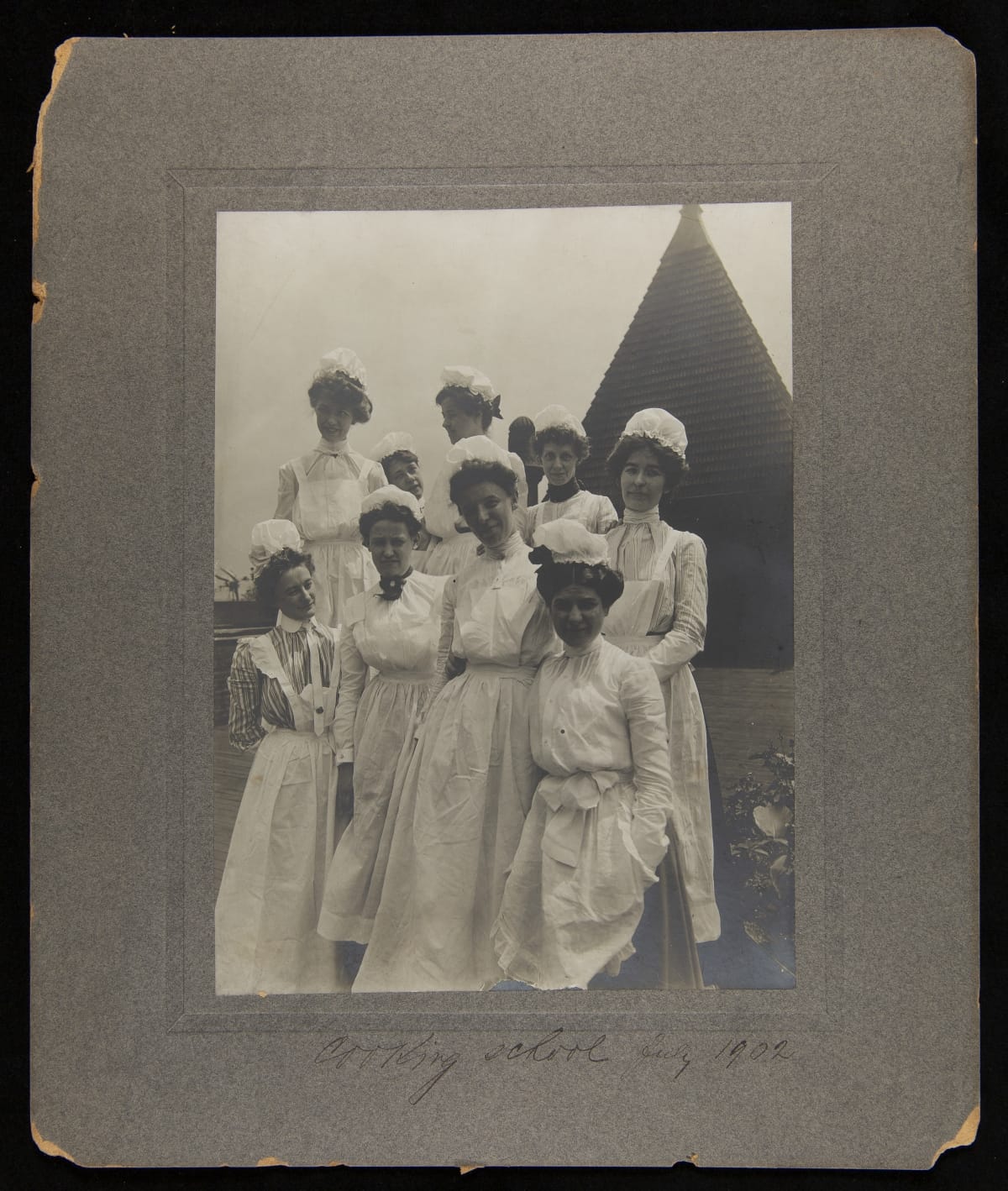
- Heinz Employees outside Cooking School, H. J. Heinz Company, July 1902 - The H.J. Heinz Company was at the forefront of employee welfare during the late 19th and early 20th centuries. Exemplary employee amenities such as a gymnasium, swimming pool, and large dining rooms supported a strong company culture. Employees were also encouraged to participate in self-improvement classes, such as weaving, sewing, and cooking (seen here).
- July 01, 1902
- Collections - Artifact
Heinz Employees outside Cooking School, H. J. Heinz Company, July 1902
The H.J. Heinz Company was at the forefront of employee welfare during the late 19th and early 20th centuries. Exemplary employee amenities such as a gymnasium, swimming pool, and large dining rooms supported a strong company culture. Employees were also encouraged to participate in self-improvement classes, such as weaving, sewing, and cooking (seen here).
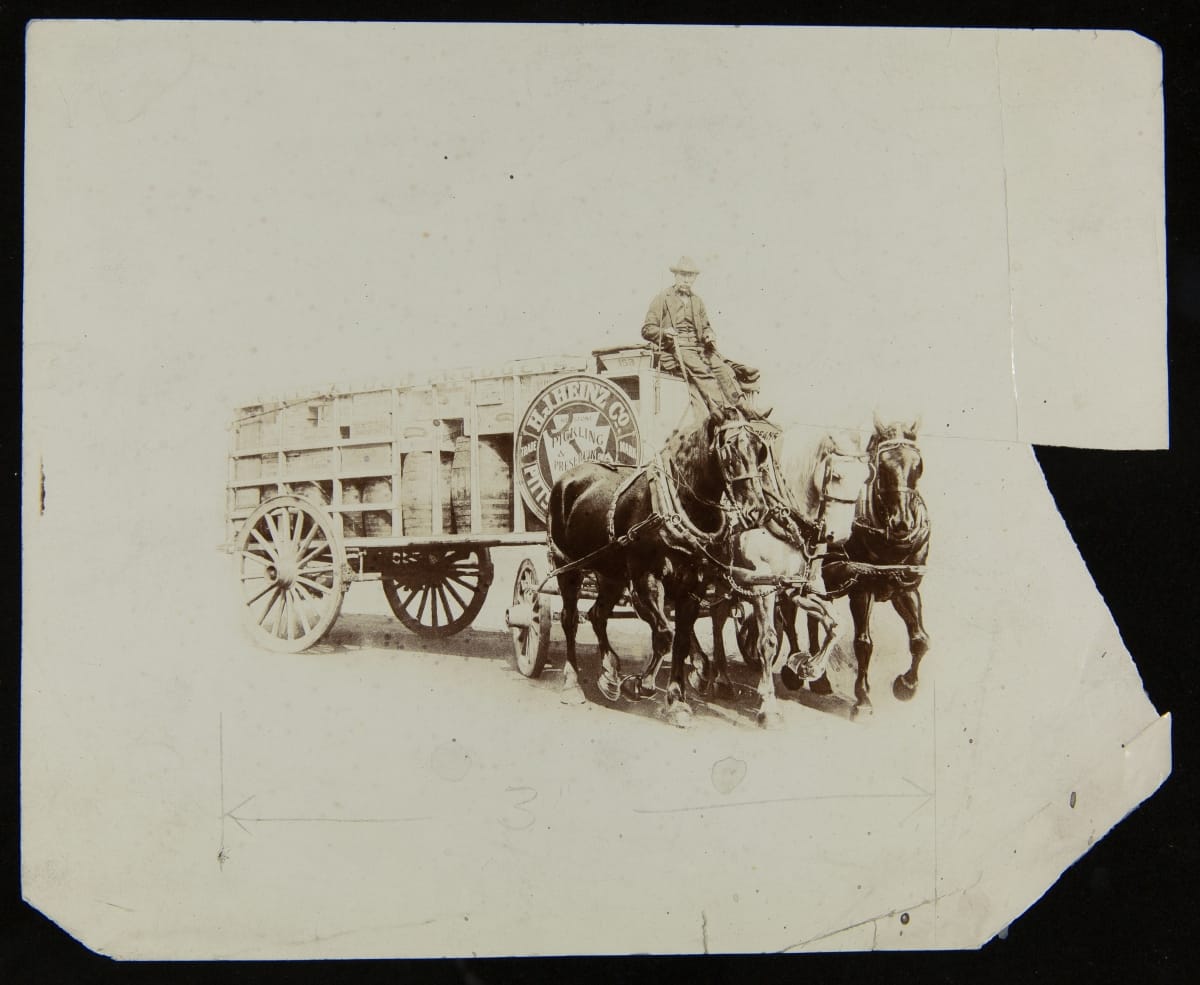
- Heinz Blue Ribbon Team with "57 Varieties" Wagon, H. J. Heinz Company - Before the 1920s, the H.J. Heinz Company transported their goods by rail and horse-drawn wagons. Heinz's horse teams consisted of all-black horses except for its "Blue Ribbon Team"--a three-horse hitch with two black horses and a gray horse in the middle. This photograph used for advertisements and publications shows the Blue Ribbon Team.
- 1910-1913
- Collections - Artifact
Heinz Blue Ribbon Team with "57 Varieties" Wagon, H. J. Heinz Company
Before the 1920s, the H.J. Heinz Company transported their goods by rail and horse-drawn wagons. Heinz's horse teams consisted of all-black horses except for its "Blue Ribbon Team"--a three-horse hitch with two black horses and a gray horse in the middle. This photograph used for advertisements and publications shows the Blue Ribbon Team.
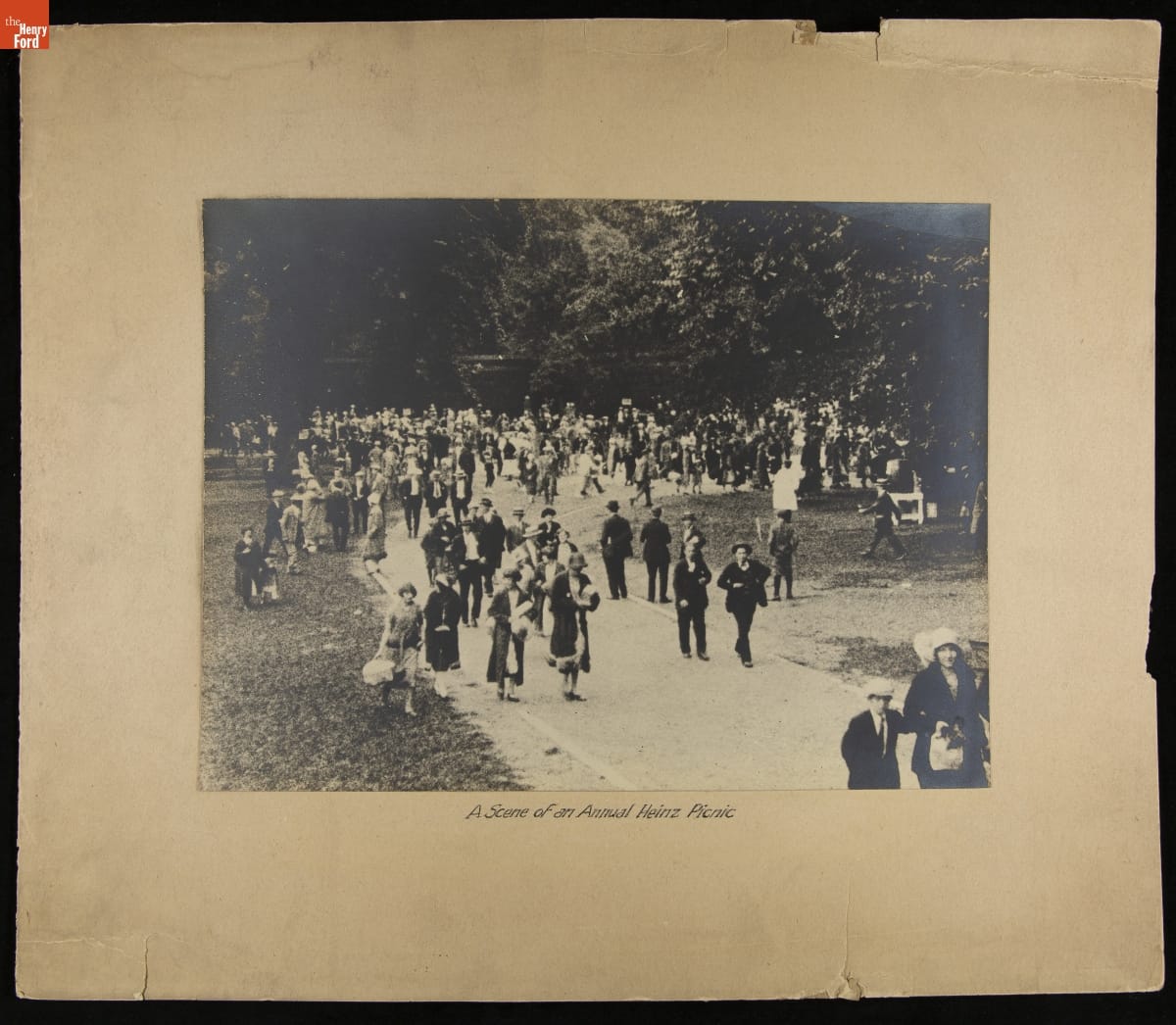
- Employees at the Annual Heinz Picnic, H. J. Heinz Company, circa 1920 - Supporting a strong company culture was important to the H.J. Heinz Company. In addition to outstanding employee amenities, the company held an annual picnic once per summer where anywhere from 3000 to 4000 employees and their families were transported by paddle-wheel steamboat or train to a nearby park for a day of fun and celebration.
- circa 1920
- Collections - Artifact
Employees at the Annual Heinz Picnic, H. J. Heinz Company, circa 1920
Supporting a strong company culture was important to the H.J. Heinz Company. In addition to outstanding employee amenities, the company held an annual picnic once per summer where anywhere from 3000 to 4000 employees and their families were transported by paddle-wheel steamboat or train to a nearby park for a day of fun and celebration.
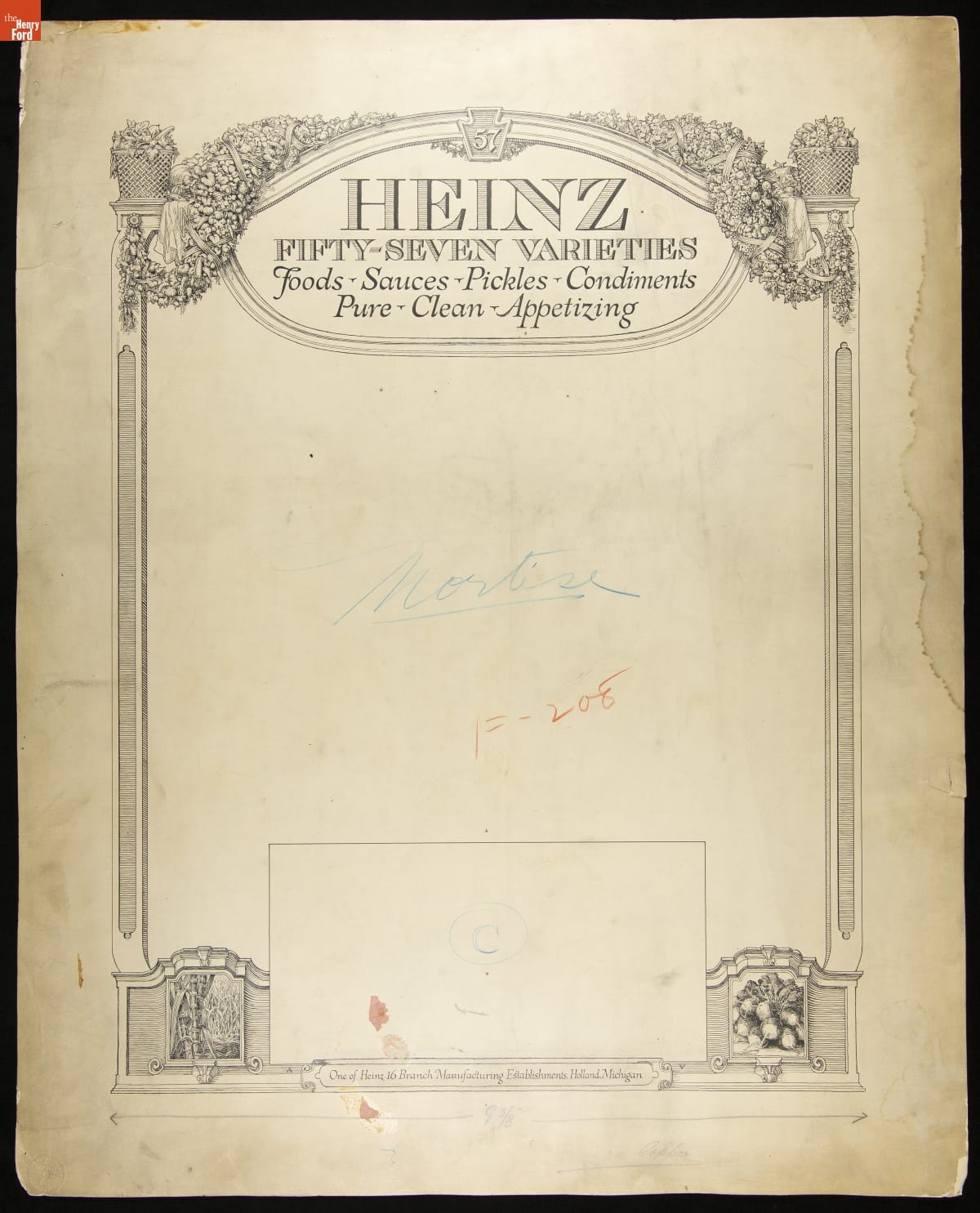
- Advertising Layout for Heinz Company's Holland, Michigan Branch, circa 1915 - The H.J. Heinz Company published pamphlets, brochures, and booklets that detailed the company's history and manufacturing process. This advertising layout represents one of the steps in the marketing process where arrangement is considered before the final advertisement is created. This layout would have surrounded text promoting Heinz products. The empty square at the bottom would have featured an image of the branch factory in Holland, Michigan.
- circa 1915
- Collections - Artifact
Advertising Layout for Heinz Company's Holland, Michigan Branch, circa 1915
The H.J. Heinz Company published pamphlets, brochures, and booklets that detailed the company's history and manufacturing process. This advertising layout represents one of the steps in the marketing process where arrangement is considered before the final advertisement is created. This layout would have surrounded text promoting Heinz products. The empty square at the bottom would have featured an image of the branch factory in Holland, Michigan.
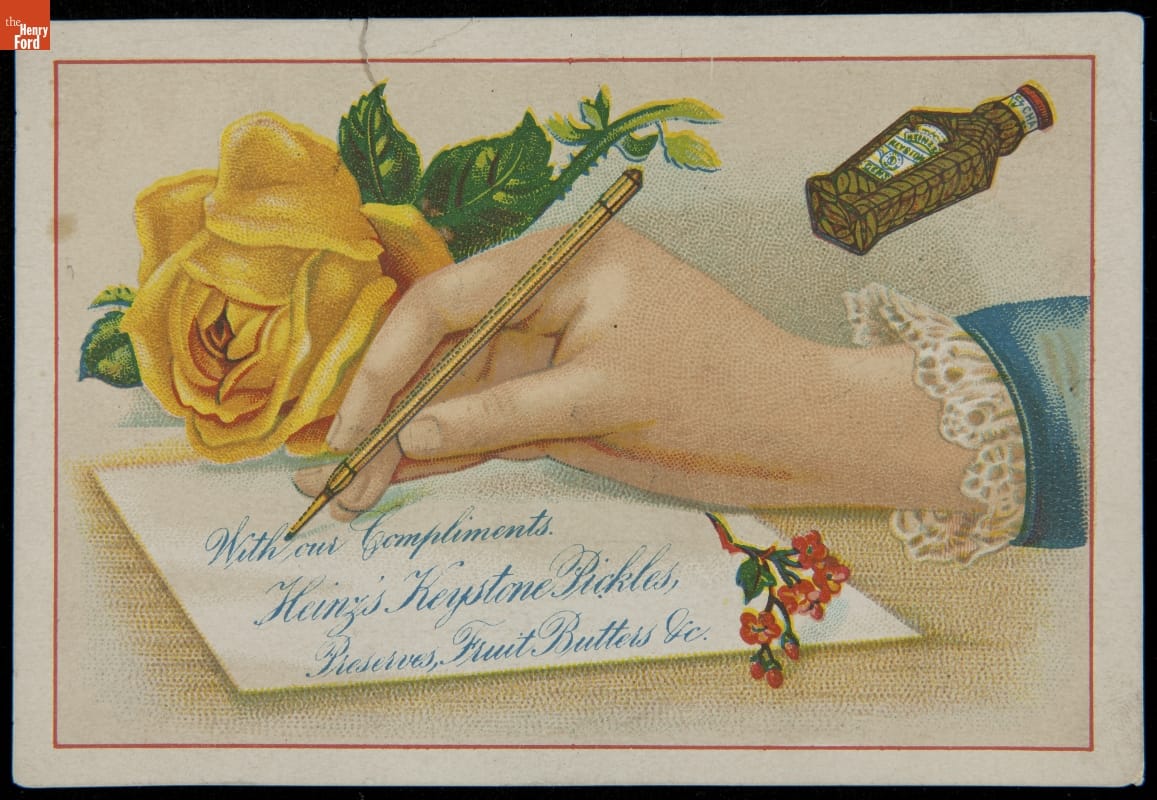
- Trade Card for Heinz Keystone Pickles, H.J. Heinz Company, circa 1885 - In the last third of the nineteenth century, an unprecedented variety of consumer goods and services flooded the American market. Advertisers, armed with new methods of color printing, bombarded potential customers with trade cards. Americans enjoyed and often saved the vibrant little advertisements found in product packages or distributed by local merchants. Many survive as historical records of commercialism in the United States.
- circa 1885
- Collections - Artifact
Trade Card for Heinz Keystone Pickles, H.J. Heinz Company, circa 1885
In the last third of the nineteenth century, an unprecedented variety of consumer goods and services flooded the American market. Advertisers, armed with new methods of color printing, bombarded potential customers with trade cards. Americans enjoyed and often saved the vibrant little advertisements found in product packages or distributed by local merchants. Many survive as historical records of commercialism in the United States.
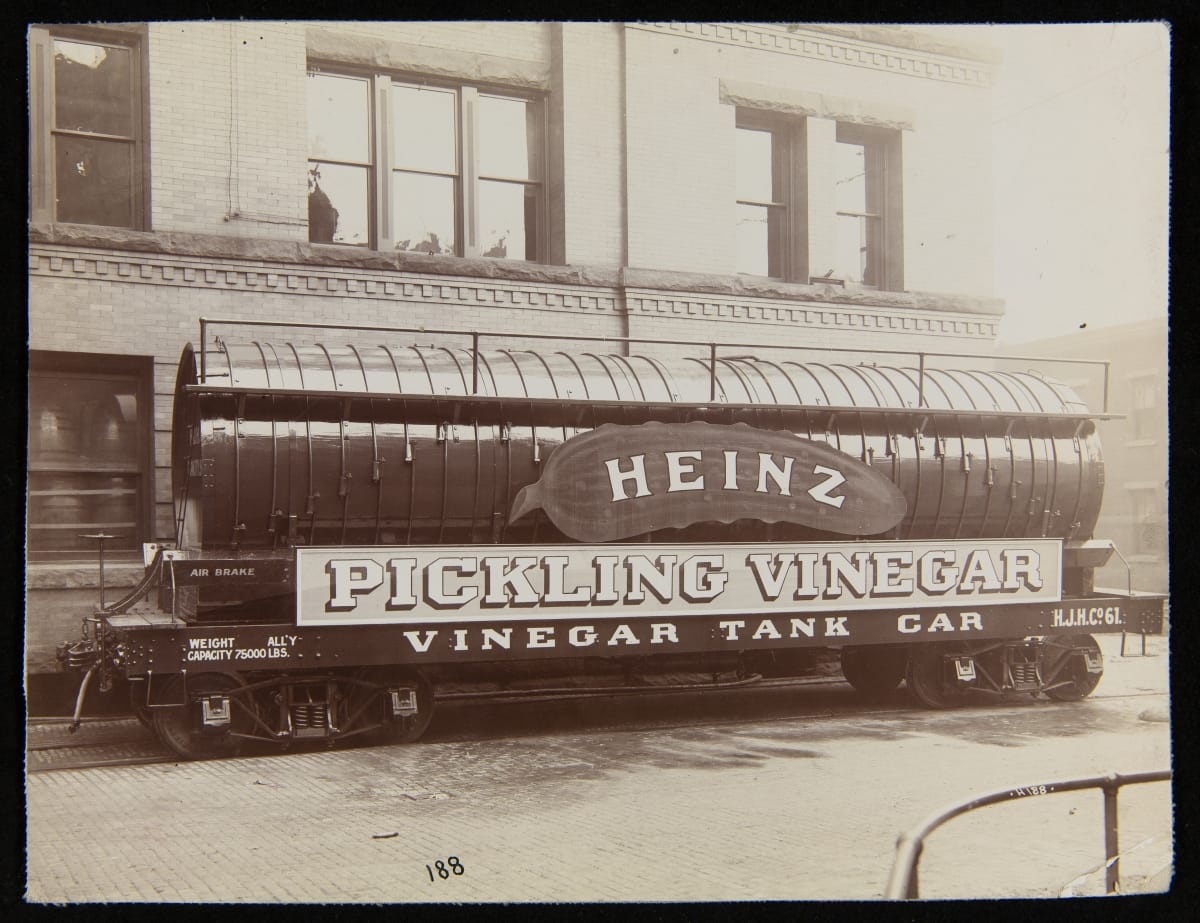
- Vinegar Tank Car, H. J. Heinz Company - The famous "57 Varieties" of the H.J. Heinz Company included several kinds of vinegar -- Malt, White, and Cider being the most popular. In order to transport its vinegar more efficiently, the H.J. Heinz Company owned and operated a line of railroad cars designed specifically for shipping vinegar in bulk, which allowed the company to transport about 10,000 gallons of vinegar per carload.
- Collections - Artifact
Vinegar Tank Car, H. J. Heinz Company
The famous "57 Varieties" of the H.J. Heinz Company included several kinds of vinegar -- Malt, White, and Cider being the most popular. In order to transport its vinegar more efficiently, the H.J. Heinz Company owned and operated a line of railroad cars designed specifically for shipping vinegar in bulk, which allowed the company to transport about 10,000 gallons of vinegar per carload.