
Search
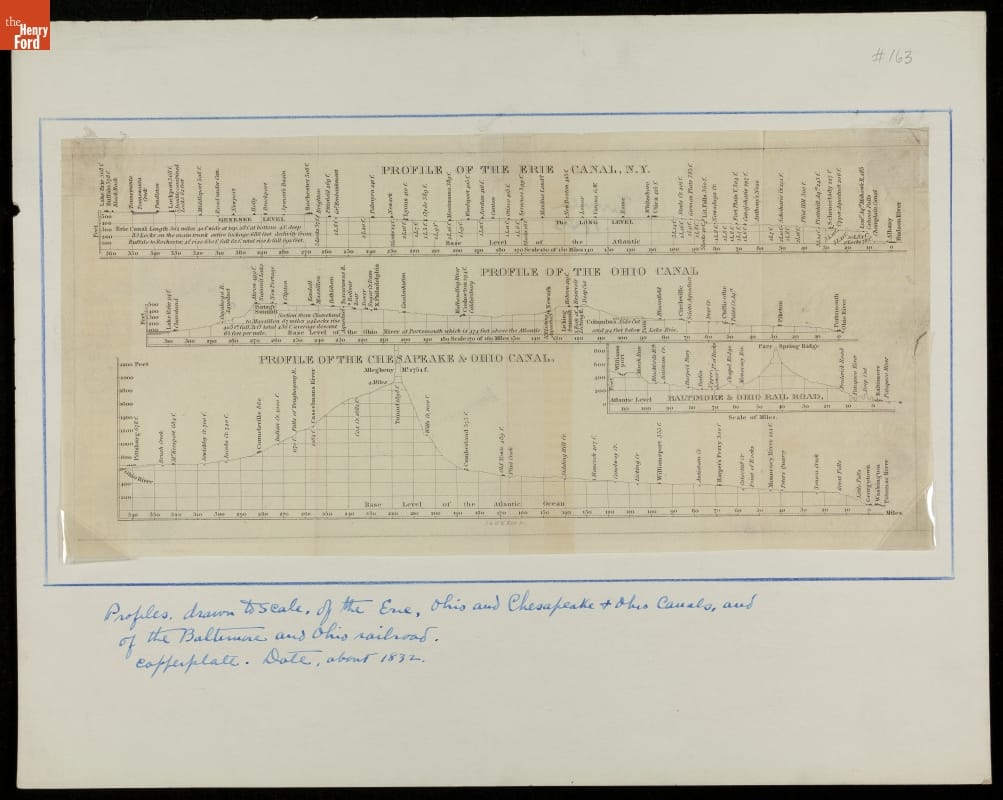
- "Profiles of the Erie, Ohio and Chesapeake & Ohio Canals and the Baltimore & Ohio Railroad," circa 1832 - The first half of the 19th century was the heyday of canal construction in the United States. This circa 1832 copperplate engraving shows the elevation profiles of the Erie Canal, the Ohio Canal, and the Chesapeake and Ohio Canal, along with the profile of the Baltimore and Ohio Railroad, measured in feet above sea level of the Atlantic Ocean.
- circa 1832
- Collections - Artifact
"Profiles of the Erie, Ohio and Chesapeake & Ohio Canals and the Baltimore & Ohio Railroad," circa 1832
The first half of the 19th century was the heyday of canal construction in the United States. This circa 1832 copperplate engraving shows the elevation profiles of the Erie Canal, the Ohio Canal, and the Chesapeake and Ohio Canal, along with the profile of the Baltimore and Ohio Railroad, measured in feet above sea level of the Atlantic Ocean.
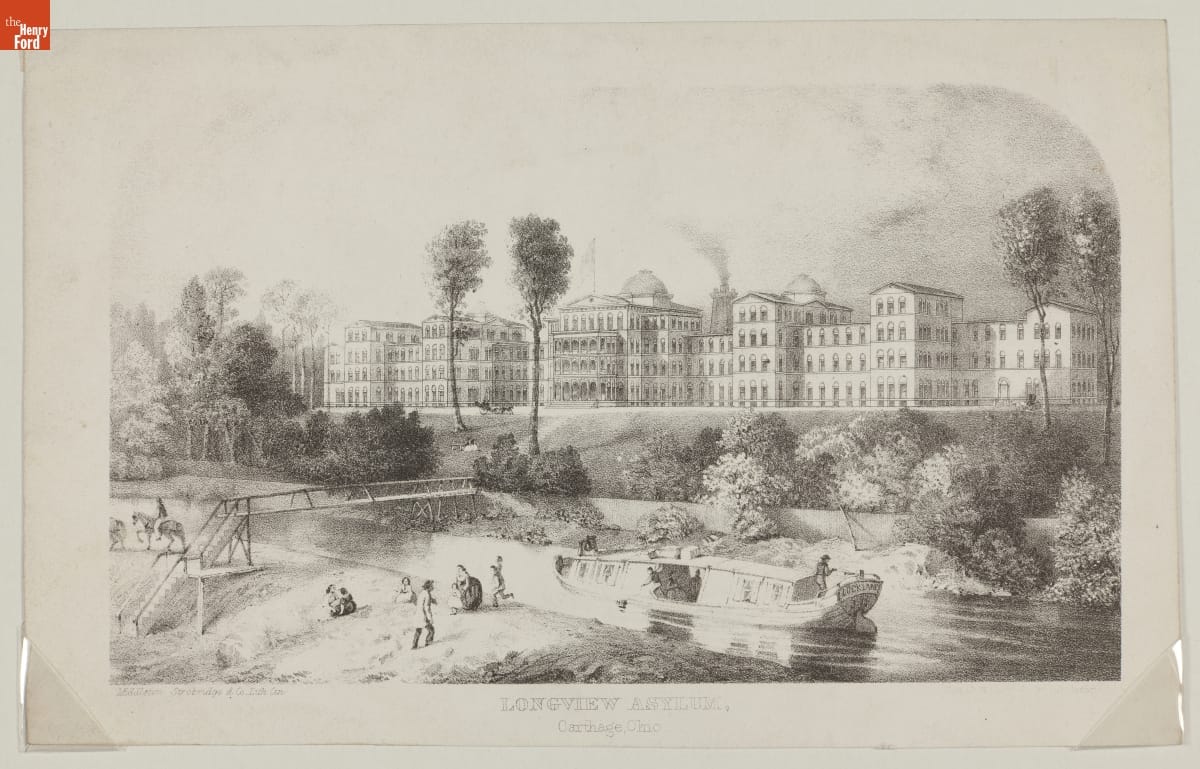
- Lithograph, Ohio Canal at Longview Asylum, Carthage, Ohio, circa 1845 - Ohio's Miami and Erie canal connected the Ohio River near Cincinnati, via the tributary Great Miami River, with Lake Erie at Toledo. The full 274-mile route was completed in 1845 at a total cost of $8 million. Traffic consisted largely of flour, pork, whiskey, corn, and wheat. Never particularly profitable, the canal closed after extensive flood damage in 1913.
- circa 1845
- Collections - Artifact
Lithograph, Ohio Canal at Longview Asylum, Carthage, Ohio, circa 1845
Ohio's Miami and Erie canal connected the Ohio River near Cincinnati, via the tributary Great Miami River, with Lake Erie at Toledo. The full 274-mile route was completed in 1845 at a total cost of $8 million. Traffic consisted largely of flour, pork, whiskey, corn, and wheat. Never particularly profitable, the canal closed after extensive flood damage in 1913.
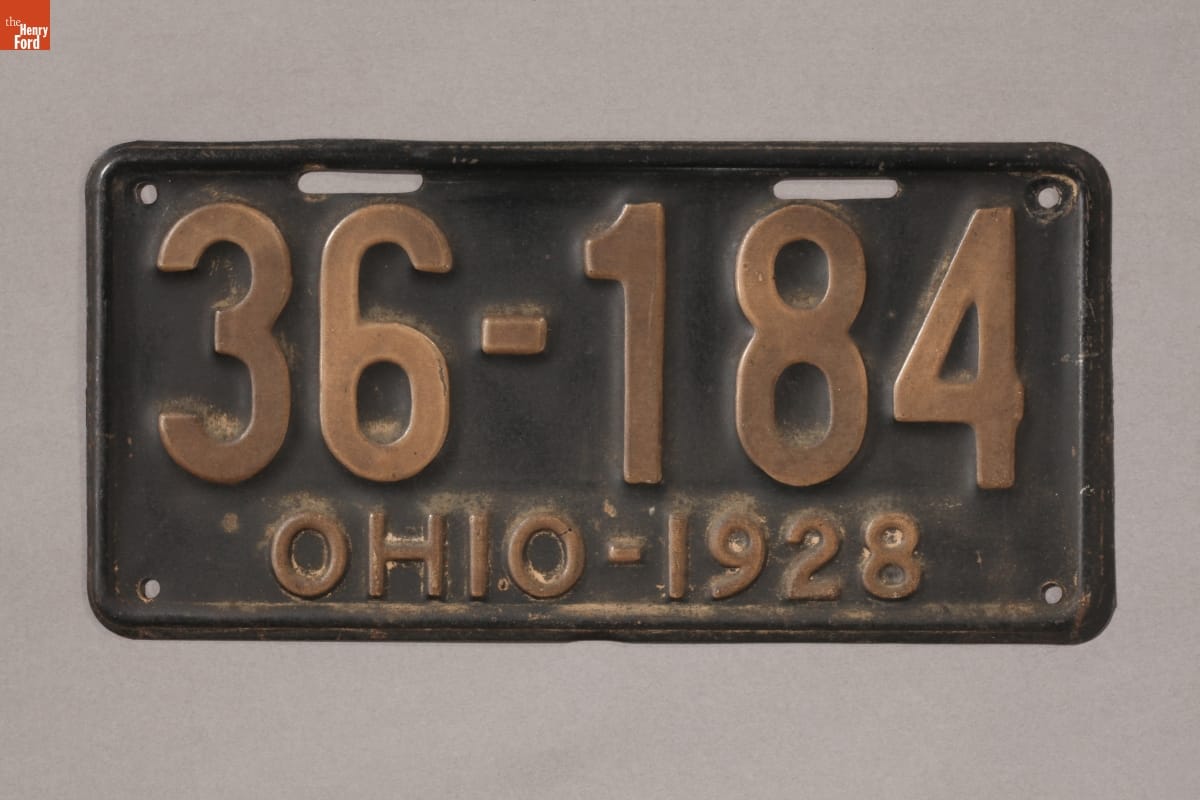
- Ohio License Plate, 1928 - Early state-issued license plates were made of porcelain-coated iron. Later, states stamped tin, steel, or even copper to make plates. During the Second World War several states used fiberboard. Plate colors varied and some states added symbols, mottoes, or other design elements. Today, states use reflective sheeting to coat a standard-sized aluminum blank which is then stamped and decorated.
- 1928
- Collections - Artifact
Ohio License Plate, 1928
Early state-issued license plates were made of porcelain-coated iron. Later, states stamped tin, steel, or even copper to make plates. During the Second World War several states used fiberboard. Plate colors varied and some states added symbols, mottoes, or other design elements. Today, states use reflective sheeting to coat a standard-sized aluminum blank which is then stamped and decorated.
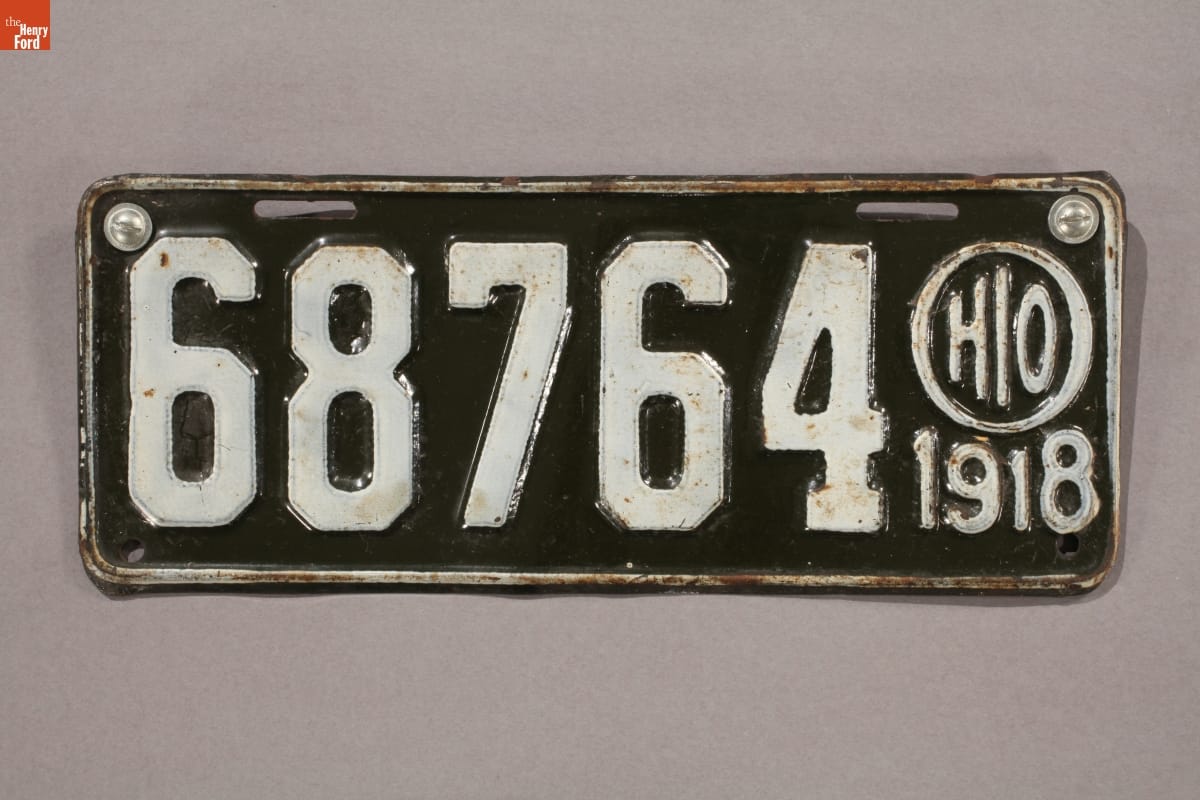
- Ohio License Plate, 1918 - Early state-issued license plates were made of porcelain-coated iron. Later, states stamped tin, steel, or even copper to make plates. During the Second World War several states used fiberboard. Plate colors varied and some states added symbols, mottoes, or other design elements. Today, states use reflective sheeting to coat a standard-sized aluminum blank which is then stamped and decorated.
- 1918
- Collections - Artifact
Ohio License Plate, 1918
Early state-issued license plates were made of porcelain-coated iron. Later, states stamped tin, steel, or even copper to make plates. During the Second World War several states used fiberboard. Plate colors varied and some states added symbols, mottoes, or other design elements. Today, states use reflective sheeting to coat a standard-sized aluminum blank which is then stamped and decorated.
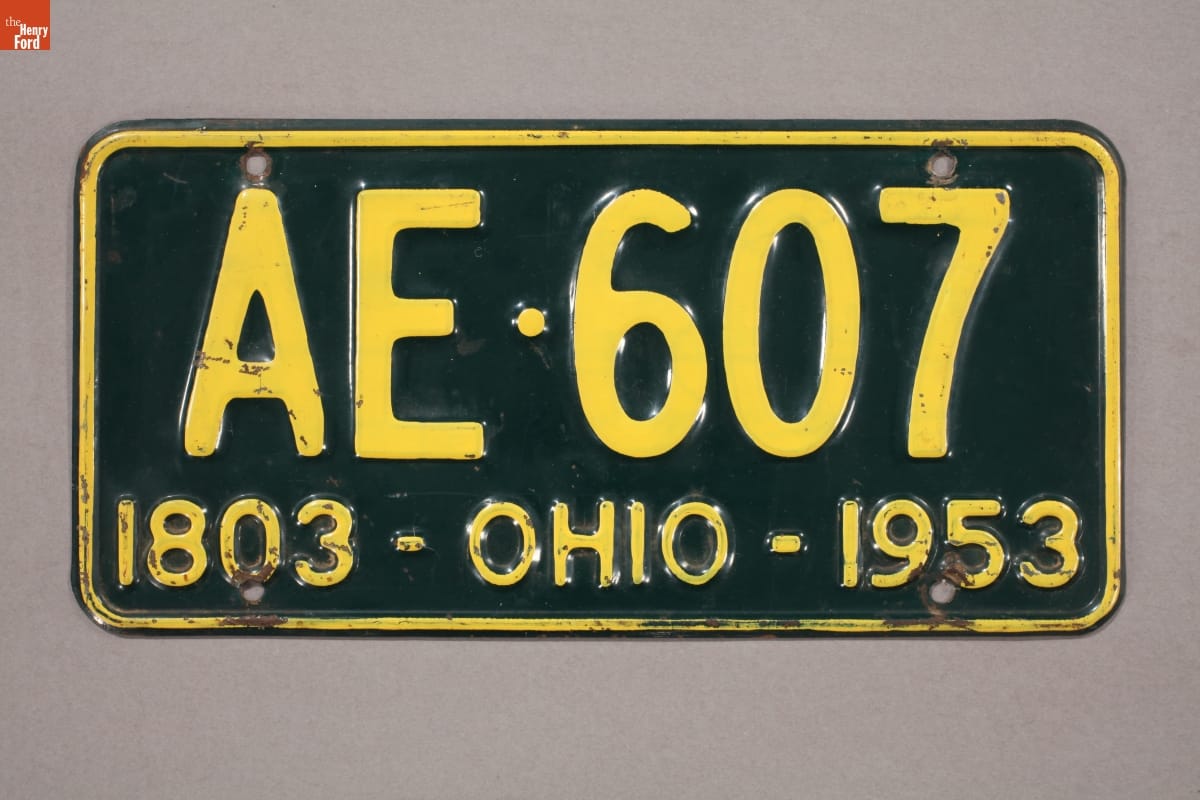
- Ohio License Plate, 1953 - Early state-issued license plates were made of porcelain-coated iron. Later, states stamped tin, steel, or even copper to make plates. During the Second World War several states used fiberboard. Plate colors varied and some states added symbols, mottoes, or other design elements. Today, states use reflective sheeting to coat a standard-sized aluminum blank which is then stamped and decorated.
- 1953
- Collections - Artifact
Ohio License Plate, 1953
Early state-issued license plates were made of porcelain-coated iron. Later, states stamped tin, steel, or even copper to make plates. During the Second World War several states used fiberboard. Plate colors varied and some states added symbols, mottoes, or other design elements. Today, states use reflective sheeting to coat a standard-sized aluminum blank which is then stamped and decorated.
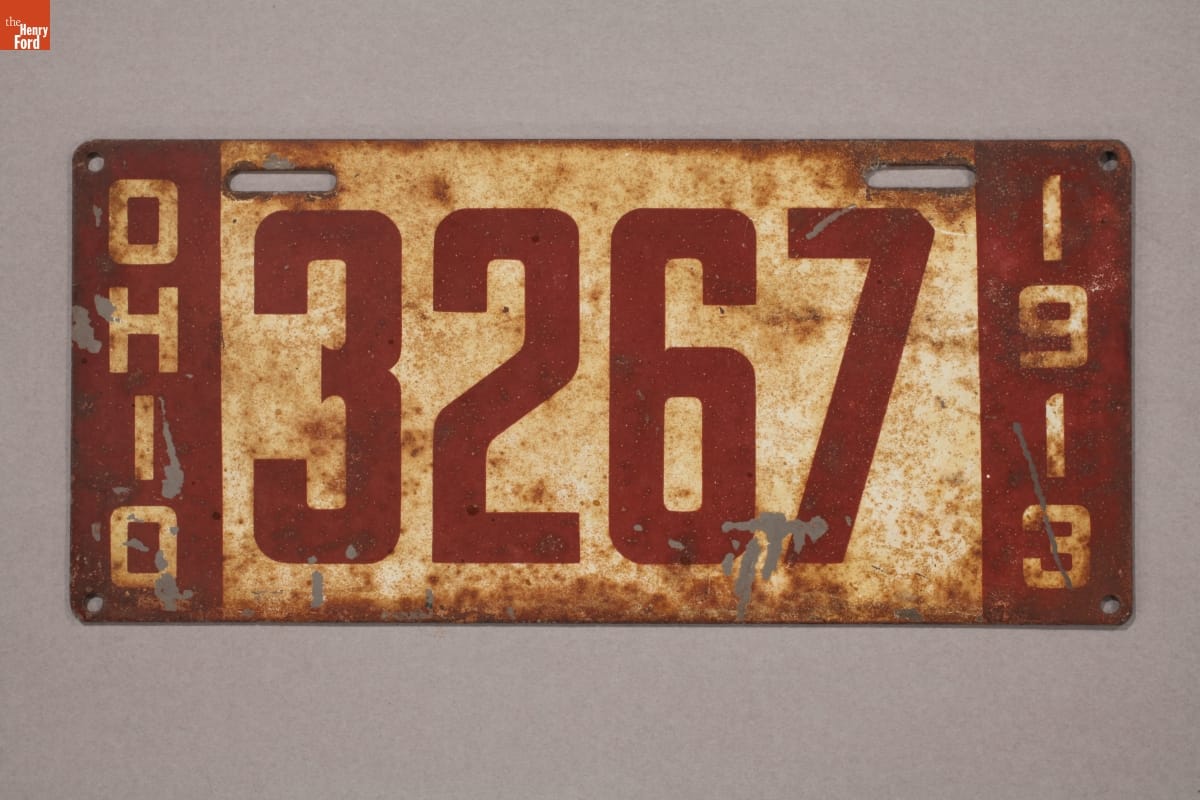
- Ohio License Plate, 1913 - Early state-issued license plates were made of porcelain-coated iron. Later, states stamped tin, steel, or even copper to make plates. During the Second World War several states used fiberboard. Plate colors varied and some states added symbols, mottoes, or other design elements. Today, states use reflective sheeting to coat a standard-sized aluminum blank which is then stamped and decorated.
- 1913
- Collections - Artifact
Ohio License Plate, 1913
Early state-issued license plates were made of porcelain-coated iron. Later, states stamped tin, steel, or even copper to make plates. During the Second World War several states used fiberboard. Plate colors varied and some states added symbols, mottoes, or other design elements. Today, states use reflective sheeting to coat a standard-sized aluminum blank which is then stamped and decorated.
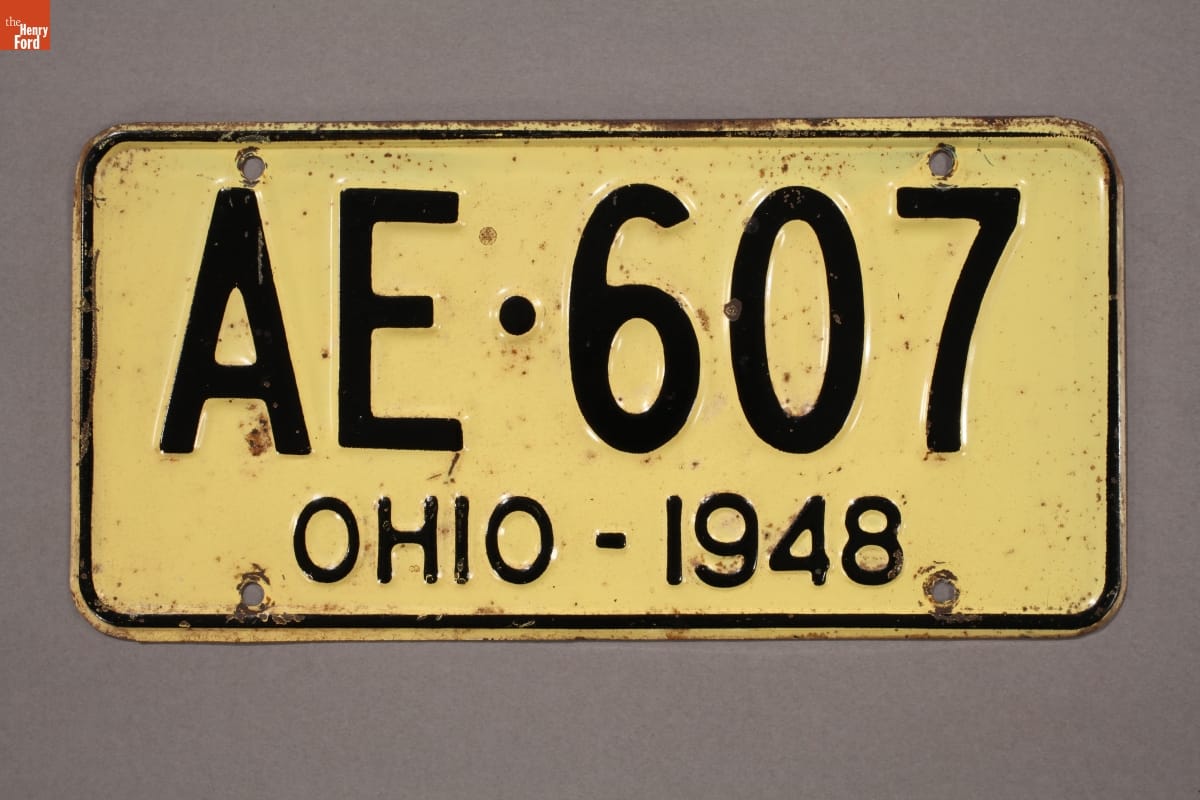
- Ohio License Plate, 1948 - Early state-issued license plates were made of porcelain-coated iron. Later, states stamped tin, steel, or even copper to make plates. During the Second World War several states used fiberboard. Plate colors varied and some states added symbols, mottoes, or other design elements. Today, states use reflective sheeting to coat a standard-sized aluminum blank which is then stamped and decorated.
- 1948
- Collections - Artifact
Ohio License Plate, 1948
Early state-issued license plates were made of porcelain-coated iron. Later, states stamped tin, steel, or even copper to make plates. During the Second World War several states used fiberboard. Plate colors varied and some states added symbols, mottoes, or other design elements. Today, states use reflective sheeting to coat a standard-sized aluminum blank which is then stamped and decorated.
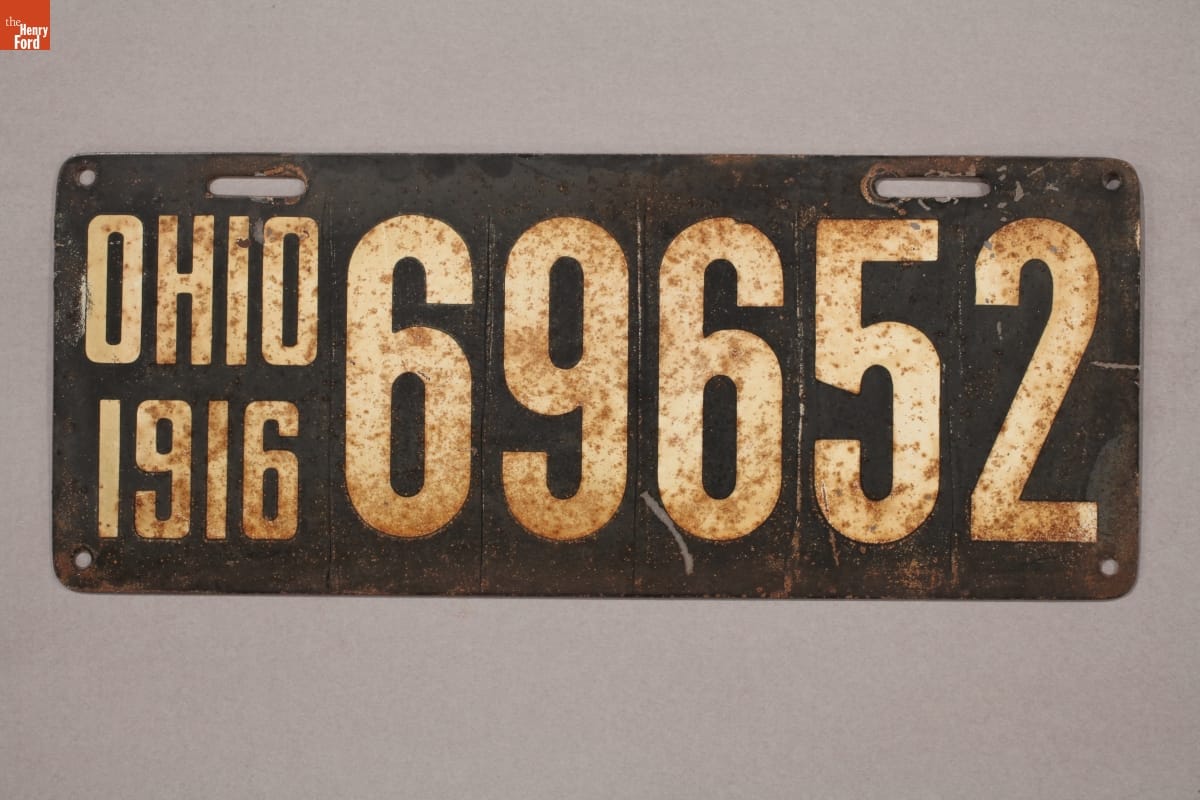
- Ohio License Plate, 1916 - Early state-issued license plates were made of porcelain-coated iron. Later, states stamped tin, steel, or even copper to make plates. During the Second World War several states used fiberboard. Plate colors varied and some states added symbols, mottoes, or other design elements. Today, states use reflective sheeting to coat a standard-sized aluminum blank which is then stamped and decorated.
- 1916
- Collections - Artifact
Ohio License Plate, 1916
Early state-issued license plates were made of porcelain-coated iron. Later, states stamped tin, steel, or even copper to make plates. During the Second World War several states used fiberboard. Plate colors varied and some states added symbols, mottoes, or other design elements. Today, states use reflective sheeting to coat a standard-sized aluminum blank which is then stamped and decorated.
- Harbel Manor, Akron, Ohio -
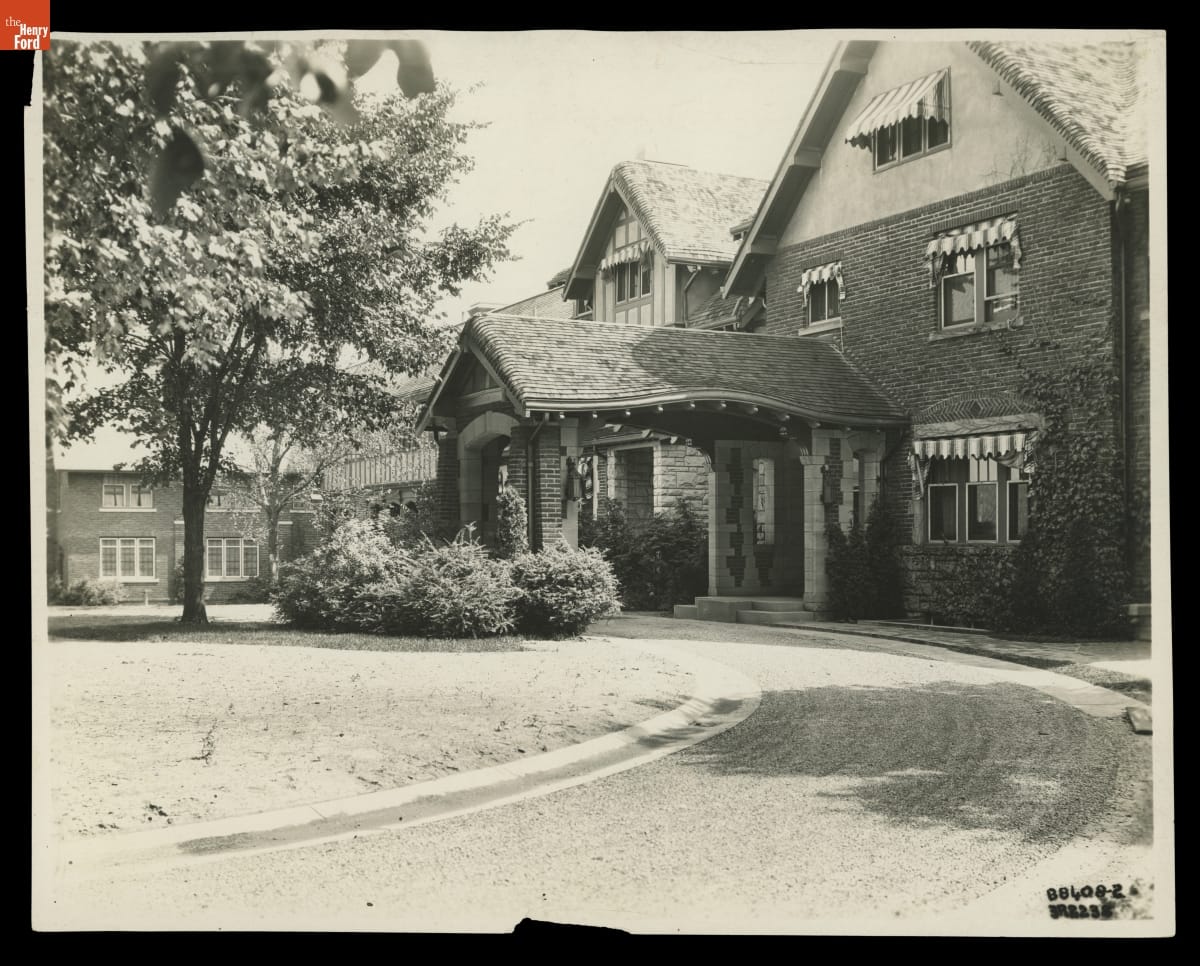
- 1912-1959
- Collections - Artifact
Harbel Manor, Akron, Ohio
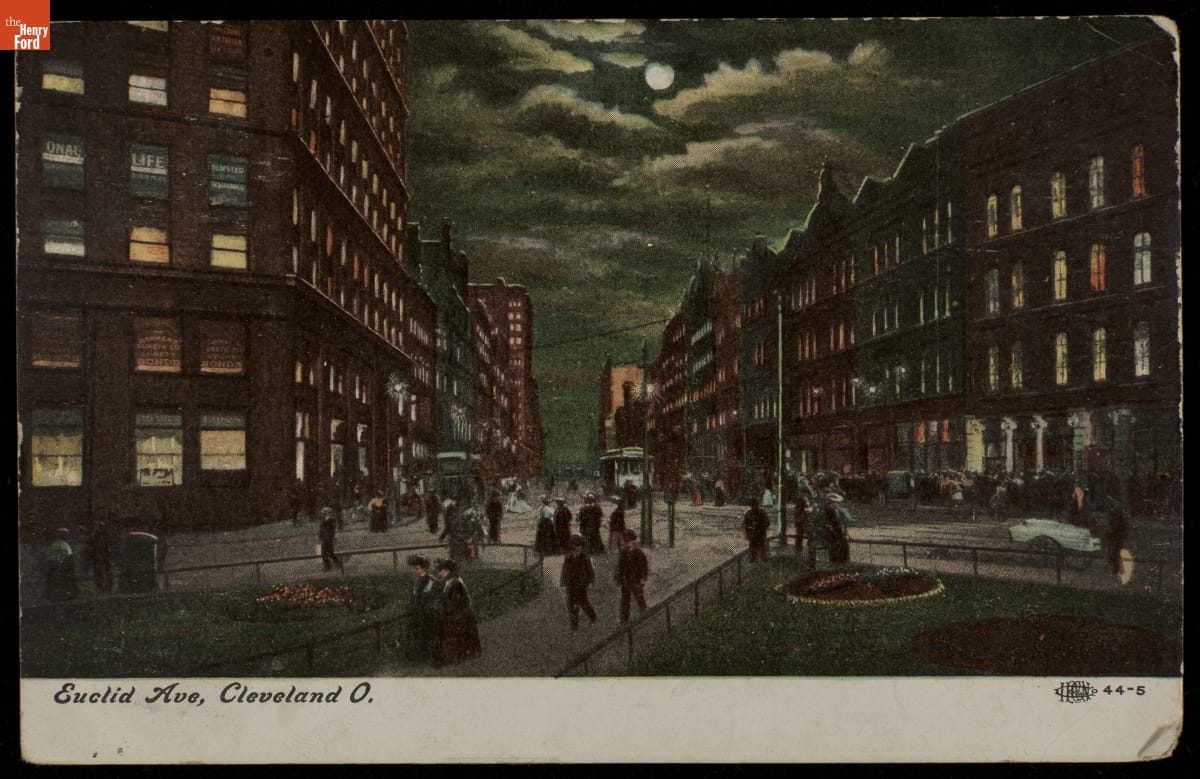
- "Euclid Avenue, Cleveland, Ohio," - This postcard depicts Cleveland's Euclid Avenue at night. Though the sun has gone down, the street bustles with vendors and pedestrians, as well as horse-drawn and streetcar traffic. The avenue's commercial and residential buildings were widely famous in the late 19th and early 20th centuries.
- circa 1908
- Collections - Artifact
"Euclid Avenue, Cleveland, Ohio,"
This postcard depicts Cleveland's Euclid Avenue at night. Though the sun has gone down, the street bustles with vendors and pedestrians, as well as horse-drawn and streetcar traffic. The avenue's commercial and residential buildings were widely famous in the late 19th and early 20th centuries.