
Search
- Household Sewing Machine Company Sewing Machine, circa 1895 -
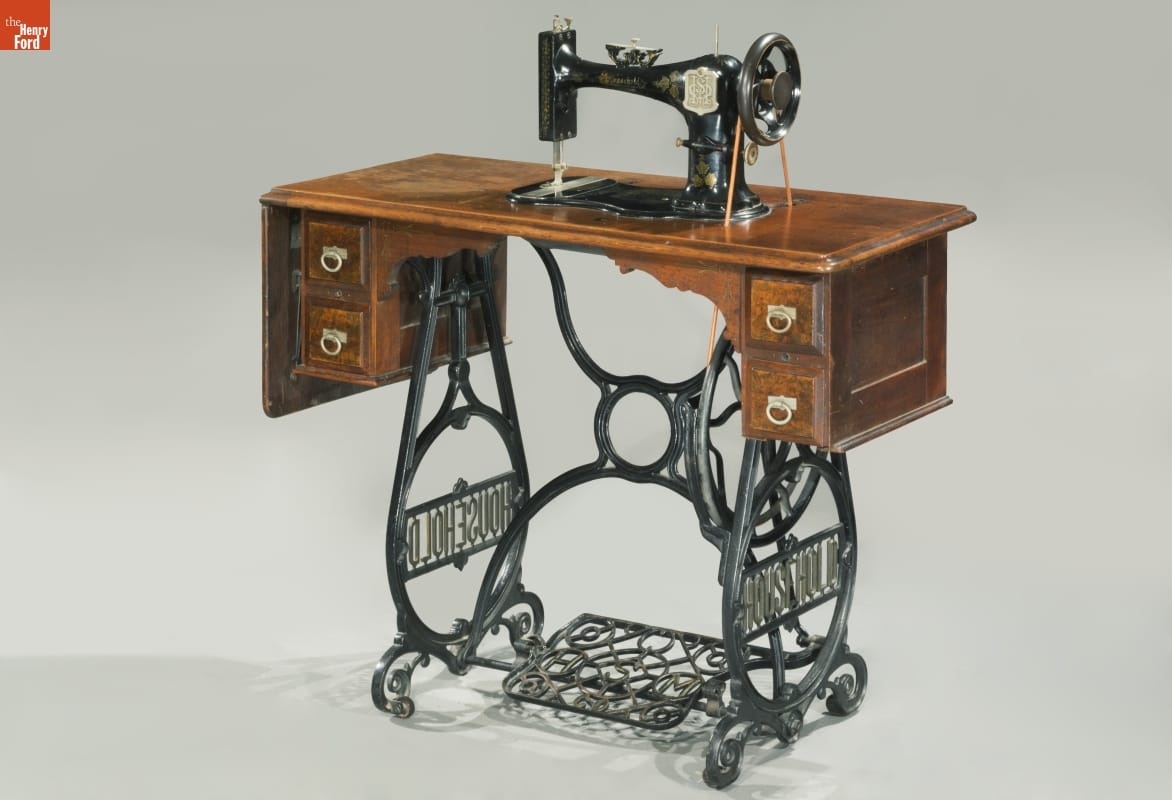
- circa 1895
- Collections - Artifact
Household Sewing Machine Company Sewing Machine, circa 1895
- Sewing machine, 1908 -
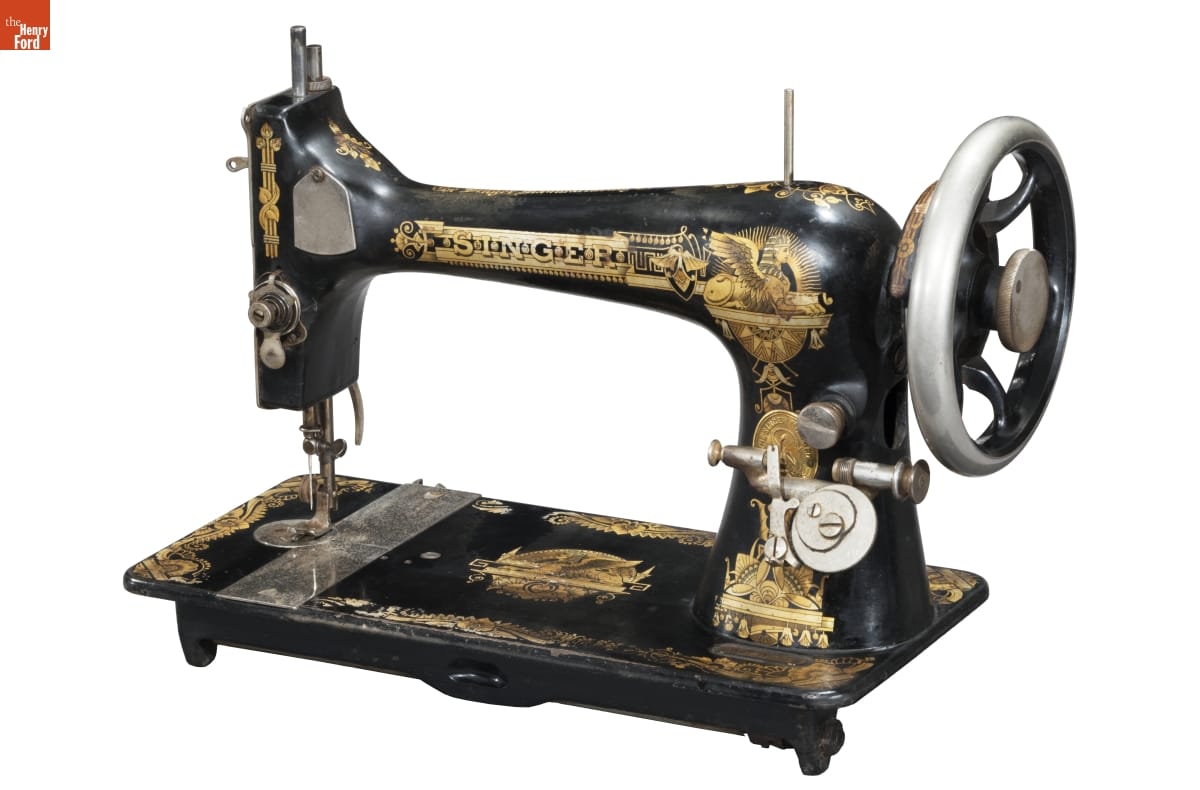
- 1908
- Collections - Artifact
Sewing machine, 1908
- Sewing Machine Motor -
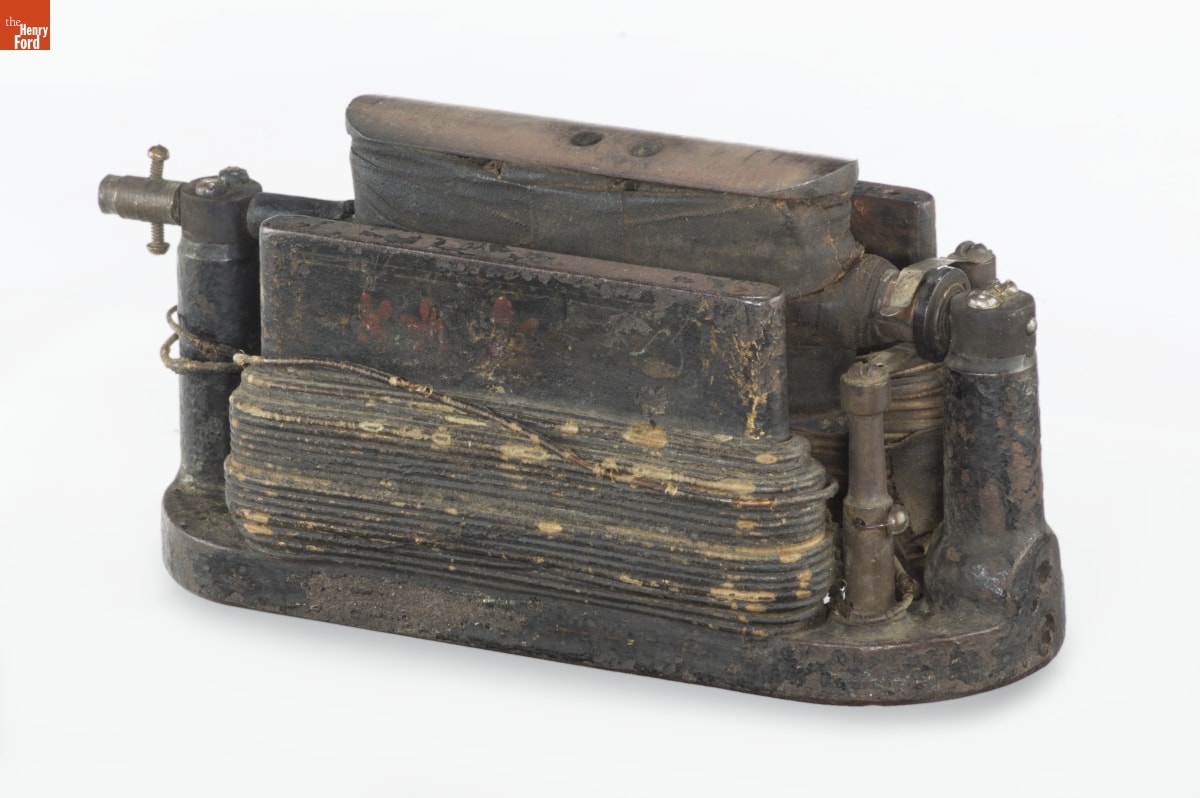
- Collections - Artifact
Sewing Machine Motor
- Portable Sewing Machine -
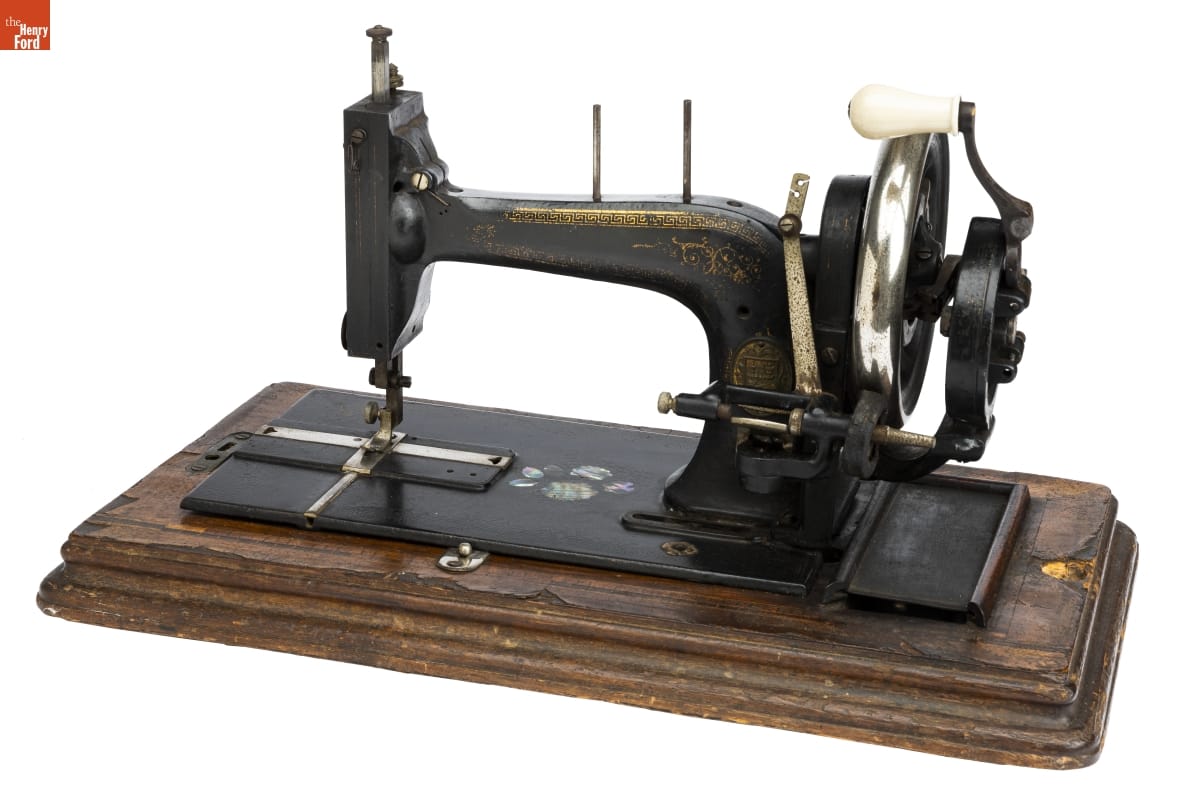
- Collections - Artifact
Portable Sewing Machine
- Weed Sewing Machine Company Treadle-Operated Sewing Machine, circa 1870 -
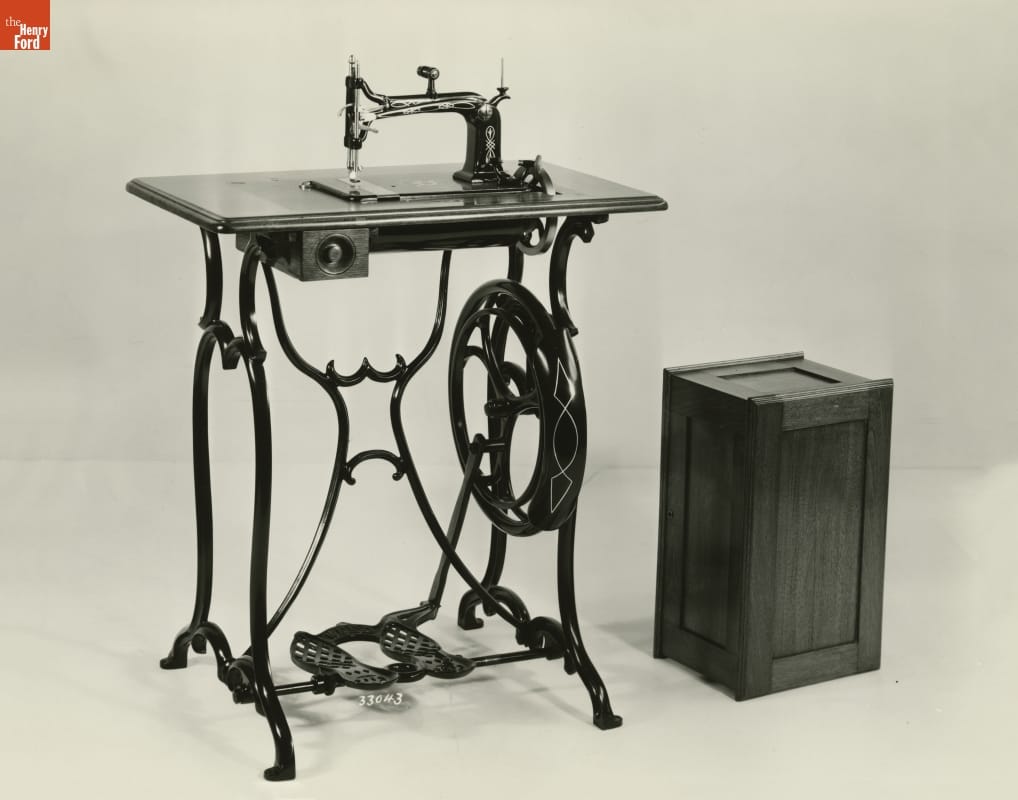
- circa 1870
- Collections - Artifact
Weed Sewing Machine Company Treadle-Operated Sewing Machine, circa 1870
- Howe Machine Co. Sewing Machine, 1877-1886 -
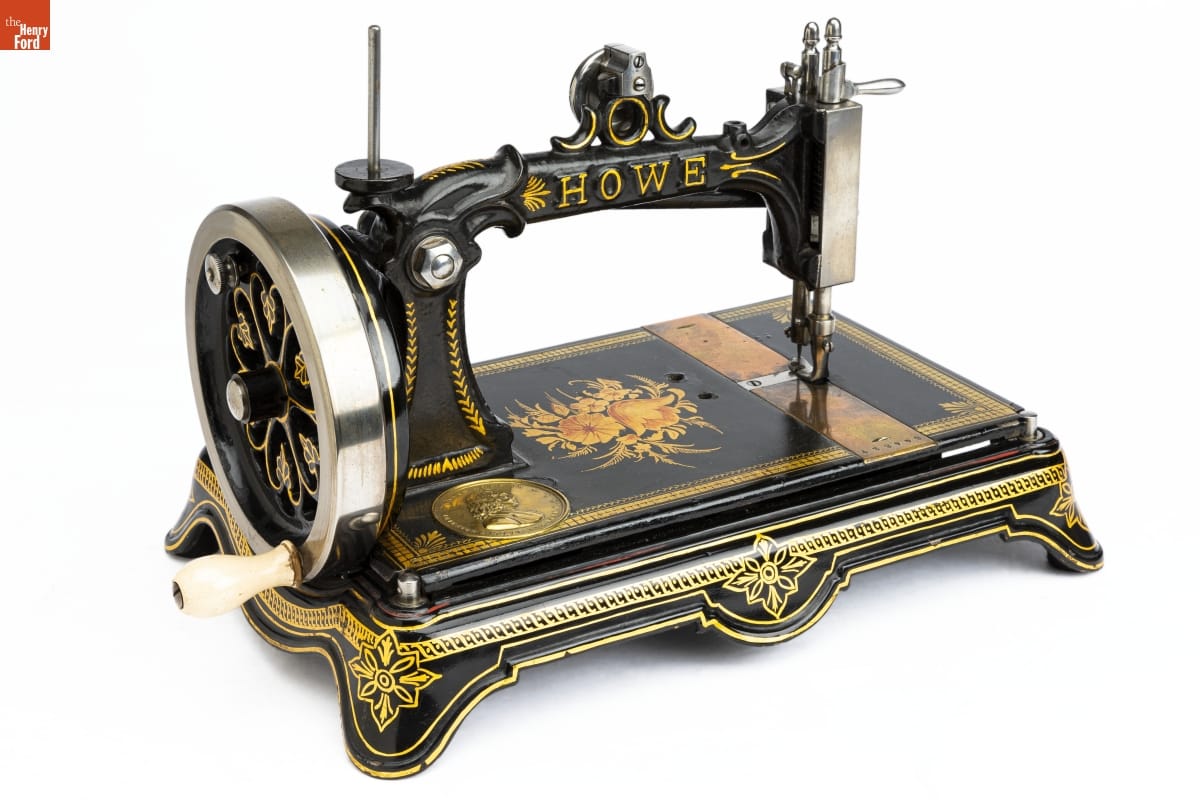
- 1877-1886
- Collections - Artifact
Howe Machine Co. Sewing Machine, 1877-1886
- Singer Sewing Machine, 1881 - Before the sewing machine, making clothing was a time-consuming task. By hand, sewing a shirt took about 14 hours; with a machine, a little over an hour. Isaac Singer developed the first practical sewing machine for home use in the 1850s. Yet it was the Singer company's marketing strategies--an installment plan, advertising aimed at women, and foreign sales-- that would be its greatest innovation.
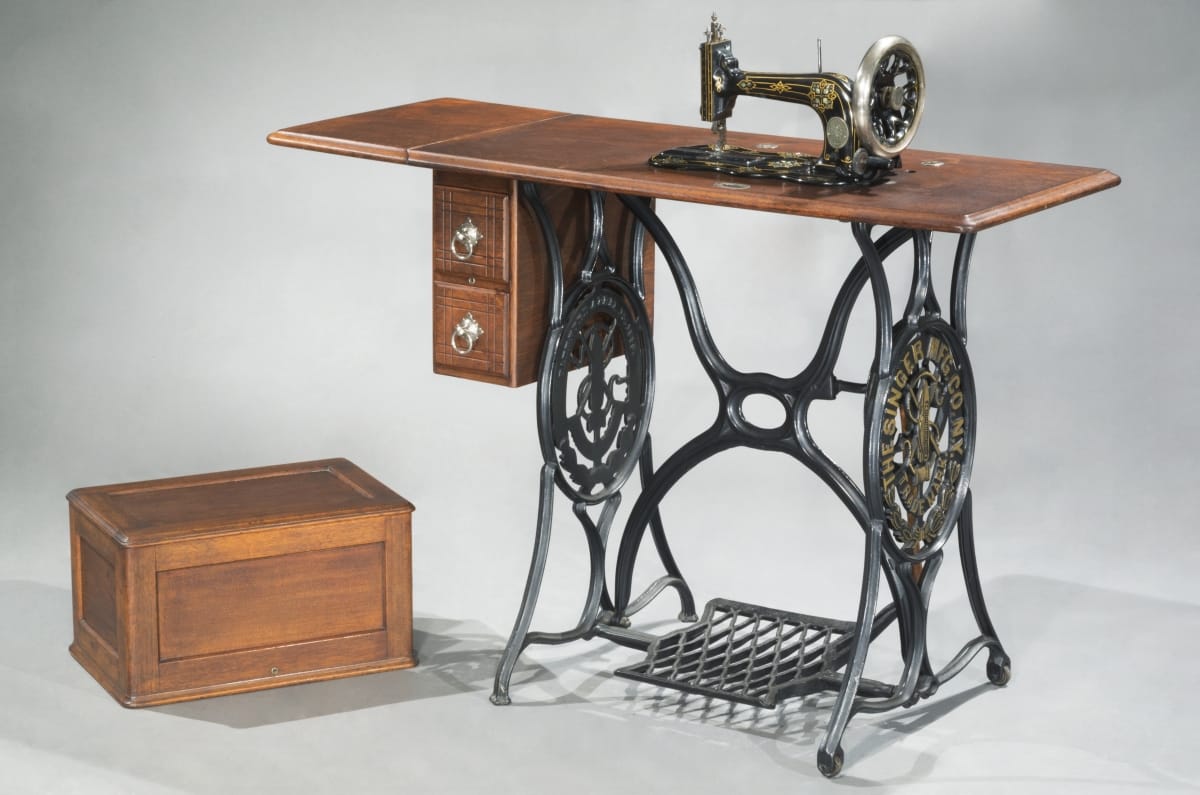
- 1881
- Collections - Artifact
Singer Sewing Machine, 1881
Before the sewing machine, making clothing was a time-consuming task. By hand, sewing a shirt took about 14 hours; with a machine, a little over an hour. Isaac Singer developed the first practical sewing machine for home use in the 1850s. Yet it was the Singer company's marketing strategies--an installment plan, advertising aimed at women, and foreign sales-- that would be its greatest innovation.
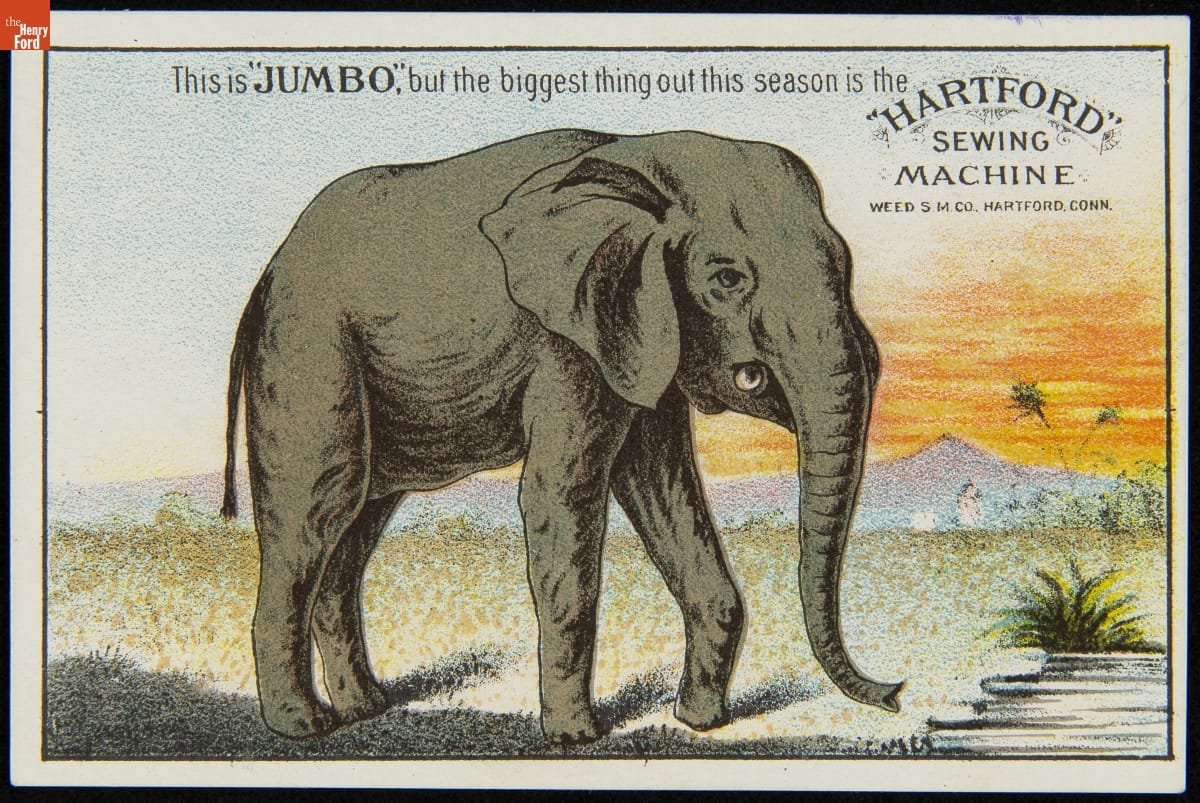
- Trade Card for the Hartford Sewing Machine, Weed Sewing Machine Co., 1882-1890 - Jumbo, an 11-foot, 6-ton African elephant, traveled with the Barnum and Bailey's circus after P.T. Barnum had purchased the giant pachyderm in 1882. Jumbo became a national sensation. American manufacturers capitalized on Jumbo's popularity by using the elephant's image in their advertising. This trade card from Weed Sewing Machine Company compared the company's Hartford sewing machine to the famous big elephant.
- 1882-1890
- Collections - Artifact
Trade Card for the Hartford Sewing Machine, Weed Sewing Machine Co., 1882-1890
Jumbo, an 11-foot, 6-ton African elephant, traveled with the Barnum and Bailey's circus after P.T. Barnum had purchased the giant pachyderm in 1882. Jumbo became a national sensation. American manufacturers capitalized on Jumbo's popularity by using the elephant's image in their advertising. This trade card from Weed Sewing Machine Company compared the company's Hartford sewing machine to the famous big elephant.
- Trade Card for the Shuttle Sewing Machine, Wilson Sewing Machine Co., 1870-1877 - In the last third of the nineteenth century, an unprecedented variety of consumer goods and services flooded the American market. Advertisers, armed with new methods of color printing, bombarded potential customers with trade cards. Americans enjoyed and often saved the vibrant little advertisements found in product packages or distributed by local merchants. Many survive as historical records of commercialism in the United States.
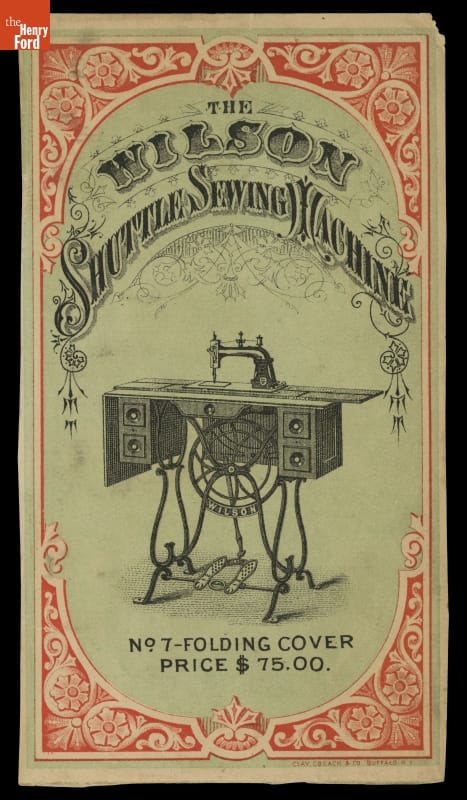
- 1870-1877
- Collections - Artifact
Trade Card for the Shuttle Sewing Machine, Wilson Sewing Machine Co., 1870-1877
In the last third of the nineteenth century, an unprecedented variety of consumer goods and services flooded the American market. Advertisers, armed with new methods of color printing, bombarded potential customers with trade cards. Americans enjoyed and often saved the vibrant little advertisements found in product packages or distributed by local merchants. Many survive as historical records of commercialism in the United States.
- Florence Sewing Machine, 1860-1865 - When new inventions like stoves, sewing machines and radios first came on the market, they seemed jarring and out of place next to people's furniture. Manufacturers learned that these devices would sell better if their mechanisms were hidden behind stylish cabinetry or fancy decoration. Fashionable parlor furniture inspired the ornately scrolled and pierced iron legs of this elaborately decorated sewing machine.
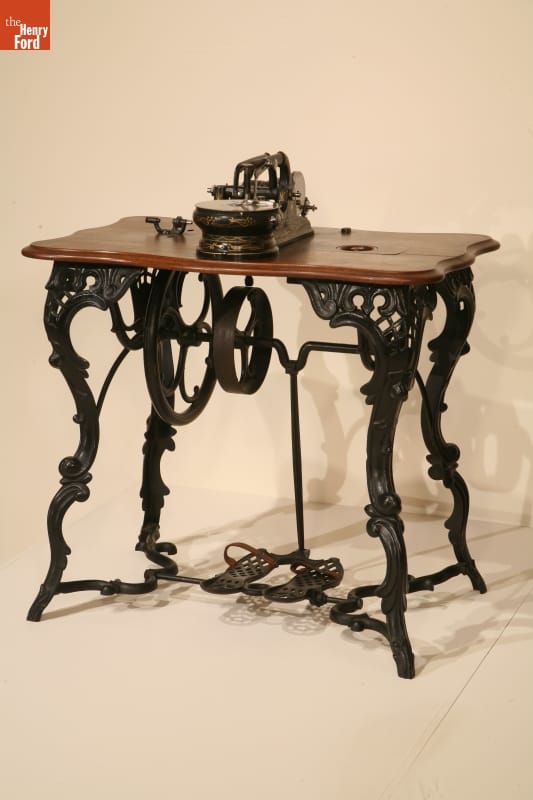
- 1860-1865
- Collections - Artifact
Florence Sewing Machine, 1860-1865
When new inventions like stoves, sewing machines and radios first came on the market, they seemed jarring and out of place next to people's furniture. Manufacturers learned that these devices would sell better if their mechanisms were hidden behind stylish cabinetry or fancy decoration. Fashionable parlor furniture inspired the ornately scrolled and pierced iron legs of this elaborately decorated sewing machine.