
Search
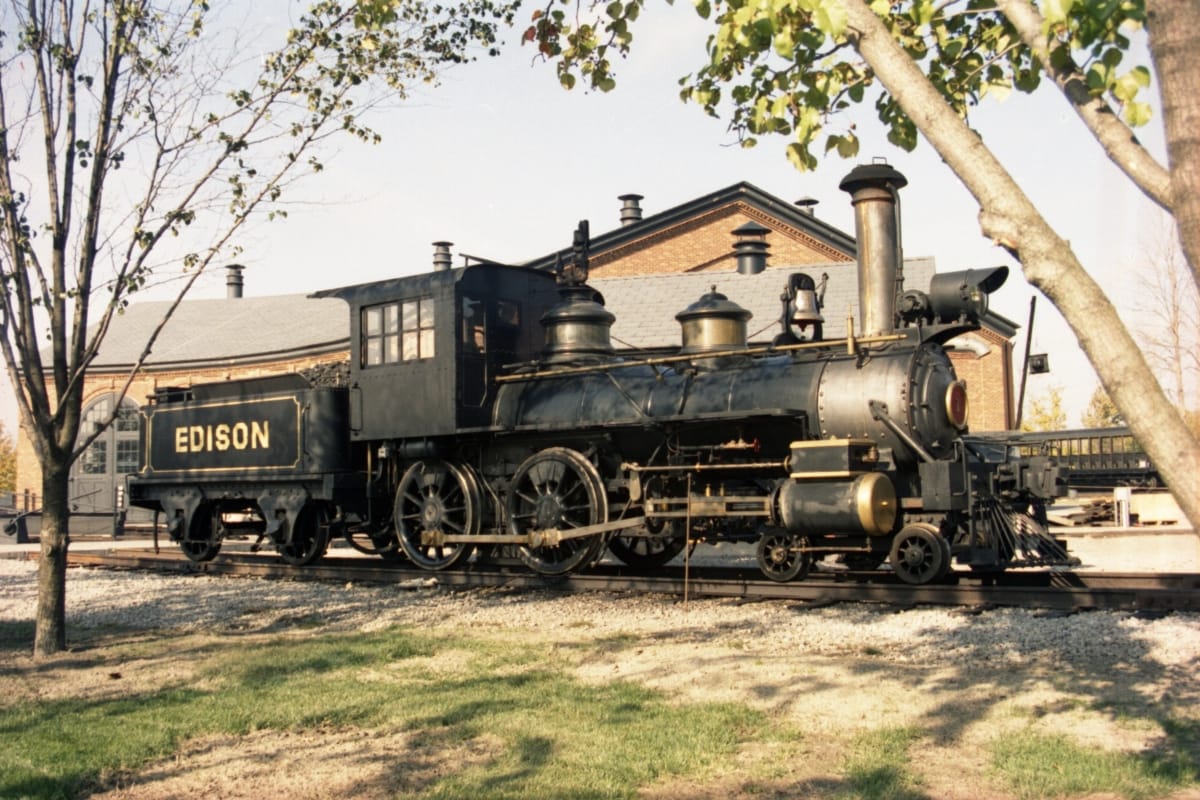
- "Edison" Steam Locomotive - <EM>Edison</EM> is based on an 0-4-0 switcher locomotive built about 1870 by Manchester Locomotive Works. Henry Ford purchased the switcher from Edison Portland Cement Company in 1932. Mr. Ford had the locomotive rebuilt into a 4-4-0 wheel arrangement by staff at Ford Motor Company's Rouge locomotive shop. <EM>Edison</EM> later went into regular service on Greenfield Village's railroad.
- 1932
- Collections - Artifact
"Edison" Steam Locomotive
Edison is based on an 0-4-0 switcher locomotive built about 1870 by Manchester Locomotive Works. Henry Ford purchased the switcher from Edison Portland Cement Company in 1932. Mr. Ford had the locomotive rebuilt into a 4-4-0 wheel arrangement by staff at Ford Motor Company's Rouge locomotive shop. Edison later went into regular service on Greenfield Village's railroad.
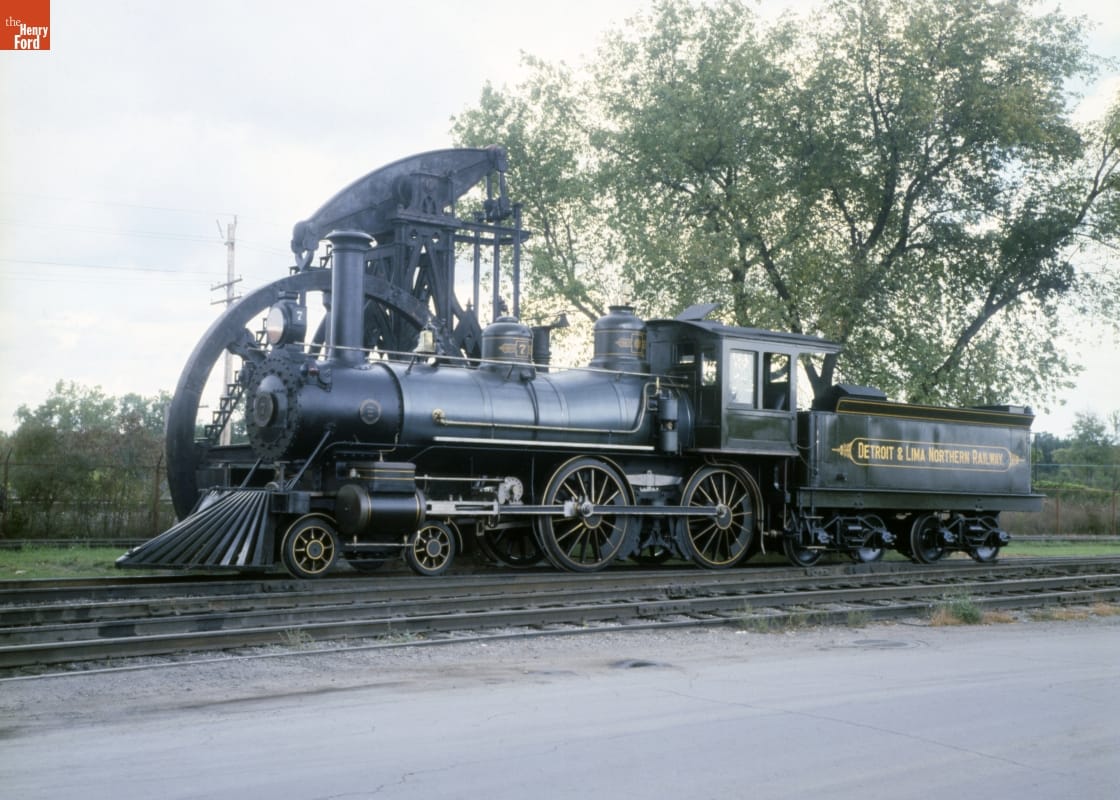
- Baldwin Locomotive Works Steam Locomotive, 1897 - This locomotive pulled passenger trains on the Detroit & Lima Northern Railway, a predecessor of the Detroit, Toledo & Ironton Railroad. After Henry Ford purchased the DT&I in 1920, this engine was the first modified under his extensive plan for improvements to the line. Ford adopted the locomotive as his favorite and donated it to The Henry Ford in 1930.
- 1897
- Collections - Artifact
Baldwin Locomotive Works Steam Locomotive, 1897
This locomotive pulled passenger trains on the Detroit & Lima Northern Railway, a predecessor of the Detroit, Toledo & Ironton Railroad. After Henry Ford purchased the DT&I in 1920, this engine was the first modified under his extensive plan for improvements to the line. Ford adopted the locomotive as his favorite and donated it to The Henry Ford in 1930.
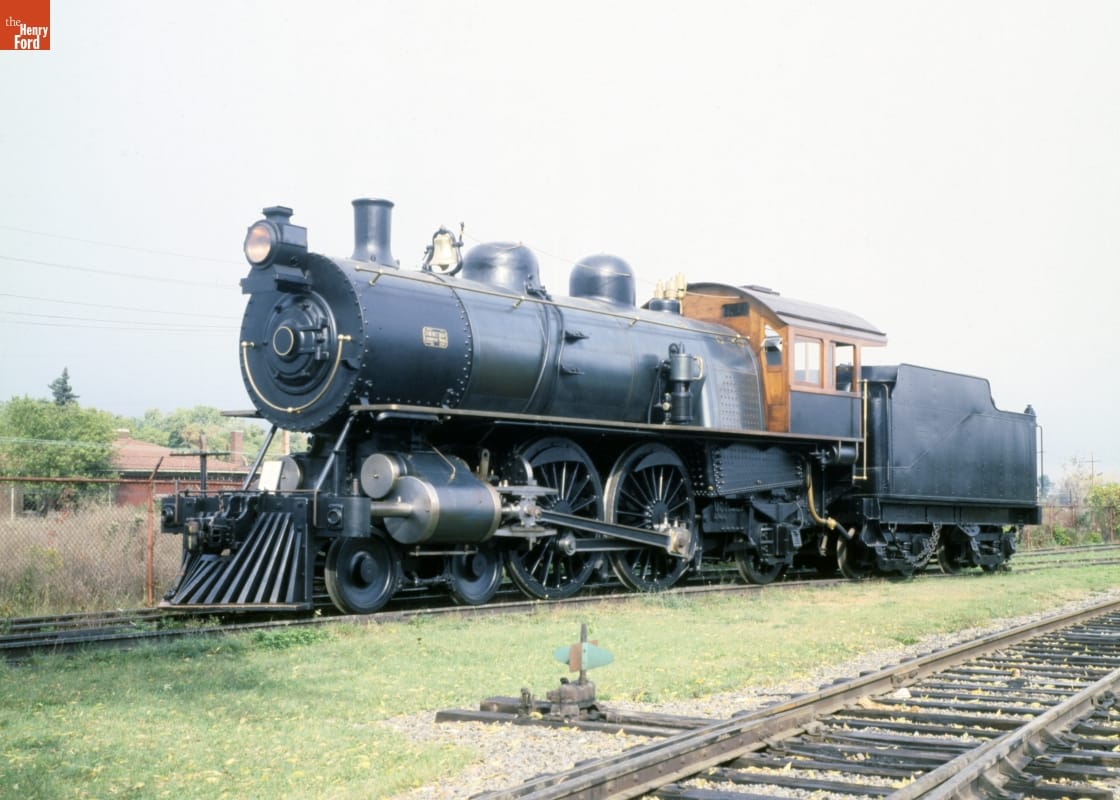
- American Locomotive Company Steam Locomotive, 1902 - The American Locomotive Company of Schenectady, New York, built this locomotive in 1902. It is a 4-4-2 Atlantic type, with four leading wheels, four driving wheels, and two trailing wheels. The Atlantic was designed to pull light wooden passenger cars at high speeds. This locomotive operated on the Michigan Central Railroad's Detroit-Chicago line until heavier steel cars made it obsolete.
- 1902
- Collections - Artifact
American Locomotive Company Steam Locomotive, 1902
The American Locomotive Company of Schenectady, New York, built this locomotive in 1902. It is a 4-4-2 Atlantic type, with four leading wheels, four driving wheels, and two trailing wheels. The Atlantic was designed to pull light wooden passenger cars at high speeds. This locomotive operated on the Michigan Central Railroad's Detroit-Chicago line until heavier steel cars made it obsolete.
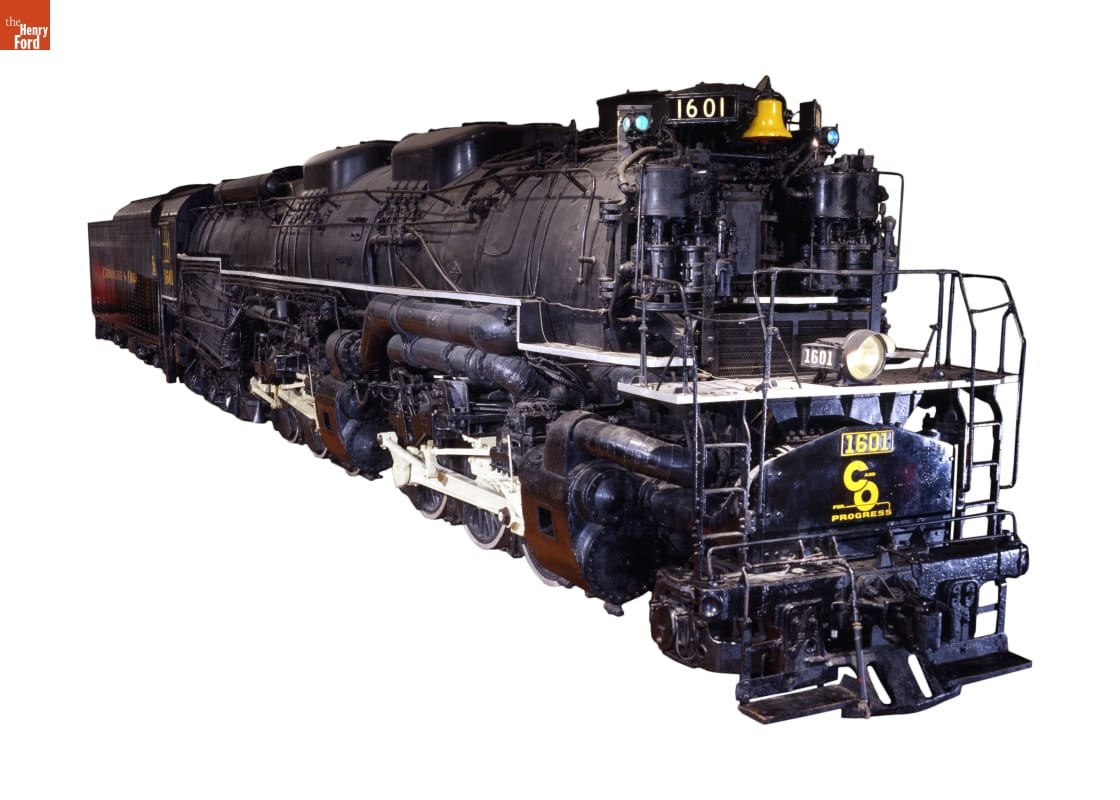
- Allegheny Steam Locomotive, 1941 - The Chesapeake & Ohio Railway's massive Allegheny, introduced in 1941, represents the peak of steam railroad technology. Among the largest and most powerful steam locomotives ever built, it weighed 1.2 million pounds with its tender and could generate 7,500 horsepower. Just 11 years later, C&O began pulling these giants from service. Diesel-electric locomotives proved more flexible and less expensive.
- 1941
- Collections - Artifact
Allegheny Steam Locomotive, 1941
The Chesapeake & Ohio Railway's massive Allegheny, introduced in 1941, represents the peak of steam railroad technology. Among the largest and most powerful steam locomotives ever built, it weighed 1.2 million pounds with its tender and could generate 7,500 horsepower. Just 11 years later, C&O began pulling these giants from service. Diesel-electric locomotives proved more flexible and less expensive.
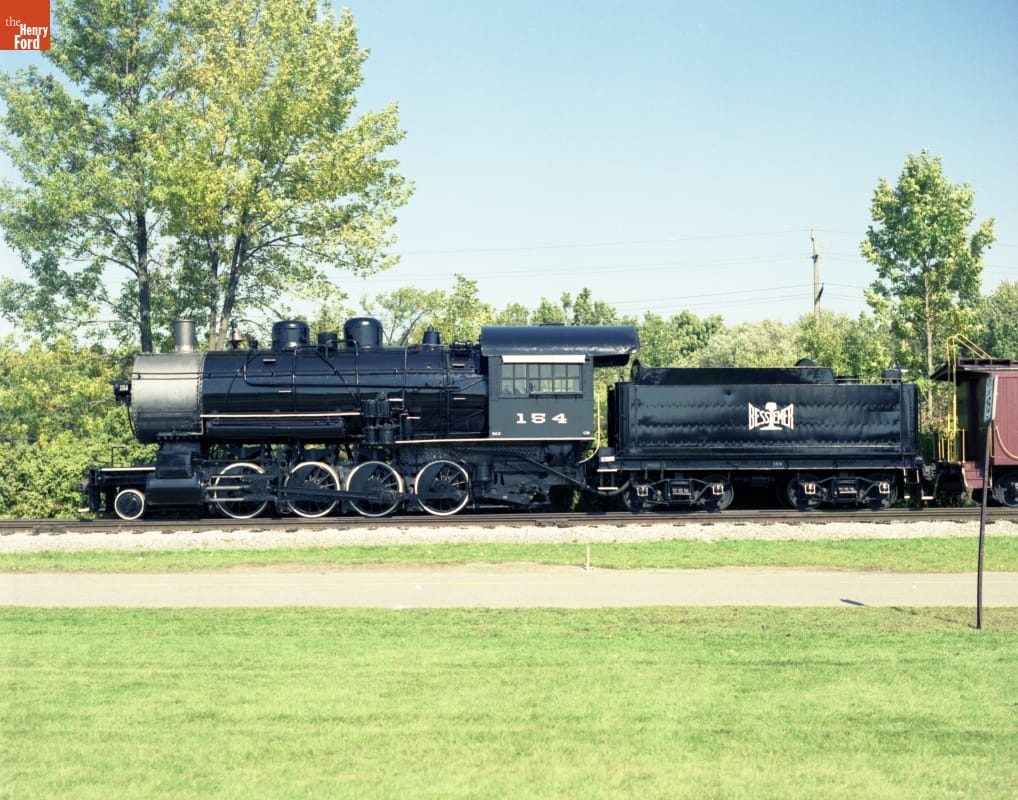
- Baldwin "Consolidation" Steam Locomotive, 1909 - Locomotives like this hauled heavy freight at relatively slow speeds. These brutes were based on practicality and increasing understandings of scientific principles, not aesthetics. This locomotive brought iron ore south and coal north on the Bessemer and Lake Erie Railroad, connecting Pittsburgh with Lake Erie. The B&LE played a limited but utterly crucial role in a nationally important heavy industry: steel.
- 1909
- Collections - Artifact
Baldwin "Consolidation" Steam Locomotive, 1909
Locomotives like this hauled heavy freight at relatively slow speeds. These brutes were based on practicality and increasing understandings of scientific principles, not aesthetics. This locomotive brought iron ore south and coal north on the Bessemer and Lake Erie Railroad, connecting Pittsburgh with Lake Erie. The B&LE played a limited but utterly crucial role in a nationally important heavy industry: steel.
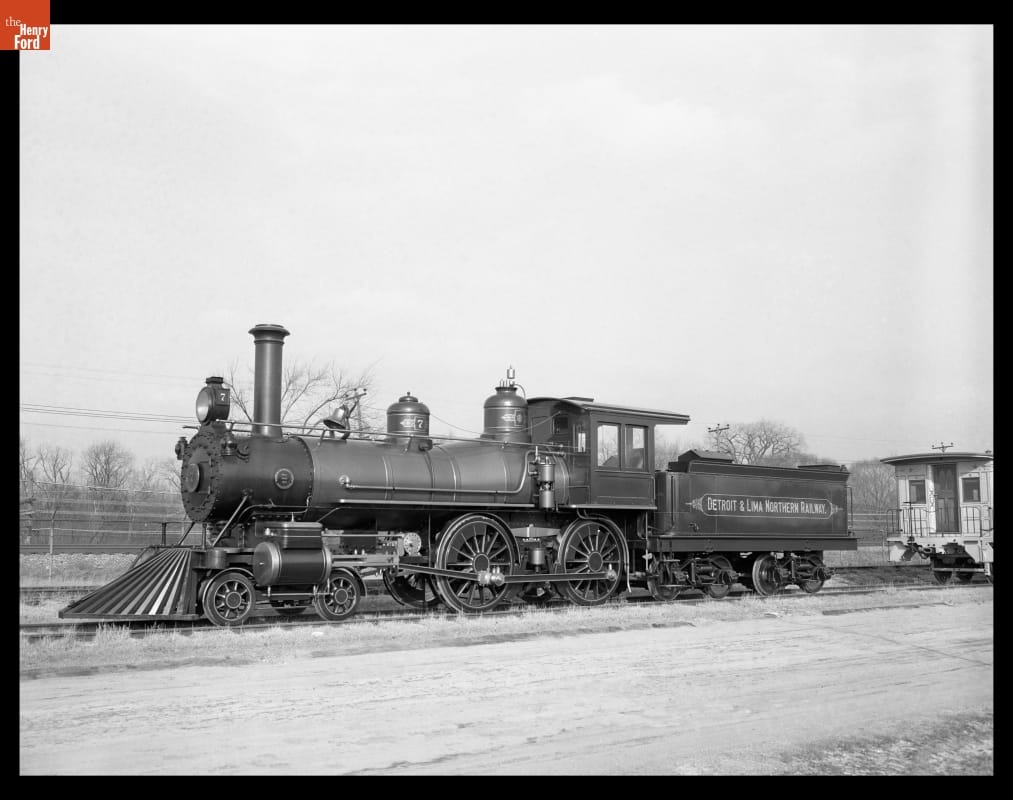
- 1897 Baldwin Locomotive Works Steam Locomotive, December 1955 - This 4-4-0 American-type locomotive pulled passenger trains on the Detroit & Lima Northern Railway, a predecessor of the Detroit, Toledo & Ironton Railroad. The 4-4-0, with four leading wheels, four driving wheels, and no trailing wheels, was a popular design on 19th-century U.S. railroads. Its small size and light weight were well suited to rough track.
- December 13, 1955
- Collections - Artifact
1897 Baldwin Locomotive Works Steam Locomotive, December 1955
This 4-4-0 American-type locomotive pulled passenger trains on the Detroit & Lima Northern Railway, a predecessor of the Detroit, Toledo & Ironton Railroad. The 4-4-0, with four leading wheels, four driving wheels, and no trailing wheels, was a popular design on 19th-century U.S. railroads. Its small size and light weight were well suited to rough track.
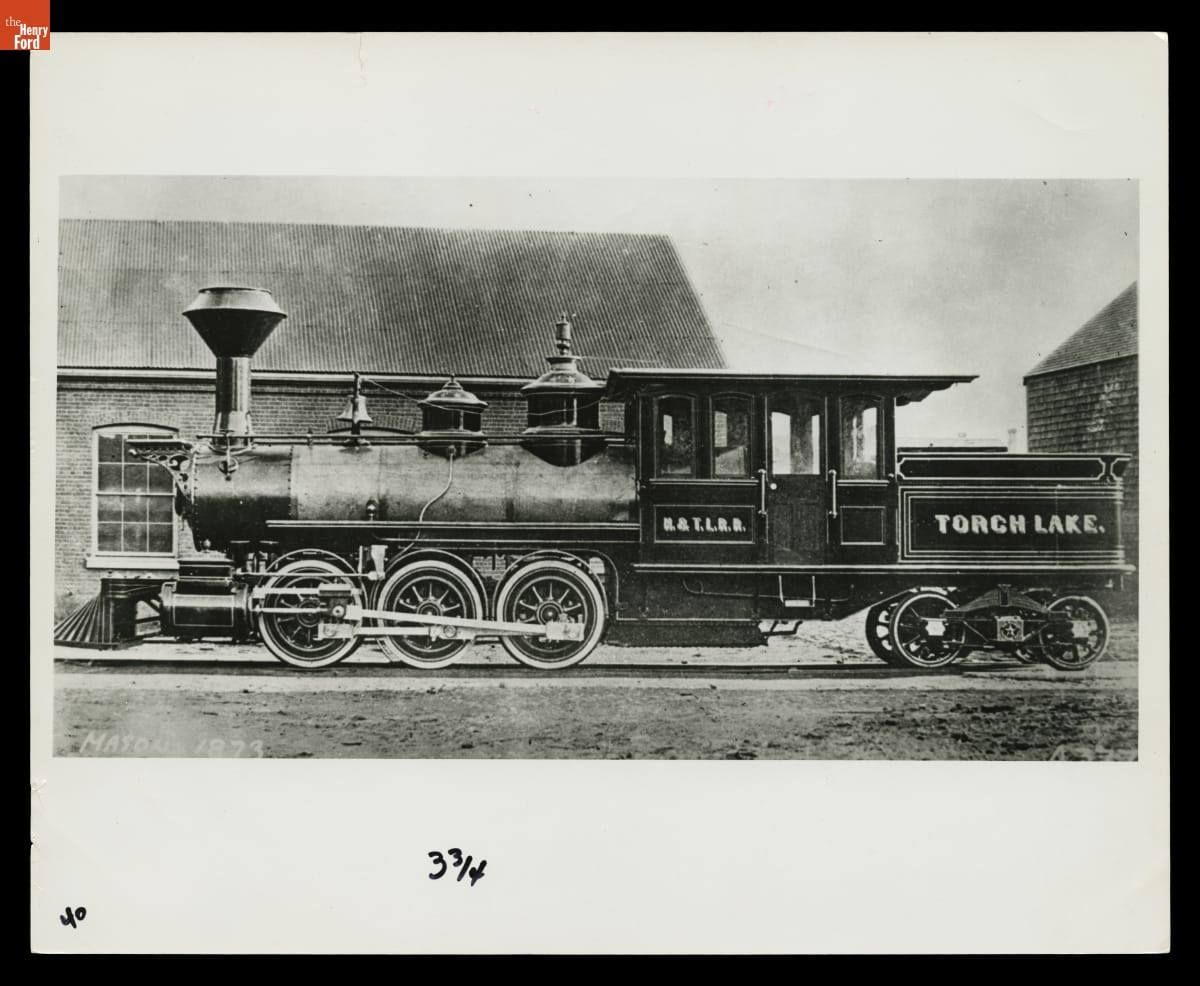
- Torch Lake Steam Locomotive, 1873 - <em>Torch Lake</em>, built by Mason Machine Works in 1873, hauled ore for the Calumet and Hecla Mining Company on Michigan's Keweenaw Peninsula. This builder's photograph shows the locomotive shortly after its completion at Mason's Taunton, Massachusetts, factory. Mason produced more than 750 steam locomotives between 1853 and 1889. <em>Torch Lake</em> joined The Henry Ford's collection in 1969.
- August 01, 1969
- Collections - Artifact
Torch Lake Steam Locomotive, 1873
Torch Lake, built by Mason Machine Works in 1873, hauled ore for the Calumet and Hecla Mining Company on Michigan's Keweenaw Peninsula. This builder's photograph shows the locomotive shortly after its completion at Mason's Taunton, Massachusetts, factory. Mason produced more than 750 steam locomotives between 1853 and 1889. Torch Lake joined The Henry Ford's collection in 1969.
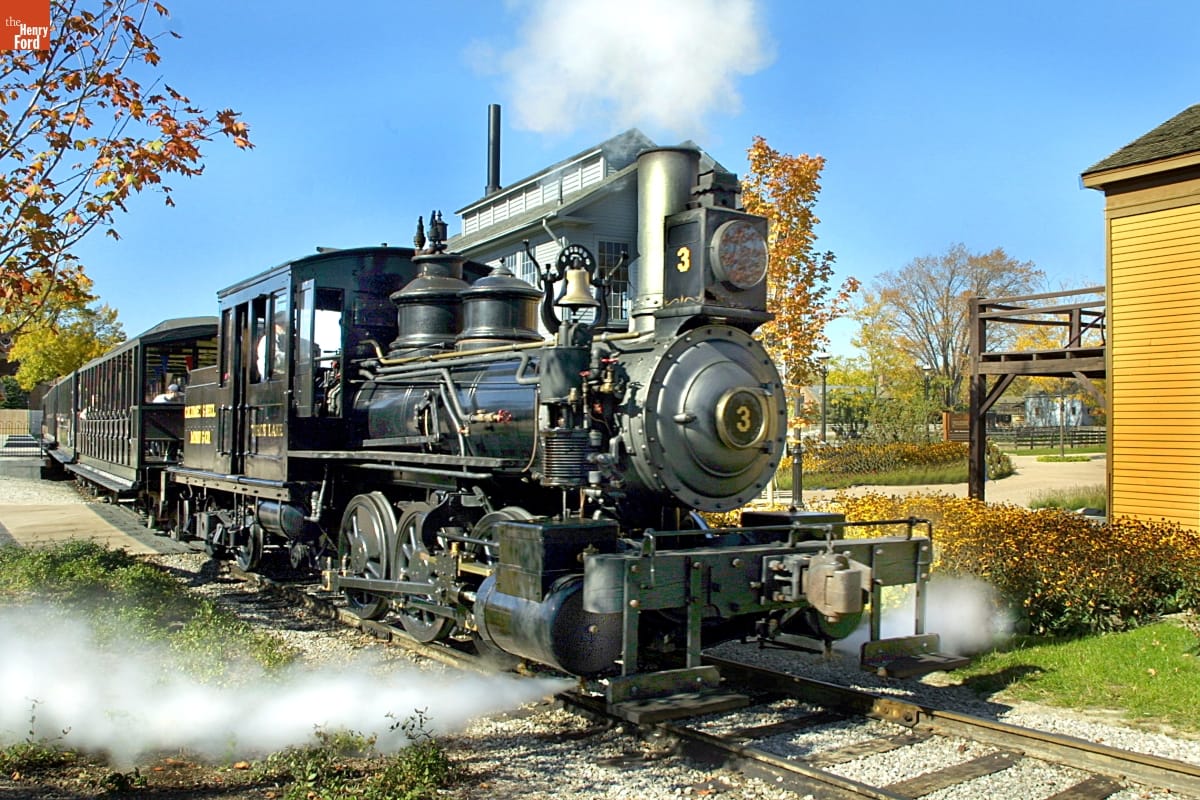
- Torch Lake Steam Locomotive, 1873 - <EM>Torch Lake</EM>, built by Mason Machine Works in 1873, hauled ore for the Calumet and Hecla Mining Company on Michigan's Keweenaw Peninsula. The engine is an articulated design. The driving wheels pivot under the boiler, allowing the locomotive to handle sharp curves. <EM>Torch Lake</EM> joined The Henry Ford's collection in 1969.
- 1873
- Collections - Artifact
Torch Lake Steam Locomotive, 1873
Torch Lake, built by Mason Machine Works in 1873, hauled ore for the Calumet and Hecla Mining Company on Michigan's Keweenaw Peninsula. The engine is an articulated design. The driving wheels pivot under the boiler, allowing the locomotive to handle sharp curves. Torch Lake joined The Henry Ford's collection in 1969.
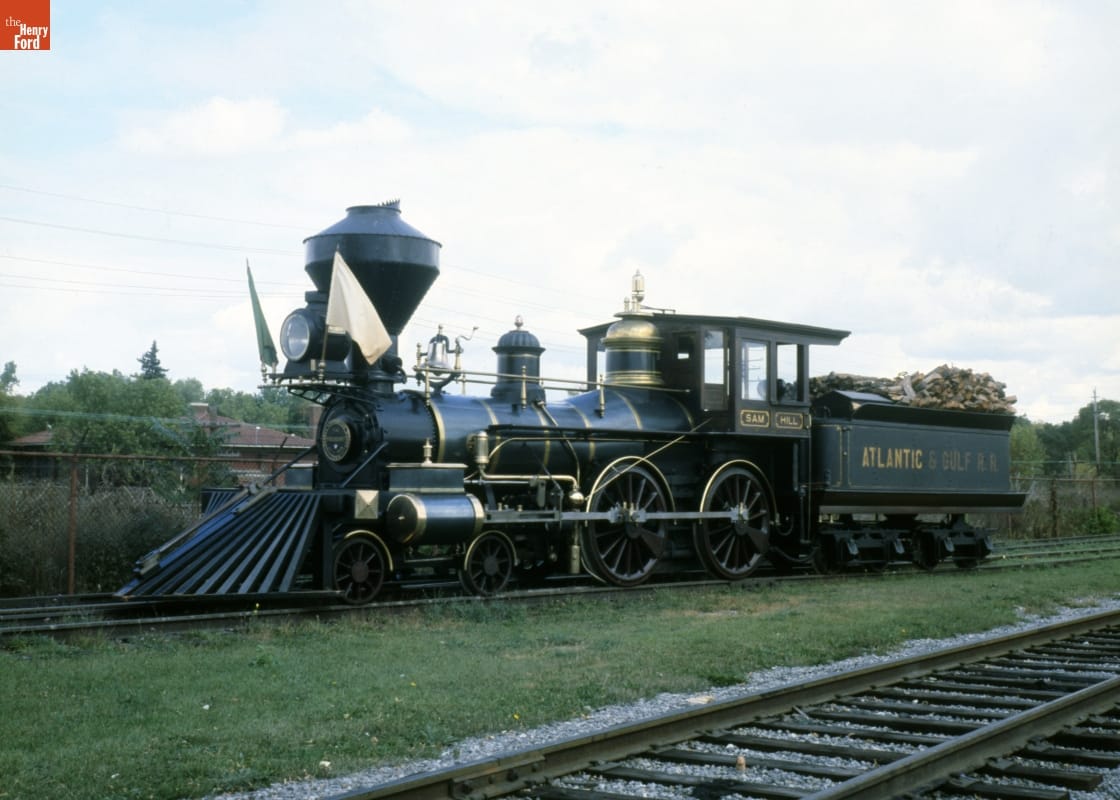
- Steam Locomotive "Sam Hill," 1858 - This 1858 Rogers steam locomotive is typical of those used in the United States in the second half of the 19th century. Its flexible wheel arrangement, high power output, and light weight were well suited to the tight curves, steep grades, and hastily constructed track that characterized American railroads. This locomotive struck an agreeable balance between practicality, safety, and economy.
- 1858
- Collections - Artifact
Steam Locomotive "Sam Hill," 1858
This 1858 Rogers steam locomotive is typical of those used in the United States in the second half of the 19th century. Its flexible wheel arrangement, high power output, and light weight were well suited to the tight curves, steep grades, and hastily constructed track that characterized American railroads. This locomotive struck an agreeable balance between practicality, safety, and economy.
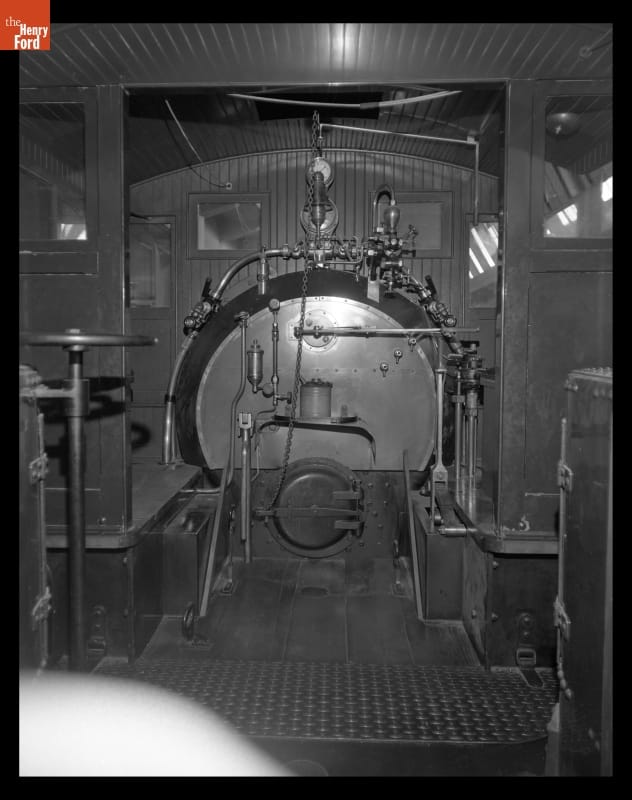
- Interior of 1897 Baldwin Locomotive Works Steam Locomotive, January 1961 - This view inside the 1897 Baldwin's cab provides a good look at the locomotive's backhead -- the rear end of the boiler -- and controls. The vertical lever at right is the reverser, which controls the timing by which steam is sent into the cylinders. The horizontal lever at center is the throttle. The door below it opens into the locomotive's firebox.
- January 06, 1961
- Collections - Artifact
Interior of 1897 Baldwin Locomotive Works Steam Locomotive, January 1961
This view inside the 1897 Baldwin's cab provides a good look at the locomotive's backhead -- the rear end of the boiler -- and controls. The vertical lever at right is the reverser, which controls the timing by which steam is sent into the cylinders. The horizontal lever at center is the throttle. The door below it opens into the locomotive's firebox.