
Baldwin "Consolidation" Steam Locomotive, 1909
THF91583 / Baldwin "Consolidation" Steam Locomotive, 1909
01
Artifact Overview
Locomotives like this hauled heavy freight at relatively slow speeds. These brutes were based on practicality and increasing understandings of scientific principles, not aesthetics. This locomotive brought iron ore south and coal north on the Bessemer and Lake Erie Railroad, connecting Pittsburgh with Lake Erie. The B&LE played a limited but utterly crucial role in a nationally important heavy industry: steel.
Artifact Details
Artifact
Steam locomotive
Date Made
1909
Creators
Place of Creation
Location
at Henry Ford Museum in Transportation - Trains
Object ID
83.190.1
Credit
From the Collections of The Henry Ford.
Material
Steel (Alloy)
Color
Black (Color)
Inscriptions
Location of inscription not noted: BESS I EMER
Location of inscription not noted: 154
Location of inscription not noted: 154 / B&LE / C3B
Keywords |
|---|
02
Related Content
 Set
SetOnline Railroad Collection
- 8 Artifacts
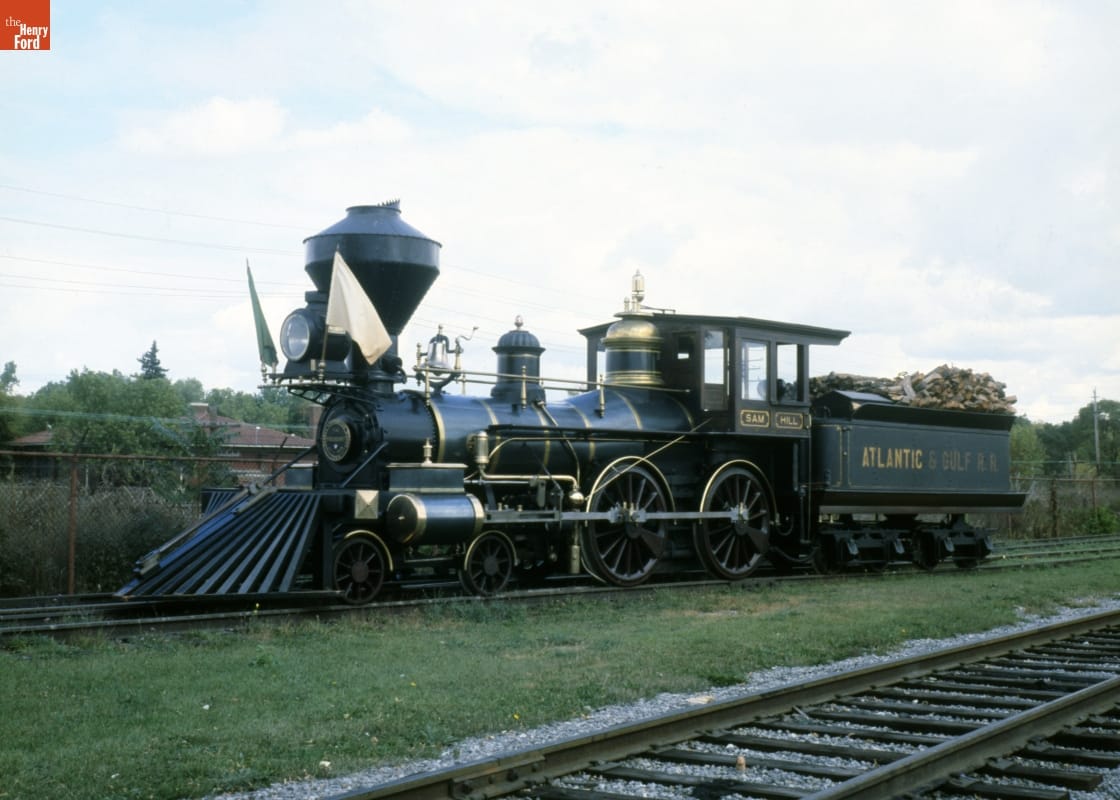
This 1858 Rogers steam locomotive is typical of those used in the United States in the second half of the 19th century. Its flexible wheel arrangement, high power output, and light weight were well suited to the tight curves, steep grades, and hastily constructed track that characterized American railroads. This locomotive struck an agreeable balance between practicality, safety, and economy. article
The Bessemer and Lake Erie Railroad’s Baldwin “Consolidation” Steam Locomotive: Modest but Crucial
The Baldwin locomotive is practical, brute technology designed for a single purpose — hauling heavy freight trains at relatively slow speeds. Read more!