
Search
- Texaco Sign, 1964 - In 1937, Texaco hired visionary industrial designer Walter Dorwin Teague to redesign and modernize its stations. By 1940, Texaco had 500 stations with clean white porcelain, green lines, and bold red stars. Teague's design was a beacon to drivers, promising friendly attendance, quality gasoline, and clean restrooms. This sign was also designed by Teague.
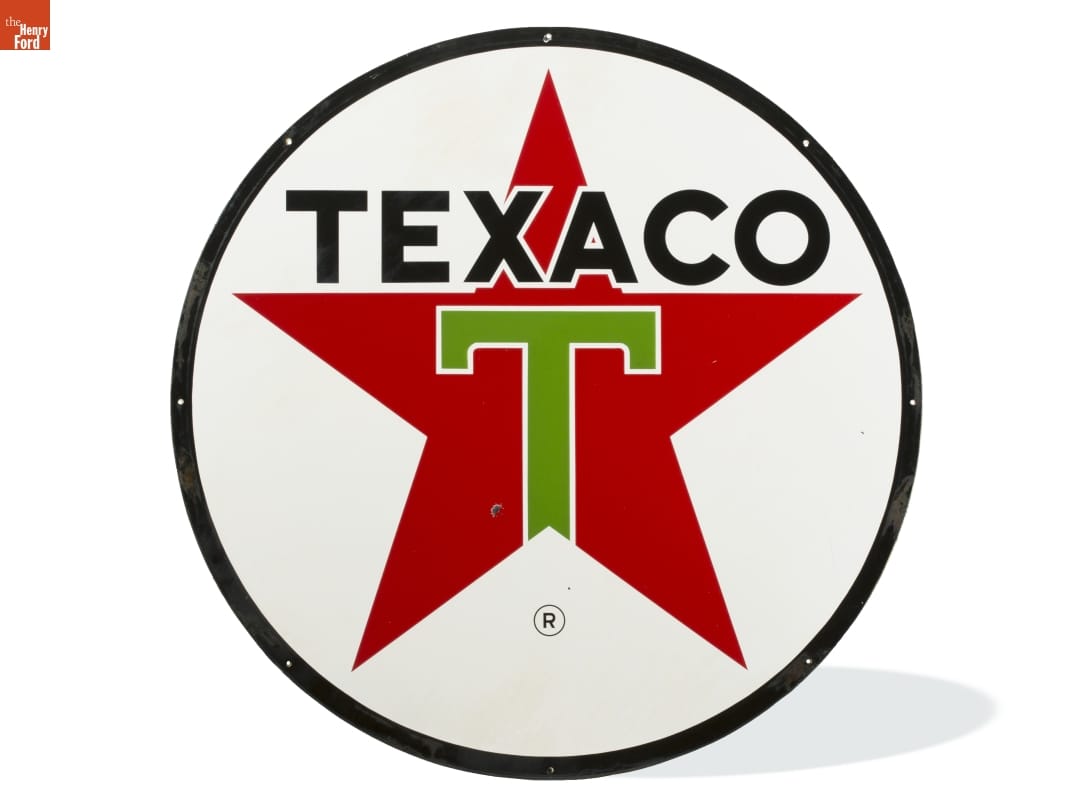
- February 02, 1964
- Collections - Artifact
Texaco Sign, 1964
In 1937, Texaco hired visionary industrial designer Walter Dorwin Teague to redesign and modernize its stations. By 1940, Texaco had 500 stations with clean white porcelain, green lines, and bold red stars. Teague's design was a beacon to drivers, promising friendly attendance, quality gasoline, and clean restrooms. This sign was also designed by Teague.
- Texaco Marfak Sign, circa 1939 - While most of its competitors focused on regional markets prior to World War II, Texaco built itself into a national brand. By 1942, the company had 40,000 outlets across the United States. "Marfak" was Texaco's brand name for its automobile lubrication process. Marfak is the brightest star in the constellation Perseus -- a reference to Texaco's red star logo.
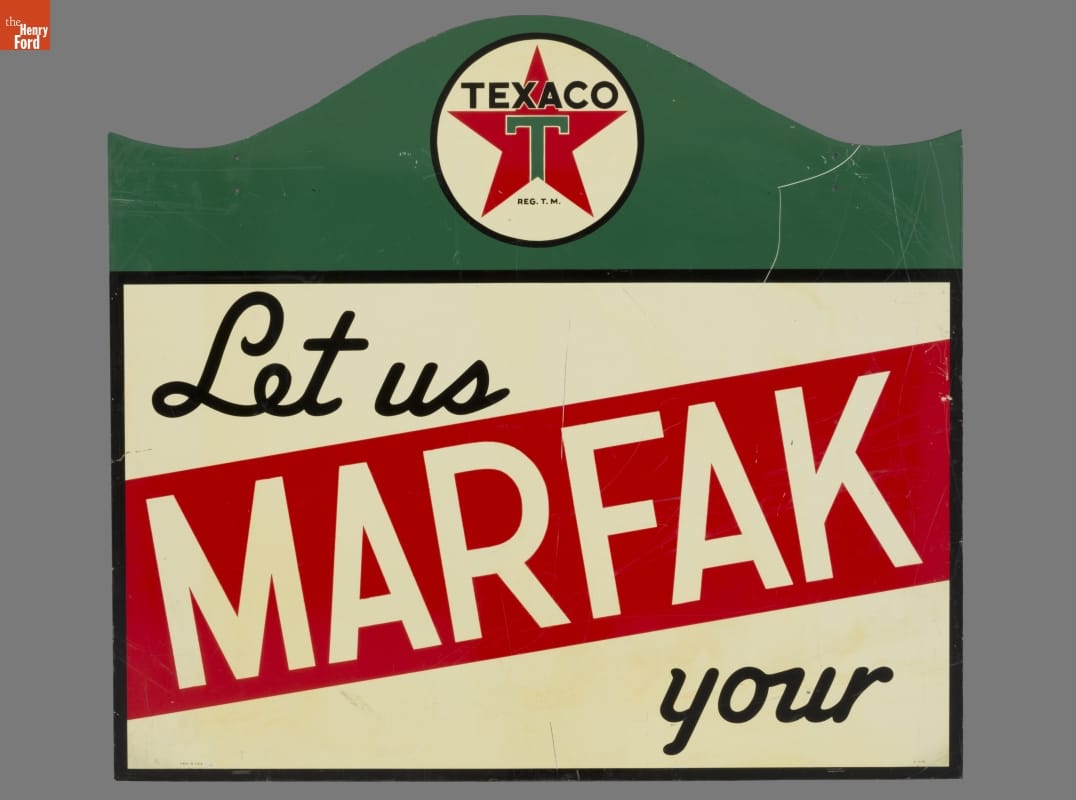
- circa 1939
- Collections - Artifact
Texaco Marfak Sign, circa 1939
While most of its competitors focused on regional markets prior to World War II, Texaco built itself into a national brand. By 1942, the company had 40,000 outlets across the United States. "Marfak" was Texaco's brand name for its automobile lubrication process. Marfak is the brightest star in the constellation Perseus -- a reference to Texaco's red star logo.
- Texaco Signpost, 1940-1960 - In 1937, Texaco hired visionary industrial designer Walter Dorwin Teague to redesign and modernize its stations. By 1940, Texaco had 500 stations with clean white porcelain, green lines, and bold red stars. Teague's design was a beacon to drivers, promising friendly attendants, quality gasoline, and clean restrooms. This "banjo" sign was also designed by Teague.
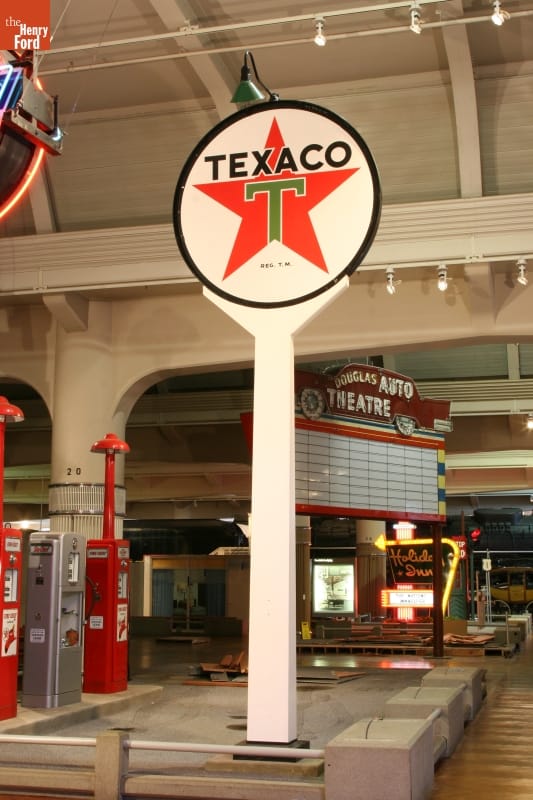
- 1940-1960
- Collections - Artifact
Texaco Signpost, 1940-1960
In 1937, Texaco hired visionary industrial designer Walter Dorwin Teague to redesign and modernize its stations. By 1940, Texaco had 500 stations with clean white porcelain, green lines, and bold red stars. Teague's design was a beacon to drivers, promising friendly attendants, quality gasoline, and clean restrooms. This "banjo" sign was also designed by Teague.
- Texaco Toy Truck, 1959 -
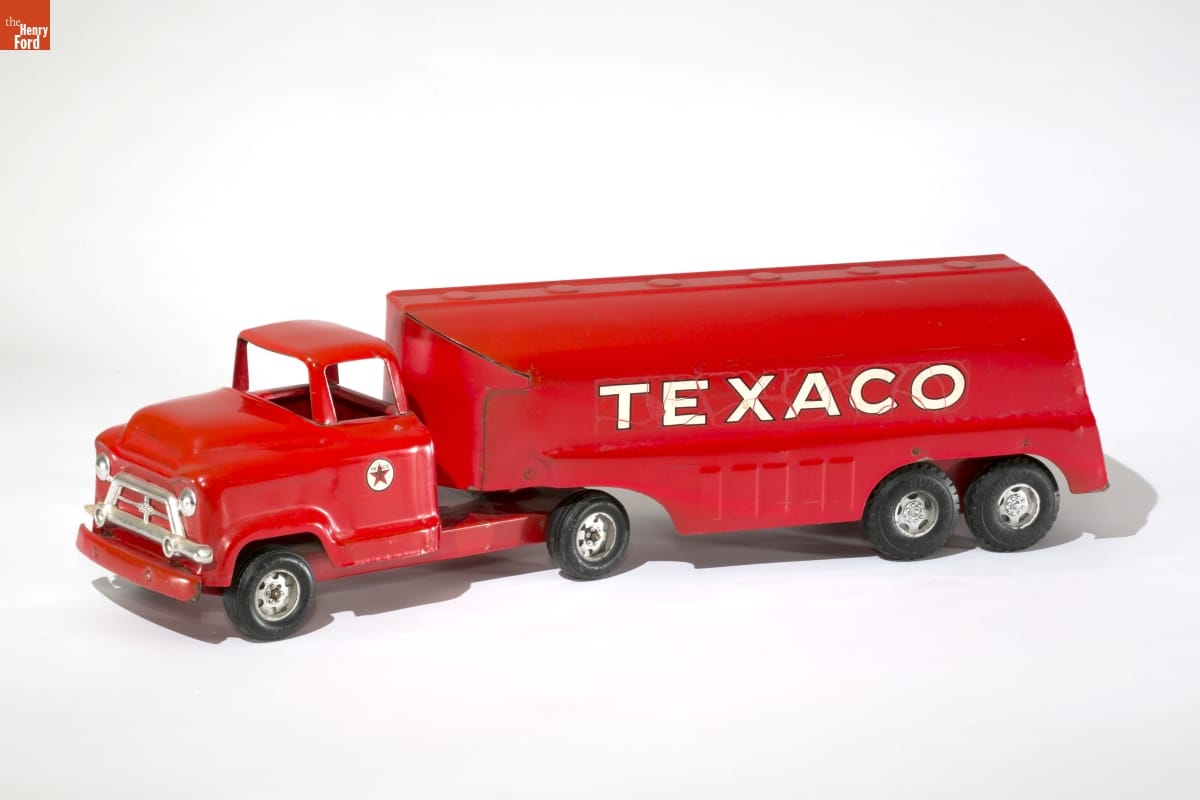
- 1959
- Collections - Artifact
Texaco Toy Truck, 1959
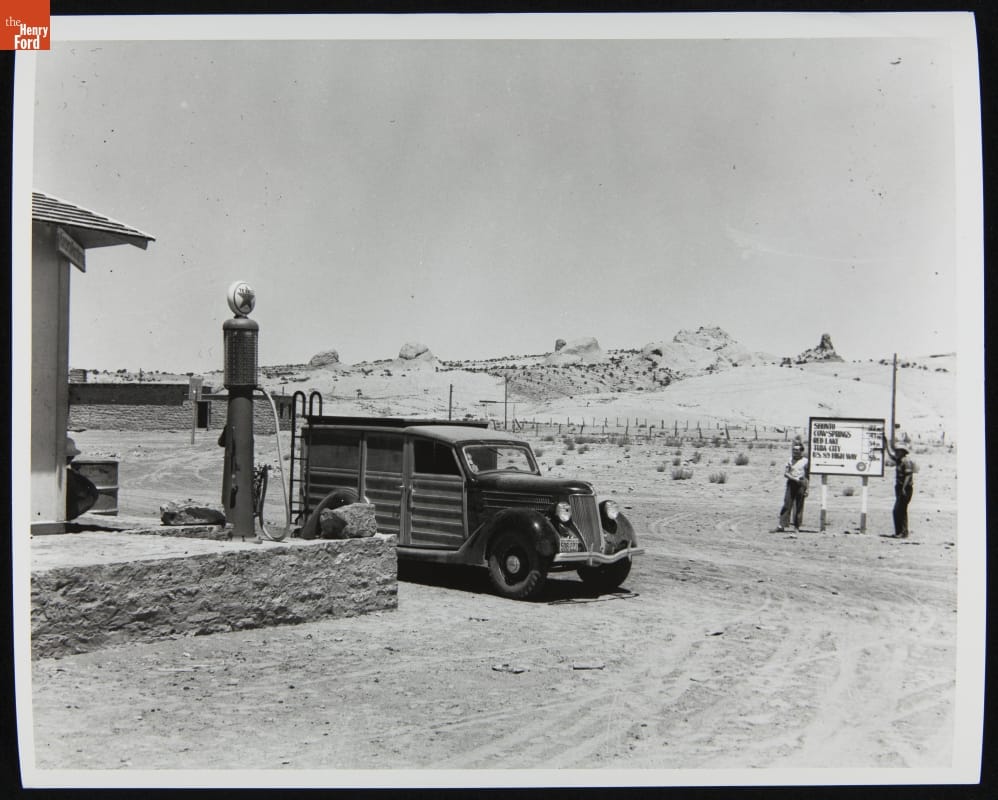
- Texaco Gas Station, Kayenta, Arizona, 1935 - By the late 1920s, gas stations had become fixtures in the American landscape. Like many other service stations, this one in the Navajo Nation in the southwestern United States also became a community gathering place. It sold gasoline, served as a post office, and had one of the few area restrooms available to passing motorists.
- 1936
- Collections - Artifact
Texaco Gas Station, Kayenta, Arizona, 1935
By the late 1920s, gas stations had become fixtures in the American landscape. Like many other service stations, this one in the Navajo Nation in the southwestern United States also became a community gathering place. It sold gasoline, served as a post office, and had one of the few area restrooms available to passing motorists.
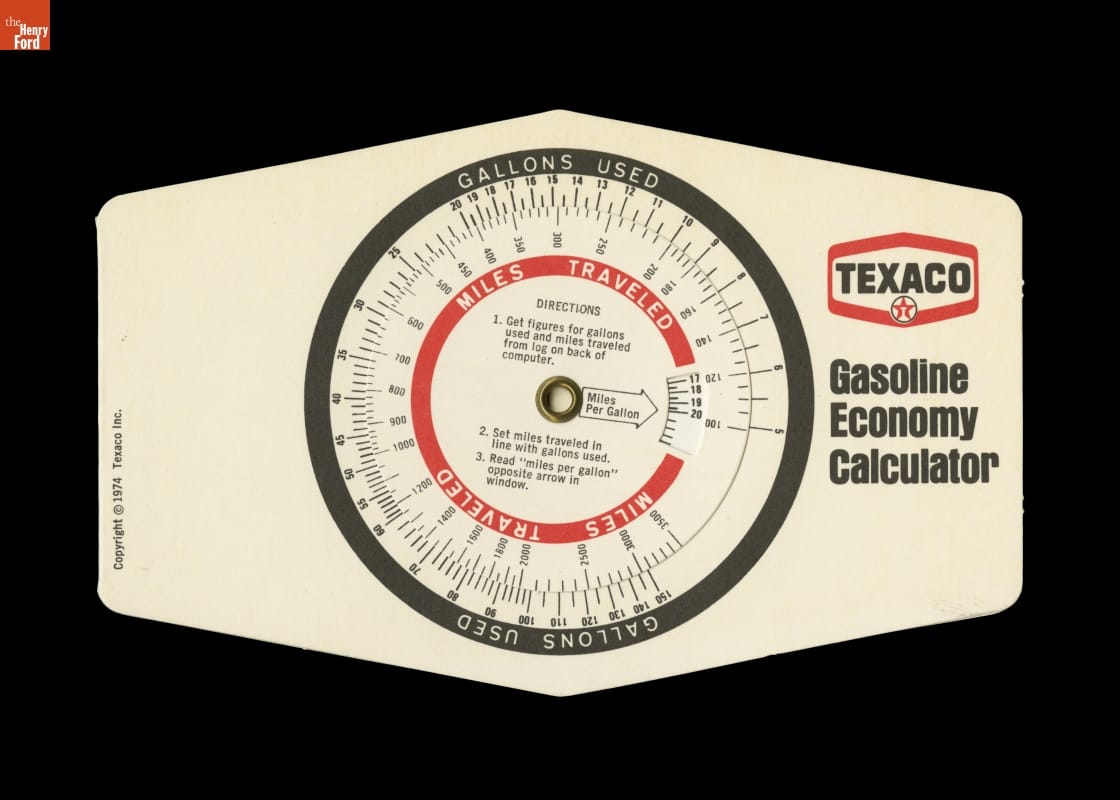
- Texaco Gasoline Economy Calculator, 1974 - Although not new, mileage calculators became much more popular during the gasoline crisis in the 1970s. In addition to calculating miles per gallon, this Texaco giveaway contains a mileage record on the back with the advice, "Conserve While You Consume."
- 1974
- Collections - Artifact
Texaco Gasoline Economy Calculator, 1974
Although not new, mileage calculators became much more popular during the gasoline crisis in the 1970s. In addition to calculating miles per gallon, this Texaco giveaway contains a mileage record on the back with the advice, "Conserve While You Consume."
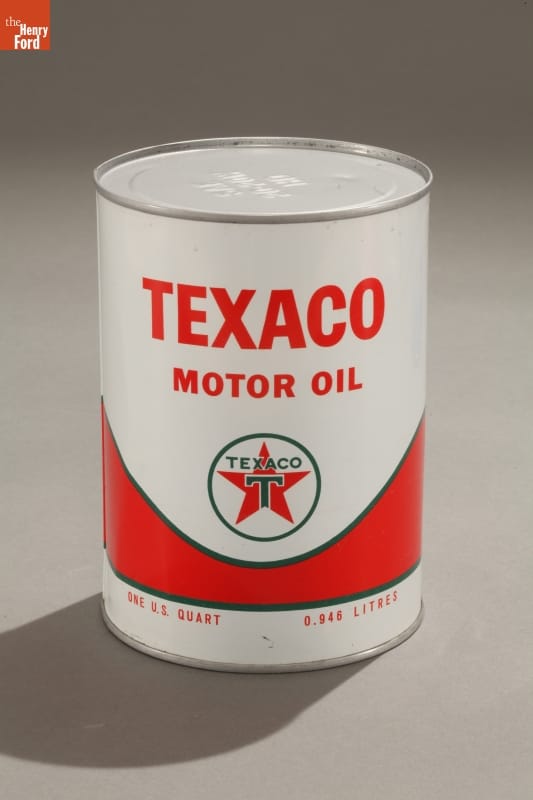
- Texaco Motor Oil Can, 1966 - The Texas Company, better known as Texaco, had its roots in the Spindletop, Texas, oil strike of 1901. While most of its competitors focused on regional markets prior to World War II, Texaco built itself into a national brand. By 1942, the company had 40,000 outlets across the United States. Texaco sold everything from gasoline to motor oil to household lubricants.
- 1966
- Collections - Artifact
Texaco Motor Oil Can, 1966
The Texas Company, better known as Texaco, had its roots in the Spindletop, Texas, oil strike of 1901. While most of its competitors focused on regional markets prior to World War II, Texaco built itself into a national brand. By 1942, the company had 40,000 outlets across the United States. Texaco sold everything from gasoline to motor oil to household lubricants.
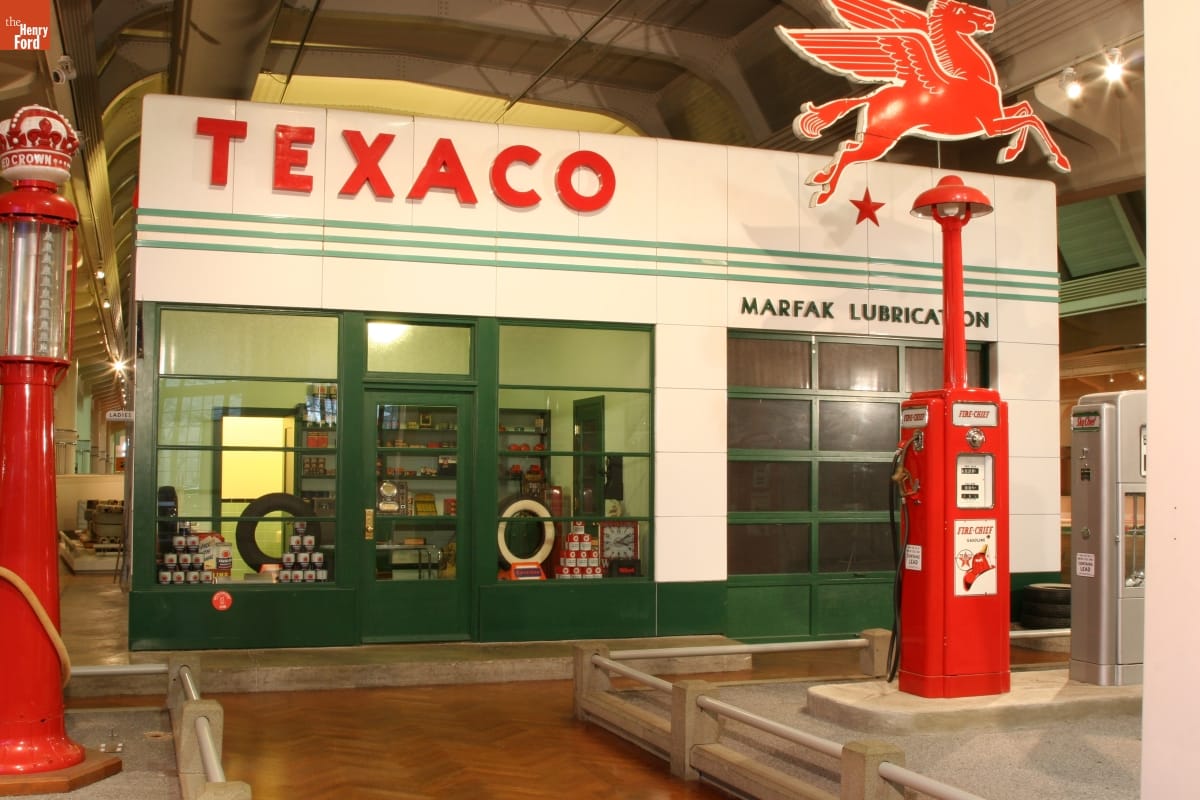
- Texaco Service Station, circa 1960 - A combination of several design disciplines (styling, package design, product design, and graphic design), Walter Dorwin Teague's Texaco station suggested consistency, simplicity, and cleanliness -- a strong corporate identity that enabled Texaco to stand out in a highly competitive marketplace.
- circa 1960
- Collections - Artifact
Texaco Service Station, circa 1960
A combination of several design disciplines (styling, package design, product design, and graphic design), Walter Dorwin Teague's Texaco station suggested consistency, simplicity, and cleanliness -- a strong corporate identity that enabled Texaco to stand out in a highly competitive marketplace.
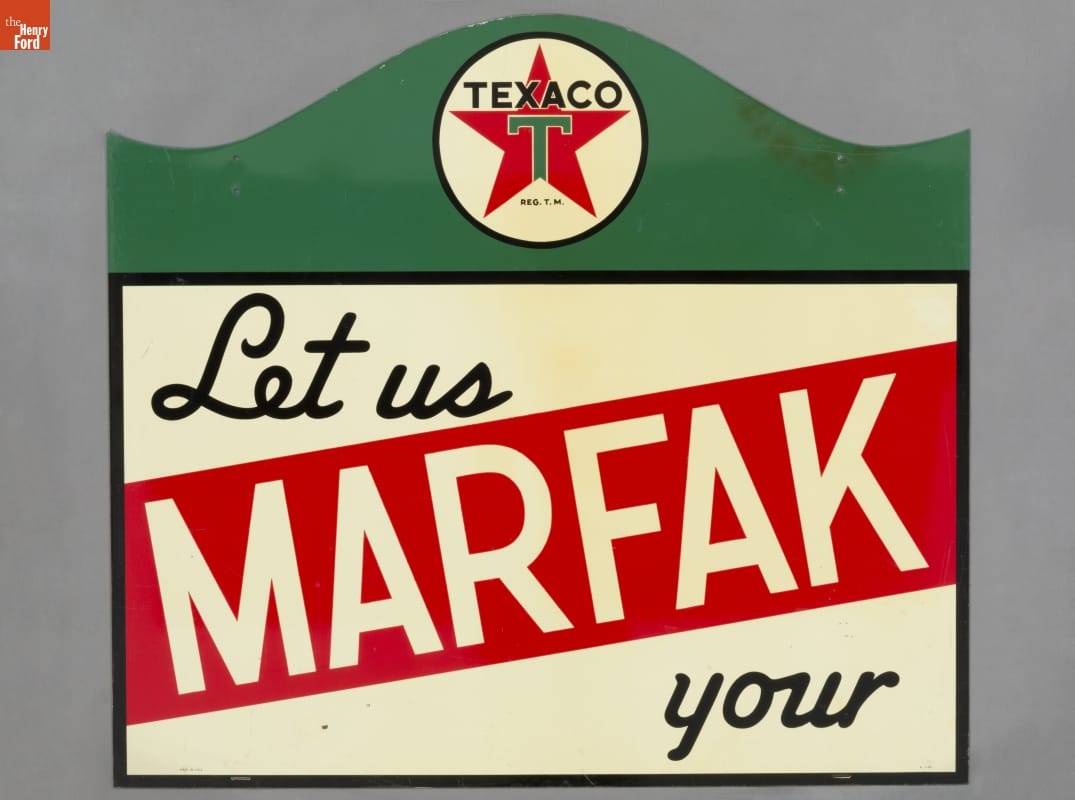
- Texaco Marfak Sign, circa 1939 - While most of its competitors focused on regional markets prior to World War II, Texaco built itself into a national brand. By 1942, the company had 40,000 outlets across the United States. "Marfak" was Texaco's brand name for its automobile lubrication process. Marfak is the brightest star in the constellation Perseus -- a reference to Texaco's red star logo.
- circa 1939
- Collections - Artifact
Texaco Marfak Sign, circa 1939
While most of its competitors focused on regional markets prior to World War II, Texaco built itself into a national brand. By 1942, the company had 40,000 outlets across the United States. "Marfak" was Texaco's brand name for its automobile lubrication process. Marfak is the brightest star in the constellation Perseus -- a reference to Texaco's red star logo.
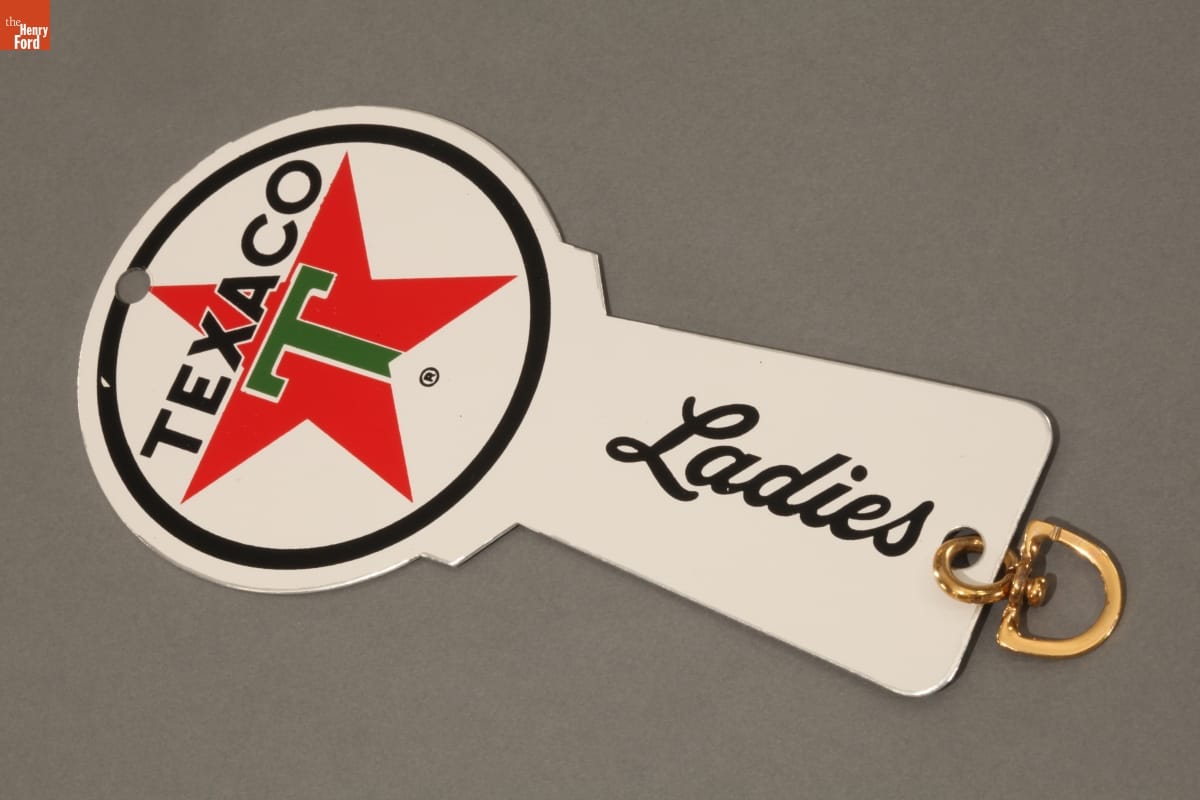
- Texaco Station Restroom Key Fob, 1950-1965 - Restrooms were a powerful incentive to get motorists off the road and into a gas station. Retailers made a point of maintaining clean, comfortable facilities. Restrooms were kept locked, and customers requested keys from the attendant to access them. This system ensured patrons' safety and helped keep the rooms tidy.
- 1950-1965
- Collections - Artifact
Texaco Station Restroom Key Fob, 1950-1965
Restrooms were a powerful incentive to get motorists off the road and into a gas station. Retailers made a point of maintaining clean, comfortable facilities. Restrooms were kept locked, and customers requested keys from the attendant to access them. This system ensured patrons' safety and helped keep the rooms tidy.