
Search
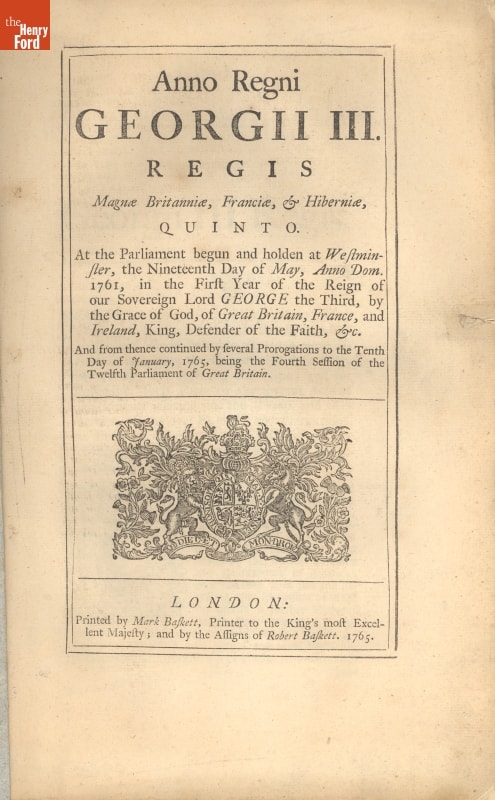
- Stamp Act, 1765 - The British government, after winning an expensive war in the colonies, passed the Stamp Act in 1765 to raise money for the defense of the American frontier. The tax on all printed paper irritated American colonists who were unrepresented in Parliament. "Taxation without representation" became their cry of protest. Parliament repealed the act in 1766, but still claimed the right to tax.
- 1765
- Collections - Artifact
Stamp Act, 1765
The British government, after winning an expensive war in the colonies, passed the Stamp Act in 1765 to raise money for the defense of the American frontier. The tax on all printed paper irritated American colonists who were unrepresented in Parliament. "Taxation without representation" became their cry of protest. Parliament repealed the act in 1766, but still claimed the right to tax.
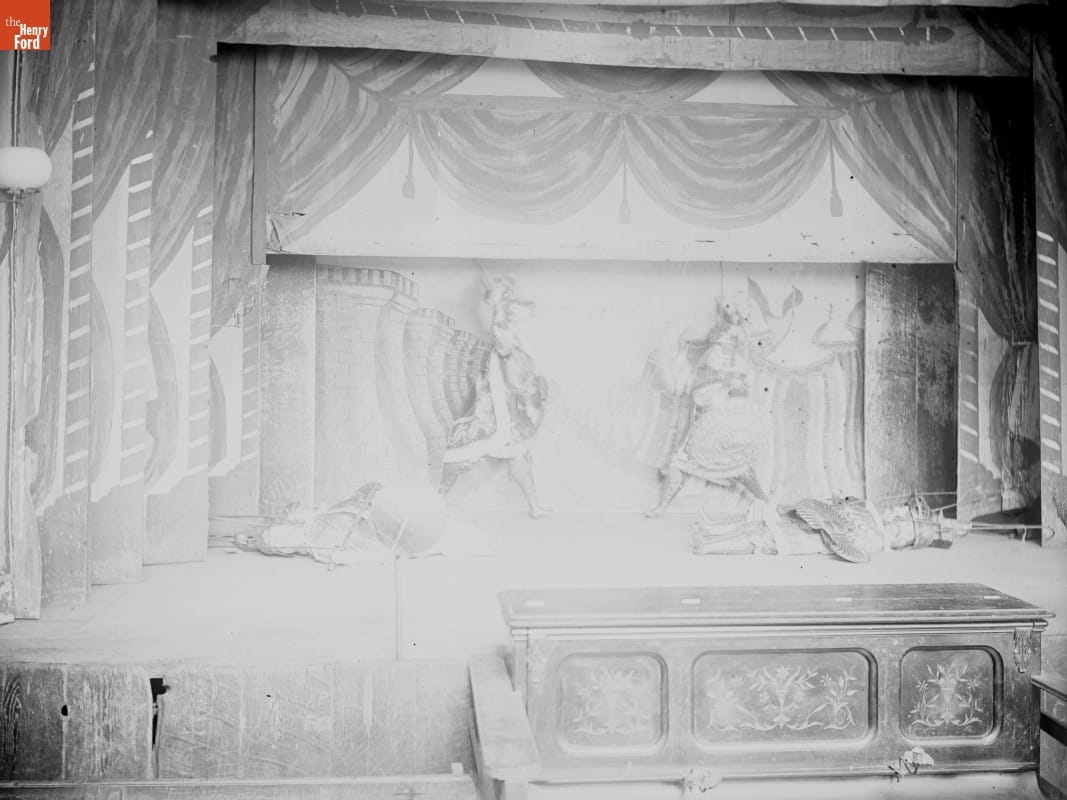
- Painted Scenery, Stage with Props and Actors, 1890-1915 - In 1890, Jenny Young Chandler, 25 years old and recently widowed, began working for the <EM>New York Herald</EM>. As a photojournalist and feature writer, Chandler captured life in Brooklyn, New York, and vicinity. She also documented collections of private individuals and museums -- some of which were featured in magazine articles for collectors. By 1922, the time of her death, she had produced over 800 glass plate negatives.
- 1890-1915
- Collections - Artifact
Painted Scenery, Stage with Props and Actors, 1890-1915
In 1890, Jenny Young Chandler, 25 years old and recently widowed, began working for the New York Herald. As a photojournalist and feature writer, Chandler captured life in Brooklyn, New York, and vicinity. She also documented collections of private individuals and museums -- some of which were featured in magazine articles for collectors. By 1922, the time of her death, she had produced over 800 glass plate negatives.
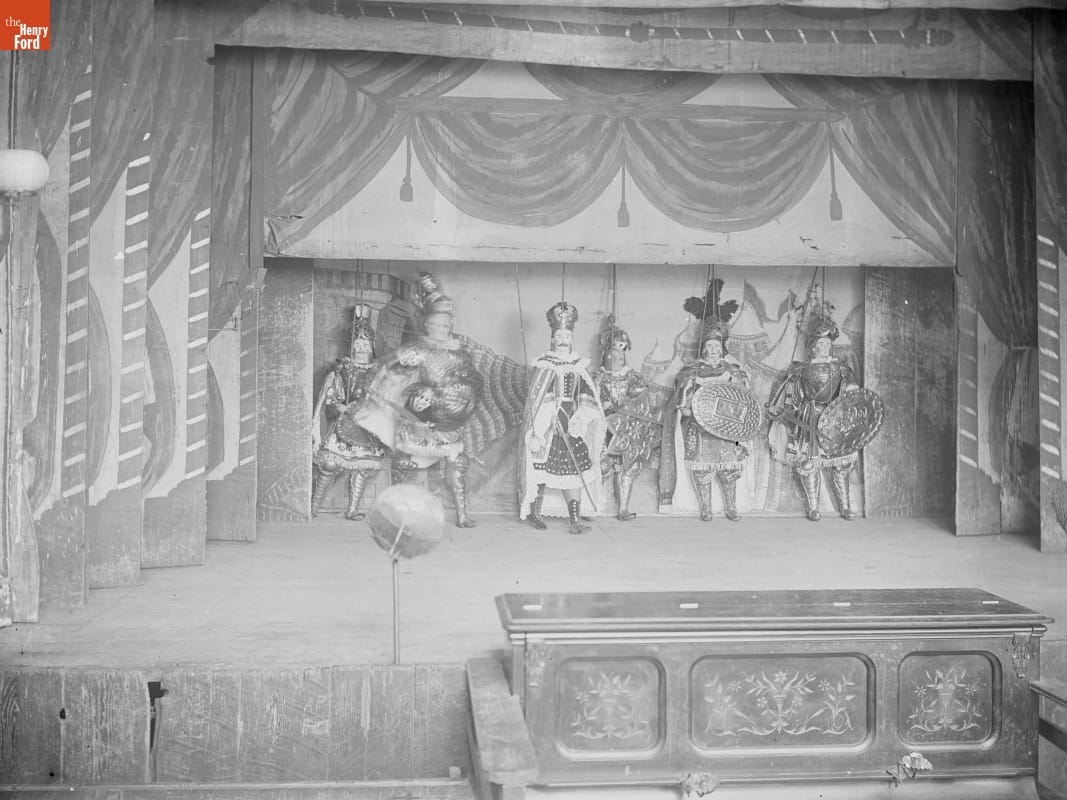
- Painted Scenery, Stage with Props and Actors, 1890-1915 - In 1890, Jenny Young Chandler, 25 years old and recently widowed, began working for the <EM>New York Herald</EM>. As a photojournalist and feature writer, Chandler captured life in Brooklyn, New York, and vicinity. She also documented collections of private individuals and museums -- some of which were featured in magazine articles for collectors. By 1922, the time of her death, she had produced over 800 glass plate negatives.
- 1890-1915
- Collections - Artifact
Painted Scenery, Stage with Props and Actors, 1890-1915
In 1890, Jenny Young Chandler, 25 years old and recently widowed, began working for the New York Herald. As a photojournalist and feature writer, Chandler captured life in Brooklyn, New York, and vicinity. She also documented collections of private individuals and museums -- some of which were featured in magazine articles for collectors. By 1922, the time of her death, she had produced over 800 glass plate negatives.
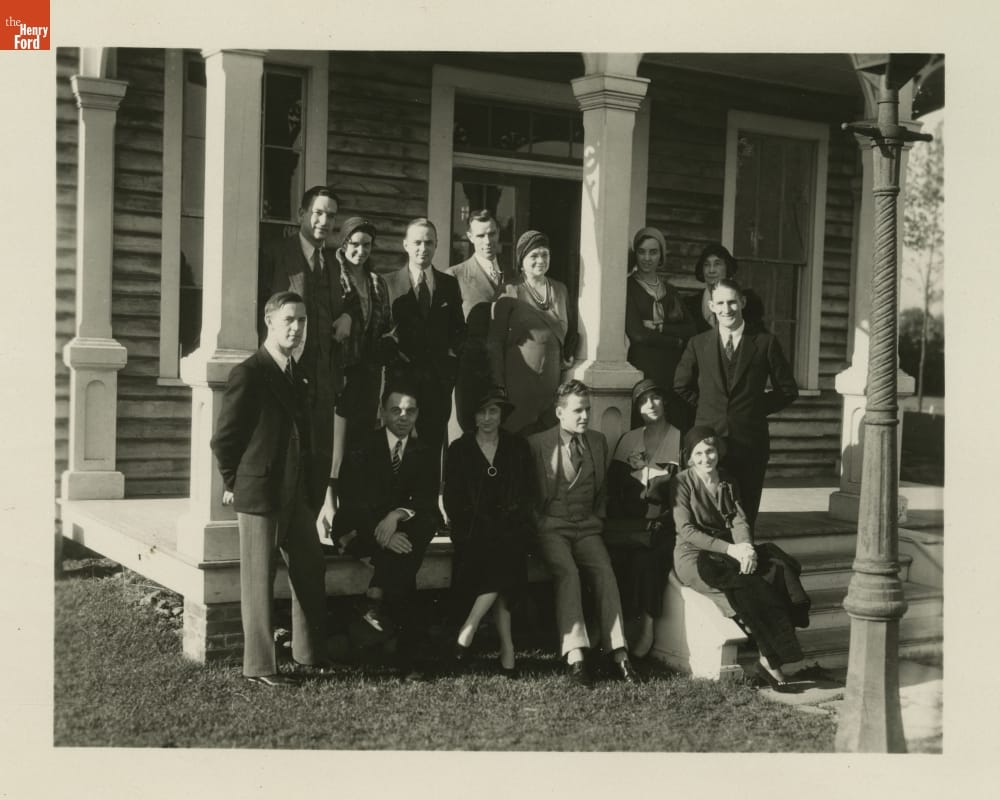
- Phillips Lord ("Seth Parker") and Fellow Actors Visiting Greenfield Village, October 21, 1931 - Phillips Lord created the radio personality of Seth Parker in 1929. The fictional Parker and his neighbors, a group of rustic New Englanders from Jonesport, Maine, sang hymns, spirituals and popular folk tunes during the half-hour Sunday night program. Parker's troop also toured the country performing for its growing number of fans. In 1931, they paid a visit to Detroit and Henry Ford's Greenfield Village.
- October 21, 1931
- Collections - Artifact
Phillips Lord ("Seth Parker") and Fellow Actors Visiting Greenfield Village, October 21, 1931
Phillips Lord created the radio personality of Seth Parker in 1929. The fictional Parker and his neighbors, a group of rustic New Englanders from Jonesport, Maine, sang hymns, spirituals and popular folk tunes during the half-hour Sunday night program. Parker's troop also toured the country performing for its growing number of fans. In 1931, they paid a visit to Detroit and Henry Ford's Greenfield Village.
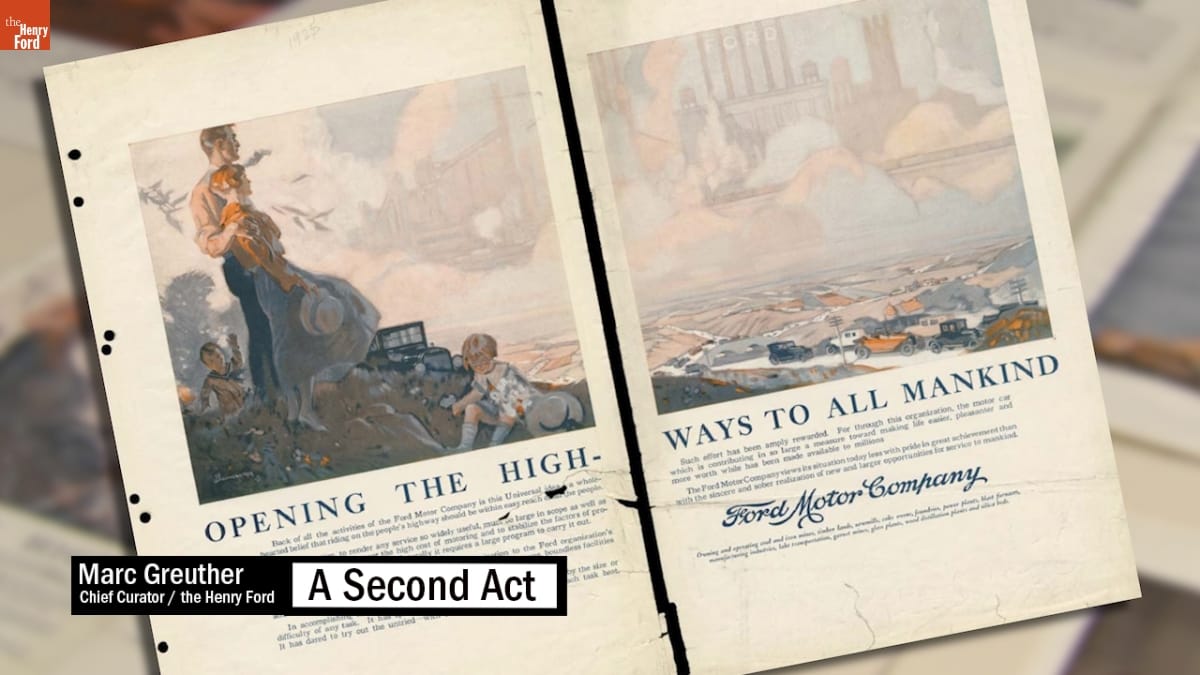
- "A Second Act" with Marc Greuther, 2013 - Marc Greuther is the Chief Curator and Curator of Industry and Design at The Henry Ford.
- 2013
- Collections - Artifact
"A Second Act" with Marc Greuther, 2013
Marc Greuther is the Chief Curator and Curator of Industry and Design at The Henry Ford.
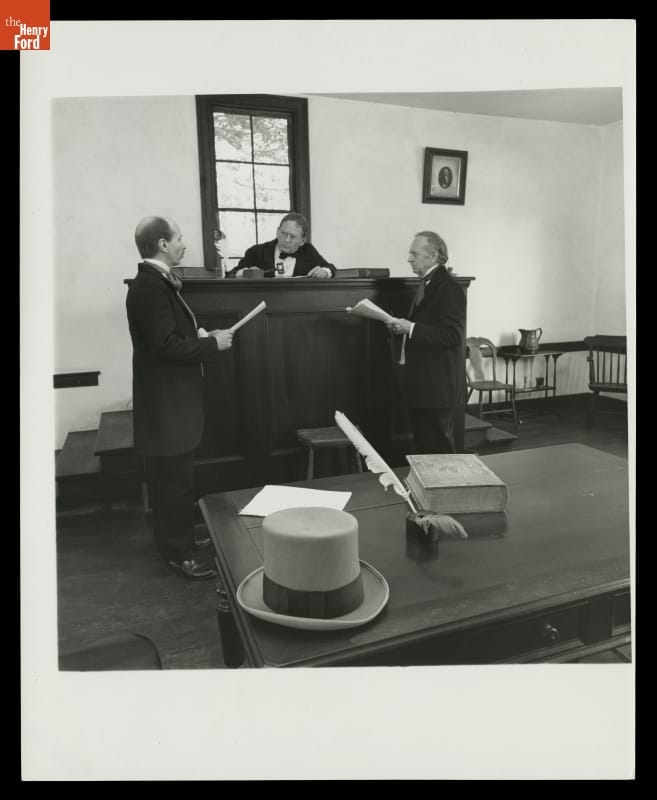
- Actors inside Logan County Courthouse, Greenfield Village, 1983 - Between 1840 and 1847, Abraham Lincoln tried cases as a traveling lawyer when this courthouse was located in Postville (later Lincoln), Illinois. With new leadership at Henry Ford Museum & Greenfield Village in the early 1980s, museum staff worked to re-create courthouse activities in frontier communities of the 1840s--resulting in dramatic role-playing performances like this one.
- 1983
- Collections - Artifact
Actors inside Logan County Courthouse, Greenfield Village, 1983
Between 1840 and 1847, Abraham Lincoln tried cases as a traveling lawyer when this courthouse was located in Postville (later Lincoln), Illinois. With new leadership at Henry Ford Museum & Greenfield Village in the early 1980s, museum staff worked to re-create courthouse activities in frontier communities of the 1840s--resulting in dramatic role-playing performances like this one.
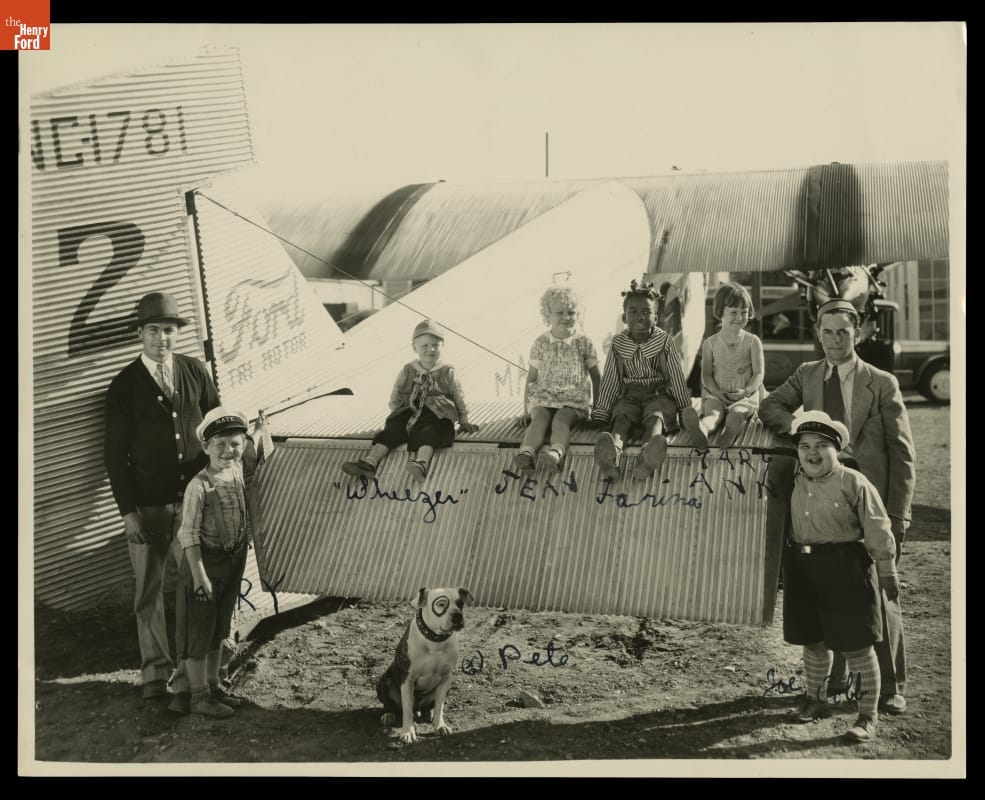
- Autographed Photo of the "Our Gang" Actors, 1928 - Jack L. Maddux, owner of a Lincoln dealership in Los Angeles, sent autographed pictures of the <em>Our Gang</em> actors to Edsel Ford in 1929. Maddux thought that Ford's children might appreciate photos of the young stars posed on a Ford Tri-Motor airplane. More than 200 <em>Our Gang</em> film shorts were produced from 1922 to 1944.
- 1928
- Collections - Artifact
Autographed Photo of the "Our Gang" Actors, 1928
Jack L. Maddux, owner of a Lincoln dealership in Los Angeles, sent autographed pictures of the Our Gang actors to Edsel Ford in 1929. Maddux thought that Ford's children might appreciate photos of the young stars posed on a Ford Tri-Motor airplane. More than 200 Our Gang film shorts were produced from 1922 to 1944.
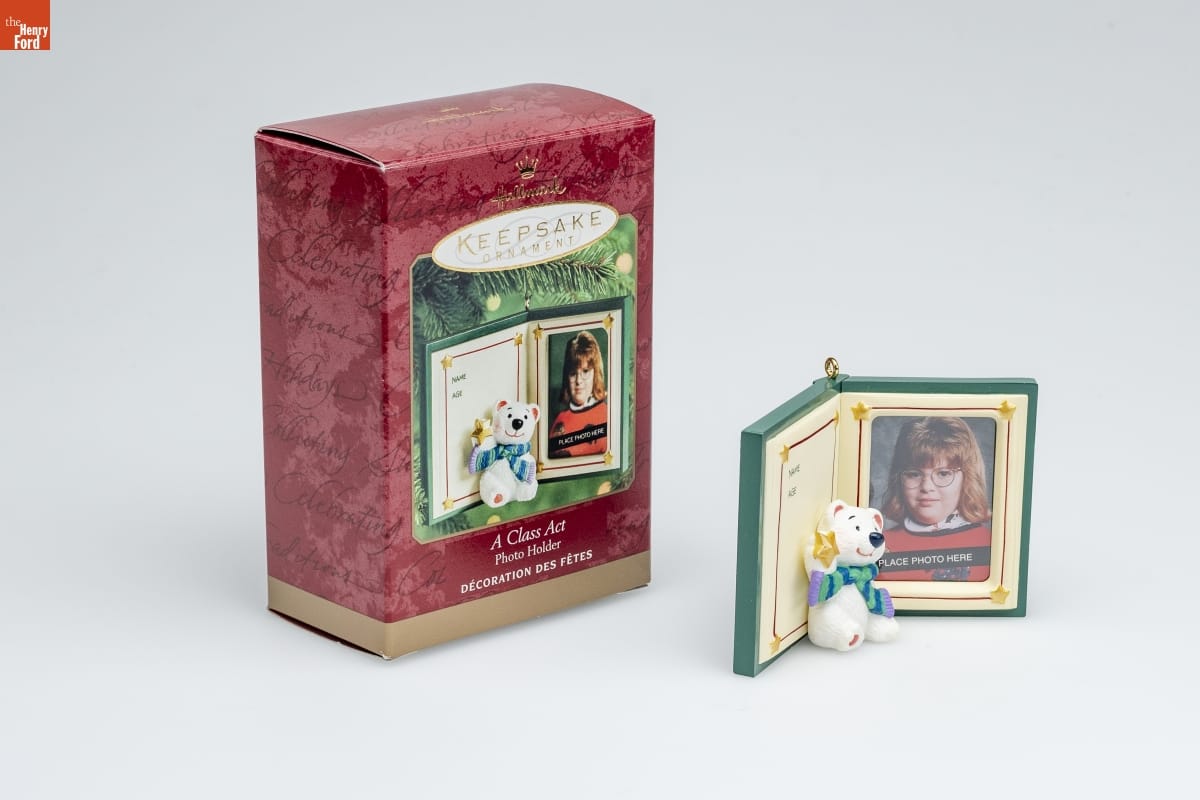
- Hallmark "A Class Act Photo Holder" Christmas Ornament, 2000 - Already known for greeting cards, Hallmark introduced a line of Christmas ornaments in 1973. The company's annual release of an increasing array of ornaments revolutionized Christmas decorating, appealing to customers' interest in marking memories and milestones as well as expressing one's personality and unique tastes.
- 2000
- Collections - Artifact
Hallmark "A Class Act Photo Holder" Christmas Ornament, 2000
Already known for greeting cards, Hallmark introduced a line of Christmas ornaments in 1973. The company's annual release of an increasing array of ornaments revolutionized Christmas decorating, appealing to customers' interest in marking memories and milestones as well as expressing one's personality and unique tastes.
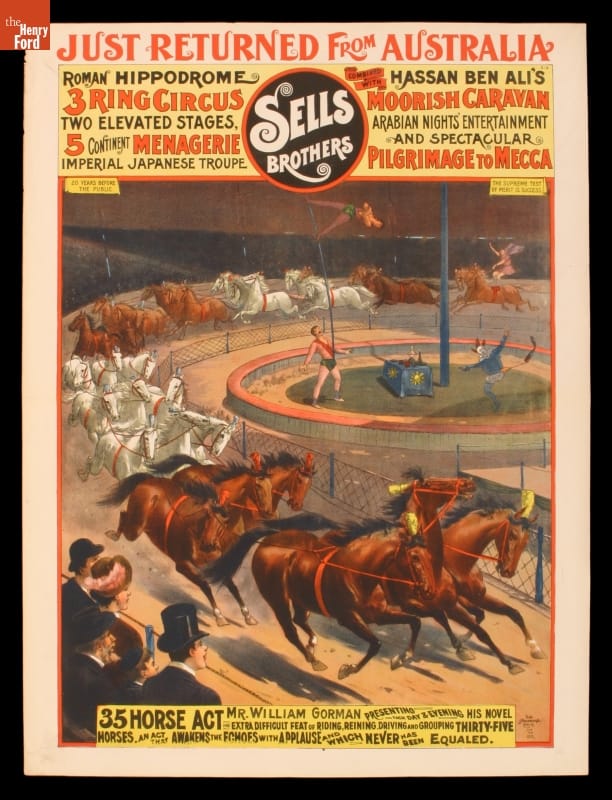
- Circus Poster, Sells Brothers, "35 Horse Act," circa 1892 -
- circa 1892
- Collections - Artifact
Circus Poster, Sells Brothers, "35 Horse Act," circa 1892
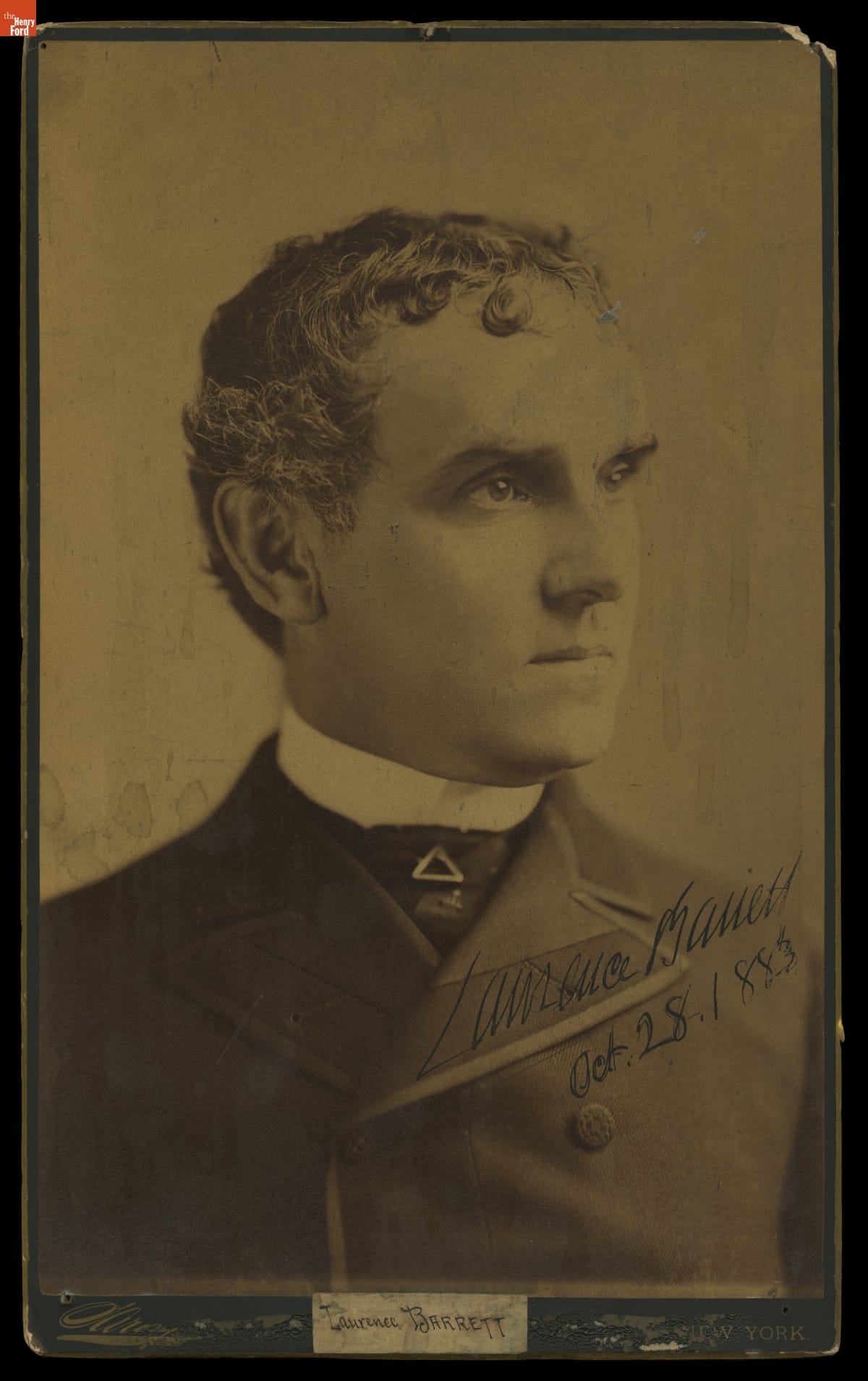
- Portrait of Actor Lawrence Barrett, 1883 - Lawrence Barrett (1838-1891) was considered one of the greatest actors of the late 1800s. He began acting professionally as a teenager in Detroit, Michigan and had a celebrated career in the United States and the United Kingdom. Barrett toured extensively with famed actor Edwin Booth in the 1880s. Photographer Napoleon Sarony, famous for his portraits of entertainers, took this photograph.
- October 28, 1883
- Collections - Artifact
Portrait of Actor Lawrence Barrett, 1883
Lawrence Barrett (1838-1891) was considered one of the greatest actors of the late 1800s. He began acting professionally as a teenager in Detroit, Michigan and had a celebrated career in the United States and the United Kingdom. Barrett toured extensively with famed actor Edwin Booth in the 1880s. Photographer Napoleon Sarony, famous for his portraits of entertainers, took this photograph.