
Search
- Detroit, Toledo & Ironton Railroad Roundhouse, Ironton, Ohio, 1923 - Steam locomotives required constant maintenance from an army of skilled and unskilled workers, and the roundhouse is where that work took place. This roundhouse at Ironton, Ohio, served the Detroit, Toledo & Ironton Railroad. The DT&I operated a 378-mile mainline between Detroit, Michigan, and Ironton, Ohio.

- December 26, 1923
- Collections - Artifact
Detroit, Toledo & Ironton Railroad Roundhouse, Ironton, Ohio, 1923
Steam locomotives required constant maintenance from an army of skilled and unskilled workers, and the roundhouse is where that work took place. This roundhouse at Ironton, Ohio, served the Detroit, Toledo & Ironton Railroad. The DT&I operated a 378-mile mainline between Detroit, Michigan, and Ironton, Ohio.
- Detroit, Toledo & Ironton Railroad Yard, Jackson, Ohio, 1924 - The Detroit, Toledo & Ironton Railroad maintained extensive facilities in Jackson, Ohio, near the south end of its mainline. Jackson was home to a roundhouse, car repair shops, a machine shop, and a freight yard. When Henry Ford owned the DT&I from 1920-1929, Jackson shop crews focused on freight car repair and rebuilding.

- January 03, 1924
- Collections - Artifact
Detroit, Toledo & Ironton Railroad Yard, Jackson, Ohio, 1924
The Detroit, Toledo & Ironton Railroad maintained extensive facilities in Jackson, Ohio, near the south end of its mainline. Jackson was home to a roundhouse, car repair shops, a machine shop, and a freight yard. When Henry Ford owned the DT&I from 1920-1929, Jackson shop crews focused on freight car repair and rebuilding.
- Detroit, Toledo & Ironton Railroad Roundhouse, Ironton, Ohio, 1923 - Steam locomotives required constant maintenance from an army of skilled and unskilled workers, and the roundhouse is where that work took place. This roundhouse at Ironton, Ohio, served the Detroit, Toledo & Ironton Railroad. The DT&I operated a 378-mile mainline between Detroit, Michigan, and Ironton, Ohio.
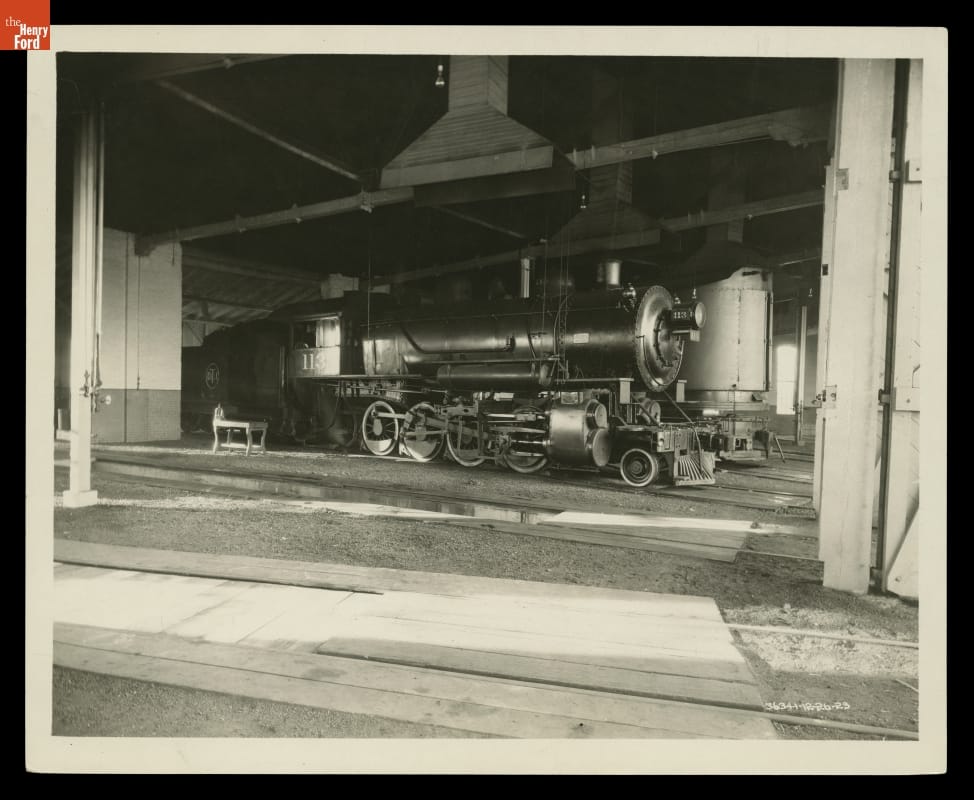
- December 26, 1923
- Collections - Artifact
Detroit, Toledo & Ironton Railroad Roundhouse, Ironton, Ohio, 1923
Steam locomotives required constant maintenance from an army of skilled and unskilled workers, and the roundhouse is where that work took place. This roundhouse at Ironton, Ohio, served the Detroit, Toledo & Ironton Railroad. The DT&I operated a 378-mile mainline between Detroit, Michigan, and Ironton, Ohio.
- Detroit, Toledo & Ironton Railroad Yard, Jackson, Ohio, 1924 - The Detroit, Toledo & Ironton Railroad maintained extensive facilities in Jackson, Ohio, near the south end of its mainline. Jackson was home to a roundhouse, car repair shops, a machine shop, and a freight yard. When Henry Ford owned the DT&I from 1920-1929, Jackson shop crews focused on freight car repair and rebuilding.

- January 03, 1924
- Collections - Artifact
Detroit, Toledo & Ironton Railroad Yard, Jackson, Ohio, 1924
The Detroit, Toledo & Ironton Railroad maintained extensive facilities in Jackson, Ohio, near the south end of its mainline. Jackson was home to a roundhouse, car repair shops, a machine shop, and a freight yard. When Henry Ford owned the DT&I from 1920-1929, Jackson shop crews focused on freight car repair and rebuilding.
- Detroit, Toledo & Ironton Railroad Roundhouse, Ironton, Ohio, 1923 - Steam locomotives required constant maintenance from an army of skilled and unskilled workers, and the roundhouse is where that work took place. This roundhouse at Ironton, Ohio, served the Detroit, Toledo & Ironton Railroad. The DT&I operated a 378-mile mainline between Detroit, Michigan, and Ironton, Ohio.

- December 26, 1923
- Collections - Artifact
Detroit, Toledo & Ironton Railroad Roundhouse, Ironton, Ohio, 1923
Steam locomotives required constant maintenance from an army of skilled and unskilled workers, and the roundhouse is where that work took place. This roundhouse at Ironton, Ohio, served the Detroit, Toledo & Ironton Railroad. The DT&I operated a 378-mile mainline between Detroit, Michigan, and Ironton, Ohio.
- "Profiles of the Erie, Ohio and Chesapeake & Ohio Canals and the Baltimore & Ohio Railroad," circa 1832 - The first half of the 19th century was the heyday of canal construction in the United States. This circa 1832 copperplate engraving shows the elevation profiles of the Erie Canal, the Ohio Canal, and the Chesapeake and Ohio Canal, along with the profile of the Baltimore and Ohio Railroad, measured in feet above sea level of the Atlantic Ocean.
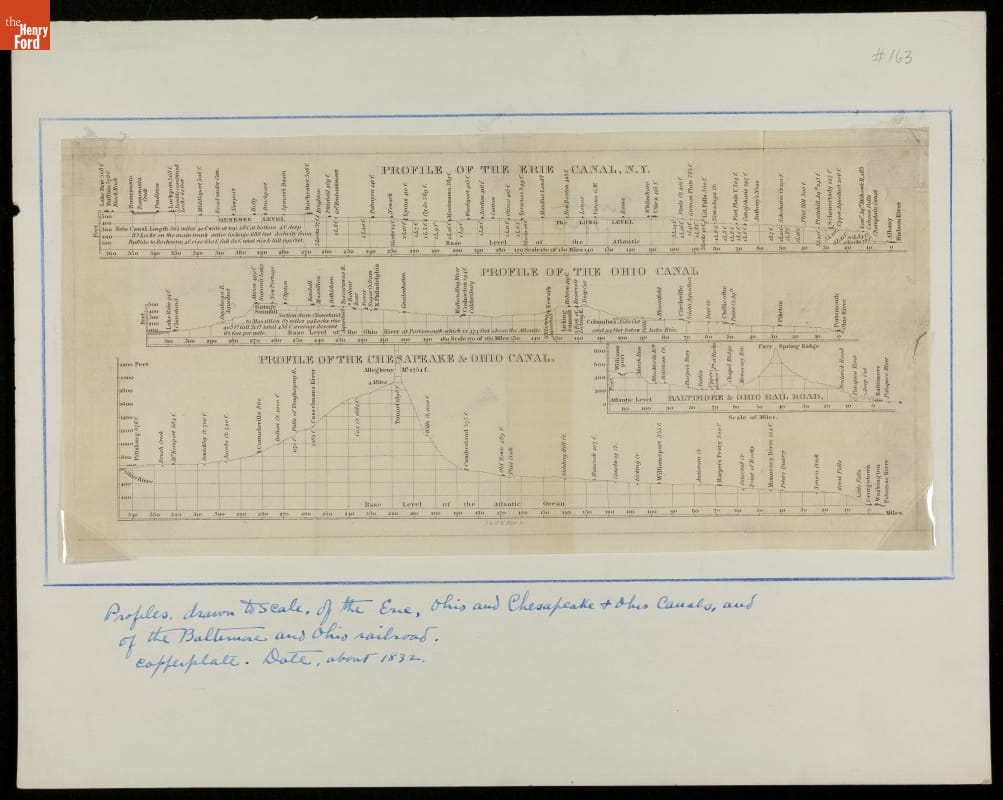
- circa 1832
- Collections - Artifact
"Profiles of the Erie, Ohio and Chesapeake & Ohio Canals and the Baltimore & Ohio Railroad," circa 1832
The first half of the 19th century was the heyday of canal construction in the United States. This circa 1832 copperplate engraving shows the elevation profiles of the Erie Canal, the Ohio Canal, and the Chesapeake and Ohio Canal, along with the profile of the Baltimore and Ohio Railroad, measured in feet above sea level of the Atlantic Ocean.
- Detroit, Toledo and Ironton Railroad Crossing, Lima, Ohio, 1923 - This rural railroad crossing near Lima, Ohio, illustrates an early danger to motorists and railroaders. Vegetation along the track obscured drivers' vision, and fast-moving trains could not stop quickly. Drivers were advised to "stop, look and listen," as written on the crossing sign's post, before they proceeded over railroad tracks. Improved warning devices and safety awareness campaigns made crossings safer.

- 1923
- Collections - Artifact
Detroit, Toledo and Ironton Railroad Crossing, Lima, Ohio, 1923
This rural railroad crossing near Lima, Ohio, illustrates an early danger to motorists and railroaders. Vegetation along the track obscured drivers' vision, and fast-moving trains could not stop quickly. Drivers were advised to "stop, look and listen," as written on the crossing sign's post, before they proceeded over railroad tracks. Improved warning devices and safety awareness campaigns made crossings safer.
- Detroit, Toledo & Ironton Railroad Roundhouse Interior, Ironton, Ohio, 1923 - Steam locomotives required constant maintenance from an army of skilled and unskilled workers, and the roundhouse is where that work took place. This roundhouse at Ironton, Ohio, served the Detroit, Toledo & Ironton Railroad. The DT&I operated a 378-mile mainline between Detroit, Michigan, and Ironton, Ohio.

- December 26, 1923
- Collections - Artifact
Detroit, Toledo & Ironton Railroad Roundhouse Interior, Ironton, Ohio, 1923
Steam locomotives required constant maintenance from an army of skilled and unskilled workers, and the roundhouse is where that work took place. This roundhouse at Ironton, Ohio, served the Detroit, Toledo & Ironton Railroad. The DT&I operated a 378-mile mainline between Detroit, Michigan, and Ironton, Ohio.
- Detroit, Toledo & Ironton Railroad Train in Ironton, Ohio, 1923 - Sometimes the only right-of-way available to a railroad was a public street. The Detroit, Toledo & Ironton Railroad entered Ironton on Railroad Street, and then ran down the center of the street to the bank of the Ohio River. The railroad track is seen running along Railroad Street's median in this photograph.

- December 26, 1923
- Collections - Artifact
Detroit, Toledo & Ironton Railroad Train in Ironton, Ohio, 1923
Sometimes the only right-of-way available to a railroad was a public street. The Detroit, Toledo & Ironton Railroad entered Ironton on Railroad Street, and then ran down the center of the street to the bank of the Ohio River. The railroad track is seen running along Railroad Street's median in this photograph.
- Detroit, Toledo and Ironton Railroad Crossing, Lima, Ohio, 1923 - This rural railroad crossing near Lima, Ohio, illustrates an early danger to motorists and railroaders. Vegetation along the track obscured drivers' vision, and fast-moving trains could not stop quickly. Drivers were advised to "stop, look and listen," as written on the crossing sign's post, before they proceeded over railroad tracks. Improved warning devices and safety awareness campaigns made crossings safer.
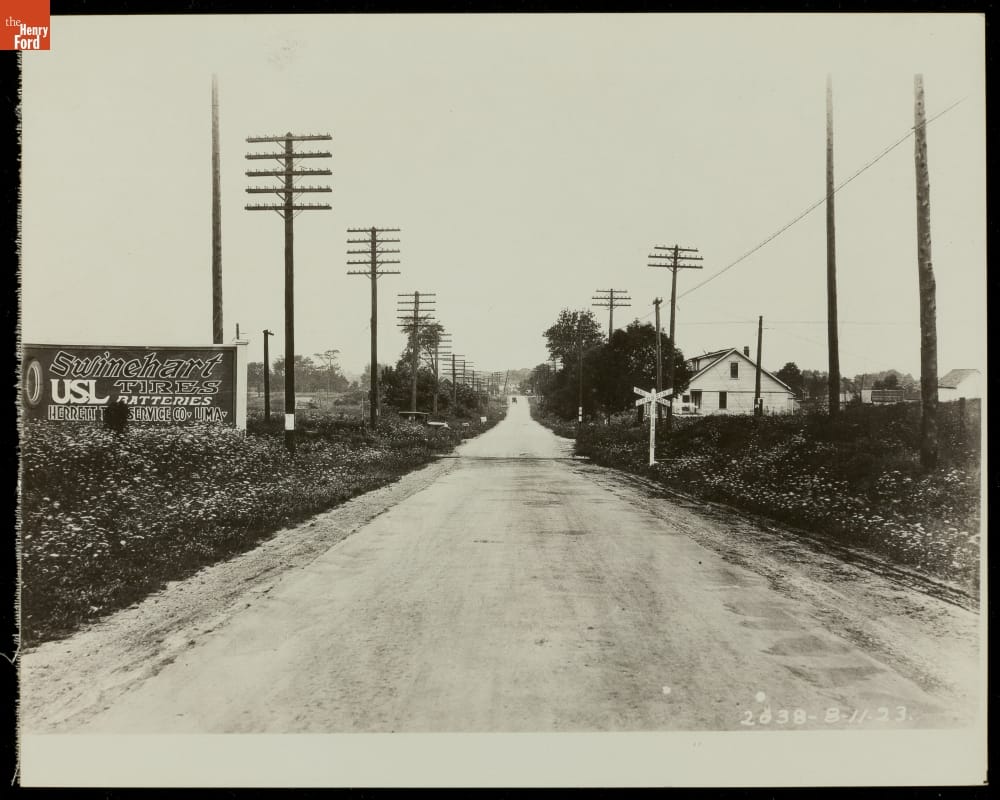
- 1923
- Collections - Artifact
Detroit, Toledo and Ironton Railroad Crossing, Lima, Ohio, 1923
This rural railroad crossing near Lima, Ohio, illustrates an early danger to motorists and railroaders. Vegetation along the track obscured drivers' vision, and fast-moving trains could not stop quickly. Drivers were advised to "stop, look and listen," as written on the crossing sign's post, before they proceeded over railroad tracks. Improved warning devices and safety awareness campaigns made crossings safer.