
Search
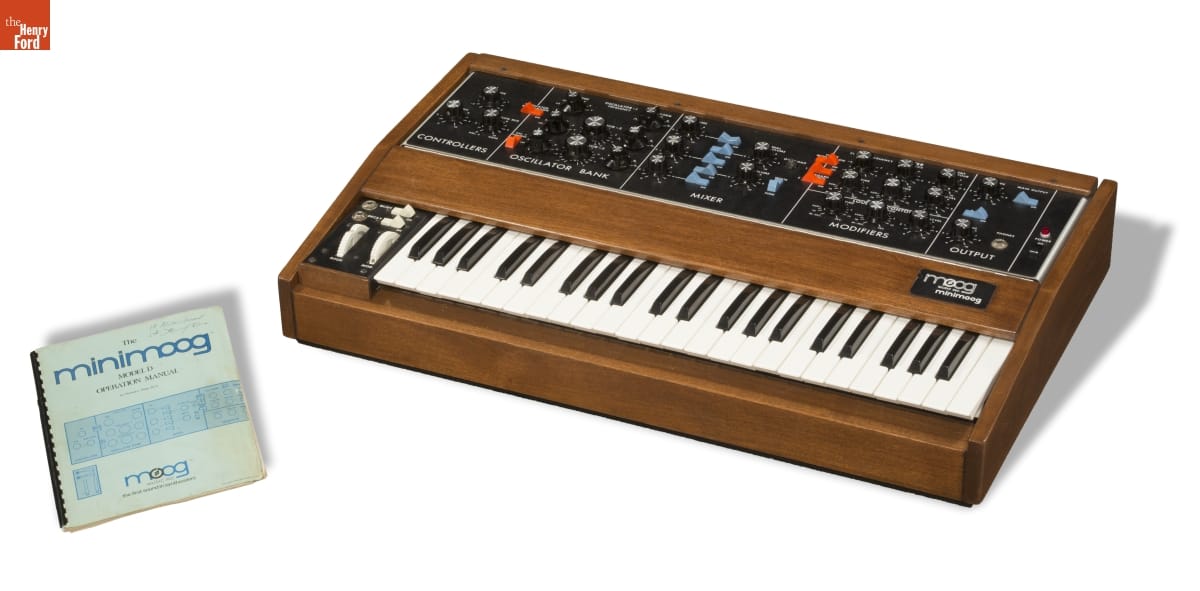
- MiniMoog Model D Synthesizer, 1980-1981 - The Minimoog Model D is a monophonic synthesizer that was manufactured from 1970-1981 by the R.A. Moog Company. It was the first synthesizer to be sold in retail music stores, and with approximately 12,000 total being sold in the model's lifetime, it was also the first synthesizer to be sold in such quantities as to be considered a "classic."
- 1980-1981
- Collections - Artifact
MiniMoog Model D Synthesizer, 1980-1981
The Minimoog Model D is a monophonic synthesizer that was manufactured from 1970-1981 by the R.A. Moog Company. It was the first synthesizer to be sold in retail music stores, and with approximately 12,000 total being sold in the model's lifetime, it was also the first synthesizer to be sold in such quantities as to be considered a "classic."
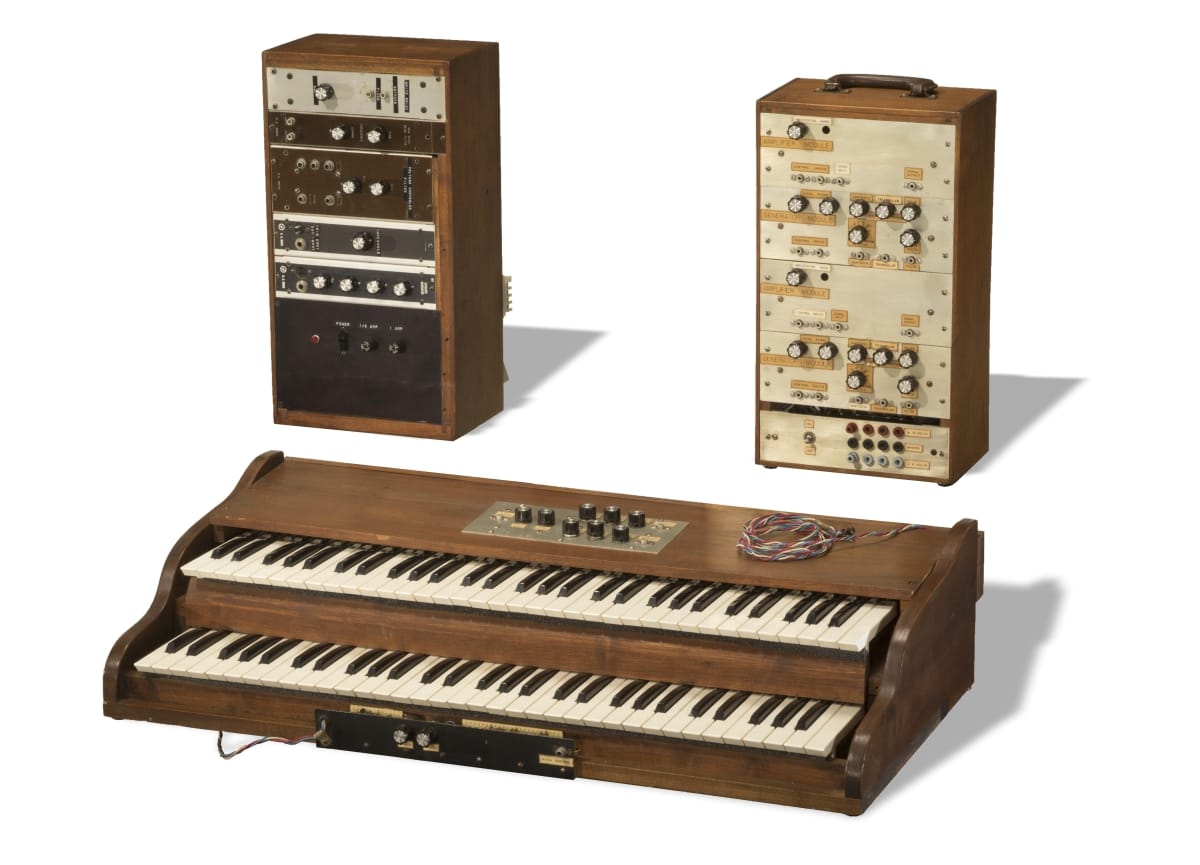
- Robert Moog's Prototype Synthesizer, 1964-1965 - This prototype synthesizer--a collaboration between engineer Robert Moog and composer Herbert Deutsch--is a musical icon. Synthesizers create unique electronically produced sounds. Moog's solid-state synthesizer was musically superior and much more portable than earlier vacuum-tube-based systems. In 1968, the album <em>Switched-On Bach</em> introduced the Moog synthesizer to a wider audience. Synthesizers quickly became a mainstay of popular music.
- 1964-1965
- Collections - Artifact
Robert Moog's Prototype Synthesizer, 1964-1965
This prototype synthesizer--a collaboration between engineer Robert Moog and composer Herbert Deutsch--is a musical icon. Synthesizers create unique electronically produced sounds. Moog's solid-state synthesizer was musically superior and much more portable than earlier vacuum-tube-based systems. In 1968, the album Switched-On Bach introduced the Moog synthesizer to a wider audience. Synthesizers quickly became a mainstay of popular music.
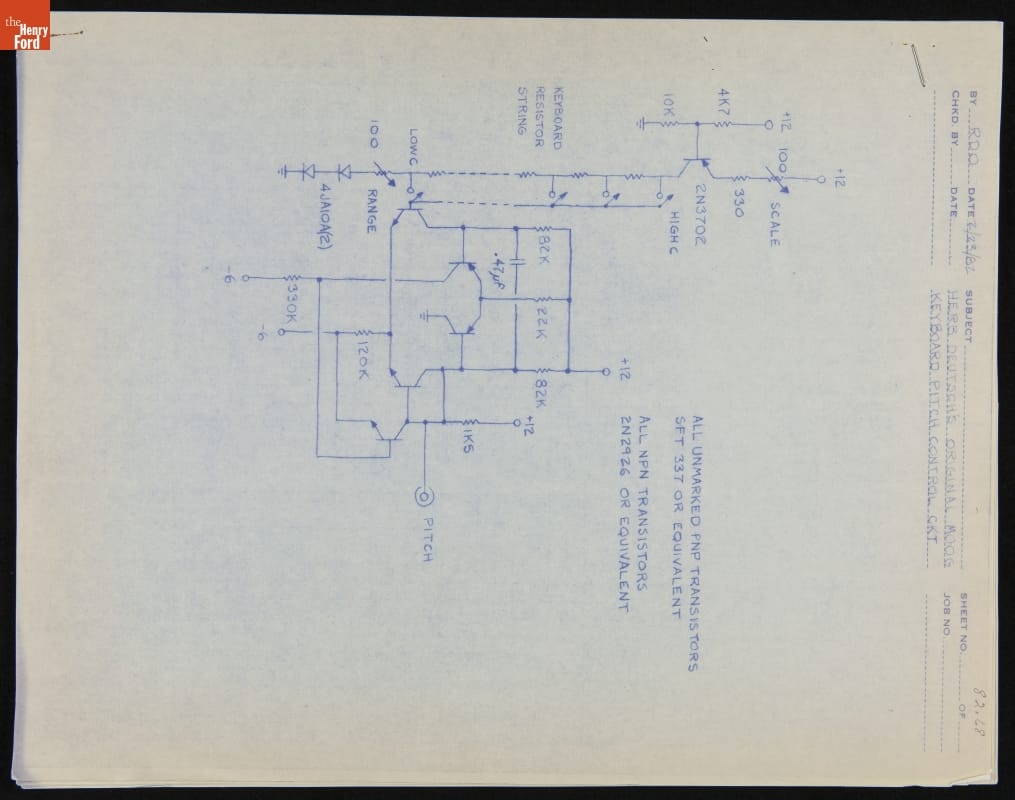
- Diagrams of Herb Deutsch's Original Moog Synthesizer, February 1982 - These circuit diagrams are graphic representations of the electronics that powered Robert Moog's first prototype synthesizer, built for Herbert Deutsch. Individual "modules" on the synthesizer allowed sounds to be shaped into infinite possibilities; these diagrams address the pitch control, envelope generator, amplifier, band pass filter, noise generator, and trigger extractor.
- February 01, 1982
- Collections - Artifact
Diagrams of Herb Deutsch's Original Moog Synthesizer, February 1982
These circuit diagrams are graphic representations of the electronics that powered Robert Moog's first prototype synthesizer, built for Herbert Deutsch. Individual "modules" on the synthesizer allowed sounds to be shaped into infinite possibilities; these diagrams address the pitch control, envelope generator, amplifier, band pass filter, noise generator, and trigger extractor.
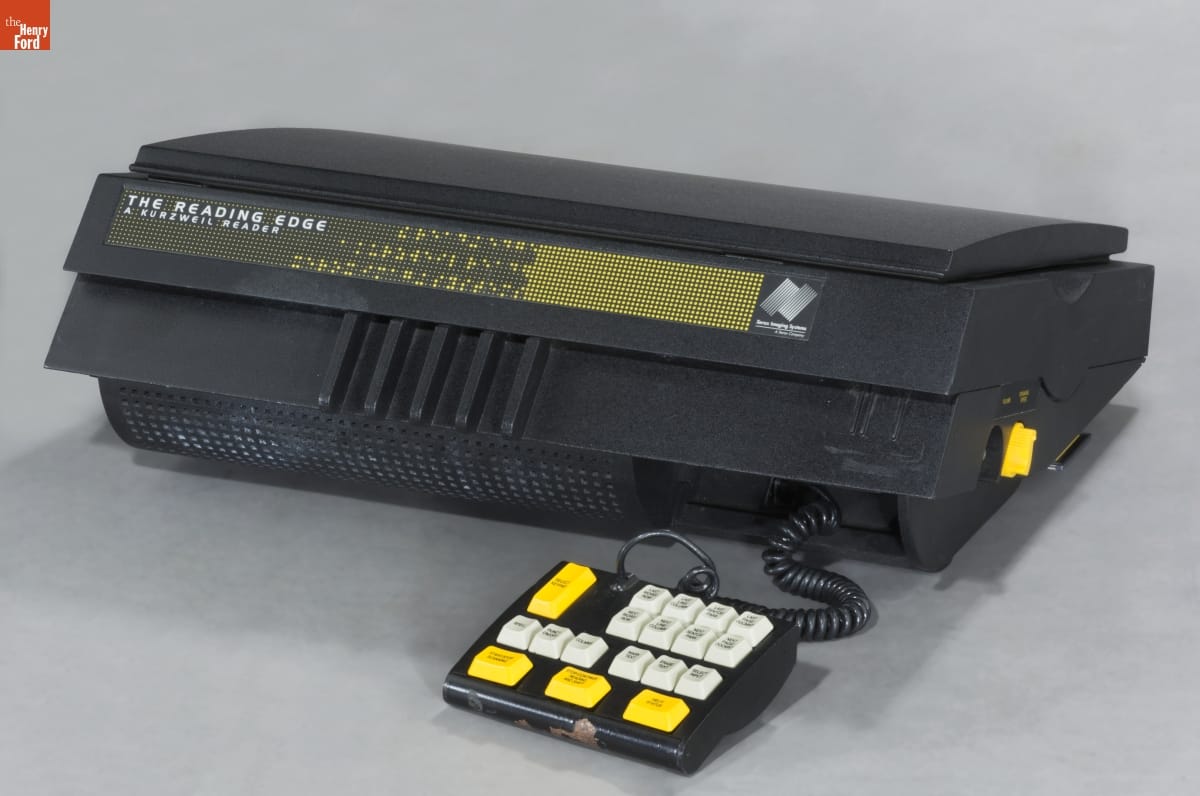
- Xerox "Kurzweil Reading Edge Optical Recognition Speech Synthesizer," 1992 - This assistive technology device was created for people who are blind or with visual impairments. Using text-to-speech synthesizer technology and optical character recognition, it can scan text from any kind of printed material and then read it out loud. This includes books, magazines, mail--even food packaging. Reading speed is adjustable and its memory can store 100 pages of text.
- 1992
- Collections - Artifact
Xerox "Kurzweil Reading Edge Optical Recognition Speech Synthesizer," 1992
This assistive technology device was created for people who are blind or with visual impairments. Using text-to-speech synthesizer technology and optical character recognition, it can scan text from any kind of printed material and then read it out loud. This includes books, magazines, mail--even food packaging. Reading speed is adjustable and its memory can store 100 pages of text.
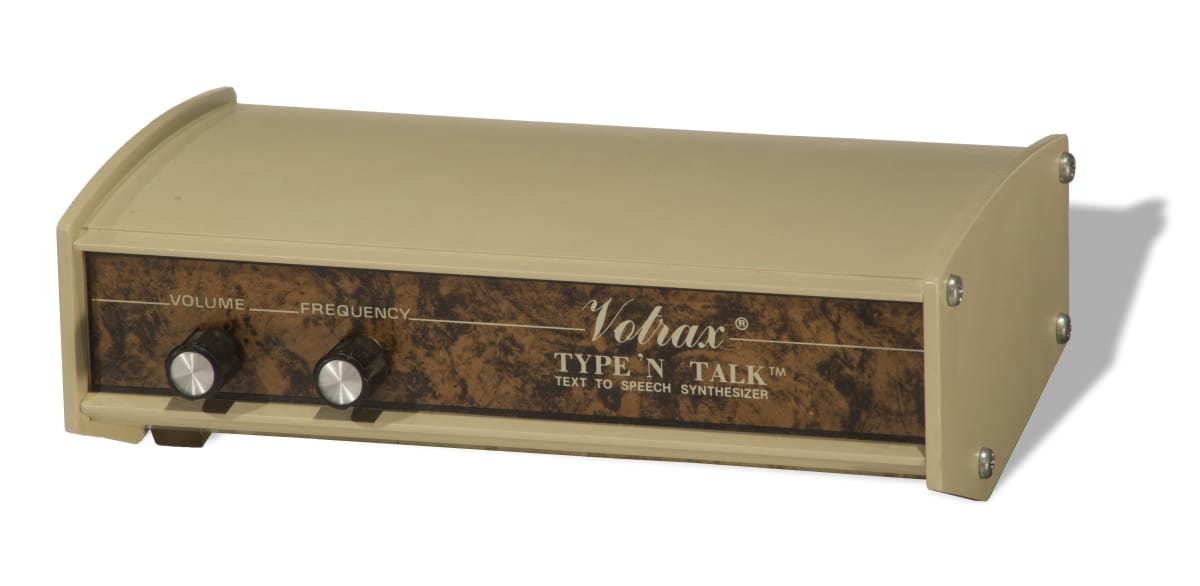
- Votrax Model 100, Type 'N Talk Text to Speech Synthesizer, 1981 - This text-to-speech synthesizer recreates the sounds of the human voice. Inventor Richard T. Gagnon created the Votrax to support his own failing vision. It could be used by the blind as a computer screen reader, or a speaking device for people with vocal cord paralysis. The Votrax shaped individual units of speech, allowing unlimited range and smoothness capable of conveying emotion.
- 1981
- Collections - Artifact
Votrax Model 100, Type 'N Talk Text to Speech Synthesizer, 1981
This text-to-speech synthesizer recreates the sounds of the human voice. Inventor Richard T. Gagnon created the Votrax to support his own failing vision. It could be used by the blind as a computer screen reader, or a speaking device for people with vocal cord paralysis. The Votrax shaped individual units of speech, allowing unlimited range and smoothness capable of conveying emotion.
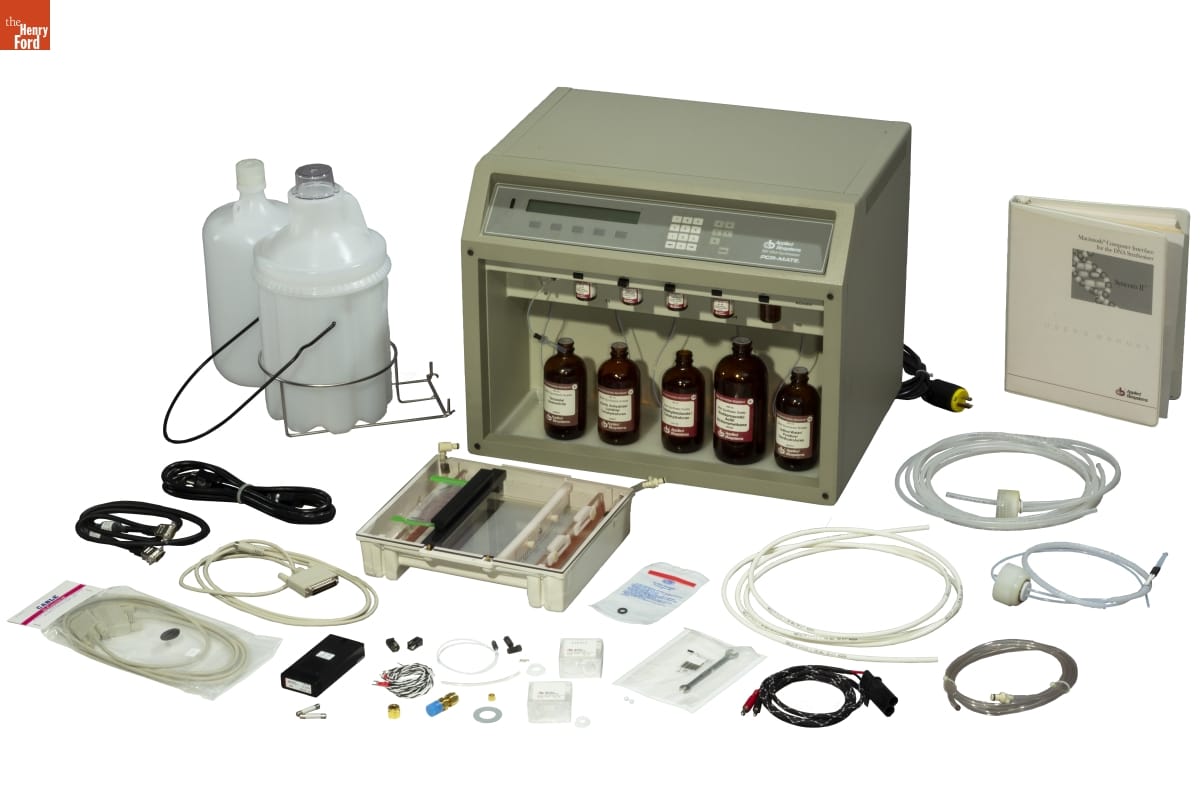
- PCR-MATE Model 391 DNA/RNA Synthesizer, 1991-1993 -
- 1991-1993
- Collections - Artifact
PCR-MATE Model 391 DNA/RNA Synthesizer, 1991-1993
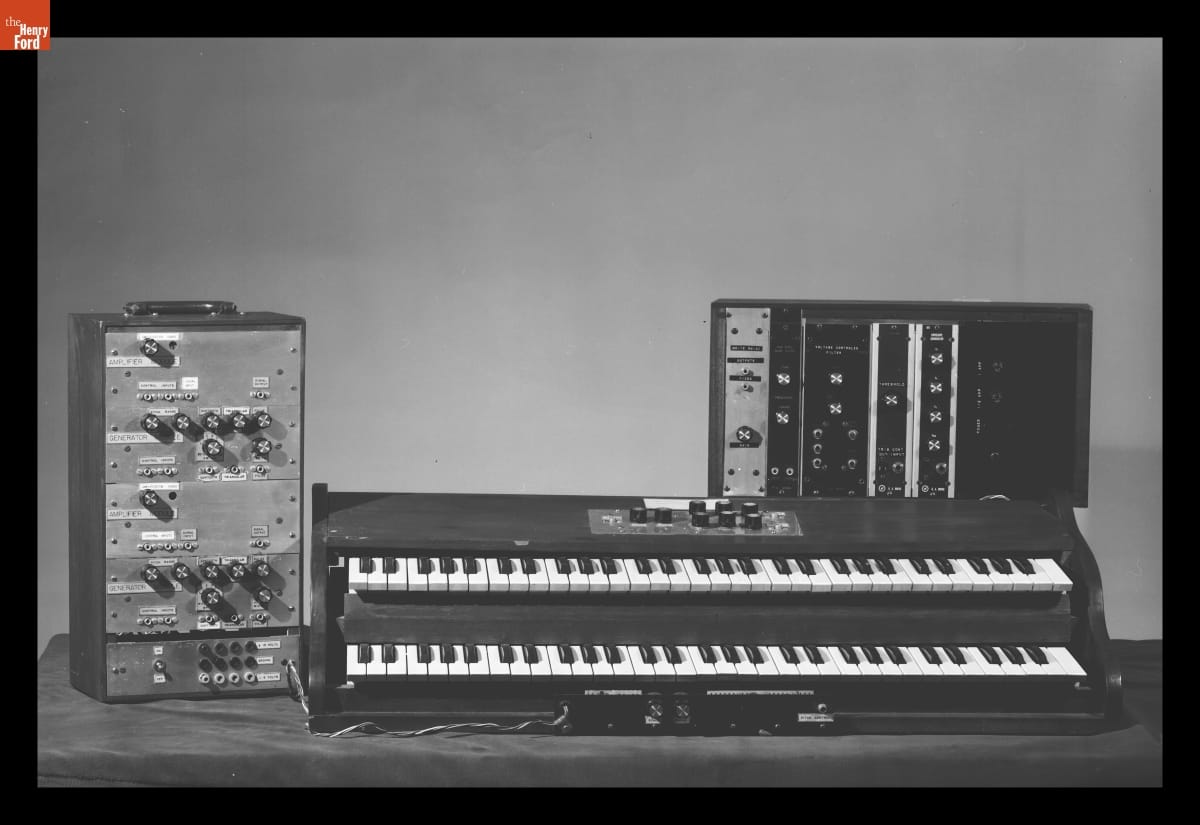
- Robert Moog's First Prototype Synthesizer in Henry Ford Museum, 1983 - This prototype synthesizer--a collaboration between engineer Robert Moog and composer Herbert Deutsch--is a musical icon. Synthesizers create unique electronically produced sounds. Moog's solid-state synthesizer was musically superior and much more portable than earlier vacuum-tube-based systems. In 1968, the album <em>Switched-On Bach</em> introduced the Moog synthesizer to a wider audience. Synthesizers quickly became a mainstay of popular music.
- 1983
- Collections - Artifact
Robert Moog's First Prototype Synthesizer in Henry Ford Museum, 1983
This prototype synthesizer--a collaboration between engineer Robert Moog and composer Herbert Deutsch--is a musical icon. Synthesizers create unique electronically produced sounds. Moog's solid-state synthesizer was musically superior and much more portable than earlier vacuum-tube-based systems. In 1968, the album Switched-On Bach introduced the Moog synthesizer to a wider audience. Synthesizers quickly became a mainstay of popular music.
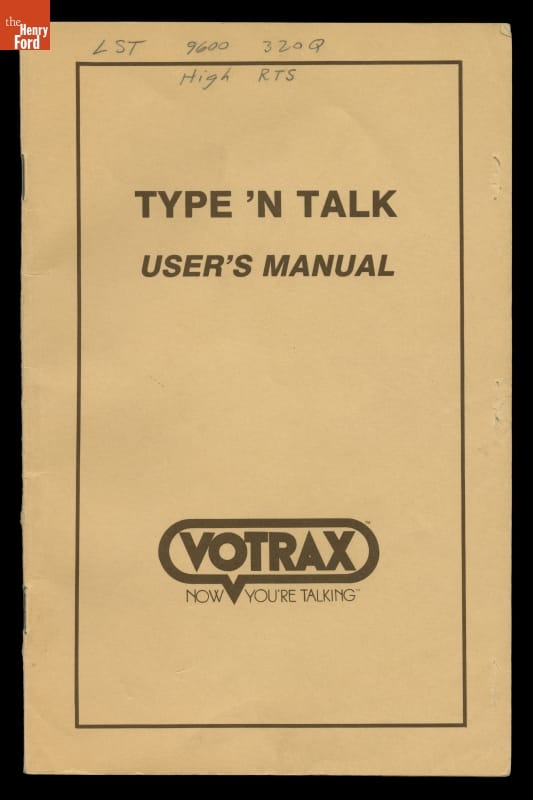
- User's Manual for Votrax Model 100, Type 'N Talk Text to Speech Synthesizer, 1981 -
- 1981
- Collections - Artifact
User's Manual for Votrax Model 100, Type 'N Talk Text to Speech Synthesizer, 1981
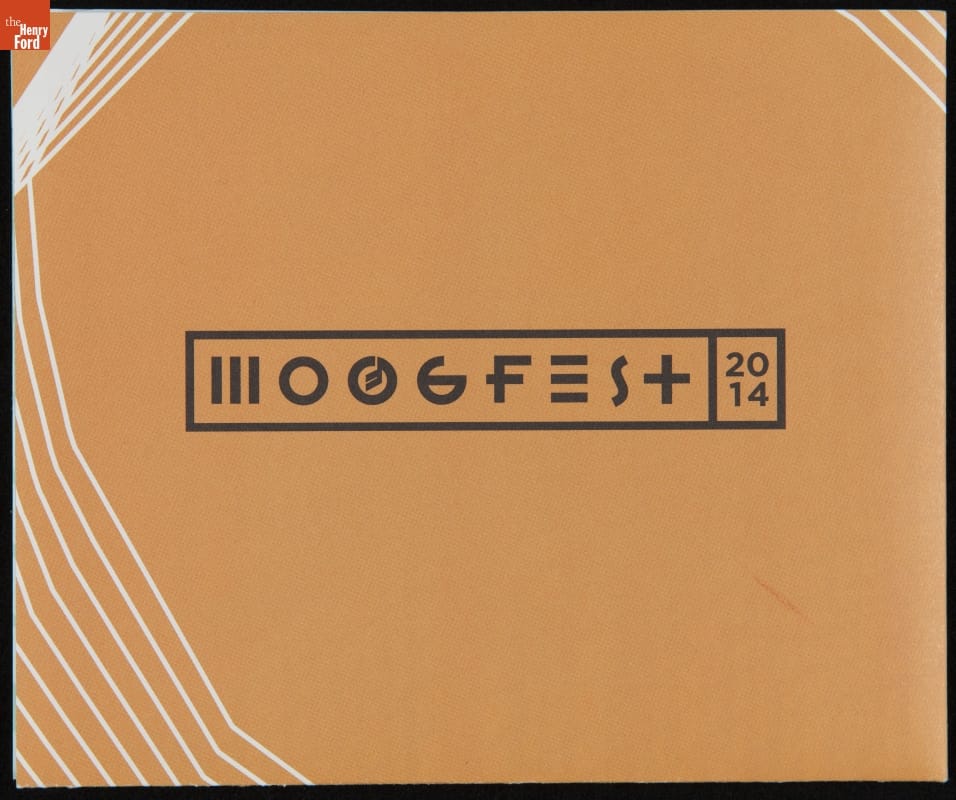
- Program, "Moogfest 2014: The Synthesis of Technology, Art & Music," Asheville, North Carolina, 2014 - Moogfest is an annual festival dedicated to "the synthesis of music, art, and technology," founded in 2004. The Moog synthesizer is an innovative electronic instrument that continues to influence music today. Moogfest pays homage to the instrument's legacy with live music programming as well as a roster of lectures, workshops, and art installations.
- 23 April 2014-27 April 2014
- Collections - Artifact
Program, "Moogfest 2014: The Synthesis of Technology, Art & Music," Asheville, North Carolina, 2014
Moogfest is an annual festival dedicated to "the synthesis of music, art, and technology," founded in 2004. The Moog synthesizer is an innovative electronic instrument that continues to influence music today. Moogfest pays homage to the instrument's legacy with live music programming as well as a roster of lectures, workshops, and art installations.
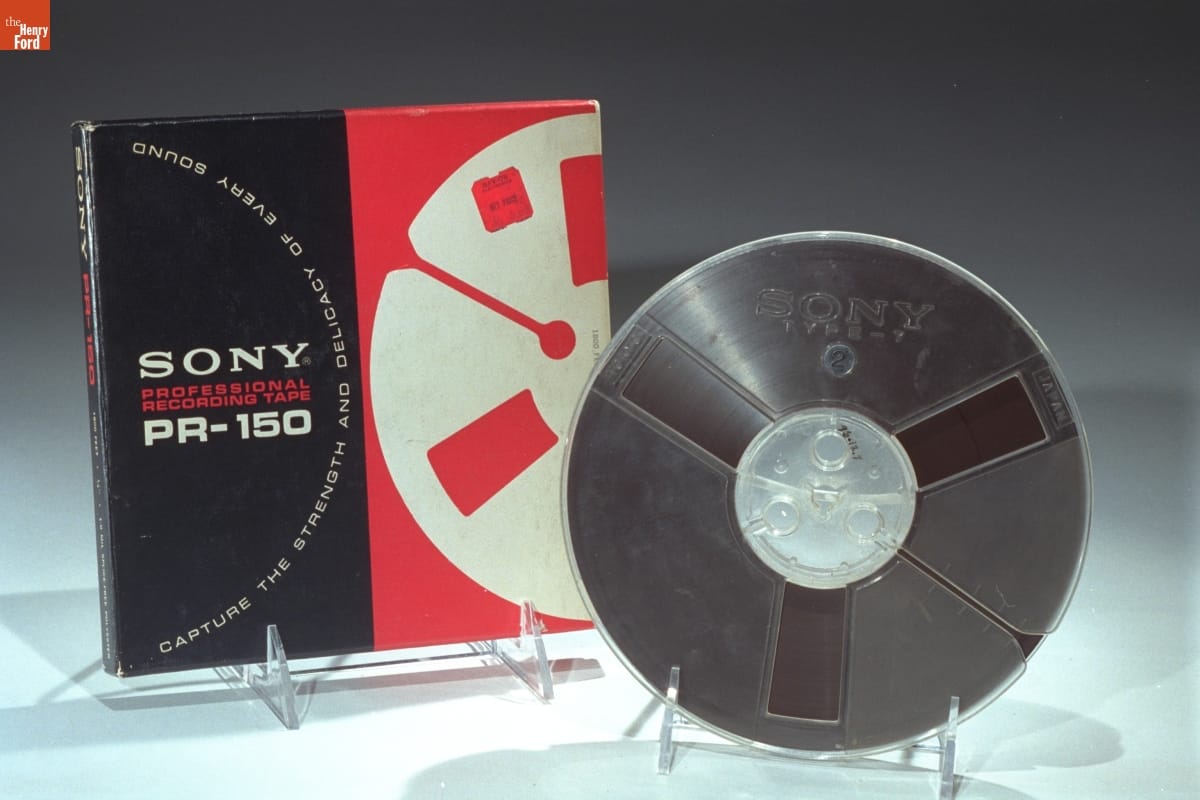
- Tape Recording Featuring "Switched on Bach" and "Beethoven's Symphony No. 4," 1977-1982 - The transformative effects of magnetic tape upon sound, broadcast, and computing history cannot be overstated. In 1930, German companies AEG and BASF revised wire recording technology by using a new material: plastic tape coated with magnetic iron pigment. Its proposed applications were varied, idealistic and practical: recording music and radio, factory automation, data storage, media lending libraries, and many others.
- 1977-1982
- Collections - Artifact
Tape Recording Featuring "Switched on Bach" and "Beethoven's Symphony No. 4," 1977-1982
The transformative effects of magnetic tape upon sound, broadcast, and computing history cannot be overstated. In 1930, German companies AEG and BASF revised wire recording technology by using a new material: plastic tape coated with magnetic iron pigment. Its proposed applications were varied, idealistic and practical: recording music and radio, factory automation, data storage, media lending libraries, and many others.