
Search
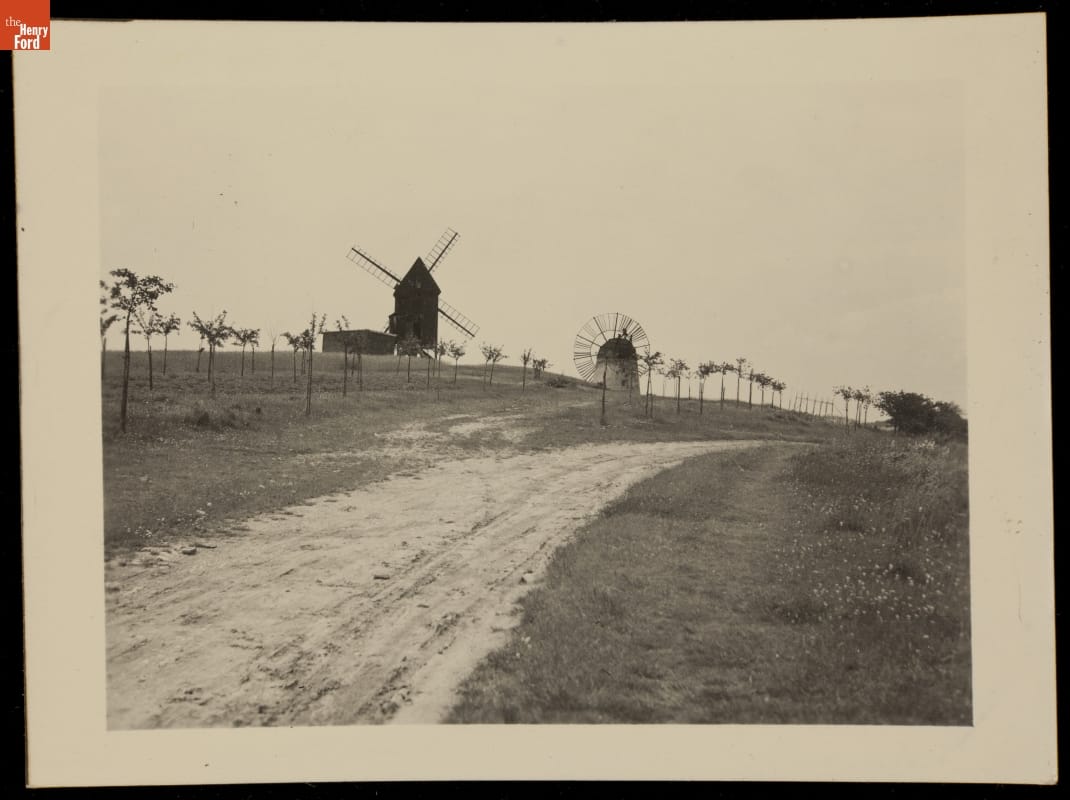
- Windmills in Eckartsberga, Germany, circa 1935 - In 1913, Henry Ford established Ford Motor Company's photographic department. Though few internal records describe company photography, remaining photographs reveal a wide range of departmental activity. Over nearly 100 years, Ford photographers documented company ventures, personal affairs, and daily life around the world. This photograph shows a couple of windmills near a dirt road in an unidentified location.
- circa 1935
- Collections - Artifact
Windmills in Eckartsberga, Germany, circa 1935
In 1913, Henry Ford established Ford Motor Company's photographic department. Though few internal records describe company photography, remaining photographs reveal a wide range of departmental activity. Over nearly 100 years, Ford photographers documented company ventures, personal affairs, and daily life around the world. This photograph shows a couple of windmills near a dirt road in an unidentified location.
- Farris Windmill - The Farris windmill is said to be the oldest windmill in the United States. It was built in the mid-1600s and operated in Cape Cod, Massachusetts. The Farris family ran it for three generations, starting in 1782. The wind moved the sails of this windmill to operate the grain milling machinery inside. The stone first floor was added at Greenfield Village.

- circa 1650
- Collections - Artifact
Farris Windmill
The Farris windmill is said to be the oldest windmill in the United States. It was built in the mid-1600s and operated in Cape Cod, Massachusetts. The Farris family ran it for three generations, starting in 1782. The wind moved the sails of this windmill to operate the grain milling machinery inside. The stone first floor was added at Greenfield Village.
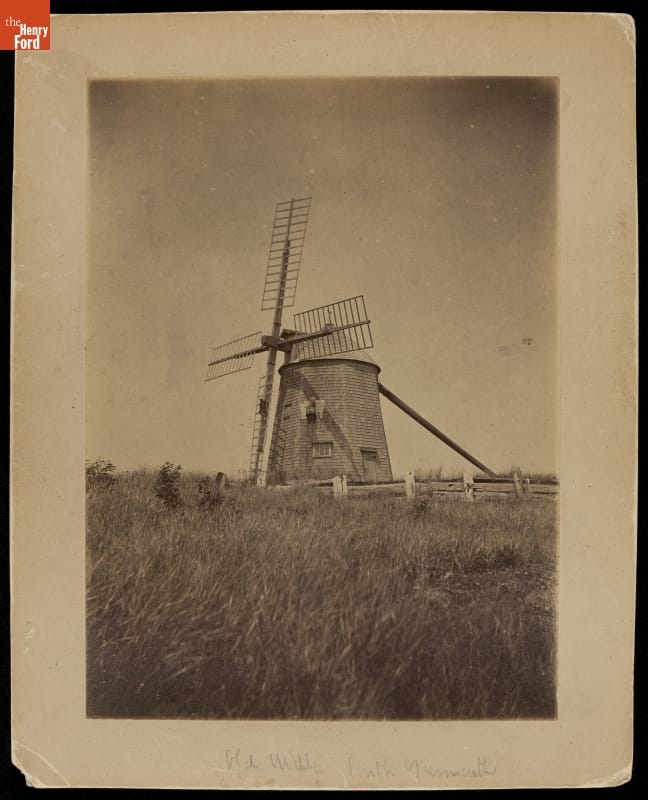
- Windmill, circa 1885 - Since the early 1600s, Americans have built windmills to grind grain, pump water, drive machinery and generate power. The European-style windmill seen in this photograph was probably located along the Massachusetts seashore. Wind power drove the grain grinding machinery inside. Mill owners could position the mill's sails to catch the ocean breeze by moving the tail pole to turn the rotating cap.
- circa 1885
- Collections - Artifact
Windmill, circa 1885
Since the early 1600s, Americans have built windmills to grind grain, pump water, drive machinery and generate power. The European-style windmill seen in this photograph was probably located along the Massachusetts seashore. Wind power drove the grain grinding machinery inside. Mill owners could position the mill's sails to catch the ocean breeze by moving the tail pole to turn the rotating cap.
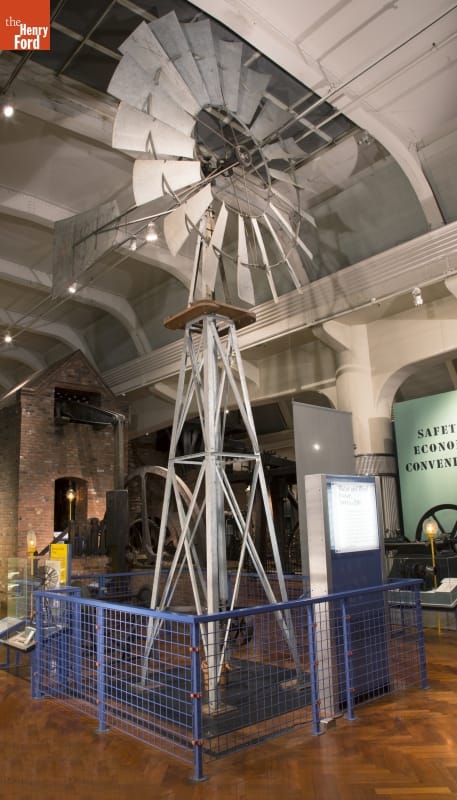
- Aermotor Windmill, 1898-1899 - Engineer Thomas O. Perry applied knowledge gained through thousands of controlled tests to perfect a steel windmill, introduced in 1888. Competitors downplayed the mathematical precision of Perry's design, but investments by LaVerne Noyes, a manufacturer in Chicago, and consumer interest in smaller, more durable windmills for less price helped Aermotor windmills become the industry standard.
- 1898-1899
- Collections - Artifact
Aermotor Windmill, 1898-1899
Engineer Thomas O. Perry applied knowledge gained through thousands of controlled tests to perfect a steel windmill, introduced in 1888. Competitors downplayed the mathematical precision of Perry's design, but investments by LaVerne Noyes, a manufacturer in Chicago, and consumer interest in smaller, more durable windmills for less price helped Aermotor windmills become the industry standard.
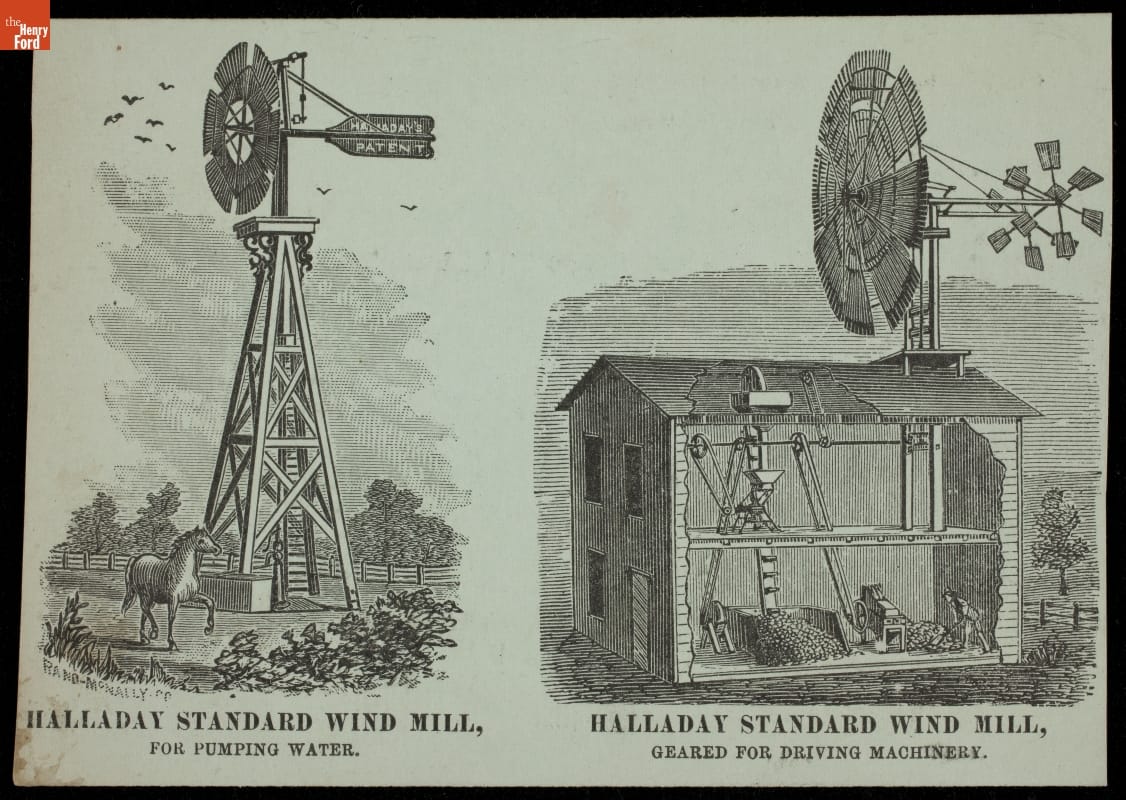
- Trade Card for Halladay Windmills, U.S. Wind Engine & Pump Co., 1870-1900 - In the last third of the nineteenth century, an unprecedented variety of consumer goods and services flooded the American market. Advertisers bombarded potential customers with trade cards. Americans enjoyed and saved the often illustrated little advertisements found in product packages or distributed by local merchants. Many survive as historical records of commercialism in the United States.
- 1870-1900
- Collections - Artifact
Trade Card for Halladay Windmills, U.S. Wind Engine & Pump Co., 1870-1900
In the last third of the nineteenth century, an unprecedented variety of consumer goods and services flooded the American market. Advertisers bombarded potential customers with trade cards. Americans enjoyed and saved the often illustrated little advertisements found in product packages or distributed by local merchants. Many survive as historical records of commercialism in the United States.
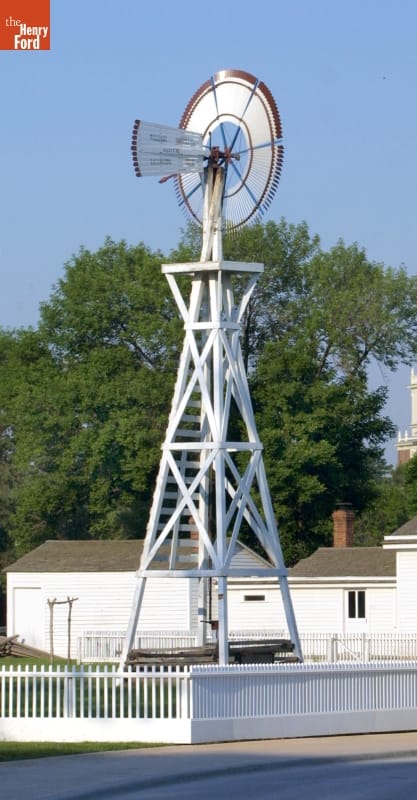
- Stover Windmill, circa 1883 - This windmill is similar to one purchased by William Ford, Henry Ford's father, and used on his Dearborn, Michigan, farm. Farmers throughout the United States in the late 1800s could purchase American prairie-style windmills like this one from scores of manufacturers. These labor-saving devices provided power for farm machinery and pumped well water used by the farmer's family and livestock.
- circa 1883
- Collections - Artifact
Stover Windmill, circa 1883
This windmill is similar to one purchased by William Ford, Henry Ford's father, and used on his Dearborn, Michigan, farm. Farmers throughout the United States in the late 1800s could purchase American prairie-style windmills like this one from scores of manufacturers. These labor-saving devices provided power for farm machinery and pumped well water used by the farmer's family and livestock.
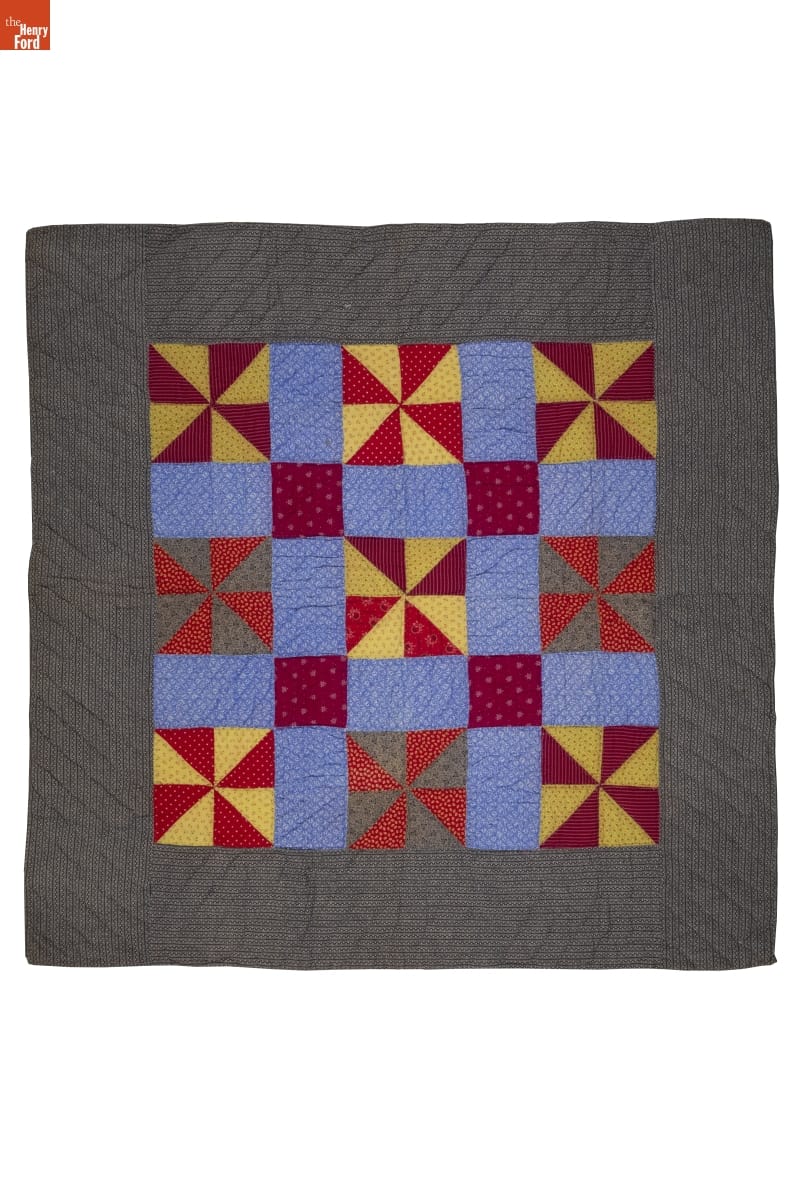
- Windmill Crib Quilt, circa 1890 -
- circa 1890
- Collections - Artifact
Windmill Crib Quilt, circa 1890
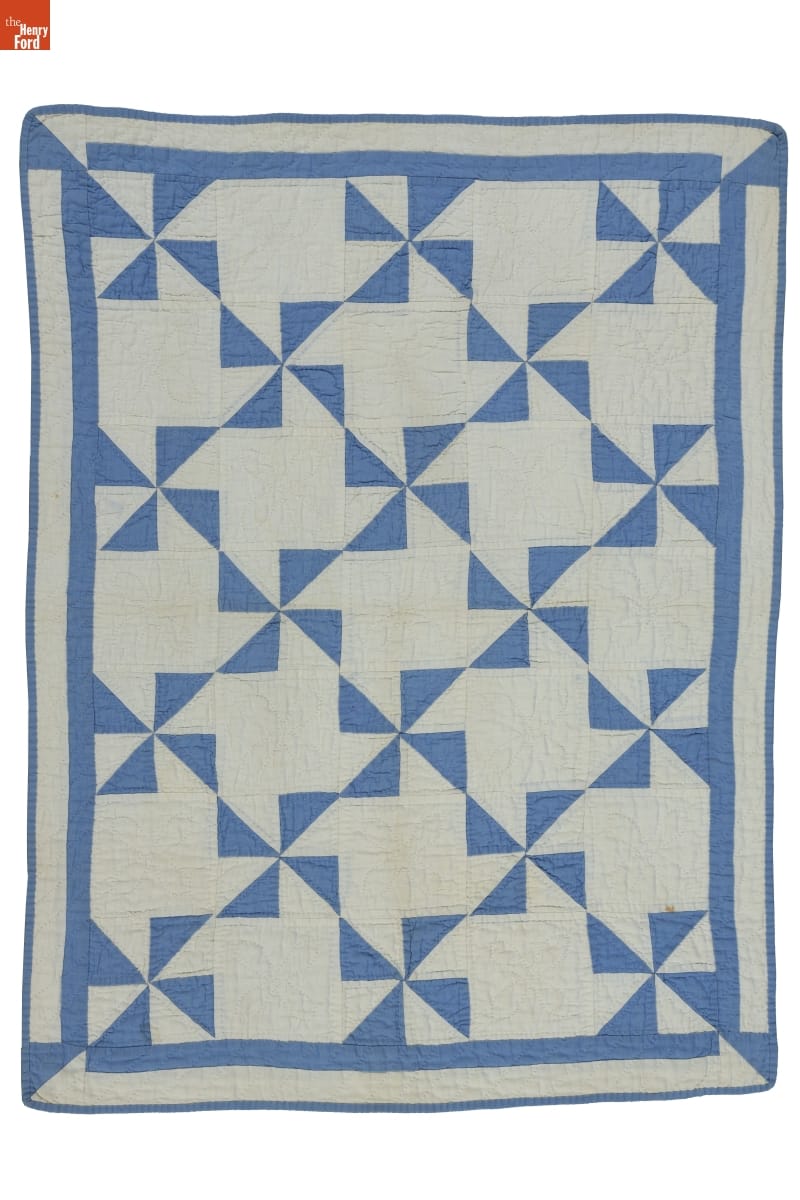
- Windmill Doll Quilt, 1920-1930 -
- 1920-1930
- Collections - Artifact
Windmill Doll Quilt, 1920-1930
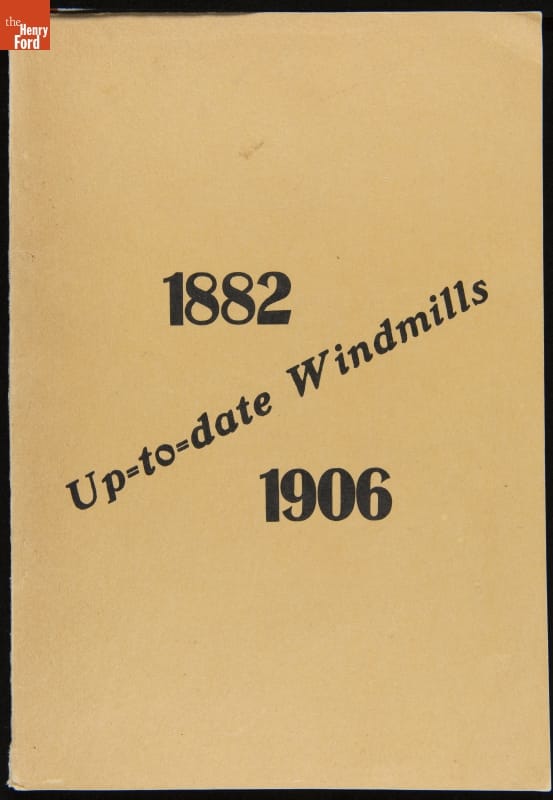
- Catalog for the Elgin Wind Power & Pump Co., "Up-to-date Windmills," 1906 -
- circa 1920
- Collections - Artifact
Catalog for the Elgin Wind Power & Pump Co., "Up-to-date Windmills," 1906
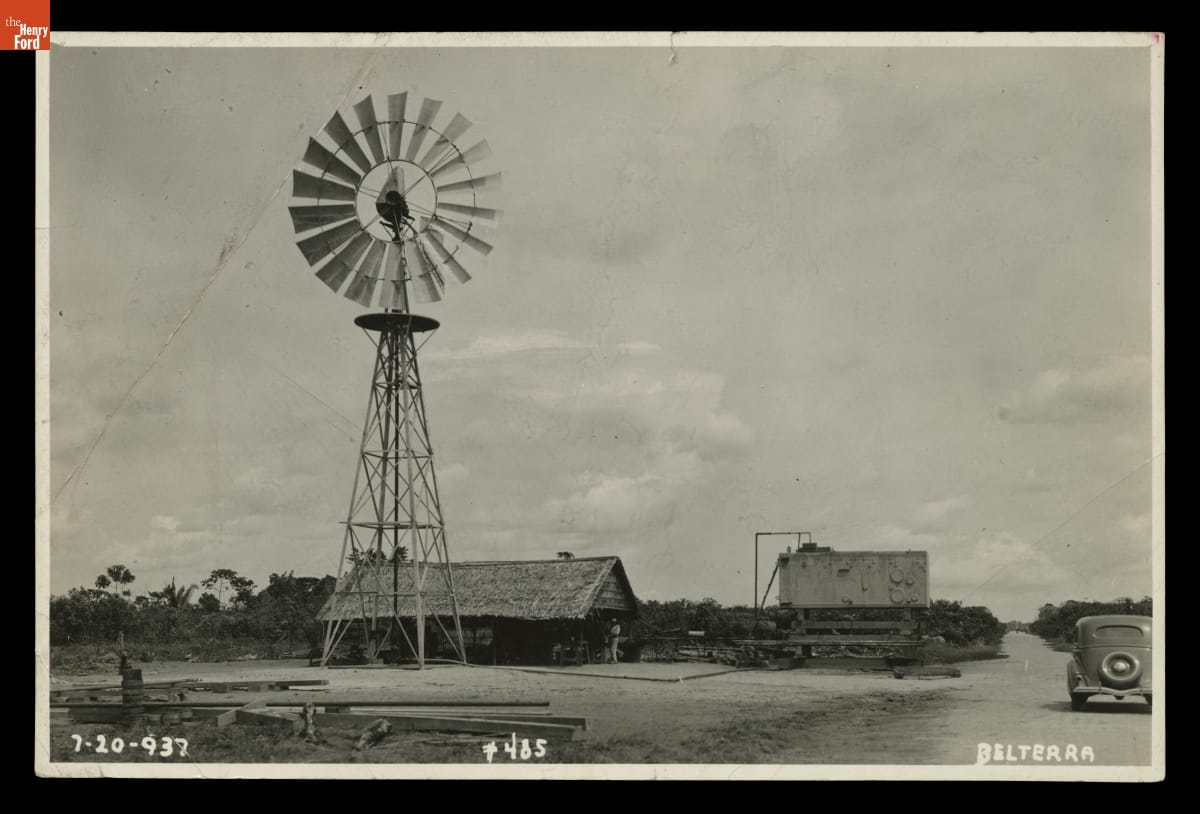
- Windmill at Belterra, Brazil, 1937 - Henry Ford established Fordlandia and Belterra in the Brazilian rainforest to supply rubber for automobile production. He began shipping machinery and supplies to the Amazon in 1928. Ford paid the indigenous workers good wages and supplied various amenities -- he also imposed foreign work traditions and behavioral restrictions which the workers resented. The plantations failed and Ford Motor Company disposed of the project in 1945.
- July 20, 1937
- Collections - Artifact
Windmill at Belterra, Brazil, 1937
Henry Ford established Fordlandia and Belterra in the Brazilian rainforest to supply rubber for automobile production. He began shipping machinery and supplies to the Amazon in 1928. Ford paid the indigenous workers good wages and supplied various amenities -- he also imposed foreign work traditions and behavioral restrictions which the workers resented. The plantations failed and Ford Motor Company disposed of the project in 1945.