
Search
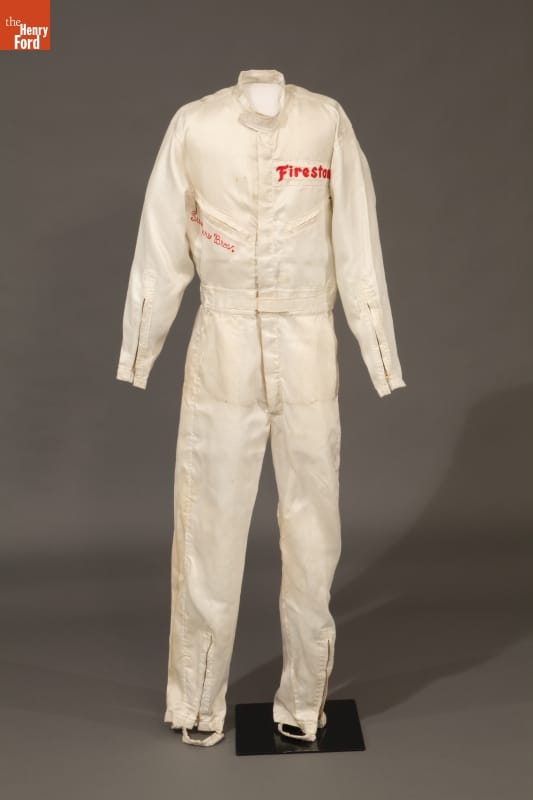
- Racing Suit Worn by Bob Summers While Winning New Land Speed Record, 1965 - Bob Summers of Ontario, California, wore this racing suit when he achieved a new wheel-driven land speed record of 409.277 miles per hour on November 12, 1965. Summers was in Goldenrod, the sleek four-engine car he built with his brother Bill. The Summers brothers' record stood until 1991.
- November 12, 1965
- Collections - Artifact
Racing Suit Worn by Bob Summers While Winning New Land Speed Record, 1965
Bob Summers of Ontario, California, wore this racing suit when he achieved a new wheel-driven land speed record of 409.277 miles per hour on November 12, 1965. Summers was in Goldenrod, the sleek four-engine car he built with his brother Bill. The Summers brothers' record stood until 1991.
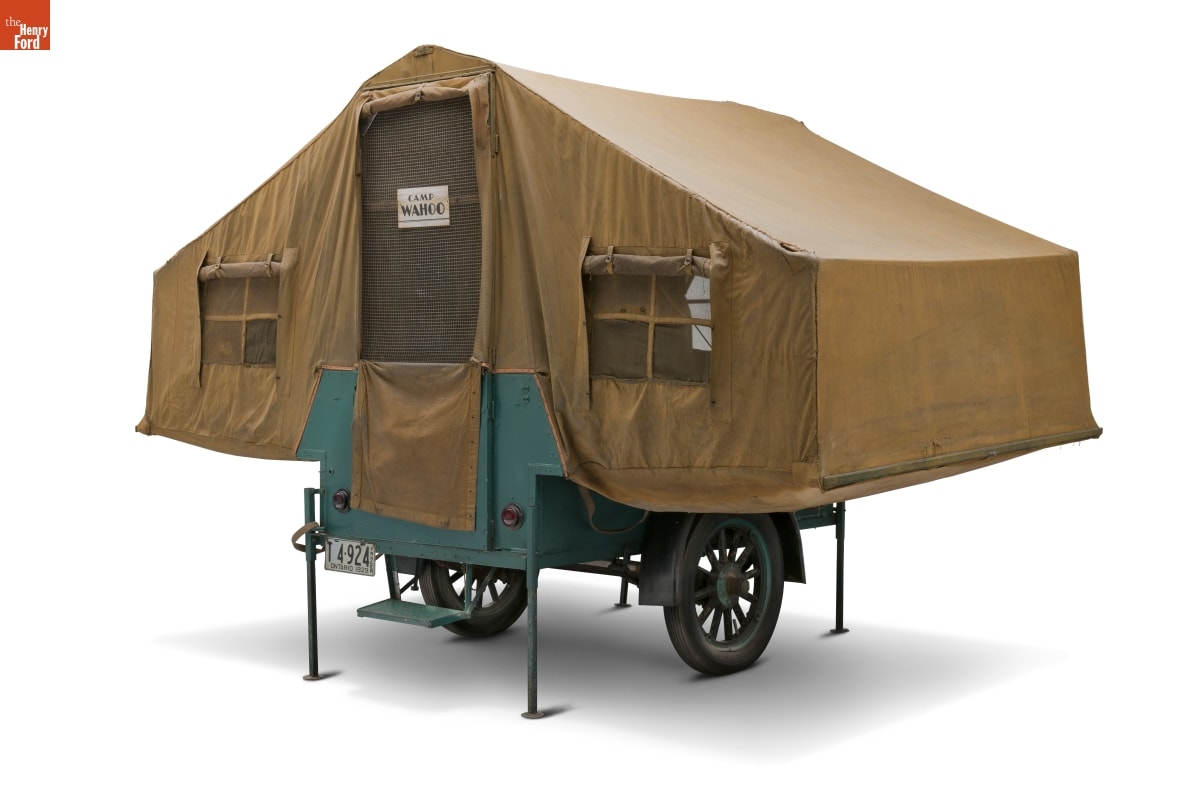
- Gilkie Tent Trailer, circa 1927 - Campers who wanted to get close to nature -- but not too close -- loved fold-out tent trailers. These two-wheelers folded down for easy towing by day and then mushroomed into miniature homes at night. Story has it that Warren and Ray Gilkison designed and built their first tent trailer in their father's machine shop for a family camping trip.
- circa 1927
- Collections - Artifact
Gilkie Tent Trailer, circa 1927
Campers who wanted to get close to nature -- but not too close -- loved fold-out tent trailers. These two-wheelers folded down for easy towing by day and then mushroomed into miniature homes at night. Story has it that Warren and Ray Gilkison designed and built their first tent trailer in their father's machine shop for a family camping trip.
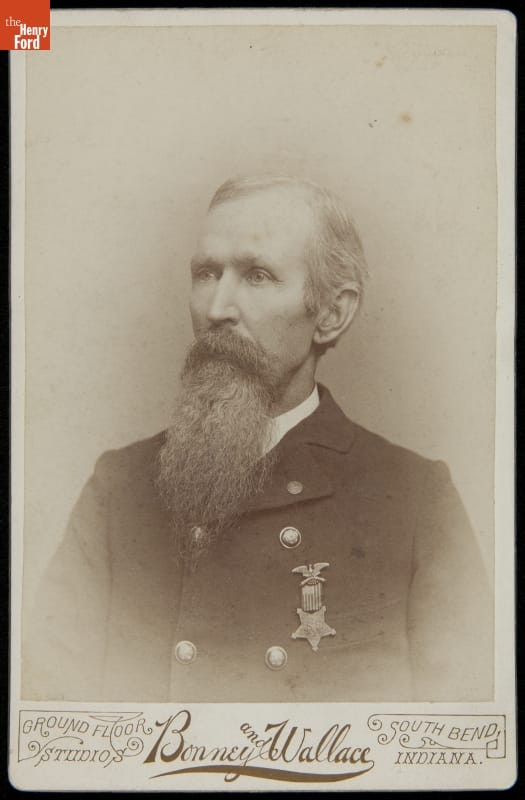
- Portrait of an American Civil War Veteran, circa 1890 -
- circa 1890
- Collections - Artifact
Portrait of an American Civil War Veteran, circa 1890
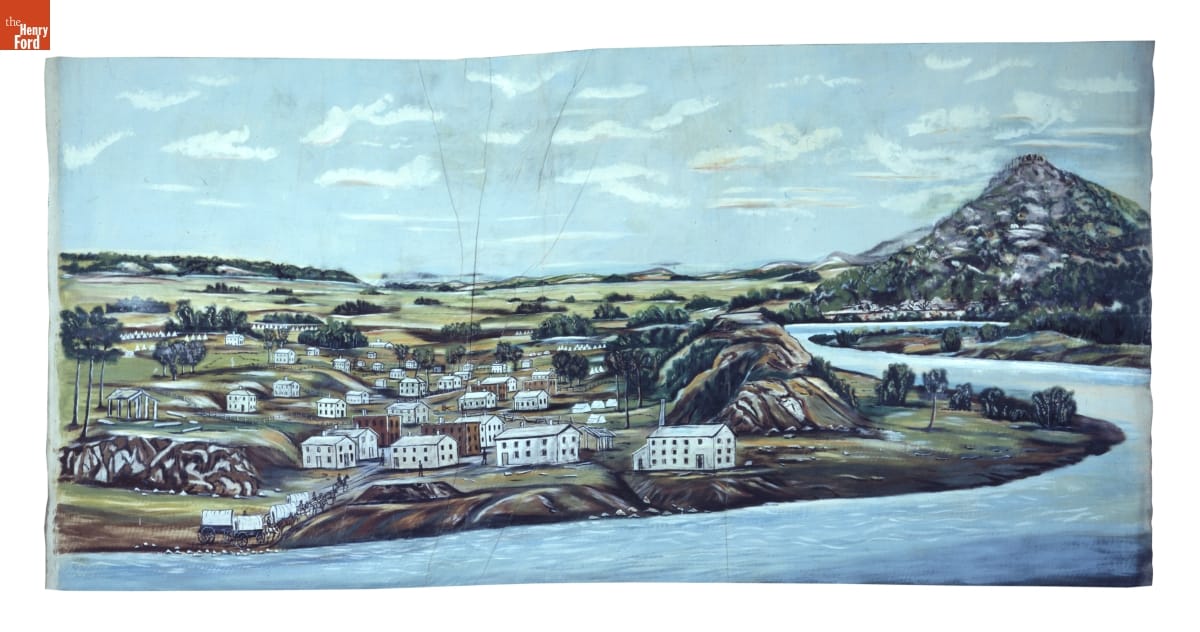
- "Battle Scenes of the Rebellion" Battle of Chattanooga, Civil War Panorama - In the 1880s, Thomas Clarkson Gordon, a self-taught artist and Civil War veteran, created a panorama depicting scenes from the Civil War. Gordon stitched together 15 paintings -- each 7 by 14 feet -- into a canvas roll more than 100 feet long. He toured his multi-paneled panorama throughout eastern Indiana, retelling the history of the conflict through his vivid illustrations.
- 1863
- Collections - Artifact
"Battle Scenes of the Rebellion" Battle of Chattanooga, Civil War Panorama
In the 1880s, Thomas Clarkson Gordon, a self-taught artist and Civil War veteran, created a panorama depicting scenes from the Civil War. Gordon stitched together 15 paintings -- each 7 by 14 feet -- into a canvas roll more than 100 feet long. He toured his multi-paneled panorama throughout eastern Indiana, retelling the history of the conflict through his vivid illustrations.
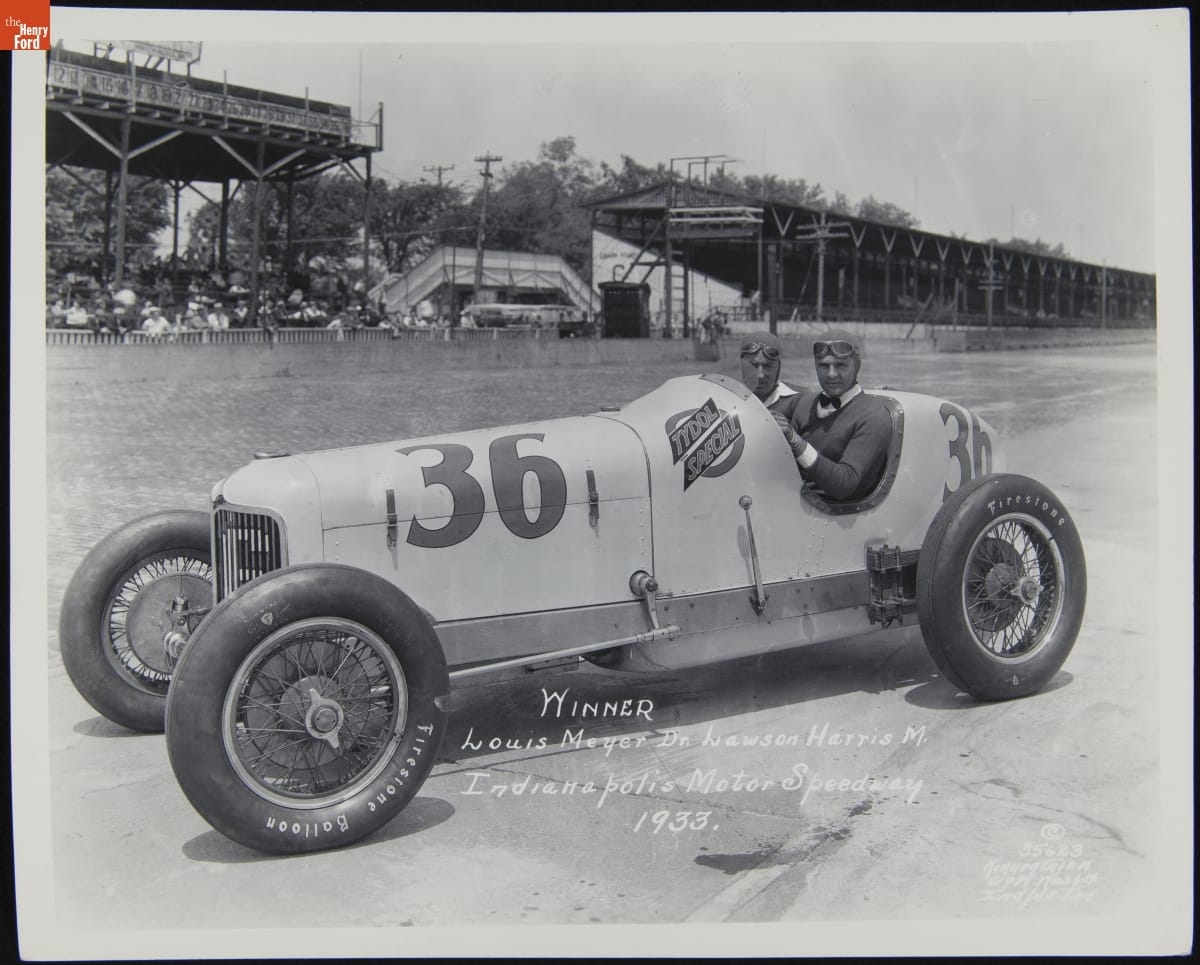
- Winners of the 1933 Indianapolis 500, Driver Louis Meyer and Mechanic Lawson Harris, in #36 Tydol Special - Driver Louis Meyer and riding mechanic Lawson Harris won the Indianapolis 500 in 1933, averaging 104.162 mph. Their Miller-built car was sponsored by Tydol gasoline. It was the second of Meyer's three Indy 500 victories. Meyer is also credited with starting the Indy tradition of drinking milk in Victory Lane -- he downed a glass of buttermilk after his 1936 win.
- 1933
- Collections - Artifact
Winners of the 1933 Indianapolis 500, Driver Louis Meyer and Mechanic Lawson Harris, in #36 Tydol Special
Driver Louis Meyer and riding mechanic Lawson Harris won the Indianapolis 500 in 1933, averaging 104.162 mph. Their Miller-built car was sponsored by Tydol gasoline. It was the second of Meyer's three Indy 500 victories. Meyer is also credited with starting the Indy tradition of drinking milk in Victory Lane -- he downed a glass of buttermilk after his 1936 win.
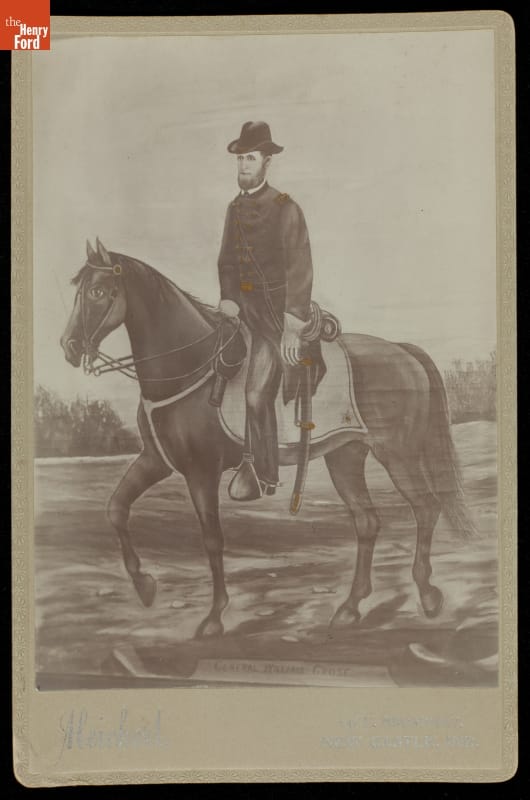
- Thomas Clarkson Gordon's Painting of Civil War General William Grose, 1861-1865 -
- 1861-1865
- Collections - Artifact
Thomas Clarkson Gordon's Painting of Civil War General William Grose, 1861-1865
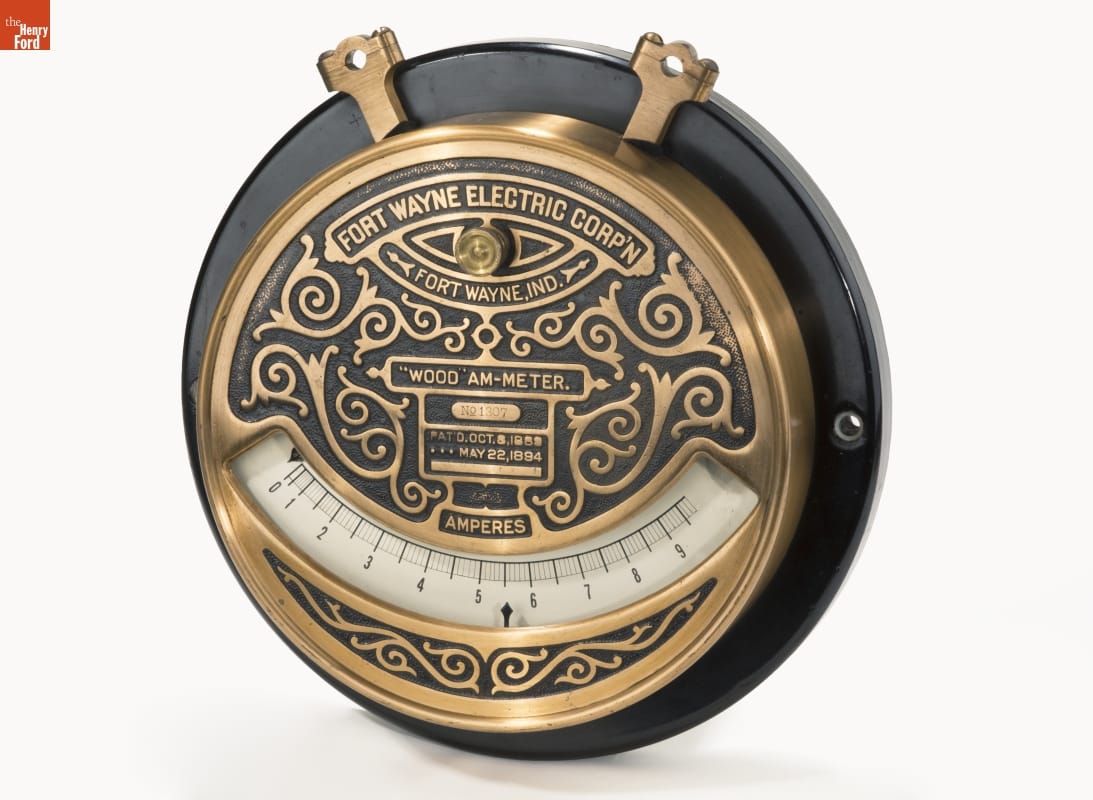
- Fort Wayne Wood Ammeter, 1895 - In the late 1800s and early 1900s, companies that supplied electricity to consumers needed a variety of instruments to regulate and monitor electrical output. These instruments were vital to the operation of power stations and needed to be accurate and rugged. Ammeters--used to measure the current in a circuit--could be found on switchboards or connected to motors and generators.
- December 02, 1895
- Collections - Artifact
Fort Wayne Wood Ammeter, 1895
In the late 1800s and early 1900s, companies that supplied electricity to consumers needed a variety of instruments to regulate and monitor electrical output. These instruments were vital to the operation of power stations and needed to be accurate and rugged. Ammeters--used to measure the current in a circuit--could be found on switchboards or connected to motors and generators.
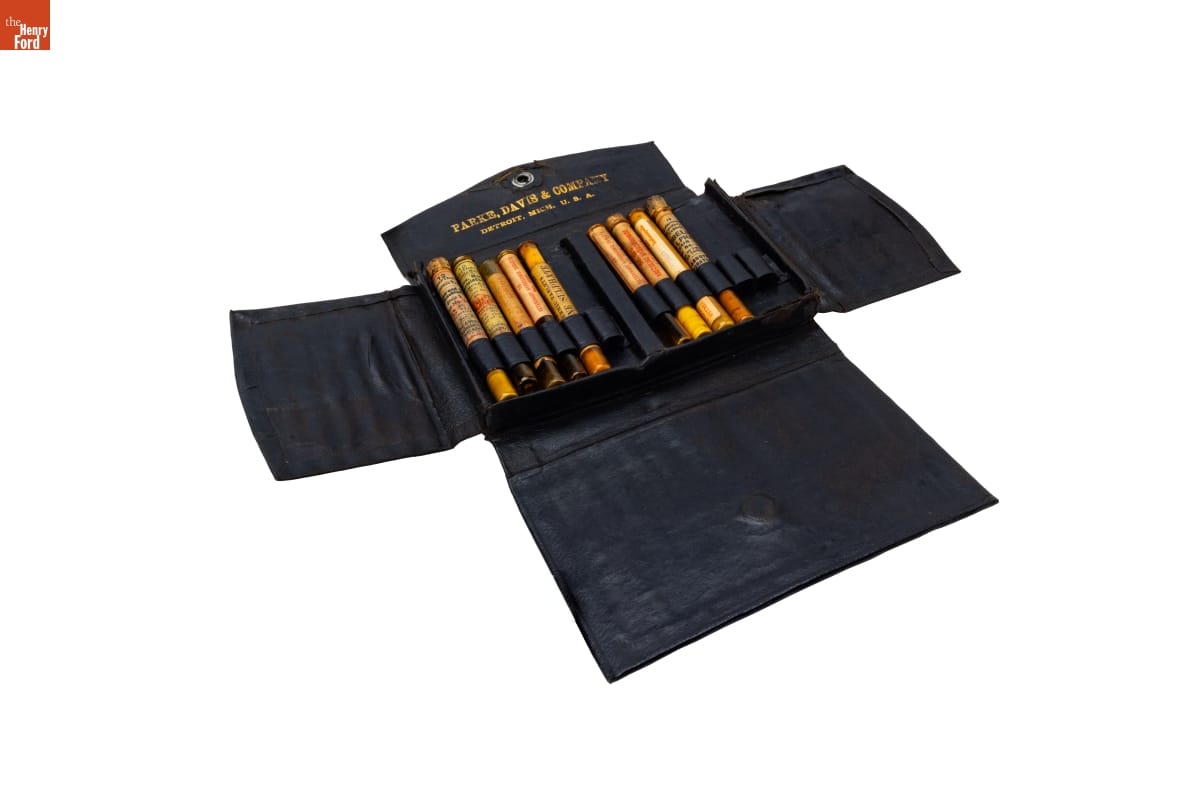
- Veterinary Pharmaceutical Kit, 1910-1920 - Veterinarians carried medicines and drugs in kits like this as they traveled to care for animals. This case, emblazoned with the name of Parke, Davis and Company, a large pharmaceutical firm that manufactured high-quality drugs, contained medicines they might need to do their work. Dr. F. Eugene Eads, who once headed the veterinary department at Parke-Davis, owned this case.
- 1910-1920
- Collections - Artifact
Veterinary Pharmaceutical Kit, 1910-1920
Veterinarians carried medicines and drugs in kits like this as they traveled to care for animals. This case, emblazoned with the name of Parke, Davis and Company, a large pharmaceutical firm that manufactured high-quality drugs, contained medicines they might need to do their work. Dr. F. Eugene Eads, who once headed the veterinary department at Parke-Davis, owned this case.
- Fort Wayne Wood Ammeter, 1899-1911 - In the late 1800s and early 1900s, companies that supplied electricity to consumers needed a variety of instruments to regulate and monitor electrical output. These instruments were vital to the operation of power stations and needed to be accurate and rugged. Ammeters--used to measure the current in a circuit--could be found on switchboards or connected to motors and generators.
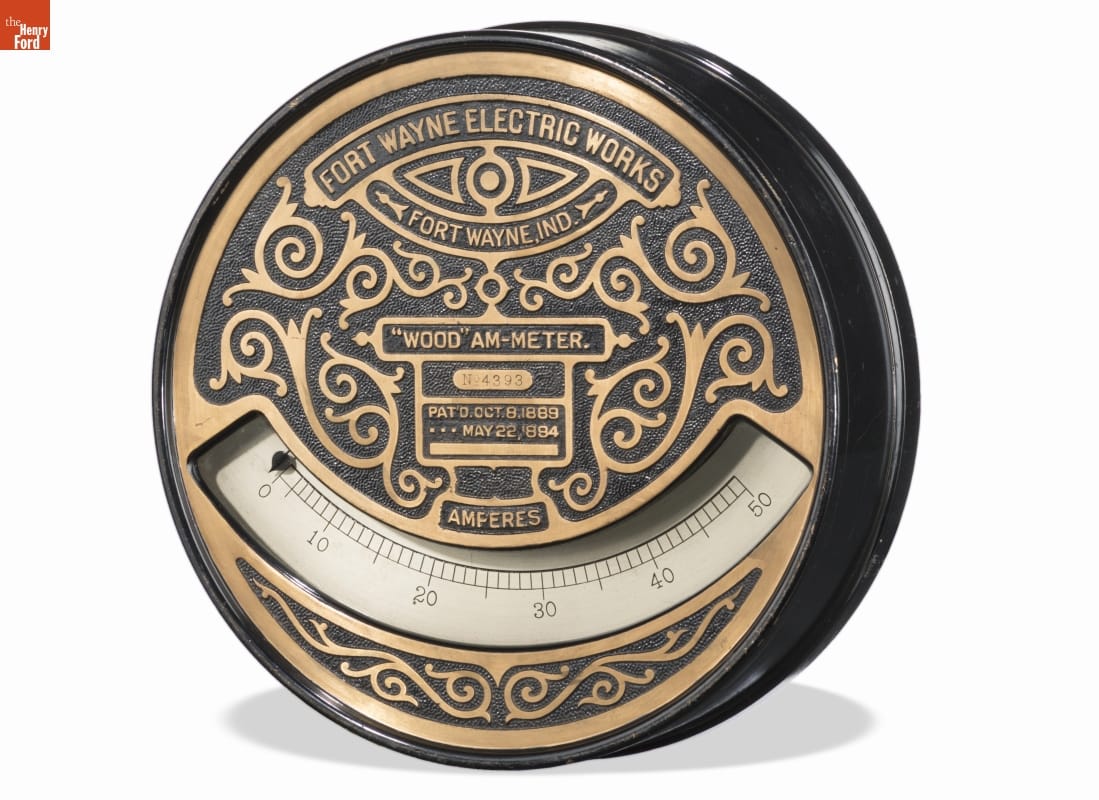
- 1899-1911
- Collections - Artifact
Fort Wayne Wood Ammeter, 1899-1911
In the late 1800s and early 1900s, companies that supplied electricity to consumers needed a variety of instruments to regulate and monitor electrical output. These instruments were vital to the operation of power stations and needed to be accurate and rugged. Ammeters--used to measure the current in a circuit--could be found on switchboards or connected to motors and generators.
- Fort Wayne Wood Ammeter, 1902-1905 - In the late 1800s and early 1900s, companies that supplied electricity to consumers needed a variety of instruments to regulate and monitor electrical output. These instruments were vital to the operation of power stations and needed to be accurate and rugged. Ammeters--used to measure the current in a circuit--could be found on switchboards or connected to motors and generators.
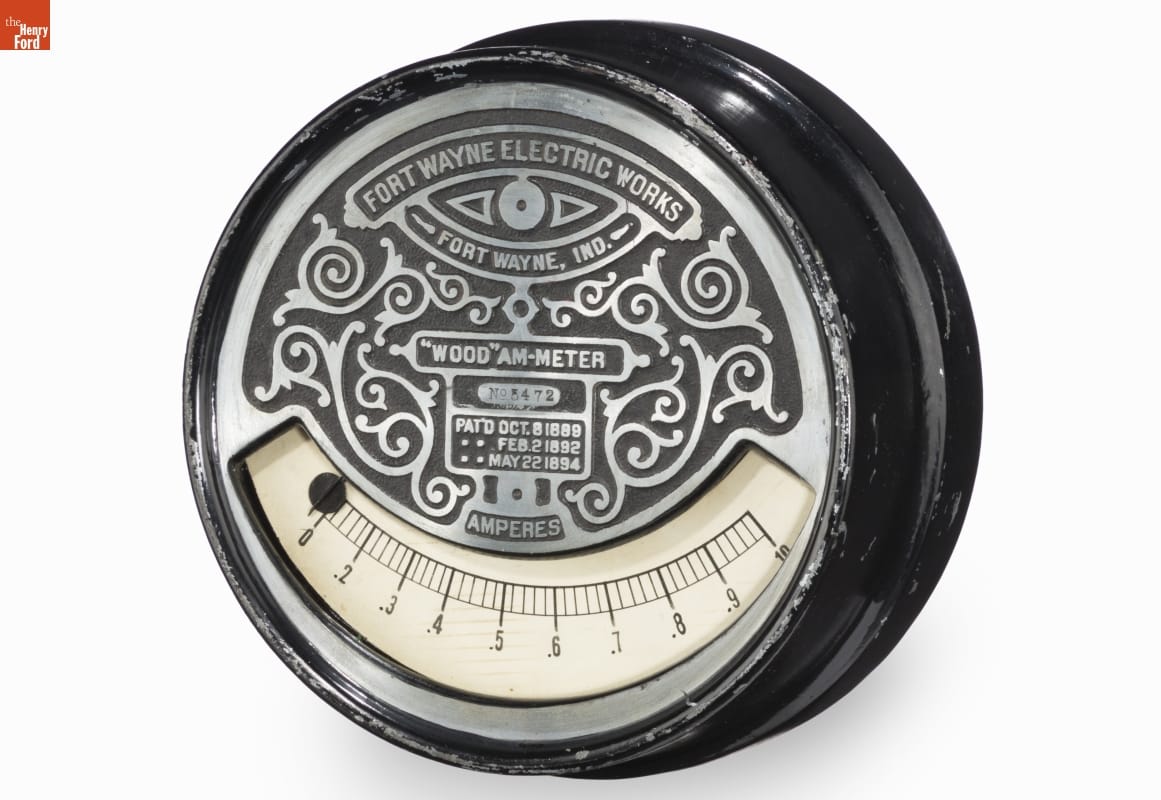
- 1902-1905
- Collections - Artifact
Fort Wayne Wood Ammeter, 1902-1905
In the late 1800s and early 1900s, companies that supplied electricity to consumers needed a variety of instruments to regulate and monitor electrical output. These instruments were vital to the operation of power stations and needed to be accurate and rugged. Ammeters--used to measure the current in a circuit--could be found on switchboards or connected to motors and generators.