
Search
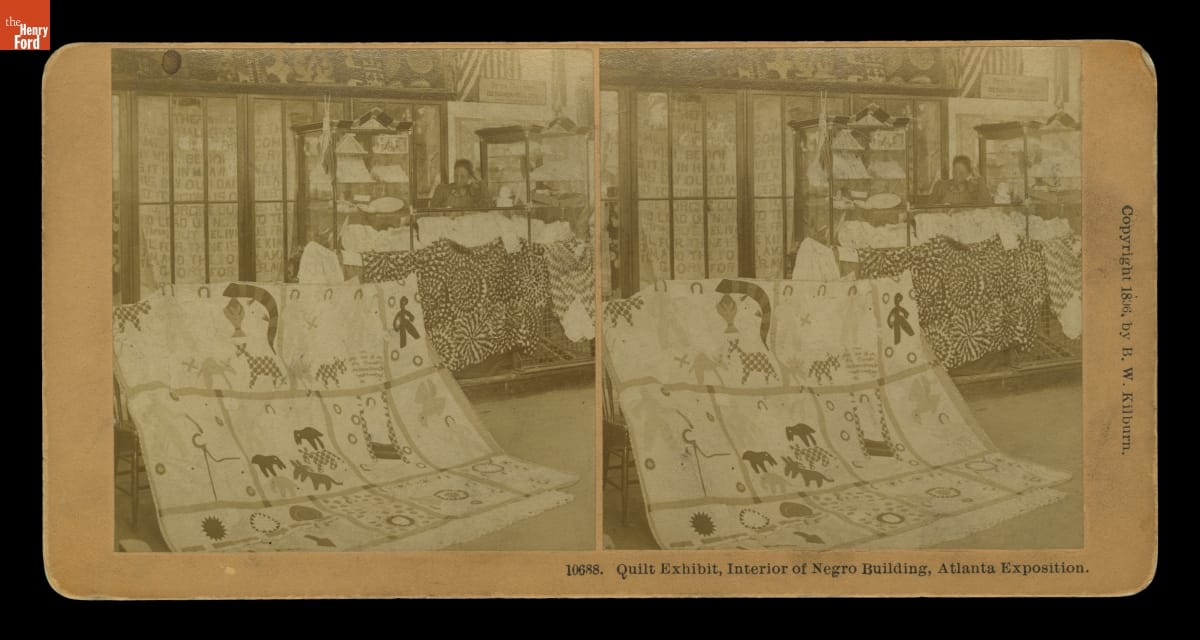
- "Quilt Exhibit, Interior of Negro Building at Atlanta Exposition," 1895 - Former slave Harriet Powers made this striking Bible quilt, with its bold figures that depict biblical events, during the mid-1880s. A decade later, the quilt--sold by Powers out of need--was exhibited at this 1895 exposition in Atlanta. For decades, Powers received little recognition for her work. Today, she is one of the best-known Southern quilt makers.
- 1895
- Collections - Artifact
"Quilt Exhibit, Interior of Negro Building at Atlanta Exposition," 1895
Former slave Harriet Powers made this striking Bible quilt, with its bold figures that depict biblical events, during the mid-1880s. A decade later, the quilt--sold by Powers out of need--was exhibited at this 1895 exposition in Atlanta. For decades, Powers received little recognition for her work. Today, she is one of the best-known Southern quilt makers.
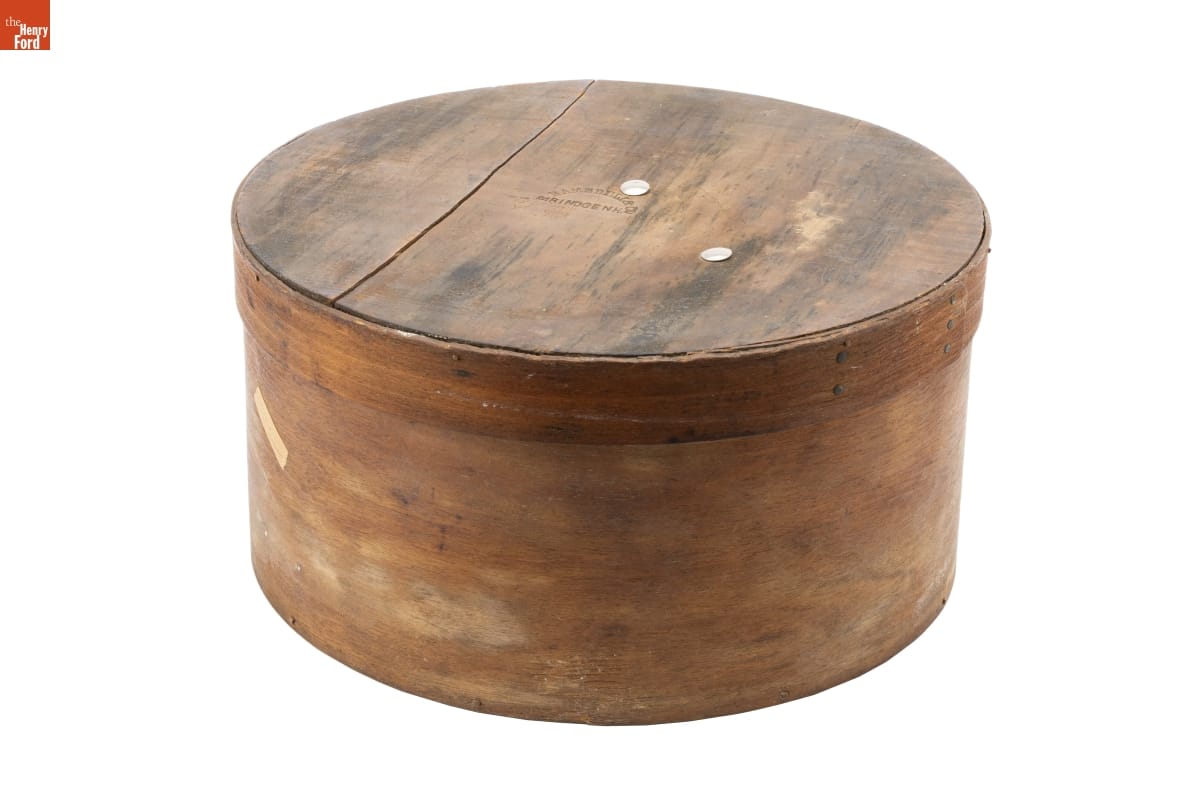
- Pantry Box, 1870-1885 -
- 1870-1885
- Collections - Artifact
Pantry Box, 1870-1885
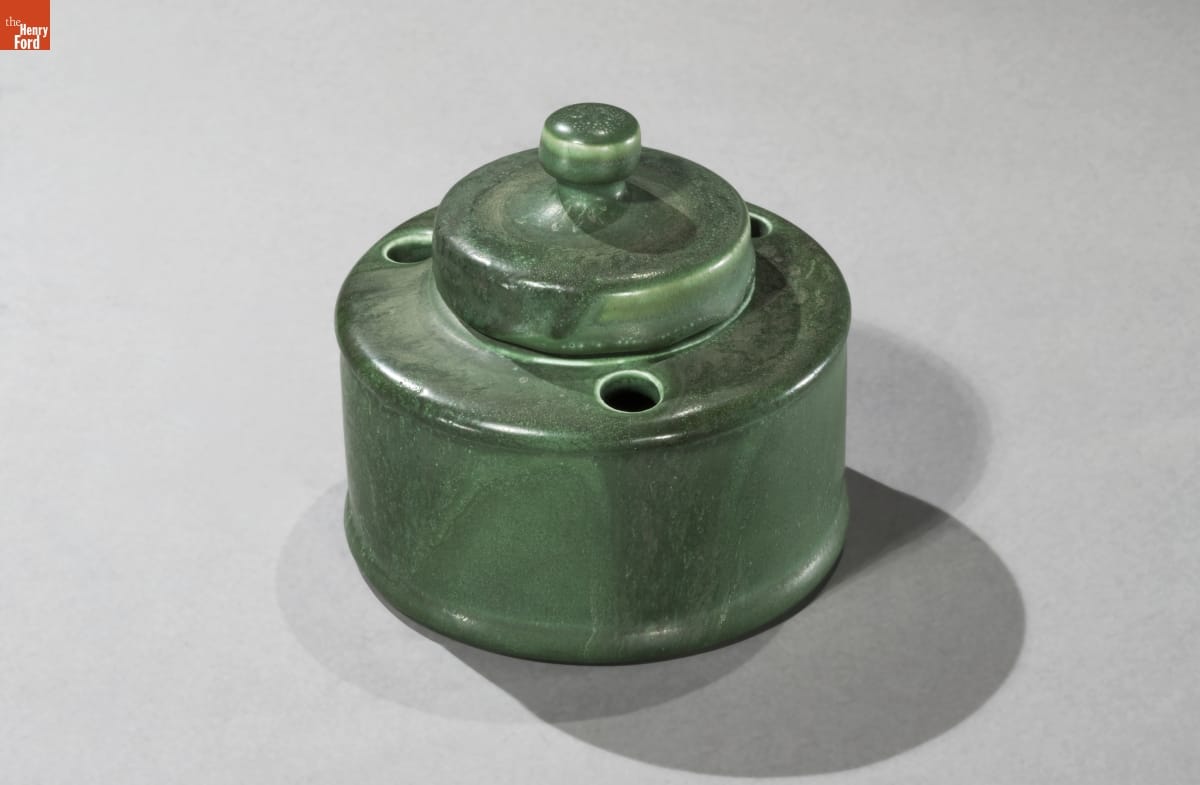
- Inkwell, 1904-1917 - Cadman Robertson joined Hampshire Pottery in 1904 and began developing decorative household items covered with an attractive thick brown, red, blue, or green glaze. The Keene, New Hampshire, company continued to produce similar wares for a few years after Robertson's sudden death in 1914. The company was sold in 1917 and focused on making commercial China for restaurants and hotels. The factory closed in 1923.
- 1904-1917
- Collections - Artifact
Inkwell, 1904-1917
Cadman Robertson joined Hampshire Pottery in 1904 and began developing decorative household items covered with an attractive thick brown, red, blue, or green glaze. The Keene, New Hampshire, company continued to produce similar wares for a few years after Robertson's sudden death in 1914. The company was sold in 1917 and focused on making commercial China for restaurants and hotels. The factory closed in 1923.
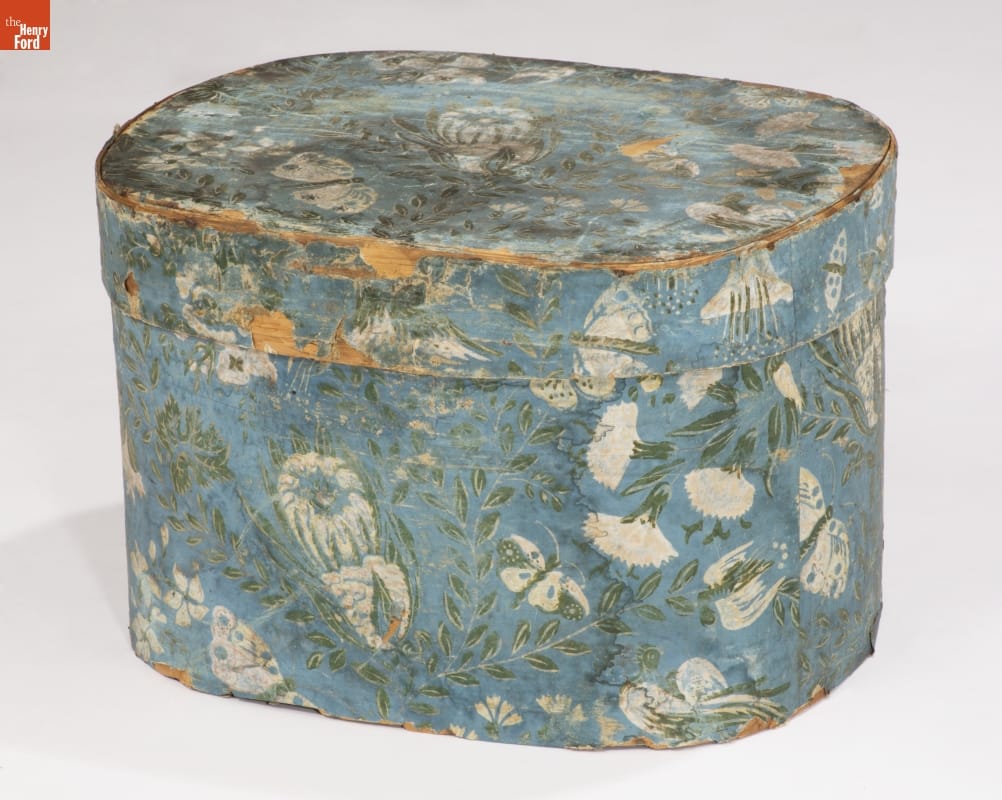
- Bandbox, Made by Hannah Davis, 1832 - Hannah Davis (1784-1863), a Jaffrey, New Hampshire, entrepreneur, created colorful, wallpaper-covered bandboxes. Davis sold many of her bandboxes to the young, migrant women who worked in the textile mills in the surrounding New England villages. Davis's attractive and affordable bandboxes were ideal for the millworkers. The boxes could hold clothing and accessories and they served as useful storage cases when the women traveled home.
- 1832
- Collections - Artifact
Bandbox, Made by Hannah Davis, 1832
Hannah Davis (1784-1863), a Jaffrey, New Hampshire, entrepreneur, created colorful, wallpaper-covered bandboxes. Davis sold many of her bandboxes to the young, migrant women who worked in the textile mills in the surrounding New England villages. Davis's attractive and affordable bandboxes were ideal for the millworkers. The boxes could hold clothing and accessories and they served as useful storage cases when the women traveled home.
- Ice Cream Freezer, circa 1923 -
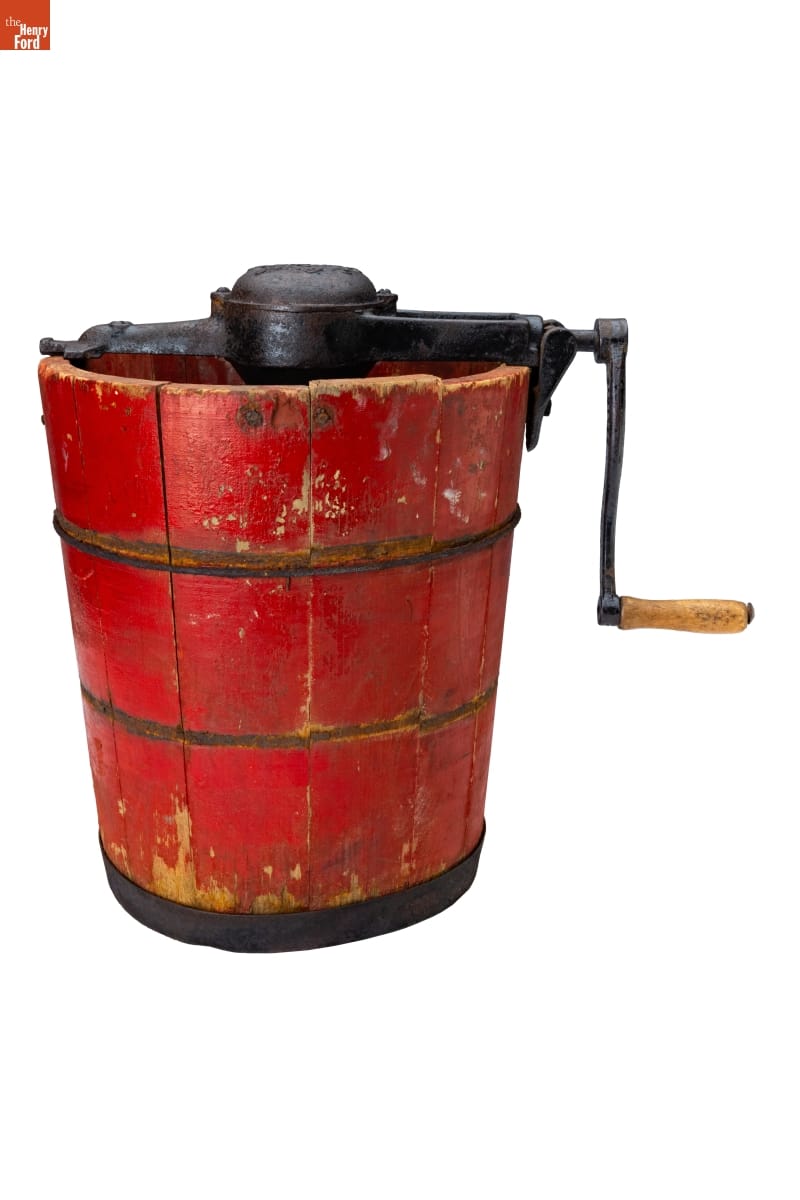
- circa 1923
- Collections - Artifact
Ice Cream Freezer, circa 1923
- Shelf Clock By John Winkley, 1787-1792 -
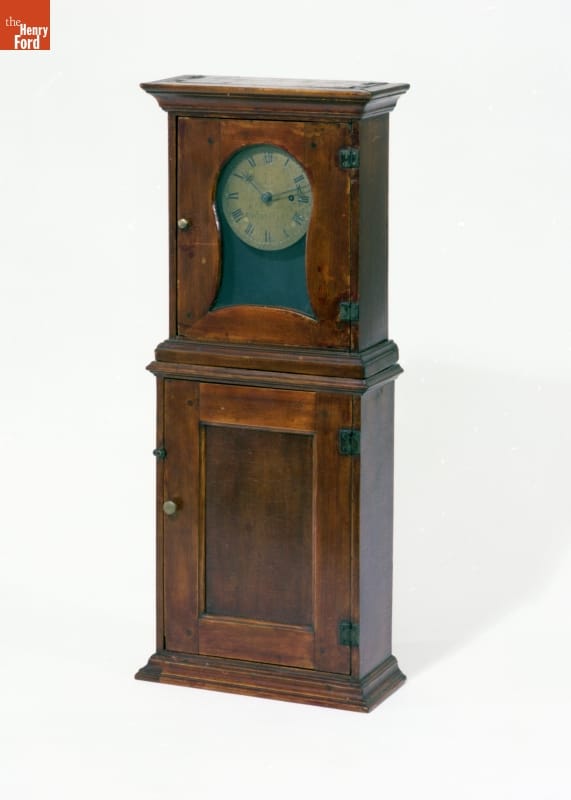
- 1787-1792
- Collections - Artifact
Shelf Clock By John Winkley, 1787-1792
- Keyed Bugle, 1848 -
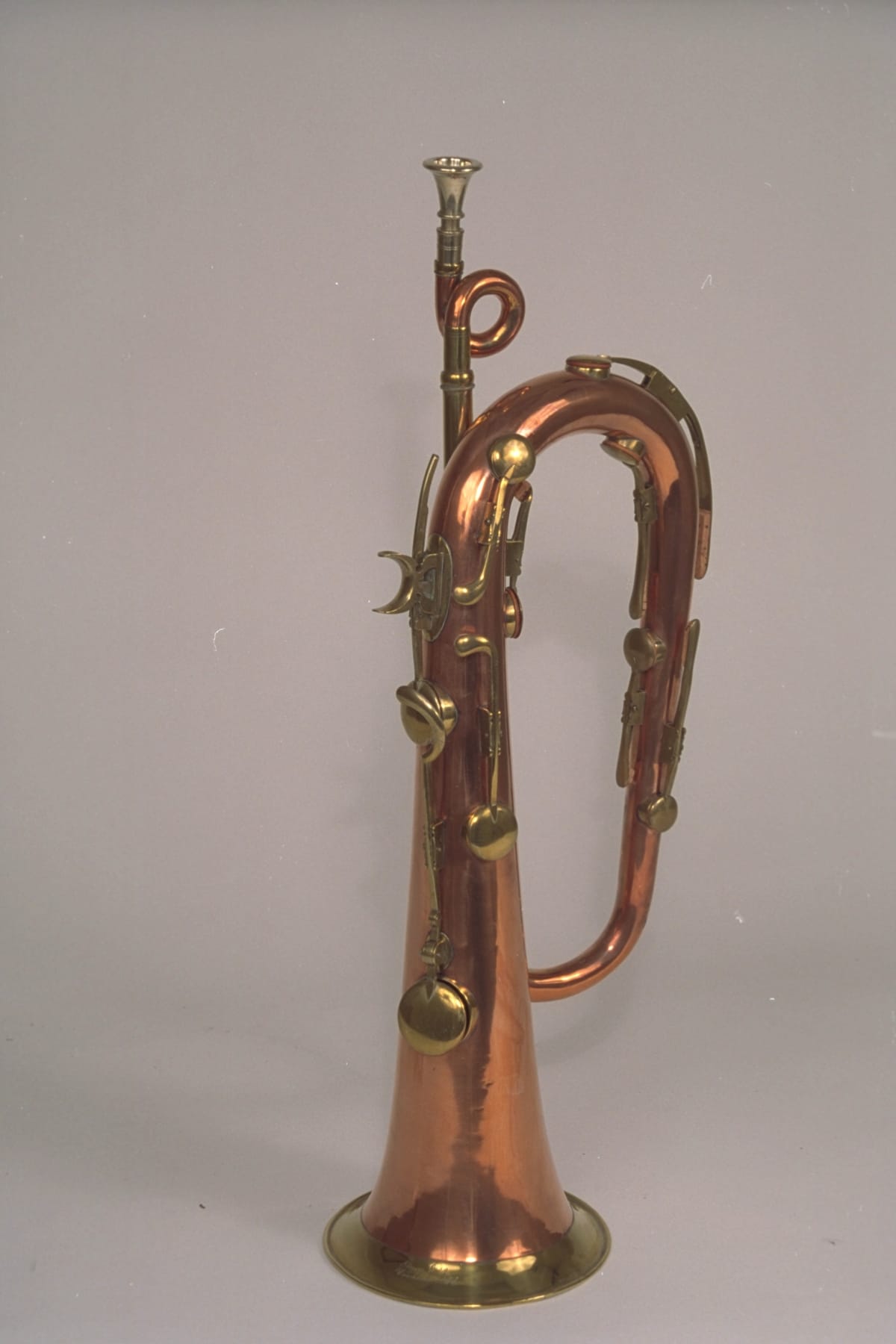
- 1848
- Collections - Artifact
Keyed Bugle, 1848
- Pennant, "Santa's Land," 1957-1965 - After World War II, highways were flooded with family vacationers out to enjoy their new cars and all that America had to offer. New attractions vied for the attention of passing auto tourists. Santa's Land opened in 1957 in Putney, Vermont. It was one of many Santa-themed attractions scattered throughout the United States.
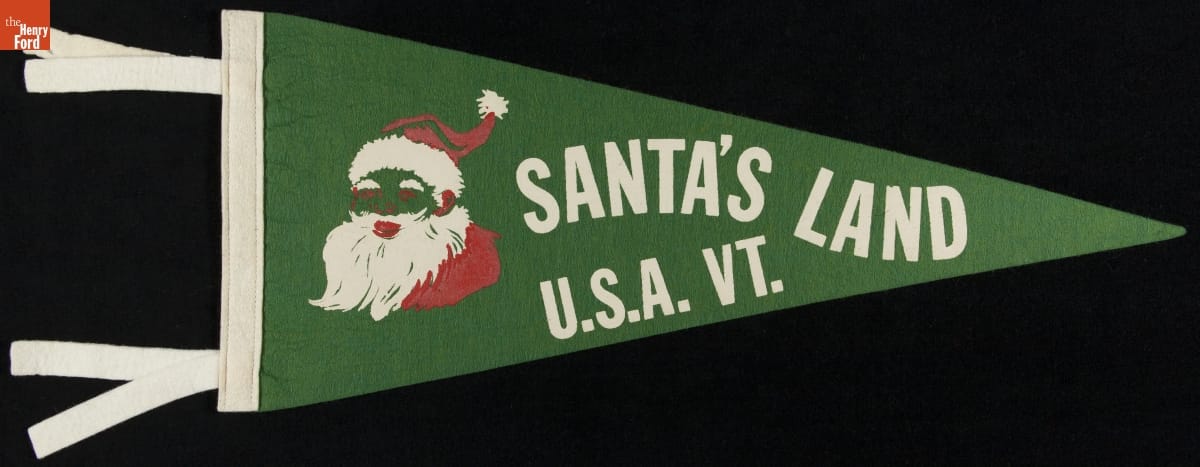
- 1957-1965
- Collections - Artifact
Pennant, "Santa's Land," 1957-1965
After World War II, highways were flooded with family vacationers out to enjoy their new cars and all that America had to offer. New attractions vied for the attention of passing auto tourists. Santa's Land opened in 1957 in Putney, Vermont. It was one of many Santa-themed attractions scattered throughout the United States.
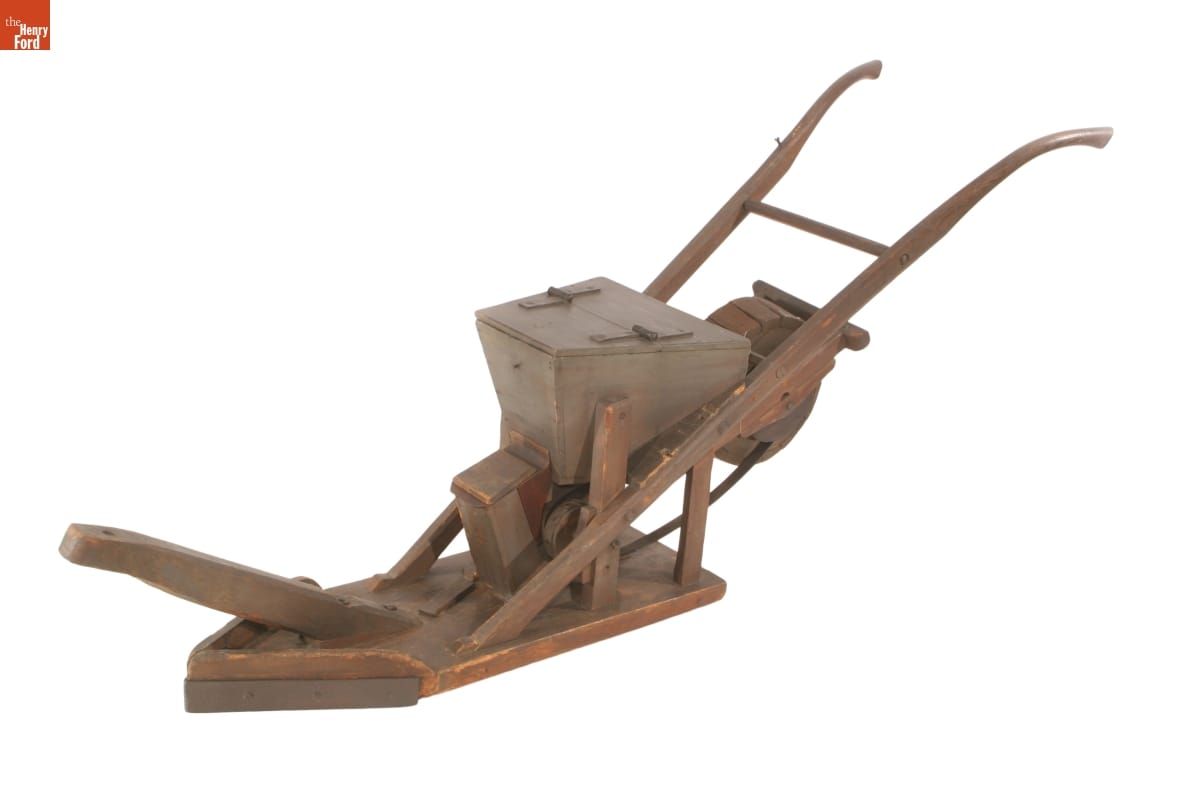
- One Row Corn Planter, circa 1855 - Farmers planted corn in hills during the 19th century. That started a year-round effort to raise food for livestock and farm family. Some used single-row planters like this. Then they cultivated with a shovel plow until corn was knee-high. They then planted squash or pumpkins to keep down weeds and retain moisture (a form of double cropping). At harvest they husked ears (to feed pigs) and shocked stalks (to feed cattle).
- circa 1855
- Collections - Artifact
One Row Corn Planter, circa 1855
Farmers planted corn in hills during the 19th century. That started a year-round effort to raise food for livestock and farm family. Some used single-row planters like this. Then they cultivated with a shovel plow until corn was knee-high. They then planted squash or pumpkins to keep down weeds and retain moisture (a form of double cropping). At harvest they husked ears (to feed pigs) and shocked stalks (to feed cattle).
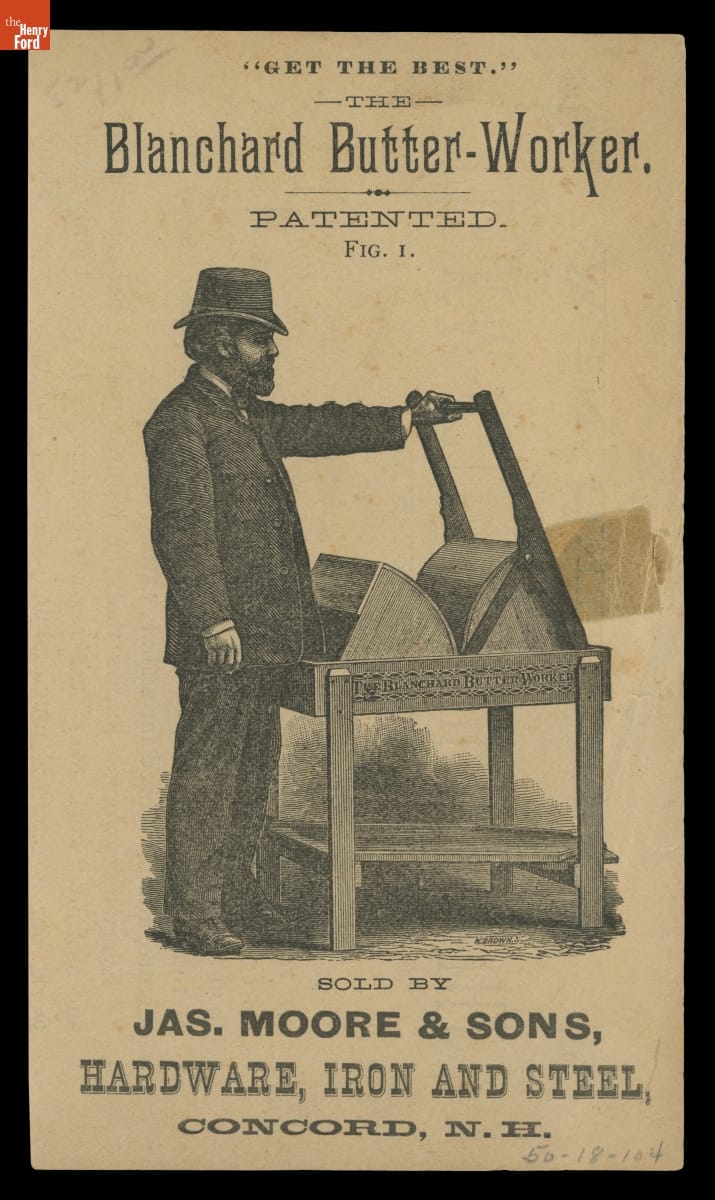
- Advertising Leaflet for the Blanchard Butter Worker, 1880 -
- 1880
- Collections - Artifact
Advertising Leaflet for the Blanchard Butter Worker, 1880