
Search
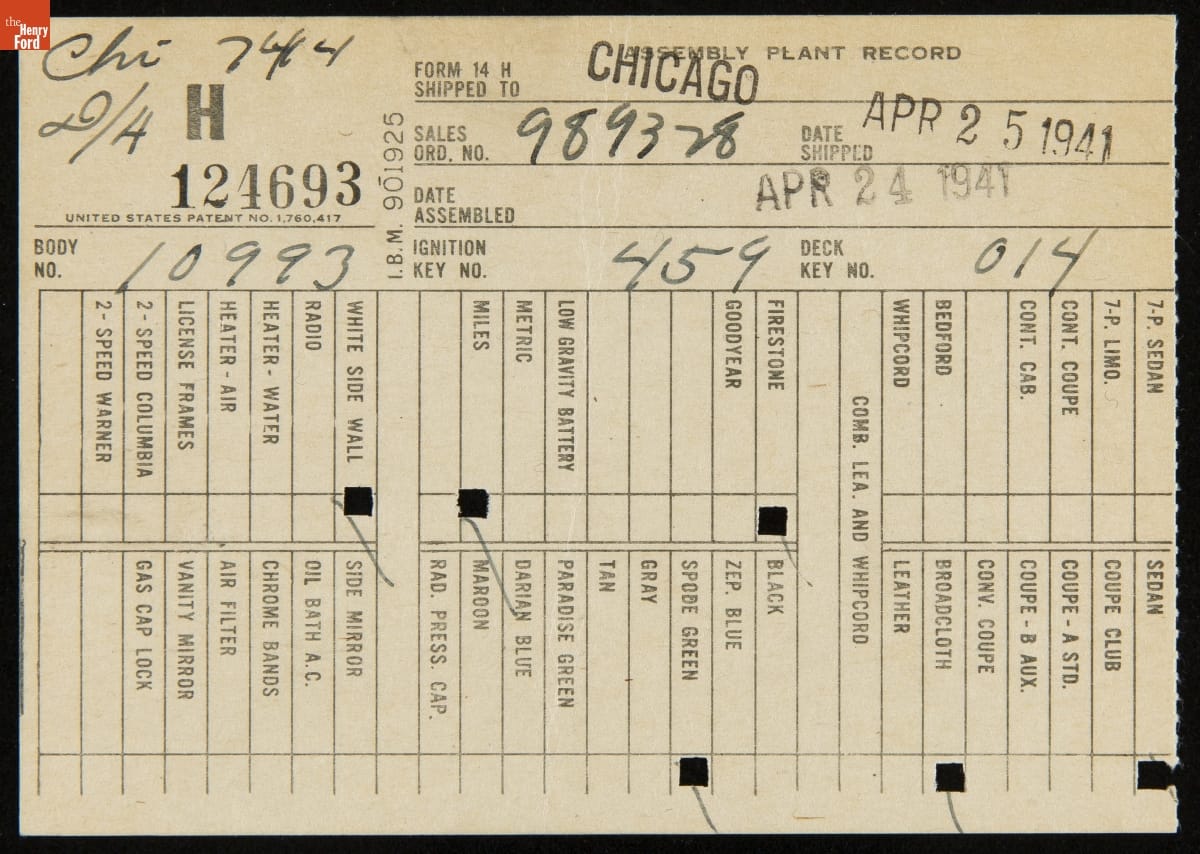
- Lincoln Production Card #124,693, April 25, 1941 - Production cards documented how a motor vehicle was equipped when it left the assembly plant. This card, for a Lincoln sedan assembled in April 1941, recorded details such as body style, interior upholstery, exterior paint color, and brand of tires. It also noted any optional equipment installed at the factory.
- April 25, 1941
- Collections - Artifact
Lincoln Production Card #124,693, April 25, 1941
Production cards documented how a motor vehicle was equipped when it left the assembly plant. This card, for a Lincoln sedan assembled in April 1941, recorded details such as body style, interior upholstery, exterior paint color, and brand of tires. It also noted any optional equipment installed at the factory.
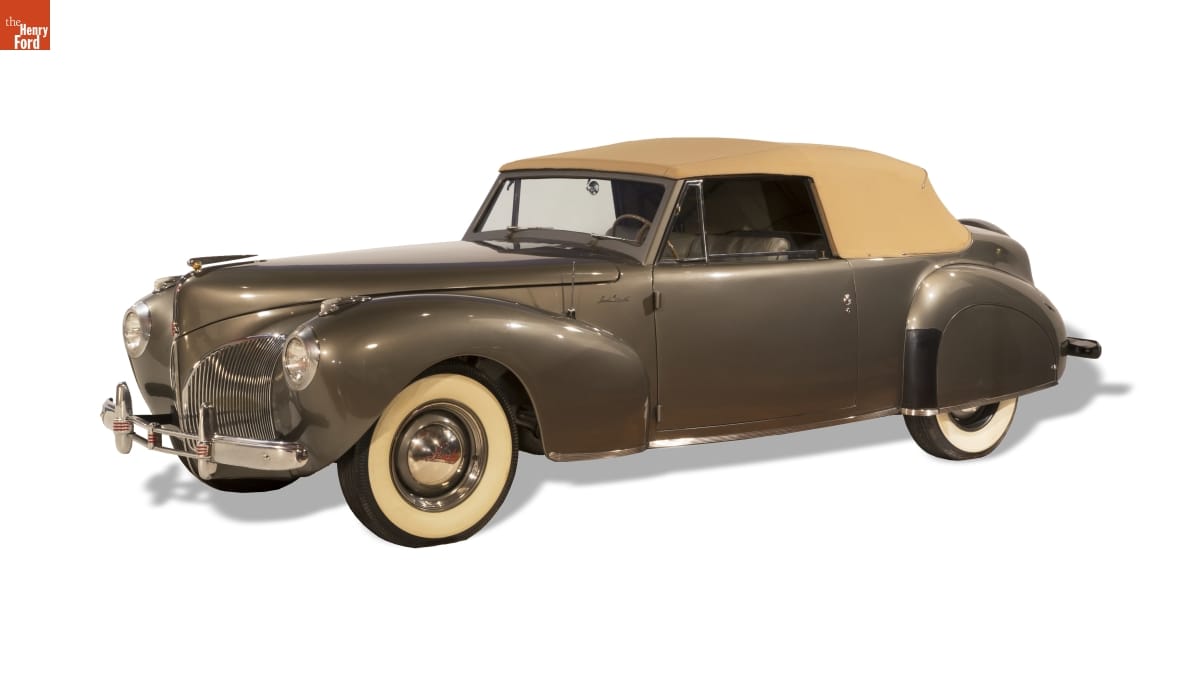
- 1941 Lincoln Continental Convertible, Owned by Edsel B. Ford - Inspired by a 1938 trip to Europe, Edsel Ford collaborated with designer E.T. "Bob" Gregorie on a custom car with a sophisticated "continental" look. Reaction was so positive that Lincoln put the car into production. The beautiful 1940-1948 Lincoln Continentals that followed represent one of Edsel Ford's most significant achievements. This 1941 convertible was Mr. Ford's personal car.
- 1941
- Collections - Artifact
1941 Lincoln Continental Convertible, Owned by Edsel B. Ford
Inspired by a 1938 trip to Europe, Edsel Ford collaborated with designer E.T. "Bob" Gregorie on a custom car with a sophisticated "continental" look. Reaction was so positive that Lincoln put the car into production. The beautiful 1940-1948 Lincoln Continentals that followed represent one of Edsel Ford's most significant achievements. This 1941 convertible was Mr. Ford's personal car.
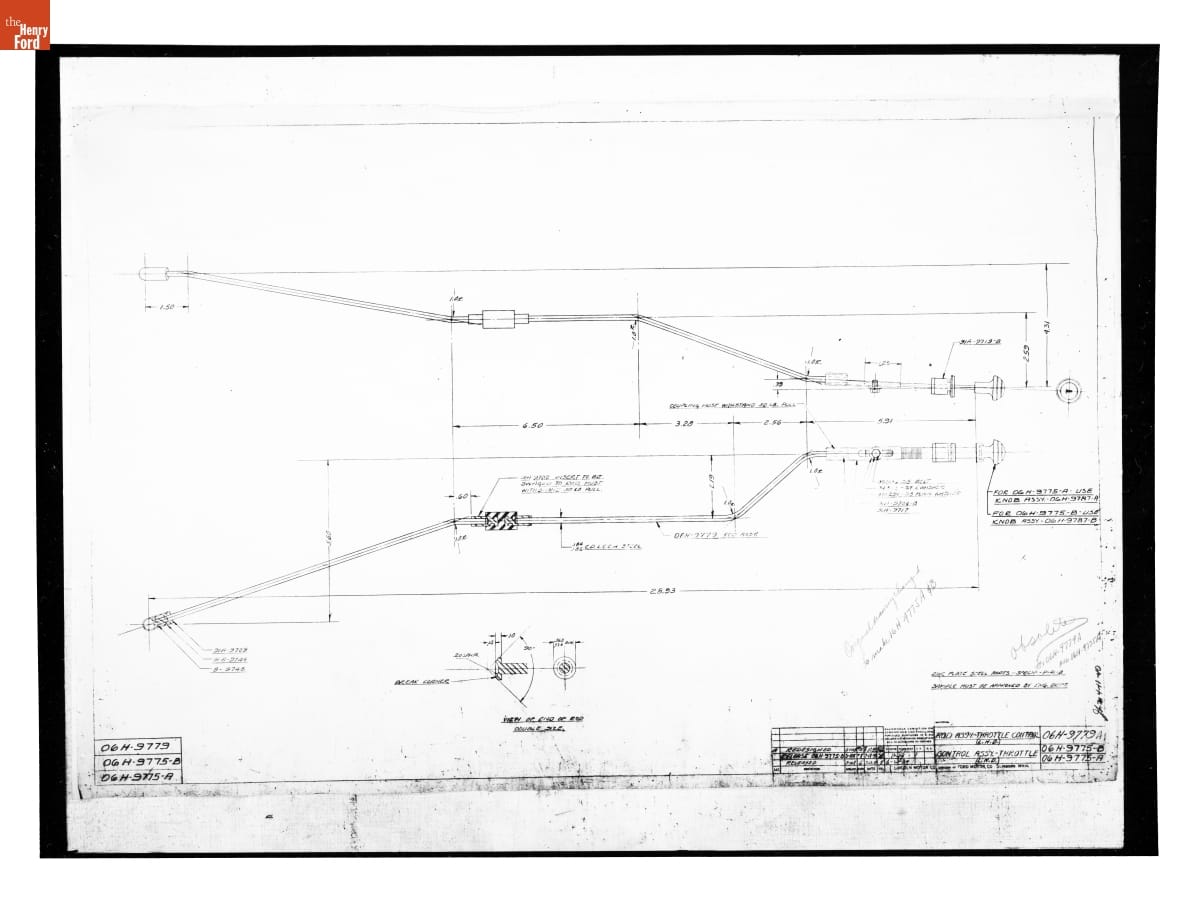
- Drawing, "Rod Assembly - Throttle Control" and "Control Assembly - Throttle," Lincoln Automobile, August 10, 1939 - The Ford Motor Company created over a million parts drawings from 1903 to 1957. Many of these drawings specify engineering requirements for the components of Ford-made vehicles--including automobiles, trucks, tractors, military vehicles and Tri-motor airplanes. Others document assembly components, stages of casting and forging, or experimental designs. Beginning in the 1940s, Ford transferred the drawings to microfilm.
- August 10, 1939
- Collections - Artifact
Drawing, "Rod Assembly - Throttle Control" and "Control Assembly - Throttle," Lincoln Automobile, August 10, 1939
The Ford Motor Company created over a million parts drawings from 1903 to 1957. Many of these drawings specify engineering requirements for the components of Ford-made vehicles--including automobiles, trucks, tractors, military vehicles and Tri-motor airplanes. Others document assembly components, stages of casting and forging, or experimental designs. Beginning in the 1940s, Ford transferred the drawings to microfilm.
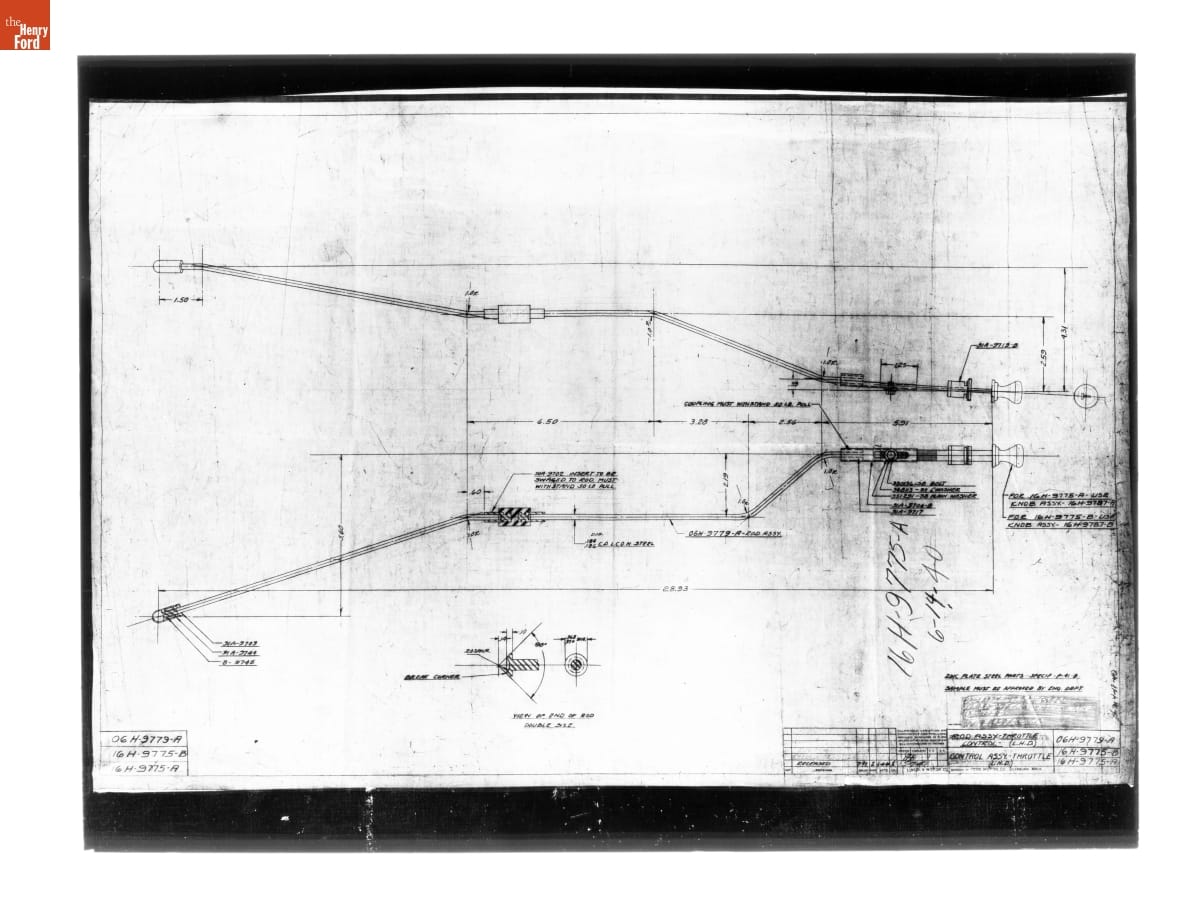
- Drawing, "Rod Assembly - Throttle Control" and "Control Assembly - Throttle," Lincoln Automobile, June 14, 1940 - The Ford Motor Company created over a million parts drawings from 1903 to 1957. Many of these drawings specify engineering requirements for the components of Ford-made vehicles--including automobiles, trucks, tractors, military vehicles and Tri-motor airplanes. Others document assembly components, stages of casting and forging, or experimental designs. Beginning in the 1940s, Ford transferred the drawings to microfilm.
- June 14, 1940
- Collections - Artifact
Drawing, "Rod Assembly - Throttle Control" and "Control Assembly - Throttle," Lincoln Automobile, June 14, 1940
The Ford Motor Company created over a million parts drawings from 1903 to 1957. Many of these drawings specify engineering requirements for the components of Ford-made vehicles--including automobiles, trucks, tractors, military vehicles and Tri-motor airplanes. Others document assembly components, stages of casting and forging, or experimental designs. Beginning in the 1940s, Ford transferred the drawings to microfilm.
- Drawing, "Rod Assembly Throttle Control" and "Control Assembly Throttle," Lincoln Automobile, November 30, 1945 - The Ford Motor Company created over a million parts drawings from 1903 to 1957. Many of these drawings specify engineering requirements for the components of Ford-made vehicles--including automobiles, trucks, tractors, military vehicles and Tri-motor airplanes. Others document assembly components, stages of casting and forging, or experimental designs. Beginning in the 1940s, Ford transferred the drawings to microfilm.
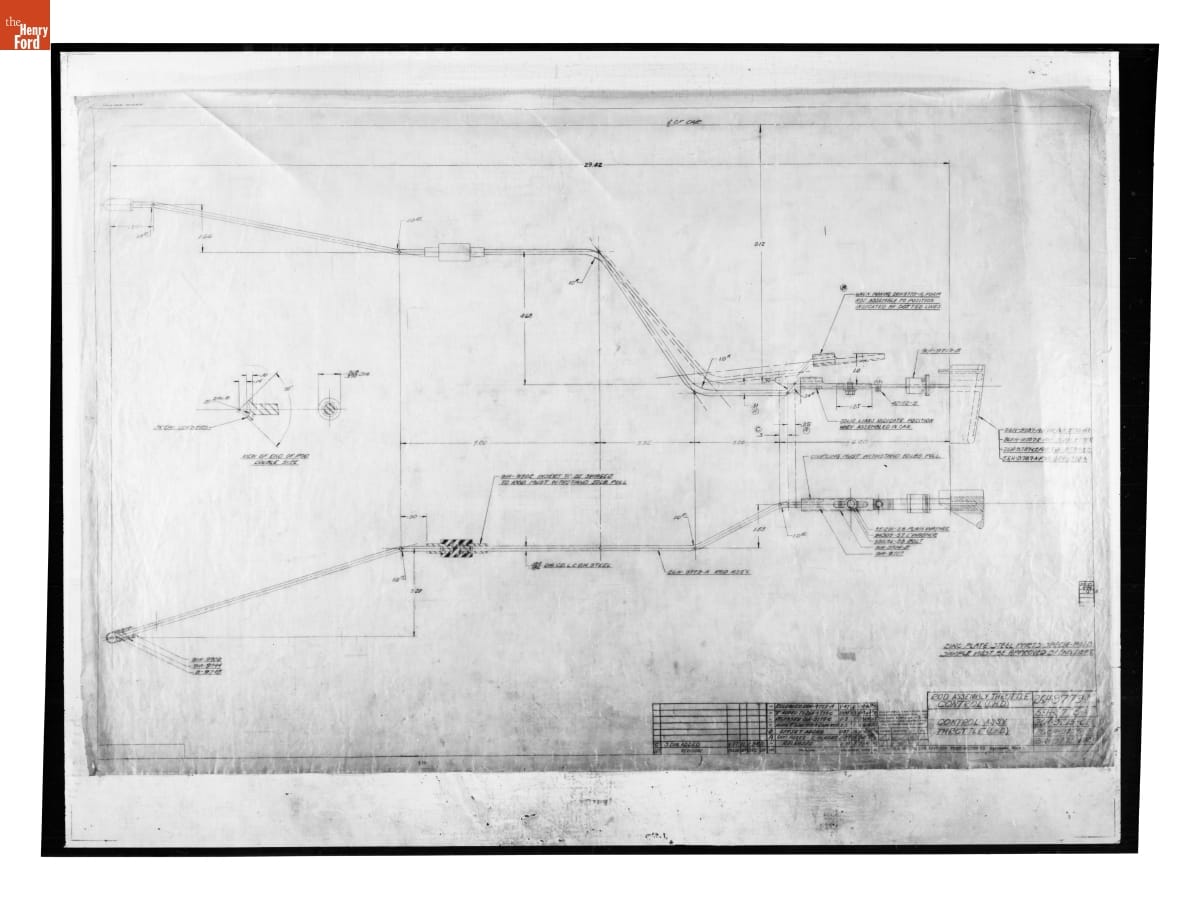
- November 30, 1945
- Collections - Artifact
Drawing, "Rod Assembly Throttle Control" and "Control Assembly Throttle," Lincoln Automobile, November 30, 1945
The Ford Motor Company created over a million parts drawings from 1903 to 1957. Many of these drawings specify engineering requirements for the components of Ford-made vehicles--including automobiles, trucks, tractors, military vehicles and Tri-motor airplanes. Others document assembly components, stages of casting and forging, or experimental designs. Beginning in the 1940s, Ford transferred the drawings to microfilm.
- Drawing, "Rod Assembly - Fuel Pump Push," Lincoln Automobile, December 23, 1941 - The Ford Motor Company created over a million parts drawings from 1903 to 1957. Many of these drawings specify engineering requirements for the components of Ford-made vehicles--including automobiles, trucks, tractors, military vehicles and Tri-motor airplanes. Others document assembly components, stages of casting and forging, or experimental designs. Beginning in the 1940s, Ford transferred the drawings to microfilm.
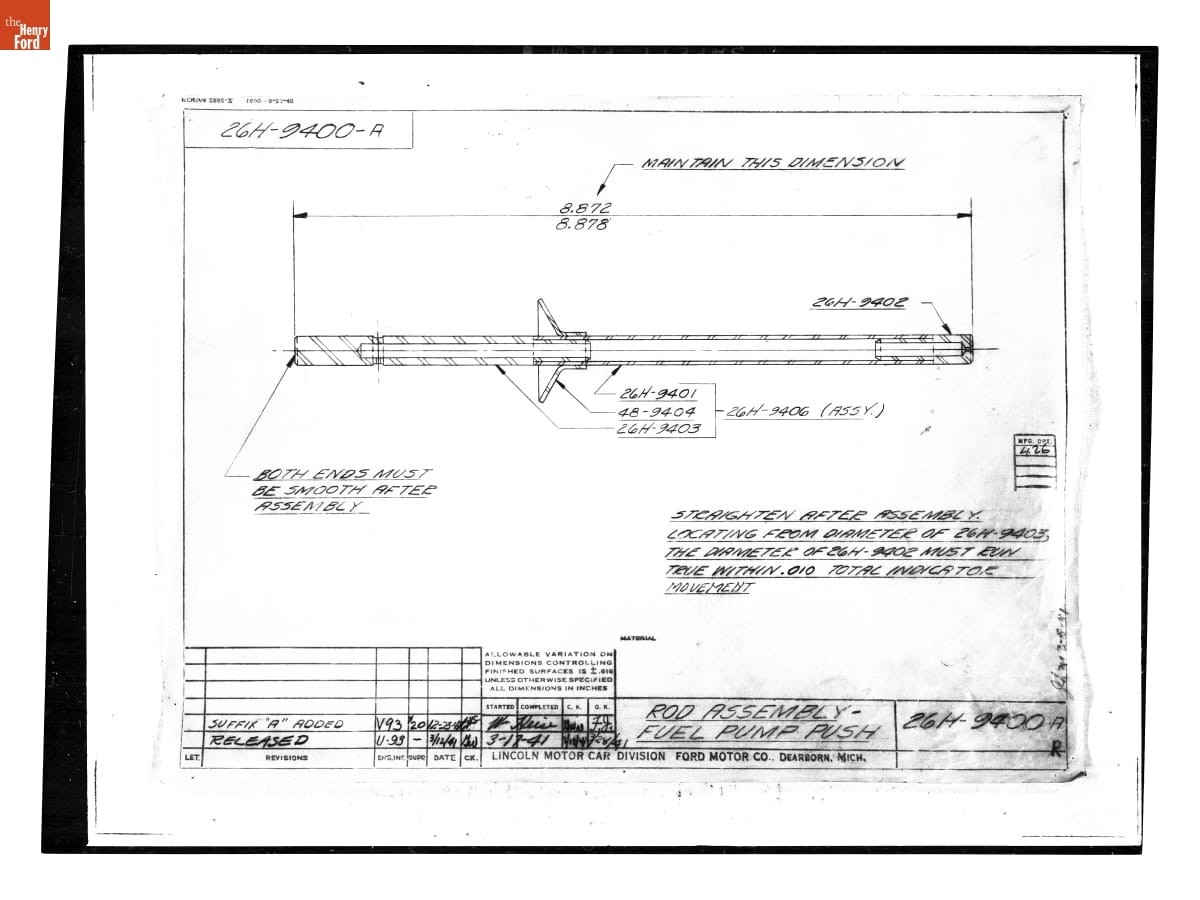
- December 23, 1941
- Collections - Artifact
Drawing, "Rod Assembly - Fuel Pump Push," Lincoln Automobile, December 23, 1941
The Ford Motor Company created over a million parts drawings from 1903 to 1957. Many of these drawings specify engineering requirements for the components of Ford-made vehicles--including automobiles, trucks, tractors, military vehicles and Tri-motor airplanes. Others document assembly components, stages of casting and forging, or experimental designs. Beginning in the 1940s, Ford transferred the drawings to microfilm.
- Drawing, "Bushing - Fuel Pump Push Rod," Lincoln Automobile, August 9, 1946 - The Ford Motor Company created over a million parts drawings from 1903 to 1957. Many of these drawings specify engineering requirements for the components of Ford-made vehicles--including automobiles, trucks, tractors, military vehicles and Tri-motor airplanes. Others document assembly components, stages of casting and forging, or experimental designs. Beginning in the 1940s, Ford transferred the drawings to microfilm.
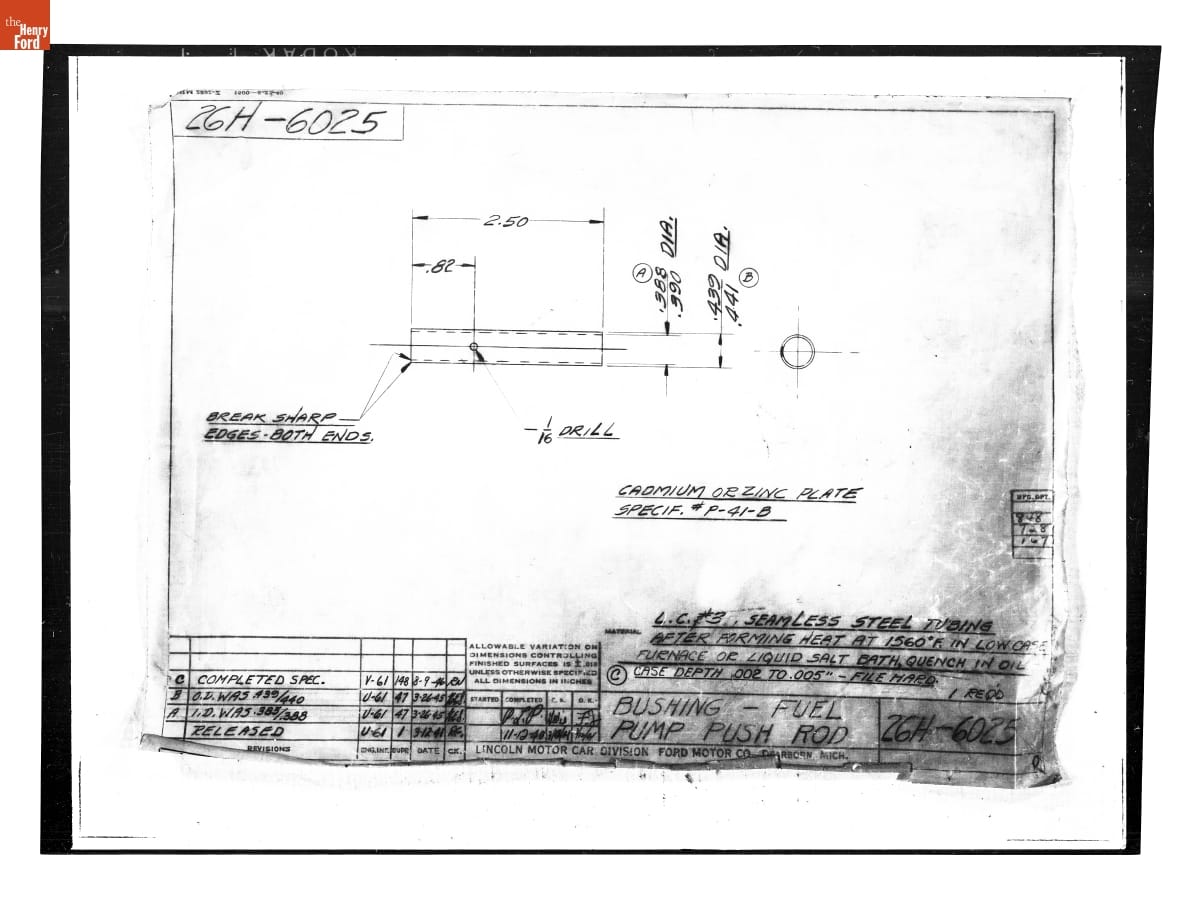
- August 09, 1946
- Collections - Artifact
Drawing, "Bushing - Fuel Pump Push Rod," Lincoln Automobile, August 9, 1946
The Ford Motor Company created over a million parts drawings from 1903 to 1957. Many of these drawings specify engineering requirements for the components of Ford-made vehicles--including automobiles, trucks, tractors, military vehicles and Tri-motor airplanes. Others document assembly components, stages of casting and forging, or experimental designs. Beginning in the 1940s, Ford transferred the drawings to microfilm.
- Drawing, "Bumper Hanger Cover Assembly for Lincoln Zephyr," September 16, 1938 - The Ford Motor Company created over a million parts drawings from 1903 to 1957. Many of these drawings specify engineering requirements for the components of Ford-made vehicles--including automobiles, trucks, tractors, military vehicles and Tri-motor airplanes. Others document assembly components, stages of casting and forging, or experimental designs. Beginning in the 1940s, Ford transferred the drawings to microfilm.
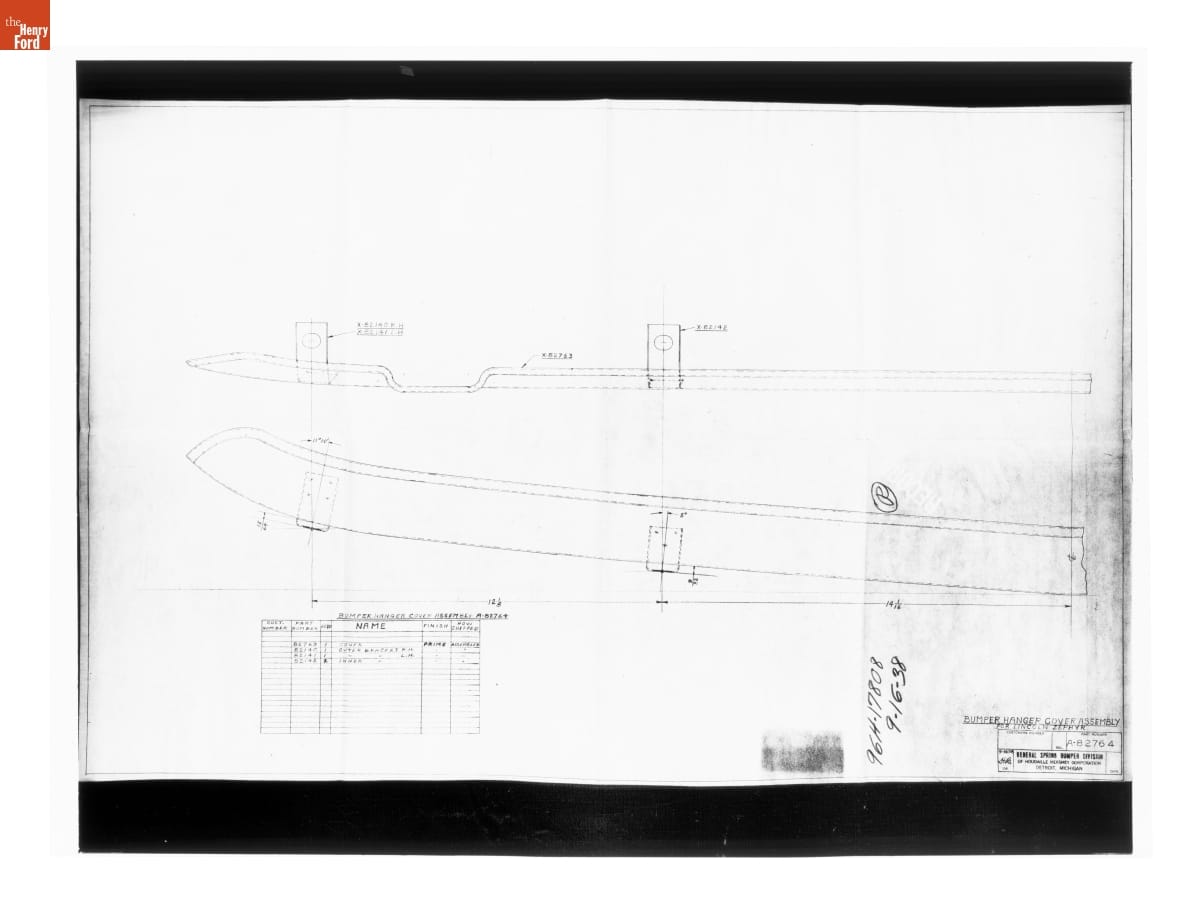
- September 16, 1938
- Collections - Artifact
Drawing, "Bumper Hanger Cover Assembly for Lincoln Zephyr," September 16, 1938
The Ford Motor Company created over a million parts drawings from 1903 to 1957. Many of these drawings specify engineering requirements for the components of Ford-made vehicles--including automobiles, trucks, tractors, military vehicles and Tri-motor airplanes. Others document assembly components, stages of casting and forging, or experimental designs. Beginning in the 1940s, Ford transferred the drawings to microfilm.
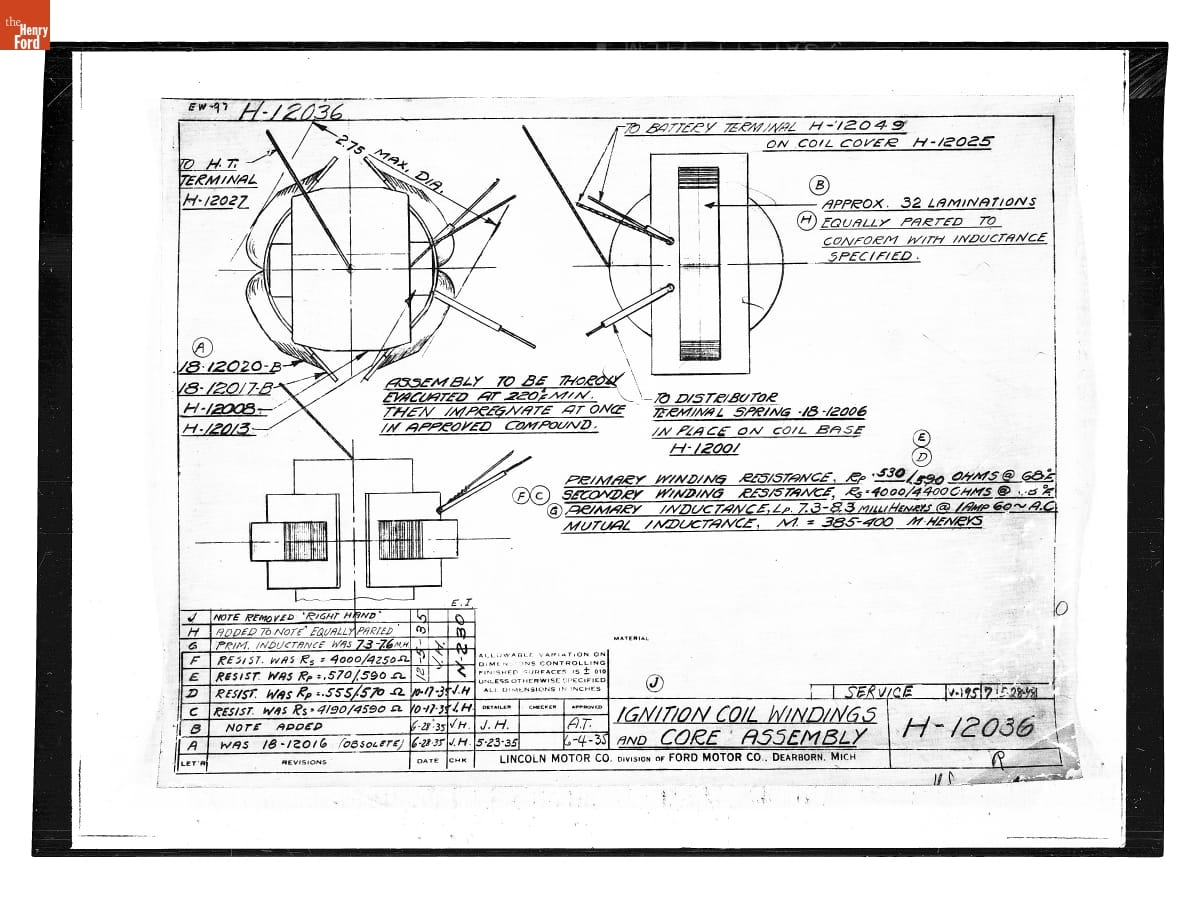
- Drawing, "Ignition Coil Windings and Core Assembly" Lincoln Automobile, December 5, 1935 - The Ford Motor Company created over a million parts drawings from 1903 to 1957. Many of these drawings specify engineering requirements for the components of Ford-made vehicles--including automobiles, trucks, tractors, military vehicles and Tri-motor airplanes. Others document assembly components, stages of casting and forging, or experimental designs. Beginning in the 1940s, Ford transferred the drawings to microfilm.
- December 05, 1935
- Collections - Artifact
Drawing, "Ignition Coil Windings and Core Assembly" Lincoln Automobile, December 5, 1935
The Ford Motor Company created over a million parts drawings from 1903 to 1957. Many of these drawings specify engineering requirements for the components of Ford-made vehicles--including automobiles, trucks, tractors, military vehicles and Tri-motor airplanes. Others document assembly components, stages of casting and forging, or experimental designs. Beginning in the 1940s, Ford transferred the drawings to microfilm.
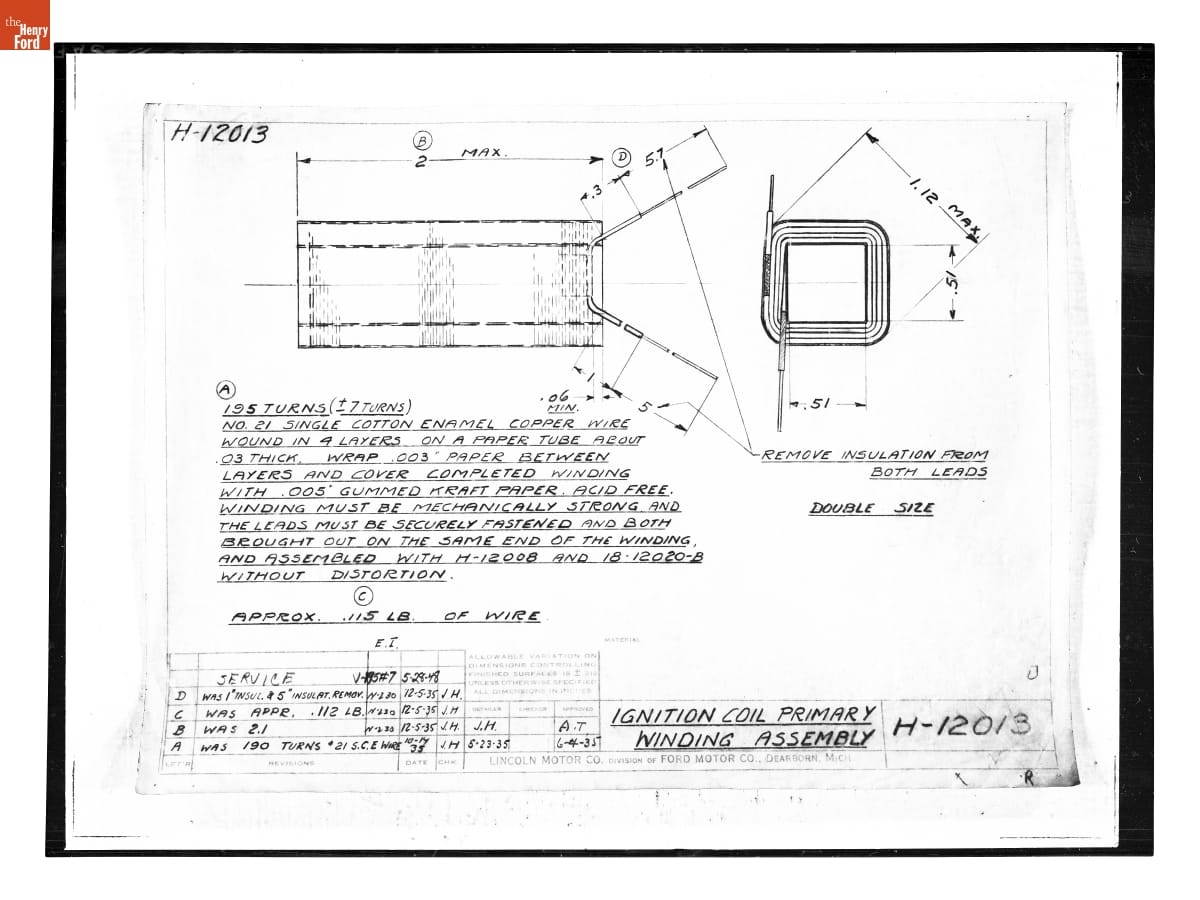
- Drawing, "Ignition Coil Primary Winding Assembly" Lincoln Automobile, May 28, 1948 - The Ford Motor Company created over a million parts drawings from 1903 to 1957. Many of these drawings specify engineering requirements for the components of Ford-made vehicles--including automobiles, trucks, tractors, military vehicles and Tri-motor airplanes. Others document assembly components, stages of casting and forging, or experimental designs. Beginning in the 1940s, Ford transferred the drawings to microfilm.
- May 28, 1948
- Collections - Artifact
Drawing, "Ignition Coil Primary Winding Assembly" Lincoln Automobile, May 28, 1948
The Ford Motor Company created over a million parts drawings from 1903 to 1957. Many of these drawings specify engineering requirements for the components of Ford-made vehicles--including automobiles, trucks, tractors, military vehicles and Tri-motor airplanes. Others document assembly components, stages of casting and forging, or experimental designs. Beginning in the 1940s, Ford transferred the drawings to microfilm.