
Search
- Button, Huey Newton, circa 1968 -
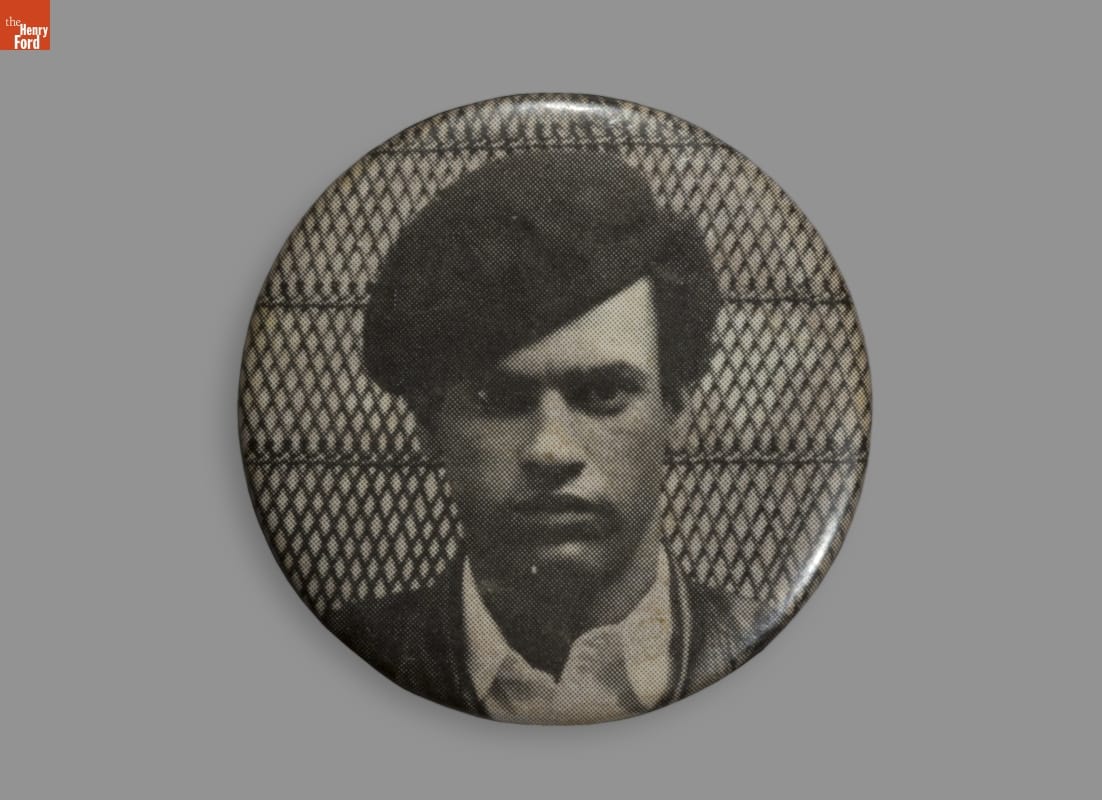
- circa 1968
- Collections - Artifact
Button, Huey Newton, circa 1968
- "The Black Community Survival Conference," March 29-31, 1972 -
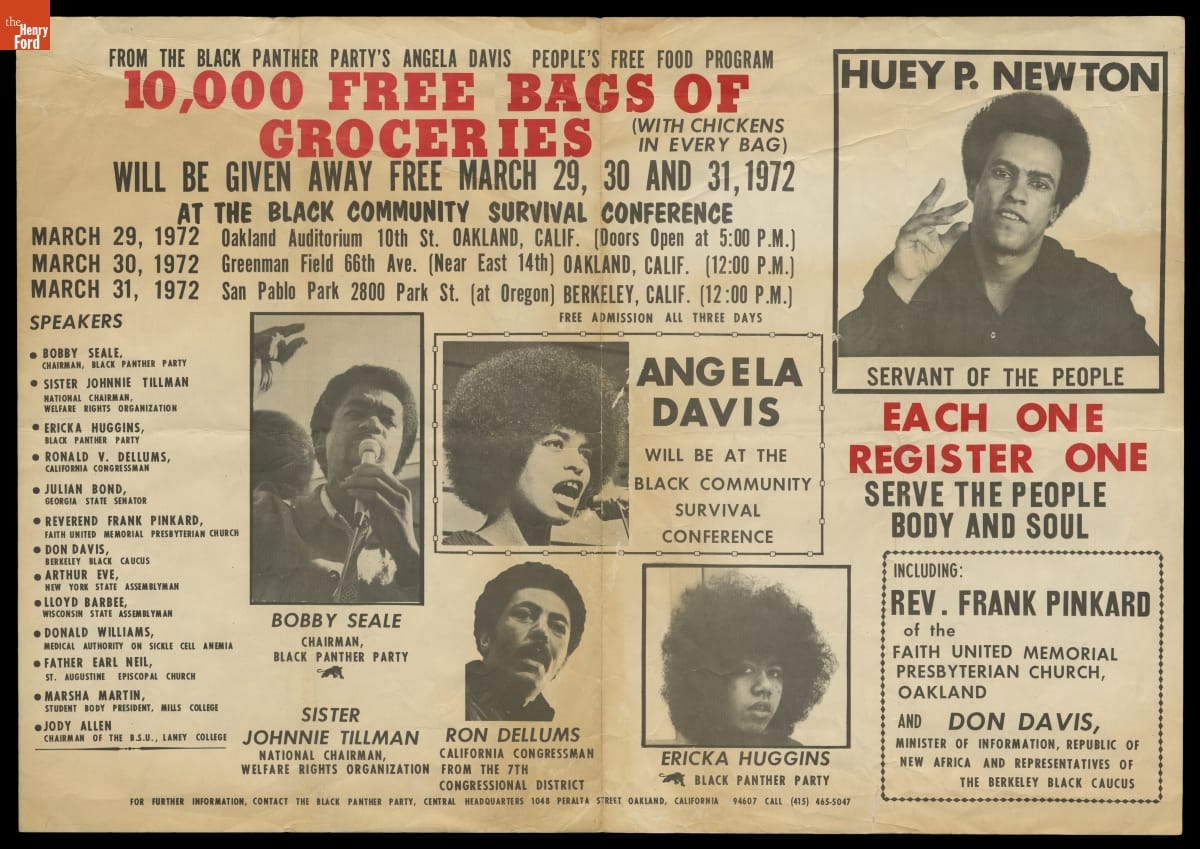
- 29 March 1972-31 March 1972
- Collections - Artifact
"The Black Community Survival Conference," March 29-31, 1972
- Special Issue of Muhammad Speaks: "Exclusive: Angela Answers 13 Questions," circa 1971 - In 1970, Black Panther Party members used guns registered to political activist and educator Angela Davis during a deadly shoot-out. Davis was charged with murder and spent 18 months in jail. The transnational, grassroots "Free Angela Davis" campaign emerged in response to her incarceration, spreading awareness of Davis's imprisonment and calling for her release.
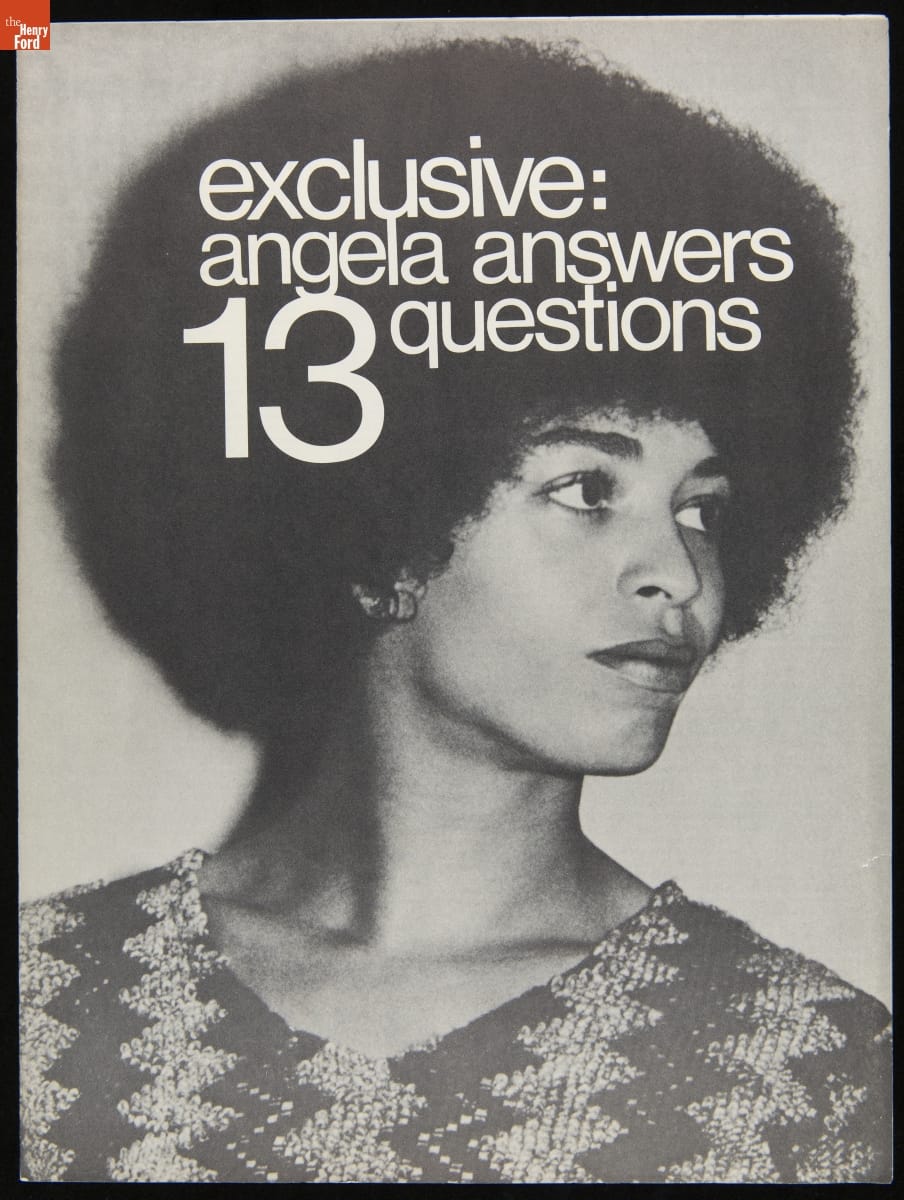
- circa 1971
- Collections - Artifact
Special Issue of Muhammad Speaks: "Exclusive: Angela Answers 13 Questions," circa 1971
In 1970, Black Panther Party members used guns registered to political activist and educator Angela Davis during a deadly shoot-out. Davis was charged with murder and spent 18 months in jail. The transnational, grassroots "Free Angela Davis" campaign emerged in response to her incarceration, spreading awareness of Davis's imprisonment and calling for her release.
- Political Campaign Button, "Cleaver for President," 1968 - The Peace and Freedom Party selected Eldridge Cleaver for president in 1968. Cleaver was a member of the militant Black Panther Party and served as the organization's minister of information -- a chief spokesman for the group. The Black Panthers sought economic, social and political equality for oppressed minorities using force if necessary.
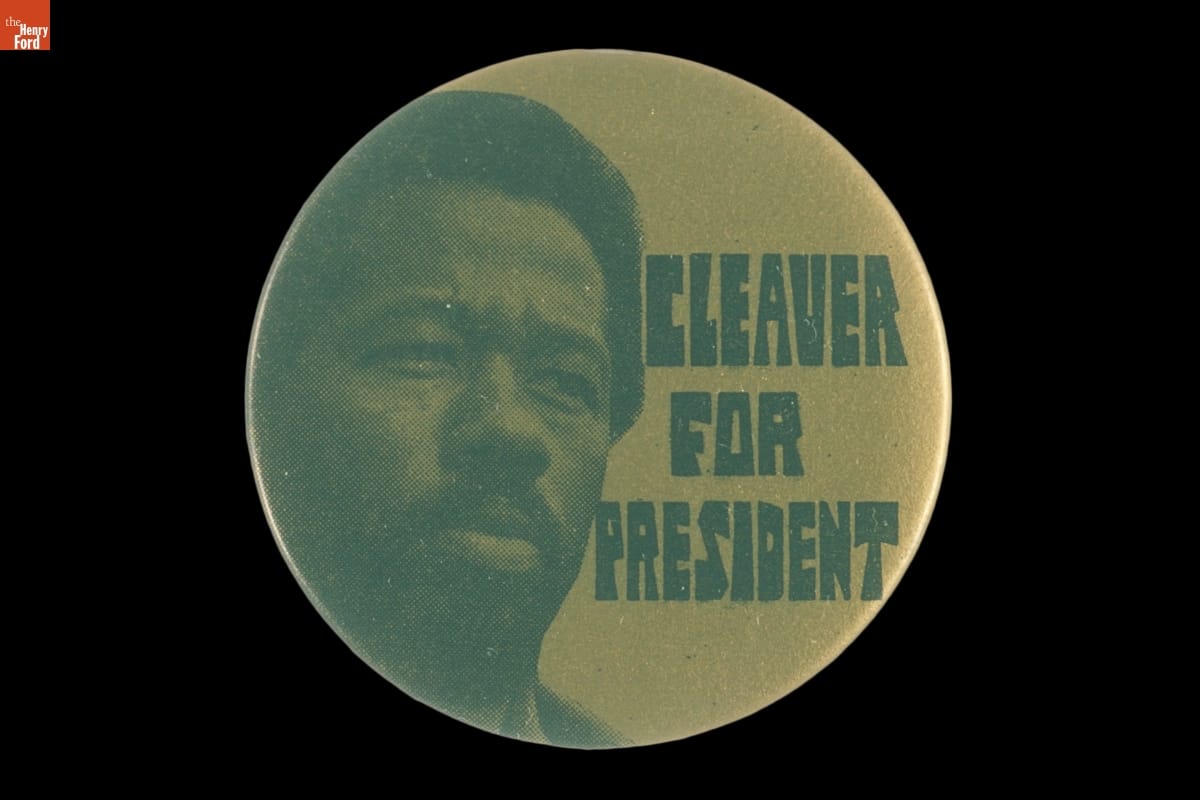
- 1968
- Collections - Artifact
Political Campaign Button, "Cleaver for President," 1968
The Peace and Freedom Party selected Eldridge Cleaver for president in 1968. Cleaver was a member of the militant Black Panther Party and served as the organization's minister of information -- a chief spokesman for the group. The Black Panthers sought economic, social and political equality for oppressed minorities using force if necessary.
- Button, "Panther Power," circa 1968 -
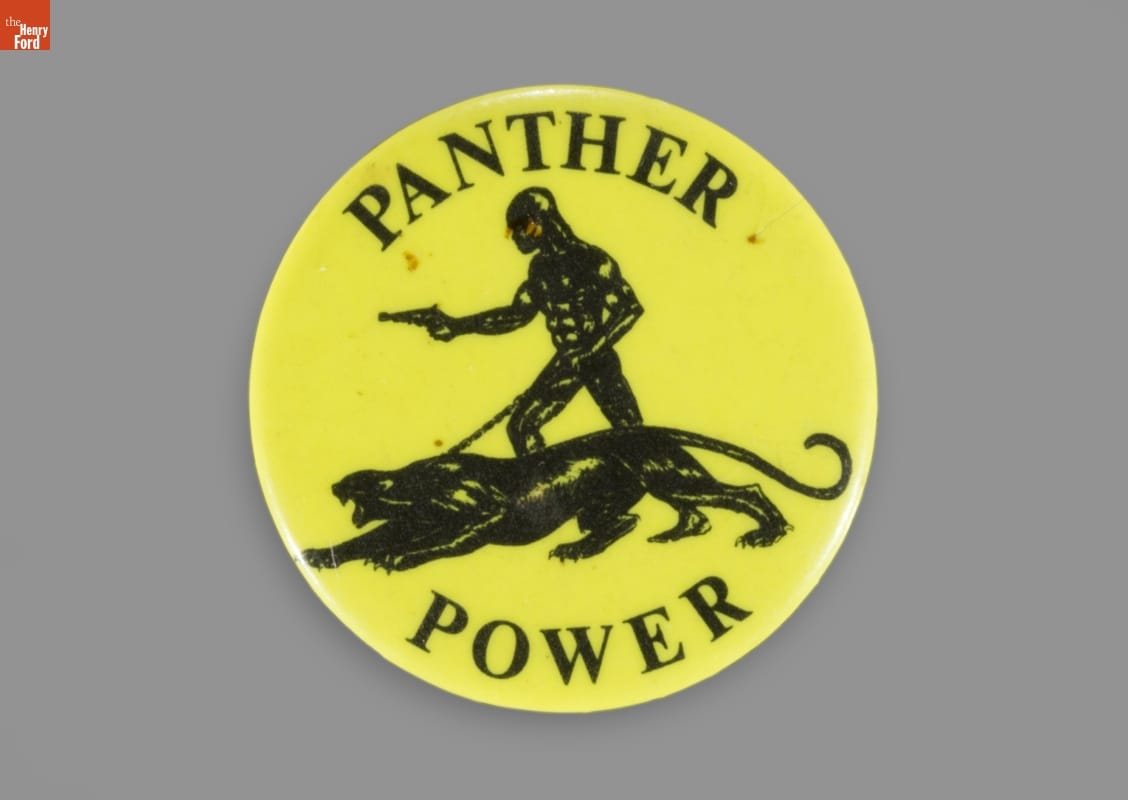
- circa 1968
- Collections - Artifact
Button, "Panther Power," circa 1968
- Letterpress Print, "You can jail a revolutionary, but you can't jail the revolution. Fred Hampton," 2021 -
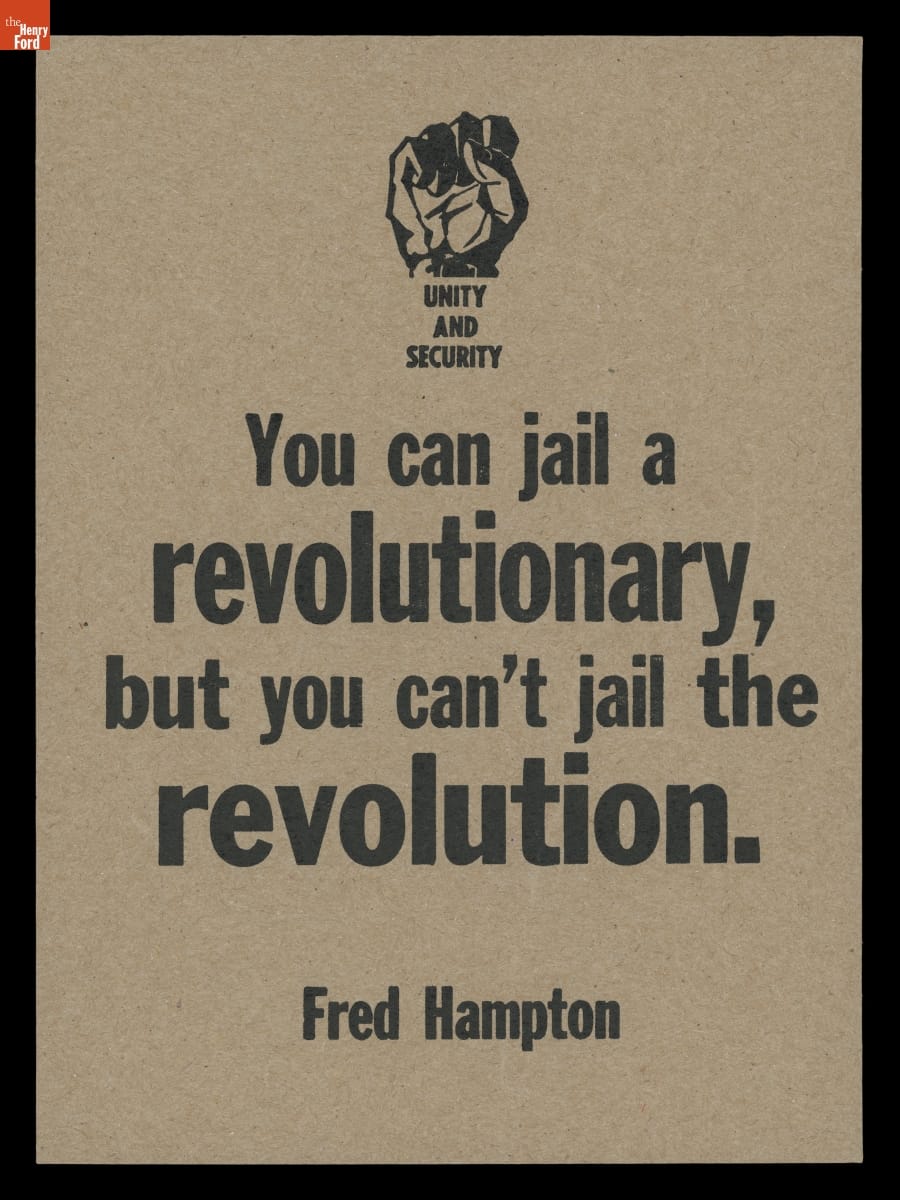
- 2021
- Collections - Artifact
Letterpress Print, "You can jail a revolutionary, but you can't jail the revolution. Fred Hampton," 2021
- "The Vanguard: A Photographic Essay on the Black Panthers," 1970 -
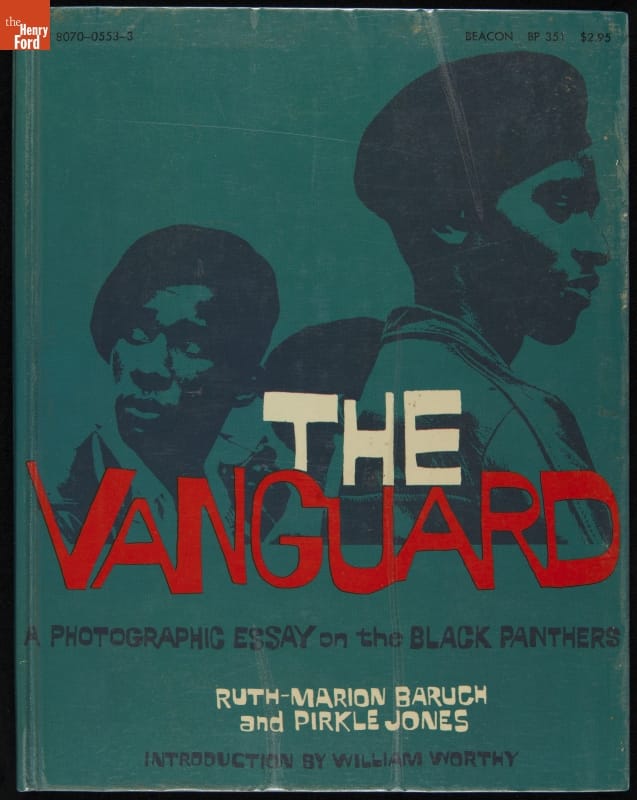
- 1970
- Collections - Artifact
"The Vanguard: A Photographic Essay on the Black Panthers," 1970
- "Free Bobby Seale," circa 1970 -
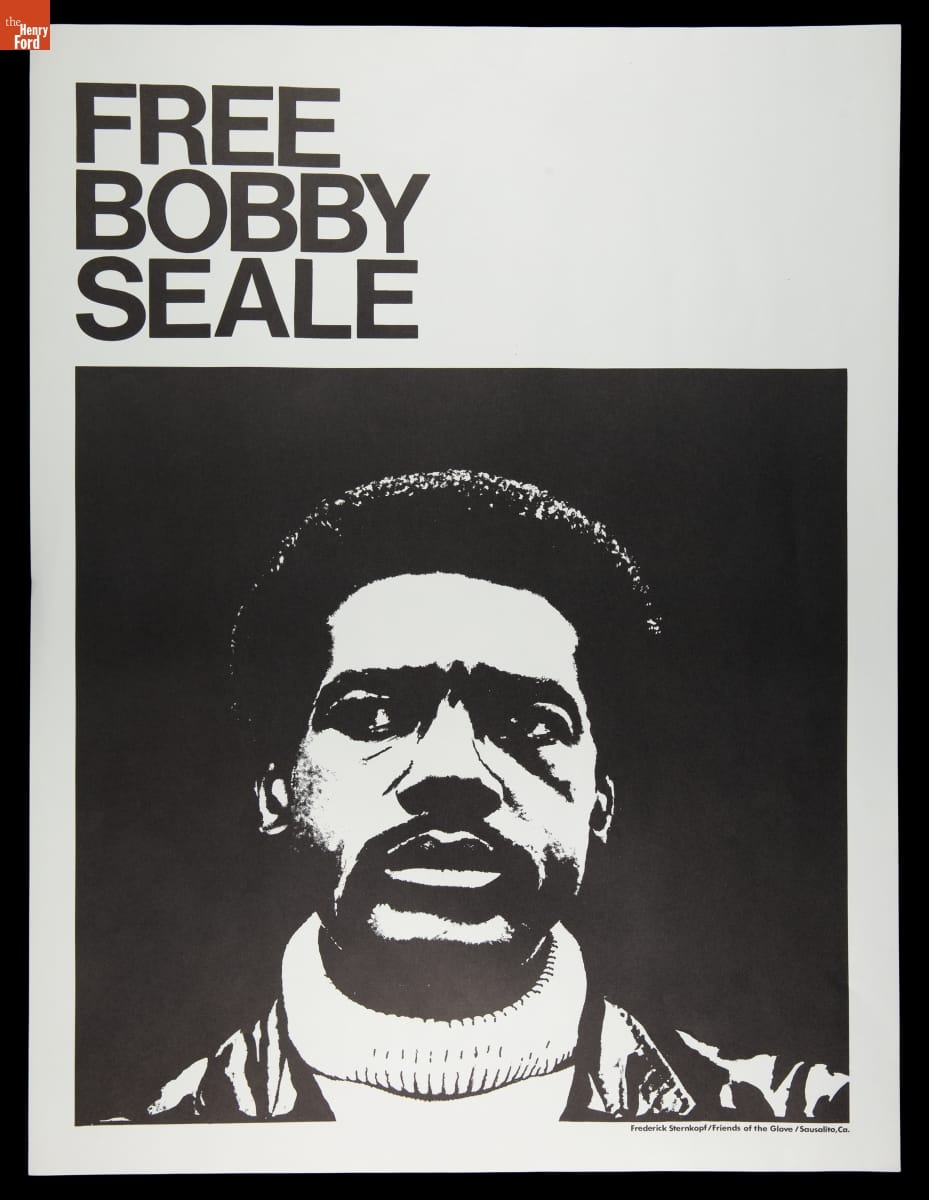
- circa 1970
- Collections - Artifact
"Free Bobby Seale," circa 1970
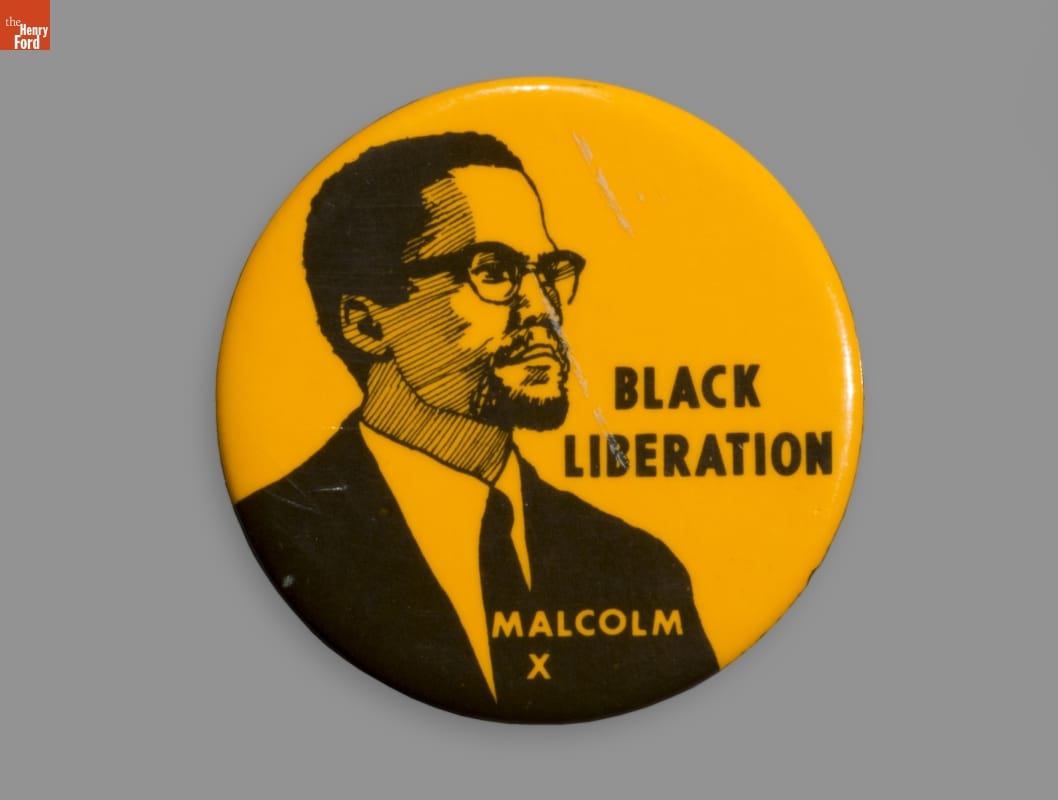
- Button, "Black Liberation Malcolm X," 1968 - Malcolm X was an articulate and charismatic spokesperson for the Nation of Islam, a movement that combined elements of Islam with black nationalism. He championed a radical, more assertive concept of racial pride than Martin Luther King, Jr., whose creed of non-violent action had defined the Civil Rights era. Malcolm X's doctrines laid the intellectual foundation for the Black Power Movement.
- 1968
- Collections - Artifact
Button, "Black Liberation Malcolm X," 1968
Malcolm X was an articulate and charismatic spokesperson for the Nation of Islam, a movement that combined elements of Islam with black nationalism. He championed a radical, more assertive concept of racial pride than Martin Luther King, Jr., whose creed of non-violent action had defined the Civil Rights era. Malcolm X's doctrines laid the intellectual foundation for the Black Power Movement.
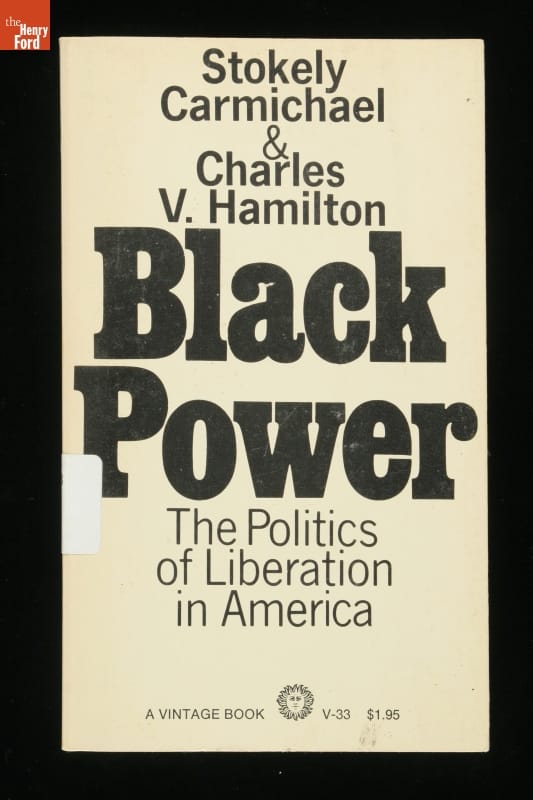
- "Black Power. The Politics of Liberation in America," 1967 - By the late-1960s, some young African Americans became frustrated with continued discrimination and the slow pace of economic gains. Stokely Carmichael and Charles Hamilton tapped into this frustration and promoted "Black Power" -- the call for African Americans to establish their own place in society, using force if necessary. This book outlines the systematic racism at the heart of this dissatisfaction.
- 1967
- Collections - Artifact
"Black Power. The Politics of Liberation in America," 1967
By the late-1960s, some young African Americans became frustrated with continued discrimination and the slow pace of economic gains. Stokely Carmichael and Charles Hamilton tapped into this frustration and promoted "Black Power" -- the call for African Americans to establish their own place in society, using force if necessary. This book outlines the systematic racism at the heart of this dissatisfaction.