
Search
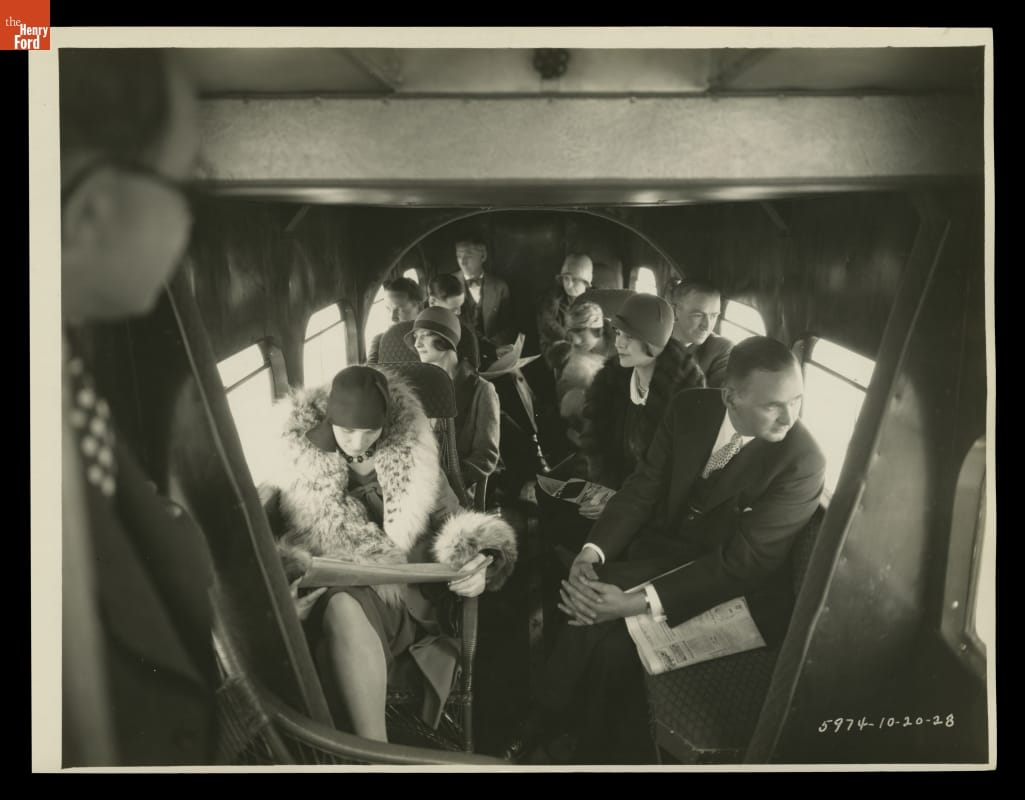
- Passengers Seated Inside a Ford Tri-Motor Airplane, October 1928 - Americans initially wondered if air travel was safe. Fatal crashes by barnstorming pilots were well publicized, and wood and cloth airplanes did not inspire confidence. But when Henry Ford began making planes, the industrialist's solid reputation eased people's fears. Ford's all-metal Tri-Motors were rugged, dependable and safe. By the late 1920s these planes were the backbone of the budding airline industry.
- October 20, 1928
- Collections - Artifact
Passengers Seated Inside a Ford Tri-Motor Airplane, October 1928
Americans initially wondered if air travel was safe. Fatal crashes by barnstorming pilots were well publicized, and wood and cloth airplanes did not inspire confidence. But when Henry Ford began making planes, the industrialist's solid reputation eased people's fears. Ford's all-metal Tri-Motors were rugged, dependable and safe. By the late 1920s these planes were the backbone of the budding airline industry.
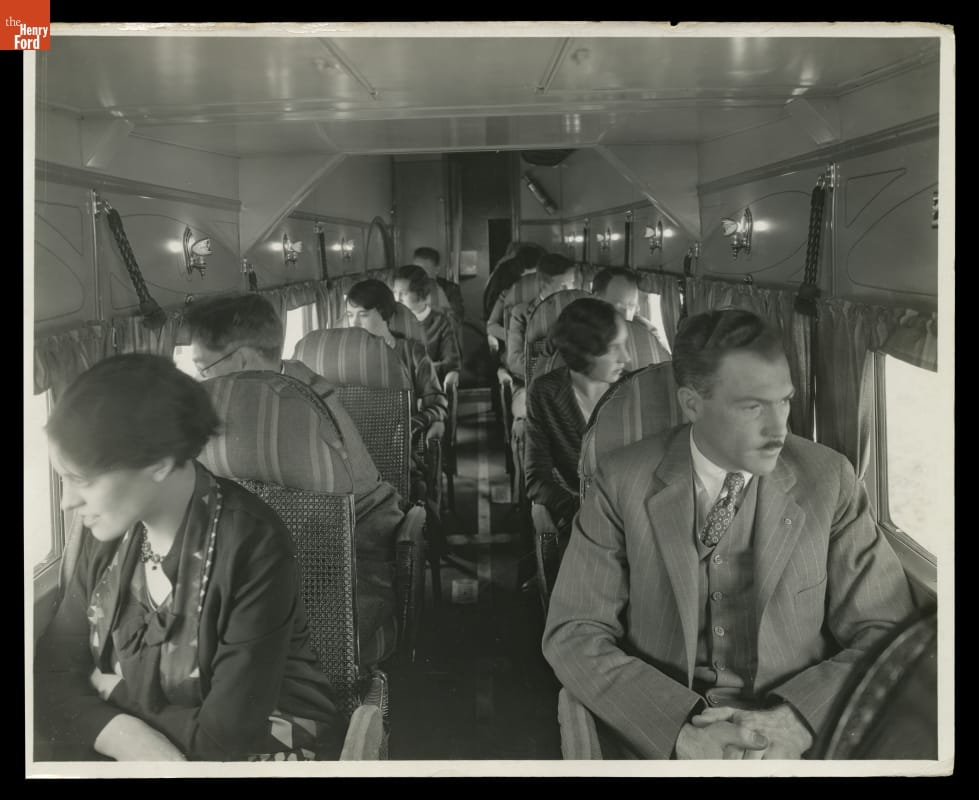
- Passengers aboard Ford Tri-Motor Airplane, 1929 - Americans initially wondered if air travel was safe. Fatal crashes by barnstorming pilots were well publicized, and wood and cloth airplanes did not inspire confidence. But when Henry Ford began making planes, the industrialist's solid reputation eased people's fears. Ford's all-metal Tri-Motors were rugged, dependable and safe. By the late 1920s these planes were the backbone of the budding airline industry.
- April 30, 1929
- Collections - Artifact
Passengers aboard Ford Tri-Motor Airplane, 1929
Americans initially wondered if air travel was safe. Fatal crashes by barnstorming pilots were well publicized, and wood and cloth airplanes did not inspire confidence. But when Henry Ford began making planes, the industrialist's solid reputation eased people's fears. Ford's all-metal Tri-Motors were rugged, dependable and safe. By the late 1920s these planes were the backbone of the budding airline industry.
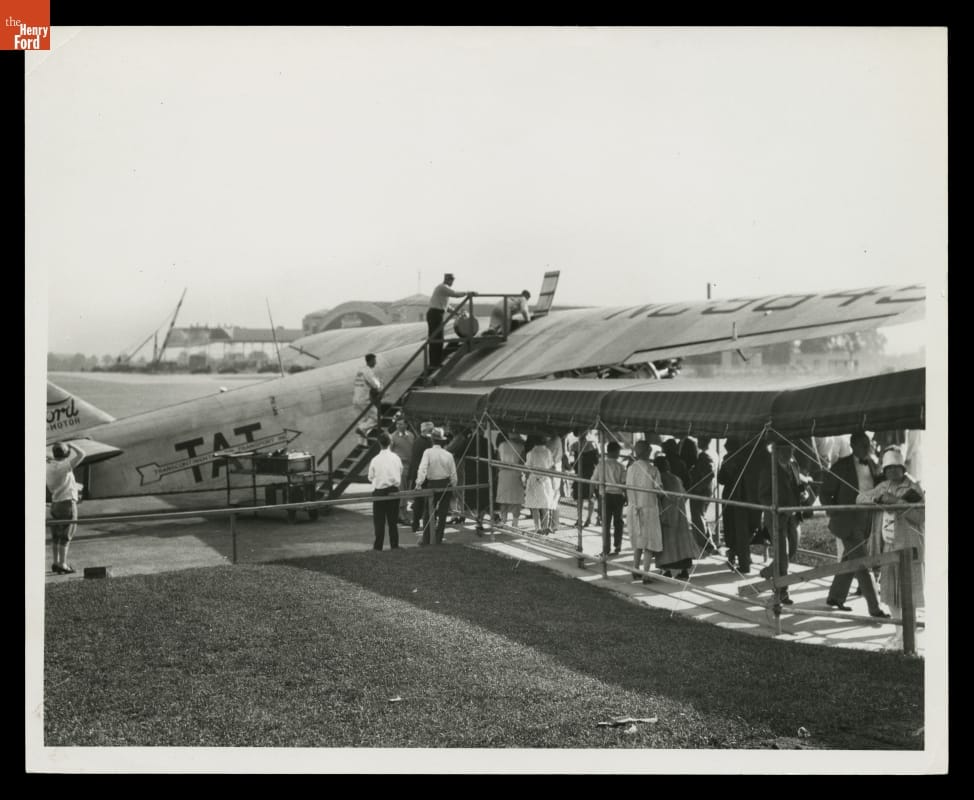
- Loading Passengers and Luggage on a Ford Tri-Motor Transcontinental Air Transport Flight, 1929-1930 - Passengers, protected from weather by a covered walkway, board a Ford Tri-Motor for a Transcontinental Air Transport flight. Their luggage is being loaded into a compartment built into the airplane's wing. The unusual storage arrangement provided room for cargo without taking up any of the limited space in the cabin.
- 1929-1930
- Collections - Artifact
Loading Passengers and Luggage on a Ford Tri-Motor Transcontinental Air Transport Flight, 1929-1930
Passengers, protected from weather by a covered walkway, board a Ford Tri-Motor for a Transcontinental Air Transport flight. Their luggage is being loaded into a compartment built into the airplane's wing. The unusual storage arrangement provided room for cargo without taking up any of the limited space in the cabin.
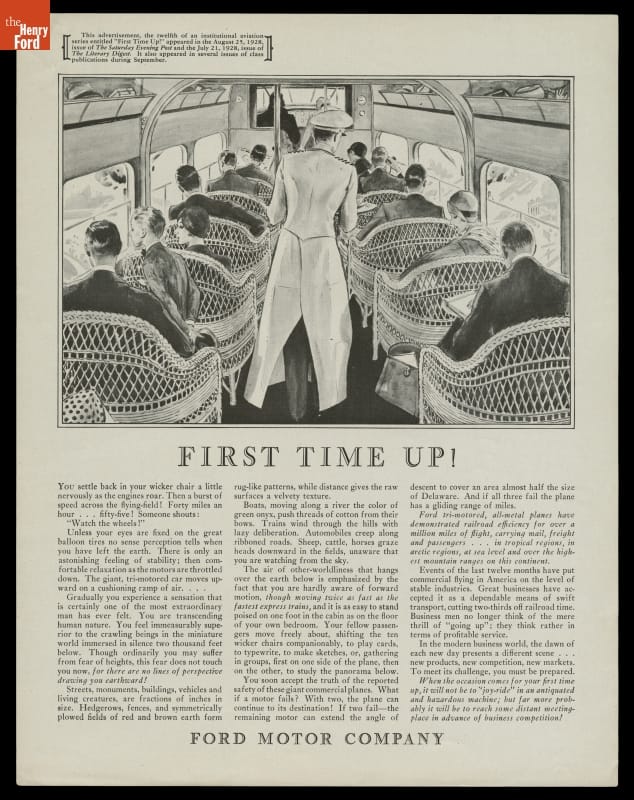
- Ford Tri-Motor Airplane Advertisement, "First Time Up!," 1928 - Air travel was something completely new for most Americans in the 1920s. Ford Motor Company offered an exciting -- and reassuring -- description of the experience in its advertisements for Ford Tri-Motor airplanes. Passengers "move twice as fast as the fastest express trains" secure in the knowledge that "if all three (engines) fail the plane has a gliding range of miles."
- 1928
- Collections - Artifact
Ford Tri-Motor Airplane Advertisement, "First Time Up!," 1928
Air travel was something completely new for most Americans in the 1920s. Ford Motor Company offered an exciting -- and reassuring -- description of the experience in its advertisements for Ford Tri-Motor airplanes. Passengers "move twice as fast as the fastest express trains" secure in the knowledge that "if all three (engines) fail the plane has a gliding range of miles."
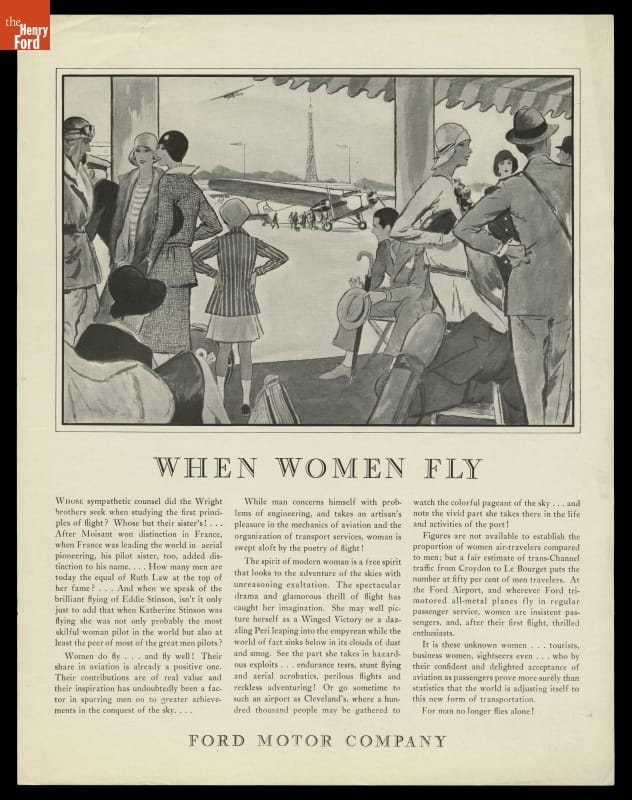
- Ford Tri-Motor Airplane Advertisement, "When Women Fly," 1929 - Ford Motor Company celebrated the contributions of women to flight in this earnest, if somewhat condescending, advertisement for Ford Tri-Motor airplanes. The women mentioned by name -- Katharine Wright, Matilde Moisant, Ruth Law, Katherine Stinson -- all made important contributions to early aviation. By traveling as passengers, Ford suggested, other women helped ensure that the young airline industry thrived.
- 1929
- Collections - Artifact
Ford Tri-Motor Airplane Advertisement, "When Women Fly," 1929
Ford Motor Company celebrated the contributions of women to flight in this earnest, if somewhat condescending, advertisement for Ford Tri-Motor airplanes. The women mentioned by name -- Katharine Wright, Matilde Moisant, Ruth Law, Katherine Stinson -- all made important contributions to early aviation. By traveling as passengers, Ford suggested, other women helped ensure that the young airline industry thrived.
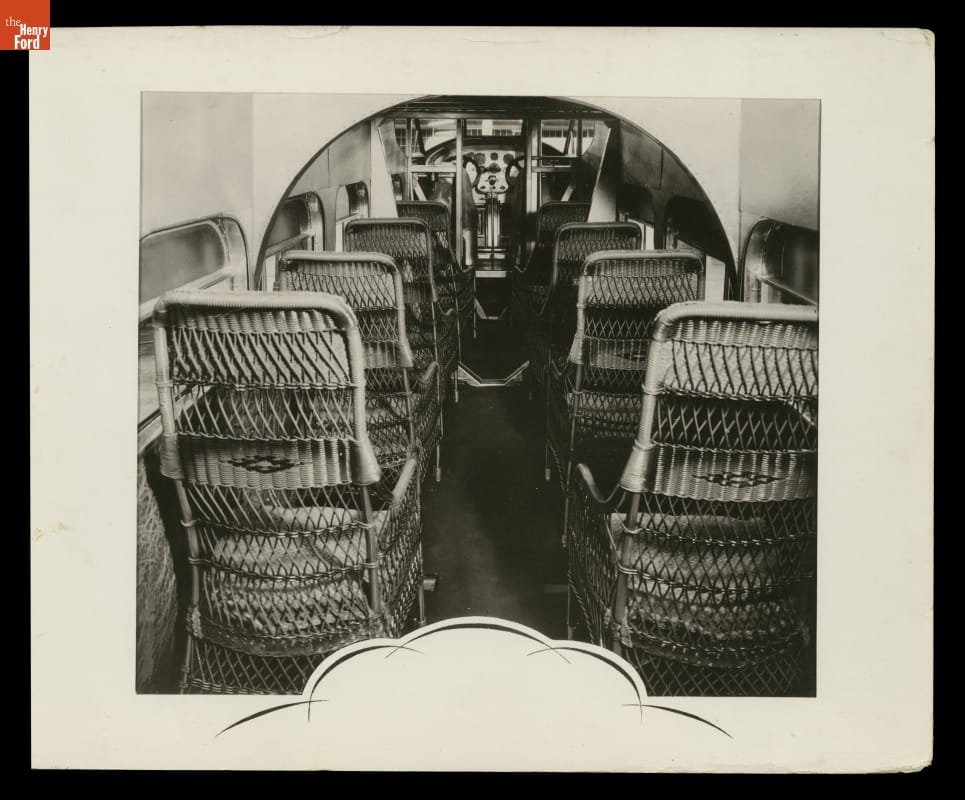
- Interior of Ford Tri-Motor Airplane, 1928 - The interior of a Ford Tri-Motor airplane is seen in this 1928 view. Lightweight wicker seats were provided for passengers. The less the airplane itself weighed, the more passengers or cargo it could carry.
- July 13, 1928
- Collections - Artifact
Interior of Ford Tri-Motor Airplane, 1928
The interior of a Ford Tri-Motor airplane is seen in this 1928 view. Lightweight wicker seats were provided for passengers. The less the airplane itself weighed, the more passengers or cargo it could carry.
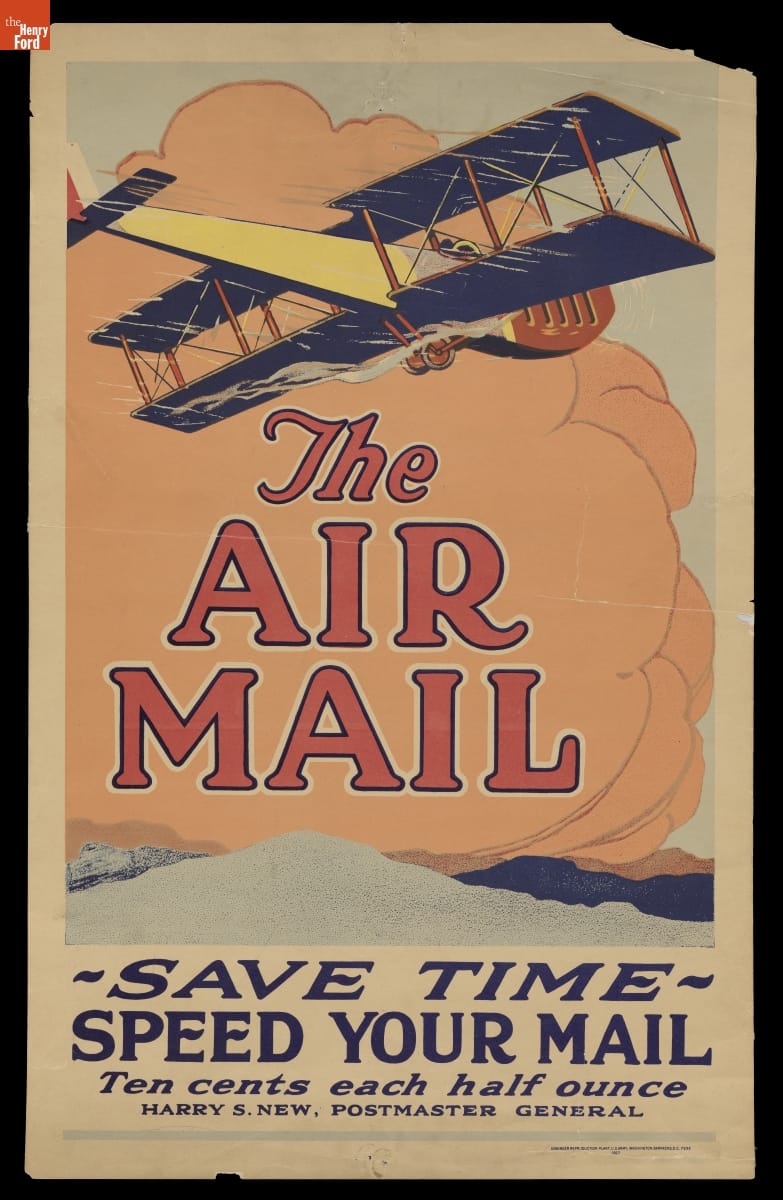
- Advertising Poster, "Air Mail. Save Time, Speed Your Mail," 1927 - Regular air mail service in the United States started in 1918. The faster delivery came with a hefty premium. Initial air mail stamps cost 24 cents each -- eight times the charge for standard ground service. Banks and time-sensitive businesses were the earliest customers. The price gradually fell until, in 1975, domestic air service was made routine without added cost.
- 1927
- Collections - Artifact
Advertising Poster, "Air Mail. Save Time, Speed Your Mail," 1927
Regular air mail service in the United States started in 1918. The faster delivery came with a hefty premium. Initial air mail stamps cost 24 cents each -- eight times the charge for standard ground service. Banks and time-sensitive businesses were the earliest customers. The price gradually fell until, in 1975, domestic air service was made routine without added cost.
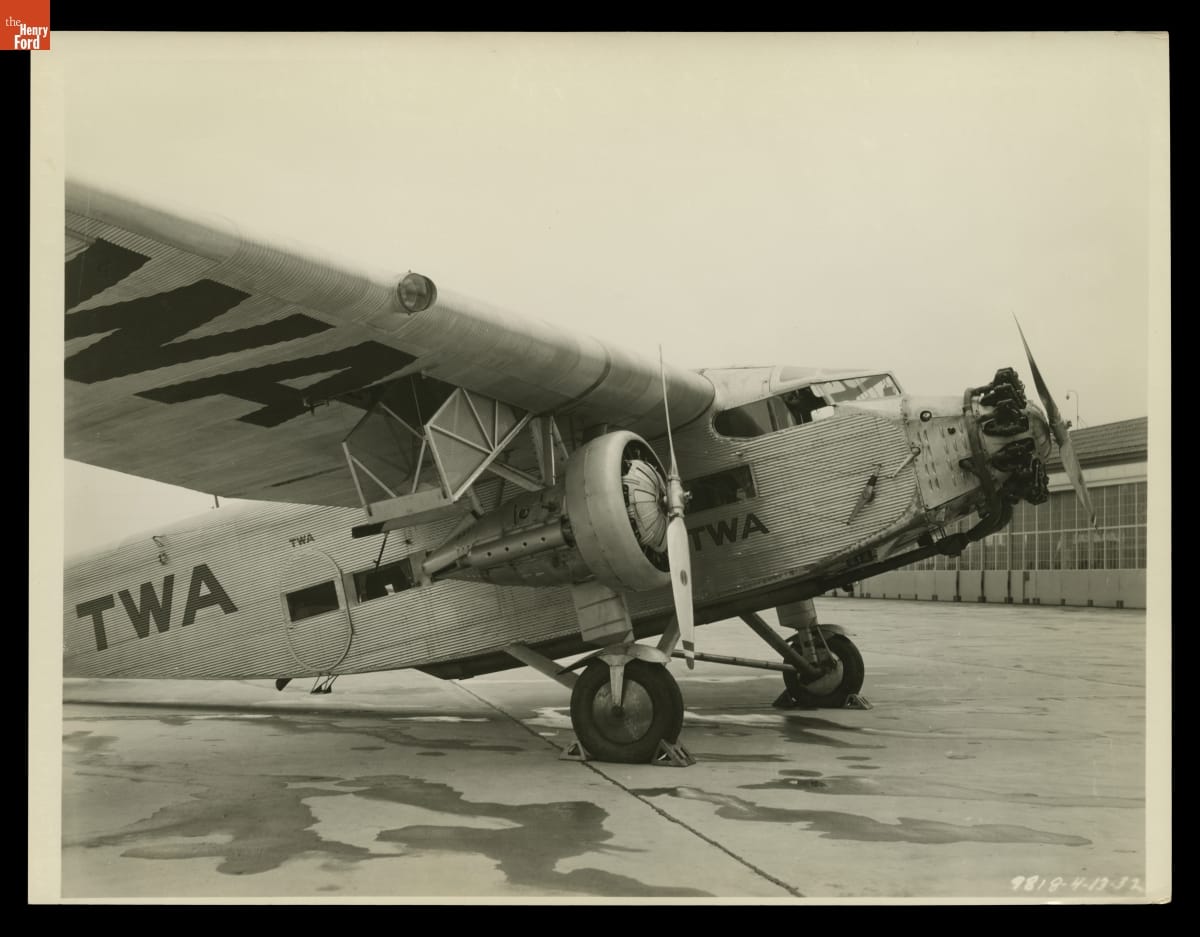
- Ford Tri-Motor Airplane Used by TWA, April 1932 - Among the interesting features on Ford's later Tri-Motors were storage bins built into the wings. TWA added the bins to some of its Tri-Motors in 1932. They provided room for mail and luggage without taking up limited cabin space. Ford liked the idea so much that it incorporated wing bins into the 5-AT-D model.
- April 12, 1932
- Collections - Artifact
Ford Tri-Motor Airplane Used by TWA, April 1932
Among the interesting features on Ford's later Tri-Motors were storage bins built into the wings. TWA added the bins to some of its Tri-Motors in 1932. They provided room for mail and luggage without taking up limited cabin space. Ford liked the idea so much that it incorporated wing bins into the 5-AT-D model.
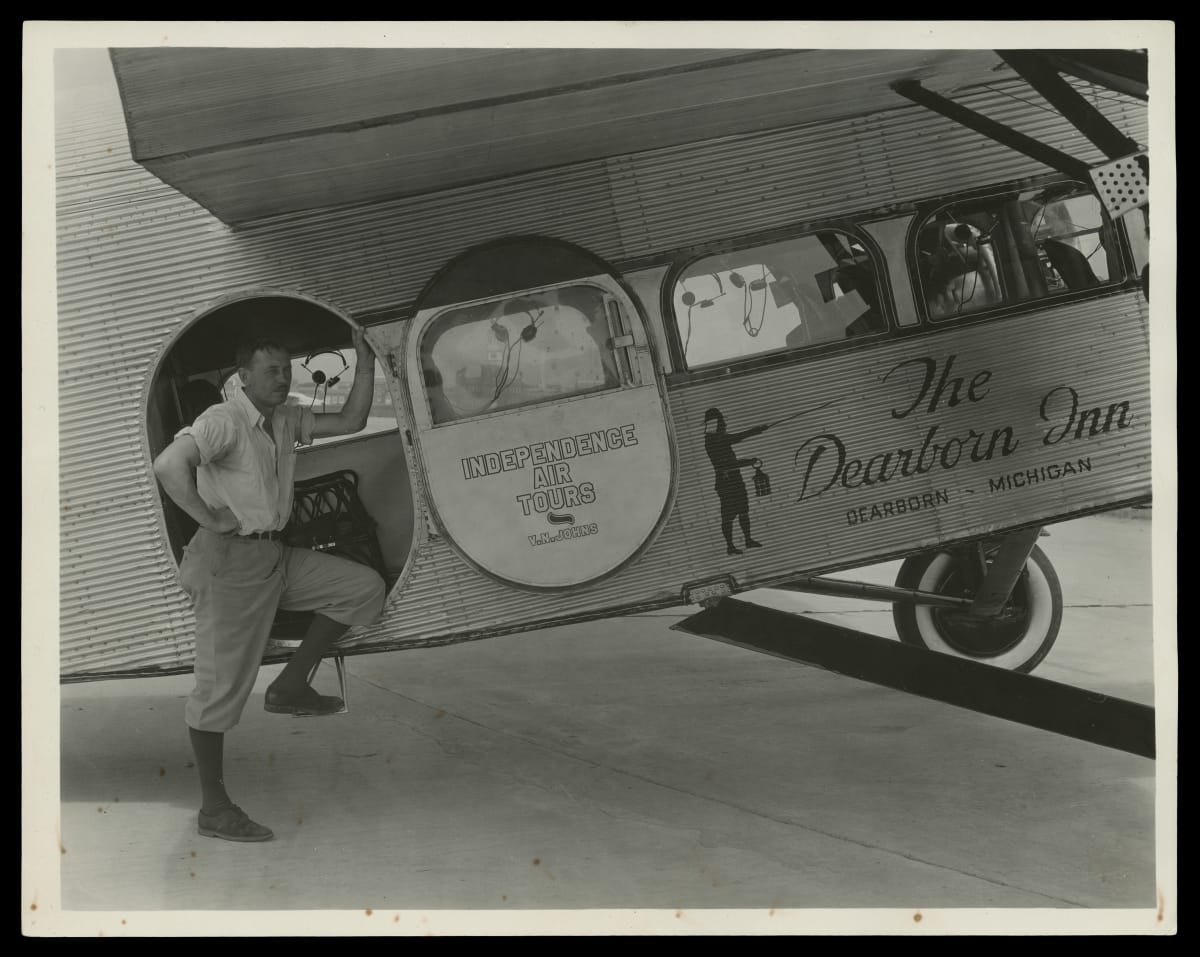
- Pilot V. N. Johns with Ford Tri-Motor Plane at Ford Airport, Dearborn, Michigan, 1931 - Vernon N. Johns operated Independence Air Tours in connection with the Dearborn Inn, the hotel adjacent to Ford Airport in Dearborn, Michigan. Note the headphones hanging above each seat. They allowed passengers to hear the tour narrator's commentary. Three engines, combined with an uninsulated cabin, made a flight in a Ford Tri-Motor a noisy experience.
- July 18, 1931
- Collections - Artifact
Pilot V. N. Johns with Ford Tri-Motor Plane at Ford Airport, Dearborn, Michigan, 1931
Vernon N. Johns operated Independence Air Tours in connection with the Dearborn Inn, the hotel adjacent to Ford Airport in Dearborn, Michigan. Note the headphones hanging above each seat. They allowed passengers to hear the tour narrator's commentary. Three engines, combined with an uninsulated cabin, made a flight in a Ford Tri-Motor a noisy experience.