
Search
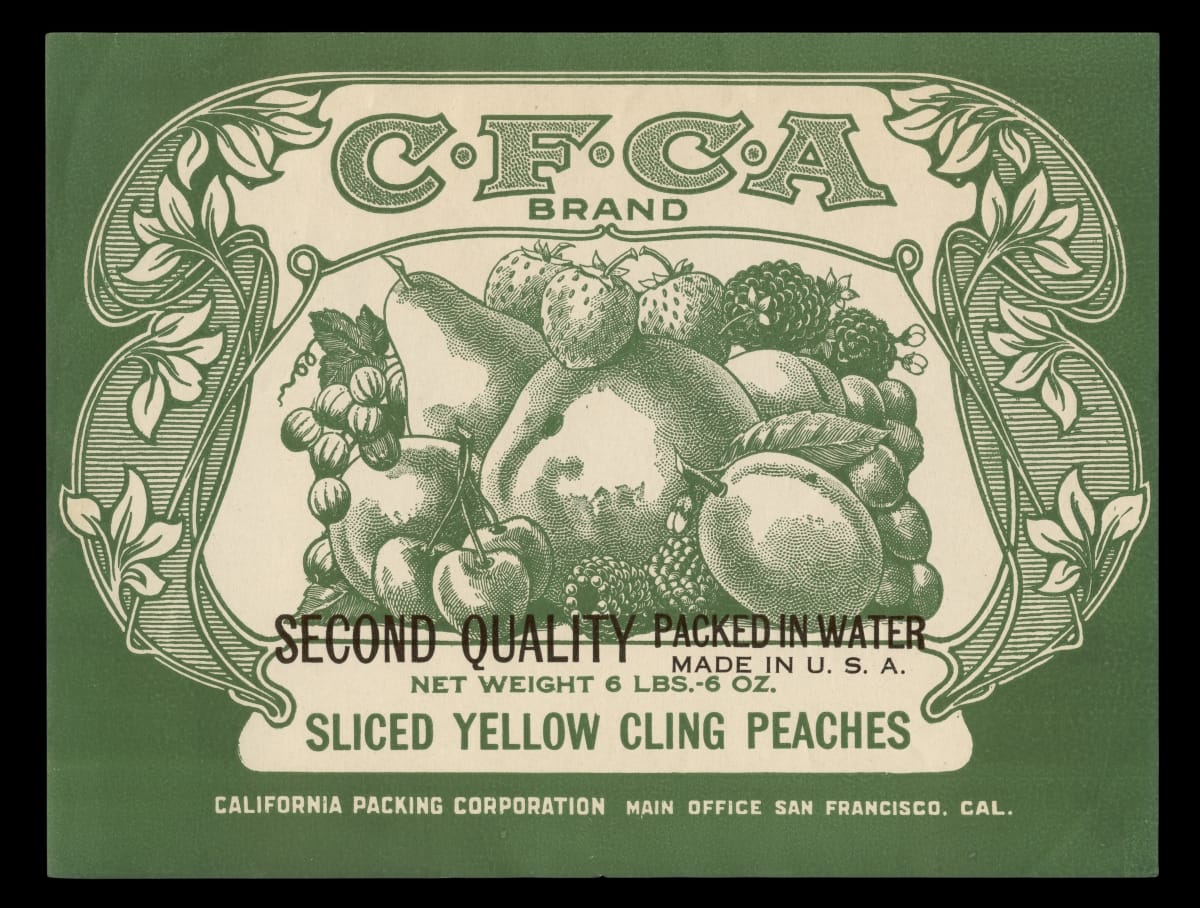
- Crate Label, "C.F.C.A. Brand Sliced Yellow Cling Peaches," 1920-1930 - In 1869, the transcontinental railroad opened eastern markets to the West Coast produce industry for the first time. As produce companies shipped crates of fruits and vegetables across the country, they needed a way to distinguish their goods from their competitors'. Colorful, eye-catching labels, like this one for C.F.C.A. Brand Sliced Yellow Cling Peaches, were created to attract grocers purchasing goods from wholesale markets.
- 1920-1930
- Collections - Artifact
Crate Label, "C.F.C.A. Brand Sliced Yellow Cling Peaches," 1920-1930
In 1869, the transcontinental railroad opened eastern markets to the West Coast produce industry for the first time. As produce companies shipped crates of fruits and vegetables across the country, they needed a way to distinguish their goods from their competitors'. Colorful, eye-catching labels, like this one for C.F.C.A. Brand Sliced Yellow Cling Peaches, were created to attract grocers purchasing goods from wholesale markets.
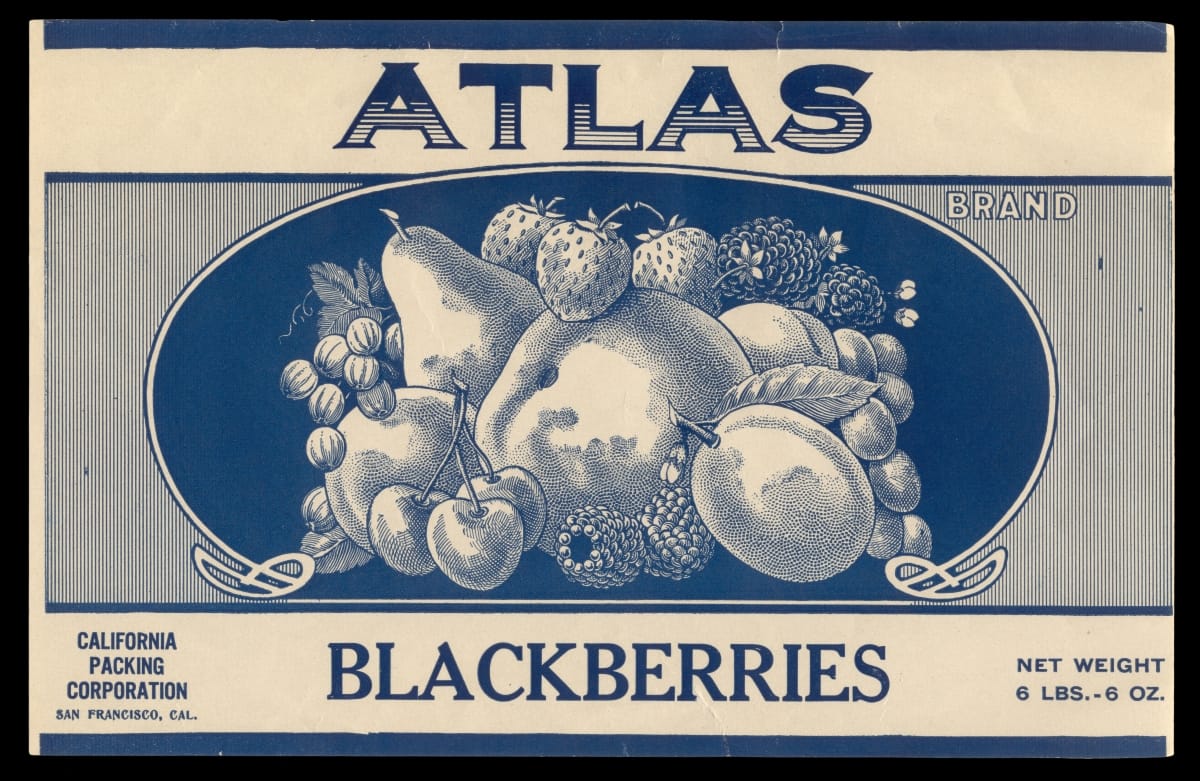
- Crate Label, "Atlas Brand Blackberries," 1920-1930 - In 1869, the transcontinental railroad opened eastern markets to the West Coast produce industry for the first time. As produce companies shipped crates of fruits and vegetables across the country, they needed a way to distinguish their goods from their competitors'. Colorful, eye-catching labels, like this one for Atlas Brand Blackberries, were created to attract grocers purchasing goods from wholesale markets.
- 1920-1930
- Collections - Artifact
Crate Label, "Atlas Brand Blackberries," 1920-1930
In 1869, the transcontinental railroad opened eastern markets to the West Coast produce industry for the first time. As produce companies shipped crates of fruits and vegetables across the country, they needed a way to distinguish their goods from their competitors'. Colorful, eye-catching labels, like this one for Atlas Brand Blackberries, were created to attract grocers purchasing goods from wholesale markets.
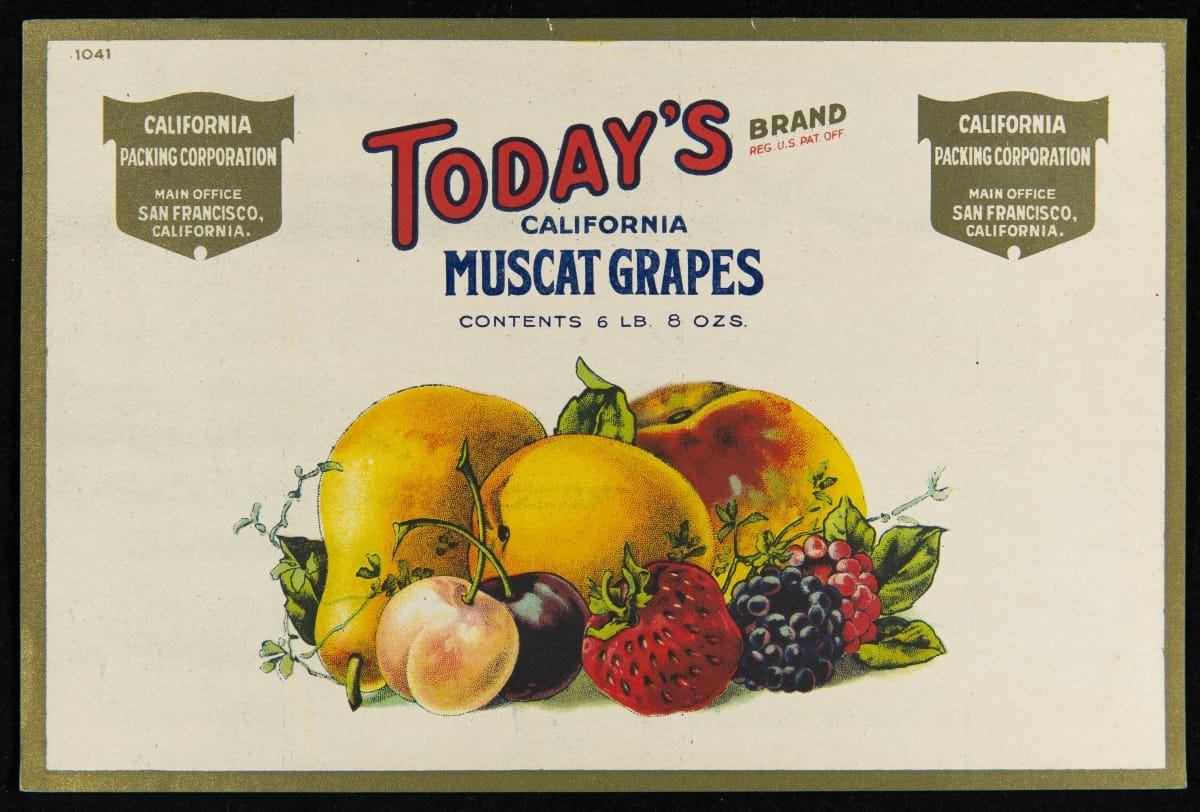
- Crate Label, "Today's Brand California Muscat Grapes," 1920-1940 - In 1869, the transcontinental railroad opened eastern markets to the West Coast produce industry for the first time. As produce companies shipped crates of fruits and vegetables across the country, they needed a way to distinguish their goods from their competitors'. Colorful, eye-catching labels, like this one for Today's Brand California Muscat Grapes, were created to attract grocers purchasing goods from wholesale markets.
- 1920-1940
- Collections - Artifact
Crate Label, "Today's Brand California Muscat Grapes," 1920-1940
In 1869, the transcontinental railroad opened eastern markets to the West Coast produce industry for the first time. As produce companies shipped crates of fruits and vegetables across the country, they needed a way to distinguish their goods from their competitors'. Colorful, eye-catching labels, like this one for Today's Brand California Muscat Grapes, were created to attract grocers purchasing goods from wholesale markets.
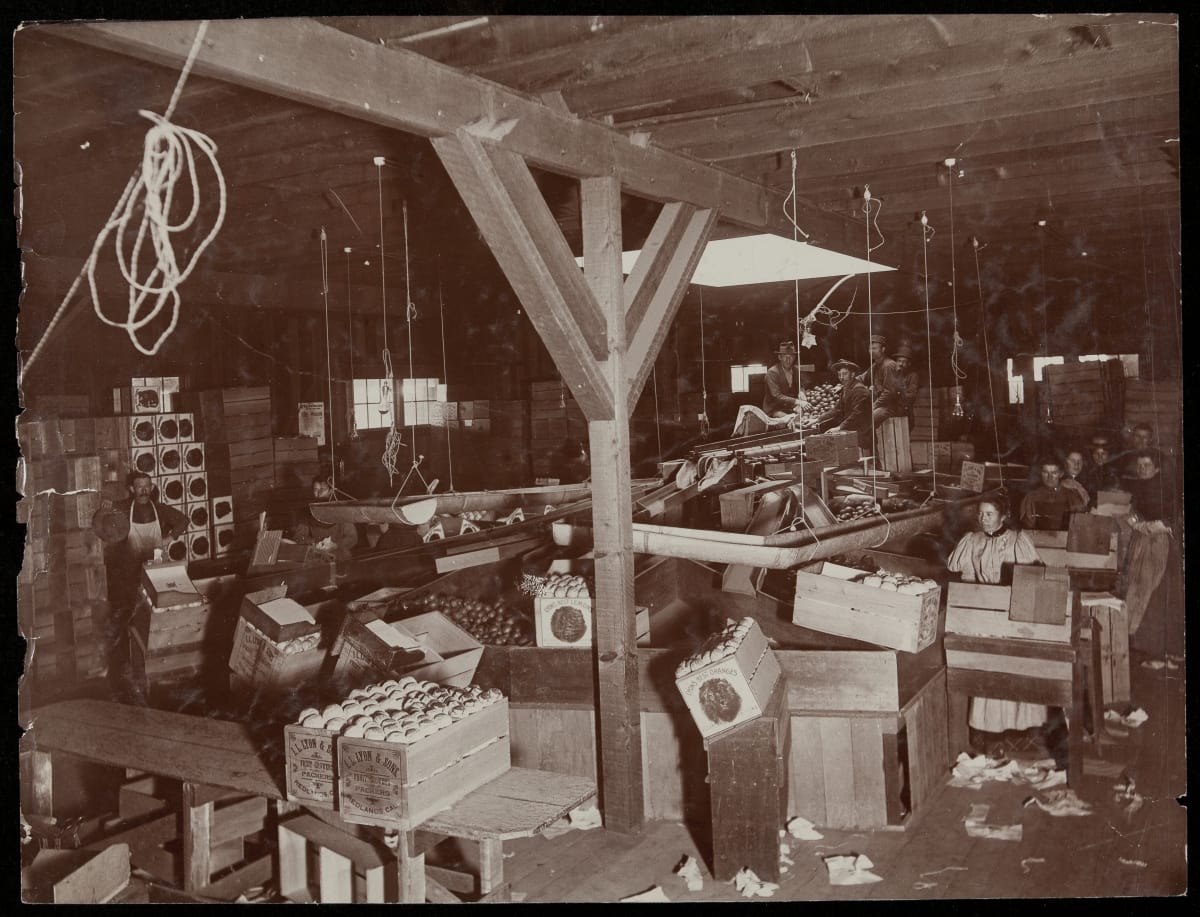
- Workers at L. L. Lyon & Sons Fruit Growers & Packers, Redlands, California, circa 1900 - For nearly thirty years, 1895 to 1924, the Detroit Publishing Company was one of the major image publishers in the world. The company had a wide-ranging stock of original photographs, including many scenes from across North America. Here, workers in California pack lemons and oranges for shipping.
- circa 1900
- Collections - Artifact
Workers at L. L. Lyon & Sons Fruit Growers & Packers, Redlands, California, circa 1900
For nearly thirty years, 1895 to 1924, the Detroit Publishing Company was one of the major image publishers in the world. The company had a wide-ranging stock of original photographs, including many scenes from across North America. Here, workers in California pack lemons and oranges for shipping.
- Crate Label, "J.K. Brand Zinfandel Grapes," circa 1940 - In 1869, the transcontinental railroad opened eastern markets to the West Coast produce industry for the first time. As produce companies shipped crates of fruits and vegetables across the country, they needed a way to distinguish their goods from their competitors'. Colorful, eye-catching labels, like this one for J.K. Brand Zinfandel Grapes, were created to attract grocers purchasing goods from wholesale markets.
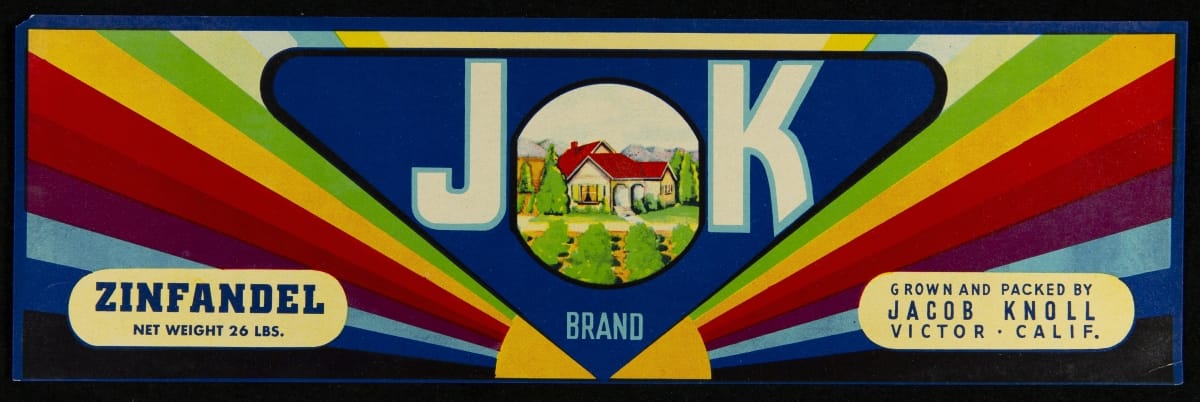
- circa 1940
- Collections - Artifact
Crate Label, "J.K. Brand Zinfandel Grapes," circa 1940
In 1869, the transcontinental railroad opened eastern markets to the West Coast produce industry for the first time. As produce companies shipped crates of fruits and vegetables across the country, they needed a way to distinguish their goods from their competitors'. Colorful, eye-catching labels, like this one for J.K. Brand Zinfandel Grapes, were created to attract grocers purchasing goods from wholesale markets.
- Crate Label, "Richmond Hill Brand Iceberg Lettuce," 1927-1947 -
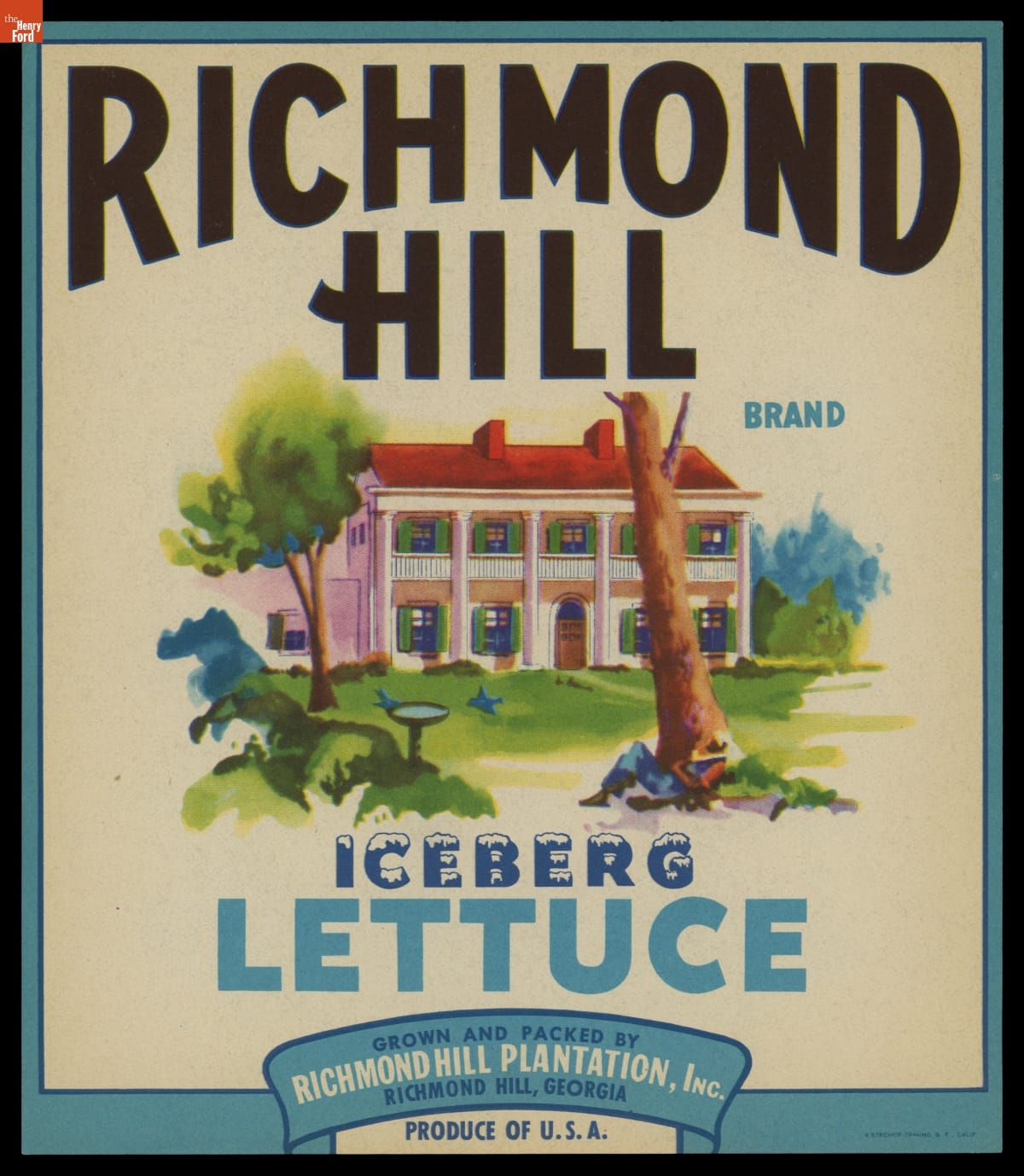
- 1927-1947
- Collections - Artifact
Crate Label, "Richmond Hill Brand Iceberg Lettuce," 1927-1947
- Crate Label, "Rayo Brand Ribier Grapes," 1925 - In 1869, the transcontinental railroad opened eastern markets to the West Coast produce industry for the first time. As produce companies shipped crates of fruits and vegetables across the country, they needed a way to distinguish their goods from their competitors'. Colorful, eye-catching labels, like this one for Rayo Brand Ribier Grapes, were created to attract grocers purchasing goods from wholesale markets.
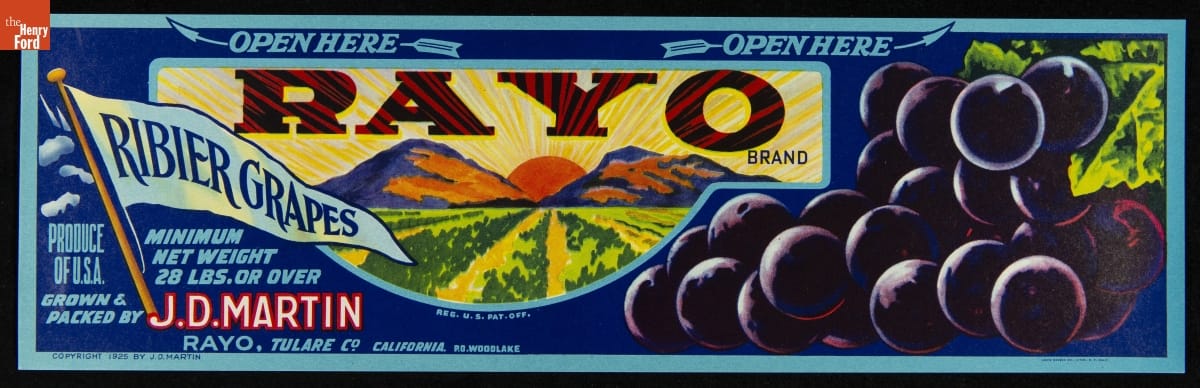
- 1925
- Collections - Artifact
Crate Label, "Rayo Brand Ribier Grapes," 1925
In 1869, the transcontinental railroad opened eastern markets to the West Coast produce industry for the first time. As produce companies shipped crates of fruits and vegetables across the country, they needed a way to distinguish their goods from their competitors'. Colorful, eye-catching labels, like this one for Rayo Brand Ribier Grapes, were created to attract grocers purchasing goods from wholesale markets.
- Crate Label, "Richmond Hill Brand Iceberg Lettuce," 1927-1947 -
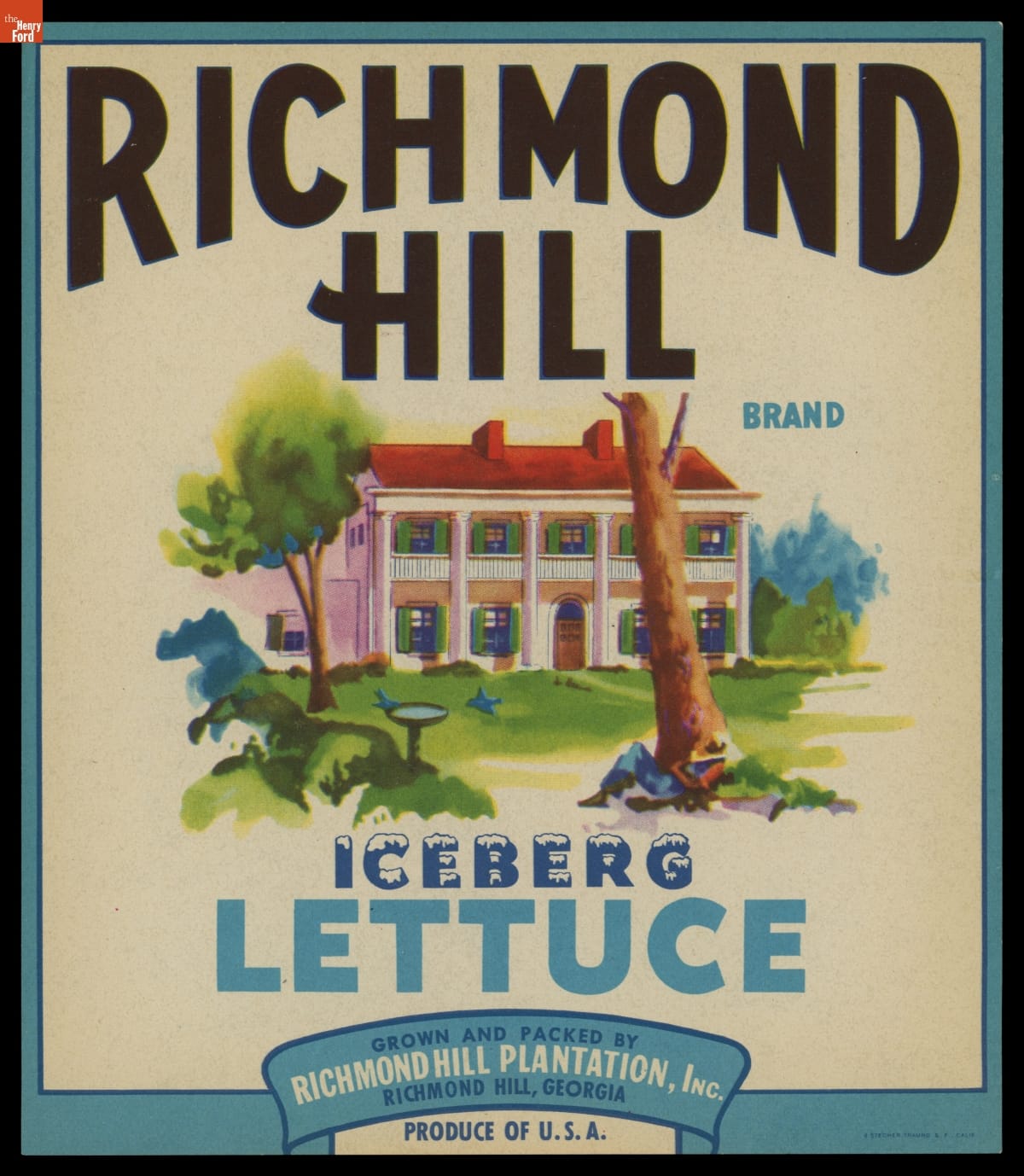
- 1927-1947
- Collections - Artifact
Crate Label, "Richmond Hill Brand Iceberg Lettuce," 1927-1947
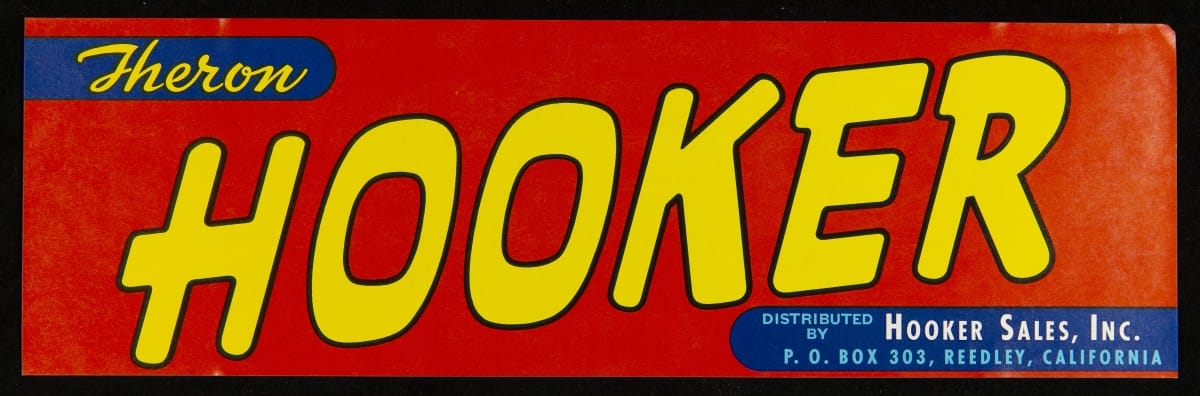
- Crate Label, "Theron Hooker Brand Product," 1940-1950 - In 1869, the transcontinental railroad opened eastern markets to the West Coast produce industry for the first time. As produce companies shipped crates of fruits and vegetables across the country, they needed a way to distinguish their goods from their competitors'. Colorful, eye-catching labels, like this one for Theron Hooker Brand products, were created to attract grocers purchasing goods from wholesale markets.
- 1940-1950
- Collections - Artifact
Crate Label, "Theron Hooker Brand Product," 1940-1950
In 1869, the transcontinental railroad opened eastern markets to the West Coast produce industry for the first time. As produce companies shipped crates of fruits and vegetables across the country, they needed a way to distinguish their goods from their competitors'. Colorful, eye-catching labels, like this one for Theron Hooker Brand products, were created to attract grocers purchasing goods from wholesale markets.
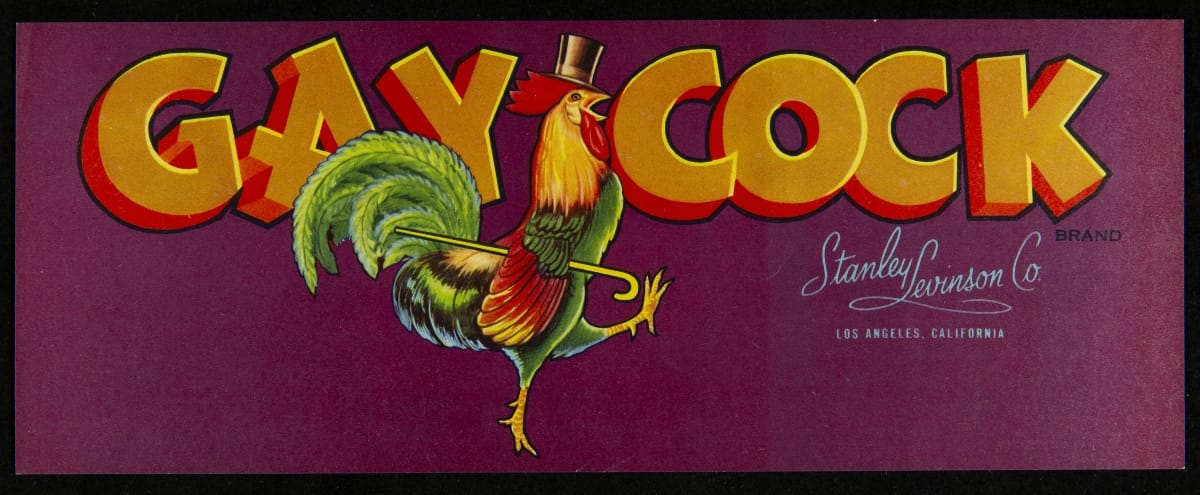
- Crate Label, "Gay Cock Brand Product," 1940-1950 - In 1869, the transcontinental railroad opened eastern markets to the West Coast produce industry for the first time. As produce companies shipped crates of fruits and vegetables across the country, they needed a way to distinguish their goods from their competitors'. Colorful, eye-catching labels, like this one for Gay Cock Brand products, were created to attract grocers purchasing goods from wholesale markets.
- 1940-1950
- Collections - Artifact
Crate Label, "Gay Cock Brand Product," 1940-1950
In 1869, the transcontinental railroad opened eastern markets to the West Coast produce industry for the first time. As produce companies shipped crates of fruits and vegetables across the country, they needed a way to distinguish their goods from their competitors'. Colorful, eye-catching labels, like this one for Gay Cock Brand products, were created to attract grocers purchasing goods from wholesale markets.