
Search
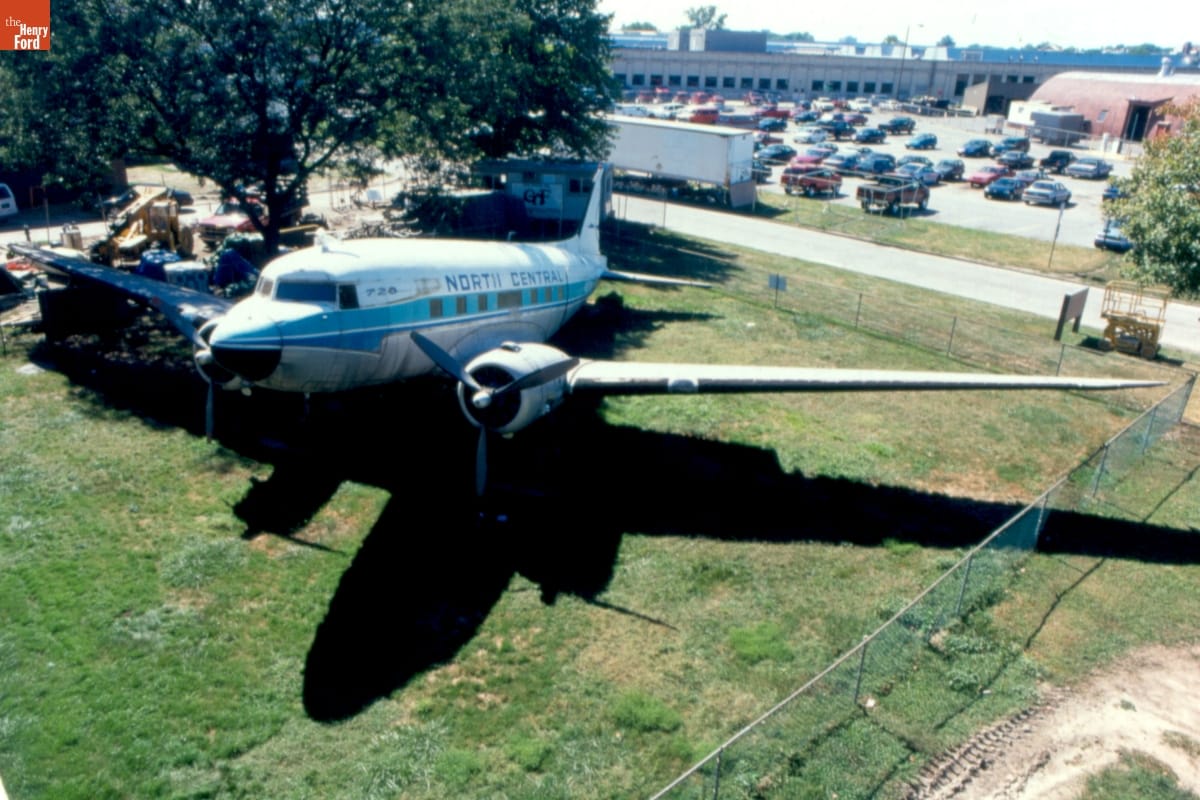
- 1939 Douglas DC-3 behind Henry Ford Museum, August 26, 1999 - When North Central Airlines donated Douglas DC-3 number N21728 to The Henry Ford in 1975, it had logged nearly 85,000 flight hours -- a record for a commercial aircraft at the time. After flying into Dearborn under its own power, the plane was moved by crane to a display location behind Henry Ford Museum. It was moved inside the museum in 2003.
- August 26, 1999
- Collections - Artifact
1939 Douglas DC-3 behind Henry Ford Museum, August 26, 1999
When North Central Airlines donated Douglas DC-3 number N21728 to The Henry Ford in 1975, it had logged nearly 85,000 flight hours -- a record for a commercial aircraft at the time. After flying into Dearborn under its own power, the plane was moved by crane to a display location behind Henry Ford Museum. It was moved inside the museum in 2003.
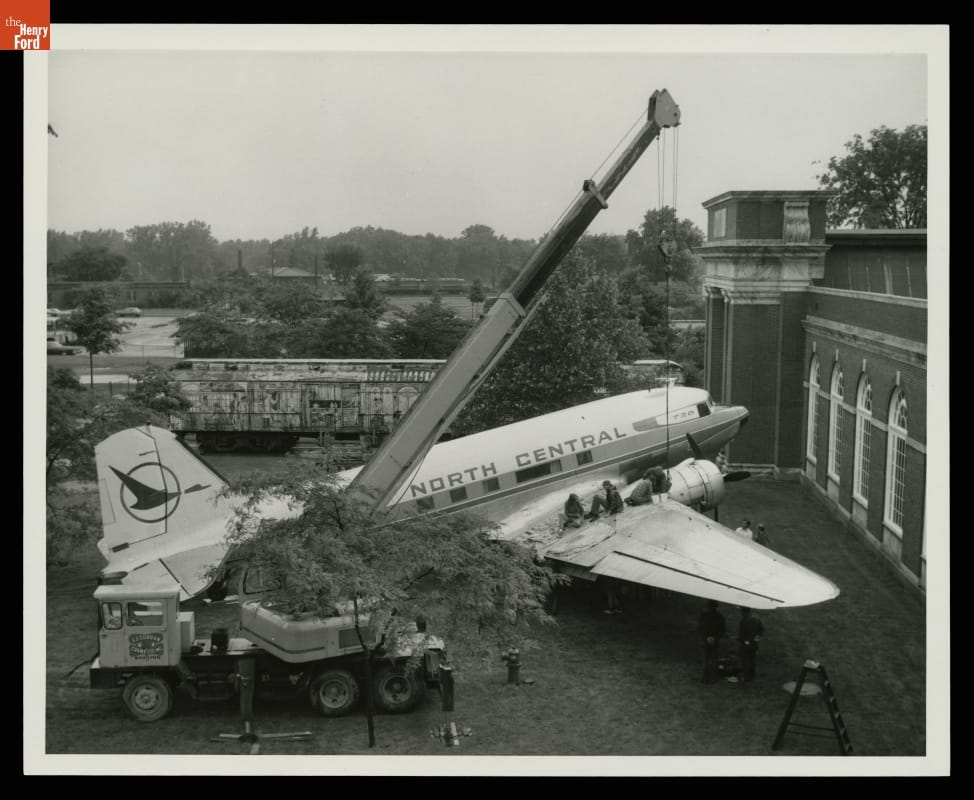
- 1939 Douglas DC-3 Being Moved to Its Place behind Henry Ford Museum, June 2, 1975 - North Central Airlines donated a Douglas DC-3 airplane to The Henry Ford in 1975. After the plane flew to Ford Motor Company's proving ground -- first developed as an airport in 1924 -- its wings were removed and the aircraft was transported by crane to Henry Ford Museum. It was reassembled and displayed outside the museum until moved indoors in 2003.
- June 02, 1975
- Collections - Artifact
1939 Douglas DC-3 Being Moved to Its Place behind Henry Ford Museum, June 2, 1975
North Central Airlines donated a Douglas DC-3 airplane to The Henry Ford in 1975. After the plane flew to Ford Motor Company's proving ground -- first developed as an airport in 1924 -- its wings were removed and the aircraft was transported by crane to Henry Ford Museum. It was reassembled and displayed outside the museum until moved indoors in 2003.
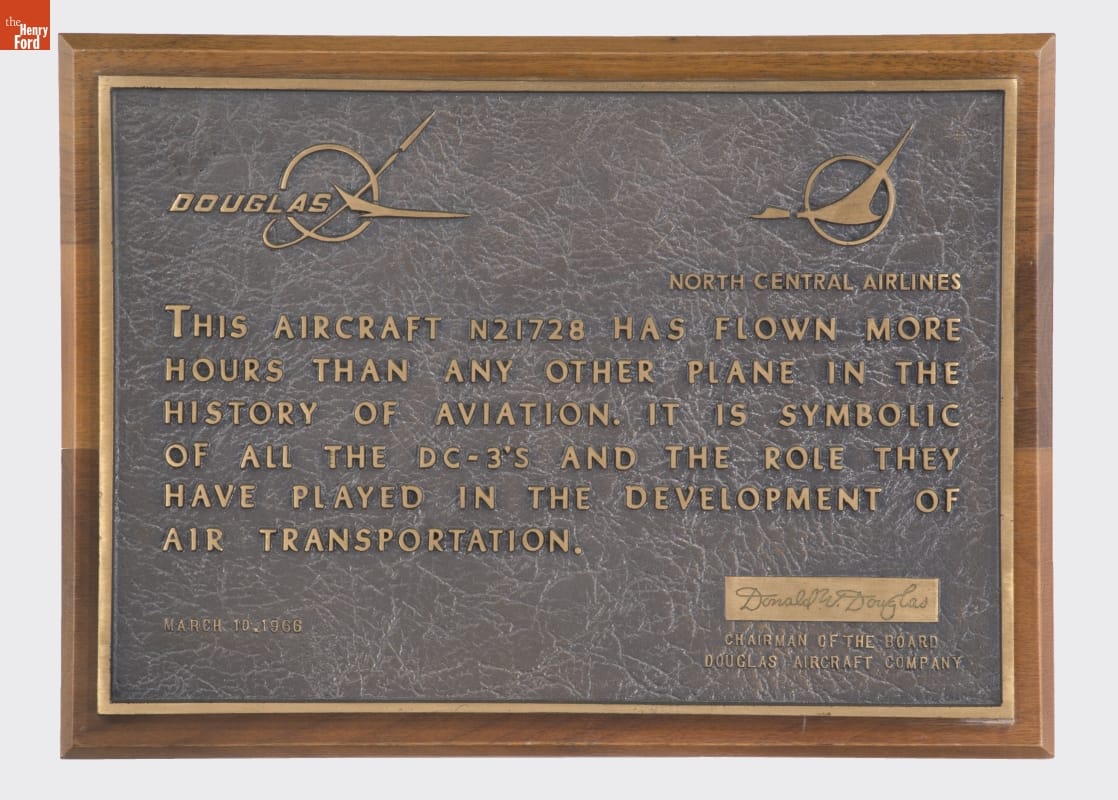
- Plaque Commemorating the Record Number of Hours Flown by the Douglas DC-3 - The Douglas DC-3 is one of history's most significant aircraft, with important achievements in civil and military applications. DC-3 N21728, operated by Eastern Airlines and North Central Airlines from 1939 to 1975, is a special example. The airplane logged 84,875 flight hours before being retired to The Henry Ford. It was a record for a commercial aircraft at that time.
- March 10, 1966
- Collections - Artifact
Plaque Commemorating the Record Number of Hours Flown by the Douglas DC-3
The Douglas DC-3 is one of history's most significant aircraft, with important achievements in civil and military applications. DC-3 N21728, operated by Eastern Airlines and North Central Airlines from 1939 to 1975, is a special example. The airplane logged 84,875 flight hours before being retired to The Henry Ford. It was a record for a commercial aircraft at that time.
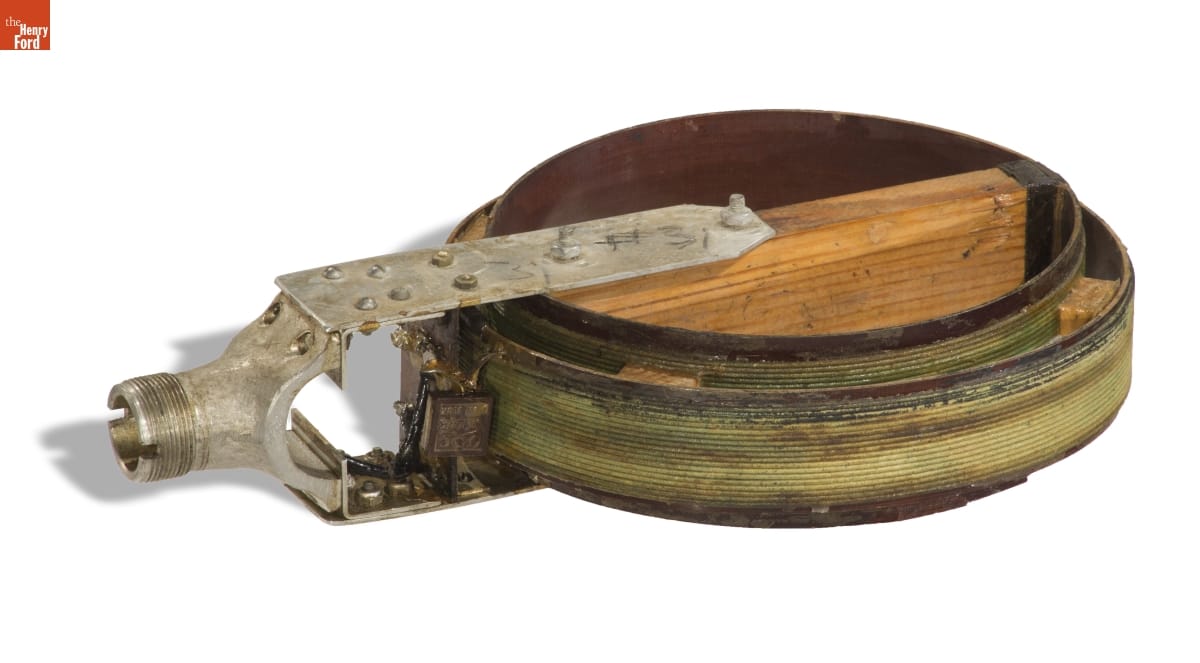
- TWA Experimental Anti-Snow Static Loop Antenna, 1937 - Airport radio navigation beacons required pilots to listen for Morse code patterns to hold the correct course--notoriously difficult during storms. In 1936, Transcontinental & Western Air introduced an anti-snow directional antenna which could be used, in high-static situations, to "home in" on airport radio signals. This loop was housed in a sleek metal enclosure, protecting it from the elements.
- 1937-1938
- Collections - Artifact
TWA Experimental Anti-Snow Static Loop Antenna, 1937
Airport radio navigation beacons required pilots to listen for Morse code patterns to hold the correct course--notoriously difficult during storms. In 1936, Transcontinental & Western Air introduced an anti-snow directional antenna which could be used, in high-static situations, to "home in" on airport radio signals. This loop was housed in a sleek metal enclosure, protecting it from the elements.
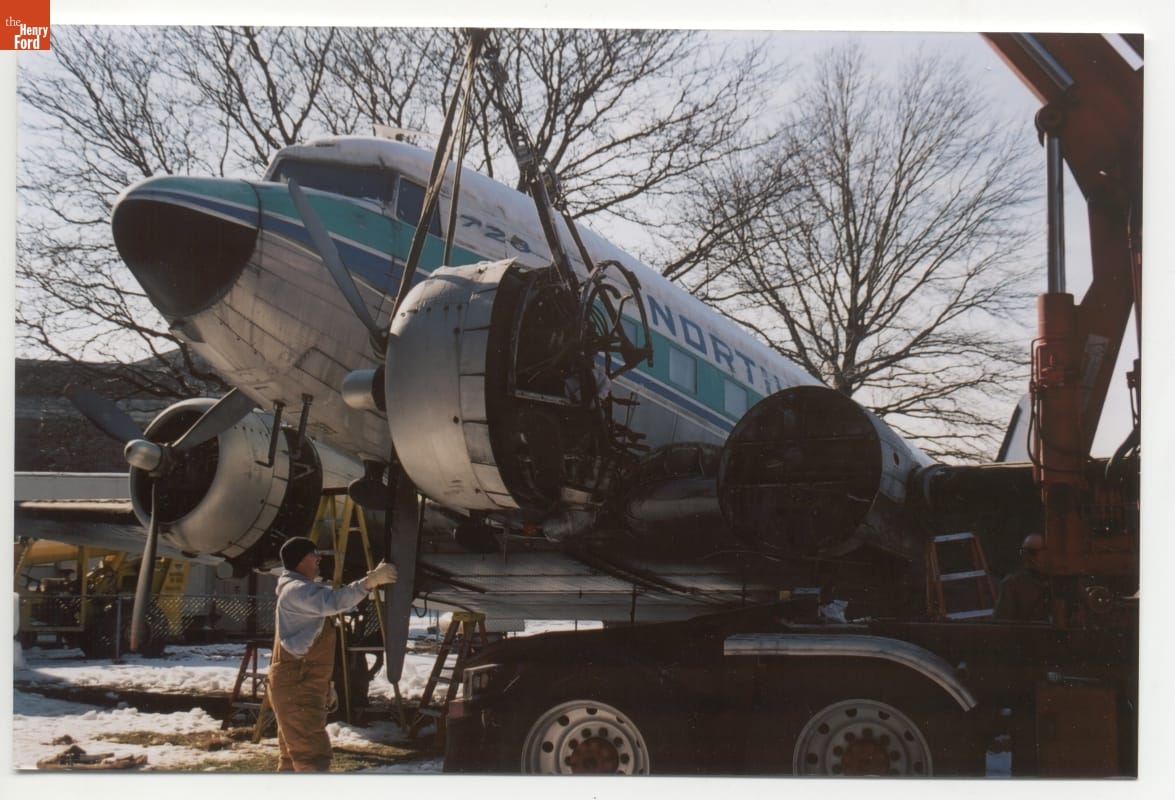
- Dismantling the 1939 Douglas DC-3 Airplane for Conservation, 2002 - The Henry Ford acquired its Douglas DC-3 airplane in 1975. Due to its size, the plane initially was displayed outside Henry Ford Museum. In 2002, the plane was disassembled and thoroughly conserved to correct the effects of 27 years of weather exposure. The treated DC-3 was reassembled for display inside the museum in 2003.
- 2002
- Collections - Artifact
Dismantling the 1939 Douglas DC-3 Airplane for Conservation, 2002
The Henry Ford acquired its Douglas DC-3 airplane in 1975. Due to its size, the plane initially was displayed outside Henry Ford Museum. In 2002, the plane was disassembled and thoroughly conserved to correct the effects of 27 years of weather exposure. The treated DC-3 was reassembled for display inside the museum in 2003.
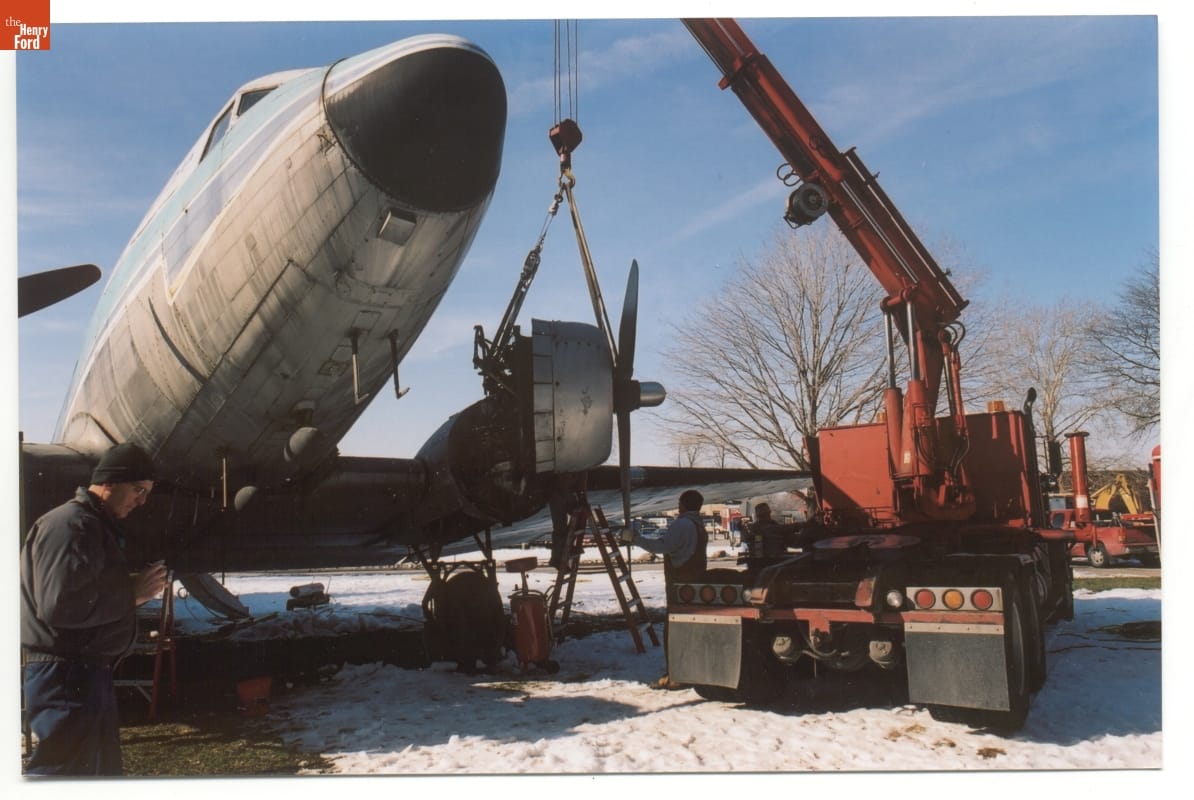
- Dismantling the 1939 Douglas DC-3 Airplane for Conservation, 2002 - The Henry Ford acquired its Douglas DC-3 airplane in 1975. Due to its size, the plane initially was displayed outside Henry Ford Museum. In 2002, the plane was disassembled and thoroughly conserved to correct the effects of 27 years of weather exposure. The treated DC-3 was reassembled for display inside the museum in 2003.
- 2002
- Collections - Artifact
Dismantling the 1939 Douglas DC-3 Airplane for Conservation, 2002
The Henry Ford acquired its Douglas DC-3 airplane in 1975. Due to its size, the plane initially was displayed outside Henry Ford Museum. In 2002, the plane was disassembled and thoroughly conserved to correct the effects of 27 years of weather exposure. The treated DC-3 was reassembled for display inside the museum in 2003.
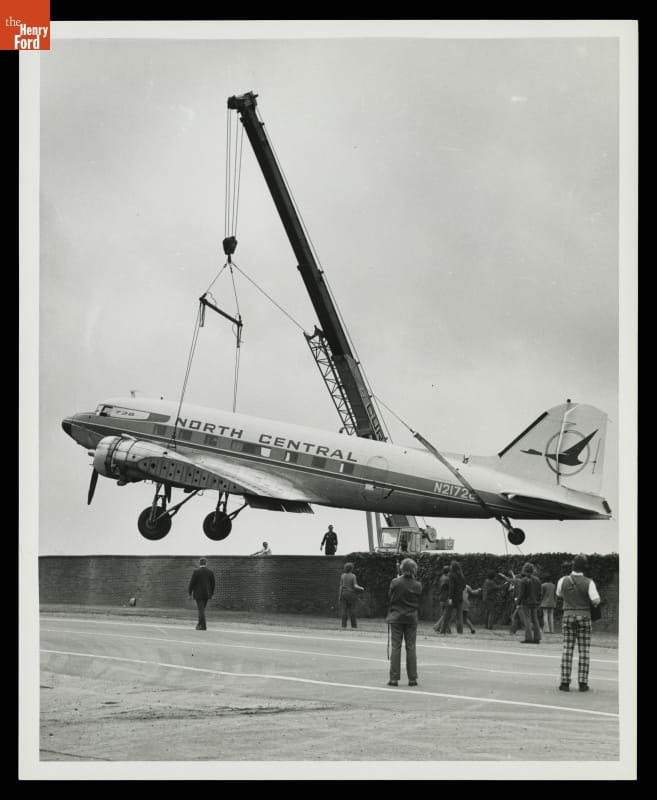
- 1939 Douglas DC-3 Being Moved from Ford Proving Ground to Henry Ford Museum, June 2, 1975 - North Central Airlines donated a Douglas DC-3 airplane to The Henry Ford in 1975. After the plane flew to Ford Motor Company's proving ground, moving it to nearby Henry Ford Museum was no simple task. The wings were removed and the airplane was lifted by crane over a fence before being transported to the museum.
- June 02, 1975
- Collections - Artifact
1939 Douglas DC-3 Being Moved from Ford Proving Ground to Henry Ford Museum, June 2, 1975
North Central Airlines donated a Douglas DC-3 airplane to The Henry Ford in 1975. After the plane flew to Ford Motor Company's proving ground, moving it to nearby Henry Ford Museum was no simple task. The wings were removed and the airplane was lifted by crane over a fence before being transported to the museum.
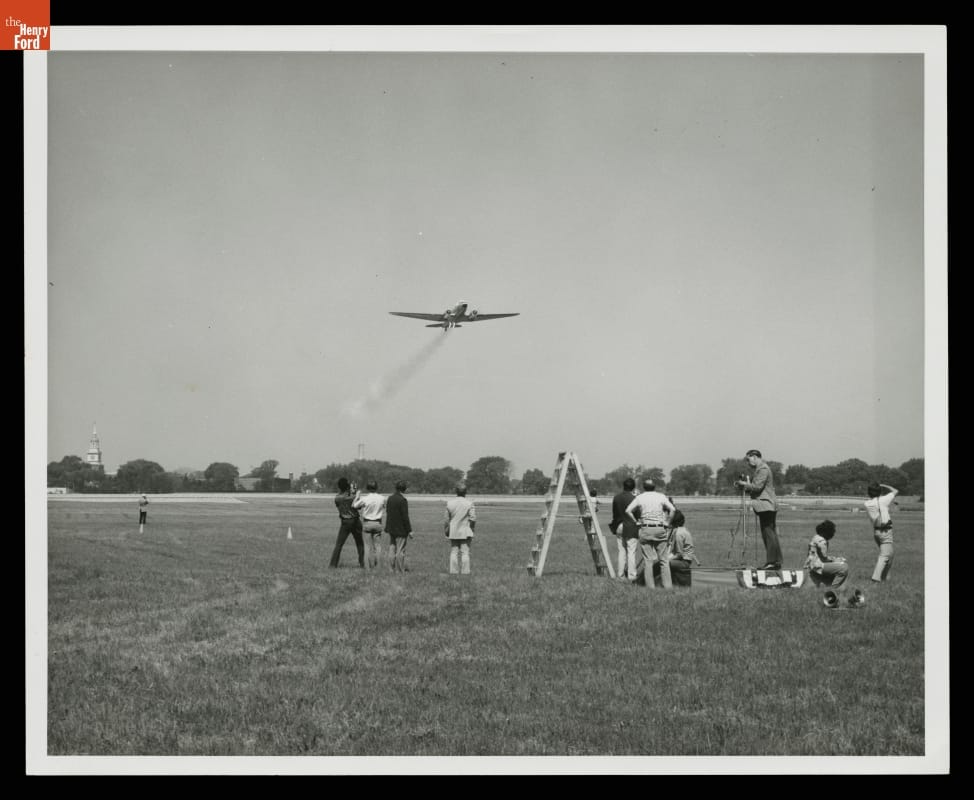
- 1939 Douglas DC-3 Arriving at the Ford Proving Ground near Henry Ford Museum, May 28, 1975 - The Henry Ford's DC-3 flew to Dearborn under its own power, landing at Ford Motor Company's proving ground -- first developed as an airport in 1924 -- on May 28, 1975. Over its 36-year career for Eastern Airlines and North Central Airlines, the plane traveled 12 million miles and logged 84,875 flying hours, a record for a commercial aircraft at the time.
- May 28, 1975
- Collections - Artifact
1939 Douglas DC-3 Arriving at the Ford Proving Ground near Henry Ford Museum, May 28, 1975
The Henry Ford's DC-3 flew to Dearborn under its own power, landing at Ford Motor Company's proving ground -- first developed as an airport in 1924 -- on May 28, 1975. Over its 36-year career for Eastern Airlines and North Central Airlines, the plane traveled 12 million miles and logged 84,875 flying hours, a record for a commercial aircraft at the time.
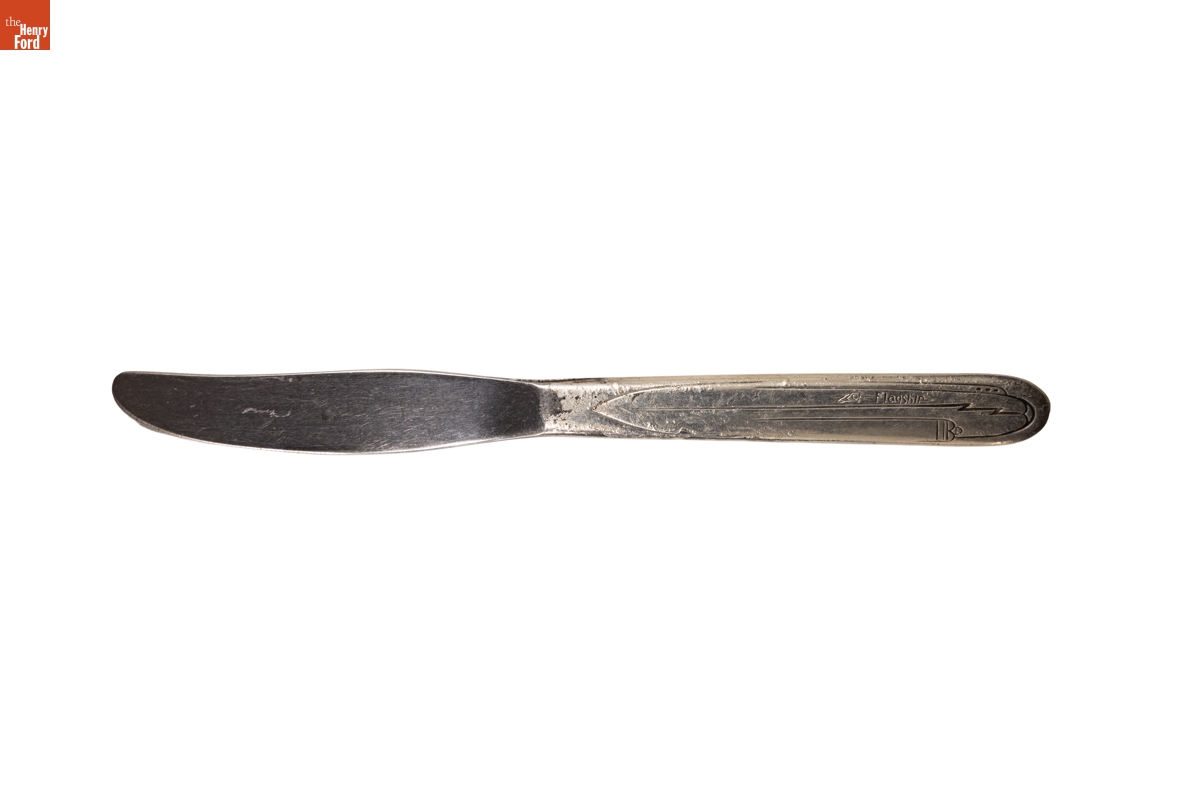
- American Airlines DC-3 "Flagship" Butter Knife, 1936-1940 - Diane Beers joined TWA as a flight attendant in 1965 but left to marry Richard Hill a year later -- a time when many airlines employed only single women in that job. Beers Hill continued her interest in the aviation industry. Her memorabilia collection included knives, forks and spoons used in airline food service or branded with carrier logos.
- 1936-1940
- Collections - Artifact
American Airlines DC-3 "Flagship" Butter Knife, 1936-1940
Diane Beers joined TWA as a flight attendant in 1965 but left to marry Richard Hill a year later -- a time when many airlines employed only single women in that job. Beers Hill continued her interest in the aviation industry. Her memorabilia collection included knives, forks and spoons used in airline food service or branded with carrier logos.
- Dismantling the 1939 Douglas DC-3 Airplane for Conservation, 2002 - The Henry Ford acquired its Douglas DC-3 airplane in 1975. Due to its size, the plane initially was displayed outside Henry Ford Museum. In 2002, the plane was disassembled and thoroughly conserved to correct the effects of 27 years of weather exposure. The treated DC-3 was reassembled for display inside the museum in 2003.

- 2002
- Collections - Artifact
Dismantling the 1939 Douglas DC-3 Airplane for Conservation, 2002
The Henry Ford acquired its Douglas DC-3 airplane in 1975. Due to its size, the plane initially was displayed outside Henry Ford Museum. In 2002, the plane was disassembled and thoroughly conserved to correct the effects of 27 years of weather exposure. The treated DC-3 was reassembled for display inside the museum in 2003.