
Search
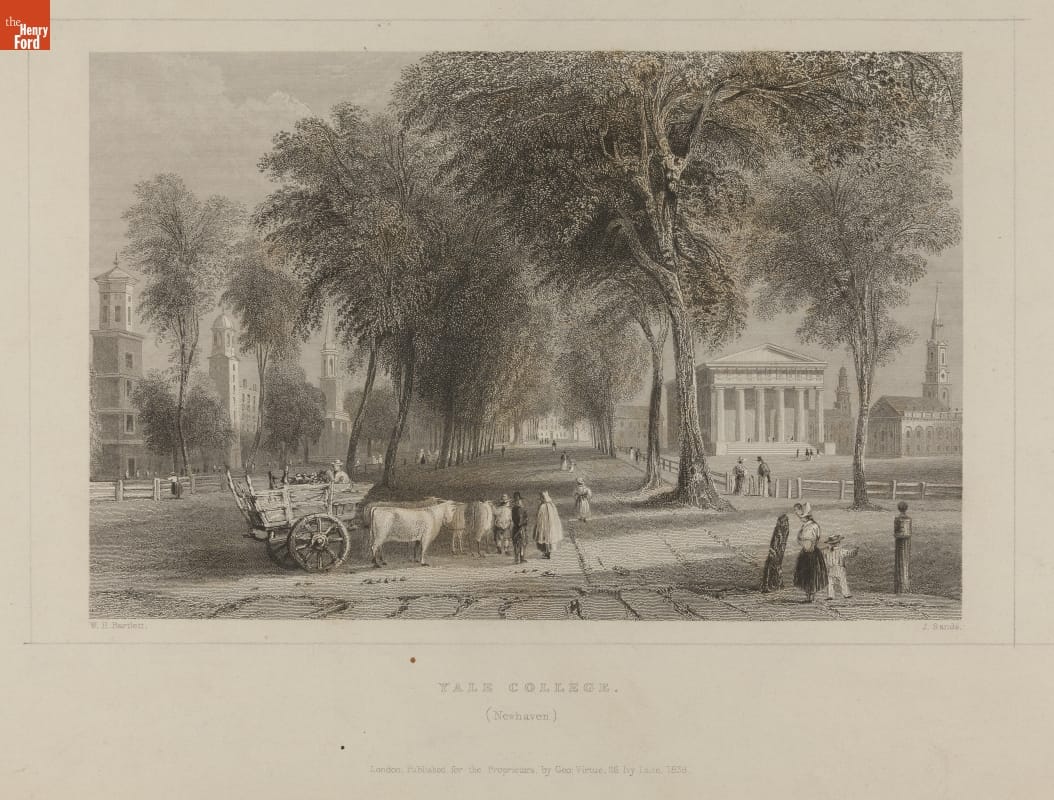
- Engraving, "Yale College, New Haven," 1838 - This 1838 engraving of New Haven, Connecticut, features a two-wheeled New England ox cart in the foreground. The picturesque print also features people strolling through town, with Yale College buildings in the background.
- 1838
- Collections - Artifact
Engraving, "Yale College, New Haven," 1838
This 1838 engraving of New Haven, Connecticut, features a two-wheeled New England ox cart in the foreground. The picturesque print also features people strolling through town, with Yale College buildings in the background.
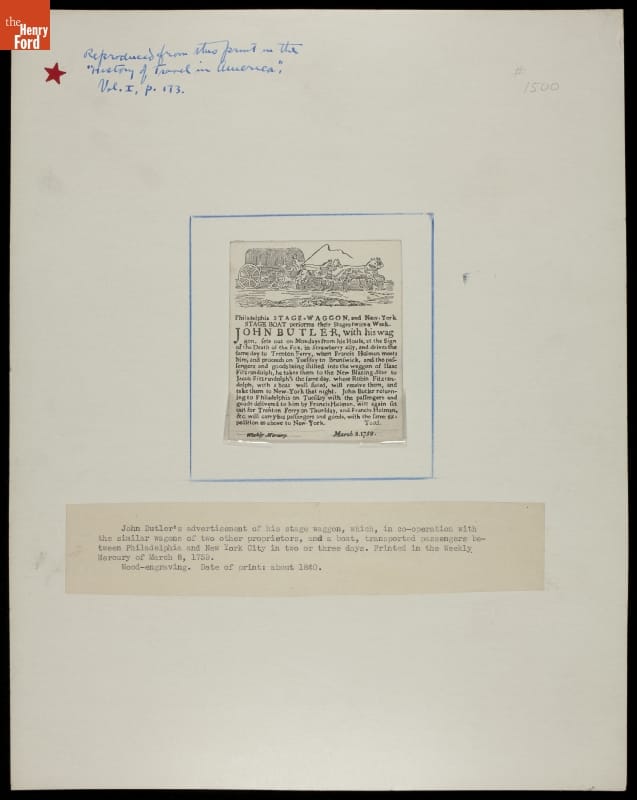
- Advertisement for Stage Wagon and Boat Transportation Between Philadelphia and New York City, circa 1840 - Originally printed March 8, 1759, in the <em>Weekly Mercury</em>, this advertisement features a wood engraving of John Butler's stage wagon. This stage line ran between Philadelphia, Pennsylvania, and New York City.
- March 08, 1759
- Collections - Artifact
Advertisement for Stage Wagon and Boat Transportation Between Philadelphia and New York City, circa 1840
Originally printed March 8, 1759, in the Weekly Mercury, this advertisement features a wood engraving of John Butler's stage wagon. This stage line ran between Philadelphia, Pennsylvania, and New York City.
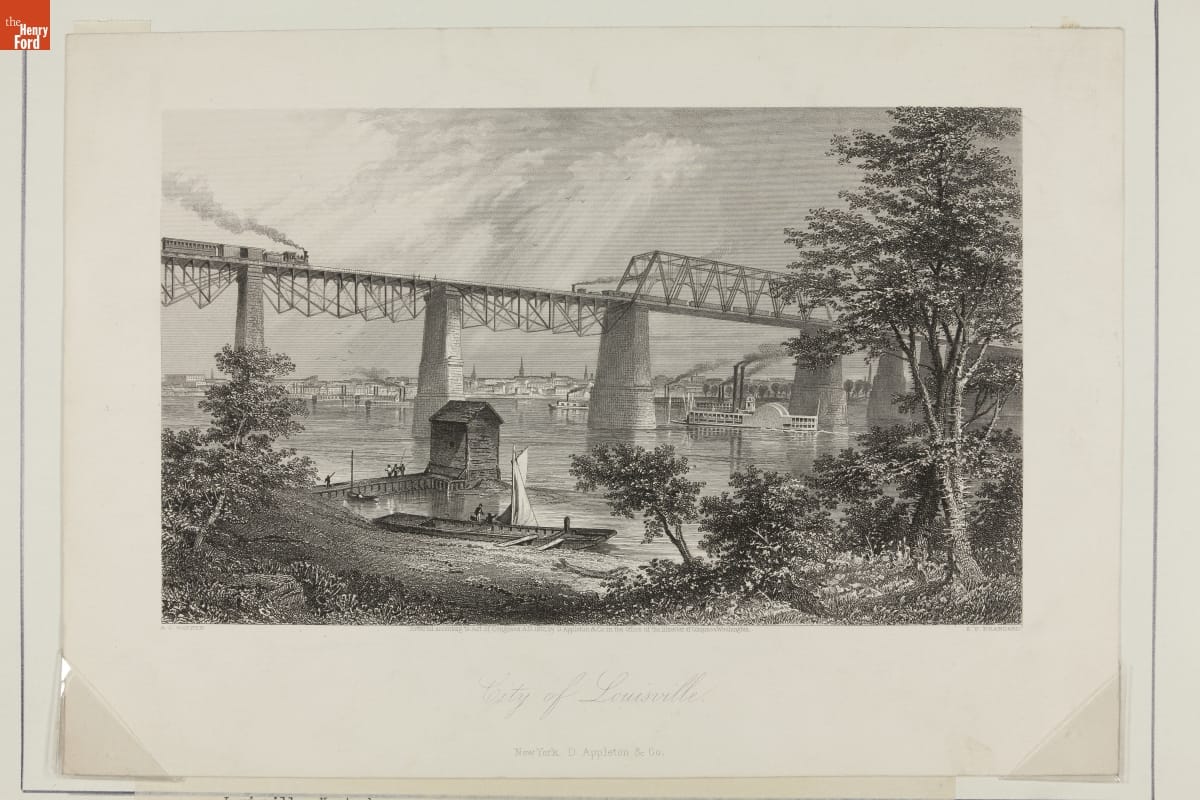
- Steel Engraving, "City of Louisville," circa 1870 - This circa 1870 steel engraving shows the city of Louisville, Kentucky, from a point across the Ohio River. Founded in 1780, Louisville grew rapidly into a major shipping port along the river, and this steel railroad bridge was the first to span the Ohio River in Louisville.
- circa 1872
- Collections - Artifact
Steel Engraving, "City of Louisville," circa 1870
This circa 1870 steel engraving shows the city of Louisville, Kentucky, from a point across the Ohio River. Founded in 1780, Louisville grew rapidly into a major shipping port along the river, and this steel railroad bridge was the first to span the Ohio River in Louisville.
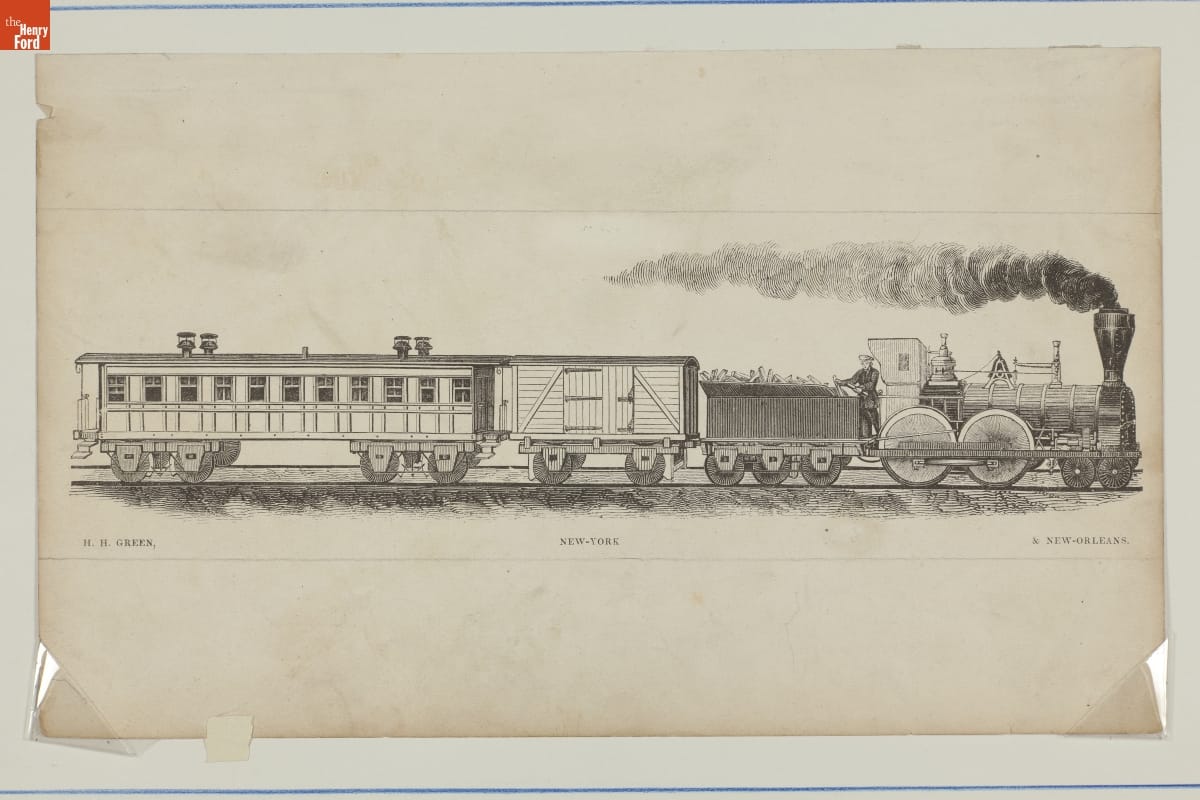
- Train with Steam Locomotive, Passenger and Freight Cars, circa 1856 - Locomotive boilers had to stay hot to produce steam. Lagging -- insulation around the boiler -- was crucial. This American-type locomotive of the 1850s had narrow wooden strips mounted around its boiler for insulation. But the wood deteriorated quickly when exposed to weather and sparks. Improved designs placed a protective sheet metal jacket over the wood.
- circa 1856
- Collections - Artifact
Train with Steam Locomotive, Passenger and Freight Cars, circa 1856
Locomotive boilers had to stay hot to produce steam. Lagging -- insulation around the boiler -- was crucial. This American-type locomotive of the 1850s had narrow wooden strips mounted around its boiler for insulation. But the wood deteriorated quickly when exposed to weather and sparks. Improved designs placed a protective sheet metal jacket over the wood.
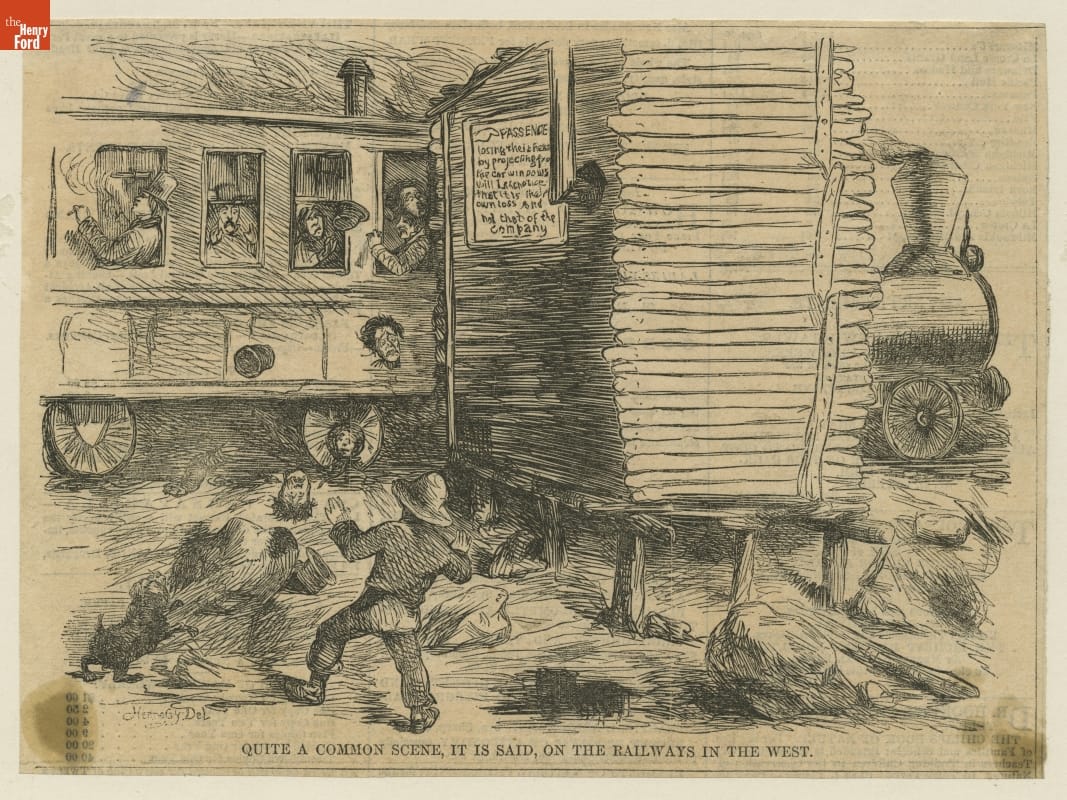
- Wood Engraving, "Quite a Common Scene, it is Said, on the Railways in the West," 1858 - While close clearances -- tight spaces between railroad cars and trackside structures -- did exist, this 1858 illustration from <em>Harper's Weekly</em> exaggerated the dangers faced by passengers who stuck their heads through windows. More likely threats from an open window included sparks, cinders and smoke from the steam locomotive pulling the train -- all of which could irritate eyes and damage clothing.
- 1858
- Collections - Artifact
Wood Engraving, "Quite a Common Scene, it is Said, on the Railways in the West," 1858
While close clearances -- tight spaces between railroad cars and trackside structures -- did exist, this 1858 illustration from Harper's Weekly exaggerated the dangers faced by passengers who stuck their heads through windows. More likely threats from an open window included sparks, cinders and smoke from the steam locomotive pulling the train -- all of which could irritate eyes and damage clothing.
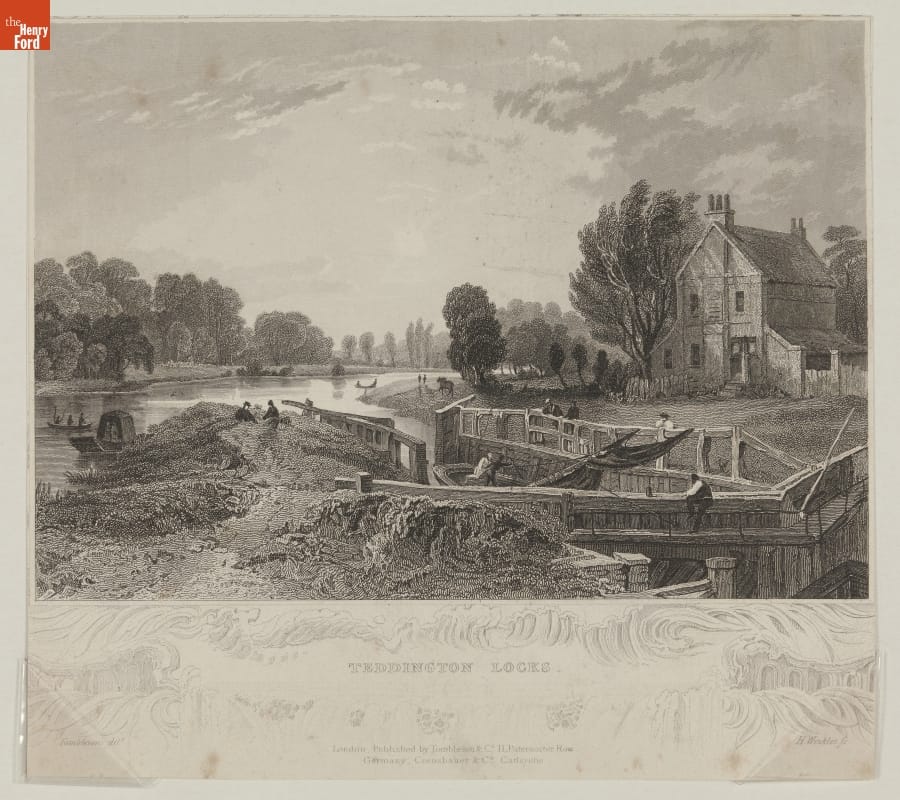
- Steel Engraving, "Teddington Locks," circa 1837 - Before railroads, rivers provided quick transportation routes for people and goods. But rapids and dams impeded a boat's movement. To avert these obstacles, a lock was built to lift or lower a boat from one navigable section of a waterway to another. This steel engraving, done about 1837, depicts the Teddington locks on the River Thames in England.
- 1835-1840
- Collections - Artifact
Steel Engraving, "Teddington Locks," circa 1837
Before railroads, rivers provided quick transportation routes for people and goods. But rapids and dams impeded a boat's movement. To avert these obstacles, a lock was built to lift or lower a boat from one navigable section of a waterway to another. This steel engraving, done about 1837, depicts the Teddington locks on the River Thames in England.
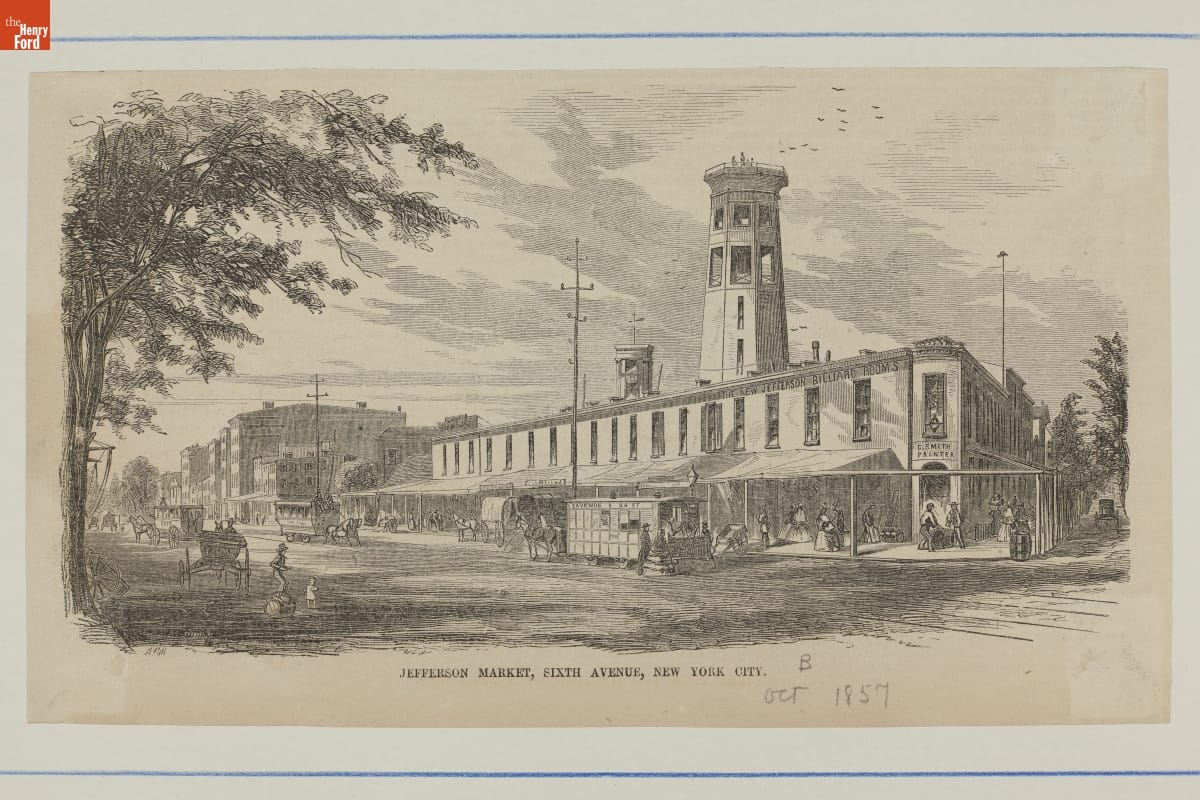
- "Jefferson Market, Sixth Avenue, New York City," 1857 - In the mid-1800s, horse-drawn streetcars provided a convenient and affordable way to get around a growing city. These streetcars traveled the main urban thoroughfares and took passengers to their workplaces, local shops and businesses, parks and other destinations. In this 1857 print, riders get on and off a streetcar at New York's Jefferson Market, while another streetcar approaches from down the street.
- 1857
- Collections - Artifact
"Jefferson Market, Sixth Avenue, New York City," 1857
In the mid-1800s, horse-drawn streetcars provided a convenient and affordable way to get around a growing city. These streetcars traveled the main urban thoroughfares and took passengers to their workplaces, local shops and businesses, parks and other destinations. In this 1857 print, riders get on and off a streetcar at New York's Jefferson Market, while another streetcar approaches from down the street.
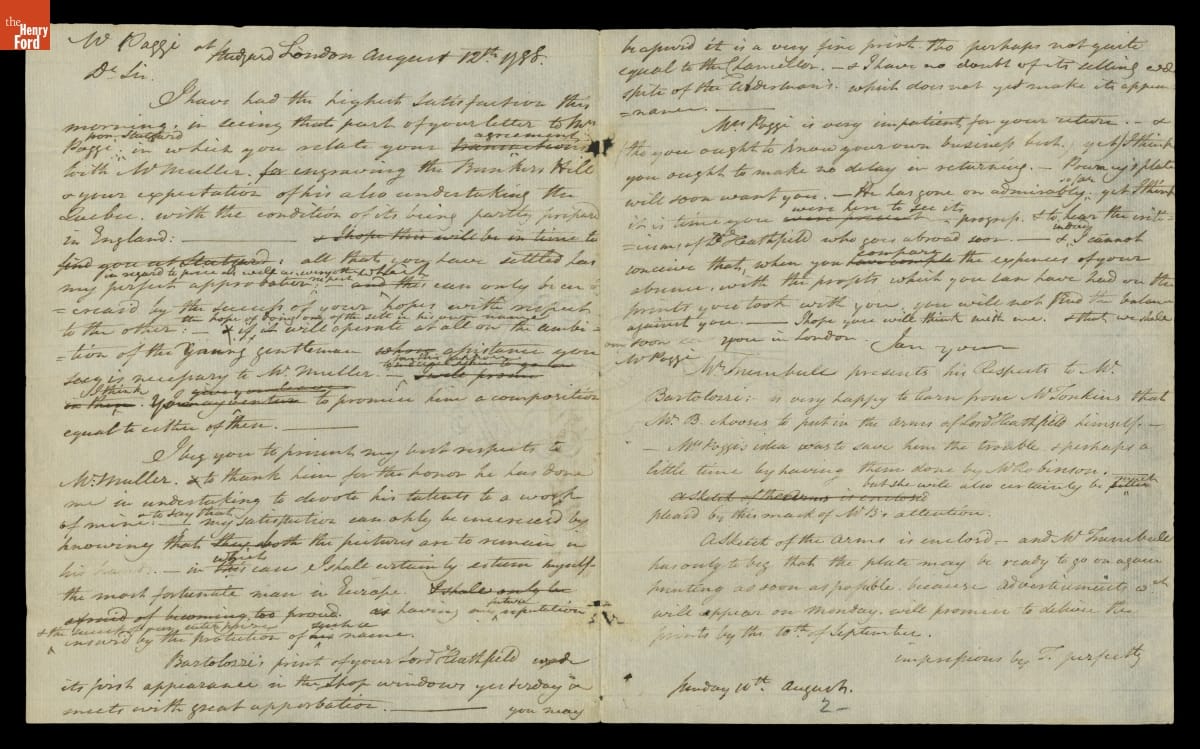
- Letter from John Trumbull to A. C. de Poggi, August 12, 1788 - American artist John Trumbull met Antonio Cesare Poggi while studying in Europe in the late 1700s. Poggi was an artist, art dealer and print publisher. The two became business associates and friends. In this letter from 1788, Trumbull is happy to hear that Poggi has entered an agreement with an engraver to create printing plates of Trumbull's paintings.
- August 12, 1788
- Collections - Artifact
Letter from John Trumbull to A. C. de Poggi, August 12, 1788
American artist John Trumbull met Antonio Cesare Poggi while studying in Europe in the late 1700s. Poggi was an artist, art dealer and print publisher. The two became business associates and friends. In this letter from 1788, Trumbull is happy to hear that Poggi has entered an agreement with an engraver to create printing plates of Trumbull's paintings.
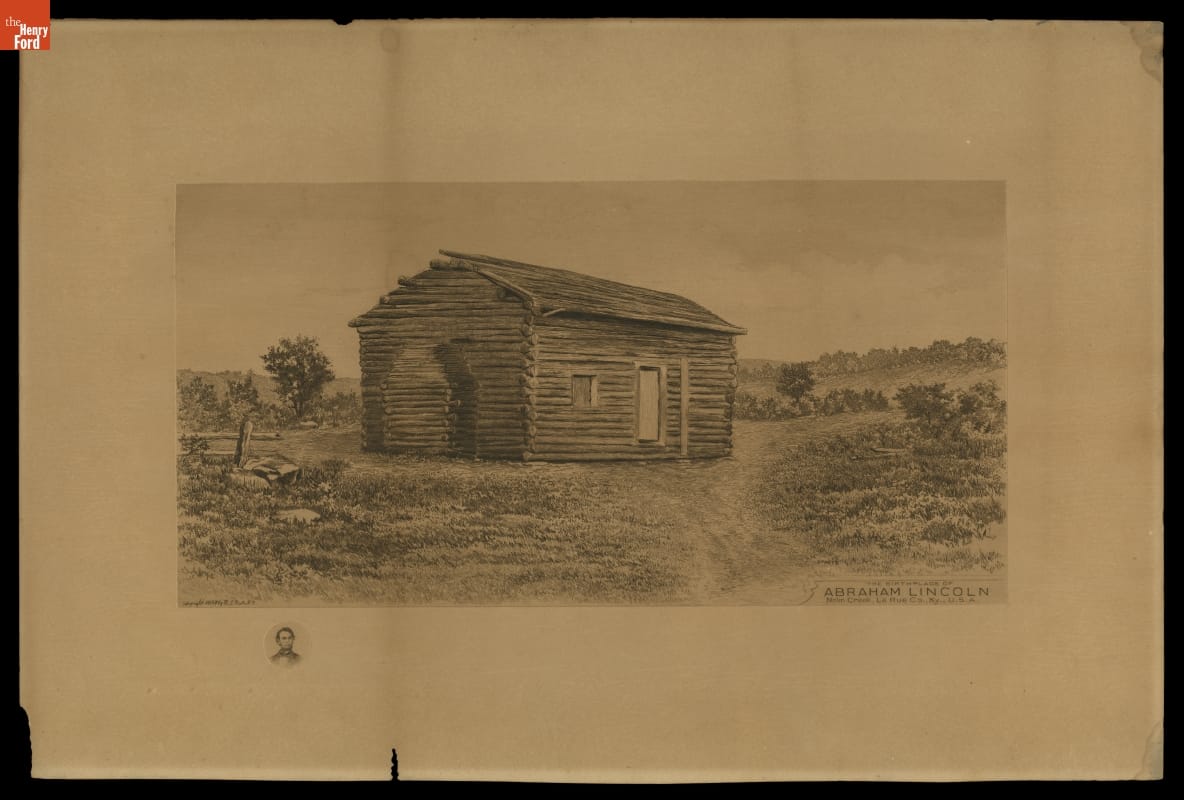
- Engraving, Abraham Lincoln Birthplace, 1897 -
- 1897
- Collections - Artifact
Engraving, Abraham Lincoln Birthplace, 1897
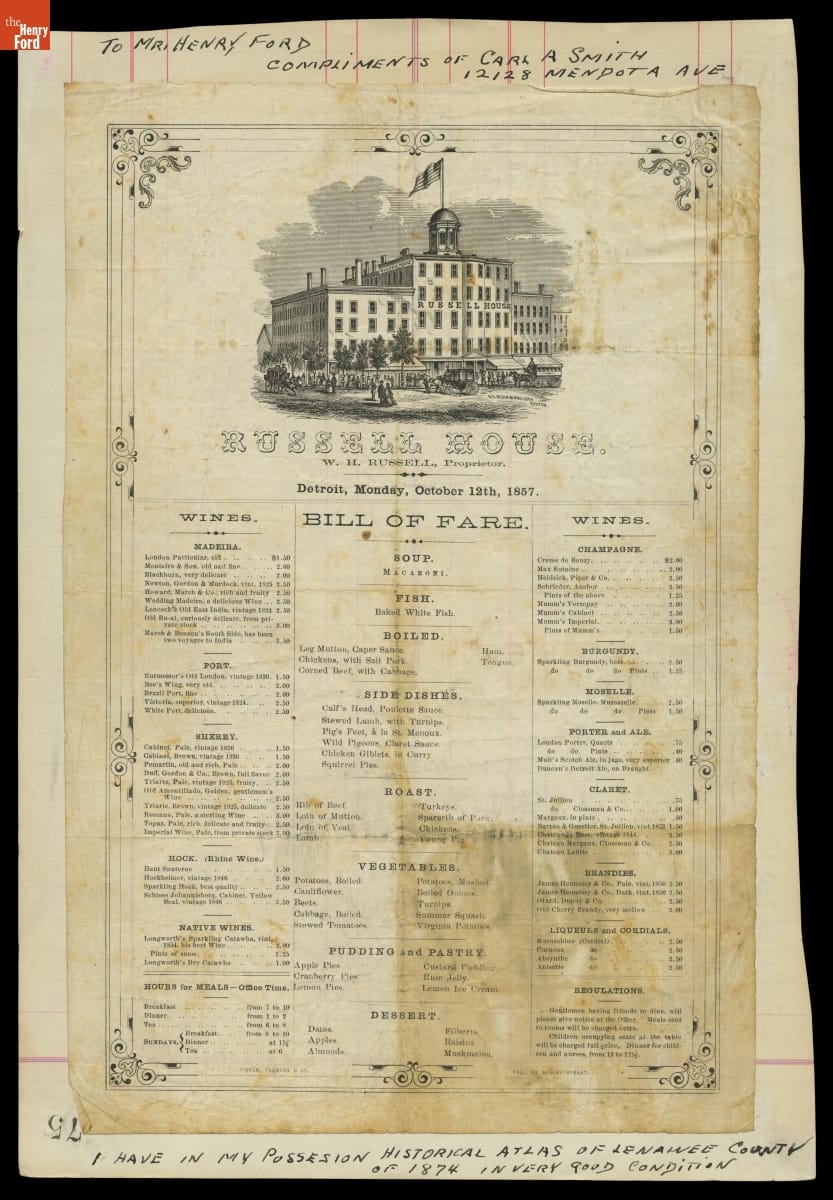
- Russell House Bill of Fare, Detroit, Michigan, Monday, October 12, 1857 -
- October 12, 1857
- Collections - Artifact
Russell House Bill of Fare, Detroit, Michigan, Monday, October 12, 1857