
Search
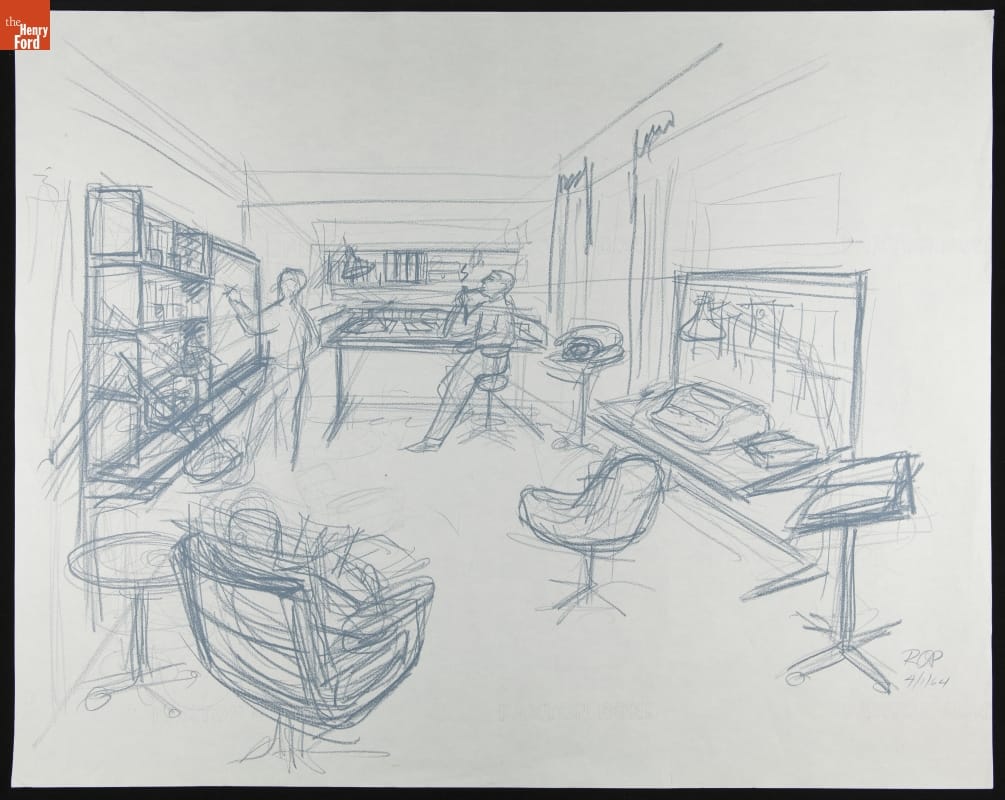
- Action Office Project Drawing by Robert Propst, April 1, 1964 - Action Office, conceptualized by Robert Propst with final design by George Nelson, was rooted in Propst's research into office function and worker behavior. The system was not a commercial success: manufacturing costs were high, and it was, in Propst's words, "too showy and bright for serious consideration as a middle management tool." Propst went on to design the hugely successful Action Office 2 cubicle-based system.
- April 01, 1964
- Collections - Artifact
Action Office Project Drawing by Robert Propst, April 1, 1964
Action Office, conceptualized by Robert Propst with final design by George Nelson, was rooted in Propst's research into office function and worker behavior. The system was not a commercial success: manufacturing costs were high, and it was, in Propst's words, "too showy and bright for serious consideration as a middle management tool." Propst went on to design the hugely successful Action Office 2 cubicle-based system.
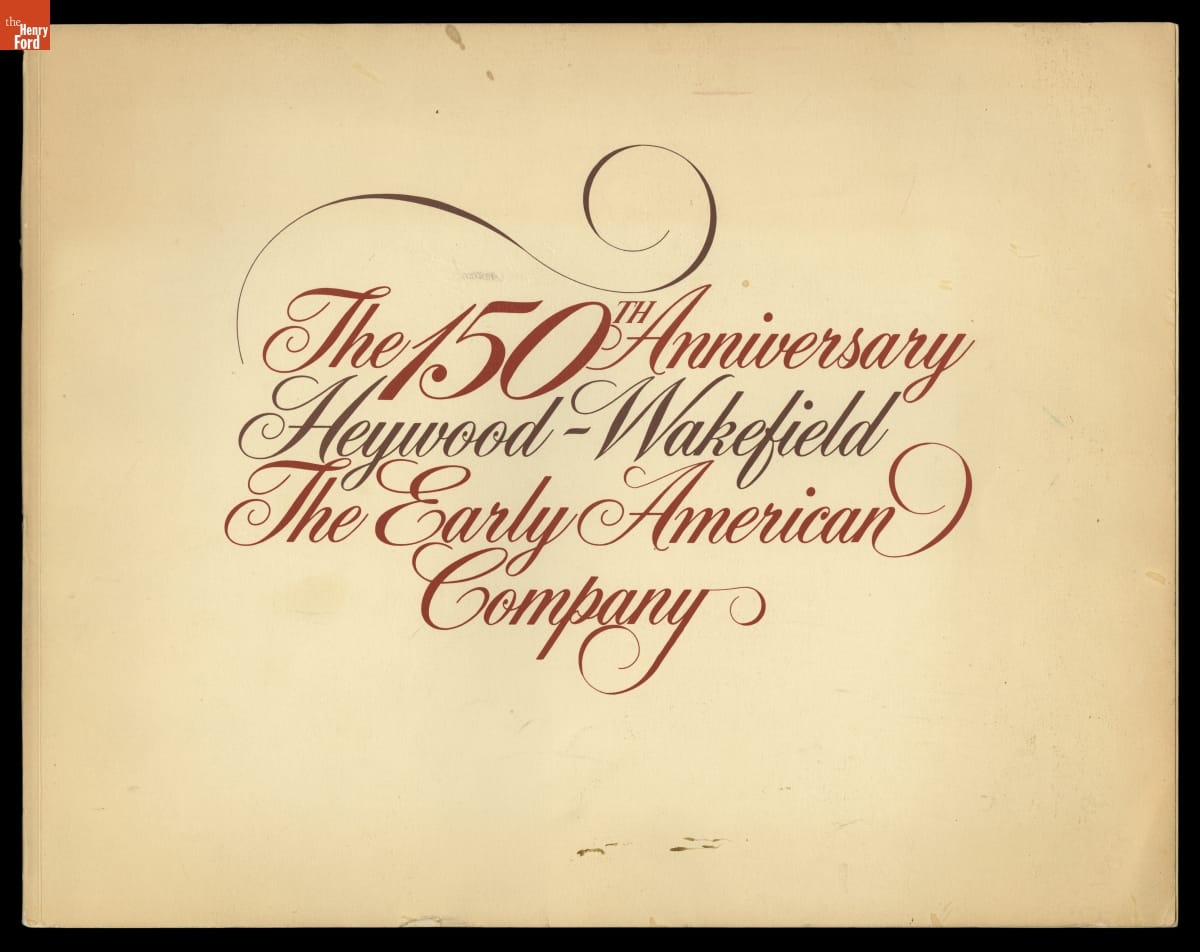
- The 150th Anniversary, Heywood-Wakefield, The Early American Company Catalog, 1976 - Heywood Brothers and Wakefield Company, two rival 19th-century furniture companies specializing in wicker and rattan furniture, merged in 1897. In 1921, the company became the Heywood-Wakefield Company. It would become a leading American manufacturer producing quality mid-century modern furniture, and later Early American designs. The company published this 150th-anniversary catalog--dating from the founding of Heywood Brothers in 1826.
- 1826-1976
- Collections - Artifact
The 150th Anniversary, Heywood-Wakefield, The Early American Company Catalog, 1976
Heywood Brothers and Wakefield Company, two rival 19th-century furniture companies specializing in wicker and rattan furniture, merged in 1897. In 1921, the company became the Heywood-Wakefield Company. It would become a leading American manufacturer producing quality mid-century modern furniture, and later Early American designs. The company published this 150th-anniversary catalog--dating from the founding of Heywood Brothers in 1826.
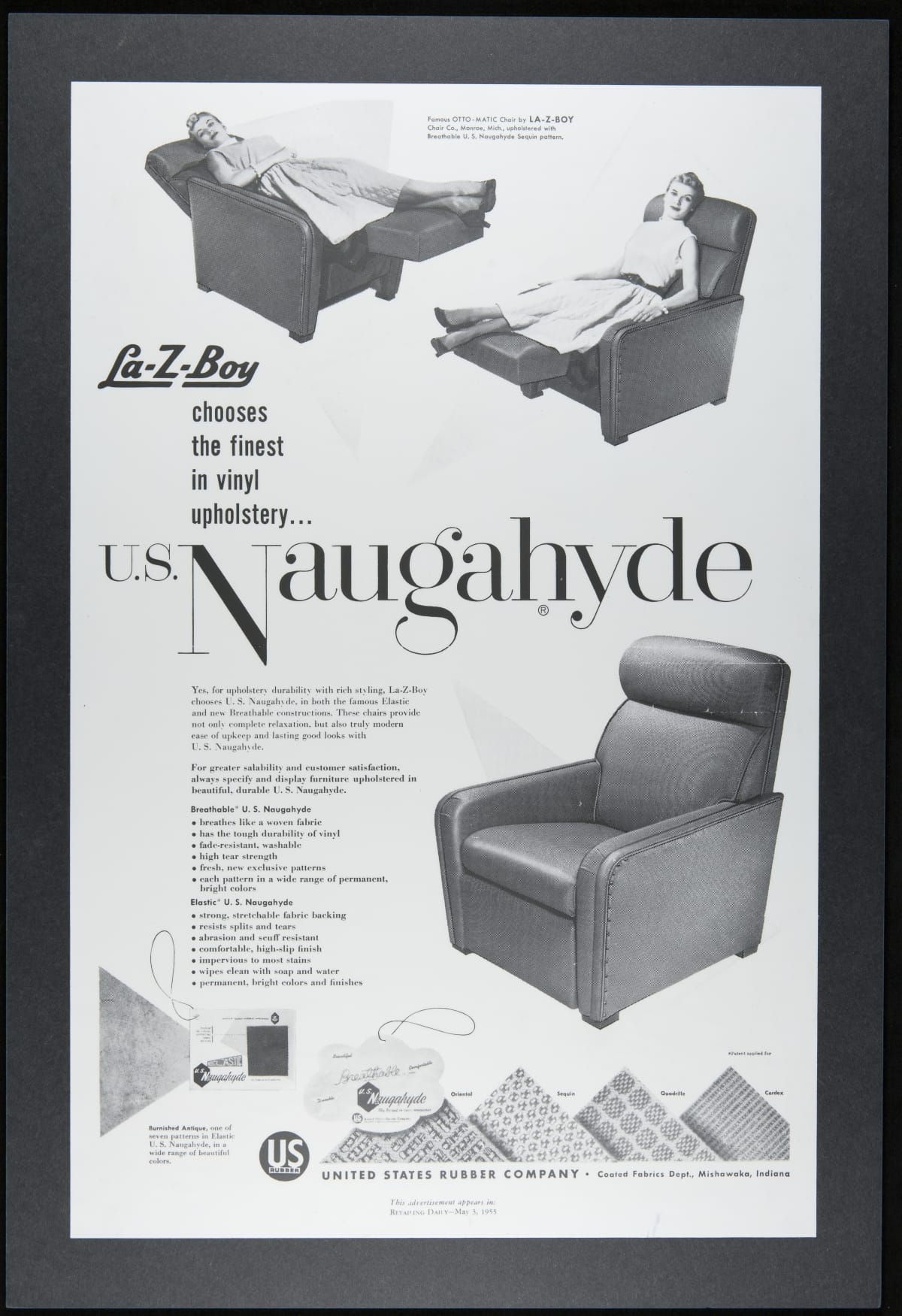
- La-Z-Boy Advertising Poster for Naugahyde, 1955 - La-Z-Boy, the reclining chair company founded in the late 1920s by Edwin Shoemaker and Edward Knabusch, continued to innovate during the 1950s. In addition to its own innovations, La-Z-Boy incorporated those developed by others. This advertisement announced recliners upholstered in Naugahyde, a coated fabric created by the U.S. Rubber Company. Naugahyde was the quintessential home decor material of the 1950s and 1960s.
- May 03, 1955
- Collections - Artifact
La-Z-Boy Advertising Poster for Naugahyde, 1955
La-Z-Boy, the reclining chair company founded in the late 1920s by Edwin Shoemaker and Edward Knabusch, continued to innovate during the 1950s. In addition to its own innovations, La-Z-Boy incorporated those developed by others. This advertisement announced recliners upholstered in Naugahyde, a coated fabric created by the U.S. Rubber Company. Naugahyde was the quintessential home decor material of the 1950s and 1960s.
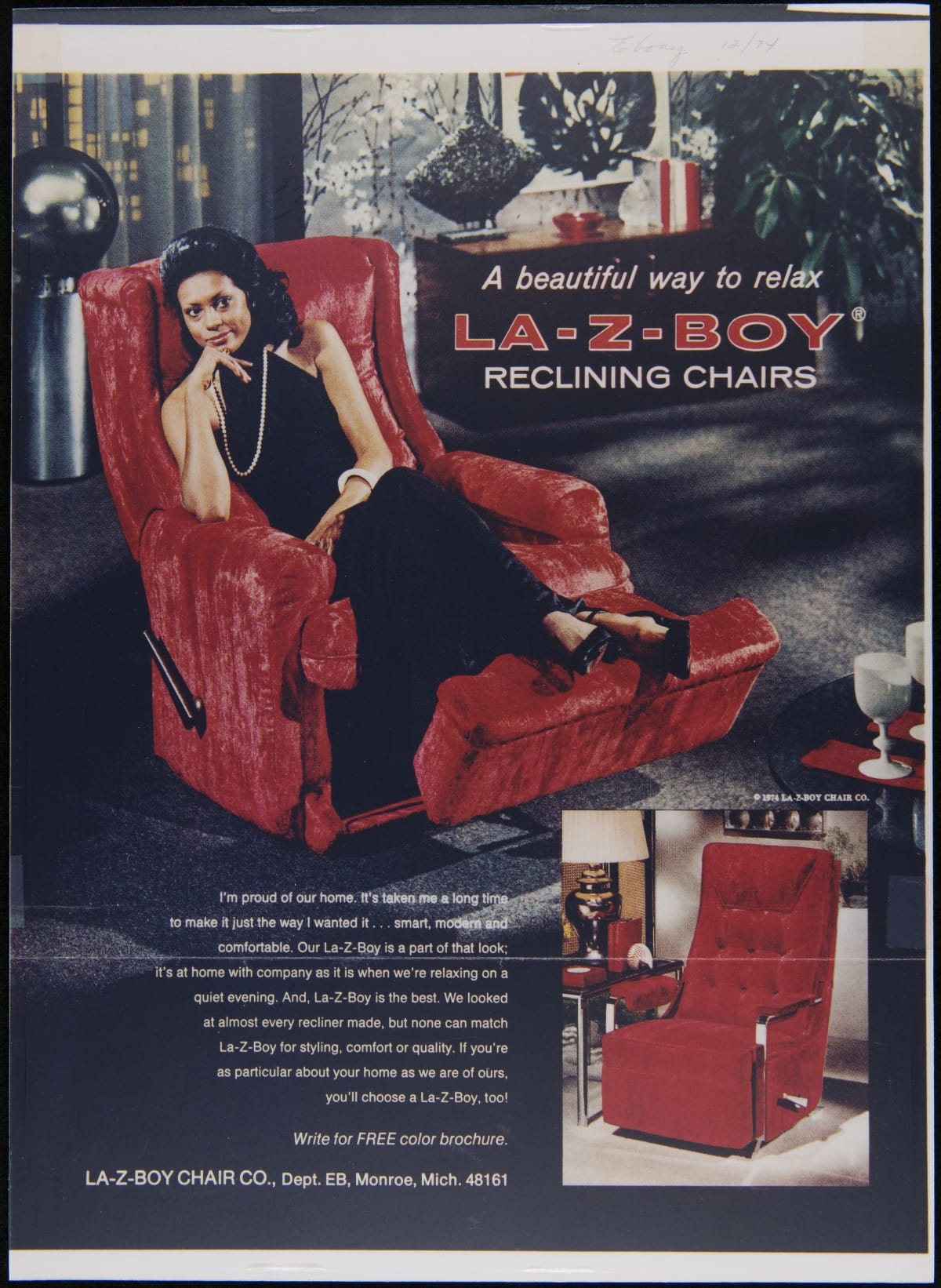
- La-Z-Boy Advertisement in Ebony Magazine, "A Beautiful Way to Relax," December 1974 - La-Z-Boy advertised in a variety of publications aimed at many demographics. This advertisement from the mid-1970s was aimed at an upscale African-American audience. The ad copy discussed the pride of home and stressed La-Z-Boy's unmatched styling, comfort, and quality.
- December 01, 1974
- Collections - Artifact
La-Z-Boy Advertisement in Ebony Magazine, "A Beautiful Way to Relax," December 1974
La-Z-Boy advertised in a variety of publications aimed at many demographics. This advertisement from the mid-1970s was aimed at an upscale African-American audience. The ad copy discussed the pride of home and stressed La-Z-Boy's unmatched styling, comfort, and quality.
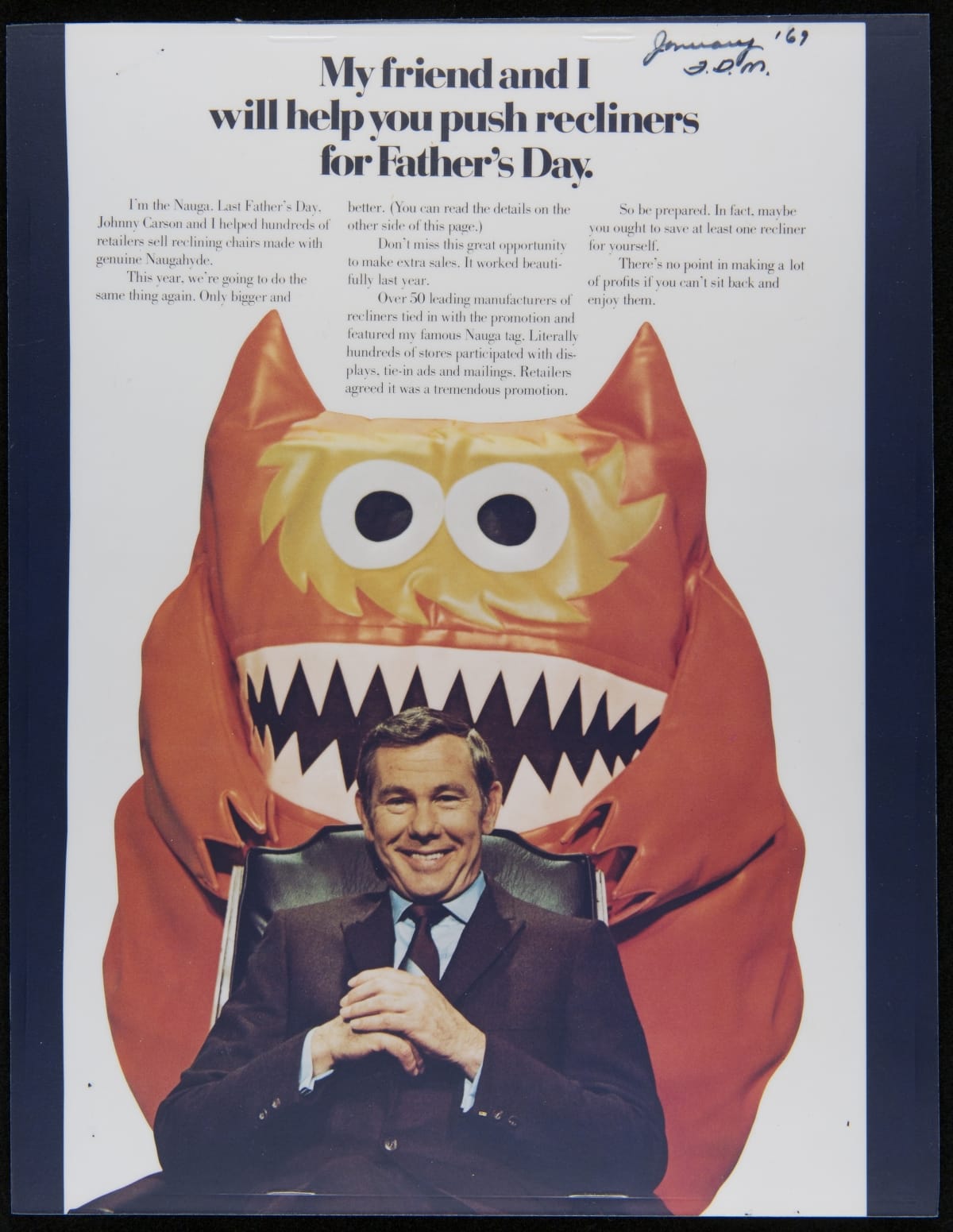
- La-Z-Boy Advertisement Featuring Johnny Carson, January 1969 - Naugahyde, a vinyl-coated fabric manufactured by Uniroyal Engineered Products, is a popular furniture upholstery material. The product's success inspired imitators, so Uniroyal hired ad-man George Lois to craft an advertising campaign that would differentiate their product. The Nauga, a fictional creature that painlessly shed its leather-like hide, was born. The Nauga featured in humorous advertisements and was even made into a promotional toy.
- January 01, 1969
- Collections - Artifact
La-Z-Boy Advertisement Featuring Johnny Carson, January 1969
Naugahyde, a vinyl-coated fabric manufactured by Uniroyal Engineered Products, is a popular furniture upholstery material. The product's success inspired imitators, so Uniroyal hired ad-man George Lois to craft an advertising campaign that would differentiate their product. The Nauga, a fictional creature that painlessly shed its leather-like hide, was born. The Nauga featured in humorous advertisements and was even made into a promotional toy.
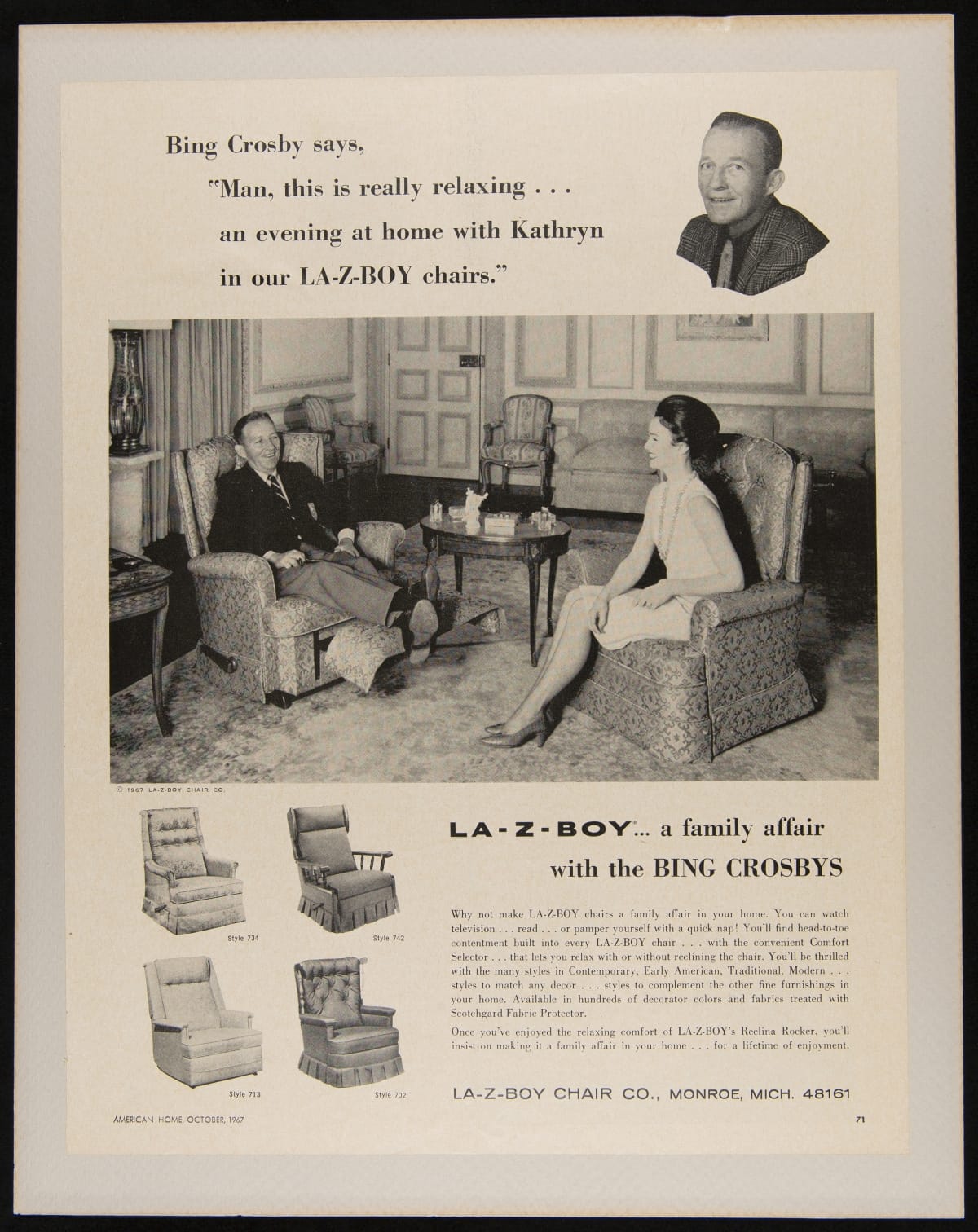
- La-Z-Boy Advertisement in American Home Magazine, "A Family Affair with the Bing Crosbys," October 1967 - In 1927, cousins Edward Knabusch and Edwin Shoemaker, established what would later become La-Z-Boy, Inc. in Monroe, Michigan. They were a perfect pair: Shoemaker was fascinated with technology and Knabusch was a master marketer. Celebrity endorsements, beginning with Bing and Kathryn Crosby in the 1960s, would become an enduring La-Z-Boy advertising strategy.
- October 01, 1967
- Collections - Artifact
La-Z-Boy Advertisement in American Home Magazine, "A Family Affair with the Bing Crosbys," October 1967
In 1927, cousins Edward Knabusch and Edwin Shoemaker, established what would later become La-Z-Boy, Inc. in Monroe, Michigan. They were a perfect pair: Shoemaker was fascinated with technology and Knabusch was a master marketer. Celebrity endorsements, beginning with Bing and Kathryn Crosby in the 1960s, would become an enduring La-Z-Boy advertising strategy.
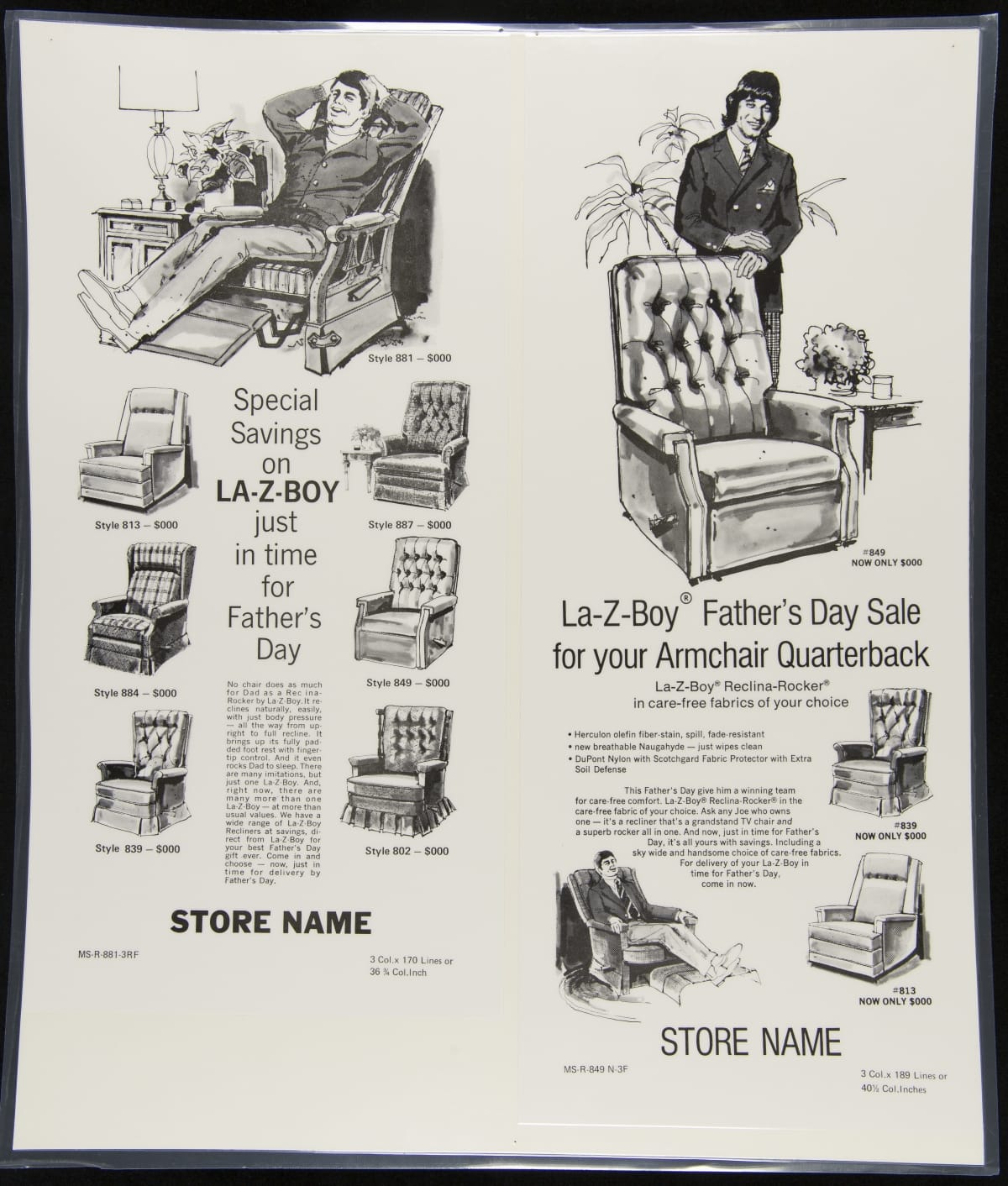
- Advertising Poster Featuring Joe Namath, "La-Z-Boy Father's Day Sale for Your Armchair Quaterback," 1975 - In 1927, cousins Edward Knabusch and Edwin Shoemaker, established what would later become La-Z-Boy, Inc. in Monroe, Michigan. They were a perfect pair: Shoemaker was fascinated with technology and Knabusch was a master marketer. Celebrity endorsements began with Bing and Kathryn Crosby in the 1960s. By the 1970s, La-Z-Boy employed multiple celebrities, including Joe Namath -- whose endorsement helped popularize the phrase "armchair quarterback."
- 1975
- Collections - Artifact
Advertising Poster Featuring Joe Namath, "La-Z-Boy Father's Day Sale for Your Armchair Quaterback," 1975
In 1927, cousins Edward Knabusch and Edwin Shoemaker, established what would later become La-Z-Boy, Inc. in Monroe, Michigan. They were a perfect pair: Shoemaker was fascinated with technology and Knabusch was a master marketer. Celebrity endorsements began with Bing and Kathryn Crosby in the 1960s. By the 1970s, La-Z-Boy employed multiple celebrities, including Joe Namath -- whose endorsement helped popularize the phrase "armchair quarterback."
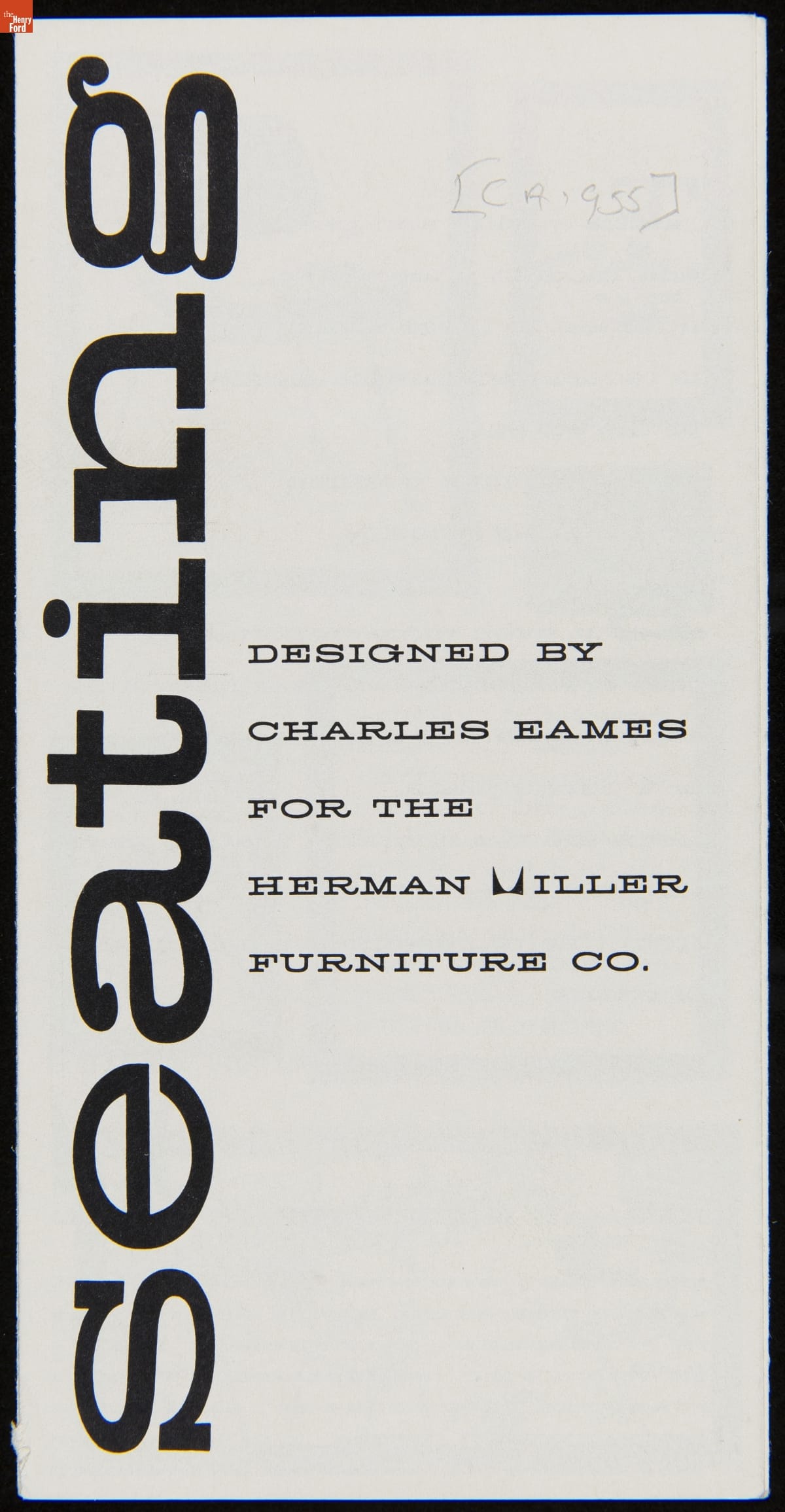
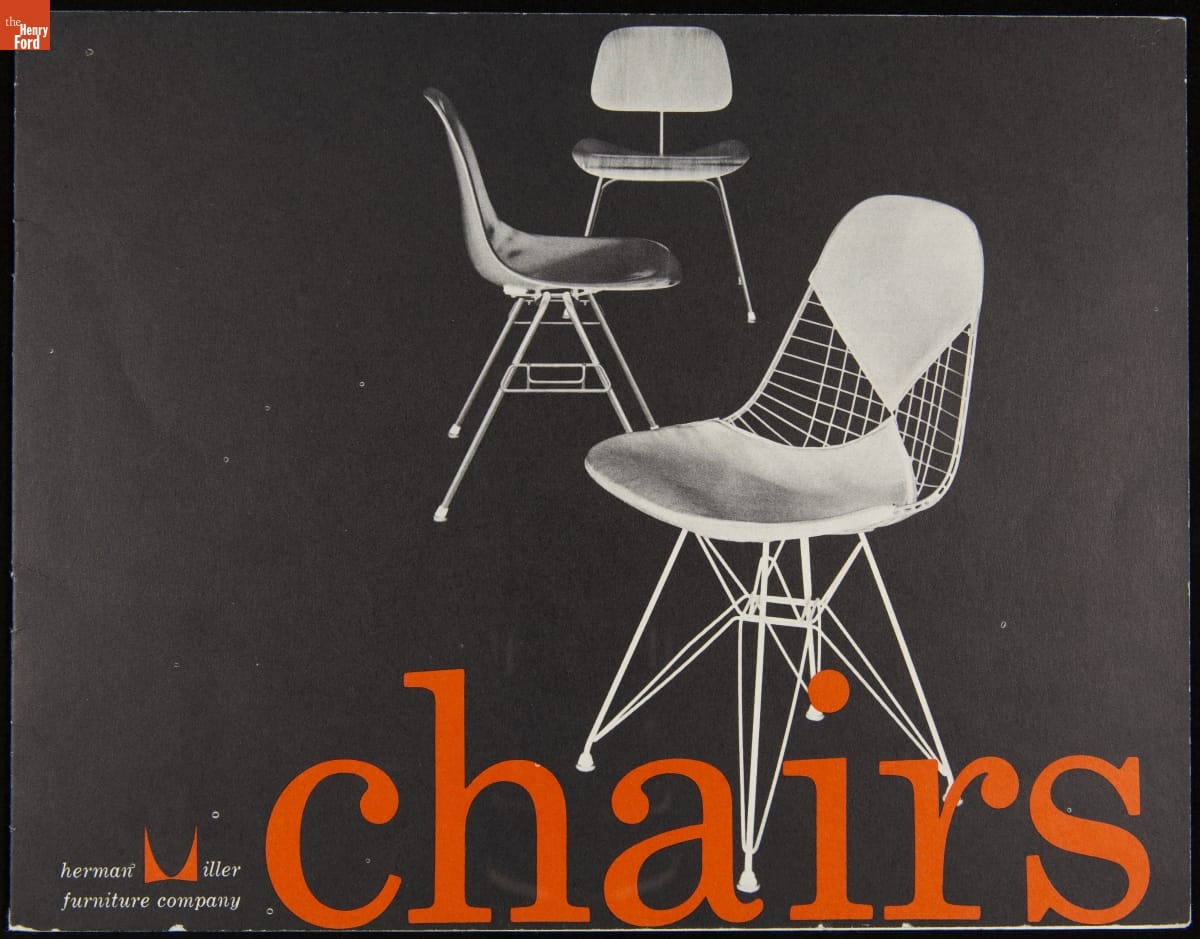
- Seating Designed by Charles Eames for the Herman Miller Furniture Company, 1955 -
- 1955
- Collections - Artifact
Seating Designed by Charles Eames for the Herman Miller Furniture Company, 1955
- Pringle Furniture Company, Detroit, Michigan -
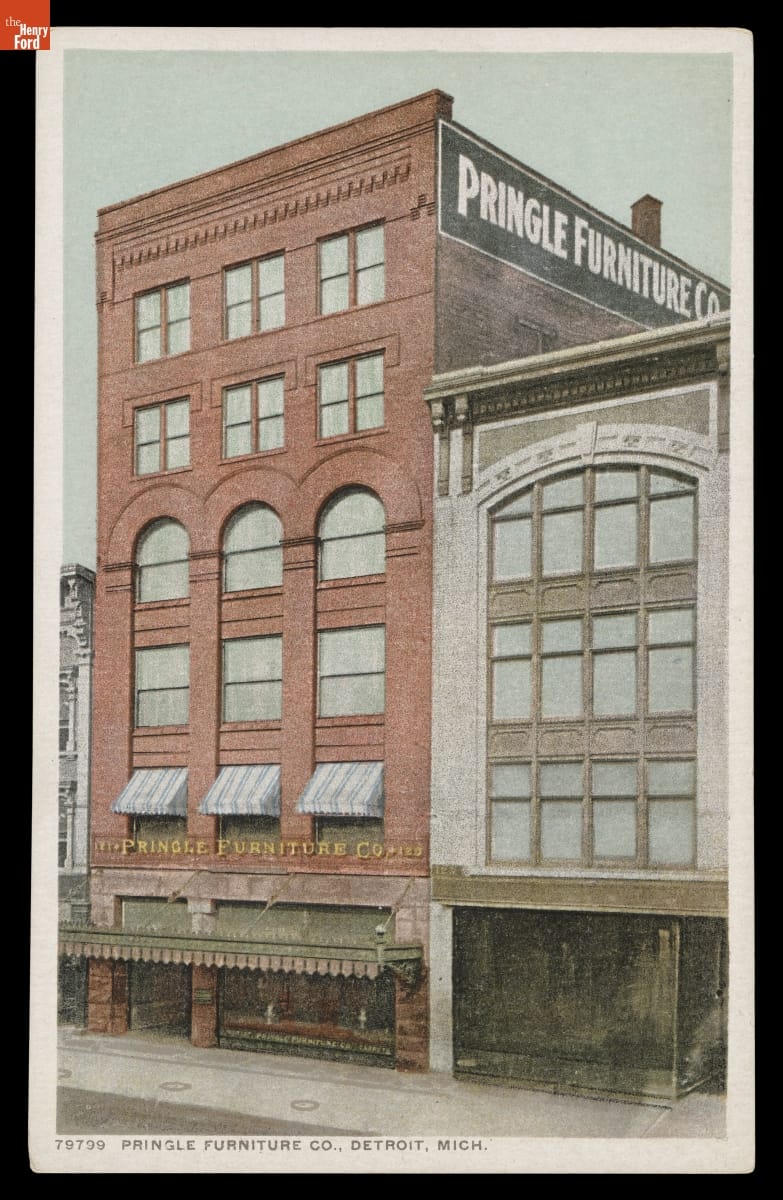
- 1910-1920
- Collections - Artifact
Pringle Furniture Company, Detroit, Michigan
- Chairs Designed by Charles Eames for Herman Miller, circa 1955 -
- 1955
- Collections - Artifact
Chairs Designed by Charles Eames for Herman Miller, circa 1955