
Search
- Ingersoll-Rand's Diesel-Electric Locomotive #90, Phillipsburg, New Jersey, March 1970 - Ingersoll-Rand, in collaboration with General Electric and American Locomotive Company, built diesel-electric locomotive #90 in 1926. Ingersoll-Rand used the locomotive in the railyard at its Phillipsburg, New Jersey, plant for some 40 years. Diesel-electric power proved more efficient and cost-effective than steam. Donated to The Henry Ford in 1970, the locomotive received a cosmetic restoration in 1983.
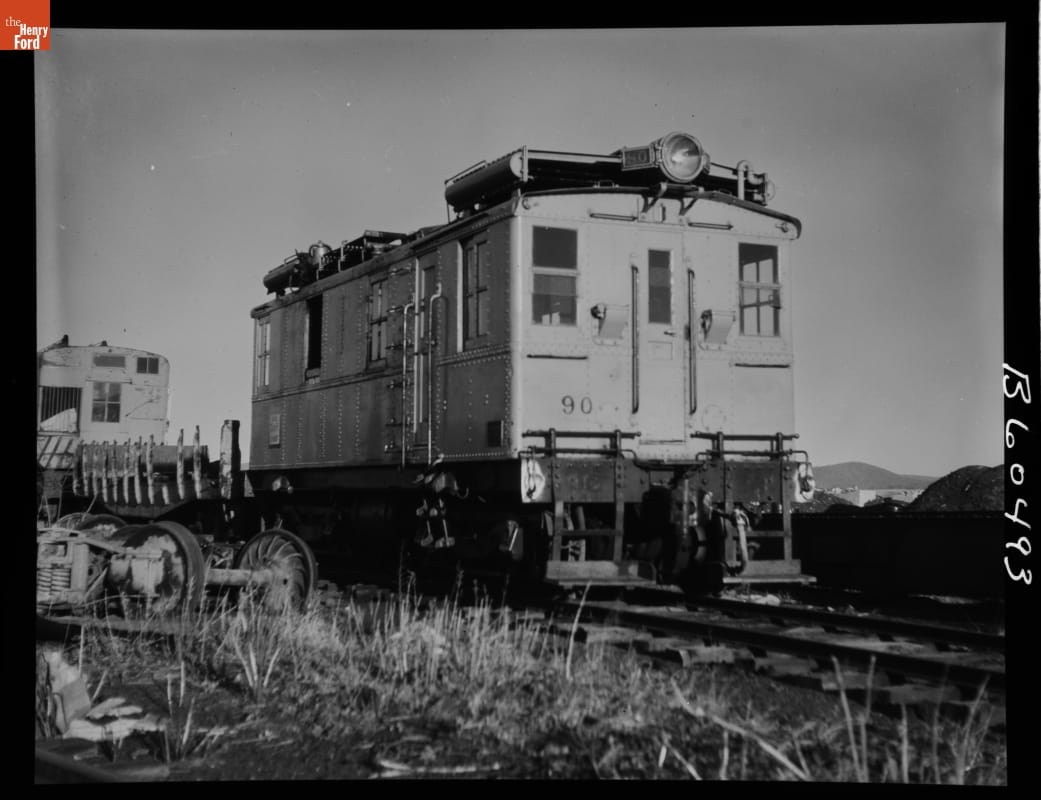
- March 01, 1970
- Collections - Artifact
Ingersoll-Rand's Diesel-Electric Locomotive #90, Phillipsburg, New Jersey, March 1970
Ingersoll-Rand, in collaboration with General Electric and American Locomotive Company, built diesel-electric locomotive #90 in 1926. Ingersoll-Rand used the locomotive in the railyard at its Phillipsburg, New Jersey, plant for some 40 years. Diesel-electric power proved more efficient and cost-effective than steam. Donated to The Henry Ford in 1970, the locomotive received a cosmetic restoration in 1983.
- M. William Grant and Randy Mason with Restored Ingersoll-Rand Diesel-Electric Locomotive No. 90 in Henry Ford Museum, January 1985 - Ingersoll-Rand, in collaboration with General Electric and American Locomotive Company, built diesel-electric locomotive #90 in 1926. Ingersoll-Rand used the locomotive in the railyard at its Phillipsburg, New Jersey, plant for some 40 years. Diesel-electric power proved more efficient and cost-effective than steam. Donated to The Henry Ford in 1970, the locomotive received a cosmetic restoration in 1983.
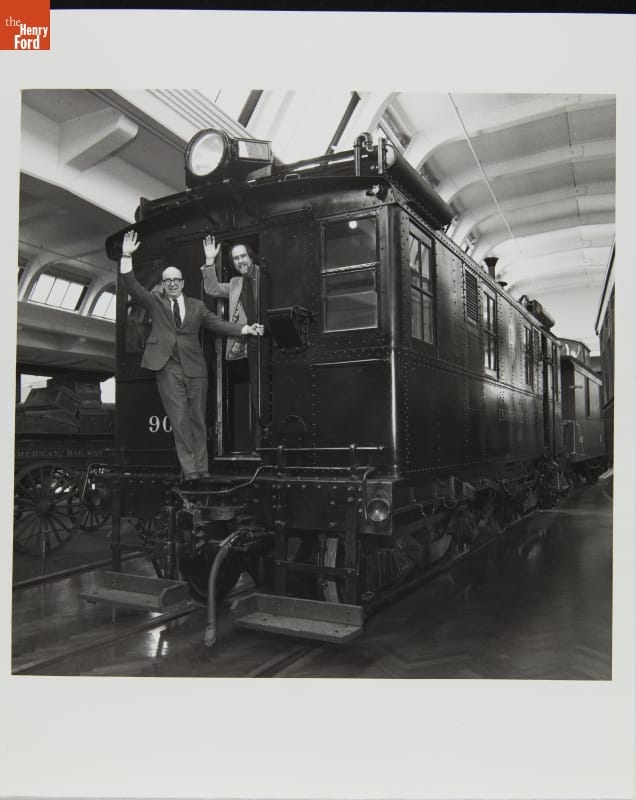
- January 01, 1985
- Collections - Artifact
M. William Grant and Randy Mason with Restored Ingersoll-Rand Diesel-Electric Locomotive No. 90 in Henry Ford Museum, January 1985
Ingersoll-Rand, in collaboration with General Electric and American Locomotive Company, built diesel-electric locomotive #90 in 1926. Ingersoll-Rand used the locomotive in the railyard at its Phillipsburg, New Jersey, plant for some 40 years. Diesel-electric power proved more efficient and cost-effective than steam. Donated to The Henry Ford in 1970, the locomotive received a cosmetic restoration in 1983.
- Ingersoll-Rand's Diesel-Electric Locomotive #90, Phillipsburg, New Jersey, March 1970 - Ingersoll-Rand, in collaboration with General Electric and American Locomotive Company, built diesel-electric locomotive #90 in 1926. Ingersoll-Rand used the locomotive in the railyard at its Phillipsburg, New Jersey, plant for some 40 years. Diesel-electric power proved more efficient and cost-effective than steam. Donated to The Henry Ford in 1970, the locomotive received a cosmetic restoration in 1983.
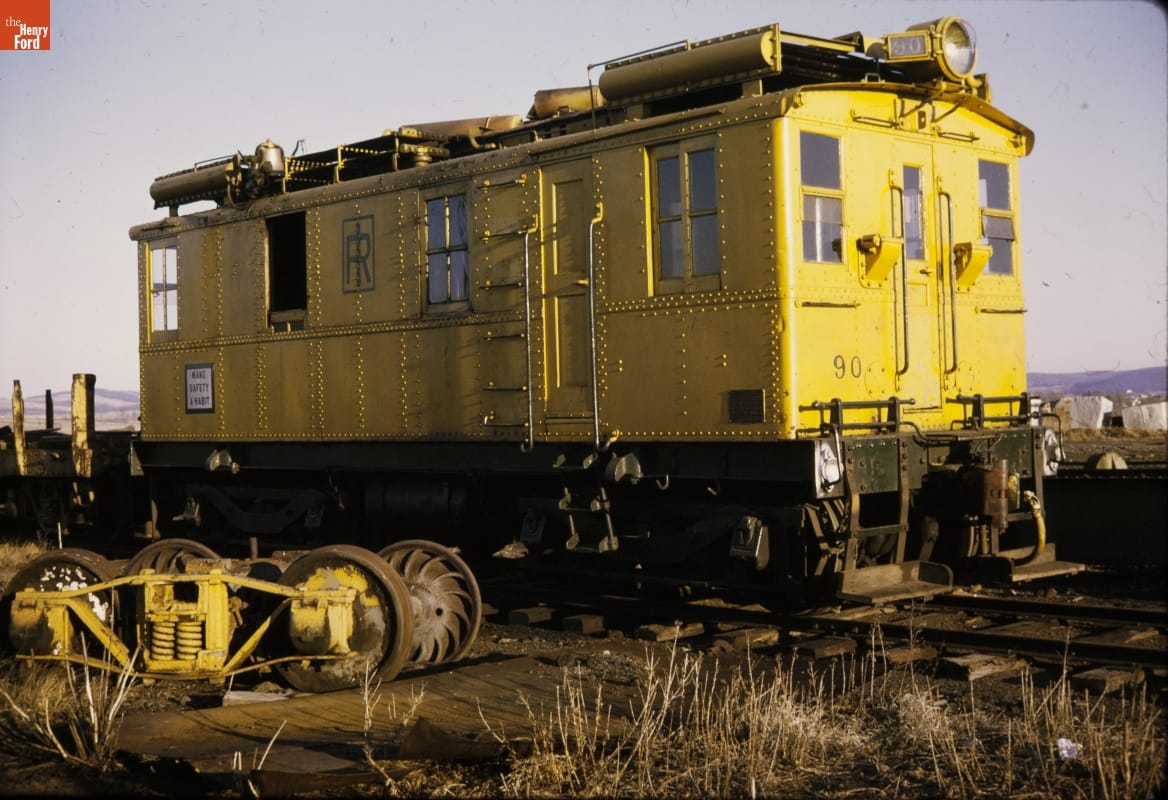
- March 01, 1970
- Collections - Artifact
Ingersoll-Rand's Diesel-Electric Locomotive #90, Phillipsburg, New Jersey, March 1970
Ingersoll-Rand, in collaboration with General Electric and American Locomotive Company, built diesel-electric locomotive #90 in 1926. Ingersoll-Rand used the locomotive in the railyard at its Phillipsburg, New Jersey, plant for some 40 years. Diesel-electric power proved more efficient and cost-effective than steam. Donated to The Henry Ford in 1970, the locomotive received a cosmetic restoration in 1983.
- Ingersoll-Rand's Diesel-Electric Locomotive #90, Phillipsburg, New Jersey, March 1970 - Ingersoll-Rand, in collaboration with General Electric and American Locomotive Company, built diesel-electric locomotive #90 in 1926. Ingersoll-Rand used the locomotive in the railyard at its Phillipsburg, New Jersey, plant for some 40 years. Diesel-electric power proved more efficient and cost-effective than steam. Donated to The Henry Ford in 1970, the locomotive received a cosmetic restoration in 1983.
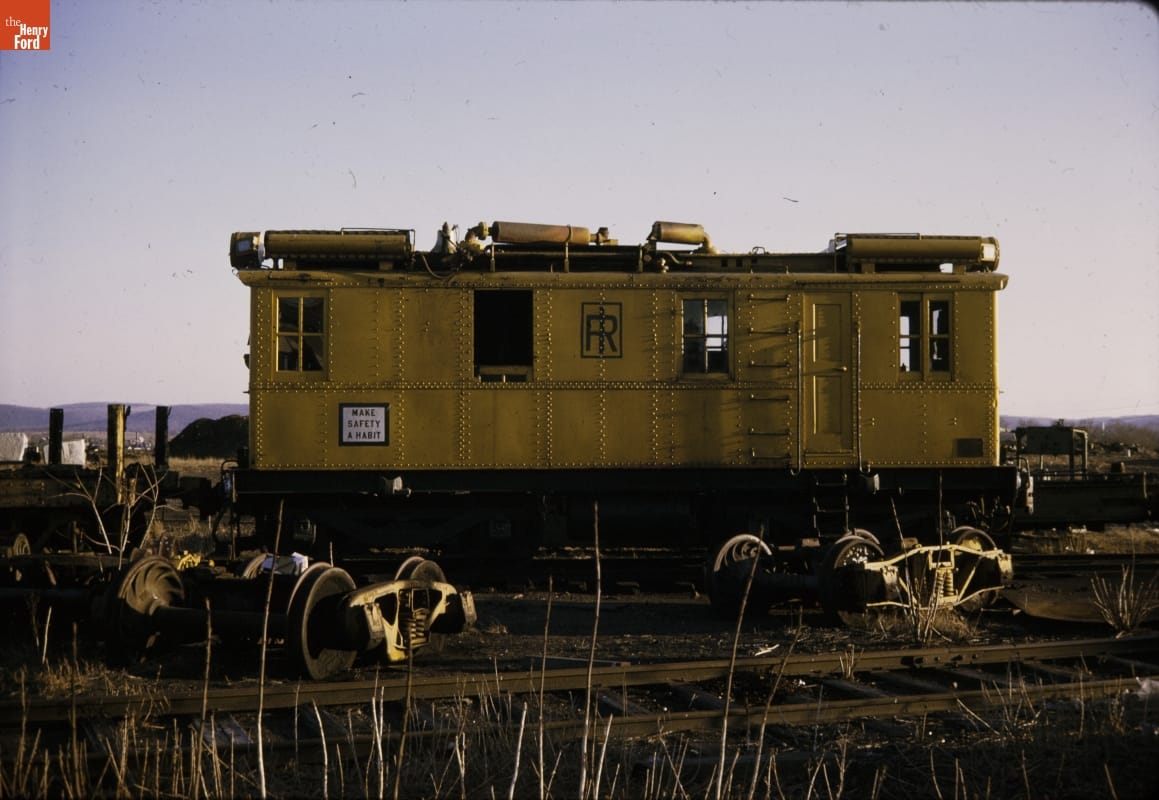
- March 01, 1970
- Collections - Artifact
Ingersoll-Rand's Diesel-Electric Locomotive #90, Phillipsburg, New Jersey, March 1970
Ingersoll-Rand, in collaboration with General Electric and American Locomotive Company, built diesel-electric locomotive #90 in 1926. Ingersoll-Rand used the locomotive in the railyard at its Phillipsburg, New Jersey, plant for some 40 years. Diesel-electric power proved more efficient and cost-effective than steam. Donated to The Henry Ford in 1970, the locomotive received a cosmetic restoration in 1983.
- Ingersoll-Rand's Diesel-Electric Locomotive #90, Phillipsburg, New Jersey, March 1970 - Ingersoll-Rand, in collaboration with General Electric and American Locomotive Company, built diesel-electric locomotive #90 in 1926. Ingersoll-Rand used the locomotive in the railyard at its Phillipsburg, New Jersey, plant for some 40 years. Diesel-electric power proved more efficient and cost-effective than steam. Donated to The Henry Ford in 1970, the locomotive received a cosmetic restoration in 1983.
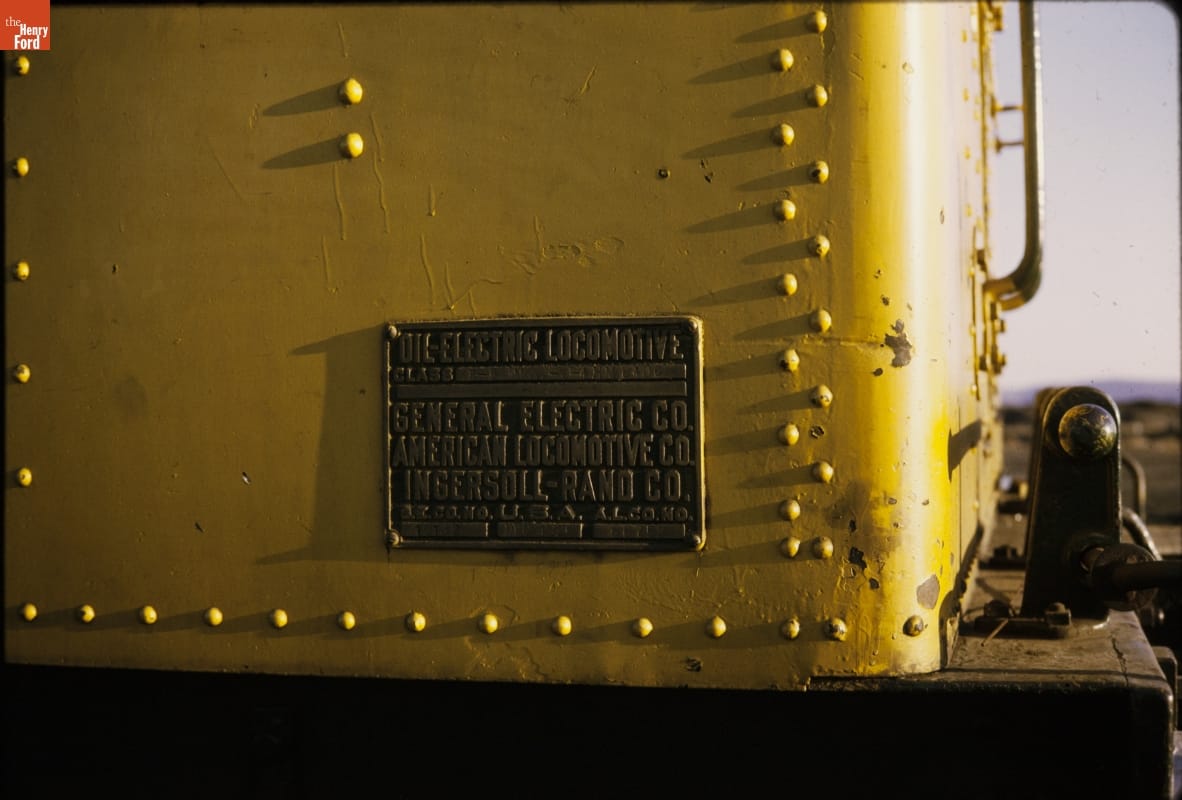
- March 01, 1970
- Collections - Artifact
Ingersoll-Rand's Diesel-Electric Locomotive #90, Phillipsburg, New Jersey, March 1970
Ingersoll-Rand, in collaboration with General Electric and American Locomotive Company, built diesel-electric locomotive #90 in 1926. Ingersoll-Rand used the locomotive in the railyard at its Phillipsburg, New Jersey, plant for some 40 years. Diesel-electric power proved more efficient and cost-effective than steam. Donated to The Henry Ford in 1970, the locomotive received a cosmetic restoration in 1983.
- The Delaware, Lackawanna & Western's Number 3001 Diesel-Electric Locomotive, probably 1926 - Diesel-electric locomotives, introduced on American railroads in the 1920s, offered several advantages over their steam-powered counterparts. They used less fuel, required less maintenance, and could be operated by smaller crews. Many early diesel-electrics proved themselves in yard service, like this unit switching cars at a marine terminal on the Delaware, Lackawanna & Western Railroad.
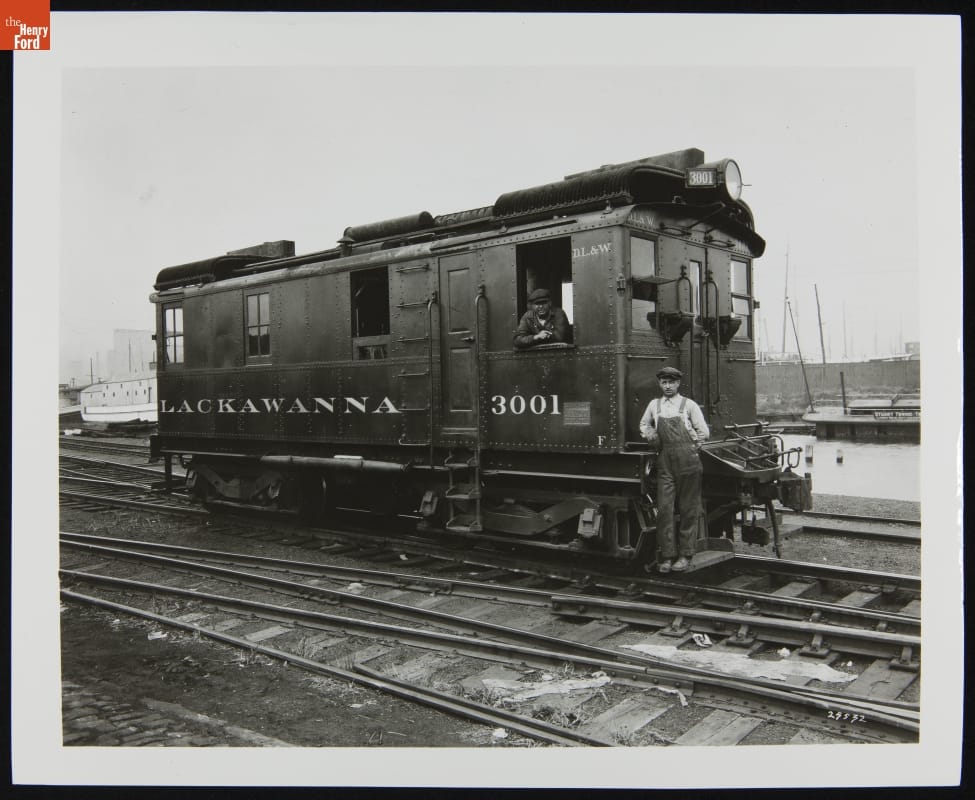
- 1926
- Collections - Artifact
The Delaware, Lackawanna & Western's Number 3001 Diesel-Electric Locomotive, probably 1926
Diesel-electric locomotives, introduced on American railroads in the 1920s, offered several advantages over their steam-powered counterparts. They used less fuel, required less maintenance, and could be operated by smaller crews. Many early diesel-electrics proved themselves in yard service, like this unit switching cars at a marine terminal on the Delaware, Lackawanna & Western Railroad.
- Ingersoll-Rand's Number 90 Diesel-Electric Locomotive, Phillipsburg, New Jersey, probably 1926 - Ingersoll-Rand, in collaboration with General Electric and American Locomotive Company, built diesel-electric locomotive #90 in 1926. Ingersoll-Rand used the locomotive in the railyard at its Phillipsburg, New Jersey, plant for some 40 years. Diesel-electric power proved more efficient and cost-effective than steam. Donated to The Henry Ford in 1970, the locomotive received a cosmetic restoration in 1983.
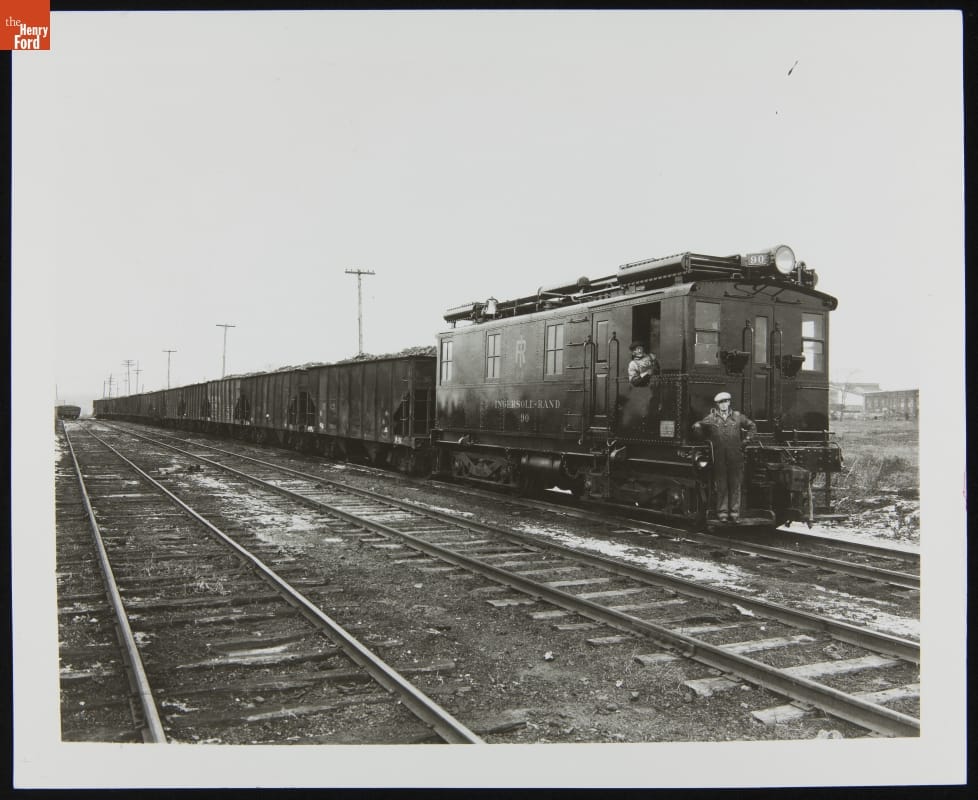
- 1926
- Collections - Artifact
Ingersoll-Rand's Number 90 Diesel-Electric Locomotive, Phillipsburg, New Jersey, probably 1926
Ingersoll-Rand, in collaboration with General Electric and American Locomotive Company, built diesel-electric locomotive #90 in 1926. Ingersoll-Rand used the locomotive in the railyard at its Phillipsburg, New Jersey, plant for some 40 years. Diesel-electric power proved more efficient and cost-effective than steam. Donated to The Henry Ford in 1970, the locomotive received a cosmetic restoration in 1983.
- Ingersoll-Rand's Diesel-Electric Locomotive #90, Phillipsburg, New Jersey, 1926 - Ingersoll-Rand, in collaboration with General Electric and American Locomotive Company, built diesel-electric locomotive #90 in 1926. Ingersoll-Rand used the locomotive in the railyard at its Phillipsburg, New Jersey, plant for some 40 years. Diesel-electric power proved more efficient and cost-effective than steam. Donated to The Henry Ford in 1970, the locomotive received a cosmetic restoration in 1983.
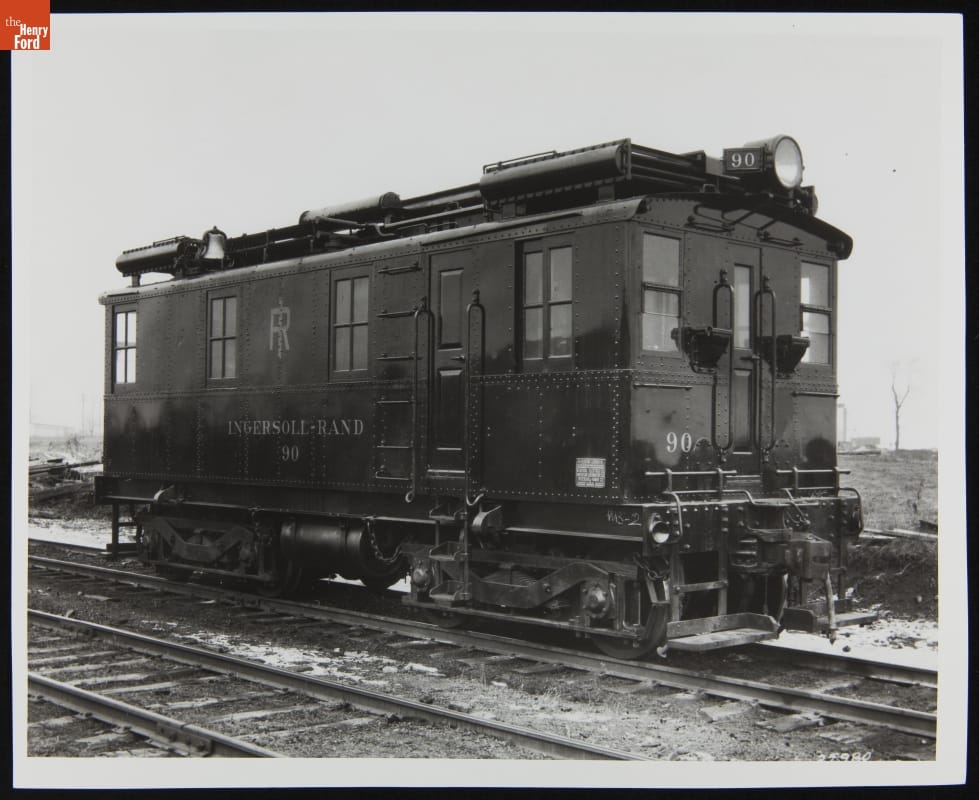
- 1926
- Collections - Artifact
Ingersoll-Rand's Diesel-Electric Locomotive #90, Phillipsburg, New Jersey, 1926
Ingersoll-Rand, in collaboration with General Electric and American Locomotive Company, built diesel-electric locomotive #90 in 1926. Ingersoll-Rand used the locomotive in the railyard at its Phillipsburg, New Jersey, plant for some 40 years. Diesel-electric power proved more efficient and cost-effective than steam. Donated to The Henry Ford in 1970, the locomotive received a cosmetic restoration in 1983.
- Ingersoll-Rand's Diesel-Electric Locomotive #90, Phillipsburg, New Jersey, March 1970 - Ingersoll-Rand, in collaboration with General Electric and American Locomotive Company, built diesel-electric locomotive #90 in 1926. Ingersoll-Rand used the locomotive in the railyard at its Phillipsburg, New Jersey, plant for some 40 years. Diesel-electric power proved more efficient and cost-effective than steam. Donated to The Henry Ford in 1970, the locomotive received a cosmetic restoration in 1983.
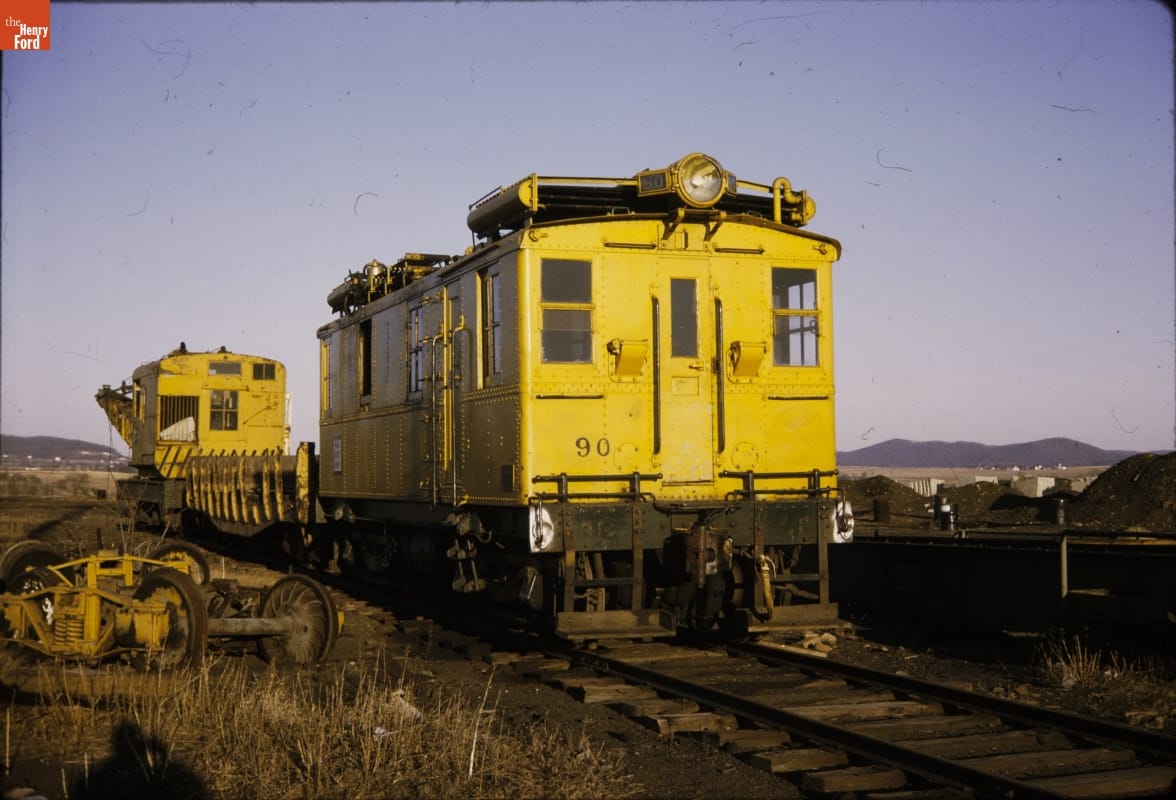
- March 01, 1970
- Collections - Artifact
Ingersoll-Rand's Diesel-Electric Locomotive #90, Phillipsburg, New Jersey, March 1970
Ingersoll-Rand, in collaboration with General Electric and American Locomotive Company, built diesel-electric locomotive #90 in 1926. Ingersoll-Rand used the locomotive in the railyard at its Phillipsburg, New Jersey, plant for some 40 years. Diesel-electric power proved more efficient and cost-effective than steam. Donated to The Henry Ford in 1970, the locomotive received a cosmetic restoration in 1983.
- Ingersoll-Rand's Diesel-Electric Locomotives, Numbers 90 and 91, Phillipsburg, New Jersey, probably 1951 - Ingersoll-Rand, in collaboration with General Electric and American Locomotive Company, built diesel-electric locomotive #90 in 1926. Ingersoll-Rand used the locomotive in the railyard at its Phillipsburg, New Jersey, plant for some 40 years. Diesel-electric power proved more efficient and cost-effective than steam. Donated to The Henry Ford in 1970, the locomotive received a cosmetic restoration in 1983.
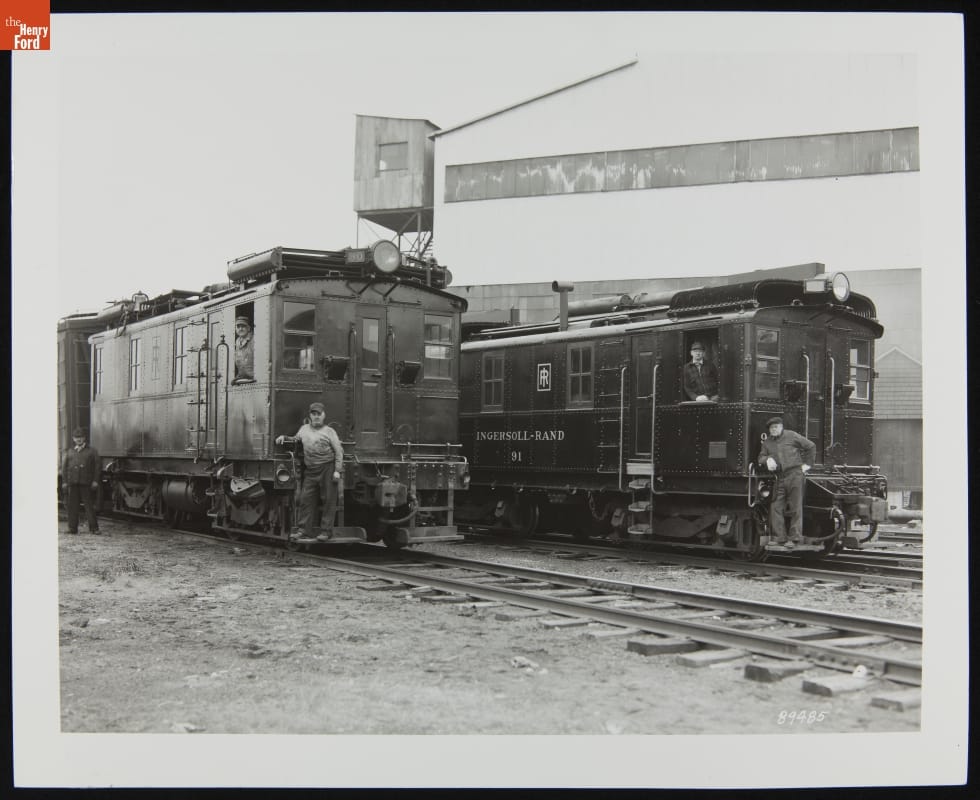
- 1951
- Collections - Artifact
Ingersoll-Rand's Diesel-Electric Locomotives, Numbers 90 and 91, Phillipsburg, New Jersey, probably 1951
Ingersoll-Rand, in collaboration with General Electric and American Locomotive Company, built diesel-electric locomotive #90 in 1926. Ingersoll-Rand used the locomotive in the railyard at its Phillipsburg, New Jersey, plant for some 40 years. Diesel-electric power proved more efficient and cost-effective than steam. Donated to The Henry Ford in 1970, the locomotive received a cosmetic restoration in 1983.