
Search
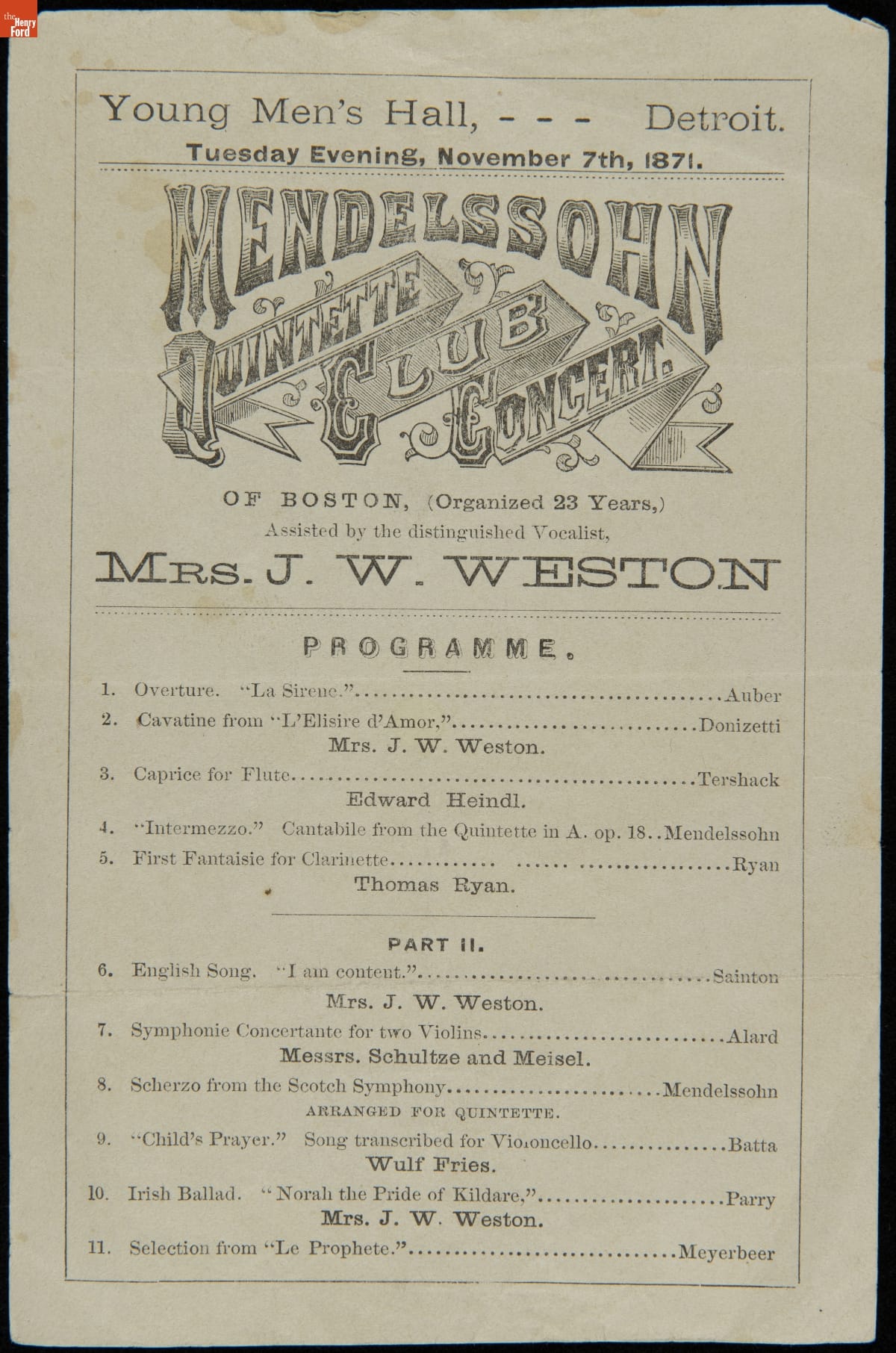
- Program, "Mendelssohn Quintette Club Concert," Young Men's Hall, Detroit, Michigan, November 7, 1871 -
- November 07, 1871
- Collections - Artifact
Program, "Mendelssohn Quintette Club Concert," Young Men's Hall, Detroit, Michigan, November 7, 1871
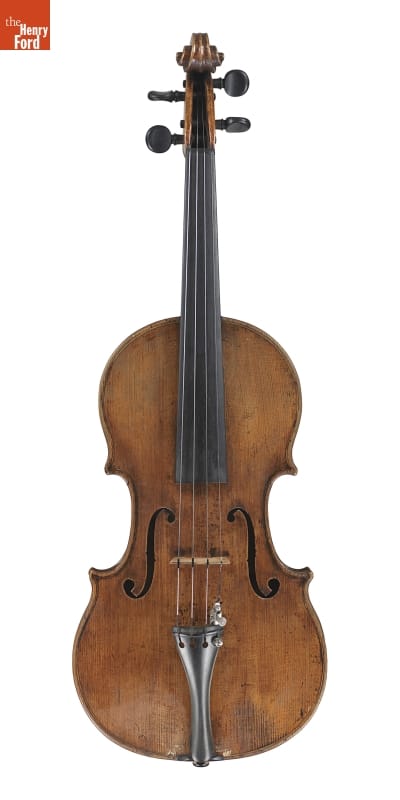
- Violin by Nicola Gagliano, 1735 - Nicola Gagliano's violins were inspired by the work of his father Alessandro Gagliano and master violinmaker Antonio Stradivari. Henry Ford purchased this Gagliano violin in the 1920s through Ole H. Bryant, a Boston violinmaker who served as principal repairer for the Boston Symphony Orchestra. This violin is said to have been once owned by a young Arthur Fielder, later conductor of the Boston Pops Orchestra.
- 1735
- Collections - Artifact
Violin by Nicola Gagliano, 1735
Nicola Gagliano's violins were inspired by the work of his father Alessandro Gagliano and master violinmaker Antonio Stradivari. Henry Ford purchased this Gagliano violin in the 1920s through Ole H. Bryant, a Boston violinmaker who served as principal repairer for the Boston Symphony Orchestra. This violin is said to have been once owned by a young Arthur Fielder, later conductor of the Boston Pops Orchestra.
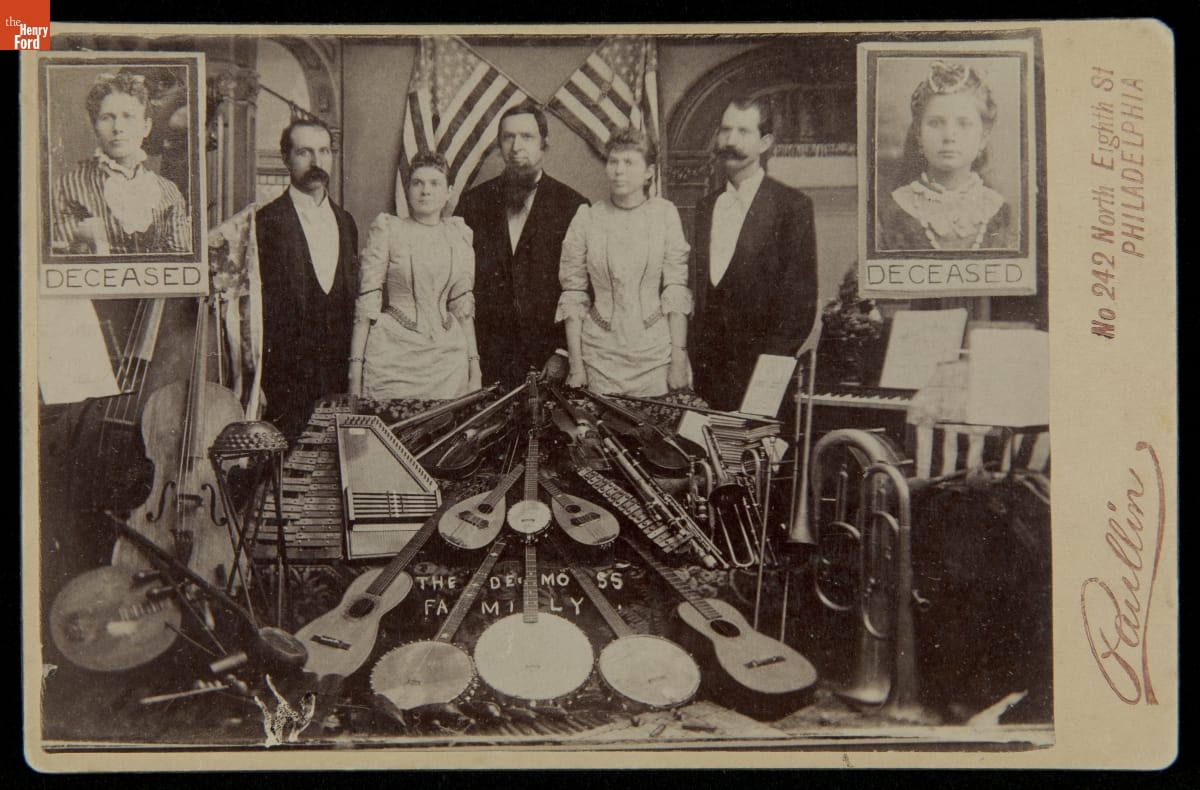
- The DeMoss Family Lyric Bards, circa 1890 -
- circa 1890
- Collections - Artifact
The DeMoss Family Lyric Bards, circa 1890
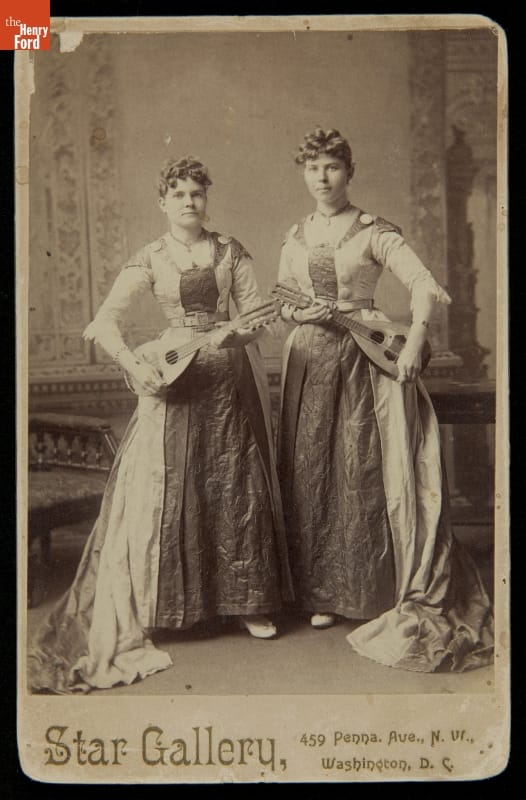
- Two Members of the DeMoss Family Lyric Bards, circa 1890 -
- circa 1890
- Collections - Artifact
Two Members of the DeMoss Family Lyric Bards, circa 1890
- Robert Moog's First Prototype Synthesizer in Henry Ford Museum, 1983 - This prototype synthesizer--a collaboration between engineer Robert Moog and composer Herbert Deutsch--is a musical icon. Synthesizers create unique electronically produced sounds. Moog's solid-state synthesizer was musically superior and much more portable than earlier vacuum-tube-based systems. In 1968, the album <em>Switched-On Bach</em> introduced the Moog synthesizer to a wider audience. Synthesizers quickly became a mainstay of popular music.
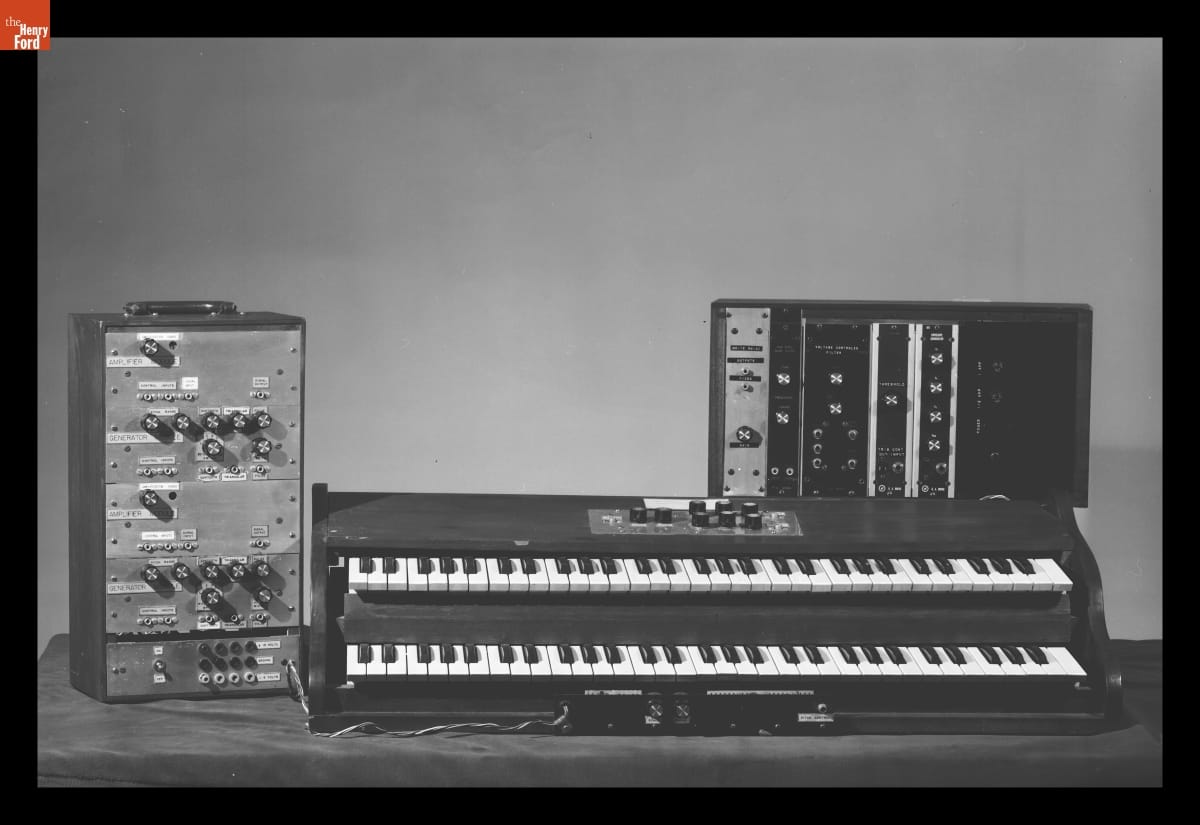
- 1983
- Collections - Artifact
Robert Moog's First Prototype Synthesizer in Henry Ford Museum, 1983
This prototype synthesizer--a collaboration between engineer Robert Moog and composer Herbert Deutsch--is a musical icon. Synthesizers create unique electronically produced sounds. Moog's solid-state synthesizer was musically superior and much more portable than earlier vacuum-tube-based systems. In 1968, the album Switched-On Bach introduced the Moog synthesizer to a wider audience. Synthesizers quickly became a mainstay of popular music.
- Player Piano, 1910-1920 - Player pianos enjoyed enormous success from the 1890s through the 1920s. During this time, over 2 1/2 million were sold to Americans eager to have piano music at home -- without having to spend many hours in practice. Coin-operated versions, like this Seeburg Company model, provided patrons with the latest music in public establishments during the early 20th century.
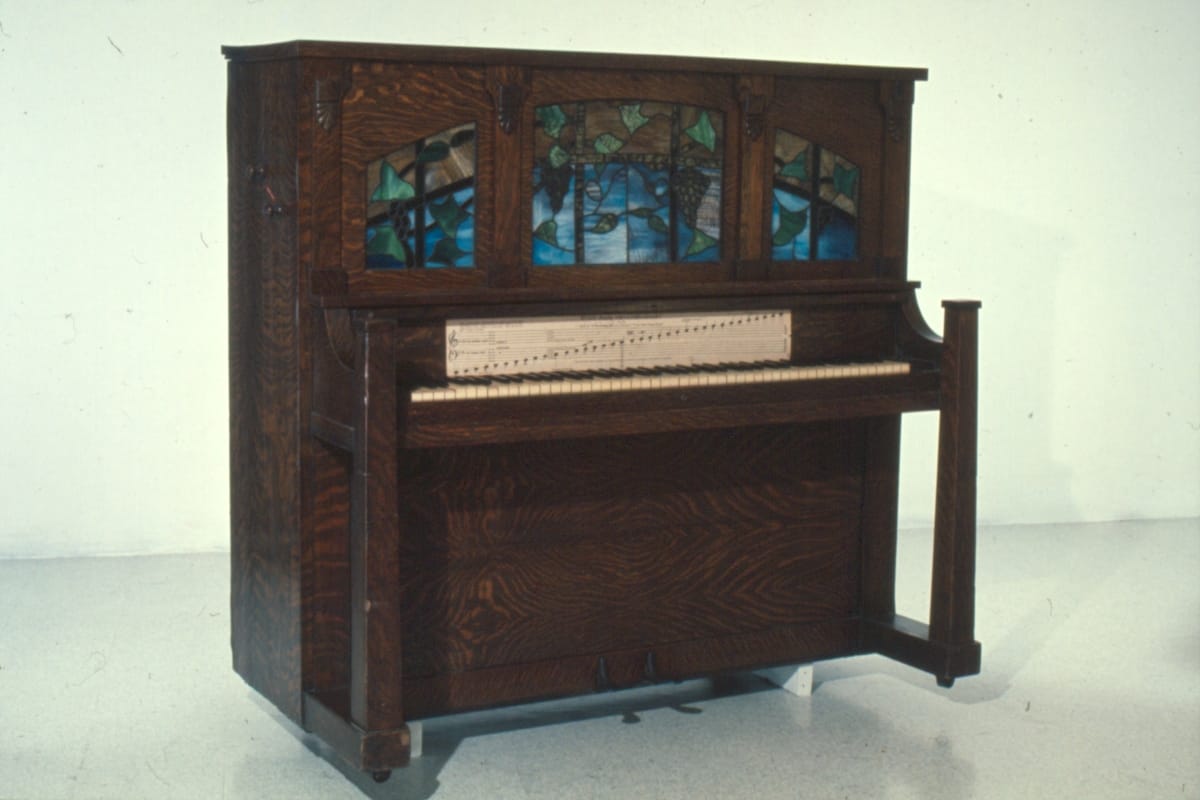
- 1910-1920
- Collections - Artifact
Player Piano, 1910-1920
Player pianos enjoyed enormous success from the 1890s through the 1920s. During this time, over 2 1/2 million were sold to Americans eager to have piano music at home -- without having to spend many hours in practice. Coin-operated versions, like this Seeburg Company model, provided patrons with the latest music in public establishments during the early 20th century.
- Confederate Bond, One Thousand Dollars, 1864 - Samson and Pae foundry and machine shop was nestled among other Richmond, Virginia, industrial facilities. During the Civil War, the firm made and finished weapons, and supplied artillery projectiles. They acquired this bond in September 1864. A few months later, Confederate troops abandoned Richmond and set fire to supply warehouses. The fire raged out of control, destroying the Samson and Pae foundry.
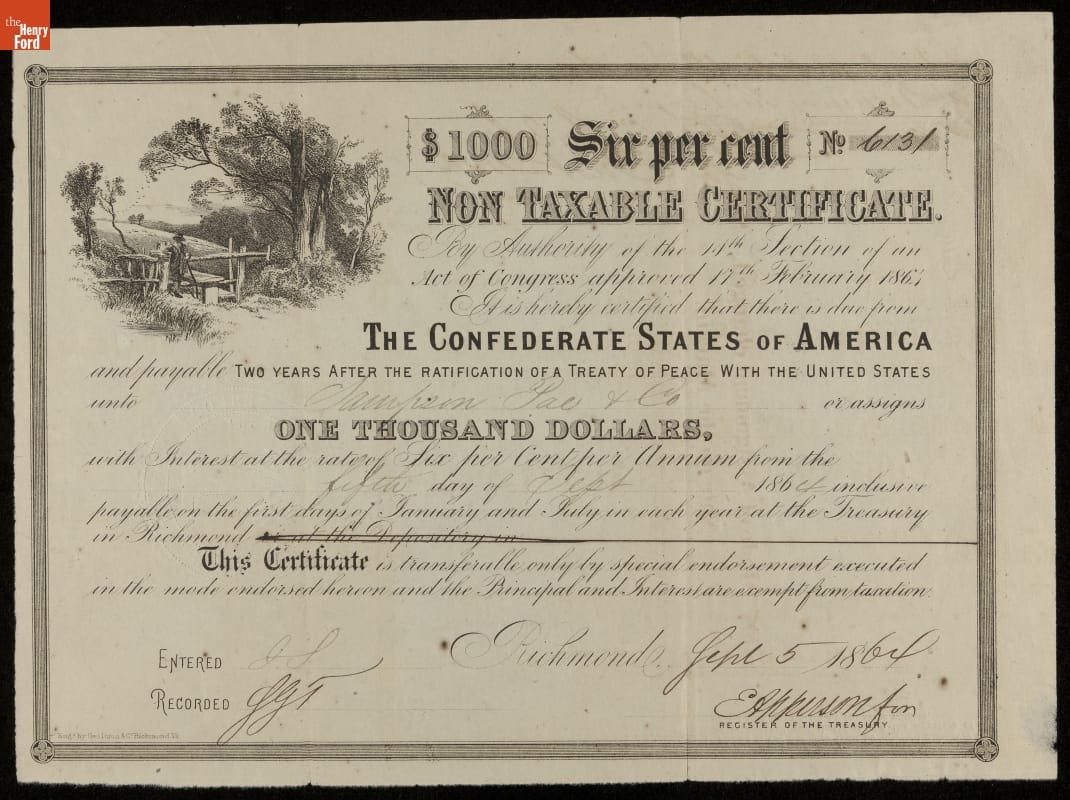
- September 05, 1864
- Collections - Artifact
Confederate Bond, One Thousand Dollars, 1864
Samson and Pae foundry and machine shop was nestled among other Richmond, Virginia, industrial facilities. During the Civil War, the firm made and finished weapons, and supplied artillery projectiles. They acquired this bond in September 1864. A few months later, Confederate troops abandoned Richmond and set fire to supply warehouses. The fire raged out of control, destroying the Samson and Pae foundry.
- Confederate Bond, Four Thousand Dollars, 1864 - In March 1865, John Clarke Sinton transferred this $4,000 bond to Jane Clarke, likely the widow of one of his relatives. Sinton had served as estate trustee; these funds were probably part of Jane's husband's estate. $4,000 may seem like a lot of money -- but in 1865 it didn't buy much. With Confederate surrender a month later, the bond became worthless.
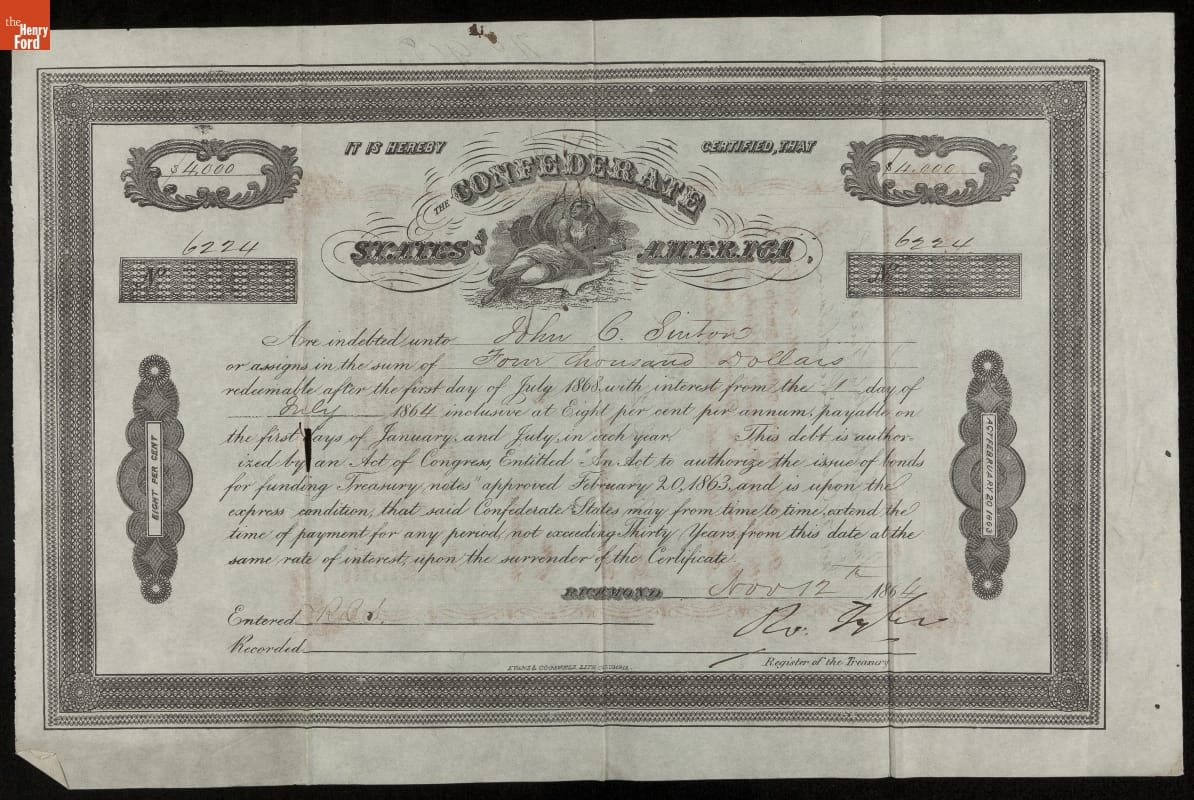
- 1864
- Collections - Artifact
Confederate Bond, Four Thousand Dollars, 1864
In March 1865, John Clarke Sinton transferred this $4,000 bond to Jane Clarke, likely the widow of one of his relatives. Sinton had served as estate trustee; these funds were probably part of Jane's husband's estate. $4,000 may seem like a lot of money -- but in 1865 it didn't buy much. With Confederate surrender a month later, the bond became worthless.
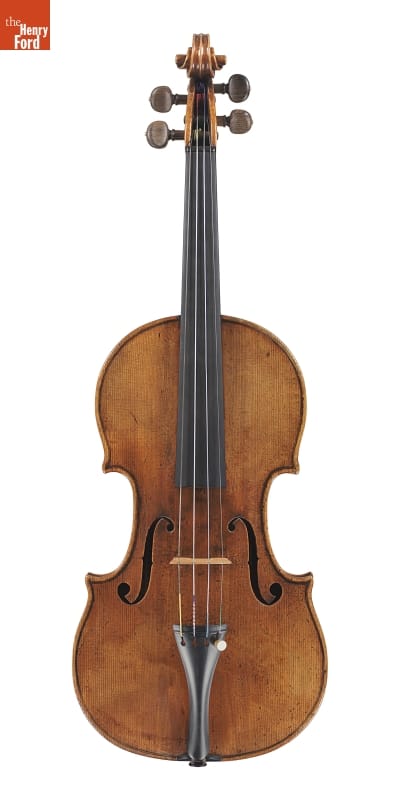
- Violin by Carlo Bergonzi, 1740 - In the 1920s, Henry Ford purchased several exquisite Italian violins, including this one by Carlo Bergonzi. Bergonzi's violins are prized for their powerful, yet sweet tone. This 1740 violin--one of the finest examples of Bergonzi's work--was owned by William Ackroyd from 1915 to about 1922. Ackroyd was the violin master at the Harrow School, a renowned school for boys located in London.
- 1740
- Collections - Artifact
Violin by Carlo Bergonzi, 1740
In the 1920s, Henry Ford purchased several exquisite Italian violins, including this one by Carlo Bergonzi. Bergonzi's violins are prized for their powerful, yet sweet tone. This 1740 violin--one of the finest examples of Bergonzi's work--was owned by William Ackroyd from 1915 to about 1922. Ackroyd was the violin master at the Harrow School, a renowned school for boys located in London.
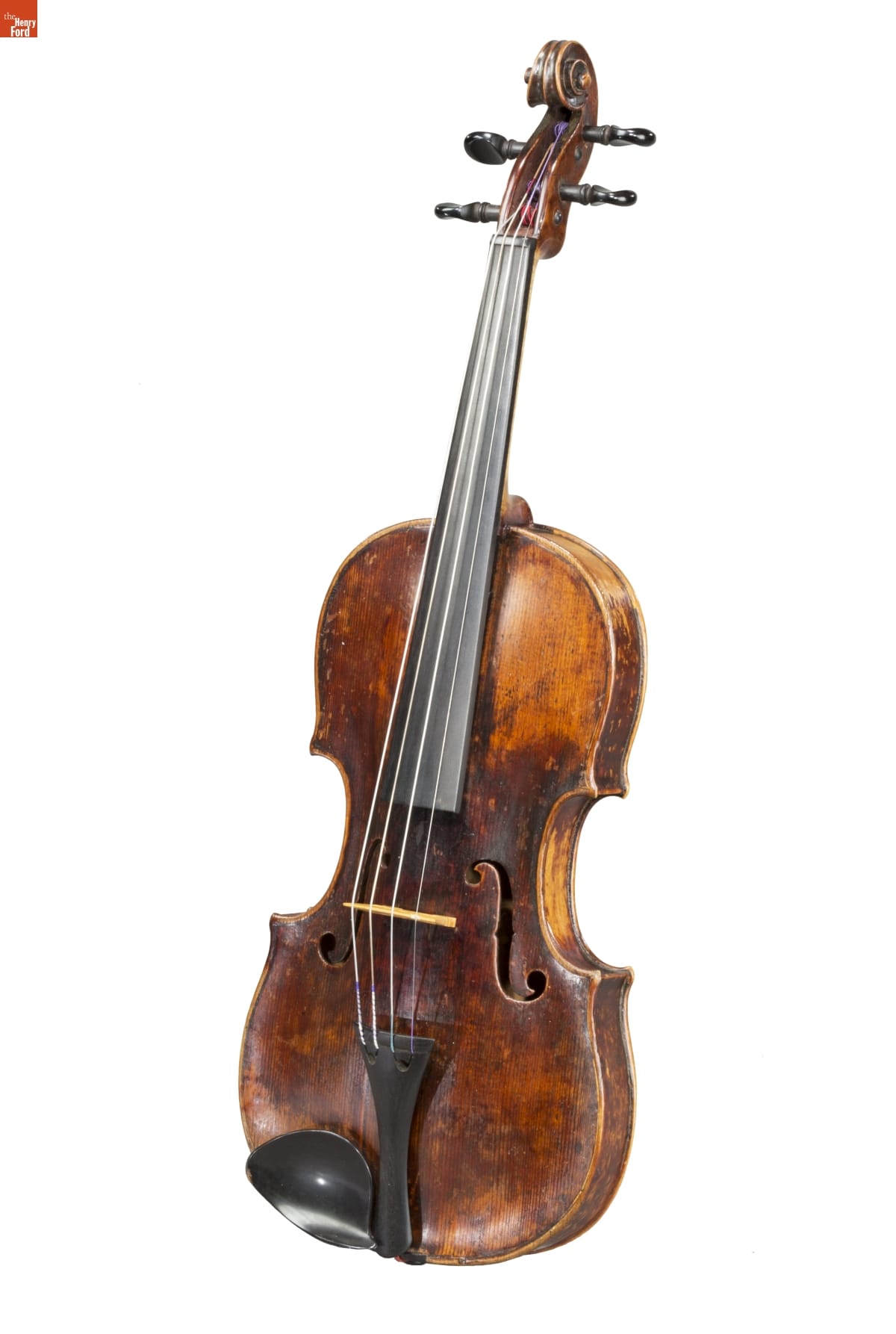
- Violin Used by Conrad Ambrose Hoffman -
- 1793
- Collections - Artifact
Violin Used by Conrad Ambrose Hoffman