
Search
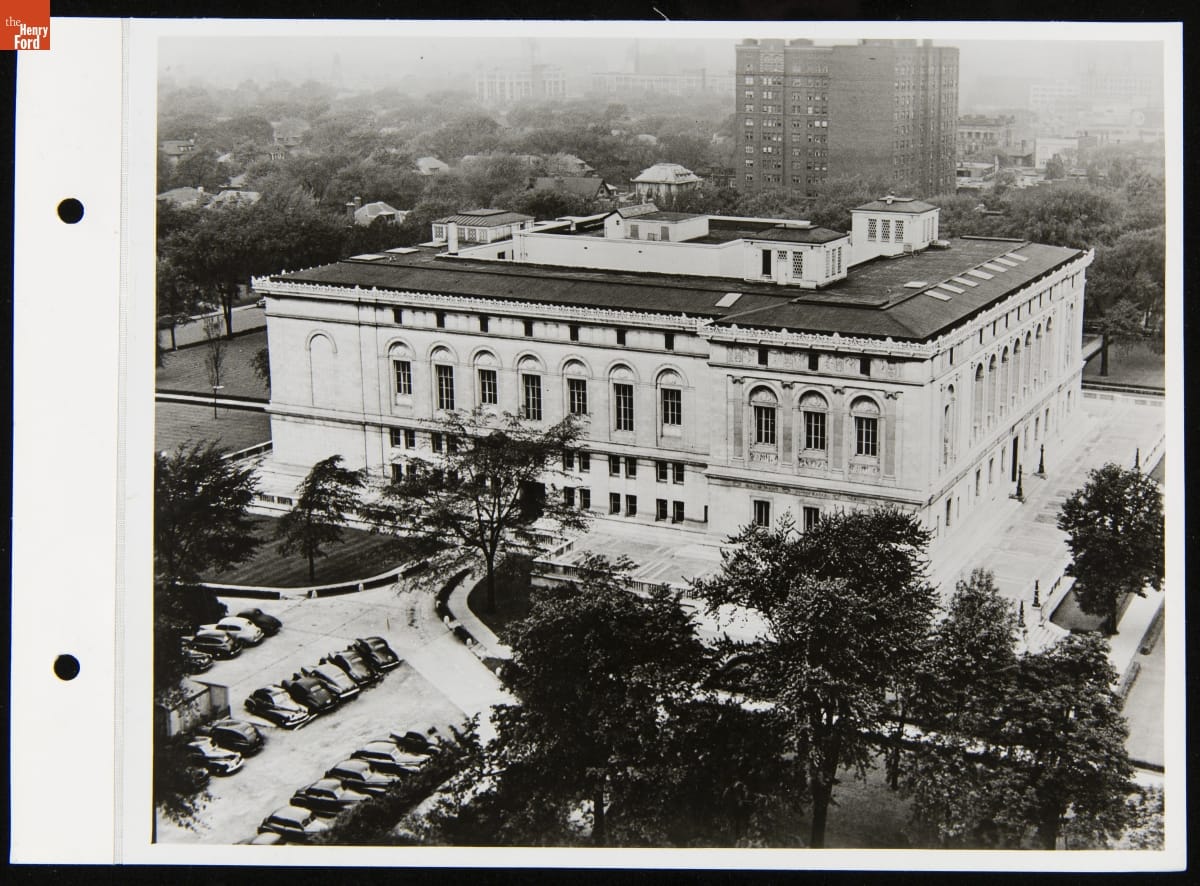
- Detroit Public Library, May 2, 1947 - Andrew Carnegie (1835-1919) amassed an immense fortune from railroads, oil, and steel. He devoted his later years to philanthropy. Between 1886 and 1919, Carnegie donated more than $40 million to build 1,679 new libraries in communities of all sizes across America. This library building, funded by a Carnegie grant and designed by New York City architect Cass Gilbert, opened in 1921 in Detroit, Michigan.
- May 02, 1947
- Collections - Artifact
Detroit Public Library, May 2, 1947
Andrew Carnegie (1835-1919) amassed an immense fortune from railroads, oil, and steel. He devoted his later years to philanthropy. Between 1886 and 1919, Carnegie donated more than $40 million to build 1,679 new libraries in communities of all sizes across America. This library building, funded by a Carnegie grant and designed by New York City architect Cass Gilbert, opened in 1921 in Detroit, Michigan.
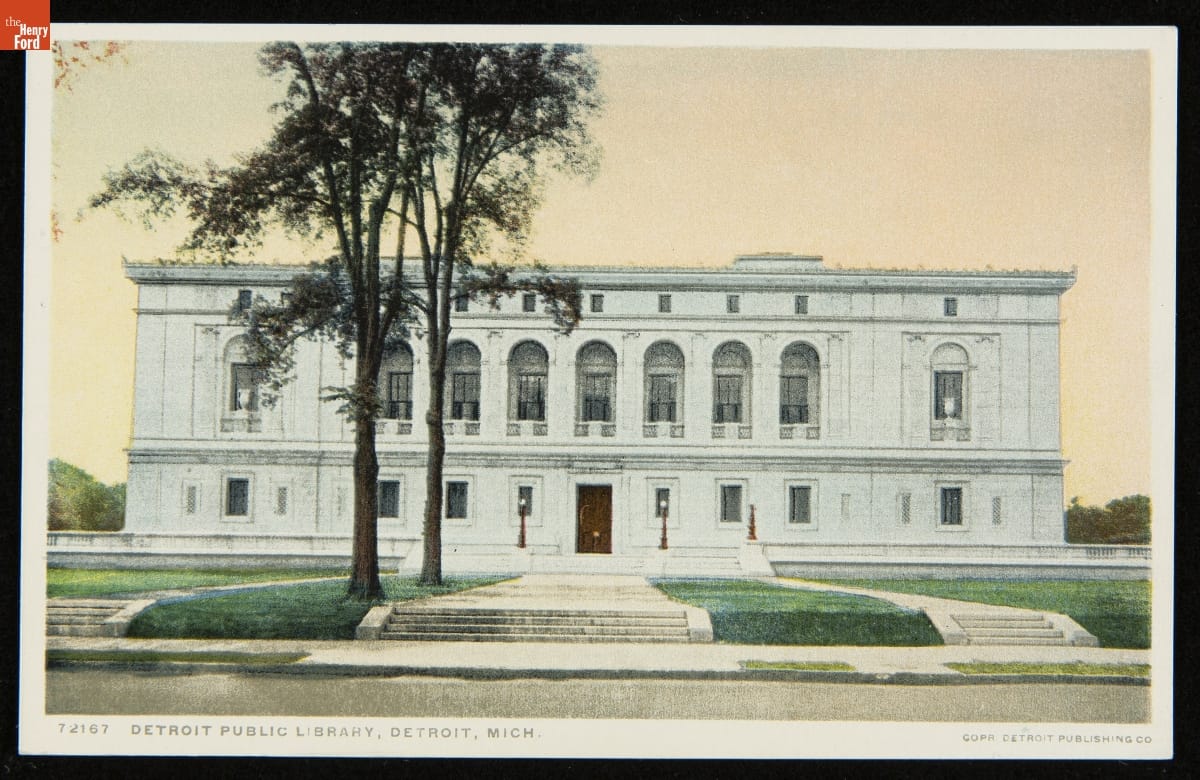
- Postcard, "Detroit Public Library, Detroit, Mich.," circa 1920 - Andrew Carnegie (1835-1919) amassed an immense fortune from railroads, oil, and steel. He devoted his later years to philanthropy. Between 1886 and 1919, Carnegie donated more than $40 million to build 1,679 new libraries in communities of all sizes across America. This library building, funded by a Carnegie grant and designed by New York City architect Cass Gilbert, opened in 1921 in Detroit, Michigan.
- circa 1920
- Collections - Artifact
Postcard, "Detroit Public Library, Detroit, Mich.," circa 1920
Andrew Carnegie (1835-1919) amassed an immense fortune from railroads, oil, and steel. He devoted his later years to philanthropy. Between 1886 and 1919, Carnegie donated more than $40 million to build 1,679 new libraries in communities of all sizes across America. This library building, funded by a Carnegie grant and designed by New York City architect Cass Gilbert, opened in 1921 in Detroit, Michigan.
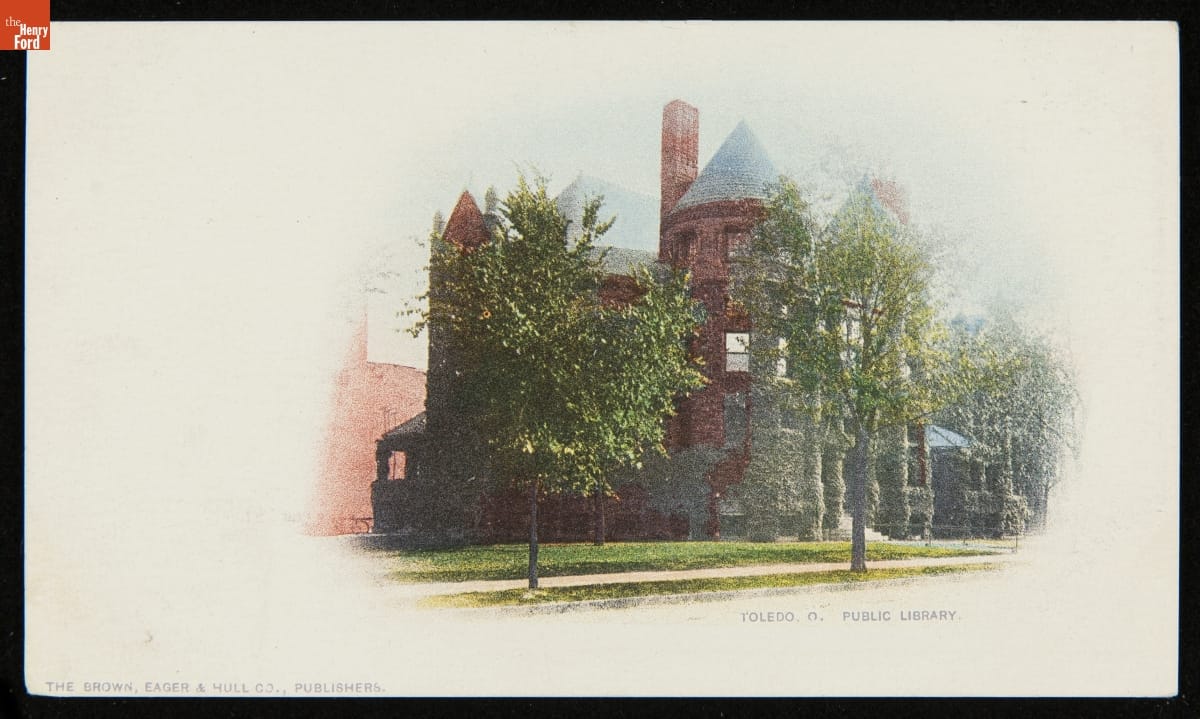
- Postcard, "Toledo, O. Public Library," circa 1900 - Until the 20th century, most book collections were not available to everyday Americans. They were either privately owned, accessible only by paid subscription, or stored away haphazardly. In communities with dedicated public library buildings (often among the most imposing structures in town), they were sources of civic pride. This building housed the Lucas County (Ohio) library from its opening in 1890 until 1940.
- circa 1900
- Collections - Artifact
Postcard, "Toledo, O. Public Library," circa 1900
Until the 20th century, most book collections were not available to everyday Americans. They were either privately owned, accessible only by paid subscription, or stored away haphazardly. In communities with dedicated public library buildings (often among the most imposing structures in town), they were sources of civic pride. This building housed the Lucas County (Ohio) library from its opening in 1890 until 1940.
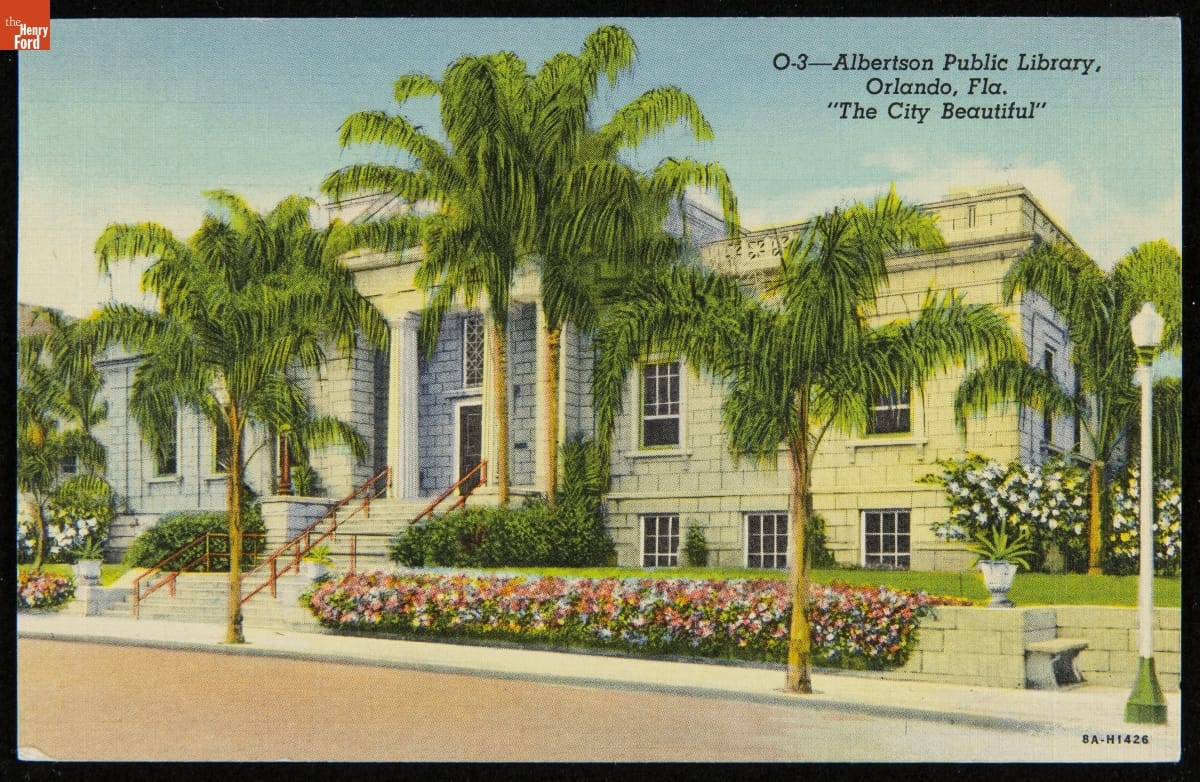
- Postcard, "Albertson Public Library, Orlando, Fla., 'The City Beautiful'," 1938 - Until the 20th century, most book collections were not available to everyday Americans. They were either privately owned, accessible only by paid subscription, or stored away haphazardly. Free public libraries began to spread in the early 1900s. For communities able to fund them, public library buildings -- usually among the most imposing structures in town -- became sources of civic pride.
- 1938
- Collections - Artifact
Postcard, "Albertson Public Library, Orlando, Fla., 'The City Beautiful'," 1938
Until the 20th century, most book collections were not available to everyday Americans. They were either privately owned, accessible only by paid subscription, or stored away haphazardly. Free public libraries began to spread in the early 1900s. For communities able to fund them, public library buildings -- usually among the most imposing structures in town -- became sources of civic pride.
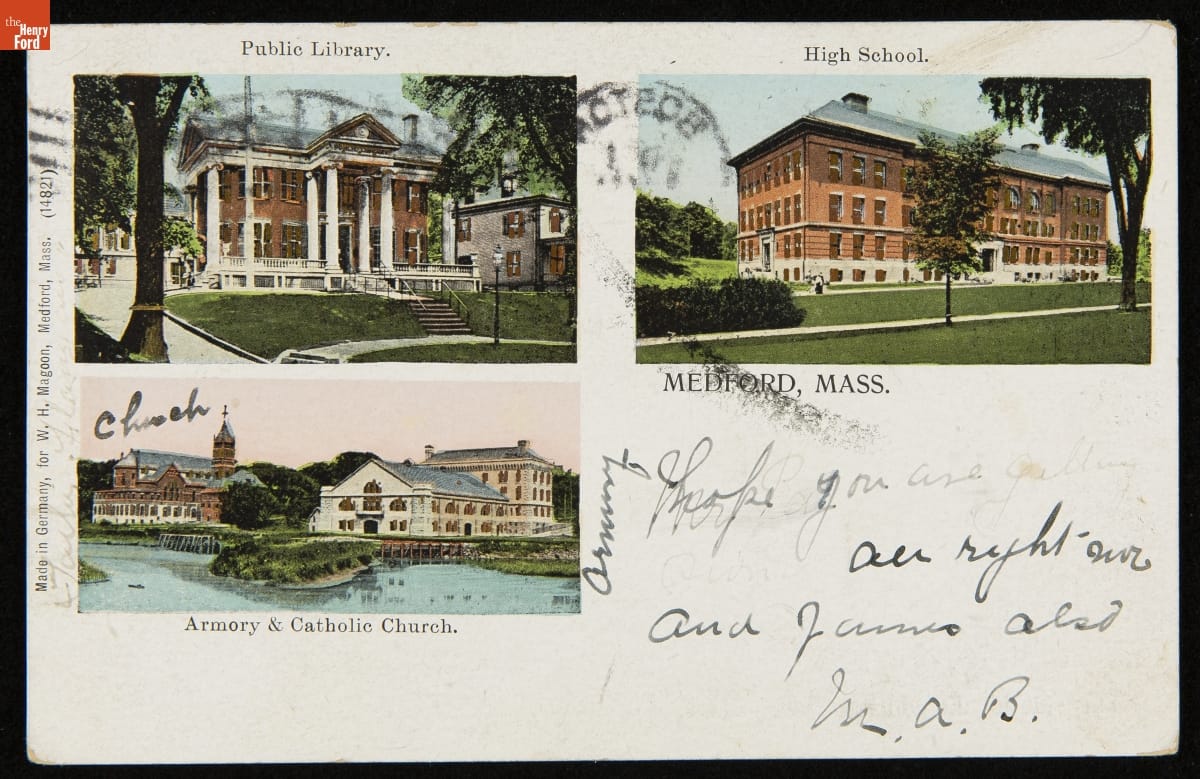
- Postcard, Views of Medford, Massacusetts, circa 1908 -
- circa 1908
- Collections - Artifact
Postcard, Views of Medford, Massacusetts, circa 1908
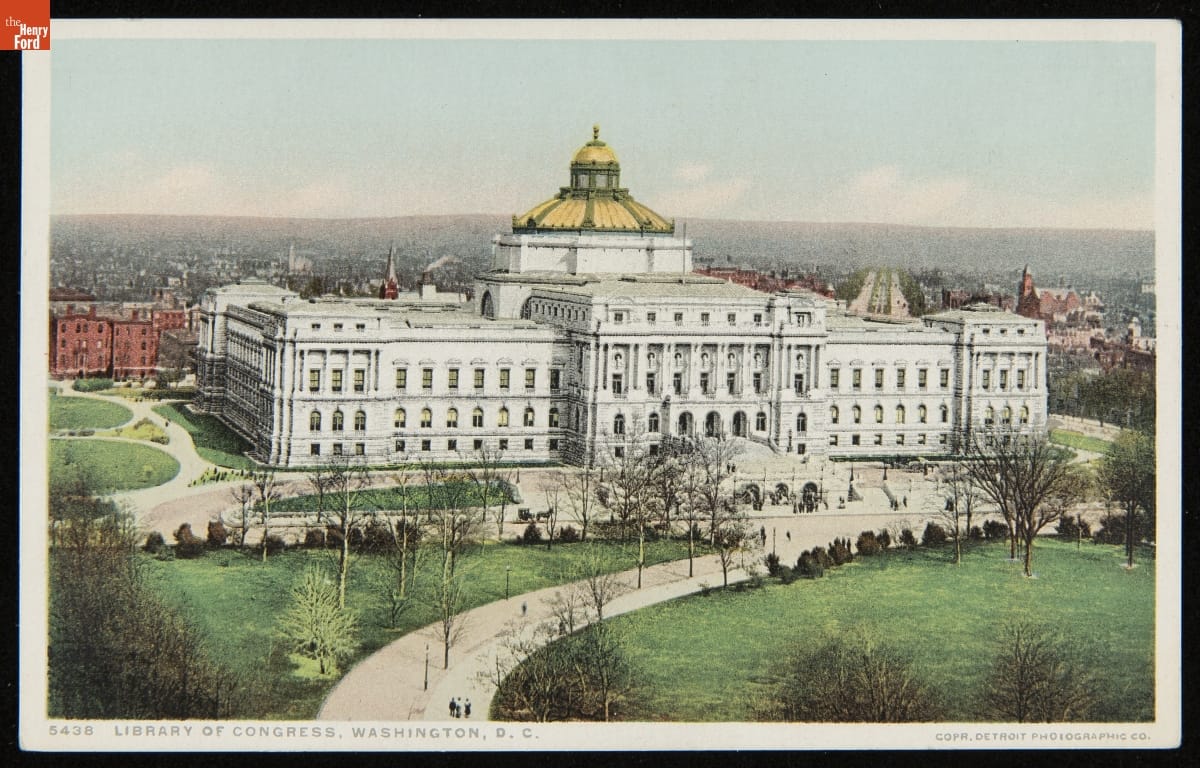
- Postcard, "Library of Congress, Washington, D.C.," circa 1915 - United States lawmakers established the Library of Congress in 1800. For nearly 100 years, the growing library occupied limited space in the U.S. Capitol. Congress eventually authorized the construction of a permanent building in 1886, and the structure opened in 1897. Since its founding, the Library of Congress has become one of the world's largest repositories of recorded knowledge.
- circa 1915
- Collections - Artifact
Postcard, "Library of Congress, Washington, D.C.," circa 1915
United States lawmakers established the Library of Congress in 1800. For nearly 100 years, the growing library occupied limited space in the U.S. Capitol. Congress eventually authorized the construction of a permanent building in 1886, and the structure opened in 1897. Since its founding, the Library of Congress has become one of the world's largest repositories of recorded knowledge.
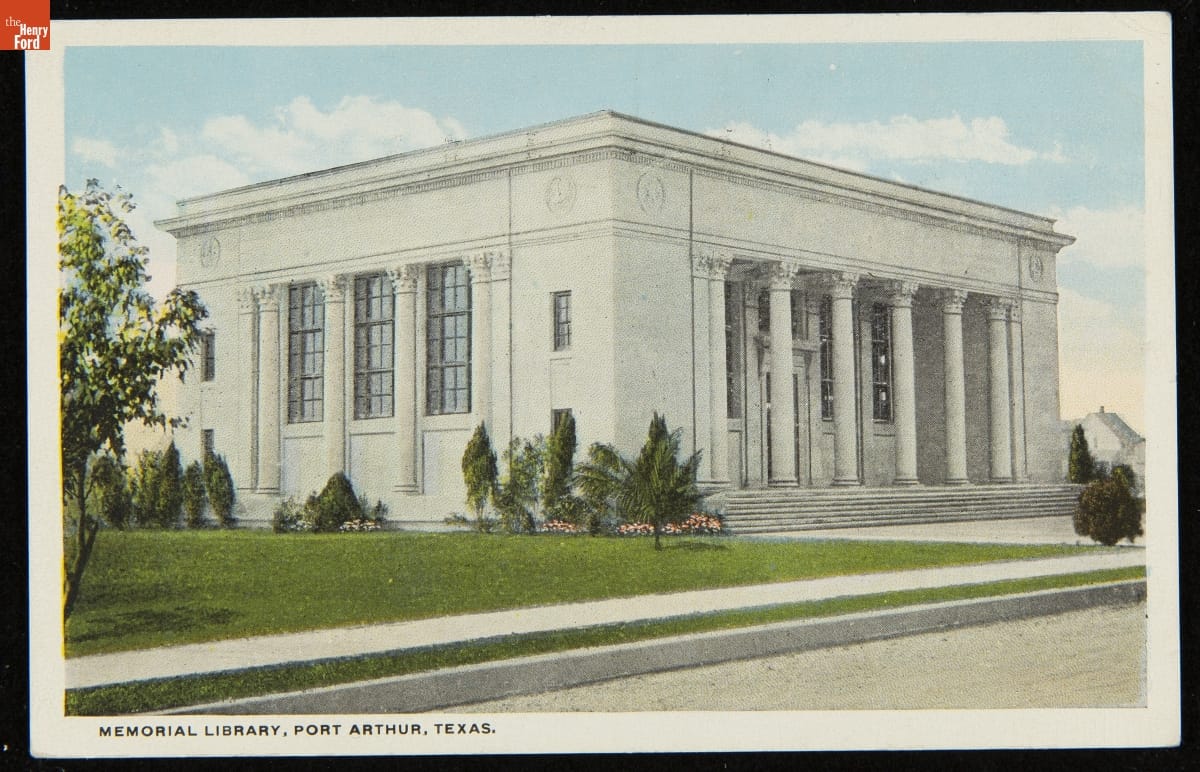
- Postcard, "Memorial Library, Port Arthur, Texas," circa 1925 - Until the 20th century, most book collections were not available to everyday Americans. They were either privately owned, accessible only by paid subscription, or stored away haphazardly. Free public libraries began to spread in the early 1900s. For communities able to fund them, public library buildings -- usually among the most imposing structures in town -- became sources of civic pride.
- circa 1925
- Collections - Artifact
Postcard, "Memorial Library, Port Arthur, Texas," circa 1925
Until the 20th century, most book collections were not available to everyday Americans. They were either privately owned, accessible only by paid subscription, or stored away haphazardly. Free public libraries began to spread in the early 1900s. For communities able to fund them, public library buildings -- usually among the most imposing structures in town -- became sources of civic pride.
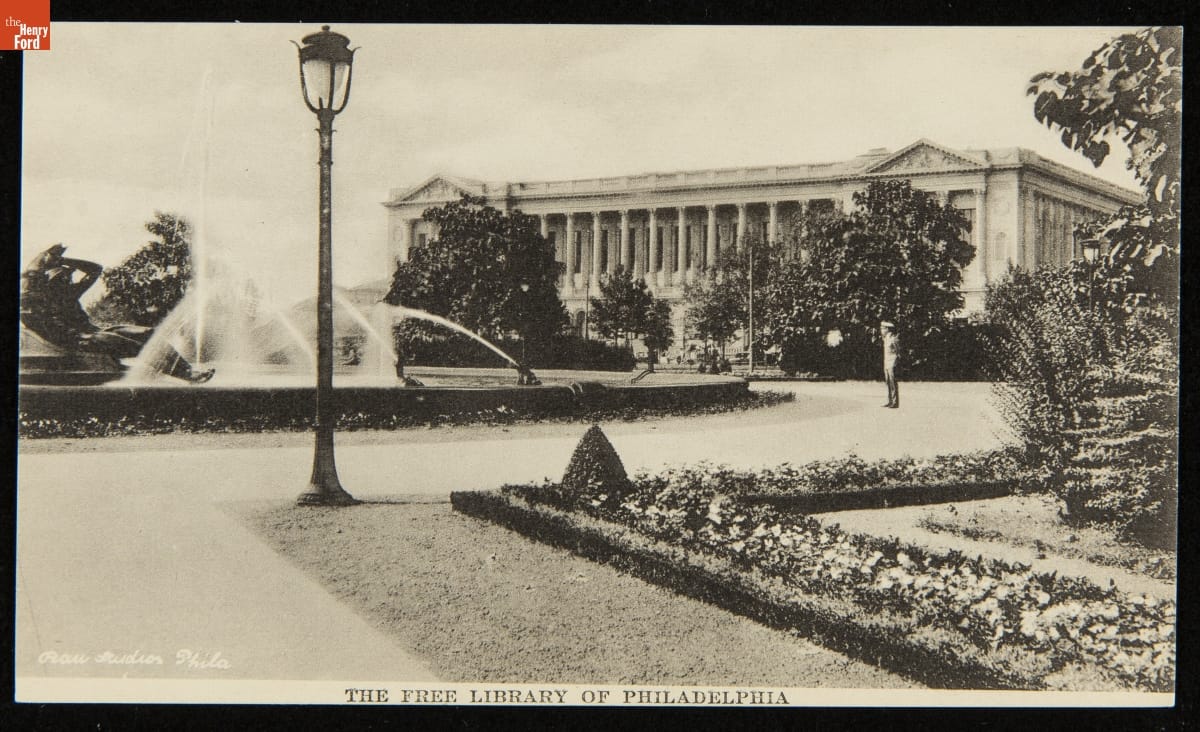
- Postcard, "The Free Library of Philadelphia," circa 1930 - Until the 20th century, most book collections were not available to everyday Americans. They were either privately owned, accessible only by paid subscription, or stored away haphazardly. In some communities, wealthy citizens funded libraries. Philadelphia philanthropist George Seckel Pepper bequeathed $225,000 in 1889 to establish The Free Library of Philadelphia. The Free Library system's massive Central Library, pictured here, opened in 1927.
- circa 1930
- Collections - Artifact
Postcard, "The Free Library of Philadelphia," circa 1930
Until the 20th century, most book collections were not available to everyday Americans. They were either privately owned, accessible only by paid subscription, or stored away haphazardly. In some communities, wealthy citizens funded libraries. Philadelphia philanthropist George Seckel Pepper bequeathed $225,000 in 1889 to establish The Free Library of Philadelphia. The Free Library system's massive Central Library, pictured here, opened in 1927.
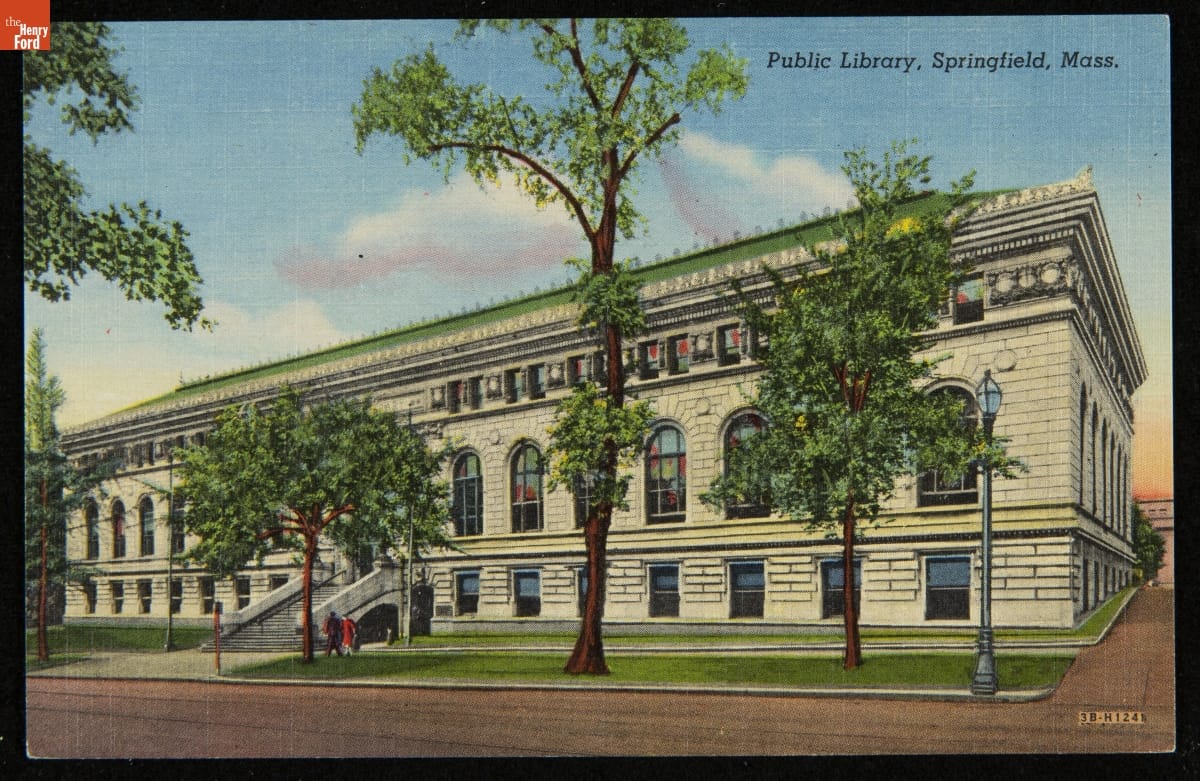
- Postcard, "Public Library, Springfield, Mass.," 1943 - Andrew Carnegie (1835-1919) amassed an immense fortune from railroads, oil, and steel. He devoted his later years to philanthropy. Between 1886 and 1919, Carnegie donated more than $40 million to build 1,679 new libraries in communities of all sizes across America. This Italian Renaissance Revival-style library building, funded in part by Carnegie grants, opened in 1912 in Springfield, Massachusetts.
- 1943
- Collections - Artifact
Postcard, "Public Library, Springfield, Mass.," 1943
Andrew Carnegie (1835-1919) amassed an immense fortune from railroads, oil, and steel. He devoted his later years to philanthropy. Between 1886 and 1919, Carnegie donated more than $40 million to build 1,679 new libraries in communities of all sizes across America. This Italian Renaissance Revival-style library building, funded in part by Carnegie grants, opened in 1912 in Springfield, Massachusetts.
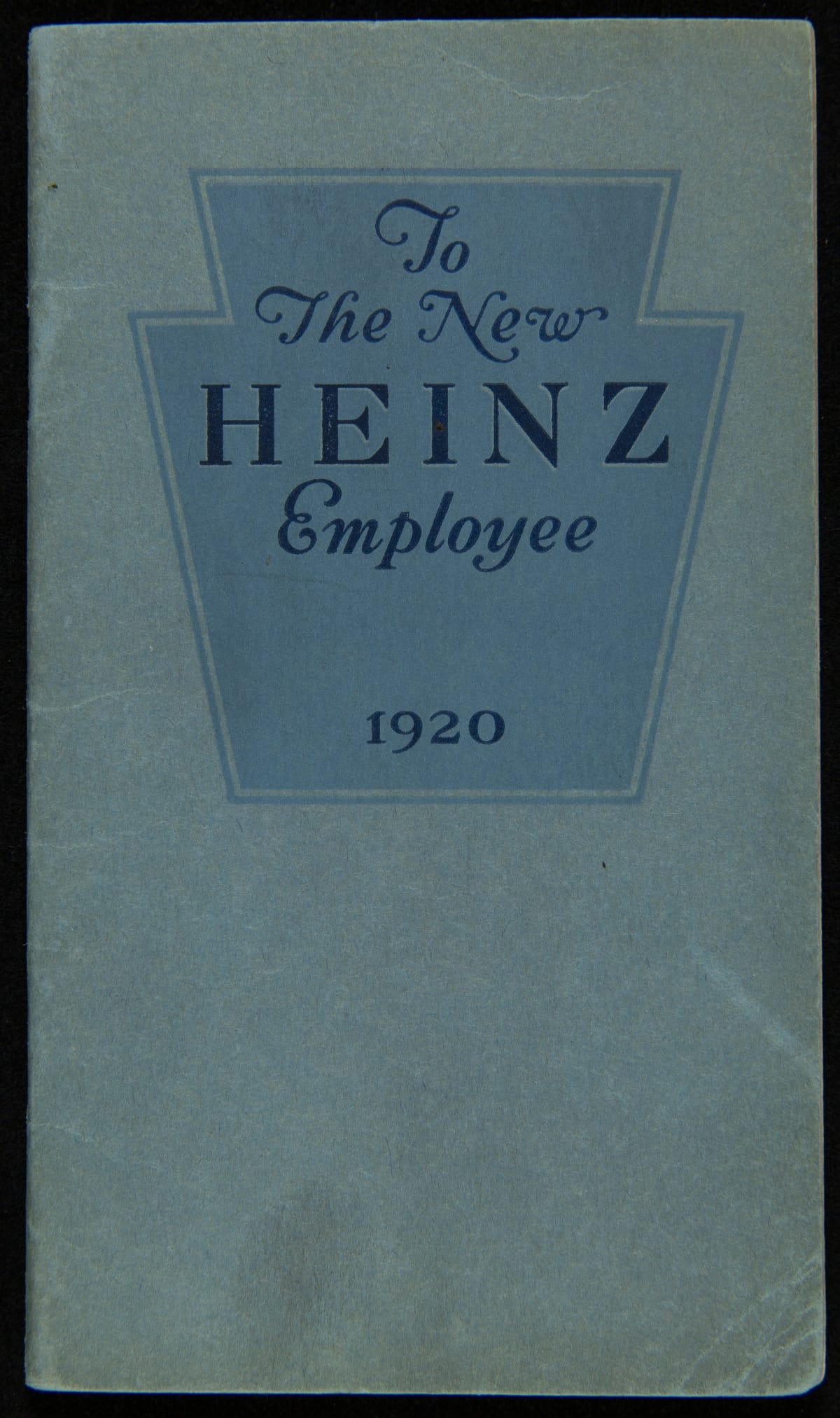
- H. J. Heinz Employee Handbook, "To The New Heinz Employee," 1920 - From its founding, a guiding principle of the H.J. Heinz Company was to promote strong company relationships with its employees. This resulted in a world-class employee welfare program which included amenities, programs, and policies with consideration for their well-being. This employee handbook from 1920 explains each of these provisions and encourages teamwork and a strong personal work ethic from the incoming employee.
- 1920
- Collections - Artifact
H. J. Heinz Employee Handbook, "To The New Heinz Employee," 1920
From its founding, a guiding principle of the H.J. Heinz Company was to promote strong company relationships with its employees. This resulted in a world-class employee welfare program which included amenities, programs, and policies with consideration for their well-being. This employee handbook from 1920 explains each of these provisions and encourages teamwork and a strong personal work ethic from the incoming employee.