
Search
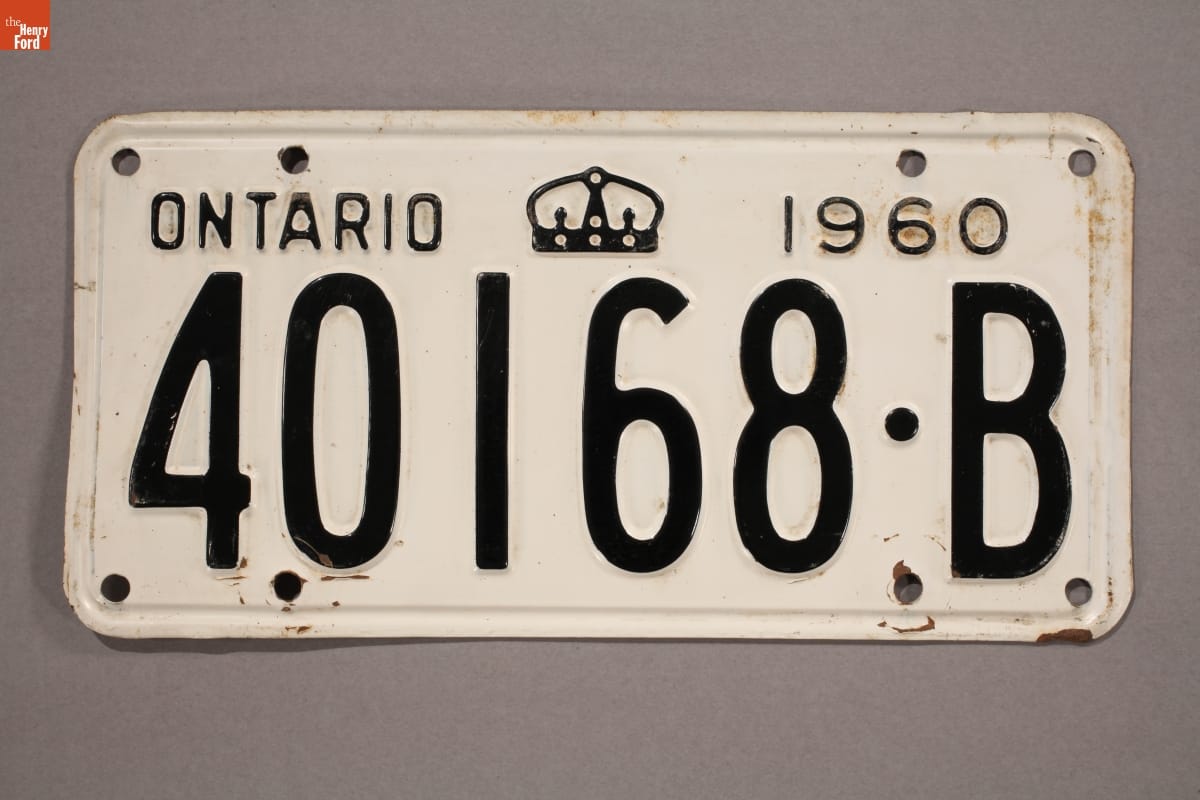
- Pair of Ontario License Plates, 1960 - Ontario's provincial government began registering motor vehicles in 1903. During the first decades of the 20th century, the province issued license plates made out of leather, rubber, porcelain, or flat steel. Embossed steel plates, like this one from 1960, were introduced in the 1920s.
- 1960
- Collections - Artifact
Pair of Ontario License Plates, 1960
Ontario's provincial government began registering motor vehicles in 1903. During the first decades of the 20th century, the province issued license plates made out of leather, rubber, porcelain, or flat steel. Embossed steel plates, like this one from 1960, were introduced in the 1920s.
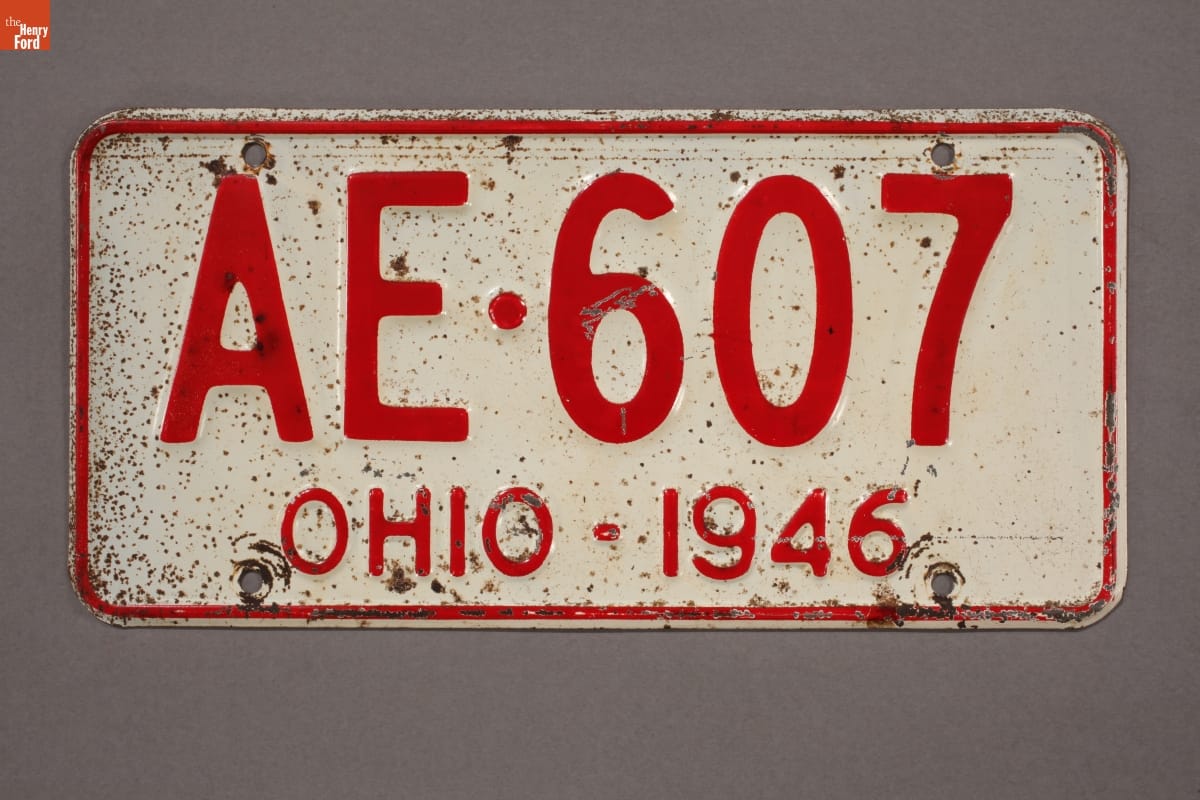
- Ohio License Plate, 1946 - Early state-issued license plates were made of porcelain-coated iron. Later, states stamped tin, steel, or even copper to make plates. During the Second World War several states used fiberboard. Plate colors varied and some states added symbols, mottoes, or other design elements. Today, states use reflective sheeting to coat a standard-sized aluminum blank which is then stamped and decorated.
- 1946
- Collections - Artifact
Ohio License Plate, 1946
Early state-issued license plates were made of porcelain-coated iron. Later, states stamped tin, steel, or even copper to make plates. During the Second World War several states used fiberboard. Plate colors varied and some states added symbols, mottoes, or other design elements. Today, states use reflective sheeting to coat a standard-sized aluminum blank which is then stamped and decorated.
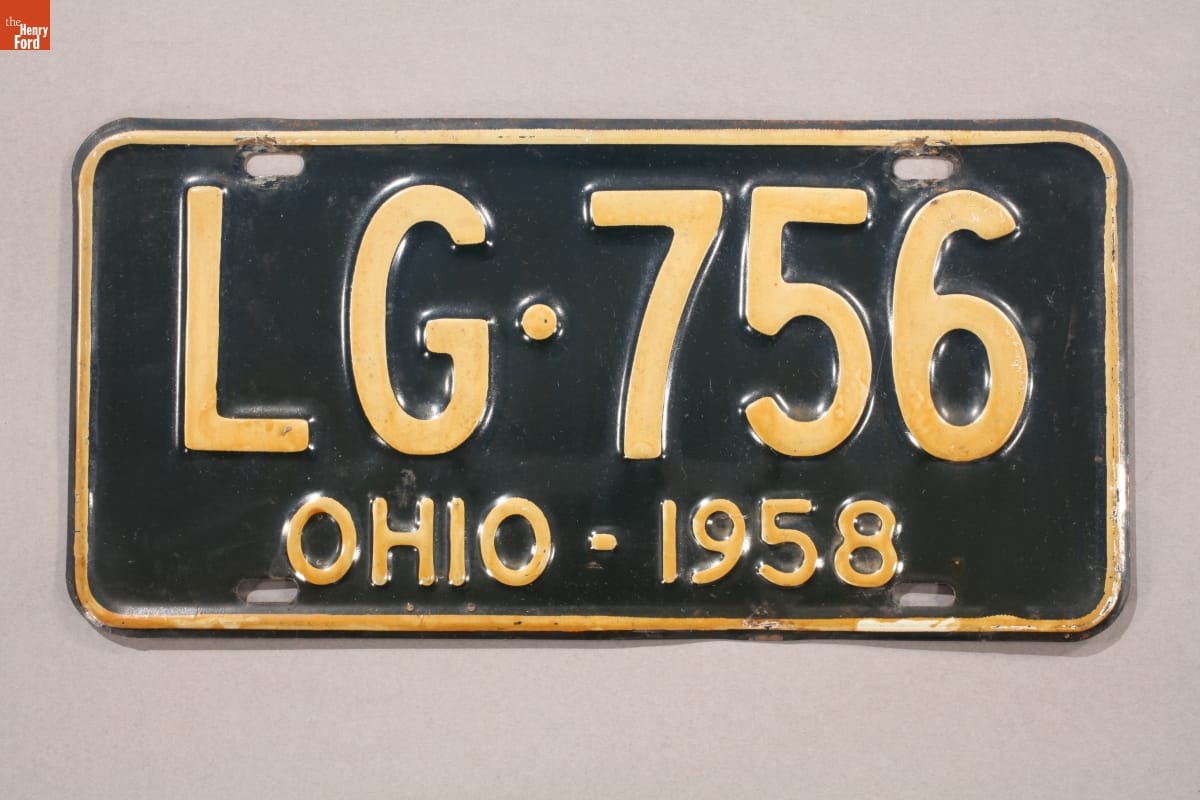
- Ohio License Plate, 1958 - Early state-issued license plates were made of porcelain-coated iron. Later, states stamped tin, steel, or even copper to make plates. During the Second World War several states used fiberboard. Plate colors varied and some states added symbols, mottoes, or other design elements. Today, states use reflective sheeting to coat a standard-sized aluminum blank which is then stamped and decorated.
- 1958
- Collections - Artifact
Ohio License Plate, 1958
Early state-issued license plates were made of porcelain-coated iron. Later, states stamped tin, steel, or even copper to make plates. During the Second World War several states used fiberboard. Plate colors varied and some states added symbols, mottoes, or other design elements. Today, states use reflective sheeting to coat a standard-sized aluminum blank which is then stamped and decorated.
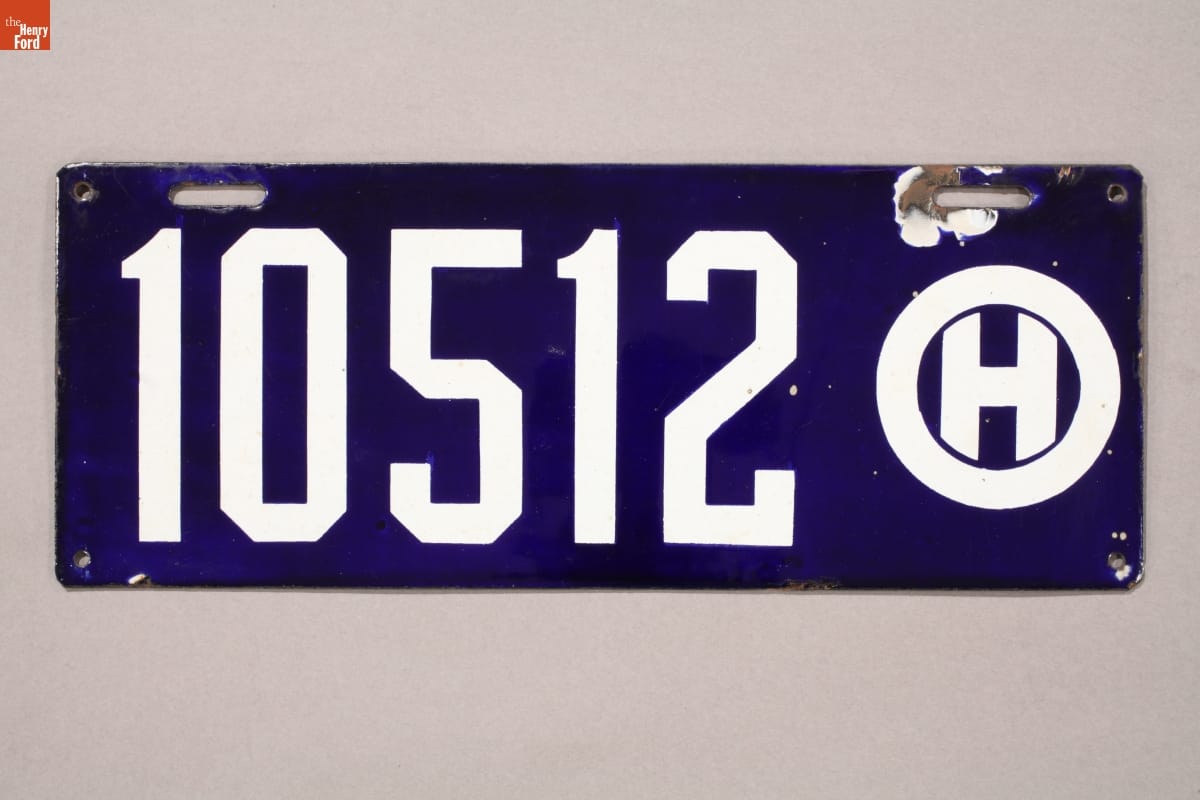
- Ohio License Plate, 1908-1909 - Early state-issued license plates were made of porcelain-coated iron. Later, states stamped tin, steel, or even copper to make plates. During the Second World War several states used fiberboard. Plate colors varied and some states added symbols, mottoes, or other design elements. Today, states use reflective sheeting to coat a standard-sized aluminum blank which is then stamped and decorated.
- 1908-1909
- Collections - Artifact
Ohio License Plate, 1908-1909
Early state-issued license plates were made of porcelain-coated iron. Later, states stamped tin, steel, or even copper to make plates. During the Second World War several states used fiberboard. Plate colors varied and some states added symbols, mottoes, or other design elements. Today, states use reflective sheeting to coat a standard-sized aluminum blank which is then stamped and decorated.
- Ohio License Plate, 1956 - Early state-issued license plates were made of porcelain-coated iron. Later, states stamped tin, steel, or even copper to make plates. During the Second World War several states used fiberboard. Plate colors varied and some states added symbols, mottoes, or other design elements. Today, states use reflective sheeting to coat a standard-sized aluminum blank which is then stamped and decorated.
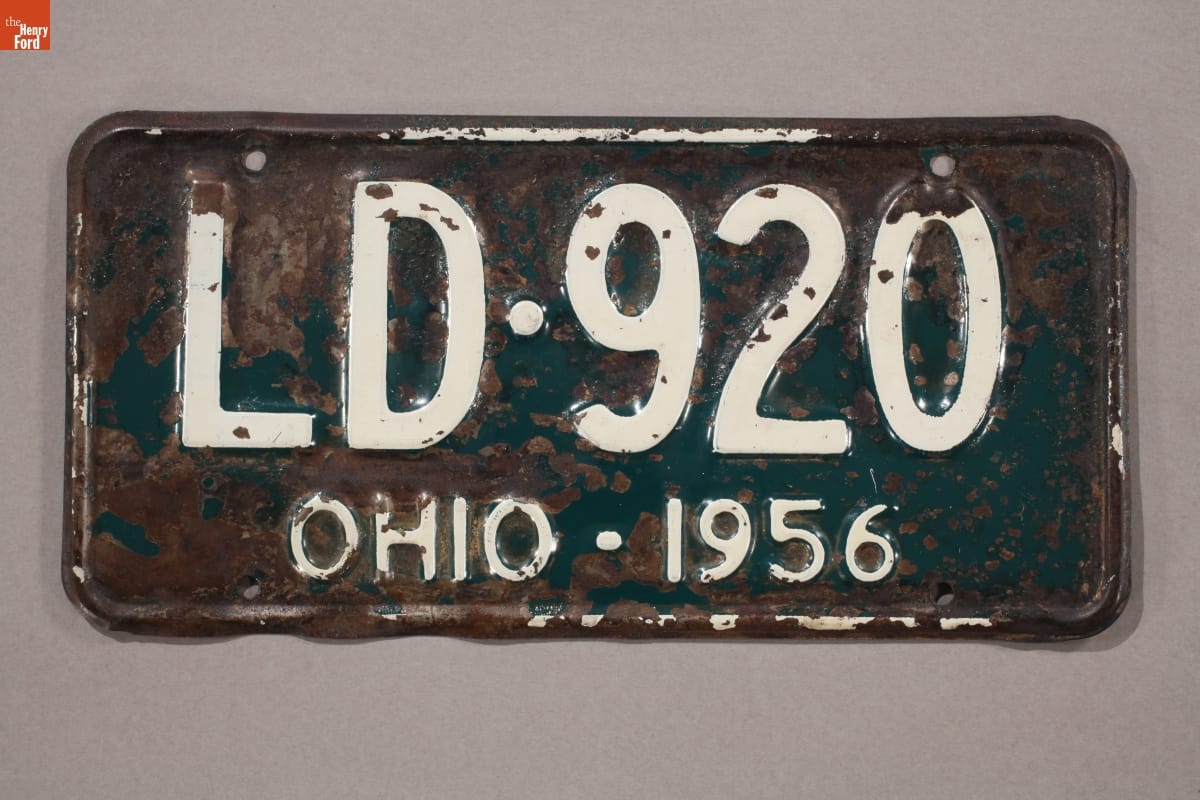
- 1956
- Collections - Artifact
Ohio License Plate, 1956
Early state-issued license plates were made of porcelain-coated iron. Later, states stamped tin, steel, or even copper to make plates. During the Second World War several states used fiberboard. Plate colors varied and some states added symbols, mottoes, or other design elements. Today, states use reflective sheeting to coat a standard-sized aluminum blank which is then stamped and decorated.
- Iowa License Plate, 1986 - Early state-issued license plates were made of porcelain-coated iron. Later, states stamped tin, steel, or even copper to make plates. During the Second World War several states used fiberboard. Plate colors varied and some states added symbols, mottoes, or other design elements. Today, states use reflective sheeting to coat a standard-sized aluminum blank which is then stamped and decorated.
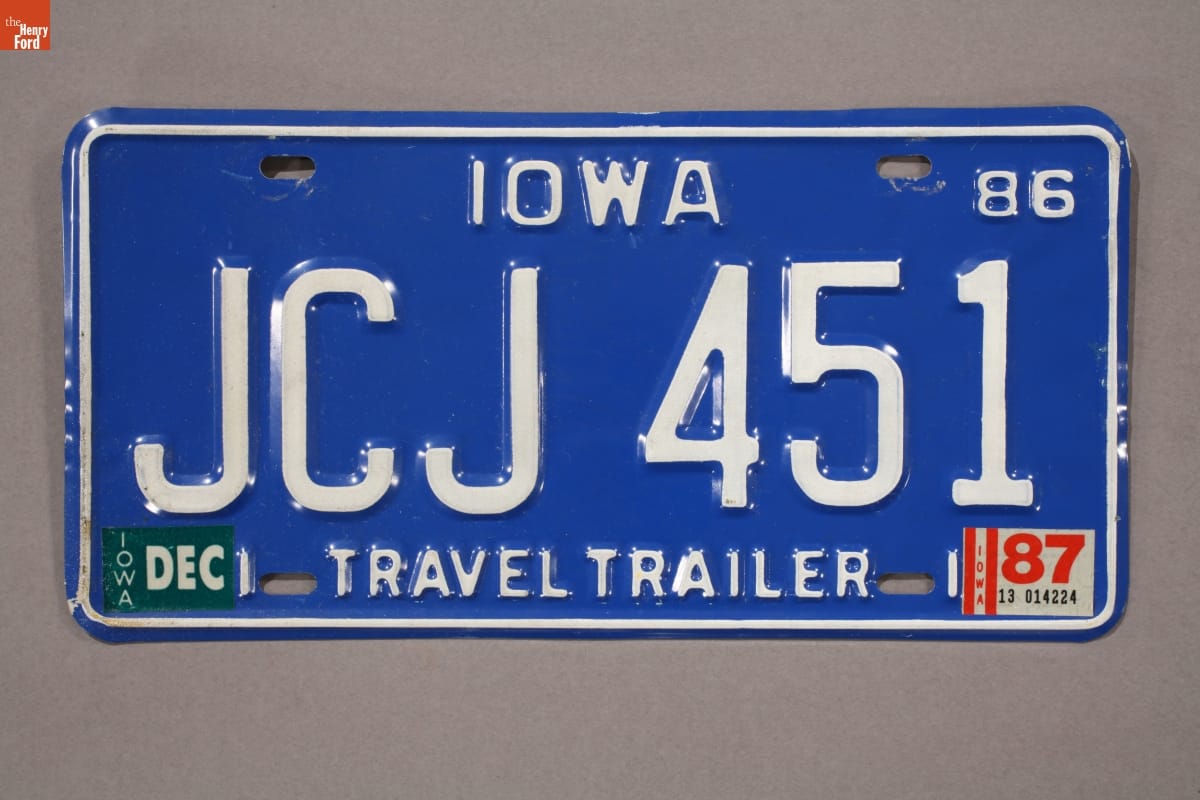
- 1986
- Collections - Artifact
Iowa License Plate, 1986
Early state-issued license plates were made of porcelain-coated iron. Later, states stamped tin, steel, or even copper to make plates. During the Second World War several states used fiberboard. Plate colors varied and some states added symbols, mottoes, or other design elements. Today, states use reflective sheeting to coat a standard-sized aluminum blank which is then stamped and decorated.
- Ohio License Plate, 1919 - Early state-issued license plates were made of porcelain-coated iron. Later, states stamped tin, steel, or even copper to make plates. During the Second World War several states used fiberboard. Plate colors varied and some states added symbols, mottoes, or other design elements. Today, states use reflective sheeting to coat a standard-sized aluminum blank which is then stamped and decorated.
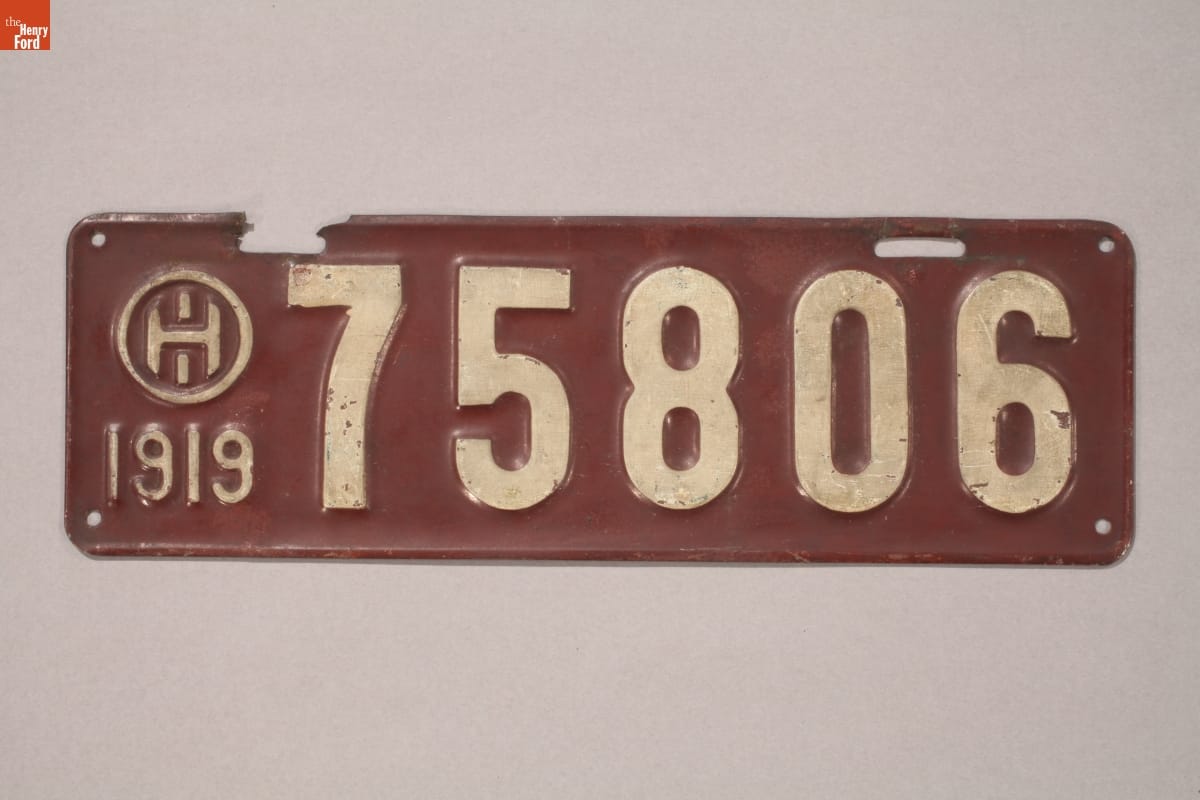
- 1919
- Collections - Artifact
Ohio License Plate, 1919
Early state-issued license plates were made of porcelain-coated iron. Later, states stamped tin, steel, or even copper to make plates. During the Second World War several states used fiberboard. Plate colors varied and some states added symbols, mottoes, or other design elements. Today, states use reflective sheeting to coat a standard-sized aluminum blank which is then stamped and decorated.
- Ohio License Plate, 1910 - Early state-issued license plates were made of porcelain-coated iron. Later, states stamped tin, steel, or even copper to make plates. During the Second World War several states used fiberboard. Plate colors varied and some states added symbols, mottoes, or other design elements. Today, states use reflective sheeting to coat a standard-sized aluminum blank which is then stamped and decorated.
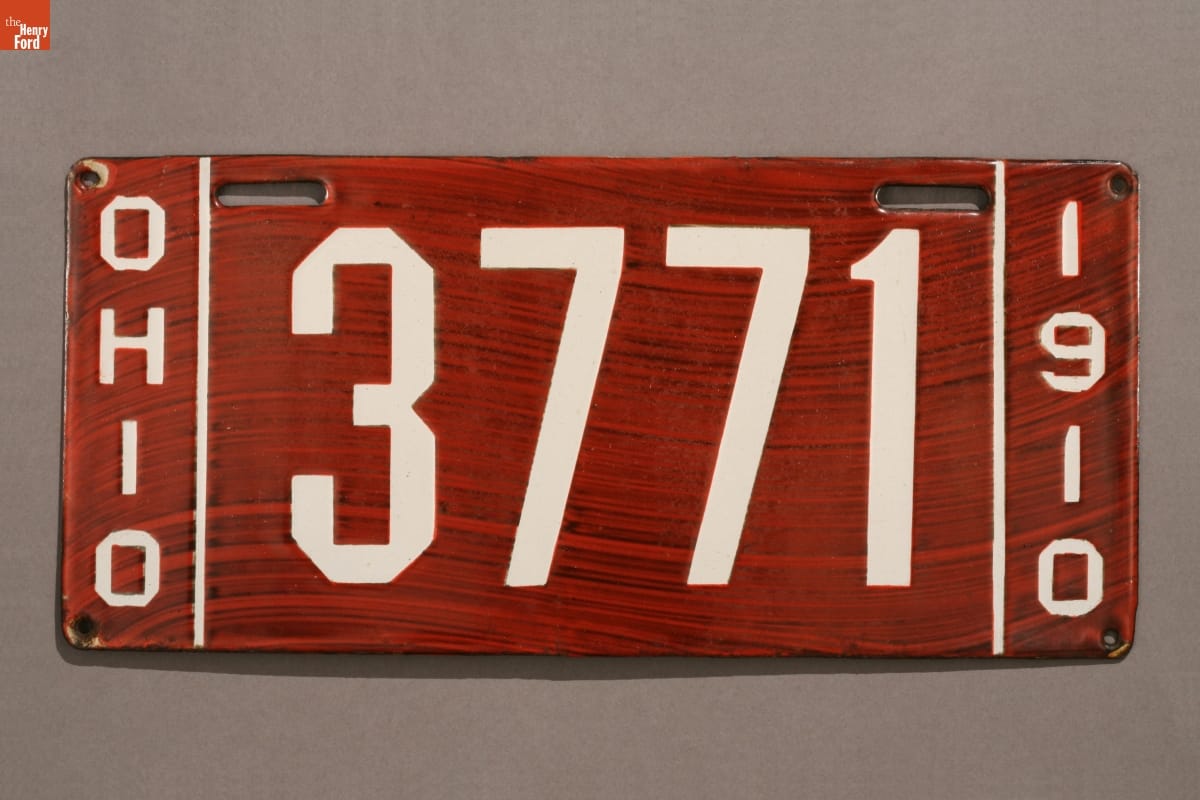
- circa 1910
- Collections - Artifact
Ohio License Plate, 1910
Early state-issued license plates were made of porcelain-coated iron. Later, states stamped tin, steel, or even copper to make plates. During the Second World War several states used fiberboard. Plate colors varied and some states added symbols, mottoes, or other design elements. Today, states use reflective sheeting to coat a standard-sized aluminum blank which is then stamped and decorated.
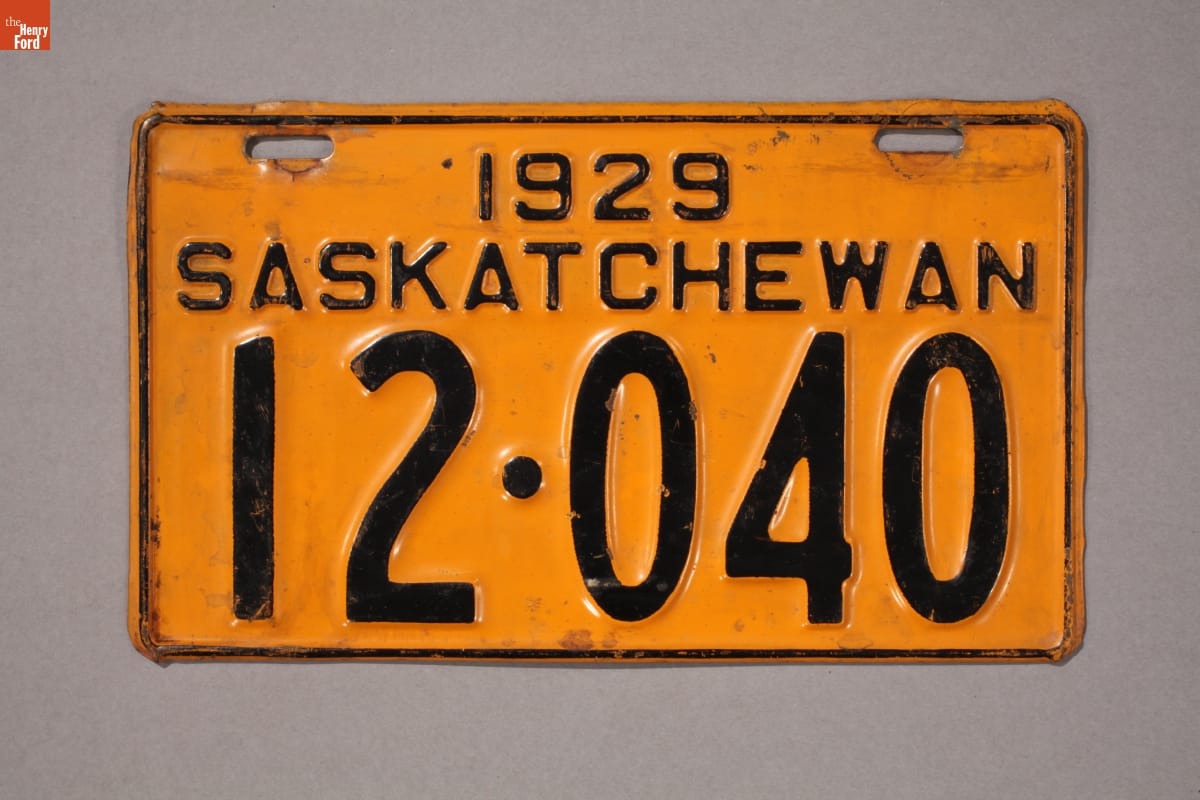
- Saskatchewan License Plate, 1929 - Early license plates issued by Canadian provincial governments consisted of porcelain coated steel, embossed or painted tin, or fiberboard. By the 1920s most provinces produced plates made of embossed steel. Automobiles registered in Saskatchewan in 1929 sported a plate like this one.
- 1929
- Collections - Artifact
Saskatchewan License Plate, 1929
Early license plates issued by Canadian provincial governments consisted of porcelain coated steel, embossed or painted tin, or fiberboard. By the 1920s most provinces produced plates made of embossed steel. Automobiles registered in Saskatchewan in 1929 sported a plate like this one.
- Ohio License Plate, 1974 - Seat belts were available on some automobiles by the mid-1950s, but most motorists were indifferent to their safety benefits. Even after federal regulations required seat belts in American cars starting with the 1968 model year, many drivers and passengers simply refused to use them. Public education campaigns tried to change habits. Ohio promoted seat belt use through its license plates.

- 1974
- Collections - Artifact
Ohio License Plate, 1974
Seat belts were available on some automobiles by the mid-1950s, but most motorists were indifferent to their safety benefits. Even after federal regulations required seat belts in American cars starting with the 1968 model year, many drivers and passengers simply refused to use them. Public education campaigns tried to change habits. Ohio promoted seat belt use through its license plates.