
Search
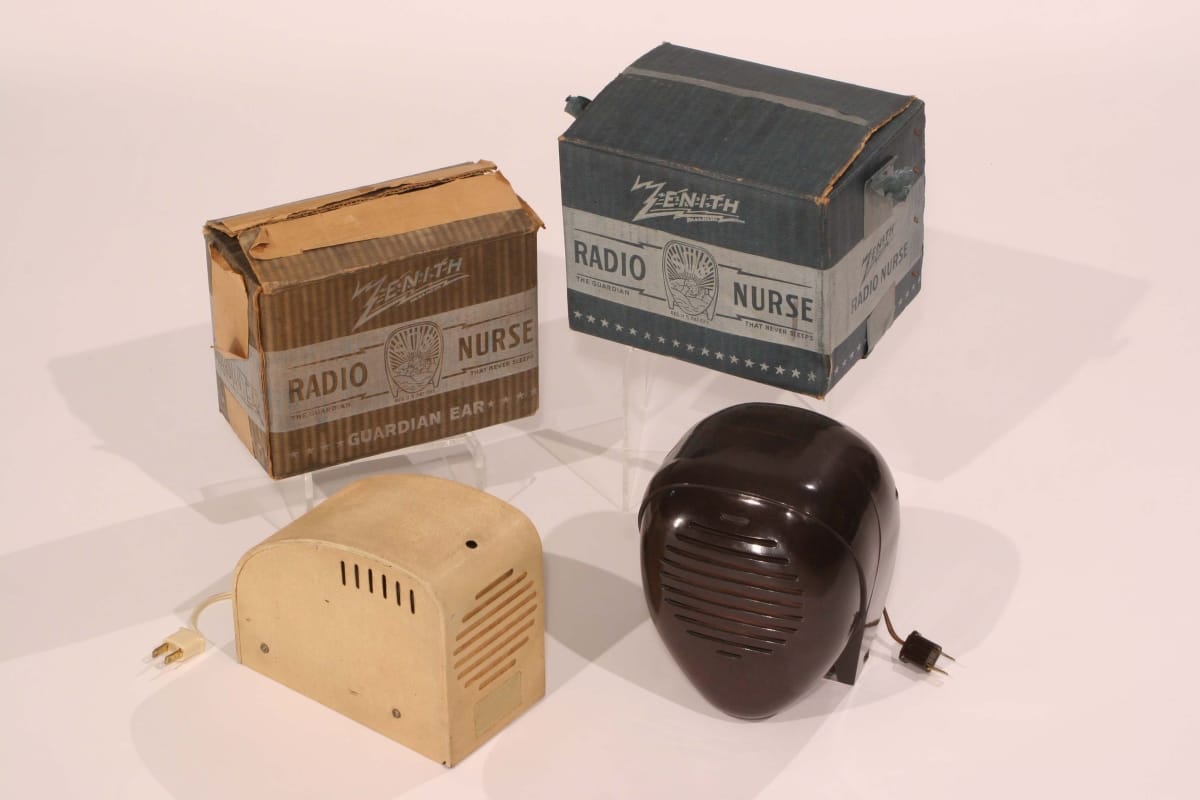
- Zenith Radio Nurse, 1938 - The first baby monitor was created by Zenith president, Eugene McDonald, Jr. Concerned for his daughter's safety following the 1932 Lindbergh baby kidnapping, McDonald's device allowed monitoring of children after bedtime. The "Guardian Ear" transmitter was installed in a child's bedroom while the "Radio Nurse" receiver was placed near parents. Sculptor Isamu Noguchi created the receiver's aesthetic, which looked like an abstracted image of a nurse with cap.
- 1938
- Collections - Artifact
Zenith Radio Nurse, 1938
The first baby monitor was created by Zenith president, Eugene McDonald, Jr. Concerned for his daughter's safety following the 1932 Lindbergh baby kidnapping, McDonald's device allowed monitoring of children after bedtime. The "Guardian Ear" transmitter was installed in a child's bedroom while the "Radio Nurse" receiver was placed near parents. Sculptor Isamu Noguchi created the receiver's aesthetic, which looked like an abstracted image of a nurse with cap.
- Sears Catalog, Spring through Summer 1960 -
- 1960
- Collections - Artifact
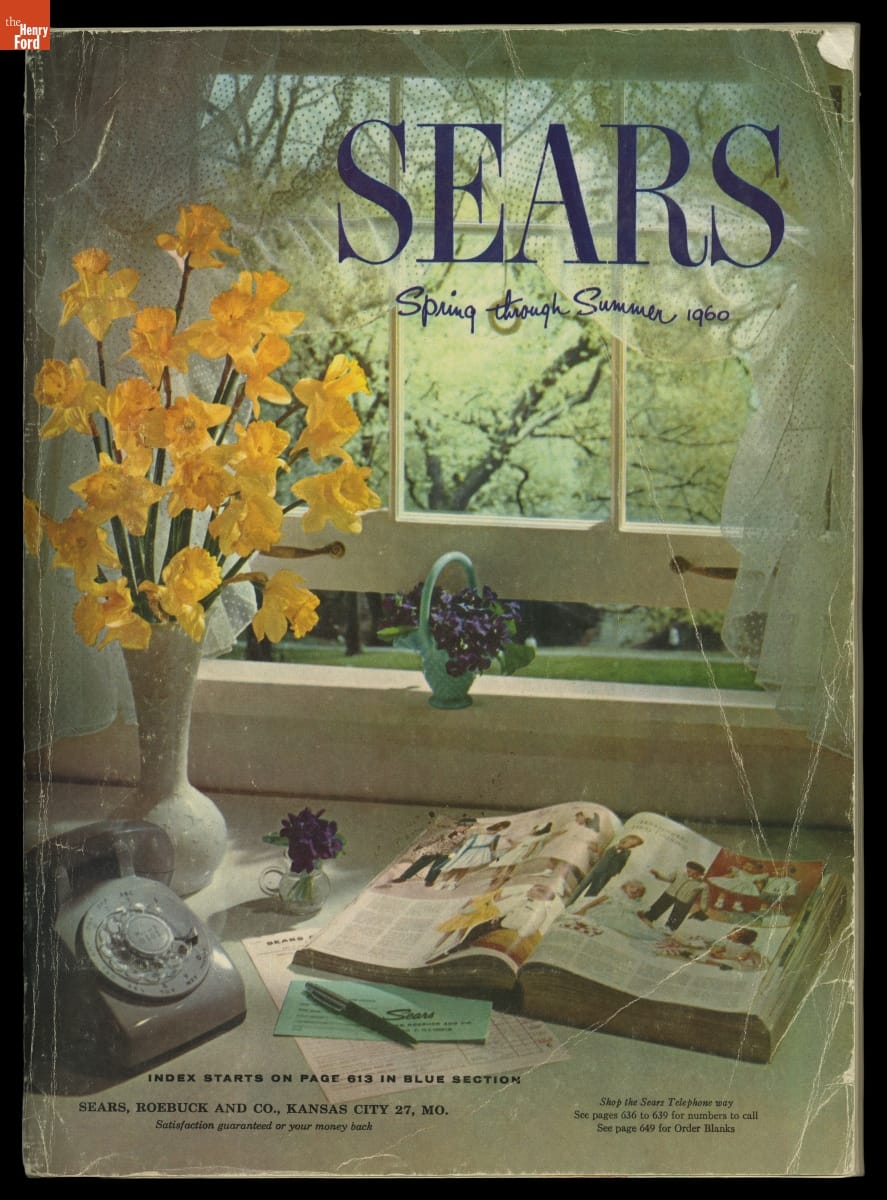
Sears Catalog, Spring through Summer 1960
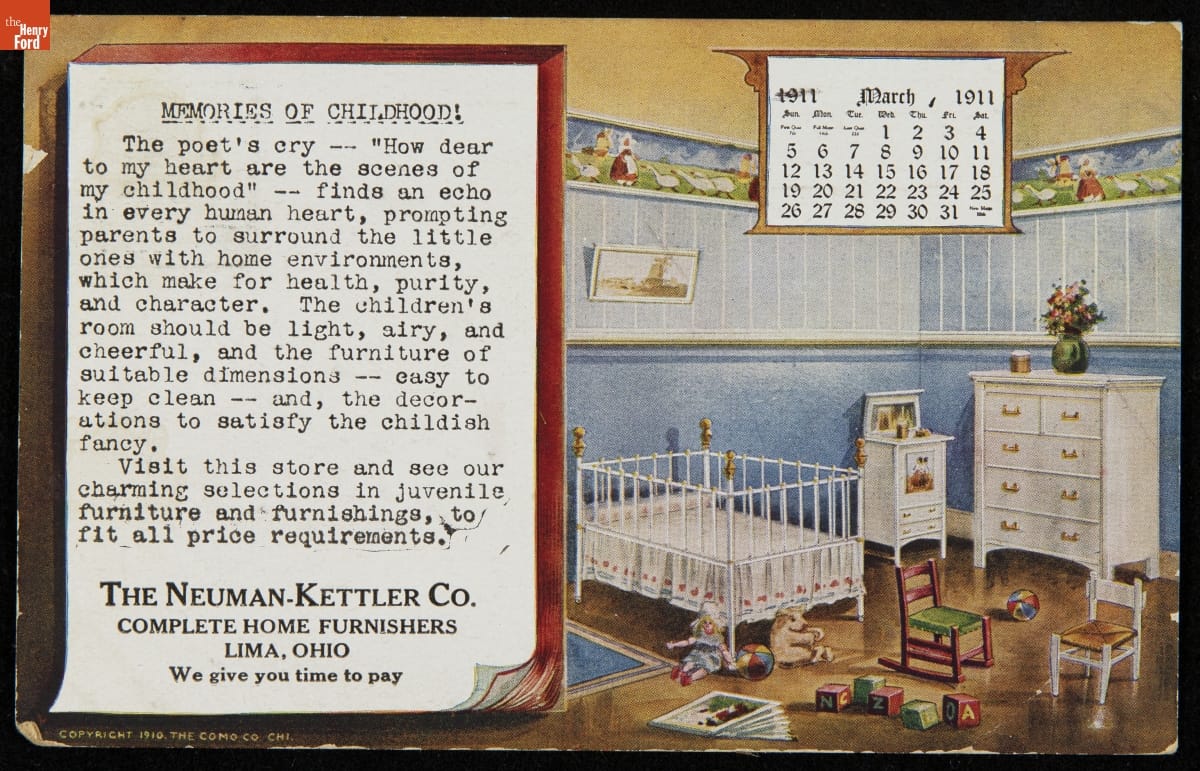
- The Neuman-Kettler Co. Complete Home Furnishings, "Memories of Childhood," 1910 - Hygiene, sanitation, and a child's well-being became paramount to many parents by the early 20th century. Concerned parents furnished children's rooms with white-painted furniture and metal beds that were easy to clean and sanitize in hopes of reducing childhood diseases. The room furnished with appropriate-sized furniture with cheerful decorations provided a pleasing refuge for children away from the adult world.
- 1910
- Collections - Artifact
The Neuman-Kettler Co. Complete Home Furnishings, "Memories of Childhood," 1910
Hygiene, sanitation, and a child's well-being became paramount to many parents by the early 20th century. Concerned parents furnished children's rooms with white-painted furniture and metal beds that were easy to clean and sanitize in hopes of reducing childhood diseases. The room furnished with appropriate-sized furniture with cheerful decorations provided a pleasing refuge for children away from the adult world.
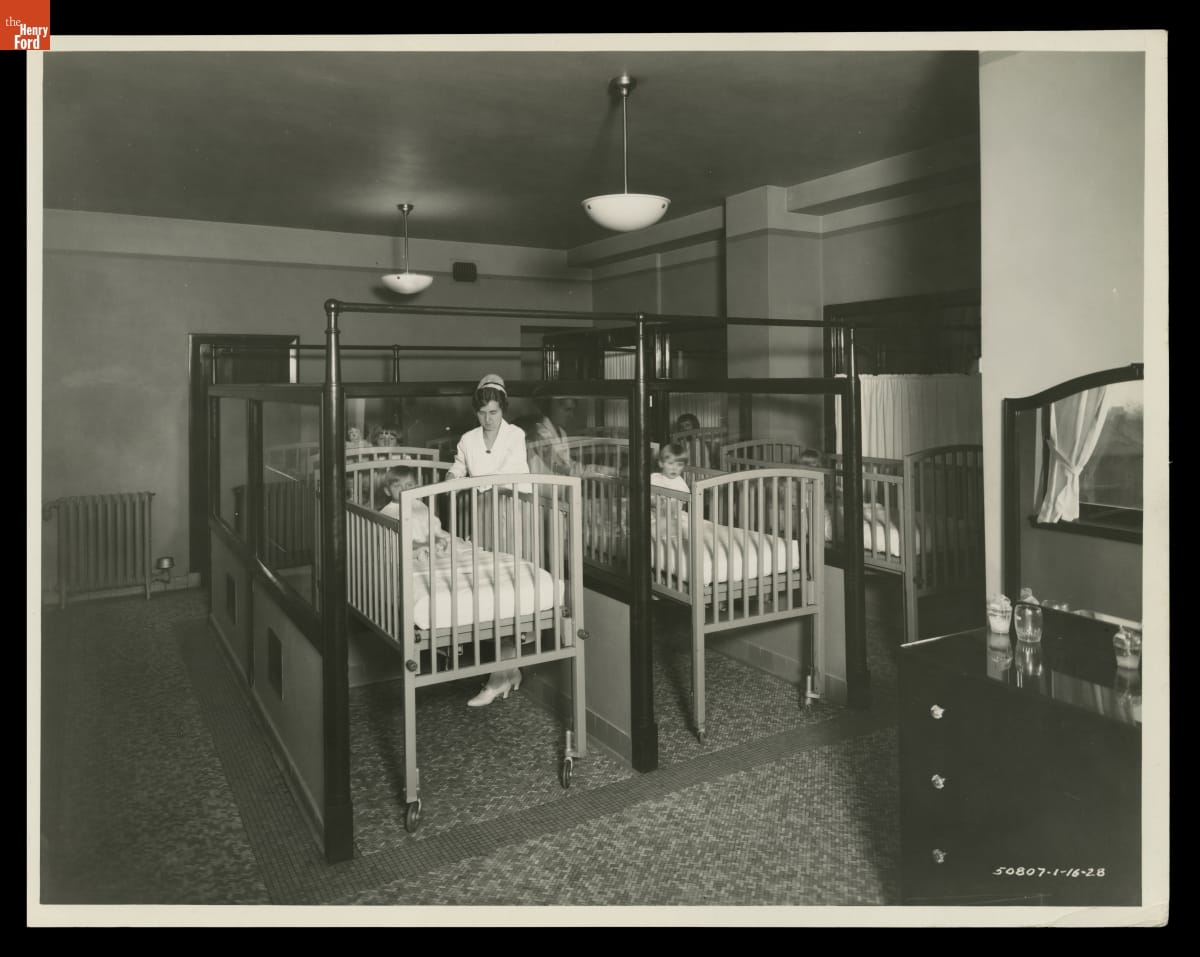
- Nursery at Henry Ford Hospital, Detroit, Michigan, January 1928 - In 1915, Henry Ford funded a new hospital for Detroit. Designed and built in consultation with leading medical experts, Henry Ford Hospital employed salaried doctors and charged low, fixed fees to patients. By Mr. Ford's death in 1947, some 1,600 people were on the hospital's staff and more than $16.5 million had been invested in the facility.
- January 16, 1928
- Collections - Artifact
Nursery at Henry Ford Hospital, Detroit, Michigan, January 1928
In 1915, Henry Ford funded a new hospital for Detroit. Designed and built in consultation with leading medical experts, Henry Ford Hospital employed salaried doctors and charged low, fixed fees to patients. By Mr. Ford's death in 1947, some 1,600 people were on the hospital's staff and more than $16.5 million had been invested in the facility.
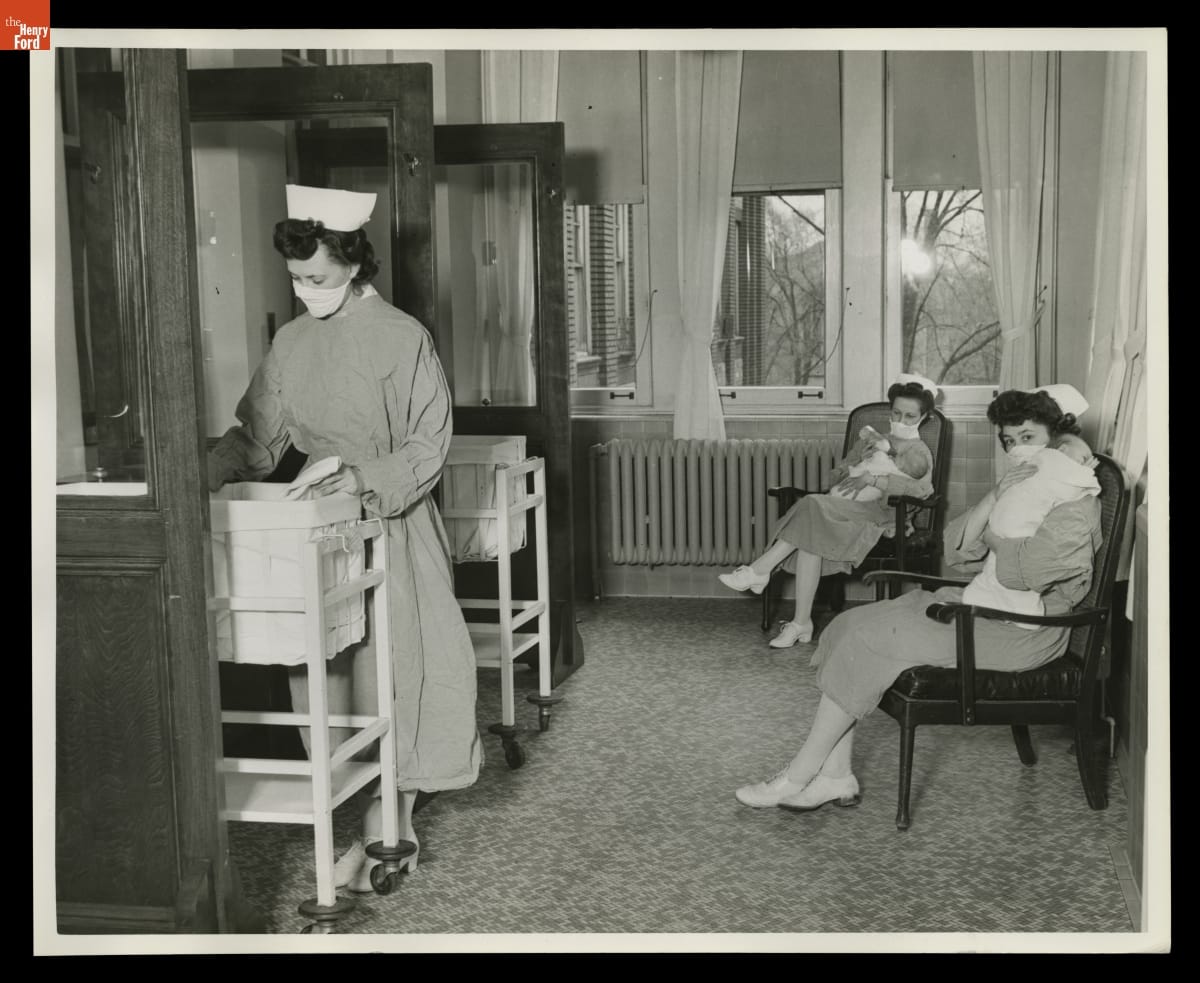
- Nursery at Henry Ford Hospital, Detroit, Michigan, March 1945 - In 1915, Henry Ford funded a new hospital for Detroit. Designed and built in consultation with leading medical experts, Henry Ford Hospital employed salaried doctors and charged low, fixed fees to patients. By Mr. Ford's death in 1947, some 1,600 people were on the hospital's staff and more than $16.5 million had been invested in the facility.
- March 29, 1945
- Collections - Artifact
Nursery at Henry Ford Hospital, Detroit, Michigan, March 1945
In 1915, Henry Ford funded a new hospital for Detroit. Designed and built in consultation with leading medical experts, Henry Ford Hospital employed salaried doctors and charged low, fixed fees to patients. By Mr. Ford's death in 1947, some 1,600 people were on the hospital's staff and more than $16.5 million had been invested in the facility.
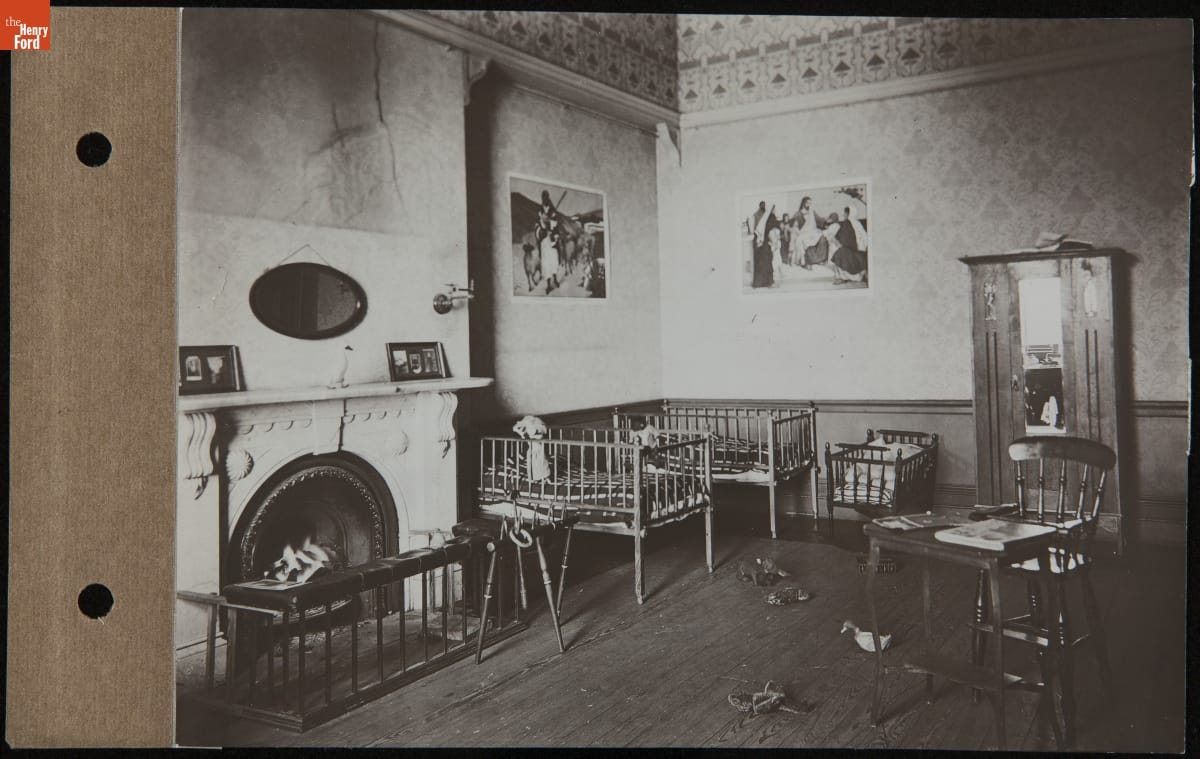
- Nursery for Belgian Refugee Children, Oughtrington Hall, 1914-1918 - Percival Perry, chairman of Ford Motor Company Limited (Ford of Britain) during World War I, relayed the plight of Belgian refugees to Henry and Clara Ford. With their authority, Perry leased Oughtrington Hall to accommodate a select group of Belgian refugees. The renovated mansion on the 30-acre estate became a temporary respite where the displaced found food, shelter, education, and work.
- 1915
- Collections - Artifact
Nursery for Belgian Refugee Children, Oughtrington Hall, 1914-1918
Percival Perry, chairman of Ford Motor Company Limited (Ford of Britain) during World War I, relayed the plight of Belgian refugees to Henry and Clara Ford. With their authority, Perry leased Oughtrington Hall to accommodate a select group of Belgian refugees. The renovated mansion on the 30-acre estate became a temporary respite where the displaced found food, shelter, education, and work.
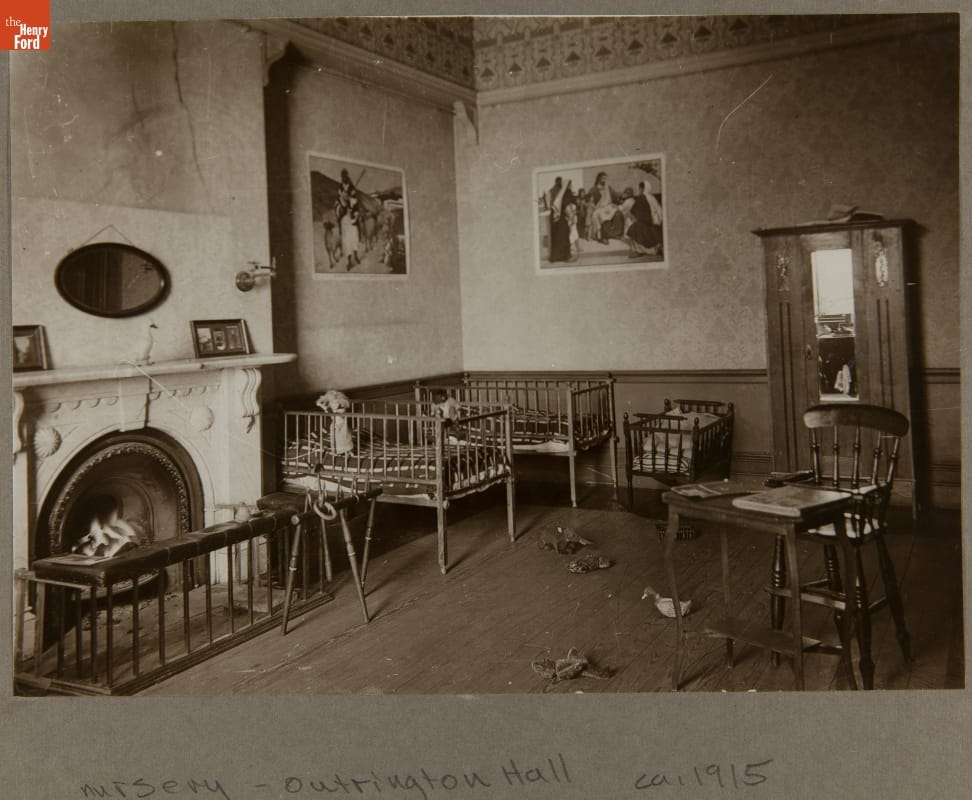
- Nursery for Belgian Refugee Children, Oughtrington Hall, 1914-1918 - Percival Perry, chairman of Ford Motor Company Limited (Ford of Britain) during World War I, relayed the plight of Belgian refugees to Henry and Clara Ford. With their authority, Perry leased Oughtrington Hall to accommodate a select group of Belgian refugees. The renovated mansion on the 30-acre estate became a temporary respite where the displaced found food, shelter, education, and work.
- 1915
- Collections - Artifact
Nursery for Belgian Refugee Children, Oughtrington Hall, 1914-1918
Percival Perry, chairman of Ford Motor Company Limited (Ford of Britain) during World War I, relayed the plight of Belgian refugees to Henry and Clara Ford. With their authority, Perry leased Oughtrington Hall to accommodate a select group of Belgian refugees. The renovated mansion on the 30-acre estate became a temporary respite where the displaced found food, shelter, education, and work.
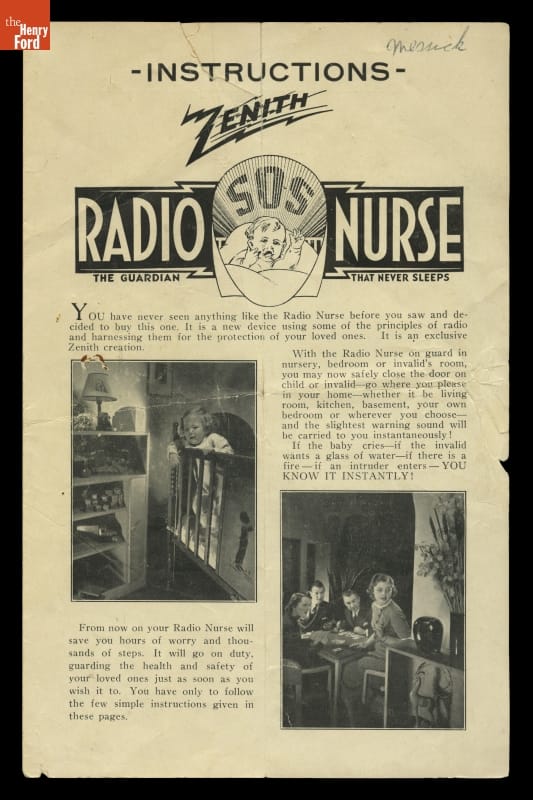
- Instructions for "Zenith Radio Nurse" Baby Monitor, 1938 -
- 1938
- Collections - Artifact
Instructions for "Zenith Radio Nurse" Baby Monitor, 1938