
Search
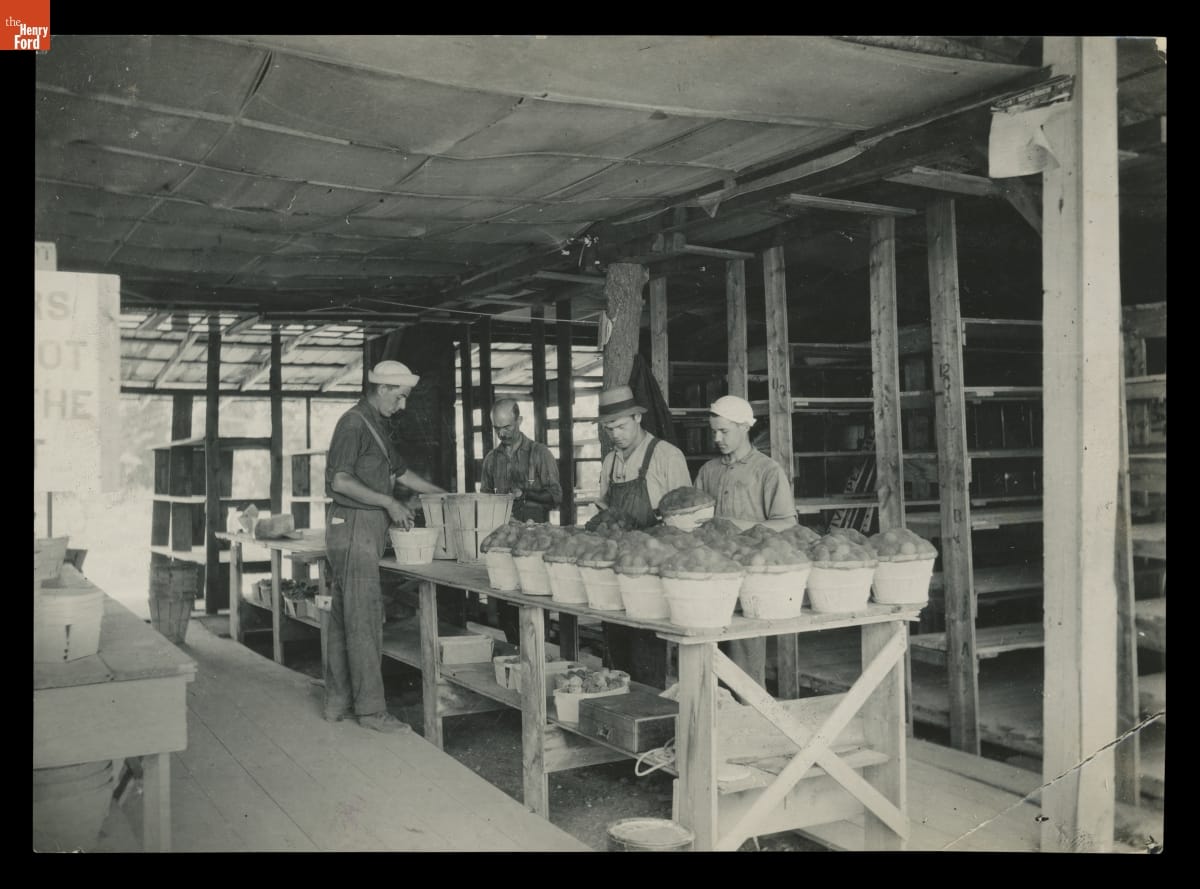
- Packing Peaches, circa 1923 -
- circa 1923
- Collections - Artifact
Packing Peaches, circa 1923
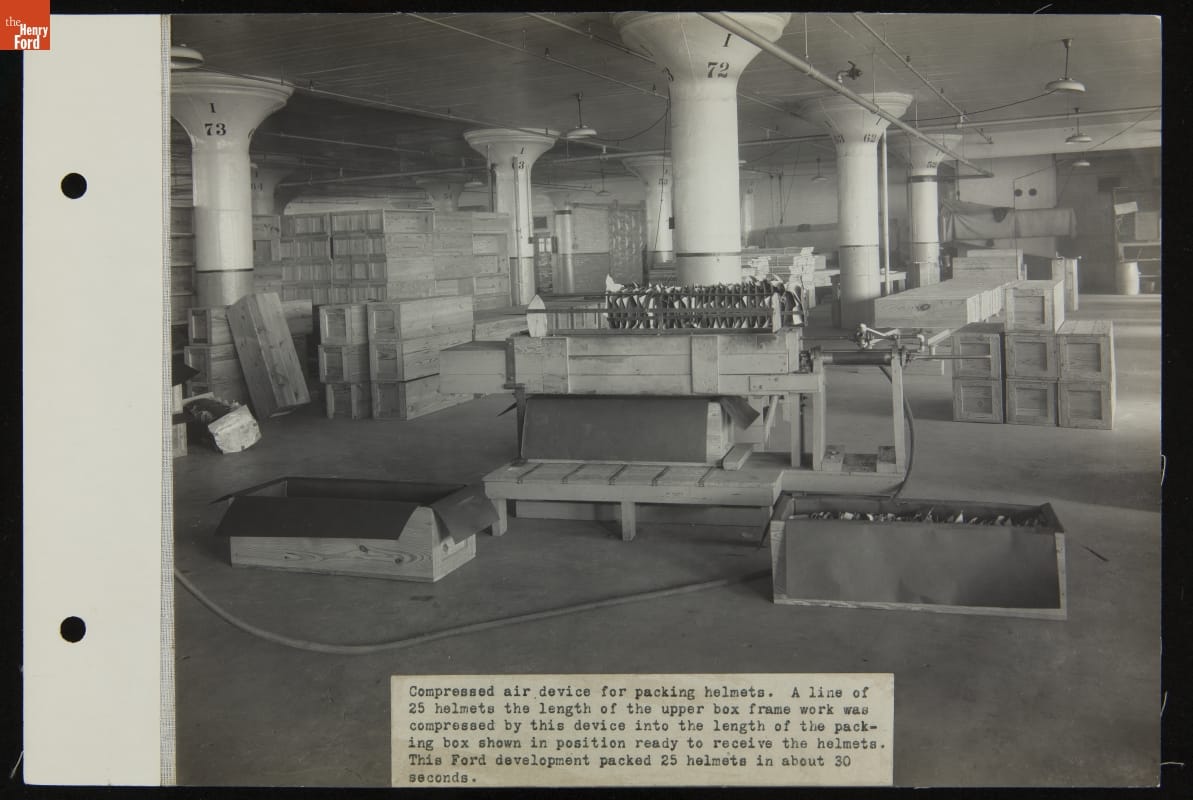
- Compressed Air Device for Packing Helmets during World War I, Ford Motor Company Philadelphia Plant, 1917-1918 - When the United States entered World War I, American automobile companies turned some of their manufacturing capacity to the production of war materiel. Ford Motor Company received a contract to paint, assemble, and crate steel helmets for American soldiers. Altogether, Ford's Philadelphia plant processed more than 2.7 million helmets at a rate as high as 40,000 each day.
- 1917-1918
- Collections - Artifact
Compressed Air Device for Packing Helmets during World War I, Ford Motor Company Philadelphia Plant, 1917-1918
When the United States entered World War I, American automobile companies turned some of their manufacturing capacity to the production of war materiel. Ford Motor Company received a contract to paint, assemble, and crate steel helmets for American soldiers. Altogether, Ford's Philadelphia plant processed more than 2.7 million helmets at a rate as high as 40,000 each day.
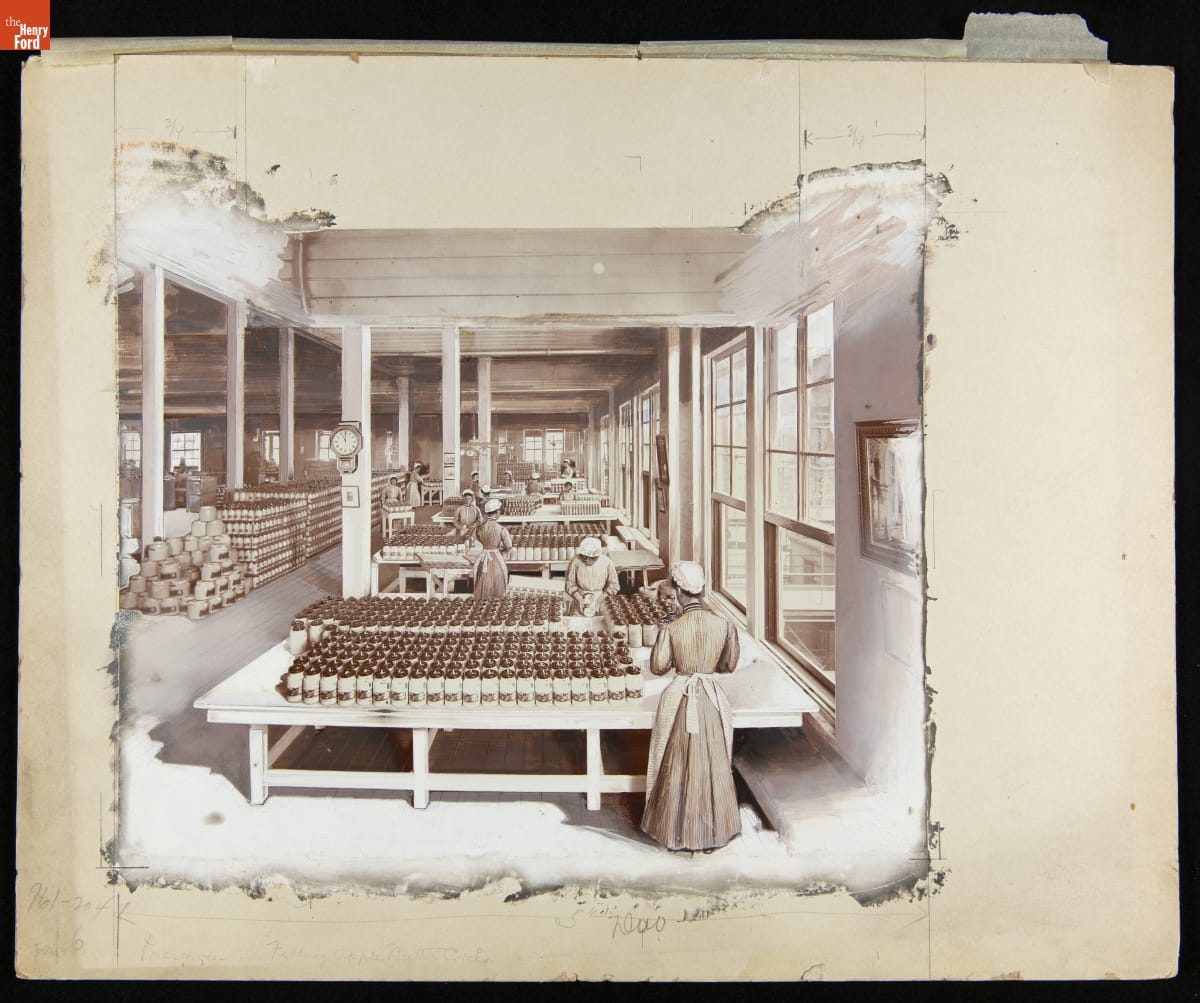
- Advertising Layout Photograph of Employees Filling Heinz Apple Butter Orders, circa 1910 - Before complete mechanization of the manufacturing process, many tasks at the Heinz factory were done by hand. Photographs of this process were often taken and then modified for advertising and publications. Pictured here female employees filling apple butter orders. While most Heinz products were sold in glass bottles or cans, fruit preserves and butters were sold in crocks.
- circa 1910
- Collections - Artifact
Advertising Layout Photograph of Employees Filling Heinz Apple Butter Orders, circa 1910
Before complete mechanization of the manufacturing process, many tasks at the Heinz factory were done by hand. Photographs of this process were often taken and then modified for advertising and publications. Pictured here female employees filling apple butter orders. While most Heinz products were sold in glass bottles or cans, fruit preserves and butters were sold in crocks.
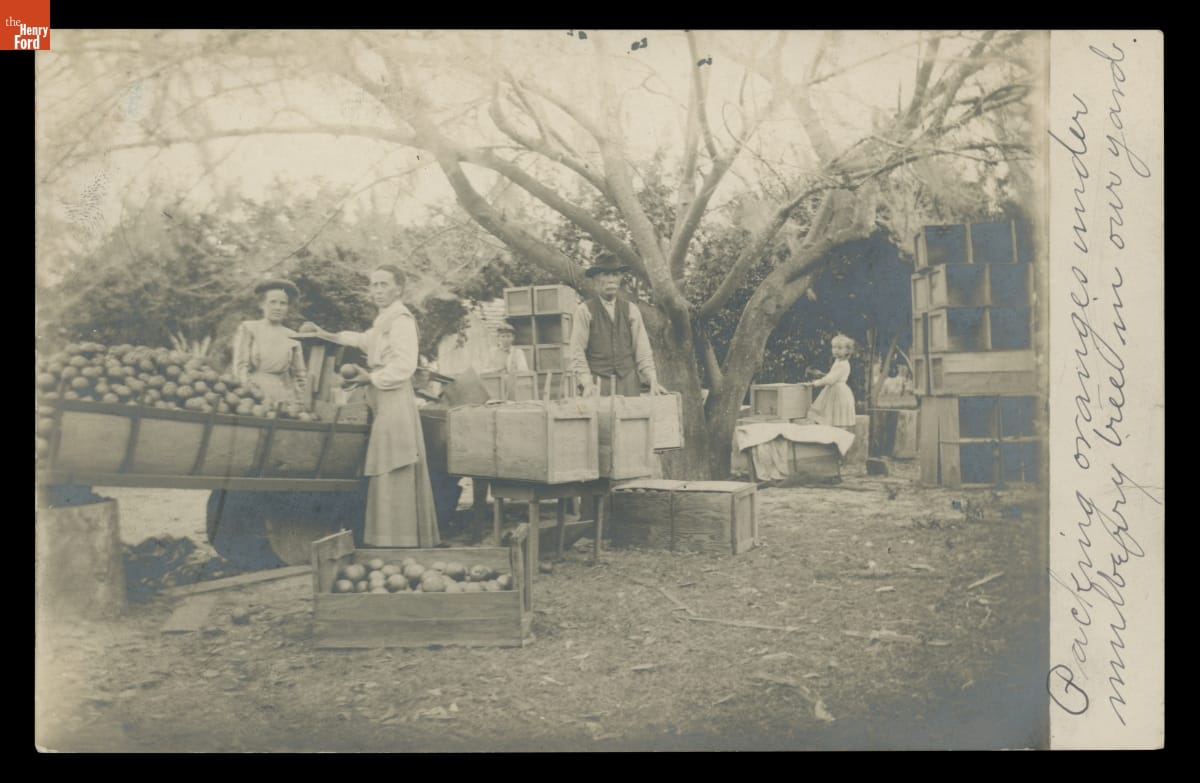
- Postcard, "Packing Oranges under Mulberry Tree in Our Yard," circa 1910 - Growers relied on laborers to pick and pack fruits, including oranges. The family pictured here explained that they packed 722 crates for a nearby grower. Each member of the family played a role. Women sorted large oranges, men moved crates, and children hammered crates together. The crates protected the oranges in transit to packing facilities or wholesale outlets.
- circa 1910
- Collections - Artifact
Postcard, "Packing Oranges under Mulberry Tree in Our Yard," circa 1910
Growers relied on laborers to pick and pack fruits, including oranges. The family pictured here explained that they packed 722 crates for a nearby grower. Each member of the family played a role. Women sorted large oranges, men moved crates, and children hammered crates together. The crates protected the oranges in transit to packing facilities or wholesale outlets.
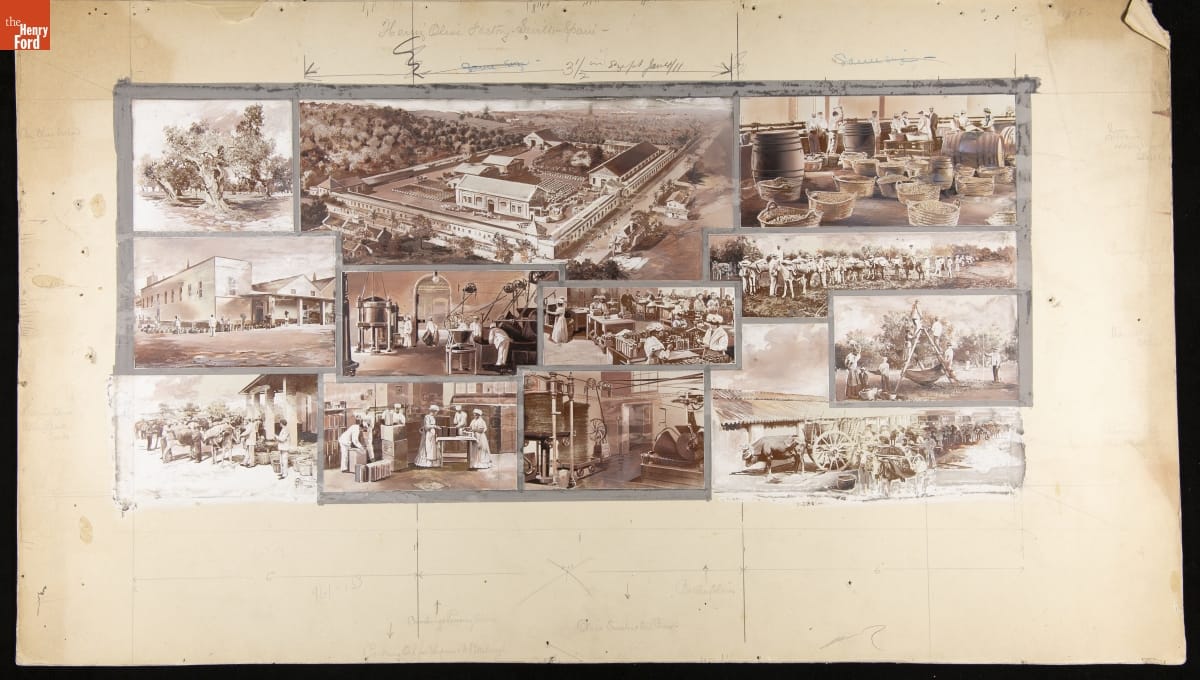
- Photomontage Showing Heinz Employees Processing Olives at the Heinz Factory in Seville, Spain, June 17, 1909 - Photographs of the H.J. Heinz factory -- including buildings, employees, and the manufacturing process -- were often taken and then modified for advertising and publications. This advertising layout features several modified photographs of the olive processing facility in Seville, Spain. The arrangement of these photos, featured in the catalog, "Home of the 57 Varieties," is a visual representation of how Heinz olive products are made.
- June 17, 1909
- Collections - Artifact
Photomontage Showing Heinz Employees Processing Olives at the Heinz Factory in Seville, Spain, June 17, 1909
Photographs of the H.J. Heinz factory -- including buildings, employees, and the manufacturing process -- were often taken and then modified for advertising and publications. This advertising layout features several modified photographs of the olive processing facility in Seville, Spain. The arrangement of these photos, featured in the catalog, "Home of the 57 Varieties," is a visual representation of how Heinz olive products are made.
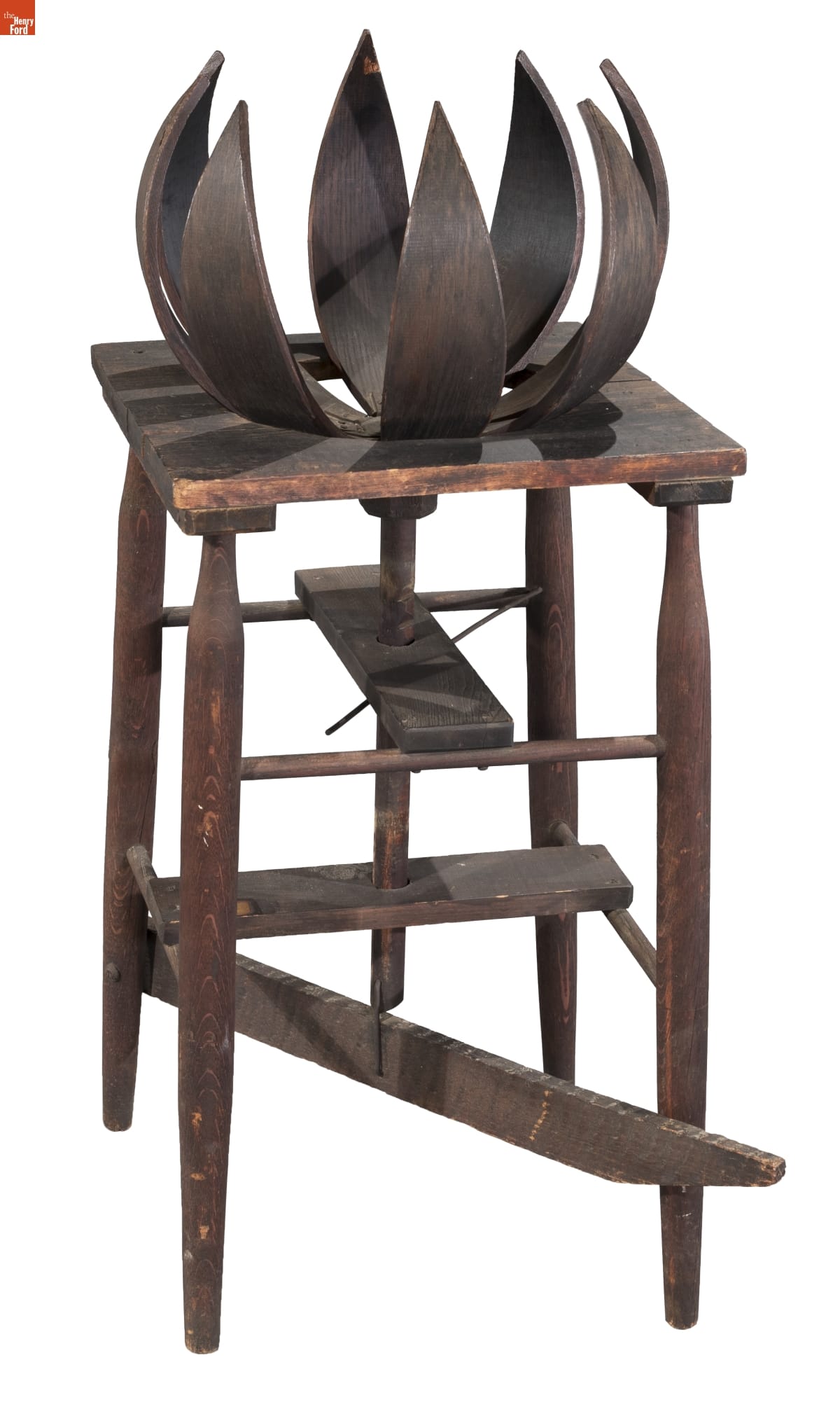
- Fleece Tying Apparatus, circa 1875 -
- circa 1875
- Collections - Artifact
Fleece Tying Apparatus, circa 1875
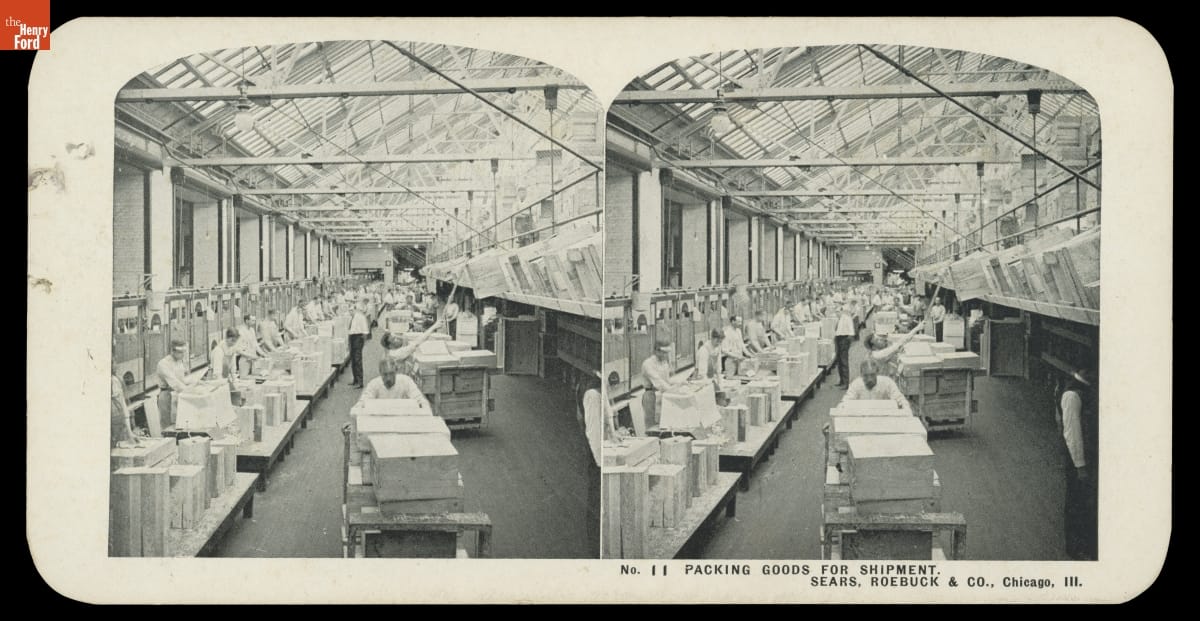
- "Packing Goods for Shipment. Sears, Roebuck & Co., Chicago, Ill.," 1906-1908 - Mail-order firm Sears, Roebuck, & Co. had become one of America's largest corporations by the early 1900s. Sears was particularly popular among rural Americans, as it offered better options, lower costs, and more efficient delivery methods than traditional general stores. This stereograph, one of a set of 50 sold through the Sears catalog beginning in 1908, offered a behind-the-scenes look at the company's operation.
- 1906-1908
- Collections - Artifact
"Packing Goods for Shipment. Sears, Roebuck & Co., Chicago, Ill.," 1906-1908
Mail-order firm Sears, Roebuck, & Co. had become one of America's largest corporations by the early 1900s. Sears was particularly popular among rural Americans, as it offered better options, lower costs, and more efficient delivery methods than traditional general stores. This stereograph, one of a set of 50 sold through the Sears catalog beginning in 1908, offered a behind-the-scenes look at the company's operation.
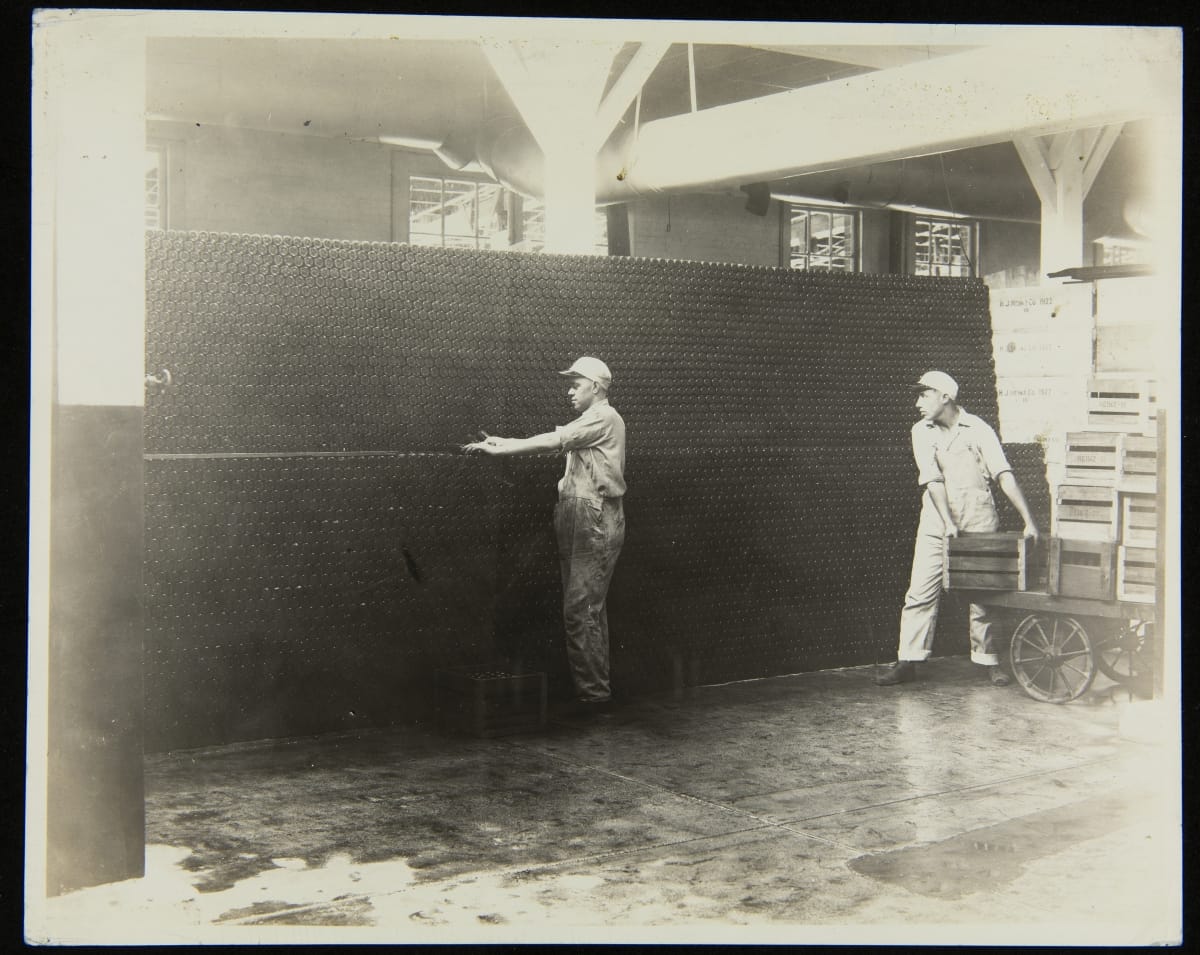
- The First Heinz Tomato Ketchup Shipment of Year for the Bowling Green, Ohio Factory, 1923 - Before complete mechanization of the manufacturing process, many tasks at the Heinz factory were done by hand. The H.J. Heinz Company documented the many departments of the manufacturing process through photographs. This photograph was taken at the Bowling Green, Ohio, factory to document the year's first shipment of ketchup in 1923.
- 1923
- Collections - Artifact
The First Heinz Tomato Ketchup Shipment of Year for the Bowling Green, Ohio Factory, 1923
Before complete mechanization of the manufacturing process, many tasks at the Heinz factory were done by hand. The H.J. Heinz Company documented the many departments of the manufacturing process through photographs. This photograph was taken at the Bowling Green, Ohio, factory to document the year's first shipment of ketchup in 1923.
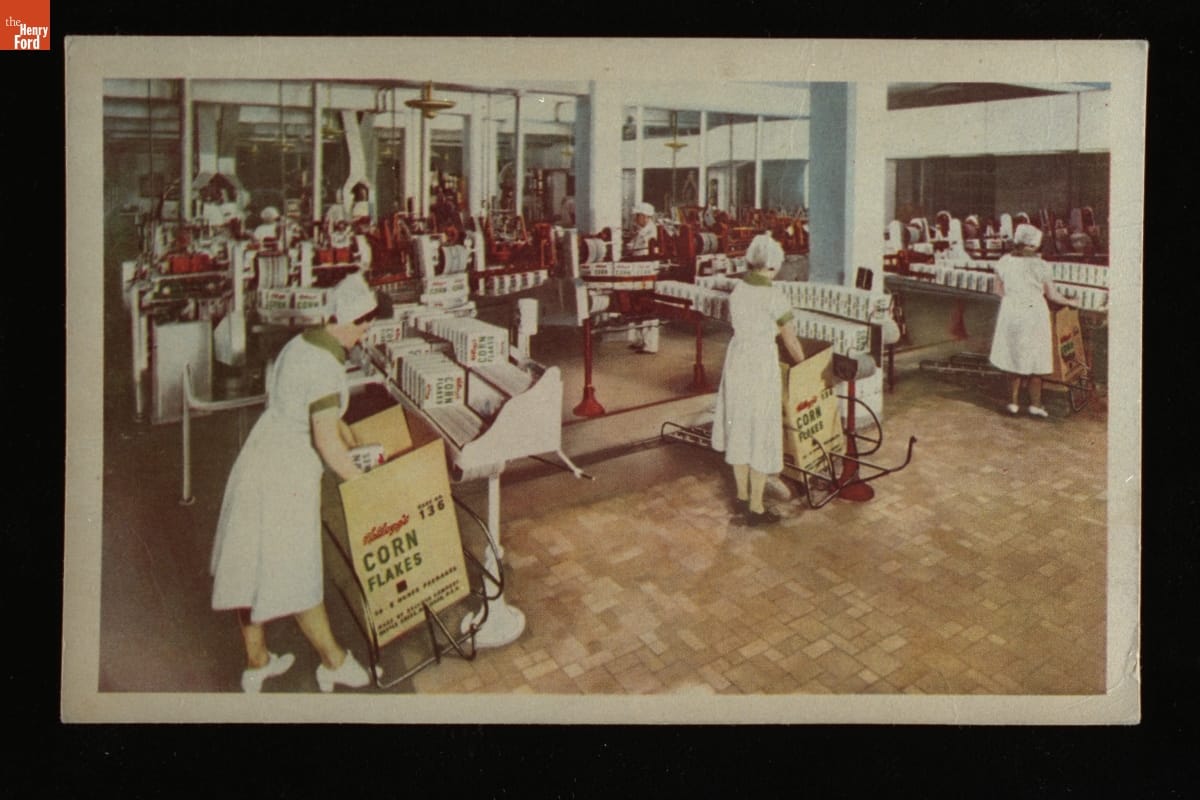
- Packing Room at the Kelloggs Plant in Battle Creek, Michigan, circa 1935 -
- circa 1935
- Collections - Artifact
Packing Room at the Kelloggs Plant in Battle Creek, Michigan, circa 1935
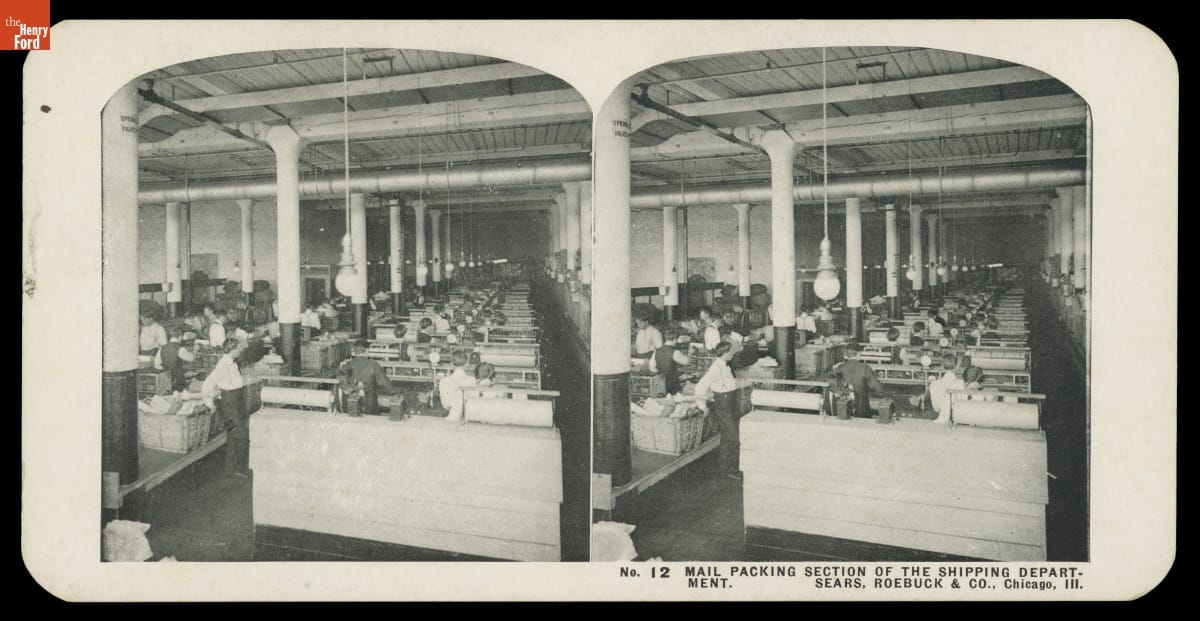
- "Mail Packing Section of the Shipping Department. Sears, Roebuck & Co., Chicago, Ill.," 1906-1908 - Mail-order firm Sears, Roebuck, & Co. had become one of America's largest corporations by the early 1900s. Sears was particularly popular among rural Americans, as it offered better options, lower costs, and more efficient delivery methods than traditional general stores. This stereograph, one of a set of 50 sold through the Sears catalog beginning in 1908, offered a behind-the-scenes look at the company's operation.
- 1906-1908
- Collections - Artifact
"Mail Packing Section of the Shipping Department. Sears, Roebuck & Co., Chicago, Ill.," 1906-1908
Mail-order firm Sears, Roebuck, & Co. had become one of America's largest corporations by the early 1900s. Sears was particularly popular among rural Americans, as it offered better options, lower costs, and more efficient delivery methods than traditional general stores. This stereograph, one of a set of 50 sold through the Sears catalog beginning in 1908, offered a behind-the-scenes look at the company's operation.