
Search
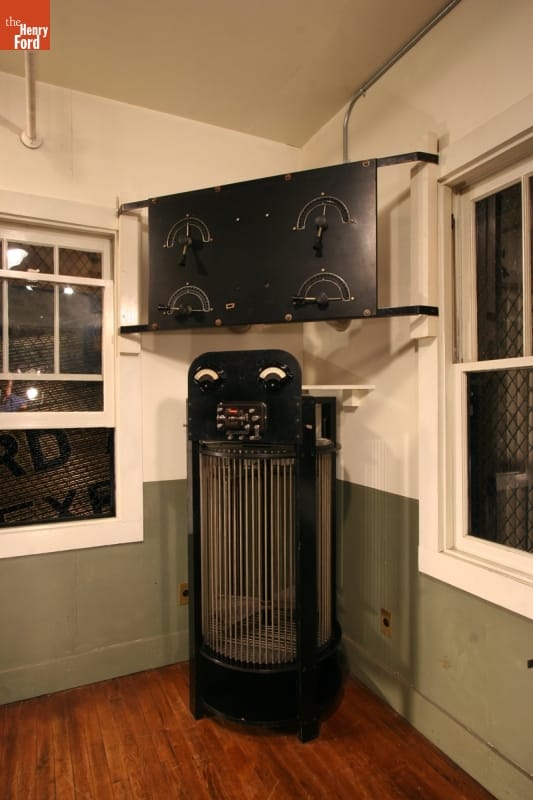
- Radio Goniometer Used at Ford Airport, circa 1927 - The radio beacon may be Henry Ford's most important contribution to aviation. Early pilots depended on landmarks, preventing reliable navigation in bad weather. Ford's engineers developed a radio beacon that simultaneously transmitted the Morse code letter "A" (dot-dash) in one direction and the letter "N" (dash-dot) in another. The pilot steered until the separate signals merged into a steady hum.
- circa 1927
- Collections - Artifact
Radio Goniometer Used at Ford Airport, circa 1927
The radio beacon may be Henry Ford's most important contribution to aviation. Early pilots depended on landmarks, preventing reliable navigation in bad weather. Ford's engineers developed a radio beacon that simultaneously transmitted the Morse code letter "A" (dot-dash) in one direction and the letter "N" (dash-dot) in another. The pilot steered until the separate signals merged into a steady hum.
- RCA Radio Direction Finder, 1918-1920 -
- 1918-1920
- Collections - Artifact
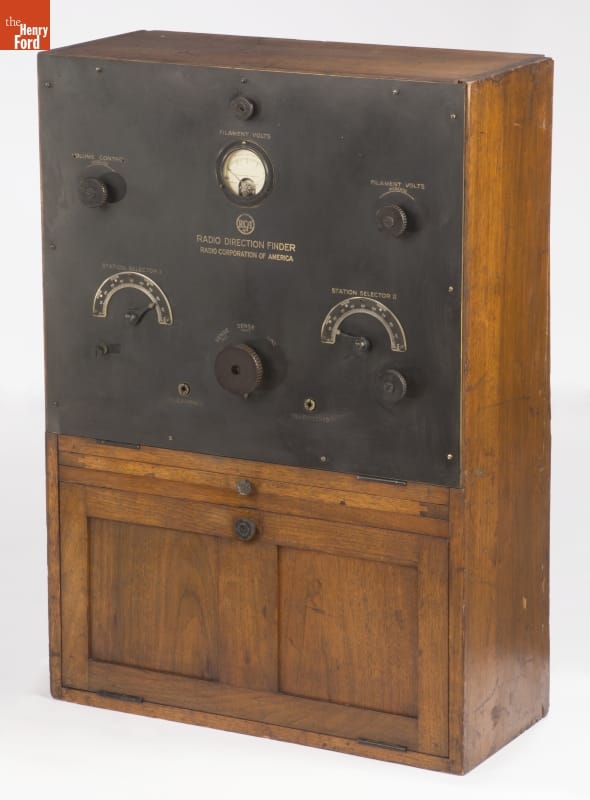
RCA Radio Direction Finder, 1918-1920
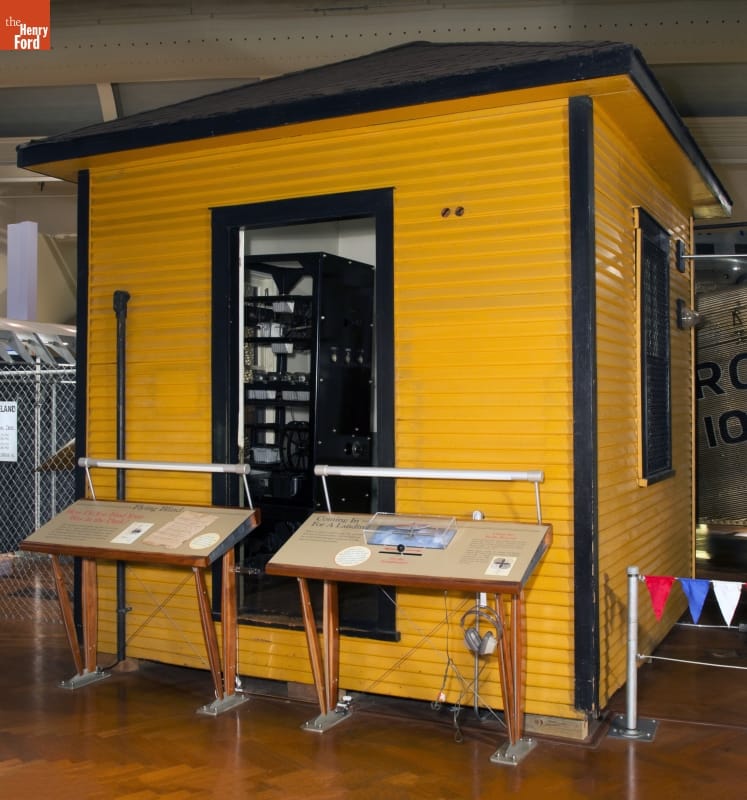
- Radio Beacon Station Building Used at Ford Airport, 1927 - Early pilots depended on visible landmarks, preventing reliable navigation in bad weather. Henry Ford's engineers developed a radio beacon that simultaneously transmitted two Morse code letters. Pilots steered until the separate signals merged into one steady hum. The original beacon station building at Ford Airport was removed in 1933 and is now displayed in Henry Ford Museum of American Innovation.
- 1927
- Collections - Artifact
Radio Beacon Station Building Used at Ford Airport, 1927
Early pilots depended on visible landmarks, preventing reliable navigation in bad weather. Henry Ford's engineers developed a radio beacon that simultaneously transmitted two Morse code letters. Pilots steered until the separate signals merged into one steady hum. The original beacon station building at Ford Airport was removed in 1933 and is now displayed in Henry Ford Museum of American Innovation.
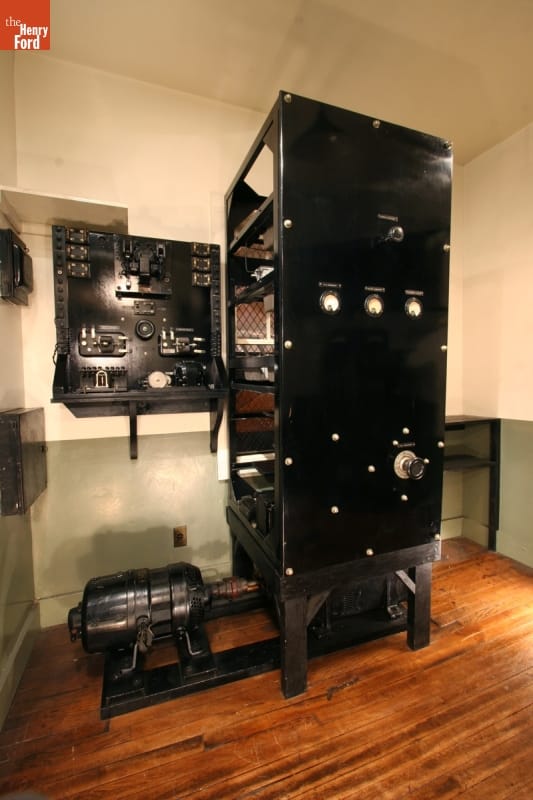
- Radio Beacon Transmitter Used at Ford Airport, 1927 - The radio beacon may be Henry Ford's most important contribution to aviation. Early pilots depended on landmarks, preventing reliable navigation in bad weather. Ford's engineers developed a radio beacon that simultaneously transmitted the Morse code letter "A" (dot-dash) in one direction and the letter "N" (dash-dot) in another. The pilot steered until the separate signals merged into a steady hum.
- 1927
- Collections - Artifact
Radio Beacon Transmitter Used at Ford Airport, 1927
The radio beacon may be Henry Ford's most important contribution to aviation. Early pilots depended on landmarks, preventing reliable navigation in bad weather. Ford's engineers developed a radio beacon that simultaneously transmitted the Morse code letter "A" (dot-dash) in one direction and the letter "N" (dash-dot) in another. The pilot steered until the separate signals merged into a steady hum.
- Radio Receiver, Type SE-950, Used by Charles Francis Jenkins in Experiment Detecting Radio Signals from Mars - The SE950 was produced commercially during WWI as a rugged field radio; its versatile nature allowed it to remain useful in Charles Francis Jenkins' laboratory. The radio was used in a curious 1924 experiment as Mars drew near Earth's orbit. The SE950 was connected to a device capable of photographically recording any "alien communication" broadcast during military-imposed radio silence.
- August 01, 1924
- Collections - Artifact
Radio Receiver, Type SE-950, Used by Charles Francis Jenkins in Experiment Detecting Radio Signals from Mars
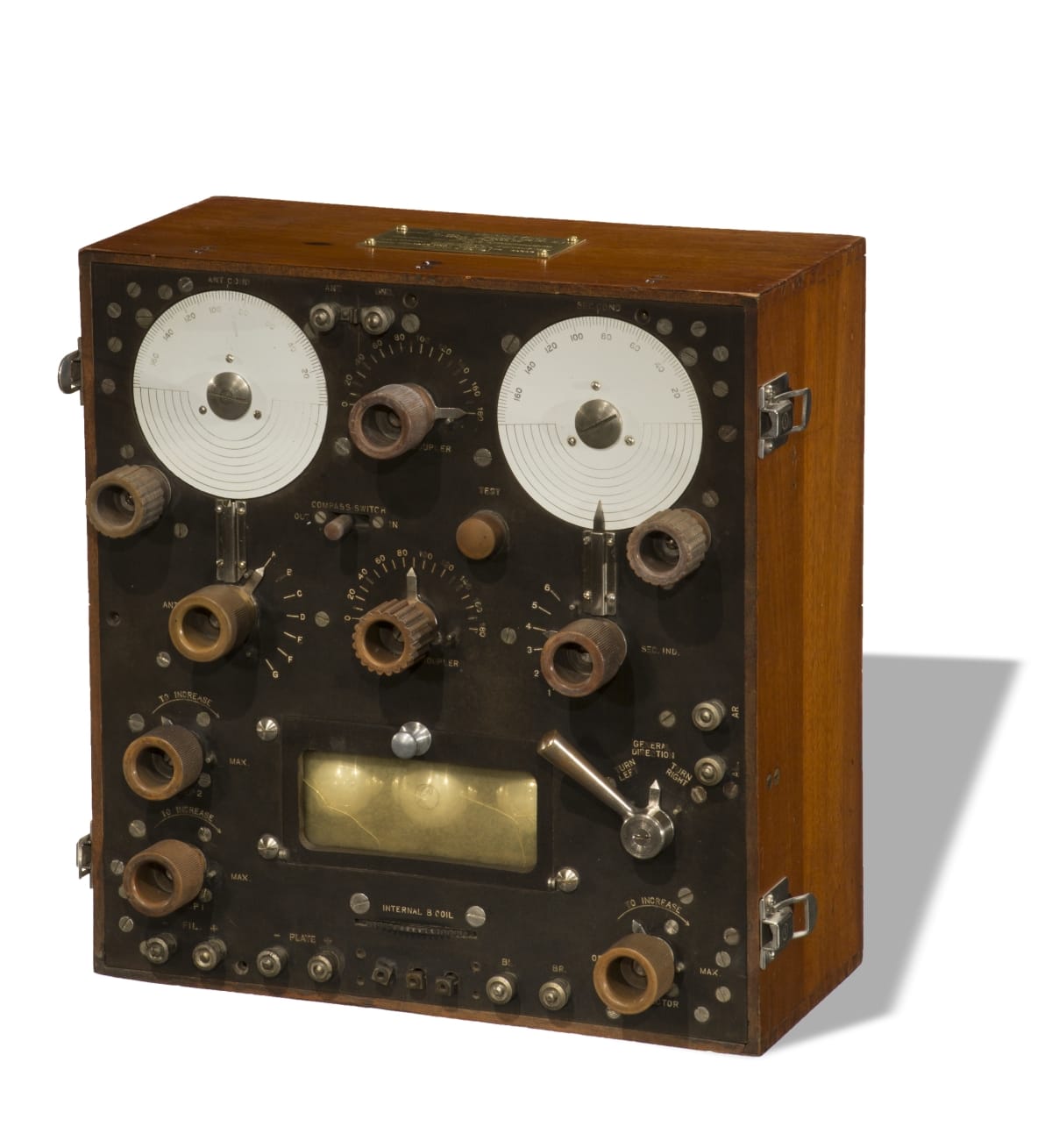
The SE950 was produced commercially during WWI as a rugged field radio; its versatile nature allowed it to remain useful in Charles Francis Jenkins' laboratory. The radio was used in a curious 1924 experiment as Mars drew near Earth's orbit. The SE950 was connected to a device capable of photographically recording any "alien communication" broadcast during military-imposed radio silence.
- Radio Receiver, Type SE-950, 1918 -
- March 26, 1918
- Collections - Artifact
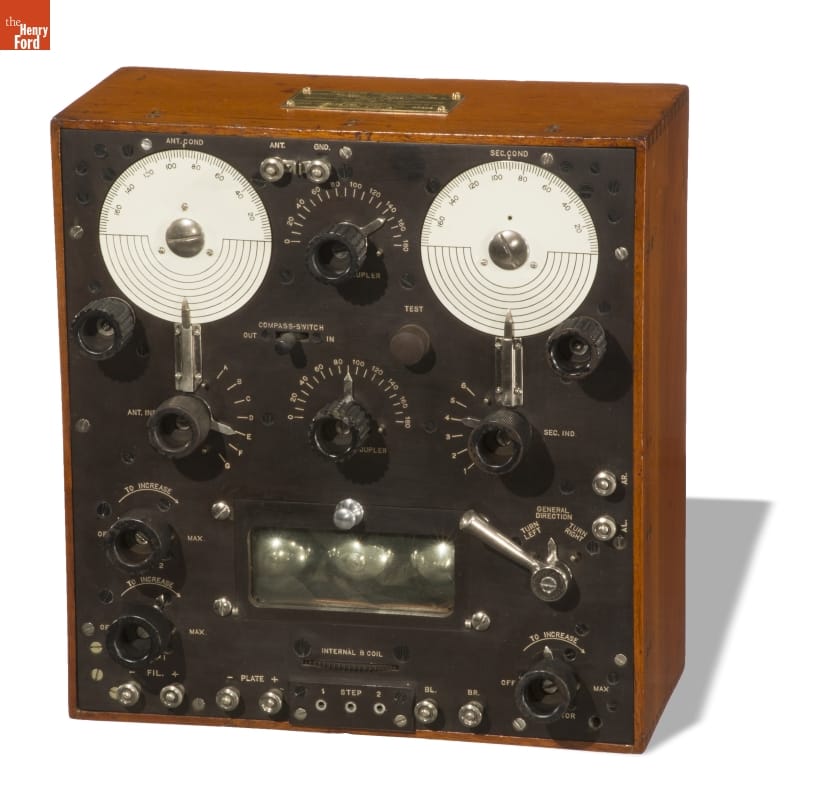
Radio Receiver, Type SE-950, 1918