
Search
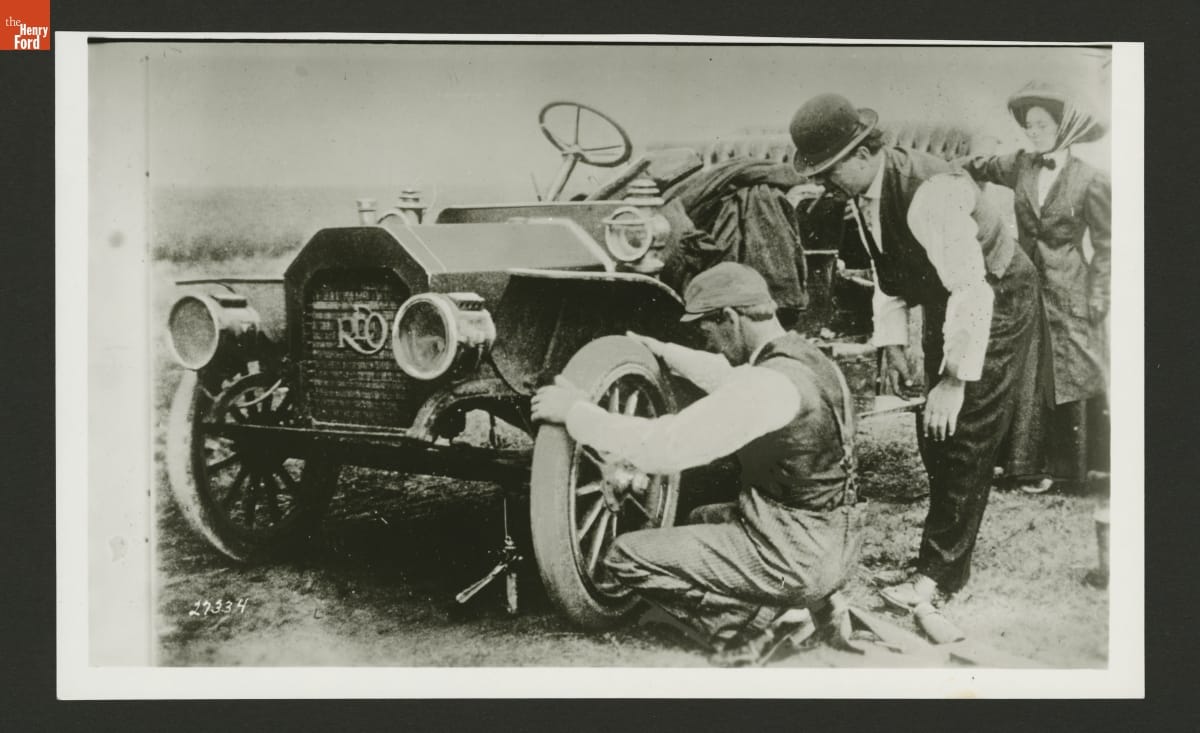
- Fixing the Tire on an REO Automobile, 1900-1909 - Numerous tire blowouts plagued motorists on the poor roads of the early 20th century. The man in this photograph is either removing a tire for repair or replacing an already repaired tire. The REO Motor Car Company was a Lansing, Michigan-based company that began producing cars in 1905.
- 1912
- Collections - Artifact
Fixing the Tire on an REO Automobile, 1900-1909
Numerous tire blowouts plagued motorists on the poor roads of the early 20th century. The man in this photograph is either removing a tire for repair or replacing an already repaired tire. The REO Motor Car Company was a Lansing, Michigan-based company that began producing cars in 1905.
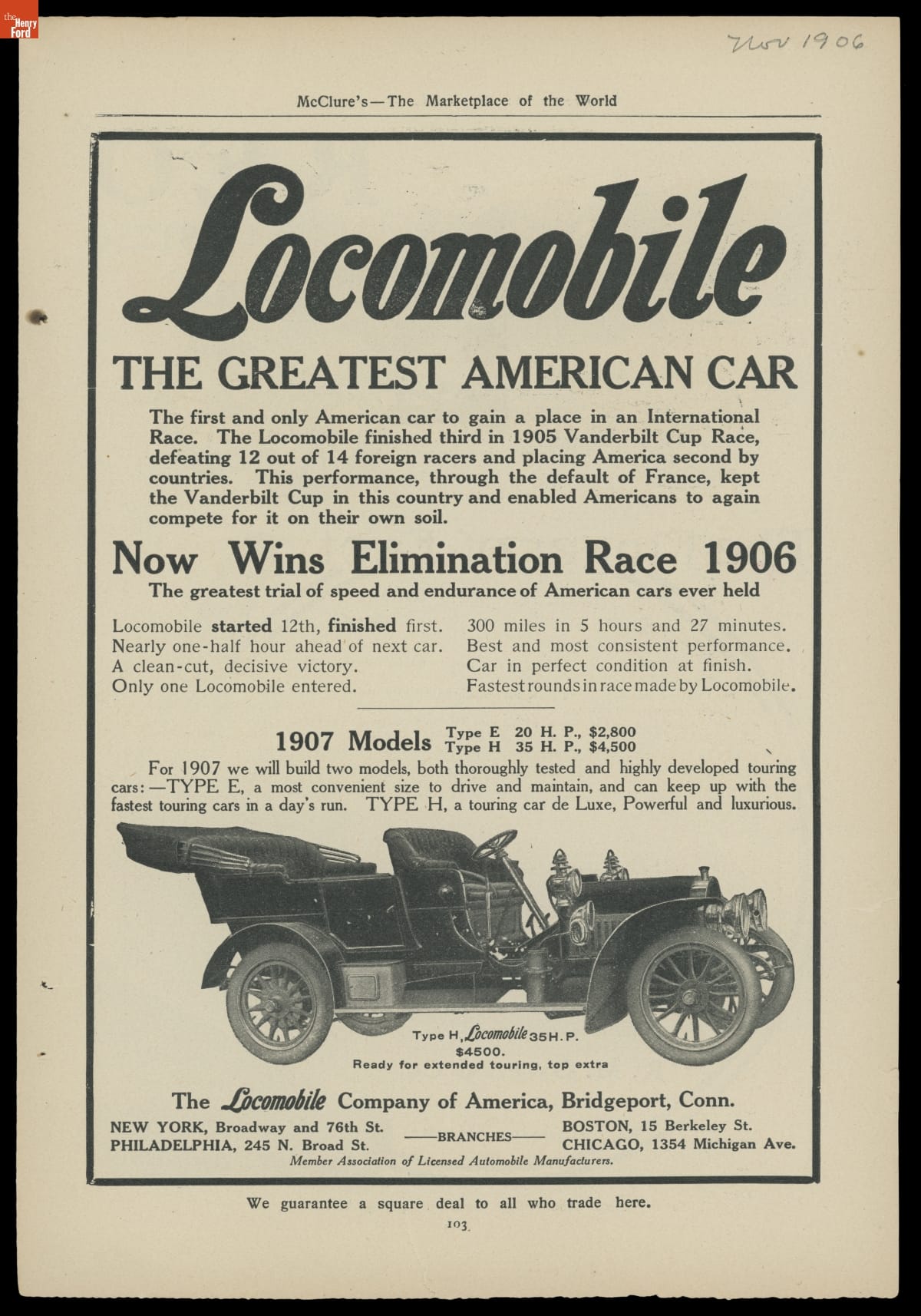
- Locomobile Company of America and Reo Motor Car Company Advertisements, November 1906 - Racing and advertising have always gone hand in hand in the automotive industry. Locomobile promoted its success at 1905 and 1906 Vanderbilt Cup racing events in this ad, published in <em>McClure's</em> magazine in November 1906. Two years later, a Locomobile would win the Vanderbilt Cup -- the first American car to win that major race.
- November 01, 1906
- Collections - Artifact
Locomobile Company of America and Reo Motor Car Company Advertisements, November 1906
Racing and advertising have always gone hand in hand in the automotive industry. Locomobile promoted its success at 1905 and 1906 Vanderbilt Cup racing events in this ad, published in McClure's magazine in November 1906. Two years later, a Locomobile would win the Vanderbilt Cup -- the first American car to win that major race.
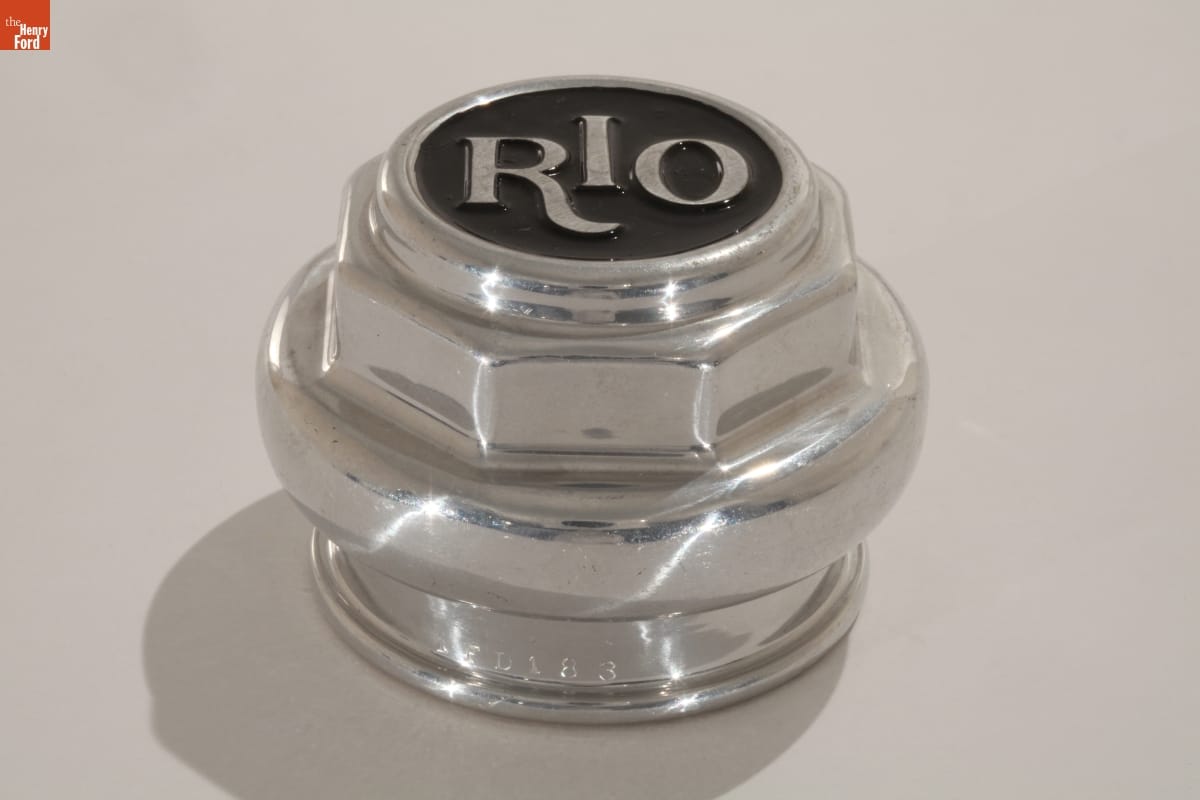
- RIO Hubcap, 1919-1929 - Early automobile wheels had a central hub with a greased wheel bearing. Hub caps kept grease in and dust out. As wheels evolved and hubcaps became functionally unnecessary, they remained important to both manufacturers -- who branded wheel covers with maker names or logos -- and consumers -- who identified with hubcaps as statements about their cars and themselves.
- 1919-1929
- Collections - Artifact
RIO Hubcap, 1919-1929
Early automobile wheels had a central hub with a greased wheel bearing. Hub caps kept grease in and dust out. As wheels evolved and hubcaps became functionally unnecessary, they remained important to both manufacturers -- who branded wheel covers with maker names or logos -- and consumers -- who identified with hubcaps as statements about their cars and themselves.
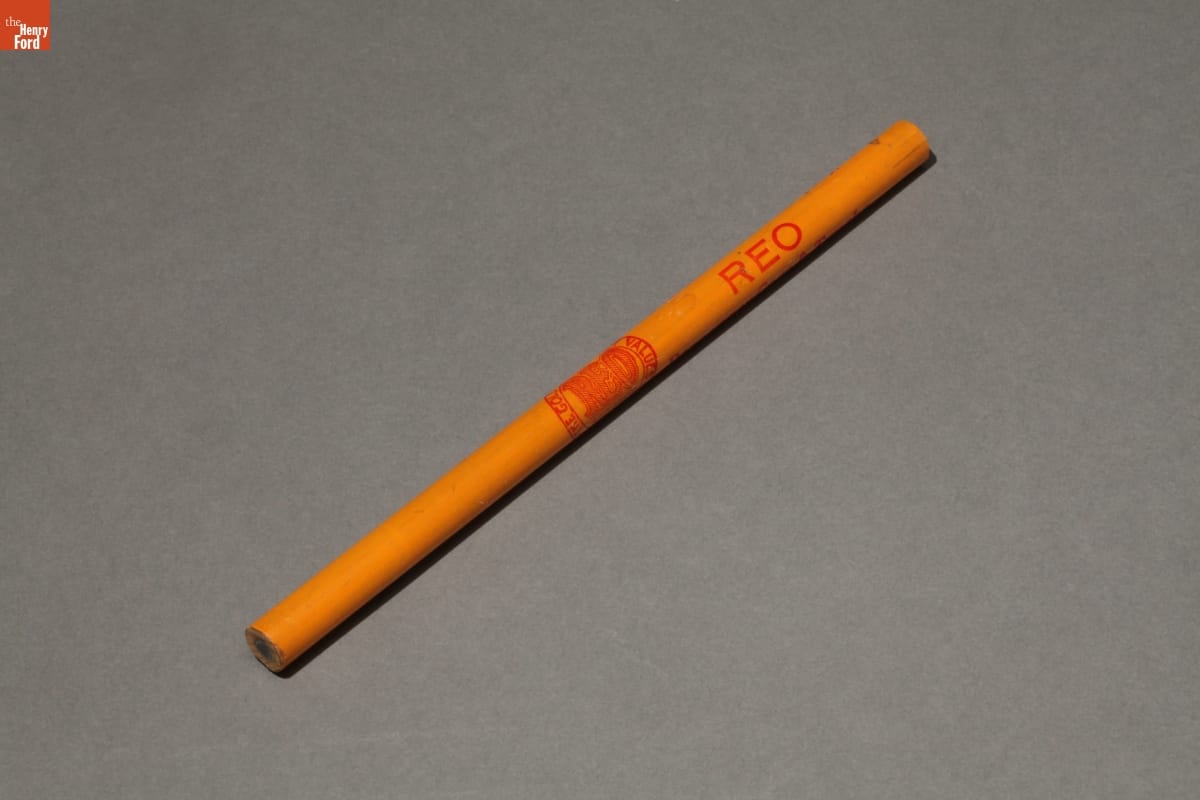
- REO Automobile Dealership Pencil, 1920-1929 - Promotional giveaways can place advertising messages deeper into people's lives than billboards or magazine ads. The power of branding -- coupled with consumer brand loyalty -- has also led to the creation of promotional items designed for sale to the public. The Davis Motor Car Company used this pencil giveaway to promote the REO brand along with their Greenville, Ohio, dealership.
- 1920-1929
- Collections - Artifact
REO Automobile Dealership Pencil, 1920-1929
Promotional giveaways can place advertising messages deeper into people's lives than billboards or magazine ads. The power of branding -- coupled with consumer brand loyalty -- has also led to the creation of promotional items designed for sale to the public. The Davis Motor Car Company used this pencil giveaway to promote the REO brand along with their Greenville, Ohio, dealership.
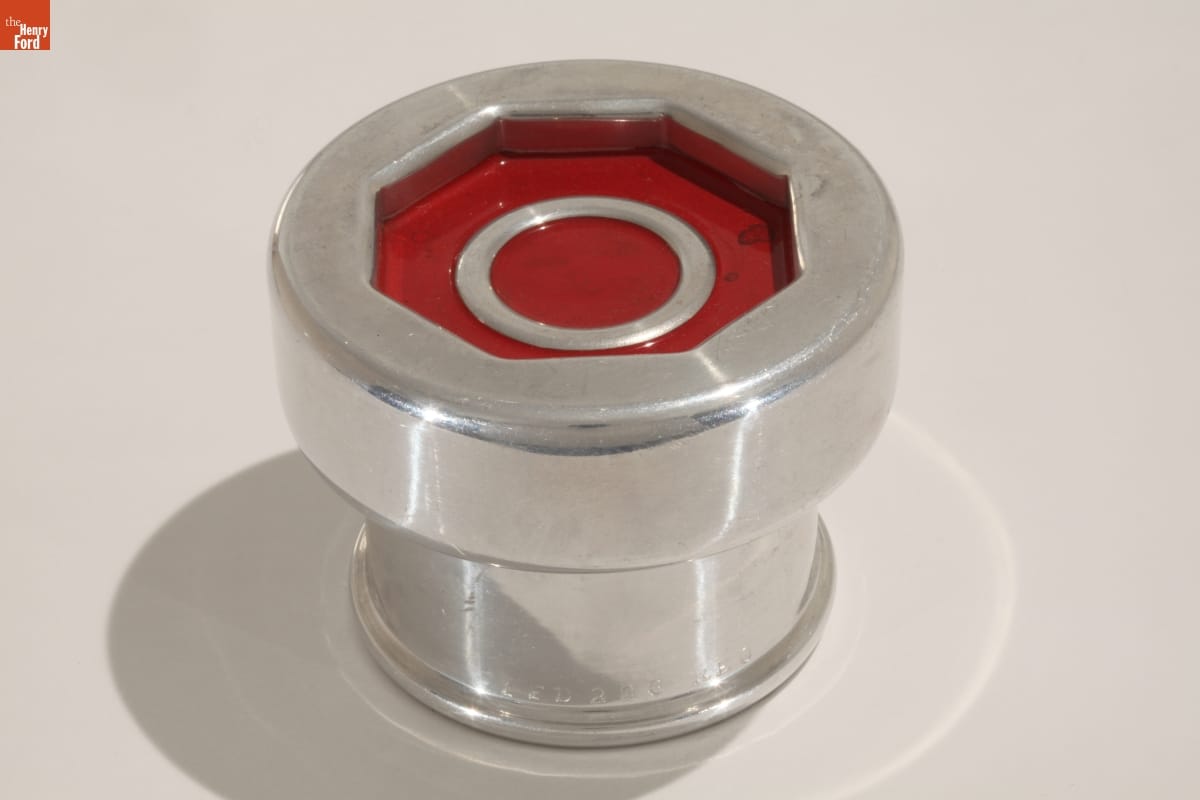
- REO Hubcap, circa 1930 - Early automobile wheels had a central hub with a greased wheel bearing. Hub caps kept grease in and dust out. As wheels evolved and hubcaps became functionally unnecessary, they remained important to both manufacturers -- who branded wheel covers with maker names or logos -- and consumers -- who identified with hubcaps as statements about their cars and themselves.
- circa 1930
- Collections - Artifact
REO Hubcap, circa 1930
Early automobile wheels had a central hub with a greased wheel bearing. Hub caps kept grease in and dust out. As wheels evolved and hubcaps became functionally unnecessary, they remained important to both manufacturers -- who branded wheel covers with maker names or logos -- and consumers -- who identified with hubcaps as statements about their cars and themselves.
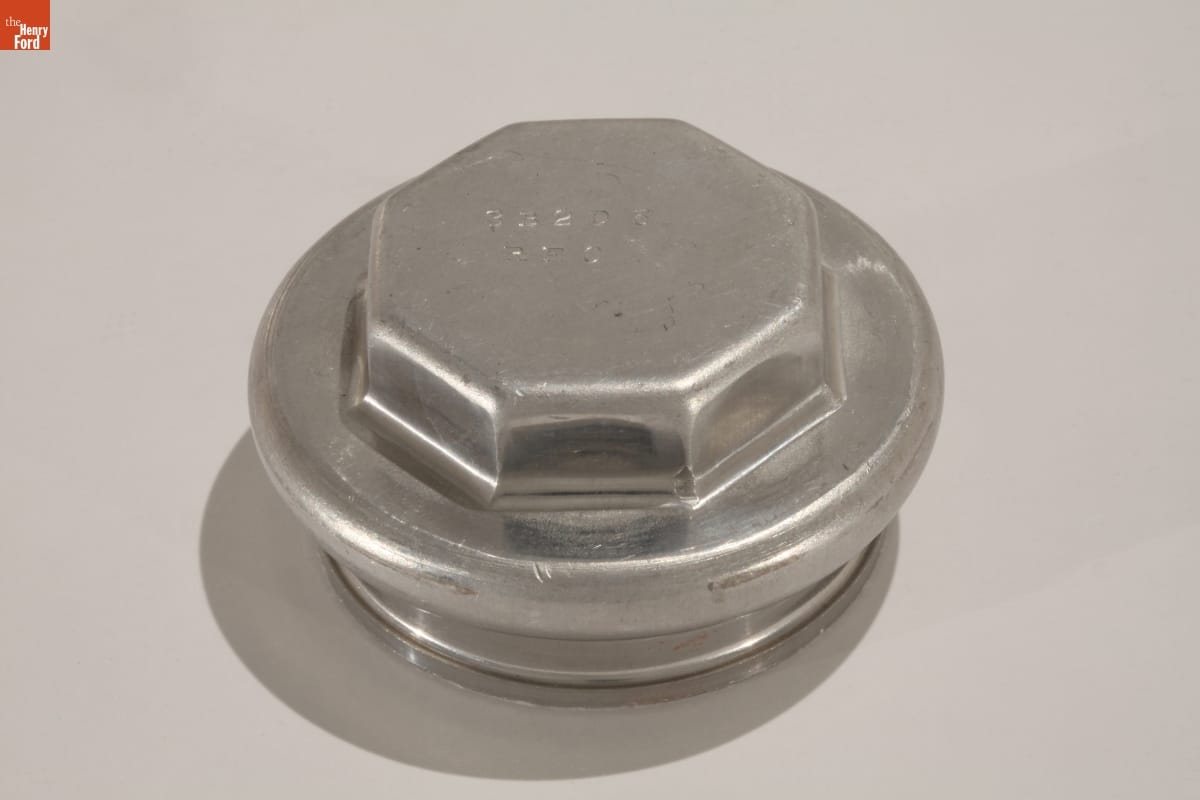
- REO Hubcap, 1920-1930 - Early automobile wheels had a central hub with a greased wheel bearing. Hub caps kept grease in and dust out. Beginning in 1915, the Aluminum Goods Manufacturing Company of Manitowoc, Wisconsin, supplied hubcaps -- including this one -- to many automotive manufacturers. Hubcaps became functionally unnecessary as wheels evolved, but they remained important components of style and marketing.
- 1920-1930
- Collections - Artifact
REO Hubcap, 1920-1930
Early automobile wheels had a central hub with a greased wheel bearing. Hub caps kept grease in and dust out. Beginning in 1915, the Aluminum Goods Manufacturing Company of Manitowoc, Wisconsin, supplied hubcaps -- including this one -- to many automotive manufacturers. Hubcaps became functionally unnecessary as wheels evolved, but they remained important components of style and marketing.
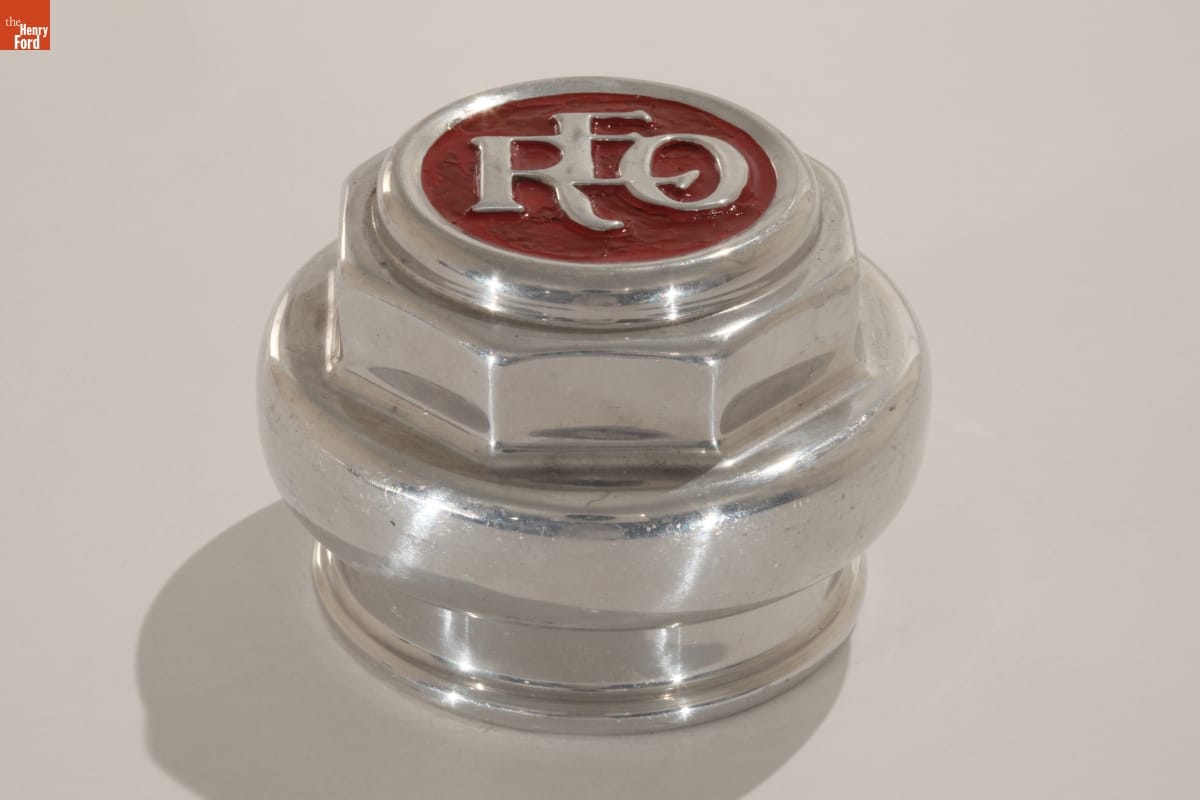
- REO Hubcap, 1920-1930 - Early automobile wheels had a central hub with a greased wheel bearing. Hub caps kept grease in and dust out. As wheels evolved and hubcaps became functionally unnecessary, they remained important to both manufacturers -- who branded wheel covers with maker names or logos -- and consumers -- who identified with hubcaps as statements about their cars and themselves.
- 1920-1930
- Collections - Artifact
REO Hubcap, 1920-1930
Early automobile wheels had a central hub with a greased wheel bearing. Hub caps kept grease in and dust out. As wheels evolved and hubcaps became functionally unnecessary, they remained important to both manufacturers -- who branded wheel covers with maker names or logos -- and consumers -- who identified with hubcaps as statements about their cars and themselves.
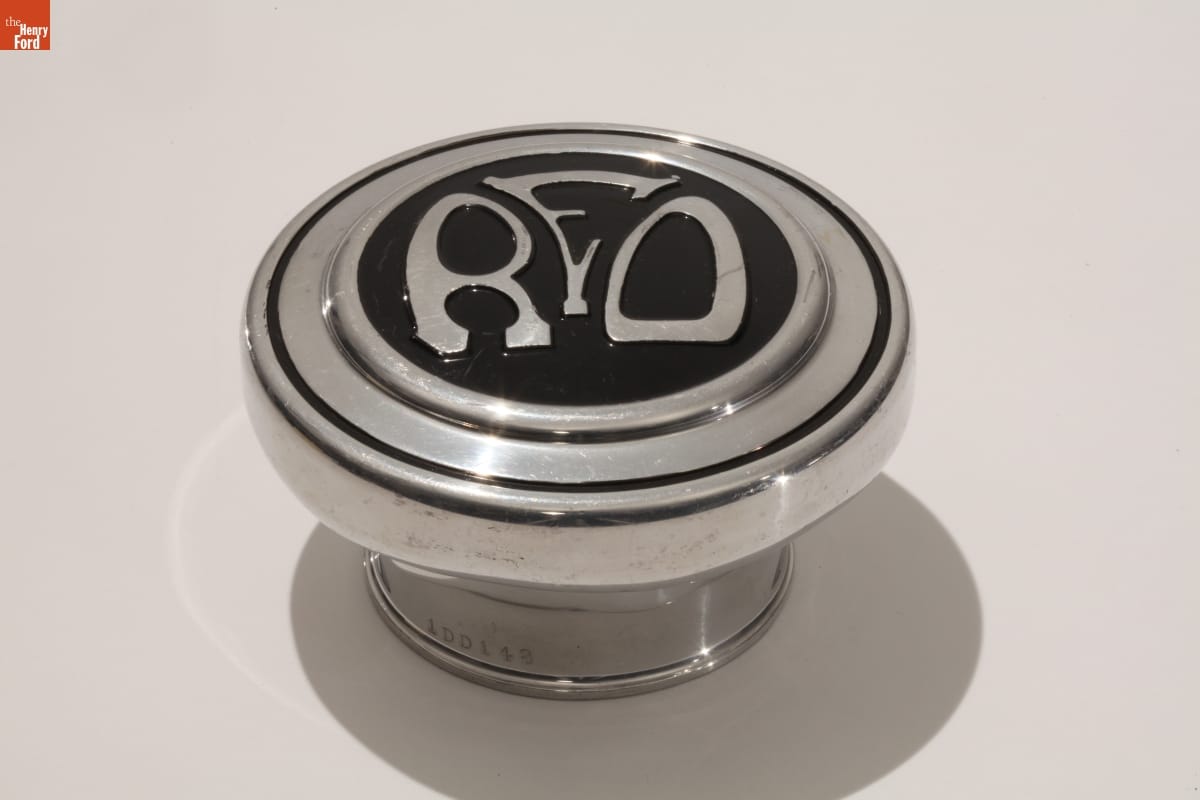
- REO Hubcap, 1920-1930 - An automobile manufacturer's badge is fundamental to the company's brand identity -- just as the maker's name is often important to <EM>our</EM> identity as consumers and drivers. Early automobile badges tended to be small and often discreetly located; today they have evolved into enlarged, prominently placed, and frequently symmetrical logos -- easy to recognize, even at a glance in a rear-view mirror.
- 1920-1930
- Collections - Artifact
REO Hubcap, 1920-1930
An automobile manufacturer's badge is fundamental to the company's brand identity -- just as the maker's name is often important to our identity as consumers and drivers. Early automobile badges tended to be small and often discreetly located; today they have evolved into enlarged, prominently placed, and frequently symmetrical logos -- easy to recognize, even at a glance in a rear-view mirror.
- REO Automobile Nameplate, circa 1910 - An automobile manufacturer's badge is fundamental to the company's brand identity -- just as the maker's name is often important to <EM>our</EM> identity as consumers and drivers. Early automobile badges tended to be small and often discreetly located; today they have evolved into enlarged, prominently placed, and frequently symmetrical logos -- easy to recognize, even at a glance in a rear-view mirror.

- circa 1910
- Collections - Artifact
REO Automobile Nameplate, circa 1910
An automobile manufacturer's badge is fundamental to the company's brand identity -- just as the maker's name is often important to our identity as consumers and drivers. Early automobile badges tended to be small and often discreetly located; today they have evolved into enlarged, prominently placed, and frequently symmetrical logos -- easy to recognize, even at a glance in a rear-view mirror.
- Wolverine 6 Hubcap, 1927-1928 - An automobile manufacturer's badge is fundamental to the company's brand identity -- just as the maker's name is often important to <EM>our</EM> identity as consumers and drivers. Early automobile badges tended to be small and often discreetly located; today they have evolved into enlarged, prominently placed, and frequently symmetrical logos -- easy to recognize, even at a glance in a rear-view mirror.
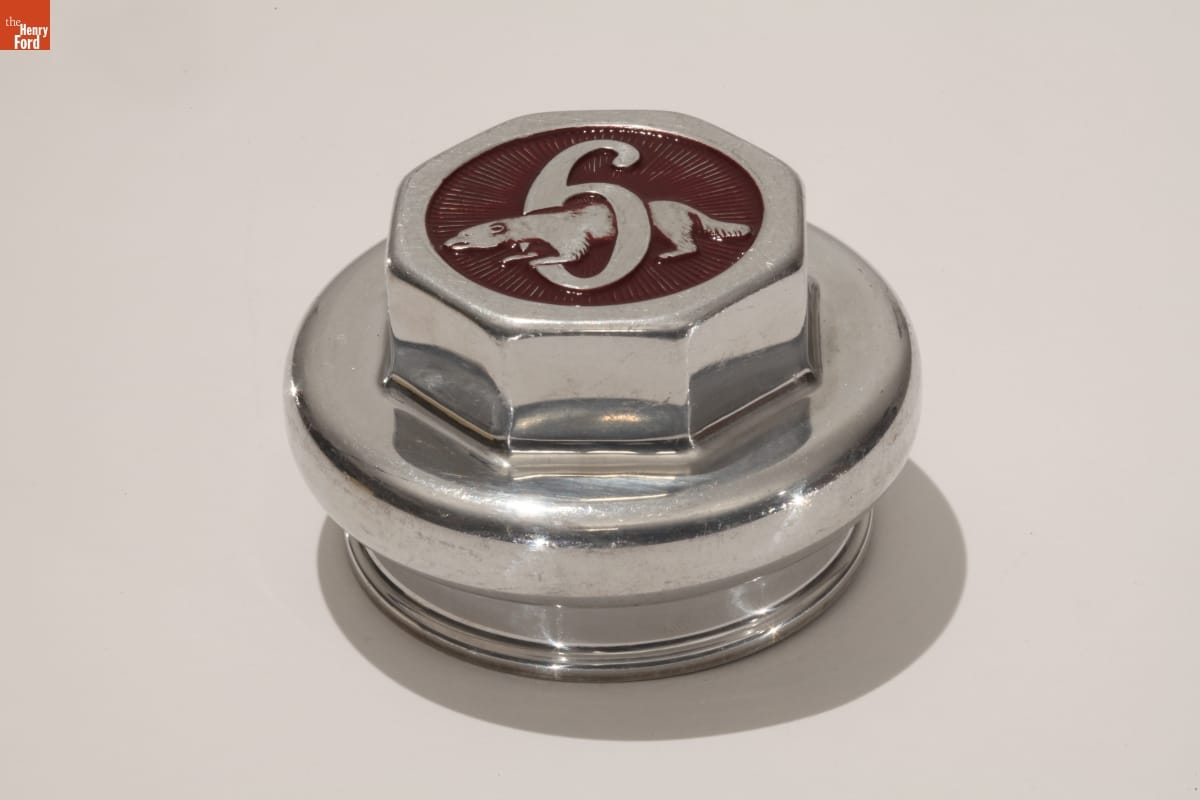
- 1927-1928
- Collections - Artifact
Wolverine 6 Hubcap, 1927-1928
An automobile manufacturer's badge is fundamental to the company's brand identity -- just as the maker's name is often important to our identity as consumers and drivers. Early automobile badges tended to be small and often discreetly located; today they have evolved into enlarged, prominently placed, and frequently symmetrical logos -- easy to recognize, even at a glance in a rear-view mirror.