
Search
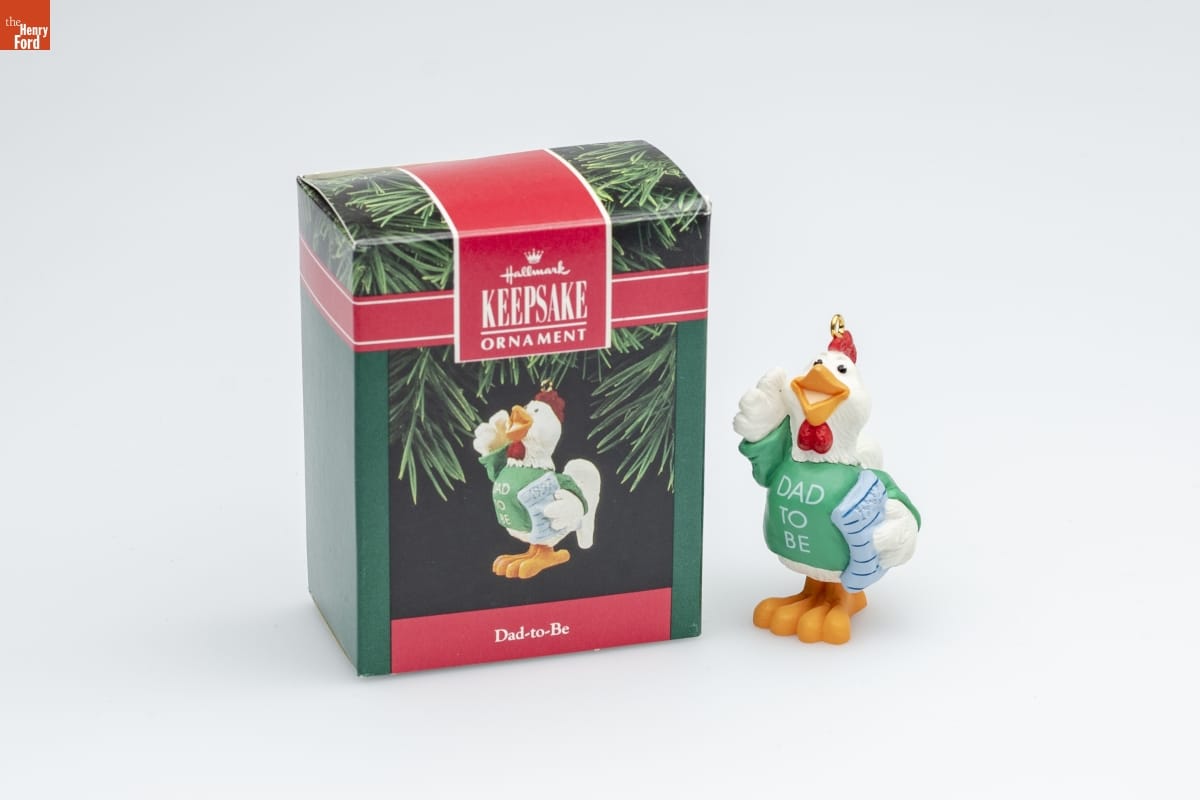
- Hallmark "Dad-to-Be" Christmas Ornament, 1992 - Already known for greeting cards, Hallmark introduced a line of Christmas ornaments in 1973. The company's annual release of an increasing array of ornaments revolutionized Christmas decorating, appealing to customers' interest in marking memories and milestones as well as expressing one's personality and unique tastes.
- 1992
- Collections - Artifact
Hallmark "Dad-to-Be" Christmas Ornament, 1992
Already known for greeting cards, Hallmark introduced a line of Christmas ornaments in 1973. The company's annual release of an increasing array of ornaments revolutionized Christmas decorating, appealing to customers' interest in marking memories and milestones as well as expressing one's personality and unique tastes.
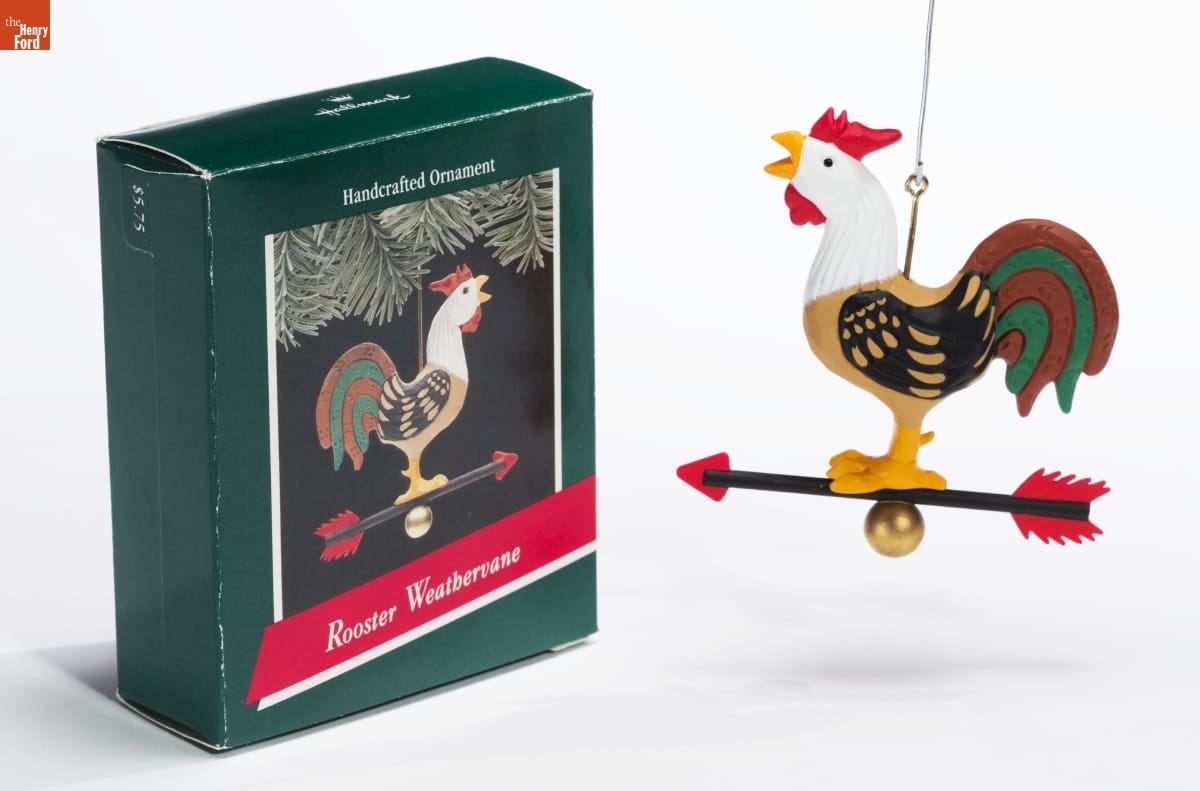
- Hallmark "Rooster Weathervane" Christmas Ornament, 1989 - Already known for greeting cards, Hallmark introduced a line of Christmas ornaments in 1973. The company's annual release of an increasing array of ornaments revolutionized Christmas decorating, appealing to customers' interest in marking memories and milestones as well as expressing one's personality and unique tastes.
- 1989
- Collections - Artifact
Hallmark "Rooster Weathervane" Christmas Ornament, 1989
Already known for greeting cards, Hallmark introduced a line of Christmas ornaments in 1973. The company's annual release of an increasing array of ornaments revolutionized Christmas decorating, appealing to customers' interest in marking memories and milestones as well as expressing one's personality and unique tastes.
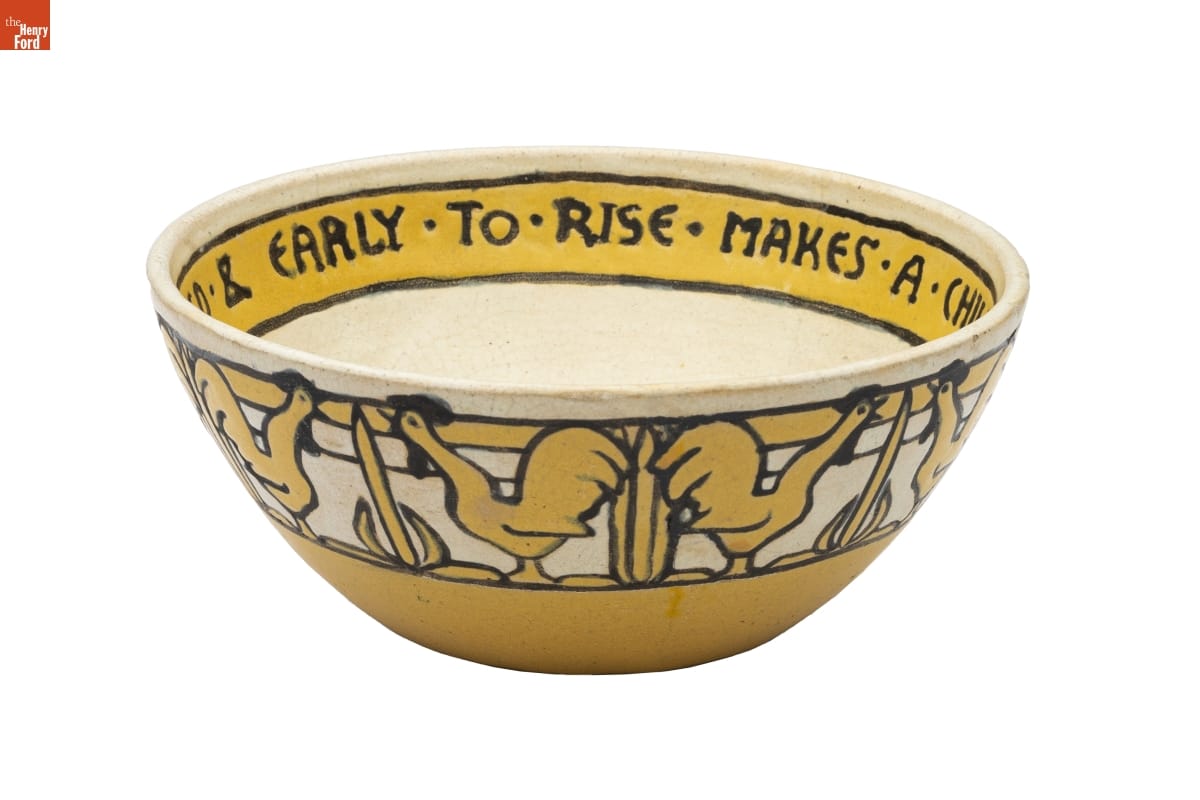
- Bowl, 1909 - Social reformers in Boston, Massachusetts, organized the Saturday Evening Girls Club to educate and improve the lives of impoverished immigrant girls. In 1907, the club established a pottery. The Saturday Evening Girls created an array of remarkable Arts and Crafts wares, including children's dishes and sets. Some of these dishes were personalized with a child's name; others bore rhymes or simple phrases.
- 1909
- Collections - Artifact
Bowl, 1909
Social reformers in Boston, Massachusetts, organized the Saturday Evening Girls Club to educate and improve the lives of impoverished immigrant girls. In 1907, the club established a pottery. The Saturday Evening Girls created an array of remarkable Arts and Crafts wares, including children's dishes and sets. Some of these dishes were personalized with a child's name; others bore rhymes or simple phrases.
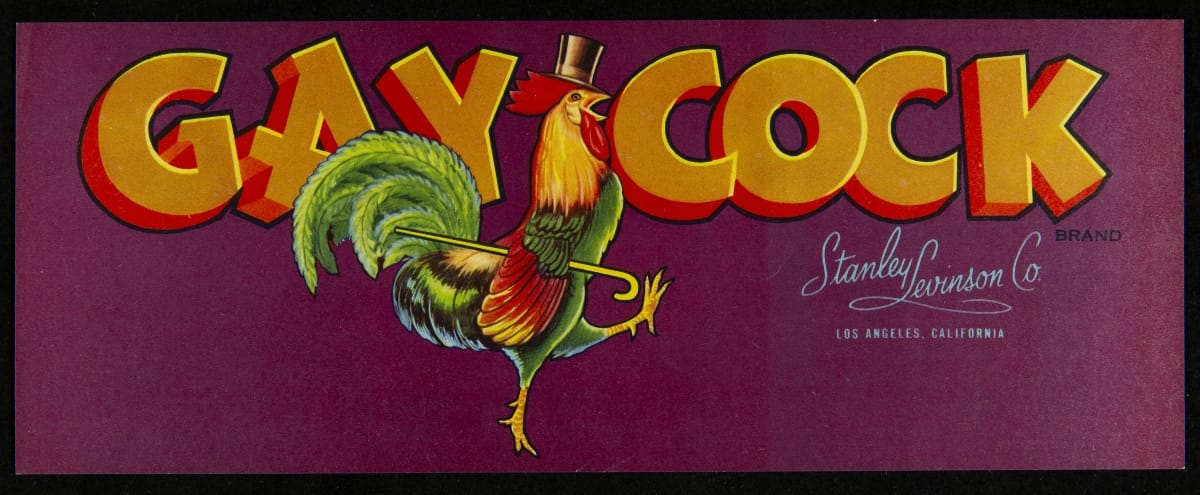
- Crate Label, "Gay Cock Brand Product," 1940-1950 - In 1869, the transcontinental railroad opened eastern markets to the West Coast produce industry for the first time. As produce companies shipped crates of fruits and vegetables across the country, they needed a way to distinguish their goods from their competitors'. Colorful, eye-catching labels, like this one for Gay Cock Brand products, were created to attract grocers purchasing goods from wholesale markets.
- 1940-1950
- Collections - Artifact
Crate Label, "Gay Cock Brand Product," 1940-1950
In 1869, the transcontinental railroad opened eastern markets to the West Coast produce industry for the first time. As produce companies shipped crates of fruits and vegetables across the country, they needed a way to distinguish their goods from their competitors'. Colorful, eye-catching labels, like this one for Gay Cock Brand products, were created to attract grocers purchasing goods from wholesale markets.
- Jigsaw Puzzles, "Animals You Know," Used by James Greenhoe, 1937-1946 -

- 1937-1946
- Collections - Artifact
Jigsaw Puzzles, "Animals You Know," Used by James Greenhoe, 1937-1946
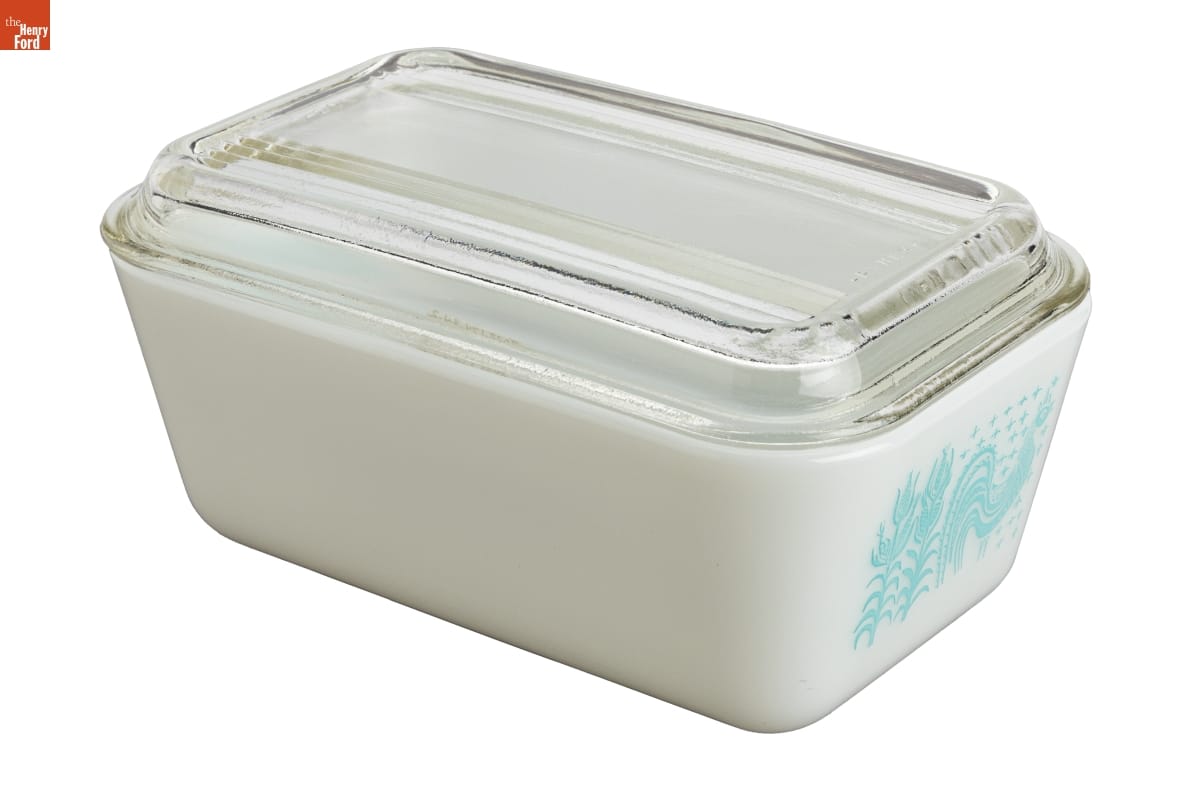
- Corning "Pyrex Butterprint" Covered Refrigerator Dish, 1957-1968 - Corning Glass Works' heat-resistant glass bakeware, Pyrex, was introduced in the mid-1910s. Pyrex products were inexpensive, with an easy-to-clean smooth surface. The glassware could travel from refrigerator to oven to table. Corning introduced colored Pyrex kitchenware in 1947, and later, produced dishes in an array of patterns, like this Butterprint refrigerator dish made from 1957-1968.
- 1947-1960
- Collections - Artifact
Corning "Pyrex Butterprint" Covered Refrigerator Dish, 1957-1968
Corning Glass Works' heat-resistant glass bakeware, Pyrex, was introduced in the mid-1910s. Pyrex products were inexpensive, with an easy-to-clean smooth surface. The glassware could travel from refrigerator to oven to table. Corning introduced colored Pyrex kitchenware in 1947, and later, produced dishes in an array of patterns, like this Butterprint refrigerator dish made from 1957-1968.
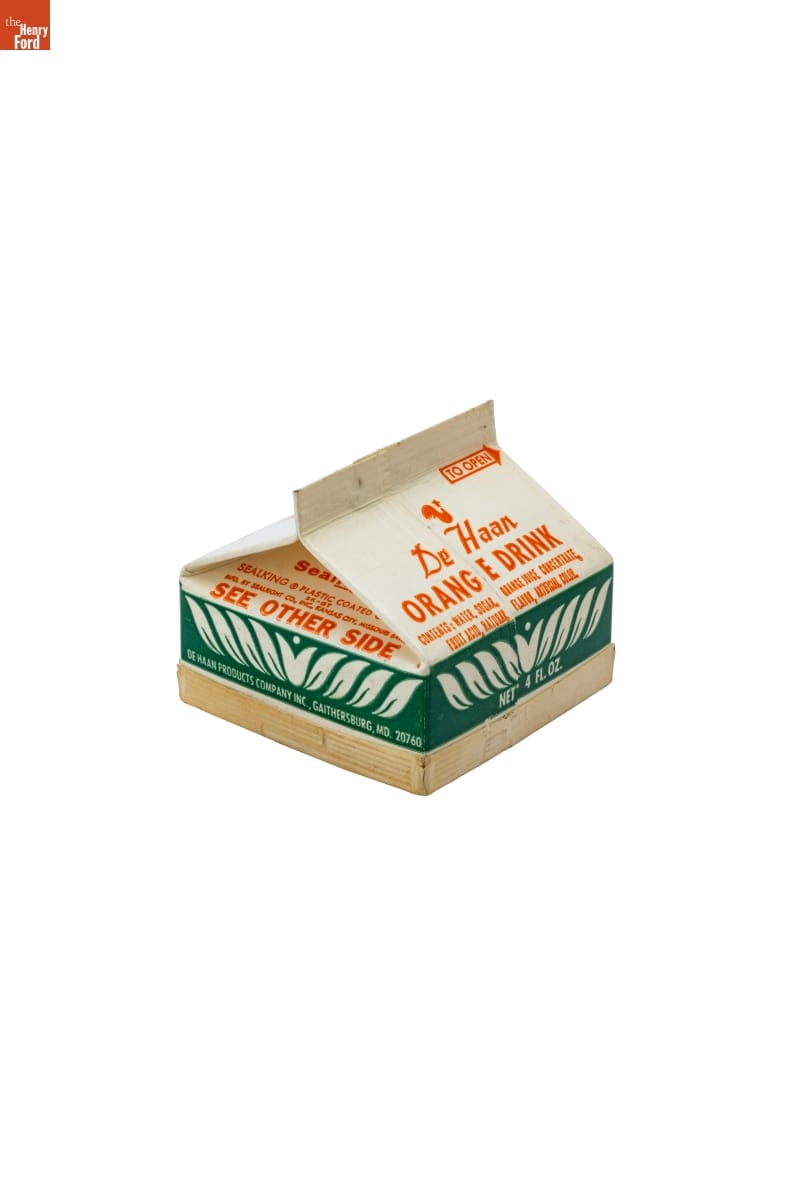
- DeHaan Orange Drink Carton - The quest for a shatter-proof milk container prompted John Van Wormer to patent a paper carton in 1915. Many processors and distributors continued to use breakable glass bottles, but, after 1937, mechanized production made the disposable, wax-coated folded cartons inexpensive and indispensable liquid containers. The iconic design, a box with a gable-end top that, when opened, creates a pouring spout, remains the industry standard today.
- Collections - Artifact
DeHaan Orange Drink Carton
The quest for a shatter-proof milk container prompted John Van Wormer to patent a paper carton in 1915. Many processors and distributors continued to use breakable glass bottles, but, after 1937, mechanized production made the disposable, wax-coated folded cartons inexpensive and indispensable liquid containers. The iconic design, a box with a gable-end top that, when opened, creates a pouring spout, remains the industry standard today.
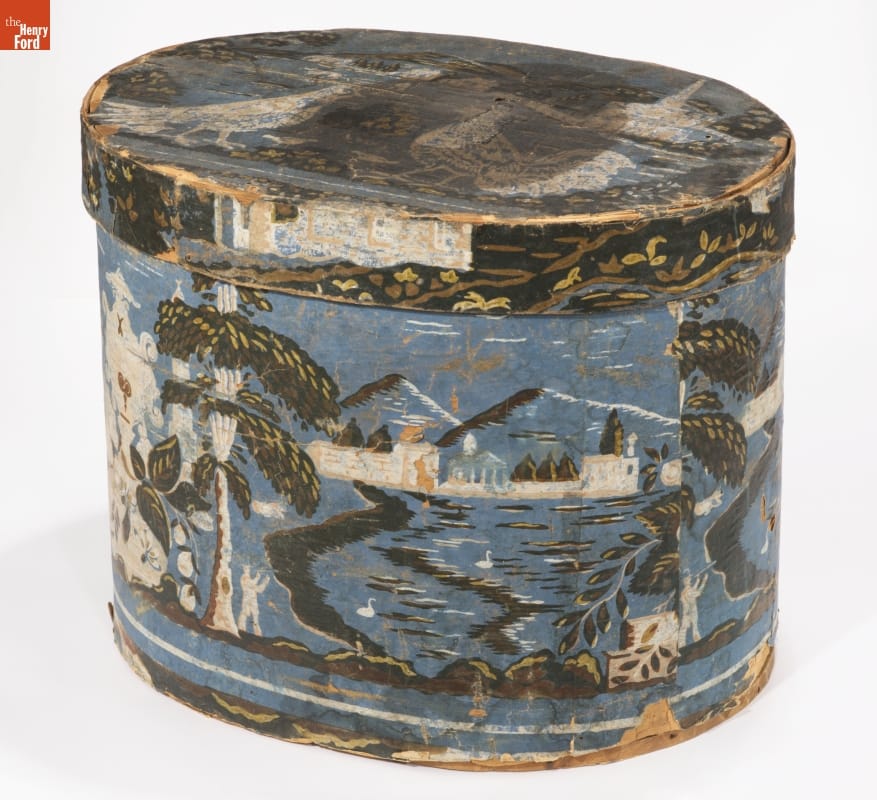
- Bandbox, Made by Hannah Davis, circa 1831 - Hannah Davis (1784-1863), a Jaffrey, New Hampshire, entrepreneur, created colorful, wallpaper-covered bandboxes. Davis sold many of her bandboxes to the young, migrant women who worked in the textile mills in the surrounding New England villages. Davis's attractive and affordable bandboxes were ideal for the millworkers. The boxes could hold clothing and accessories and they served as useful storage cases when the women traveled home.
- circa 1831
- Collections - Artifact
Bandbox, Made by Hannah Davis, circa 1831
Hannah Davis (1784-1863), a Jaffrey, New Hampshire, entrepreneur, created colorful, wallpaper-covered bandboxes. Davis sold many of her bandboxes to the young, migrant women who worked in the textile mills in the surrounding New England villages. Davis's attractive and affordable bandboxes were ideal for the millworkers. The boxes could hold clothing and accessories and they served as useful storage cases when the women traveled home.
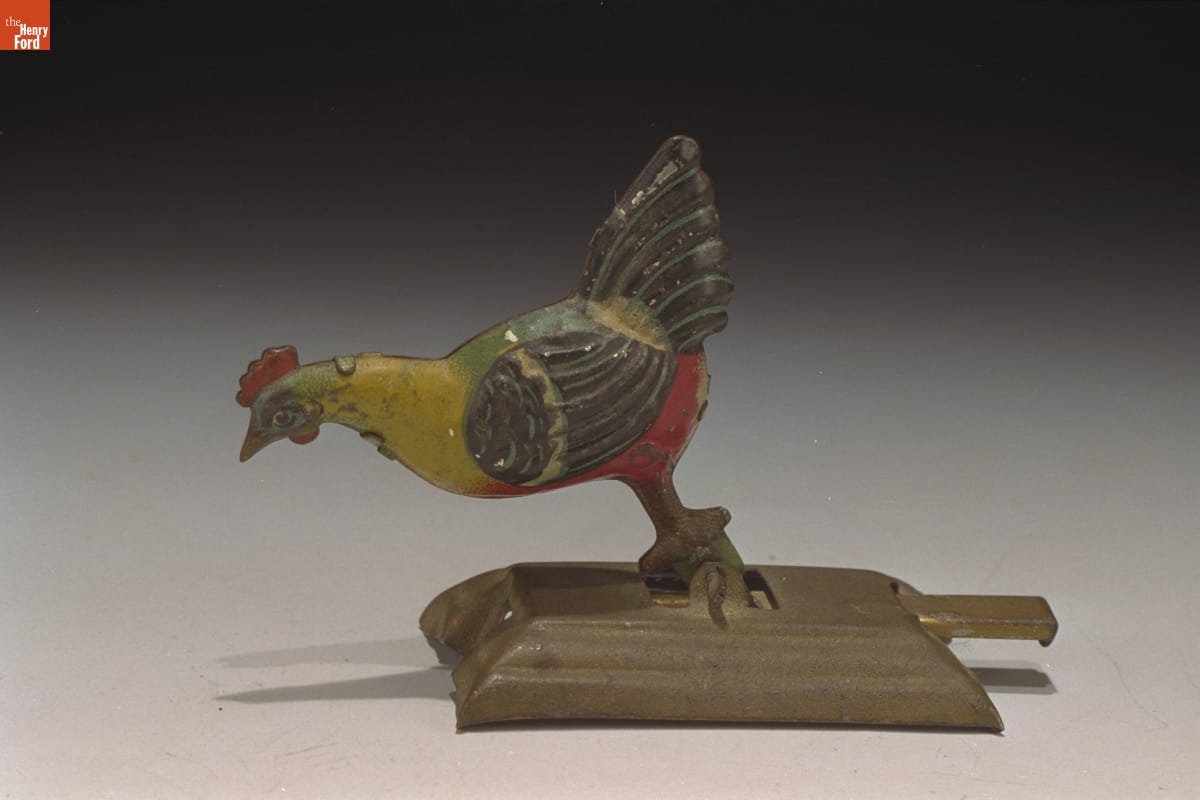
- Toy Rooster, 1890-1930 - Toy companies began making small, inexpensive, yet colorful, tin toys in the late 19th century. Over the years, toymakers stamped tin into shapes of boats, trains, cars, soldiers, and various animals -- like this rooster. Children could purchase these low-priced toys from shopkeepers or street vendors. These mass-produced toys -- though not meant to last -- provided fun for just a few pennies.
- 1890-1930
- Collections - Artifact
Toy Rooster, 1890-1930
Toy companies began making small, inexpensive, yet colorful, tin toys in the late 19th century. Over the years, toymakers stamped tin into shapes of boats, trains, cars, soldiers, and various animals -- like this rooster. Children could purchase these low-priced toys from shopkeepers or street vendors. These mass-produced toys -- though not meant to last -- provided fun for just a few pennies.
- Vase Designed by Frederick Rhead, 1896-1902 -

- 1896-1902
- Collections - Artifact
Vase Designed by Frederick Rhead, 1896-1902