
Search
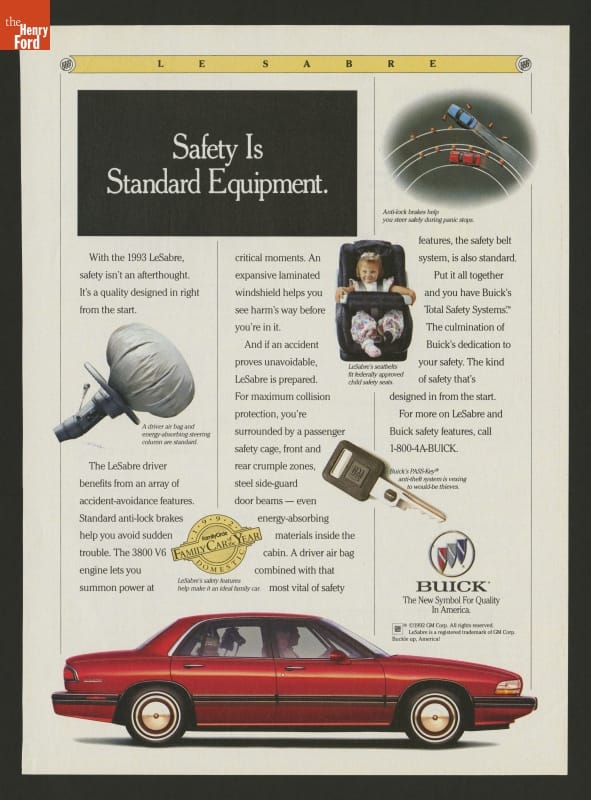
- 1992 Buick LeSabre Ad, "Safety is Standard Equipment" - When safety sells, auto manufacturers incorporate new safety feature and trumpet their successes. This ad for the 1993 Buick LeSabre highlighted the car's standard equipment that keeps drivers and passengers safe.
- 1992
- Collections - Artifact
1992 Buick LeSabre Ad, "Safety is Standard Equipment"
When safety sells, auto manufacturers incorporate new safety feature and trumpet their successes. This ad for the 1993 Buick LeSabre highlighted the car's standard equipment that keeps drivers and passengers safe.
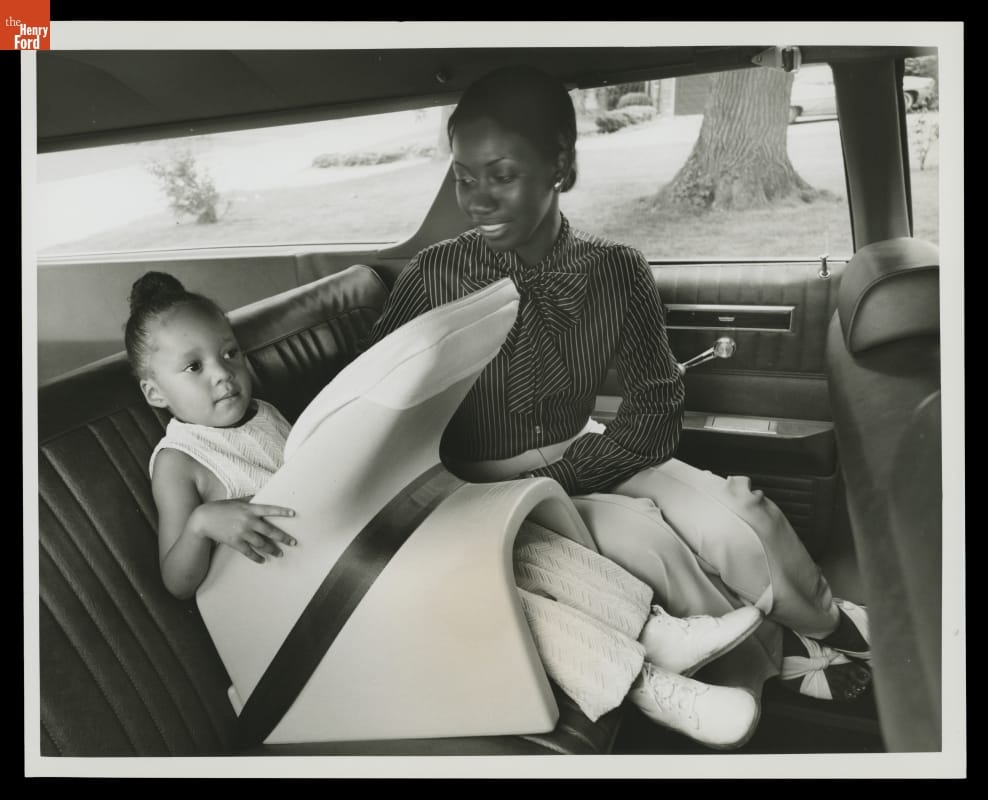
- Ford Motor Company's Tot-Guard Car Seat, 1973 - American car manufacturers developed child restraints designed for crash protection in the late 1960s. One of the first was Ford's Tot-Guard, seen in this photograph. The seatbelt secured the padded shield and seat. This early and effective restraint was not widely used, however. Only with more stringent regulations, public education, and mandated use would children safely ride in automobiles.
- 1973
- Collections - Artifact
Ford Motor Company's Tot-Guard Car Seat, 1973
American car manufacturers developed child restraints designed for crash protection in the late 1960s. One of the first was Ford's Tot-Guard, seen in this photograph. The seatbelt secured the padded shield and seat. This early and effective restraint was not widely used, however. Only with more stringent regulations, public education, and mandated use would children safely ride in automobiles.
- "Grunow Recipes by Dorothy Ayers Loudon," circa 1934 -
- circa 1934
- Collections - Artifact
"Grunow Recipes by Dorothy Ayers Loudon," circa 1934
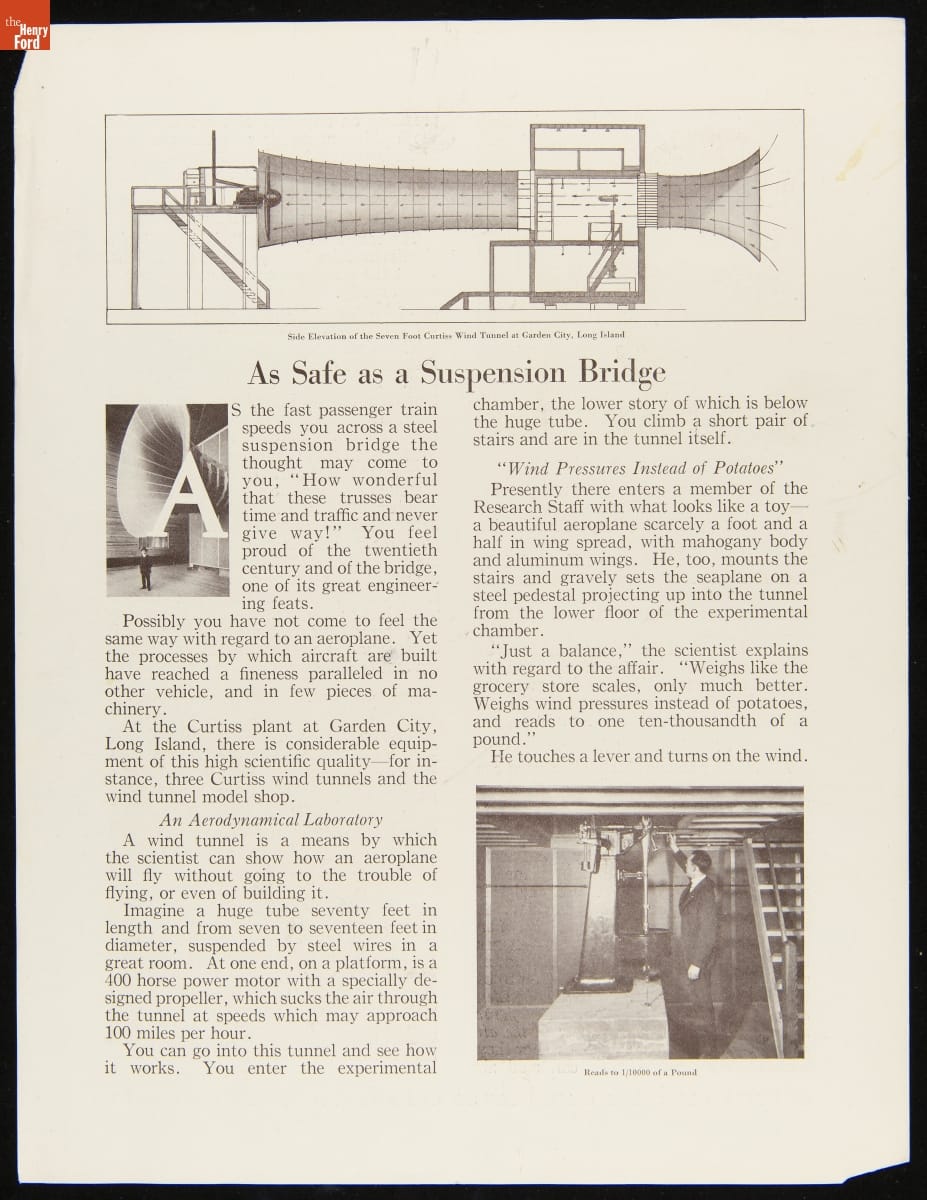
- As Safe as a Suspension Bridge, 1919-1920 - Glenn Curtiss, whose airplane business flourished during World War I, established a state-of-the-art research and experimentation facility on Long Island, New York, in 1917. At the Curtiss Engineering Corporation, a handpicked team built, tested, and refined propellers, engines, and airplanes. This brochure claimed a scientific approach made Curtiss airplanes as safe as the more established modes of transportation Americans already trusted.
- 1919-1920
- Collections - Artifact
As Safe as a Suspension Bridge, 1919-1920
Glenn Curtiss, whose airplane business flourished during World War I, established a state-of-the-art research and experimentation facility on Long Island, New York, in 1917. At the Curtiss Engineering Corporation, a handpicked team built, tested, and refined propellers, engines, and airplanes. This brochure claimed a scientific approach made Curtiss airplanes as safe as the more established modes of transportation Americans already trusted.
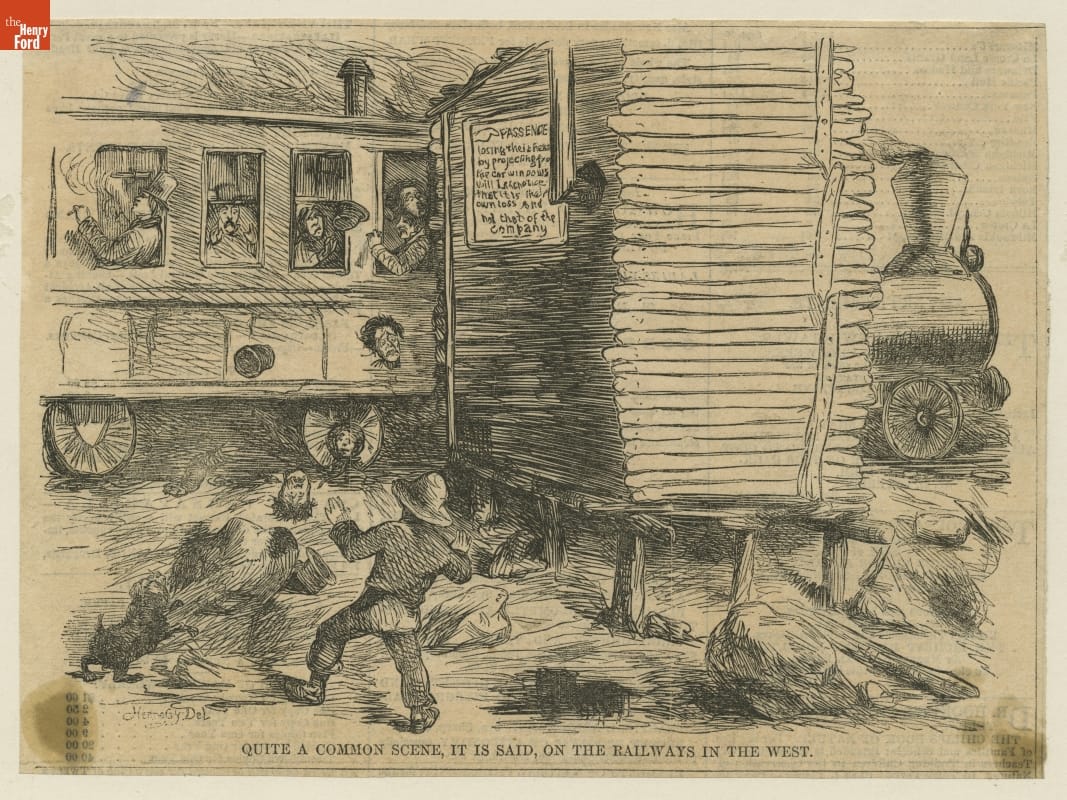
- Wood Engraving, "Quite a Common Scene, it is Said, on the Railways in the West," 1858 - While close clearances -- tight spaces between railroad cars and trackside structures -- did exist, this 1858 illustration from <em>Harper's Weekly</em> exaggerated the dangers faced by passengers who stuck their heads through windows. More likely threats from an open window included sparks, cinders and smoke from the steam locomotive pulling the train -- all of which could irritate eyes and damage clothing.
- 1858
- Collections - Artifact
Wood Engraving, "Quite a Common Scene, it is Said, on the Railways in the West," 1858
While close clearances -- tight spaces between railroad cars and trackside structures -- did exist, this 1858 illustration from Harper's Weekly exaggerated the dangers faced by passengers who stuck their heads through windows. More likely threats from an open window included sparks, cinders and smoke from the steam locomotive pulling the train -- all of which could irritate eyes and damage clothing.
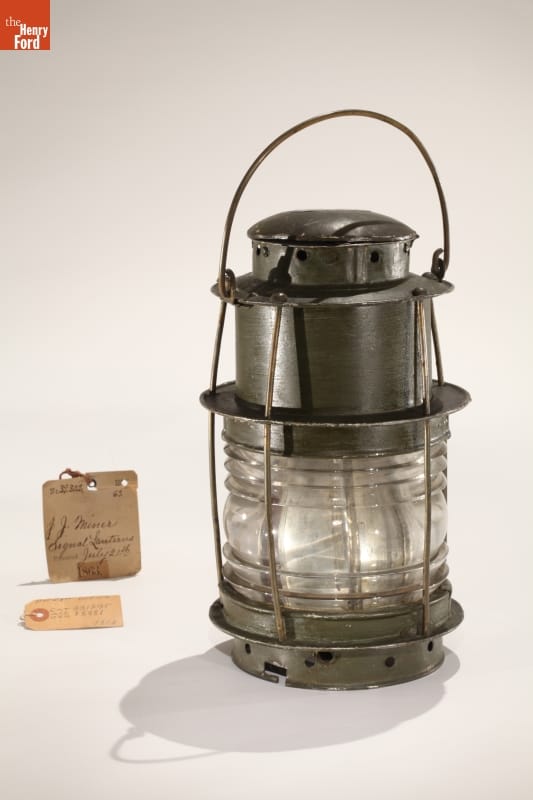
- Patent Model of Marine Signal Lantern, 1863 - This marine lantern was designed to burn oil. An opaque metal shade could be moved to expose and block its glow. Moveable red and green glass shades are its most innovative feature, which served two purposes. They allowed the lantern to act as a communications device, to send messages between ships--and as an anchor light, to avoid collisions between vessels.
- July 21, 1863
- Collections - Artifact
Patent Model of Marine Signal Lantern, 1863
This marine lantern was designed to burn oil. An opaque metal shade could be moved to expose and block its glow. Moveable red and green glass shades are its most innovative feature, which served two purposes. They allowed the lantern to act as a communications device, to send messages between ships--and as an anchor light, to avoid collisions between vessels.
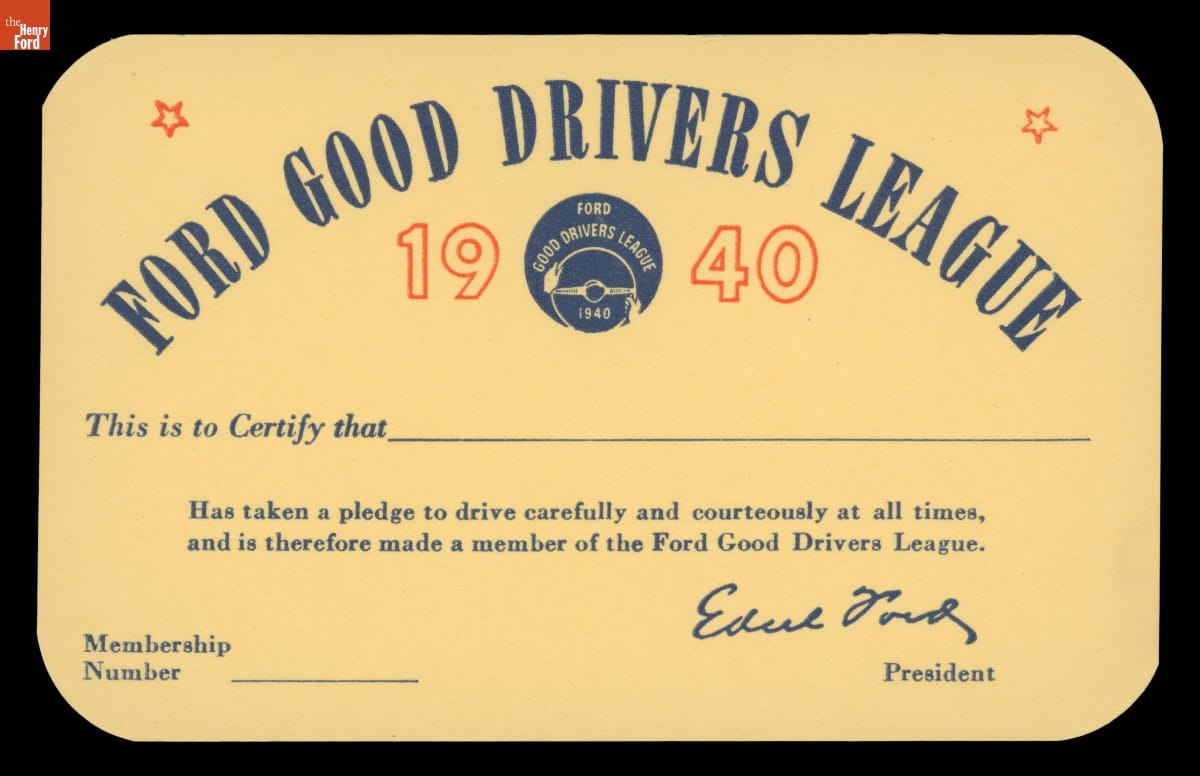
- Ford Good Drivers League Membership Card, 1940 - Ford Motor Company created the Good Drivers League in 1940. Headed by Edsel Ford, the League promoted safe driving habits among high school students. The League initially invited boys to compete in state and national championships--girls would join in 1941. Contestants wrote essays and participated in driving tests. National champions won trophies and scholarships. America's entry into World War II ended the program.
- 1940
- Collections - Artifact
Ford Good Drivers League Membership Card, 1940
Ford Motor Company created the Good Drivers League in 1940. Headed by Edsel Ford, the League promoted safe driving habits among high school students. The League initially invited boys to compete in state and national championships--girls would join in 1941. Contestants wrote essays and participated in driving tests. National champions won trophies and scholarships. America's entry into World War II ended the program.
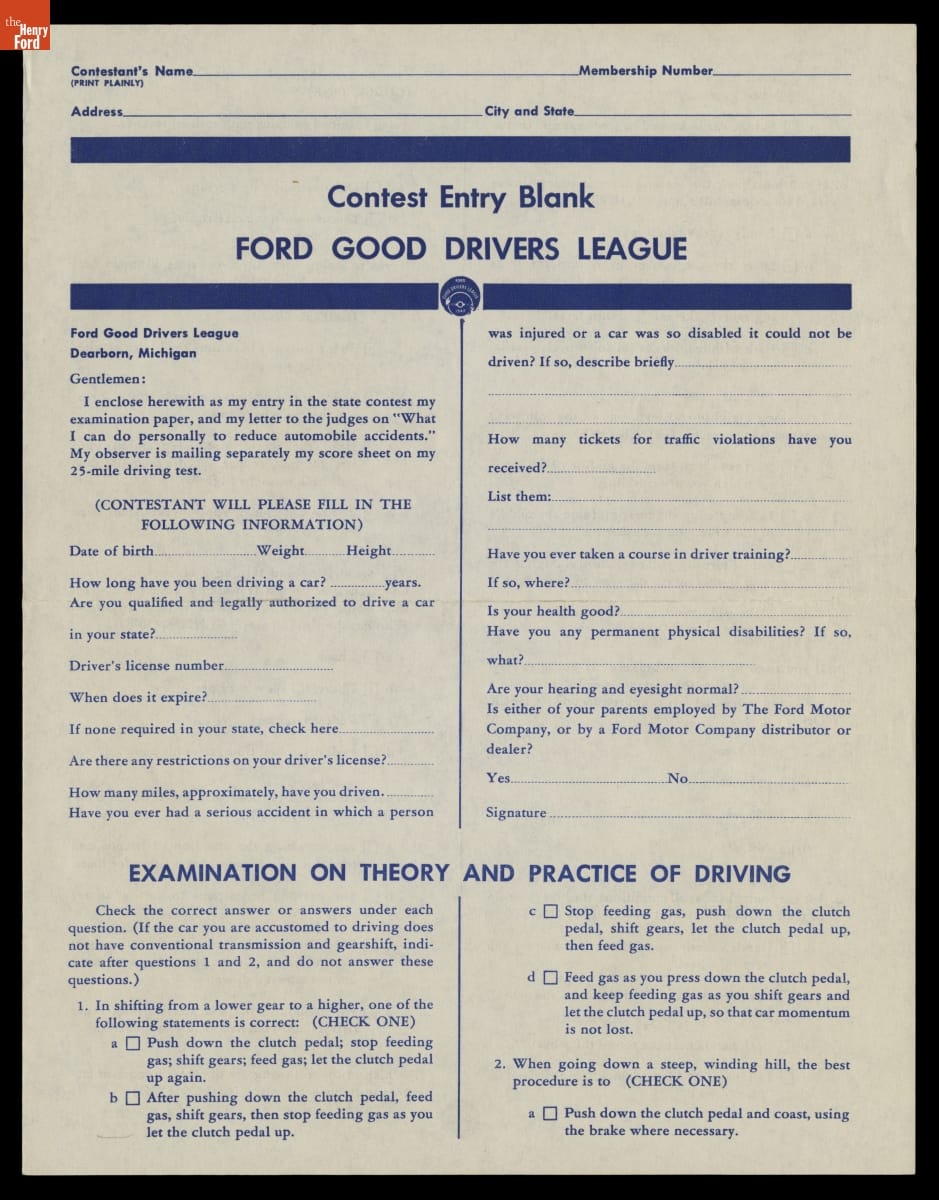
- Ford Good Drivers League Contest Entry Blank, April 1940 - Ford Motor Company created the Good Drivers League in 1940. Headed by Edsel Ford, the League promoted safe driving habits among high school students. The League initially invited boys to compete in state and national championships--girls would join in 1941. Contestants wrote essays and participated in driving tests. National champions won trophies and scholarships. America's entry into World War II ended the program.
- April 01, 1940
- Collections - Artifact
Ford Good Drivers League Contest Entry Blank, April 1940
Ford Motor Company created the Good Drivers League in 1940. Headed by Edsel Ford, the League promoted safe driving habits among high school students. The League initially invited boys to compete in state and national championships--girls would join in 1941. Contestants wrote essays and participated in driving tests. National champions won trophies and scholarships. America's entry into World War II ended the program.
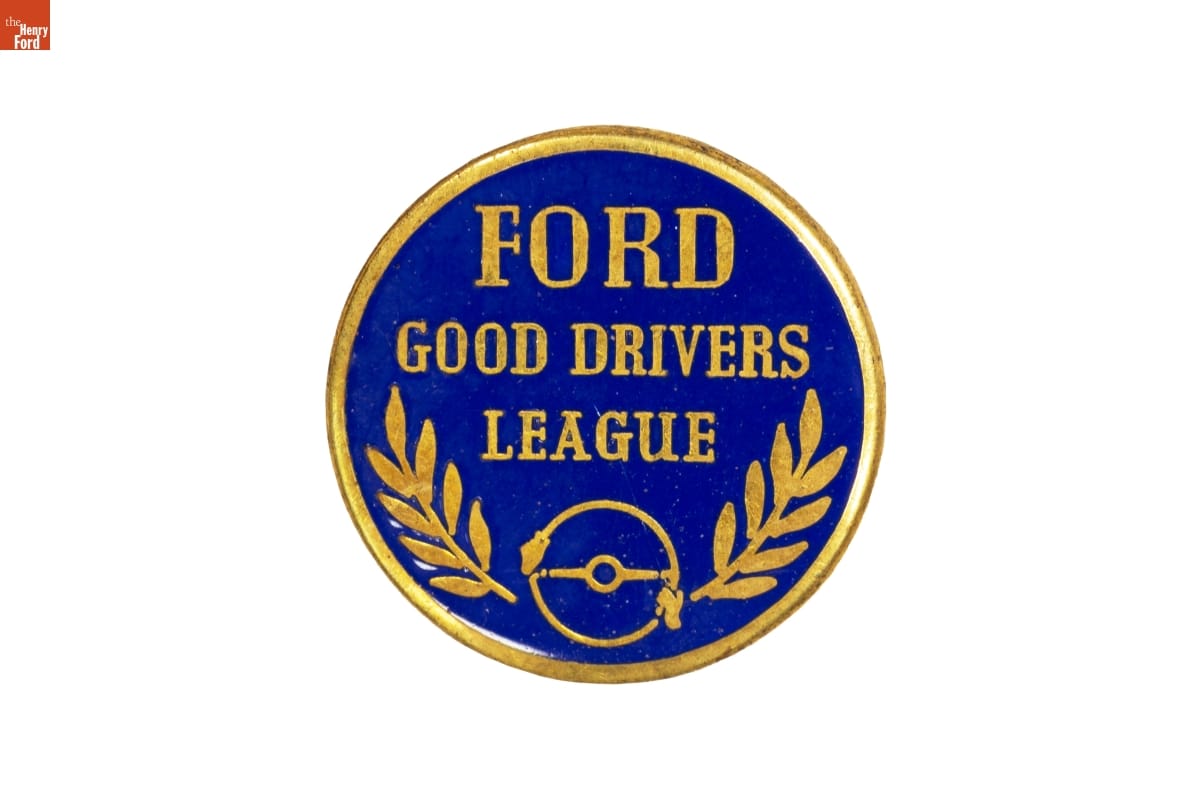
- "Ford Good Drivers League" Pin, 1940-1942 - Ford Motor Company created the Good Drivers League in 1940. Headed by Edsel Ford, the League promoted safe driving habits among high school students. The League initially invited boys to compete in state and national championships--girls would join in 1941. Contestants wrote essays and participated in driving tests. National champions won trophies and scholarships. America's entry into World War II ended the program.
- 1940-1942
- Collections - Artifact
"Ford Good Drivers League" Pin, 1940-1942
Ford Motor Company created the Good Drivers League in 1940. Headed by Edsel Ford, the League promoted safe driving habits among high school students. The League initially invited boys to compete in state and national championships--girls would join in 1941. Contestants wrote essays and participated in driving tests. National champions won trophies and scholarships. America's entry into World War II ended the program.
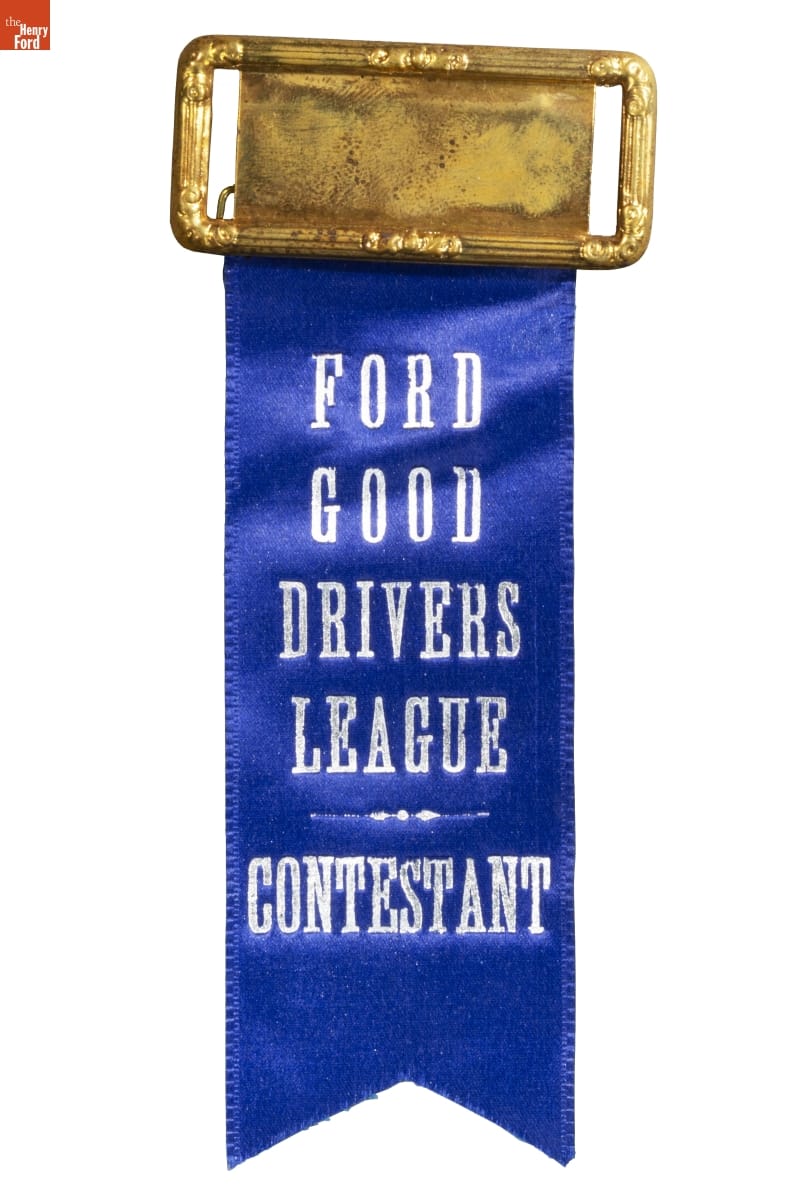
- Ford Good Drivers League "Contestant" Badge, 1940-1942 - Ford Motor Company created the Good Drivers League in 1940. Headed by Edsel Ford, the League promoted safe driving habits among high school students. The League initially invited boys to compete in state and national championships--girls would join in 1941. Contestants wrote essays and participated in driving tests. National champions won trophies and scholarships. America's entry into World War II ended the program.
- 1940-1942
- Collections - Artifact
Ford Good Drivers League "Contestant" Badge, 1940-1942
Ford Motor Company created the Good Drivers League in 1940. Headed by Edsel Ford, the League promoted safe driving habits among high school students. The League initially invited boys to compete in state and national championships--girls would join in 1941. Contestants wrote essays and participated in driving tests. National champions won trophies and scholarships. America's entry into World War II ended the program.