
Search
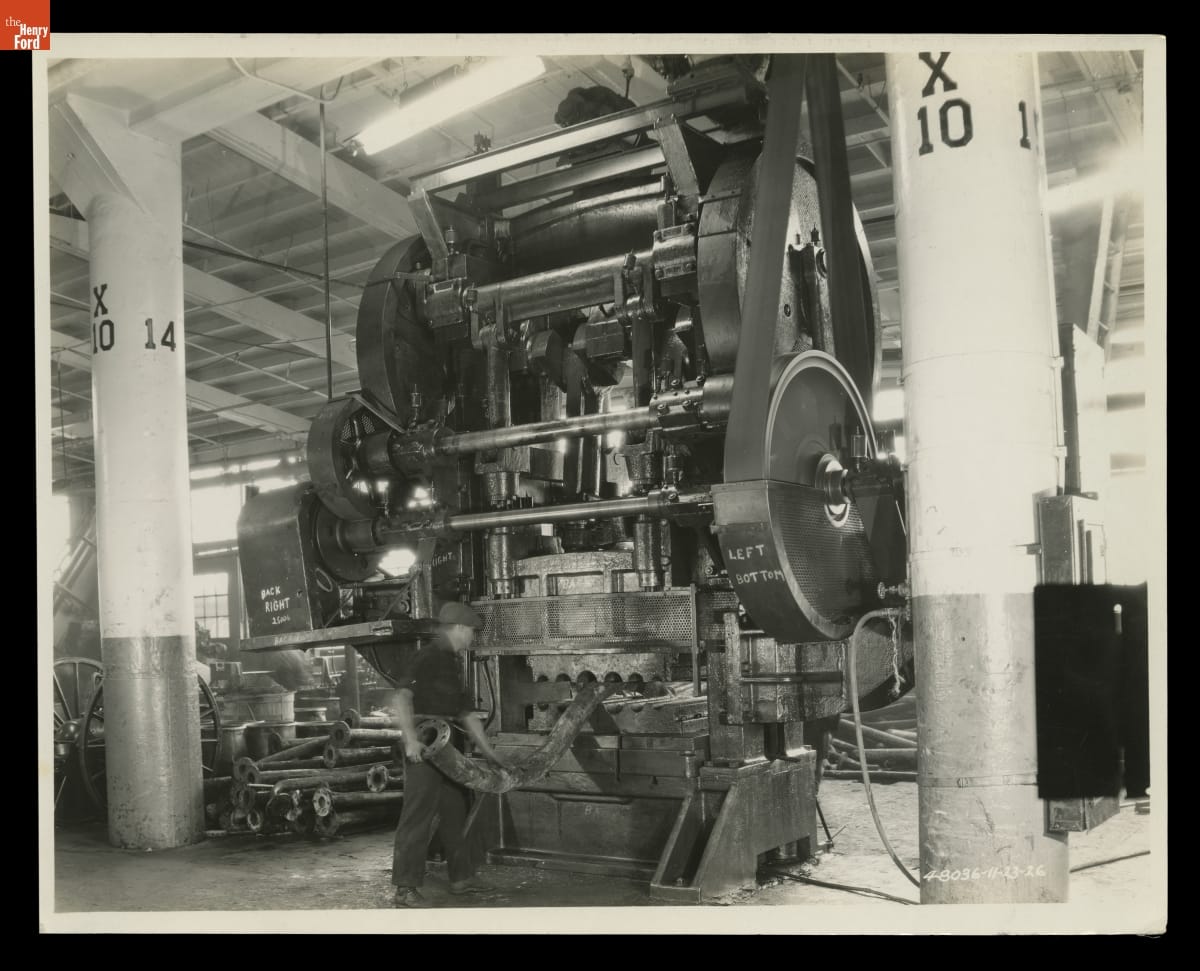
- Worker Operating a Press in the Salvage Department at the Ford Motor Company Rouge Plant, November 1926 - In 1925, Ford Motor Company purchased 199 surplus World War I merchant ships from the U.S. government. The vessels were towed by tugs to the Rouge, where most were cut into scrap metal used in the plant's steel-making facilities. Serviceable parts were salvaged. Here, a worker straightens a pipe from one of the ships for use elsewhere.
- November 23, 1926
- Collections - Artifact
Worker Operating a Press in the Salvage Department at the Ford Motor Company Rouge Plant, November 1926
In 1925, Ford Motor Company purchased 199 surplus World War I merchant ships from the U.S. government. The vessels were towed by tugs to the Rouge, where most were cut into scrap metal used in the plant's steel-making facilities. Serviceable parts were salvaged. Here, a worker straightens a pipe from one of the ships for use elsewhere.
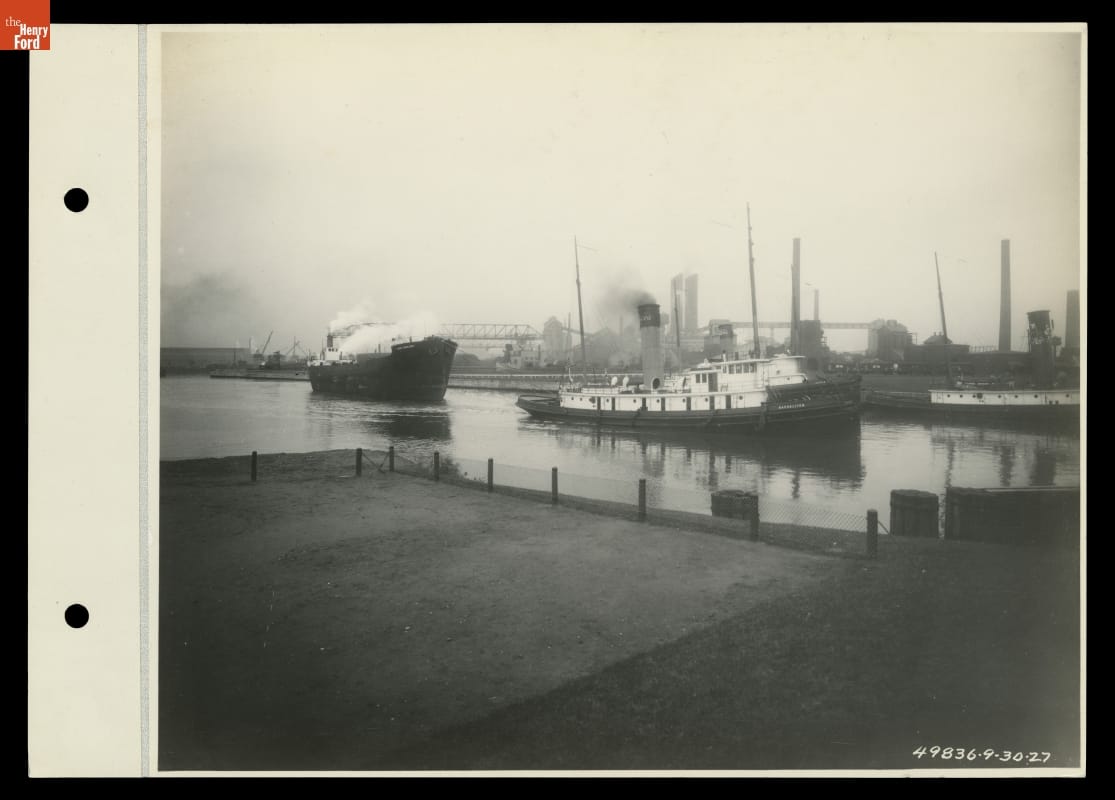
- Tugboat Towing the "Lake Hemlock" to be Salvaged at Ford Motor Company Rouge Plant Shipyard, 1927 - Completed in 1928 along the newly dredged River Rouge, Ford Motor Company's Rouge Plant quickly became an icon of modern industrial productivity. The factory's ship salvaging project exemplified Henry Ford's vision of efficiency at the plant. Workers disassembled surplus vessels, saving hardware and reconditioning functional machinery. Then, in the Rouge's production foundry, they melted down remaining scraps into reusable steel.
- September 30, 1927
- Collections - Artifact
Tugboat Towing the "Lake Hemlock" to be Salvaged at Ford Motor Company Rouge Plant Shipyard, 1927
Completed in 1928 along the newly dredged River Rouge, Ford Motor Company's Rouge Plant quickly became an icon of modern industrial productivity. The factory's ship salvaging project exemplified Henry Ford's vision of efficiency at the plant. Workers disassembled surplus vessels, saving hardware and reconditioning functional machinery. Then, in the Rouge's production foundry, they melted down remaining scraps into reusable steel.
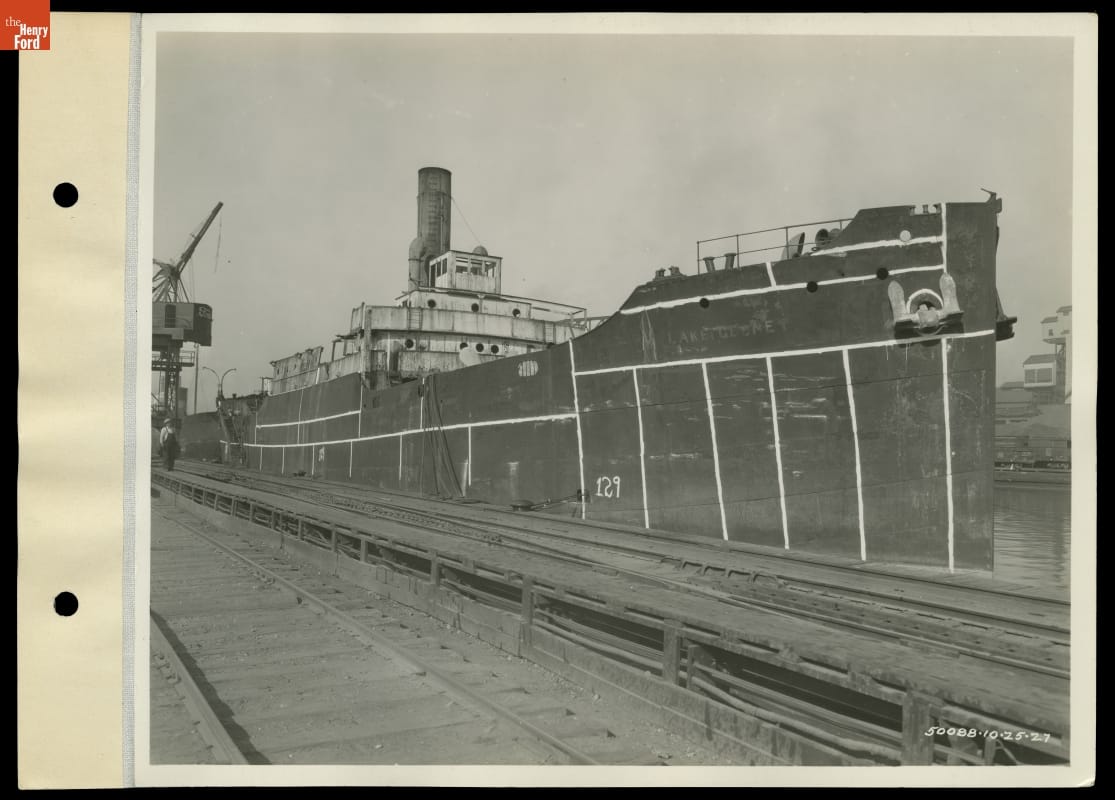
- Ship "Lake Gedney" in Storage Prior to Salvage at Ford Motor Company Rouge Plant Shipyard, 1927 - Completed in 1928 along the newly dredged River Rouge, Ford Motor Company's Rouge Plant quickly became an icon of modern industrial productivity. The factory's ship salvaging project exemplified Henry Ford's vision of efficiency at the plant. Workers disassembled surplus vessels, saving hardware and reconditioning functional machinery. Then, in the Rouge's production foundry, they melted down remaining scraps into reusable steel.
- October 25, 1927
- Collections - Artifact
Ship "Lake Gedney" in Storage Prior to Salvage at Ford Motor Company Rouge Plant Shipyard, 1927
Completed in 1928 along the newly dredged River Rouge, Ford Motor Company's Rouge Plant quickly became an icon of modern industrial productivity. The factory's ship salvaging project exemplified Henry Ford's vision of efficiency at the plant. Workers disassembled surplus vessels, saving hardware and reconditioning functional machinery. Then, in the Rouge's production foundry, they melted down remaining scraps into reusable steel.
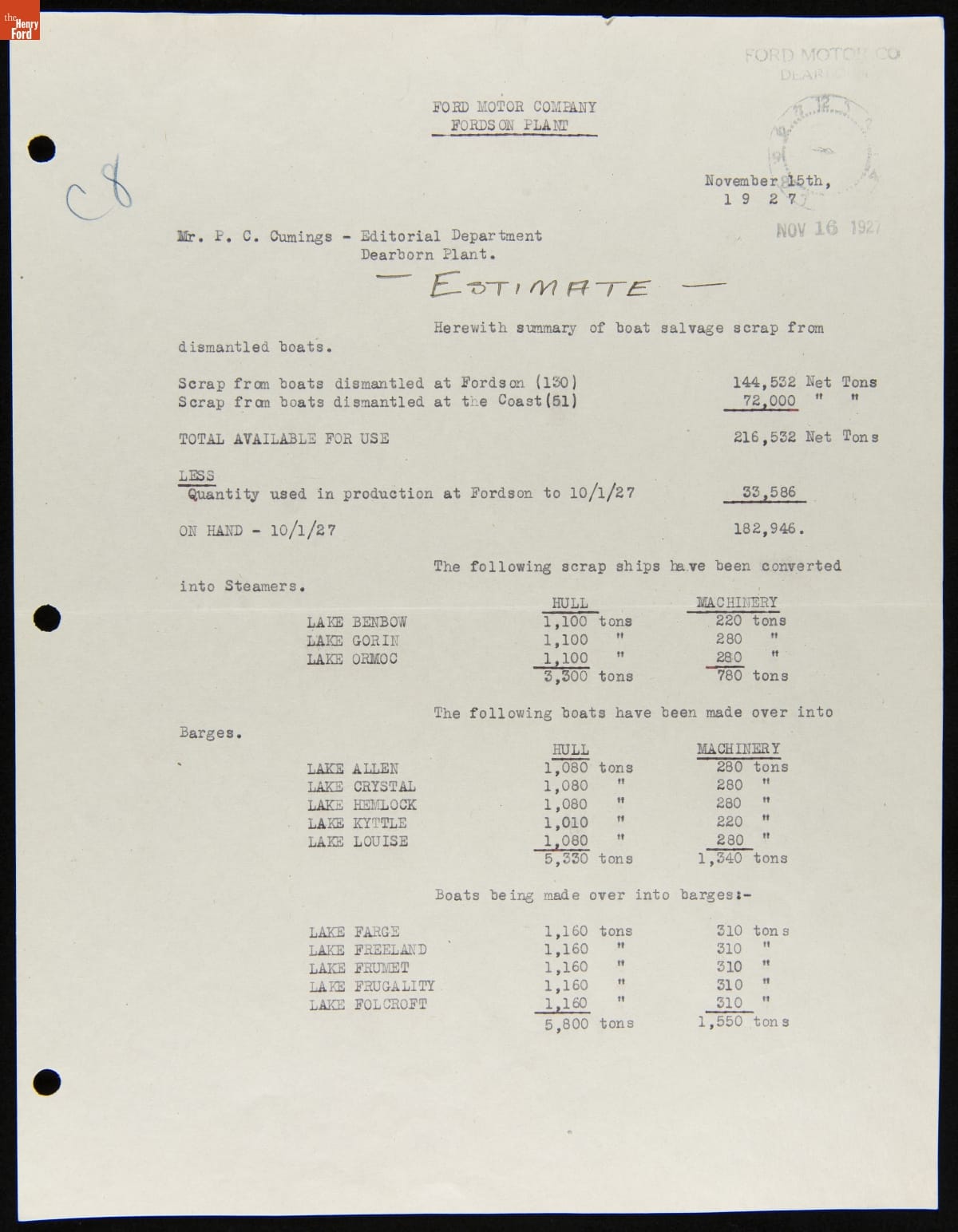
- Summary of Scrap from Dismantled Boats in the Ford Motor Company Ship Salvage Program, November 15, 1927 - Henry Ford purchased 199 surplus World War I merchant ships from the United States government in 1925. Many of these ships were towed to Ford's River Rouge Plant and dismantled -- their steel, metal, and salvageable parts were recycled. The other vessels were refurbished or converted to help transport raw materials and finished products as part of Ford's operations.
- October 01, 1927
- Collections - Artifact
Summary of Scrap from Dismantled Boats in the Ford Motor Company Ship Salvage Program, November 15, 1927
Henry Ford purchased 199 surplus World War I merchant ships from the United States government in 1925. Many of these ships were towed to Ford's River Rouge Plant and dismantled -- their steel, metal, and salvageable parts were recycled. The other vessels were refurbished or converted to help transport raw materials and finished products as part of Ford's operations.
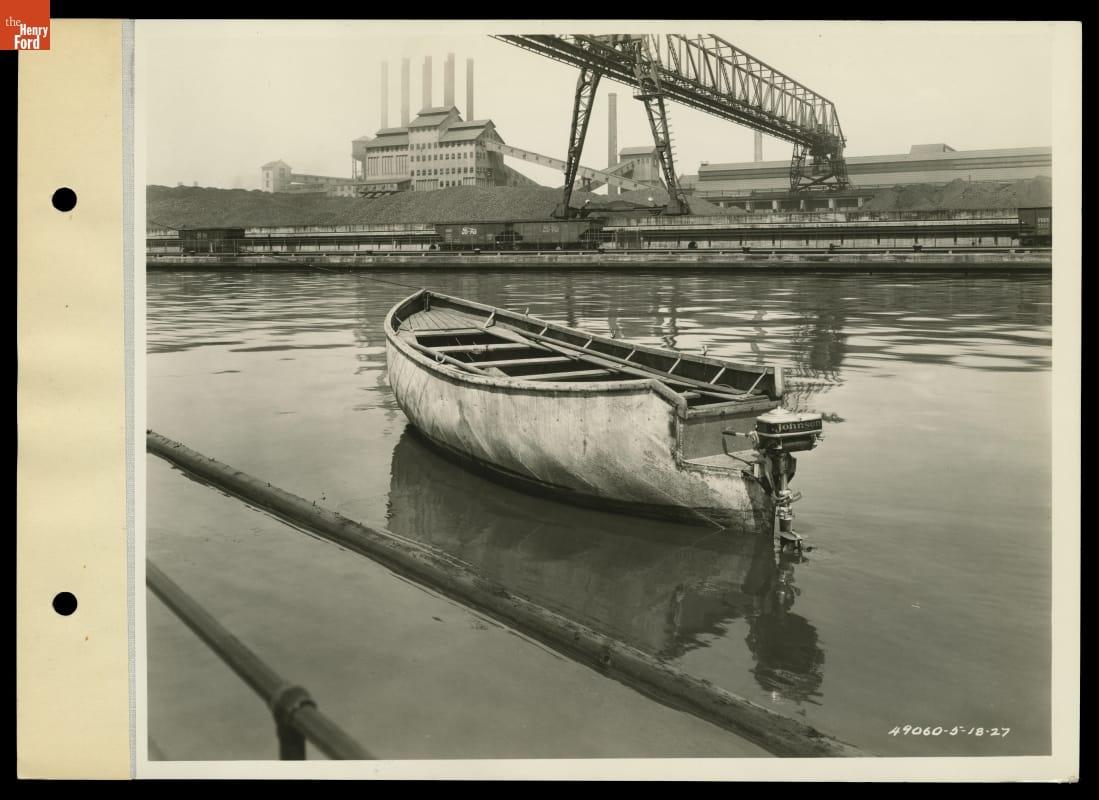
- Salvage Department Motorboat at Ford Motor Company Rouge Plant Shipyard, Dearborn, Michigan, 1927 - Completed in 1928 along the newly dredged River Rouge, Ford Motor Company's Rouge Plant quickly became an icon of modern industrial productivity. The factory's ship salvaging project exemplified Henry Ford's vision of efficiency at the plant. Workers disassembled surplus vessels, saving hardware and reconditioning functional machinery. Then, in the Rouge's production foundry, they melted down remaining scraps into reusable steel.
- May 18, 1927
- Collections - Artifact
Salvage Department Motorboat at Ford Motor Company Rouge Plant Shipyard, Dearborn, Michigan, 1927
Completed in 1928 along the newly dredged River Rouge, Ford Motor Company's Rouge Plant quickly became an icon of modern industrial productivity. The factory's ship salvaging project exemplified Henry Ford's vision of efficiency at the plant. Workers disassembled surplus vessels, saving hardware and reconditioning functional machinery. Then, in the Rouge's production foundry, they melted down remaining scraps into reusable steel.
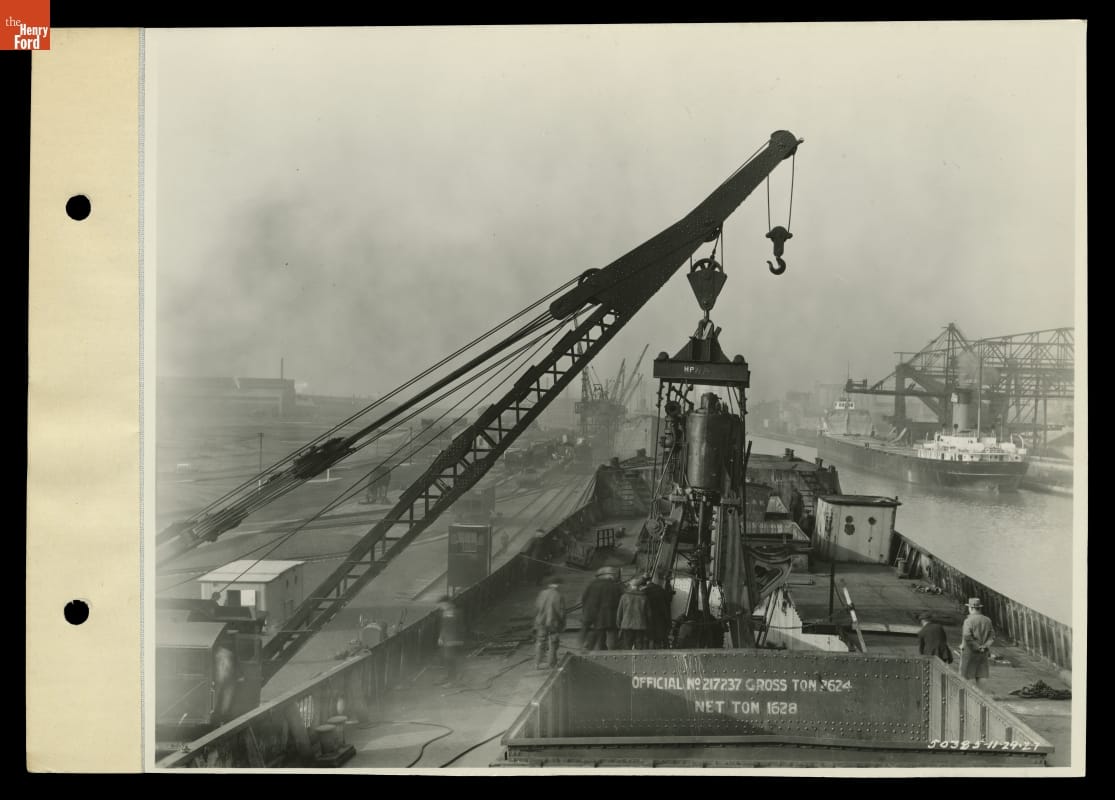
- Removing Engine from Salvage Ship at Ford Motor Company Rouge Plant Shipyard, 1927 - Completed in 1928 along the newly dredged River Rouge, Ford Motor Company's Rouge Plant quickly became an icon of modern industrial productivity. The factory's ship salvaging project exemplified Henry Ford's vision of efficiency at the plant. Workers disassembled surplus vessels, saving hardware and reconditioning functional machinery. Then, in the Rouge's production foundry, they melted down remaining scraps into reusable steel.
- November 29, 1927
- Collections - Artifact
Removing Engine from Salvage Ship at Ford Motor Company Rouge Plant Shipyard, 1927
Completed in 1928 along the newly dredged River Rouge, Ford Motor Company's Rouge Plant quickly became an icon of modern industrial productivity. The factory's ship salvaging project exemplified Henry Ford's vision of efficiency at the plant. Workers disassembled surplus vessels, saving hardware and reconditioning functional machinery. Then, in the Rouge's production foundry, they melted down remaining scraps into reusable steel.
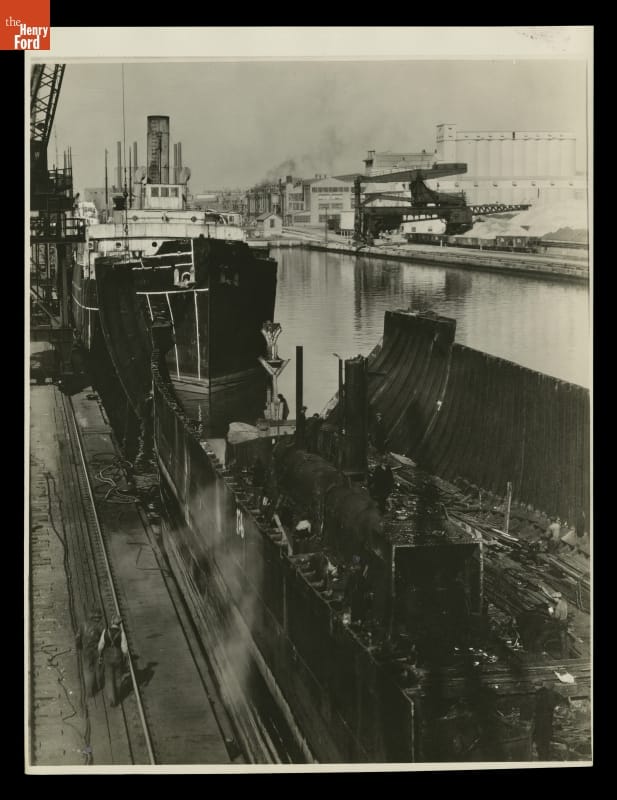
- Salvaging Metal from Ships at Ford Rouge Plant, 1927 - Completed in 1928 along the newly dredged River Rouge, Ford Motor Company's Rouge Plant quickly became an icon of modern industrial productivity. The factory's ship salvaging project exemplified Henry Ford's vision of efficiency at the plant. Workers disassembled surplus vessels, saving hardware and reconditioning functional machinery. Then, in the Rouge's production foundry, they melted down remaining scraps into reusable steel.
- 1927
- Collections - Artifact
Salvaging Metal from Ships at Ford Rouge Plant, 1927
Completed in 1928 along the newly dredged River Rouge, Ford Motor Company's Rouge Plant quickly became an icon of modern industrial productivity. The factory's ship salvaging project exemplified Henry Ford's vision of efficiency at the plant. Workers disassembled surplus vessels, saving hardware and reconditioning functional machinery. Then, in the Rouge's production foundry, they melted down remaining scraps into reusable steel.
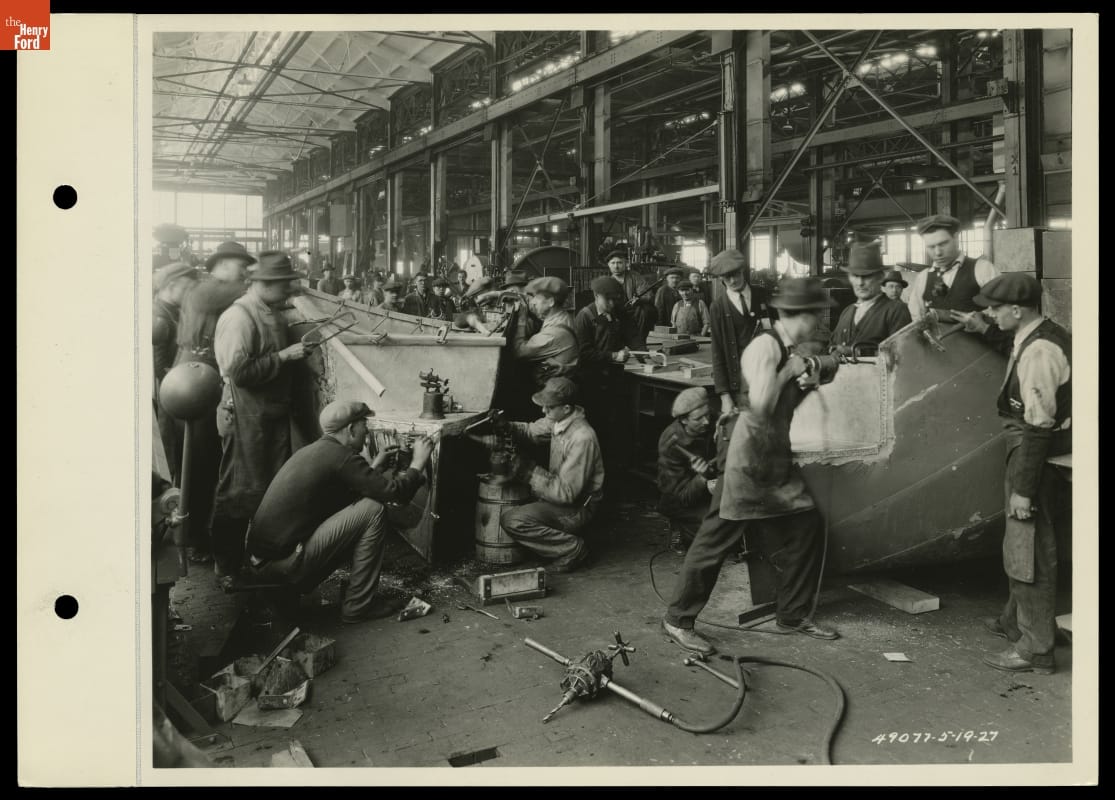
- Salvage Boats at Ford Motor Company Rouge Plant Shipyard, 1927 - Completed in 1928 along the newly dredged River Rouge, Ford Motor Company's Rouge Plant quickly became an icon of modern industrial productivity. The factory's ship salvaging project exemplified Henry Ford's vision of efficiency at the plant. Workers disassembled surplus vessels, saving hardware and reconditioning functional machinery. Then, in the Rouge's production foundry, they melted down remaining scraps into reusable steel.
- May 19, 1927
- Collections - Artifact
Salvage Boats at Ford Motor Company Rouge Plant Shipyard, 1927
Completed in 1928 along the newly dredged River Rouge, Ford Motor Company's Rouge Plant quickly became an icon of modern industrial productivity. The factory's ship salvaging project exemplified Henry Ford's vision of efficiency at the plant. Workers disassembled surplus vessels, saving hardware and reconditioning functional machinery. Then, in the Rouge's production foundry, they melted down remaining scraps into reusable steel.
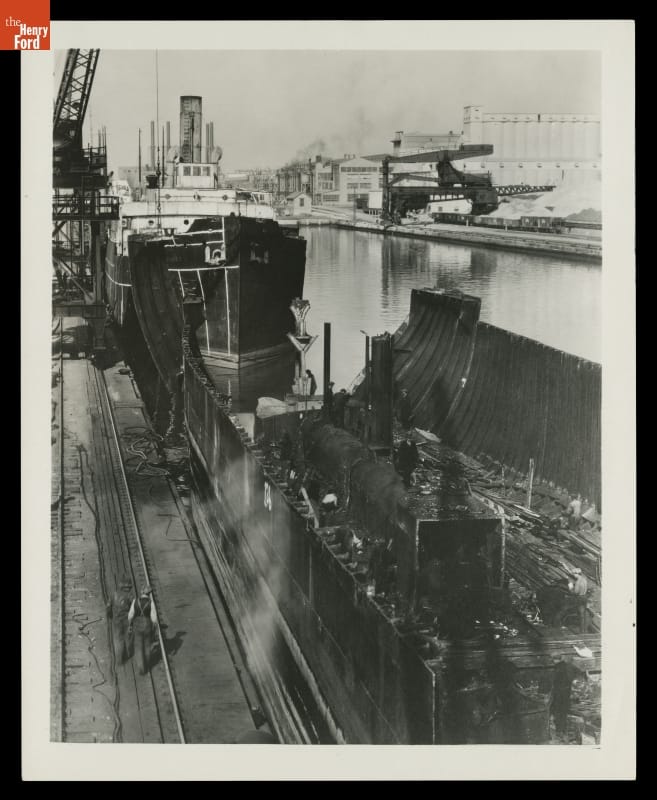
- Salvaging Metal from Ships at Ford Rouge Plant, 1927 - In 1927 Ford Motor Company commissioned Charles Sheeler to do a series of documentary photographs of their River Rouge industrial complex near Dearborn, Michigan. This photograph focuses on the dismantling of surplus ships in the boat slip. After reclaiming usable parts, the steel is cut into scrap and melted down in the production foundry. Sheeler balances this activity with a landscape background of factory buildings.
- 1927
- Collections - Artifact
Salvaging Metal from Ships at Ford Rouge Plant, 1927
In 1927 Ford Motor Company commissioned Charles Sheeler to do a series of documentary photographs of their River Rouge industrial complex near Dearborn, Michigan. This photograph focuses on the dismantling of surplus ships in the boat slip. After reclaiming usable parts, the steel is cut into scrap and melted down in the production foundry. Sheeler balances this activity with a landscape background of factory buildings.
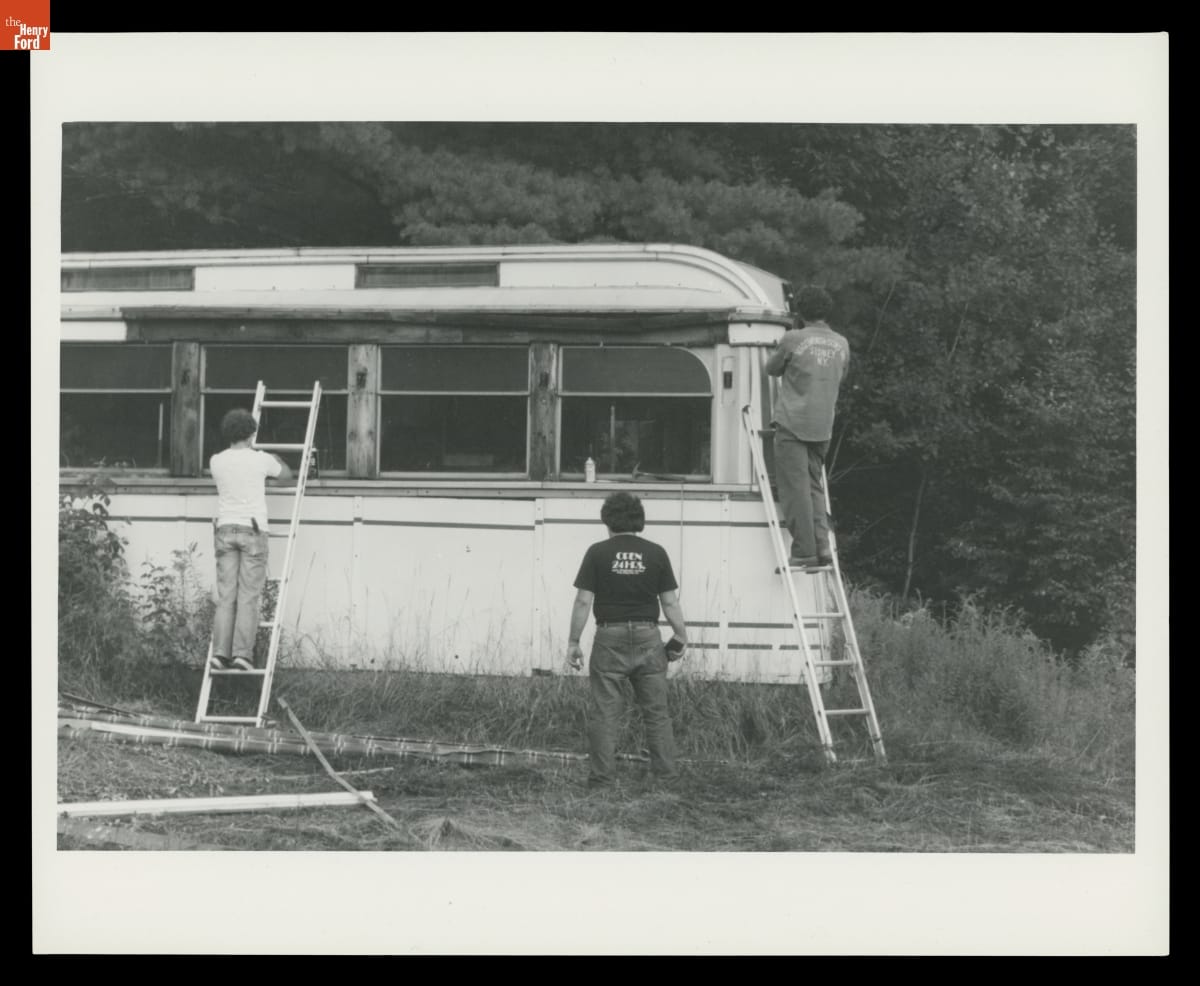
- Dismantling Corriveau's Diner for Salvage, Gilmanton, New Hampshire, August 1985 -
- August 01, 1985
- Collections - Artifact
Dismantling Corriveau's Diner for Salvage, Gilmanton, New Hampshire, August 1985