
Search
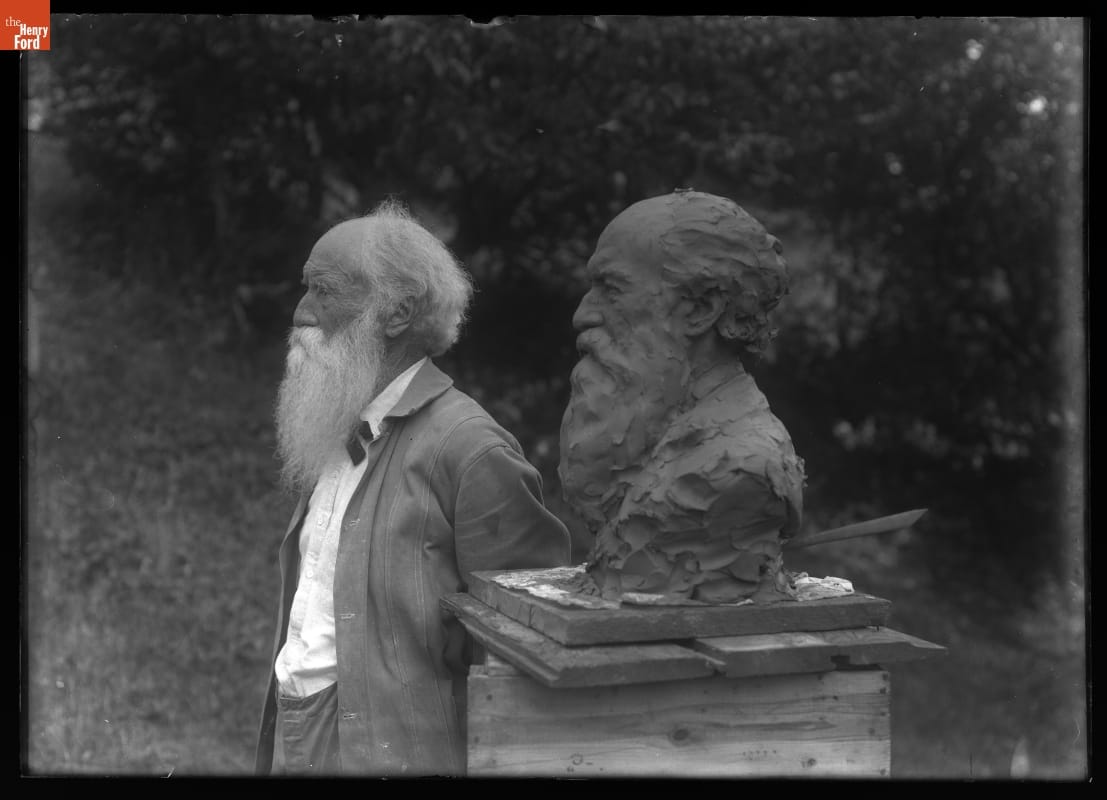
- John Burroughs with Clay Model Bust by C. S. Pietro, 1912 - John Burroughs (1837-1921) was an internationally known naturalist and writer whose nature essays were well-received in both literary and scientific circles. From his home in the Catskills of upstate New York, Burroughs wrote mostly about what could be found in accessible and familiar landscapes. He wanted his readers to appreciate the natural world that surrounded them.
- 1912
- Collections - Artifact
John Burroughs with Clay Model Bust by C. S. Pietro, 1912
John Burroughs (1837-1921) was an internationally known naturalist and writer whose nature essays were well-received in both literary and scientific circles. From his home in the Catskills of upstate New York, Burroughs wrote mostly about what could be found in accessible and familiar landscapes. He wanted his readers to appreciate the natural world that surrounded them.
- Tensegrity, 2008 -
- 2008
- Collections - Artifact
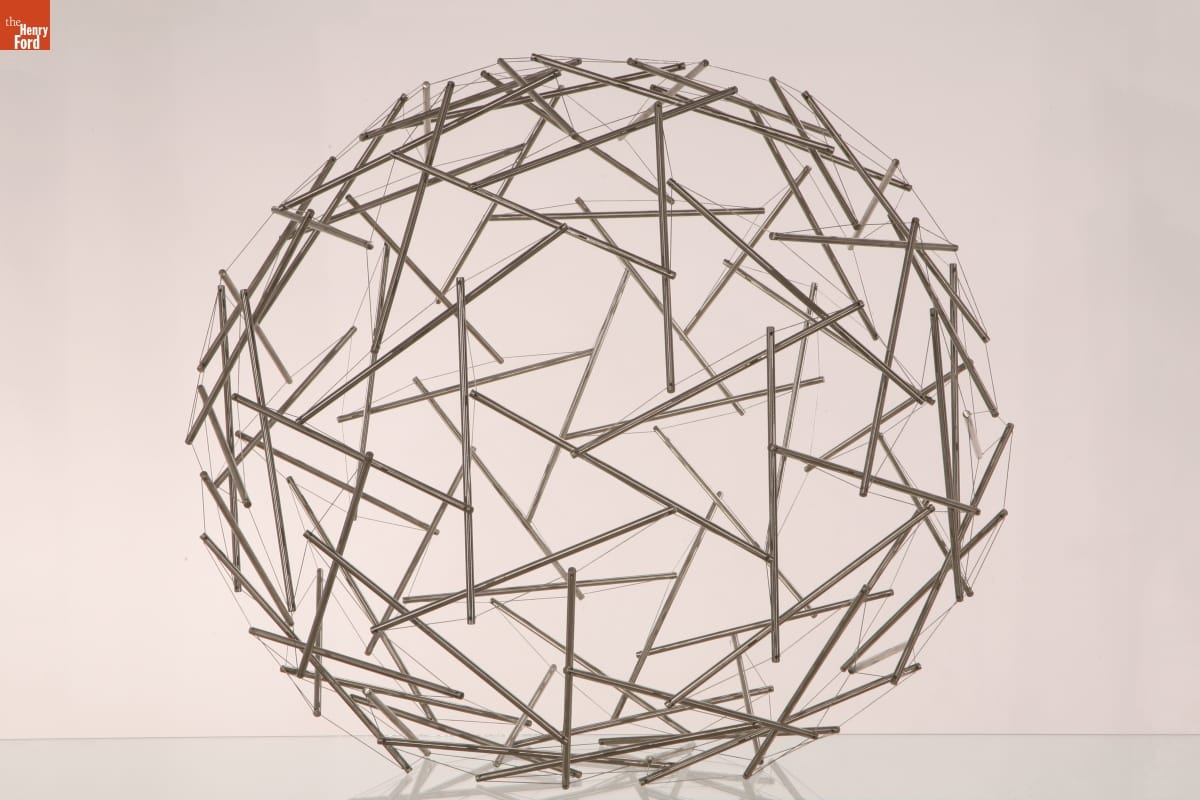
Tensegrity, 2008
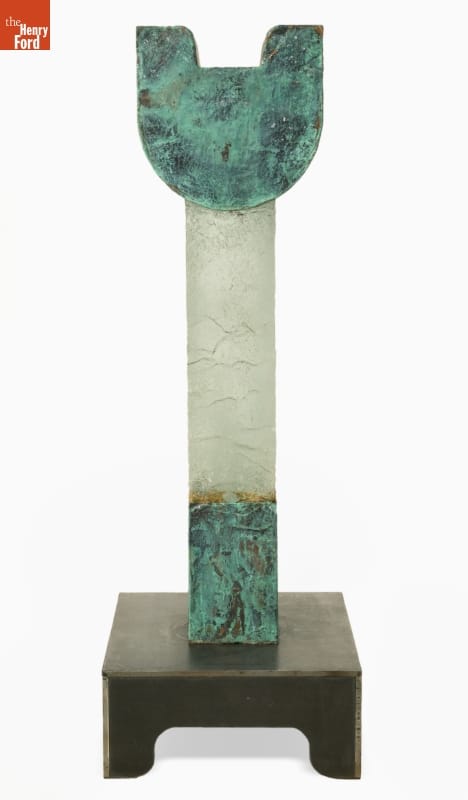
- "Structure 25" by Howard Ben Tre, 1985 - Howard Ben Tré took a unique path in the studio glass world when he exchanged traditional glassblowing techniques to cast monumental sculptures of solid glass. The rough glass surface of this piece has patinated sheet copper attached giving it a weathered look. Ben Tré states, "I hope that people without any history of looking at art, can be drawn in, and have a connection to it."
- 1985
- Collections - Artifact
"Structure 25" by Howard Ben Tre, 1985
Howard Ben Tré took a unique path in the studio glass world when he exchanged traditional glassblowing techniques to cast monumental sculptures of solid glass. The rough glass surface of this piece has patinated sheet copper attached giving it a weathered look. Ben Tré states, "I hope that people without any history of looking at art, can be drawn in, and have a connection to it."
- "Settling In" by Richard Jolley, 1998 -
- 1998
- Collections - Artifact
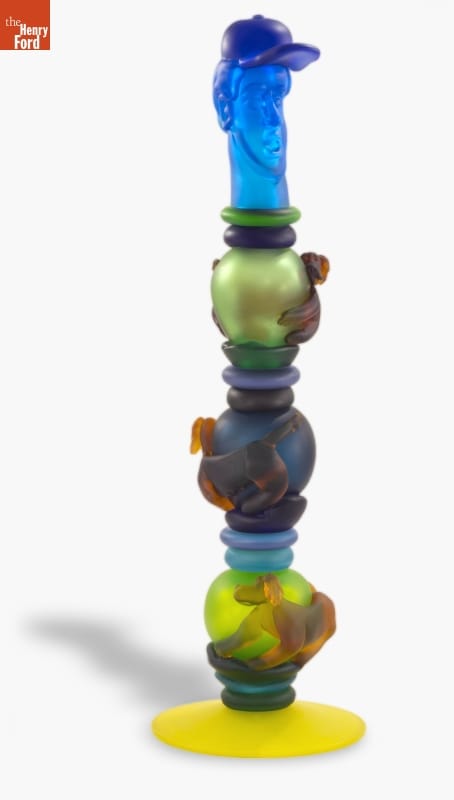
"Settling In" by Richard Jolley, 1998
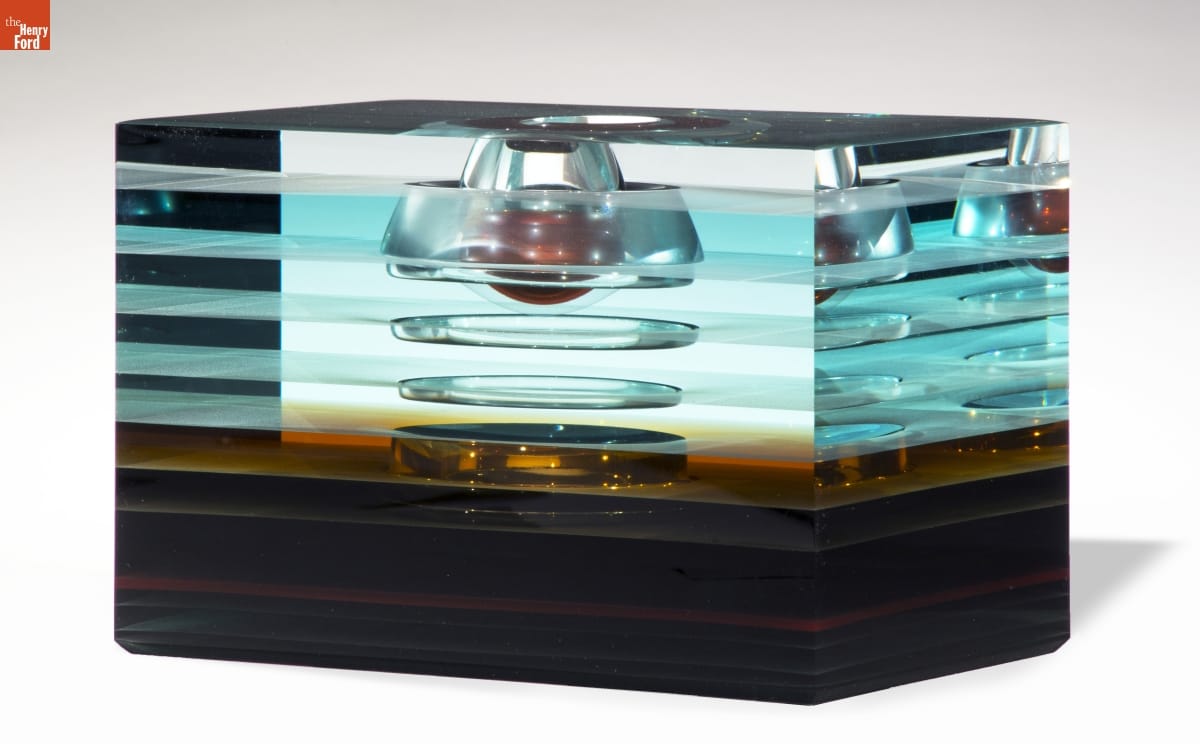
- "Lumina Green With Red Ring" by Tom Patti, 1993 - The beauty of art and the innovation of technology are combined in Tom Patti's work. He approaches glass with a voracious curiosity to discover what the material can do. His career in art began when he discovered how to create small glass sculptures of layered industrial glass with a bubble inside. Sculptures such as this one explore color and spatial perception.
- 1993
- Collections - Artifact
"Lumina Green With Red Ring" by Tom Patti, 1993
The beauty of art and the innovation of technology are combined in Tom Patti's work. He approaches glass with a voracious curiosity to discover what the material can do. His career in art began when he discovered how to create small glass sculptures of layered industrial glass with a bubble inside. Sculptures such as this one explore color and spatial perception.
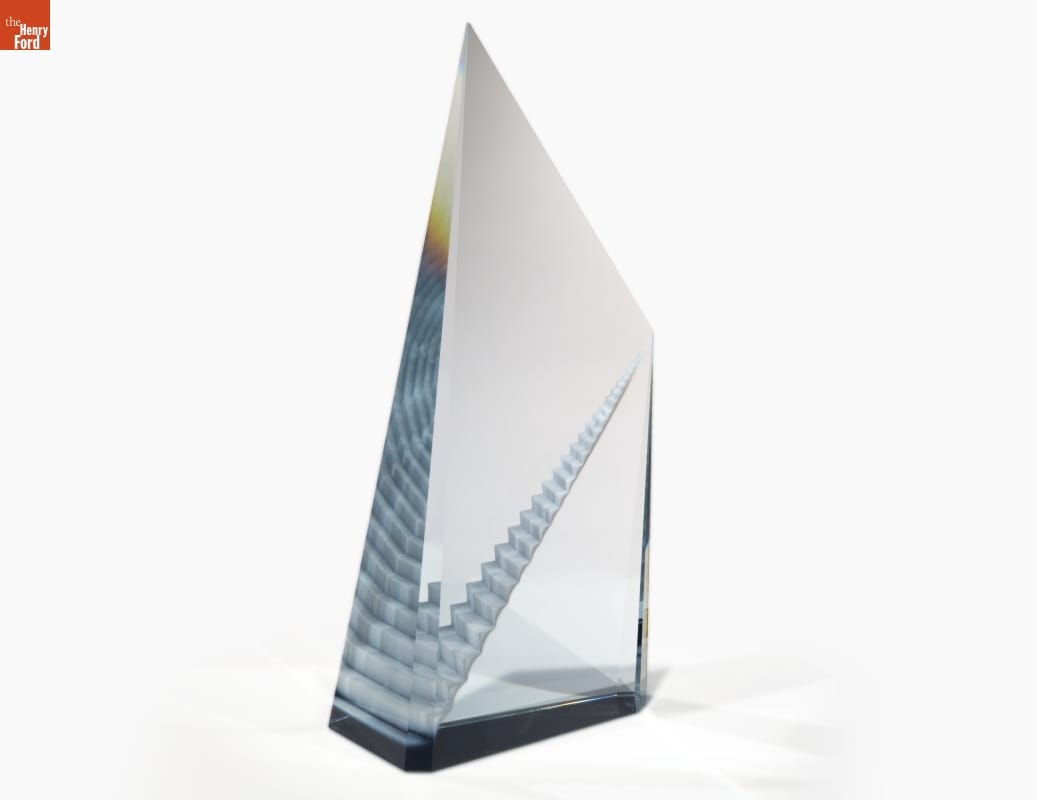
- "Ascension" by Mark Peiser, 1987 - "For me, technique is not cheap -- it's imperative," asserts Mark Peiser. This contrasts with the comment made by Harvey Littleton, the founder of the studio glass movement, that, "Technique is cheap." Peiser creates innovative technical processes that express his ideas. His Innerspace Series (1983-1994) explores how to compose a solid three dimensional image within a mass of a different color.
- 1987
- Collections - Artifact
"Ascension" by Mark Peiser, 1987
"For me, technique is not cheap -- it's imperative," asserts Mark Peiser. This contrasts with the comment made by Harvey Littleton, the founder of the studio glass movement, that, "Technique is cheap." Peiser creates innovative technical processes that express his ideas. His Innerspace Series (1983-1994) explores how to compose a solid three dimensional image within a mass of a different color.
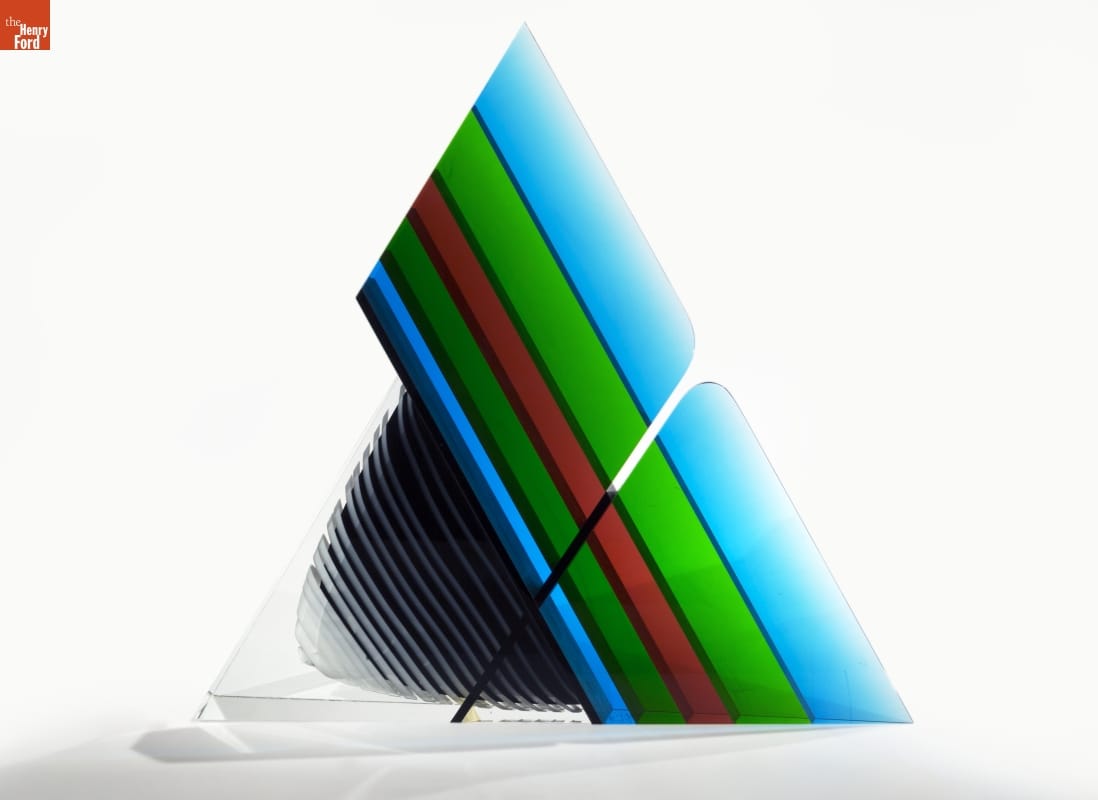
- "Triangle" by Pavel Hlava, 2002 -
- 2002
- Collections - Artifact
"Triangle" by Pavel Hlava, 2002
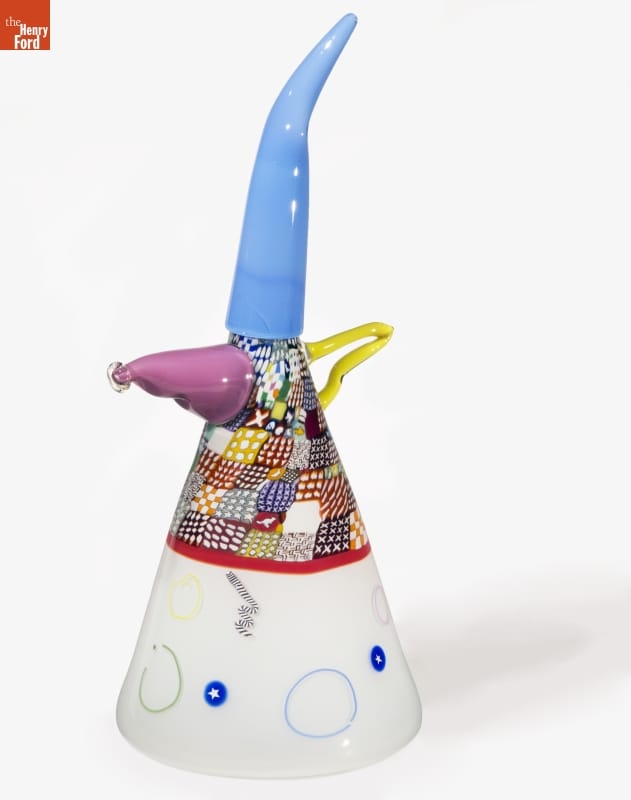
- "Wizard" by Richard Marquis, 1987 -
- 1987
- Collections - Artifact
"Wizard" by Richard Marquis, 1987
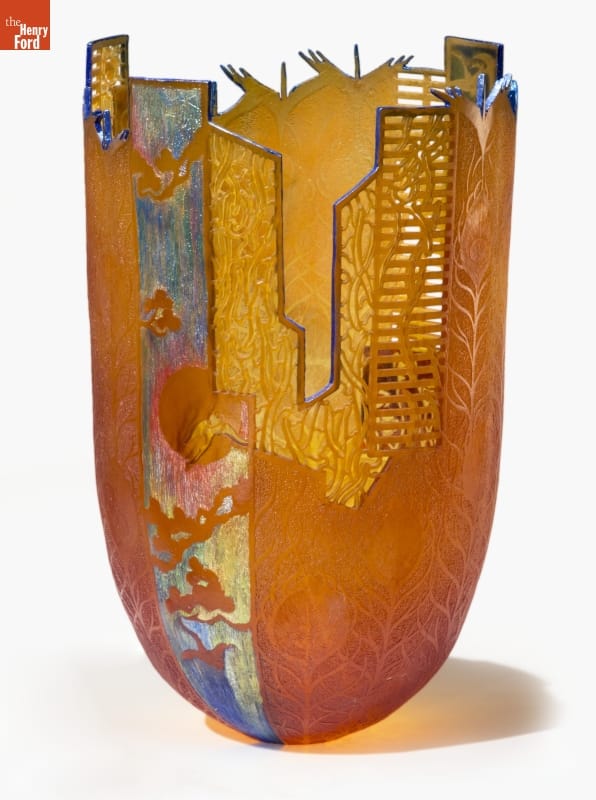
- "Sunset" from Between World Series by Binh Pho, 2010 -
- 2010
- Collections - Artifact
"Sunset" from Between World Series by Binh Pho, 2010
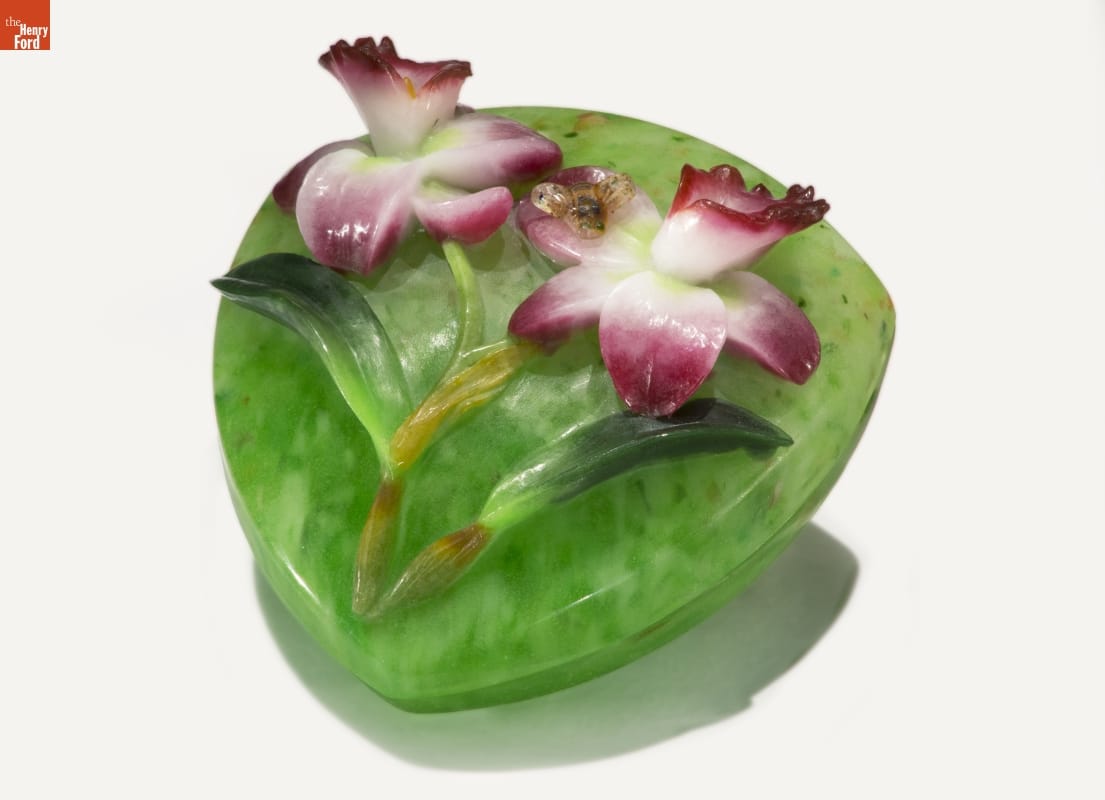
- Orchard Box by Kimiake Higuchi, 2007 - New centers of glassmaking emerged as studio glass spread in the 1980s, creating a truly international movement. In Japan, studio glass artist Kimiake Higuchi referenced the Art Nouveau style of the 1890s for inspiration. She revived a popular glassmaking technique known as "pate-de-verre" to achieve opaque finishes and used color schemes and botanical motifs that further echo the Art Nouveau.
- 2007
- Collections - Artifact
Orchard Box by Kimiake Higuchi, 2007
New centers of glassmaking emerged as studio glass spread in the 1980s, creating a truly international movement. In Japan, studio glass artist Kimiake Higuchi referenced the Art Nouveau style of the 1890s for inspiration. She revived a popular glassmaking technique known as "pate-de-verre" to achieve opaque finishes and used color schemes and botanical motifs that further echo the Art Nouveau.