
Search
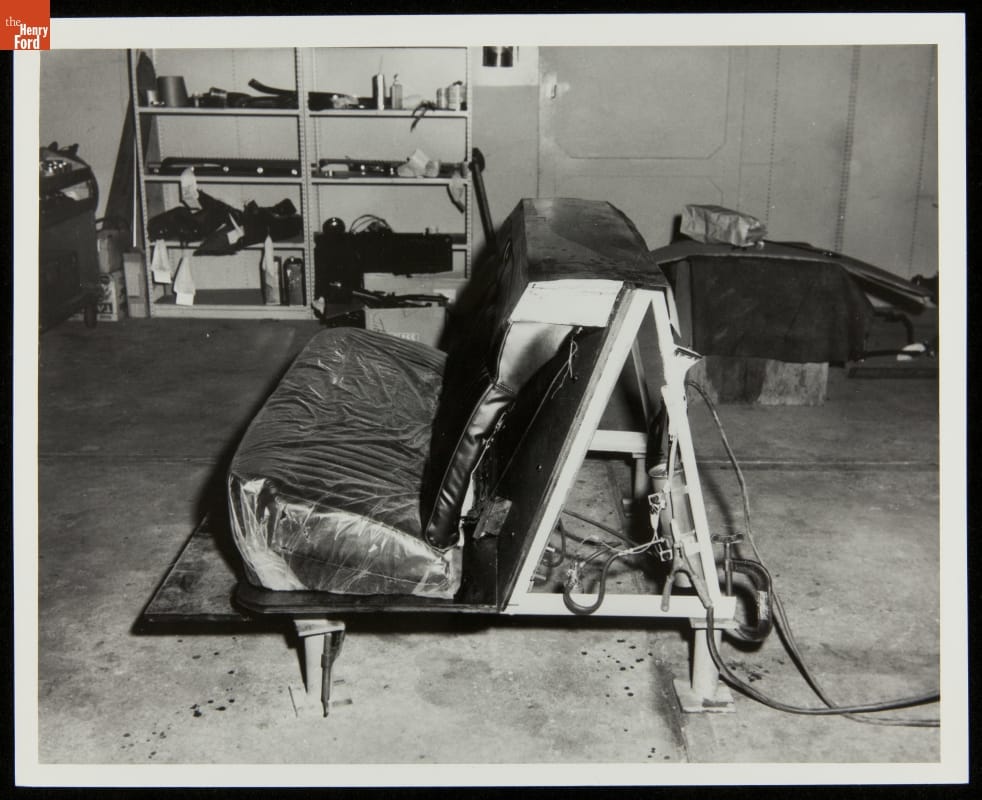
- Lincoln Continental Presidential Limousine Customization, Testing Adjustable Hydraulic Seat, 1961 - The Hess & Eisenhardt Company of Cincinnati, Ohio, transformed a stock 1961 Lincoln Continental convertible into the presidential limousine. Among the special modifications was a hydraulic lift installed on the rear seat. At the touch of a button, the president could raise the seat 10-1/2 inches to make himself and his passengers more visible to crowds watching the limousine pass.
- 1961
- Collections - Artifact
Lincoln Continental Presidential Limousine Customization, Testing Adjustable Hydraulic Seat, 1961
The Hess & Eisenhardt Company of Cincinnati, Ohio, transformed a stock 1961 Lincoln Continental convertible into the presidential limousine. Among the special modifications was a hydraulic lift installed on the rear seat. At the touch of a button, the president could raise the seat 10-1/2 inches to make himself and his passengers more visible to crowds watching the limousine pass.
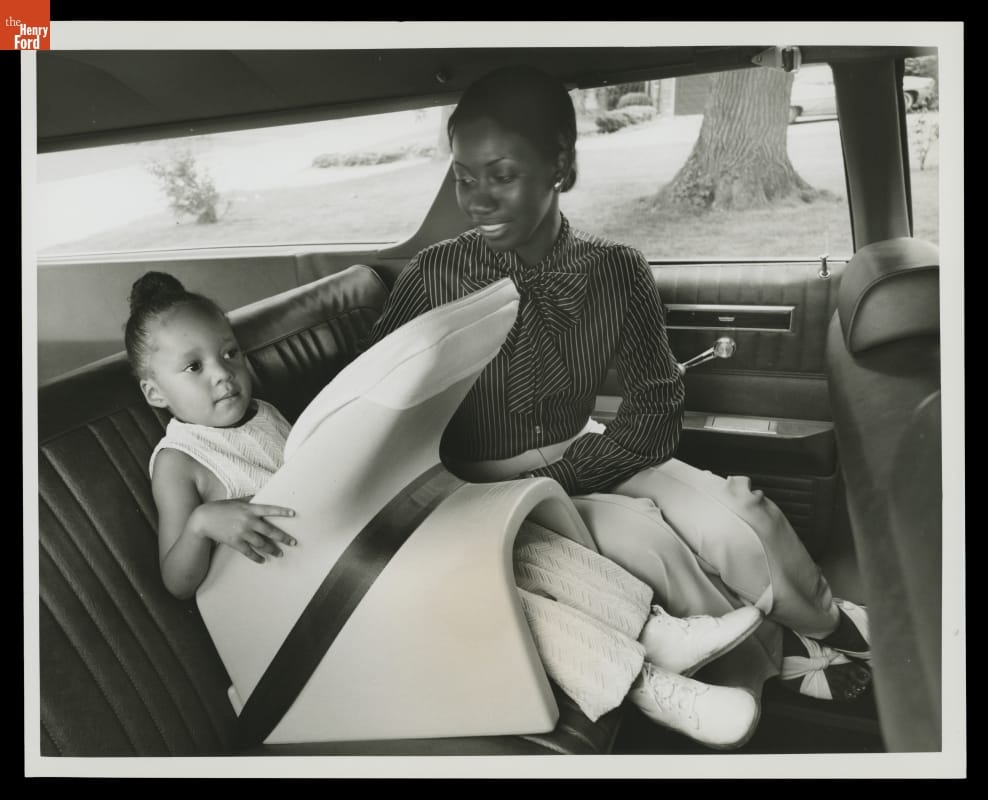
- Ford Motor Company's Tot-Guard Car Seat, 1973 - American car manufacturers developed child restraints designed for crash protection in the late 1960s. One of the first was Ford's Tot-Guard, seen in this photograph. The seatbelt secured the padded shield and seat. This early and effective restraint was not widely used, however. Only with more stringent regulations, public education, and mandated use would children safely ride in automobiles.
- 1973
- Collections - Artifact
Ford Motor Company's Tot-Guard Car Seat, 1973
American car manufacturers developed child restraints designed for crash protection in the late 1960s. One of the first was Ford's Tot-Guard, seen in this photograph. The seatbelt secured the padded shield and seat. This early and effective restraint was not widely used, however. Only with more stringent regulations, public education, and mandated use would children safely ride in automobiles.
- Milking Stool -
- Collections - Artifact
Milking Stool
- Milking Stool -
- Collections - Artifact
Milking Stool
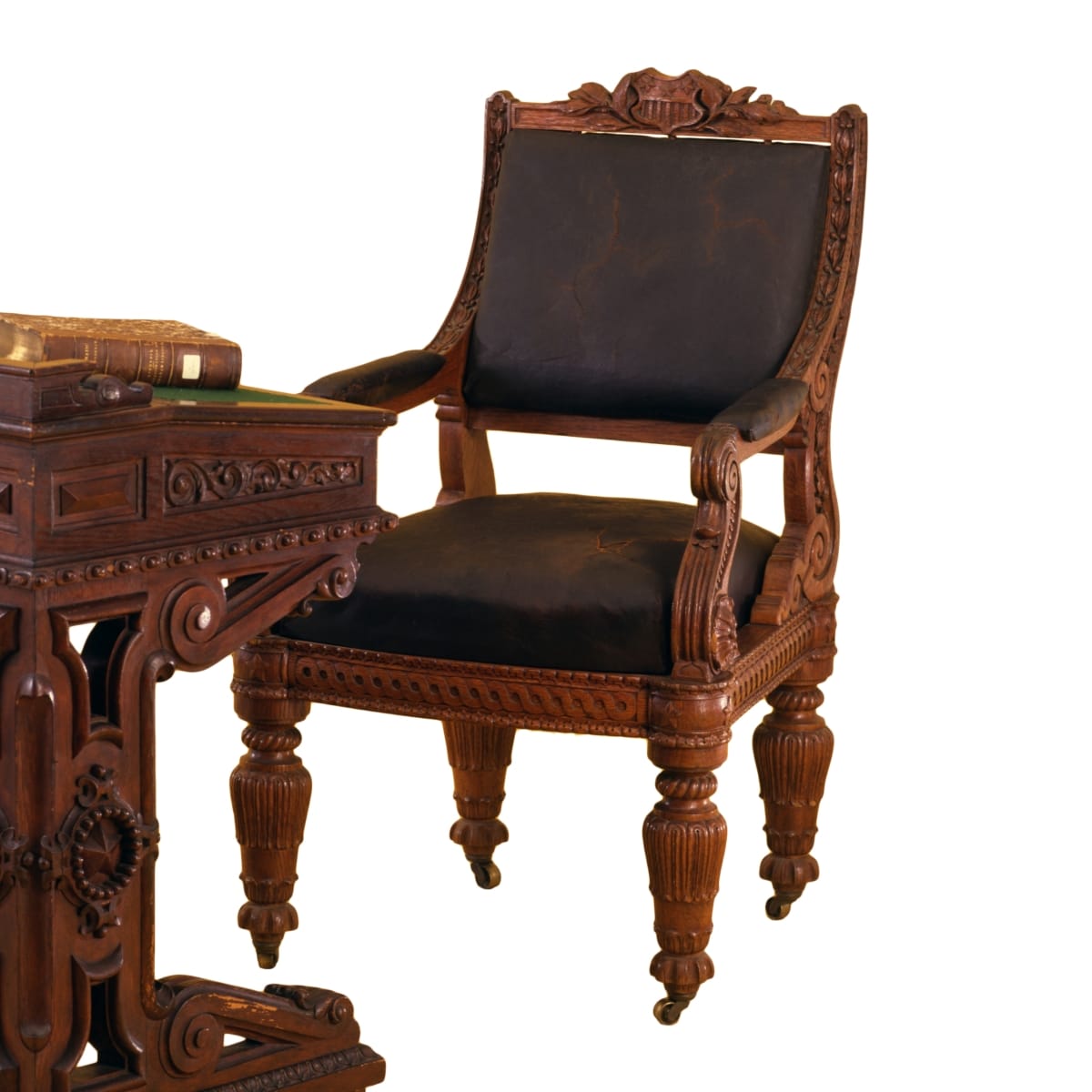
- Armchair Used in the United States House of Representatives, 1857-1873 - Thomas U. Walter, Architect of the Capitol, designed chairs like this one for use in the U.S. House of Representatives in 1857. However, members of the House found these impressive-looking chairs uncomfortable. The chairs were replaced in 1859 -- many sold at auction. Photographers like Mathew Brady and Alexander Gardner obtained these chairs as studio props and they appear in images taken during the 1860s.
- 1857
- Collections - Artifact
Armchair Used in the United States House of Representatives, 1857-1873
Thomas U. Walter, Architect of the Capitol, designed chairs like this one for use in the U.S. House of Representatives in 1857. However, members of the House found these impressive-looking chairs uncomfortable. The chairs were replaced in 1859 -- many sold at auction. Photographers like Mathew Brady and Alexander Gardner obtained these chairs as studio props and they appear in images taken during the 1860s.
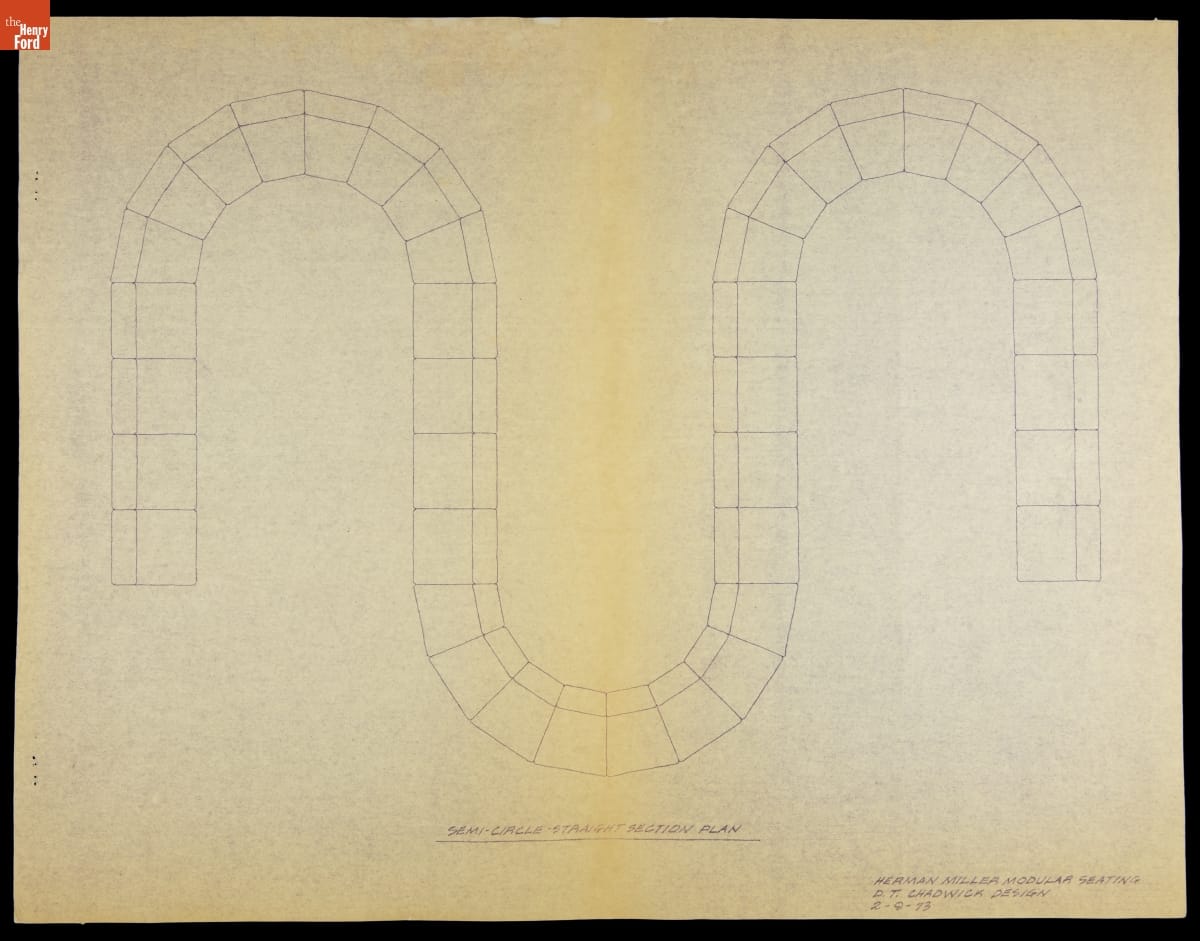
- Herman Miller Modular Seating Design by Don Chadwick, "Semi-Circle-Straight Section Plan," February 9, 1973 -
- February 09, 1973
- Collections - Artifact
Herman Miller Modular Seating Design by Don Chadwick, "Semi-Circle-Straight Section Plan," February 9, 1973
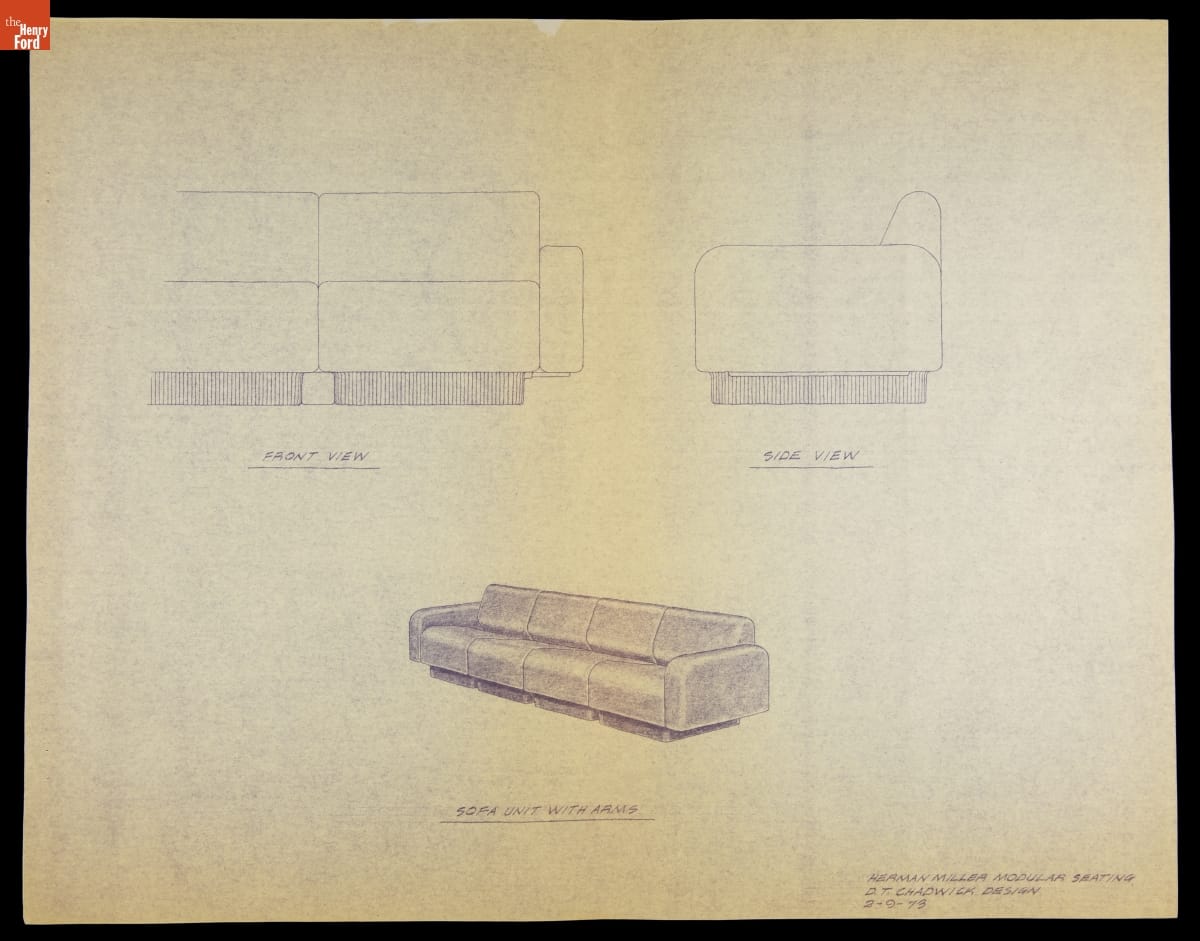
- Herman Miller Modular Seating Design by Don Chadwick, "Sofa Unit With Arms," February 9, 1973 -
- February 09, 1973
- Collections - Artifact
Herman Miller Modular Seating Design by Don Chadwick, "Sofa Unit With Arms," February 9, 1973
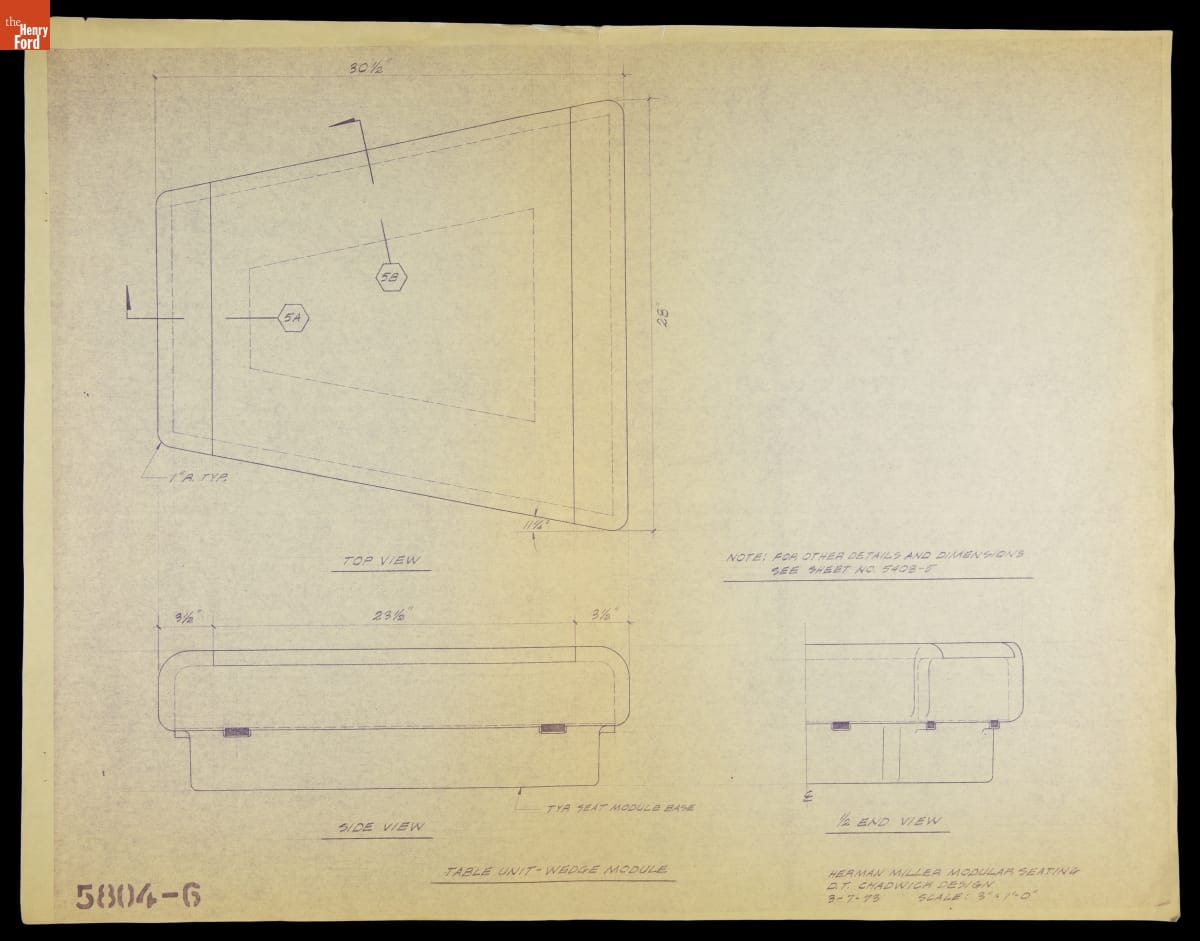
- Herman Miller Modular Seating Design by Don Chadwick, "Table Unit-Wedge Module," March 7, 1973 -
- March 07, 1973
- Collections - Artifact
Herman Miller Modular Seating Design by Don Chadwick, "Table Unit-Wedge Module," March 7, 1973
- Milking Stool -
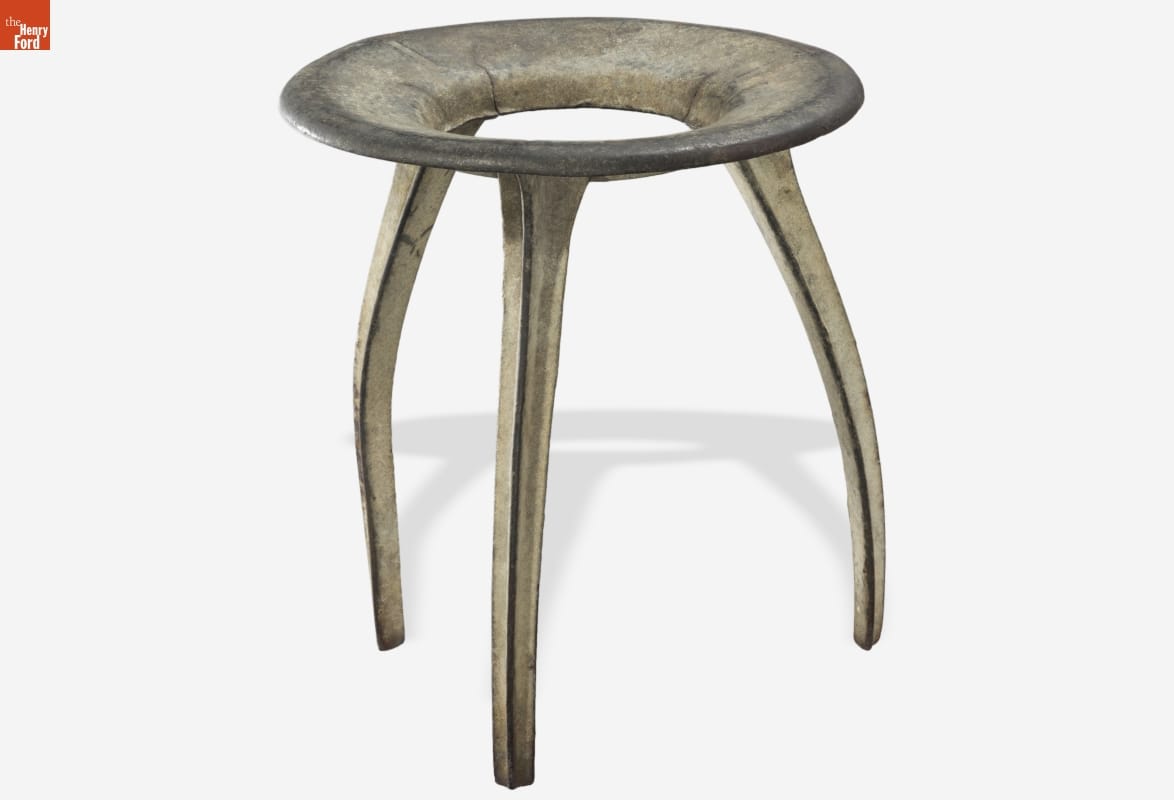
- Collections - Artifact
Milking Stool
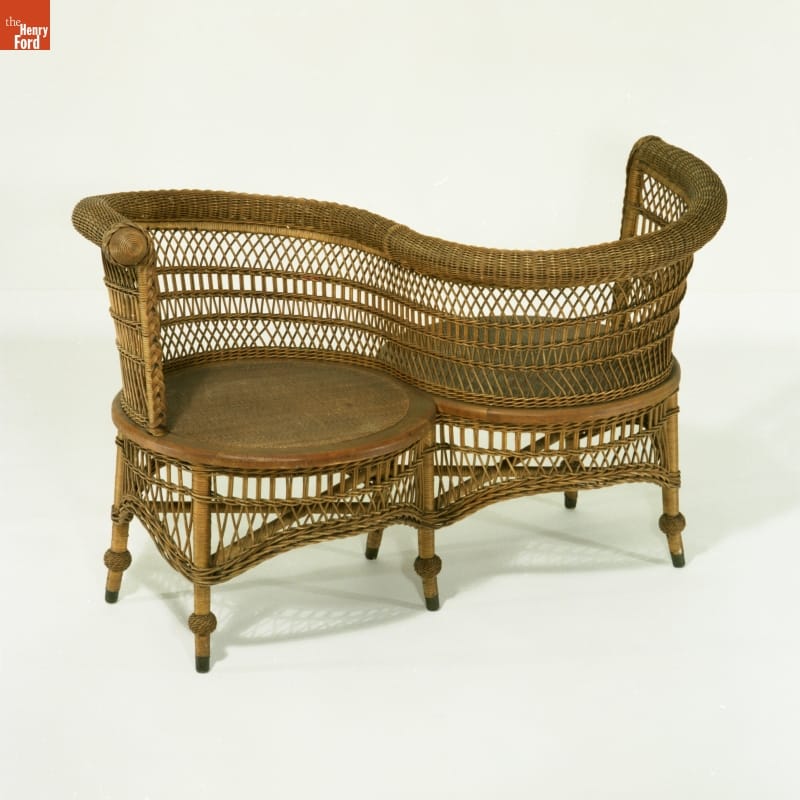
- Tete-a-Tete Settee, 1895-1915 - During a time when the rules of propriety were quite strict, this unusual seat physically separated young people of the opposite sex. But it still allowed their heads to come near for private conversation. Hence its name "tete-a-tete," which in French means "head-to-head."
- 1895-1915
- Collections - Artifact
Tete-a-Tete Settee, 1895-1915
During a time when the rules of propriety were quite strict, this unusual seat physically separated young people of the opposite sex. But it still allowed their heads to come near for private conversation. Hence its name "tete-a-tete," which in French means "head-to-head."