
Search
- How to Grow the Peanut and 105 Ways of Preparing it for Human Consumption, May 1917 - George Washington Carver directed the agricultural Experiment Station at Tuskegee Institute in Alabama. As part of his work, Carver wrote what he called "threefold" agricultural bulletins: they included information for the farmer, for the teacher, and for the housewife. This bulletin on growing and cooking peanuts, along with Carver's other advocacy work, helped popularize the peanut as a useful and nutritious crop for Southern farmers.

- May 01, 1917
- Collections - Artifact
How to Grow the Peanut and 105 Ways of Preparing it for Human Consumption, May 1917
George Washington Carver directed the agricultural Experiment Station at Tuskegee Institute in Alabama. As part of his work, Carver wrote what he called "threefold" agricultural bulletins: they included information for the farmer, for the teacher, and for the housewife. This bulletin on growing and cooking peanuts, along with Carver's other advocacy work, helped popularize the peanut as a useful and nutritious crop for Southern farmers.
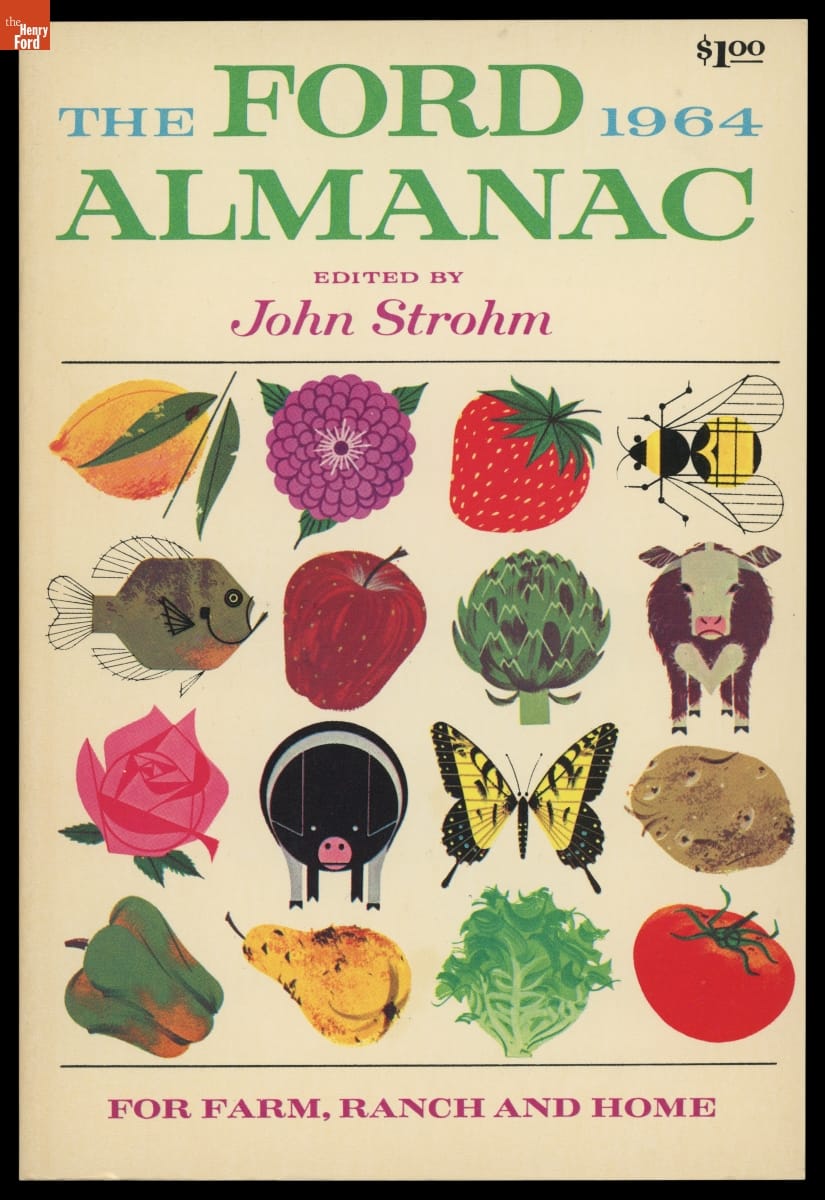
- The Ford Almanac for Farm, Ranch and Home, 1964 - Ford Motor Company published a series of almanacs from the 1950s until at least 1980. Issues covered a range of topics and included weather predictions, gardening and "country living" tips, and suggestions for agricultural mechanization and efficiency. Text and images throughout advertised the ways Ford automobiles, tractors, and agricultural implements might increase farmers' profits and enhance rural customers' lives.
- 1964
- Collections - Artifact
The Ford Almanac for Farm, Ranch and Home, 1964
Ford Motor Company published a series of almanacs from the 1950s until at least 1980. Issues covered a range of topics and included weather predictions, gardening and "country living" tips, and suggestions for agricultural mechanization and efficiency. Text and images throughout advertised the ways Ford automobiles, tractors, and agricultural implements might increase farmers' profits and enhance rural customers' lives.
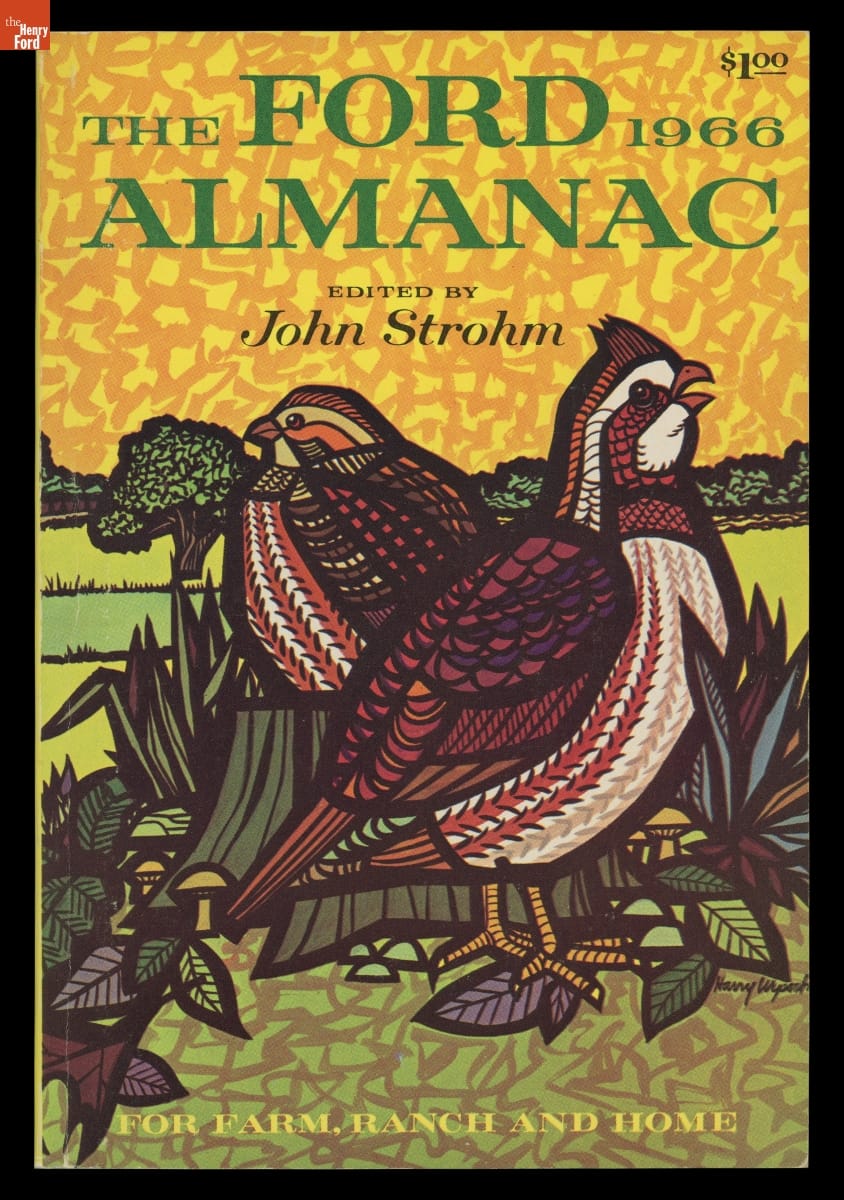
- The Ford Almanac for Farm, Ranch and Home, 1966 - Ford Motor Company published a series of almanacs from the 1950s until at least 1980. Issues covered a range of topics and included weather predictions, gardening and "country living" tips, and suggestions for agricultural mechanization and efficiency. Text and images throughout advertised the ways Ford automobiles, tractors, and agricultural implements might increase farmers' profits and enhance rural customers' lives.
- 1966
- Collections - Artifact
The Ford Almanac for Farm, Ranch and Home, 1966
Ford Motor Company published a series of almanacs from the 1950s until at least 1980. Issues covered a range of topics and included weather predictions, gardening and "country living" tips, and suggestions for agricultural mechanization and efficiency. Text and images throughout advertised the ways Ford automobiles, tractors, and agricultural implements might increase farmers' profits and enhance rural customers' lives.
- Bound Volume, "Ford News," Volume 19, 1939 -
- 1939
- Collections - Artifact
Bound Volume, "Ford News," Volume 19, 1939
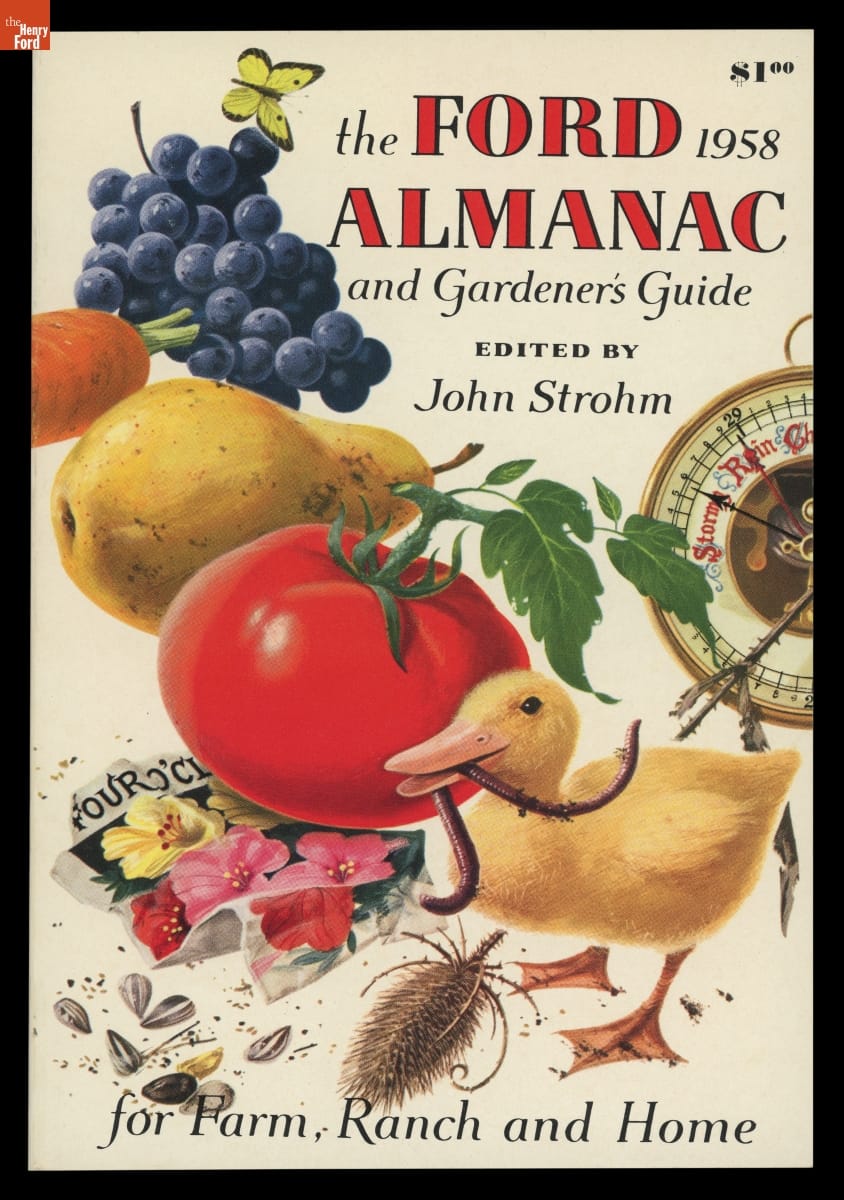
- The Ford Almanac and Gardener's Guide for Farm, Ranch and Home, 1958 - Ford Motor Company published a series of almanacs from the 1950s until at least 1980. Issues covered a range of topics and included weather predictions, gardening and "country living" tips, and suggestions for agricultural mechanization and efficiency. Text and images throughout advertised the ways Ford automobiles, tractors, and agricultural implements might increase farmers' profits and enhance rural customers' lives.
- 1958
- Collections - Artifact
The Ford Almanac and Gardener's Guide for Farm, Ranch and Home, 1958
Ford Motor Company published a series of almanacs from the 1950s until at least 1980. Issues covered a range of topics and included weather predictions, gardening and "country living" tips, and suggestions for agricultural mechanization and efficiency. Text and images throughout advertised the ways Ford automobiles, tractors, and agricultural implements might increase farmers' profits and enhance rural customers' lives.
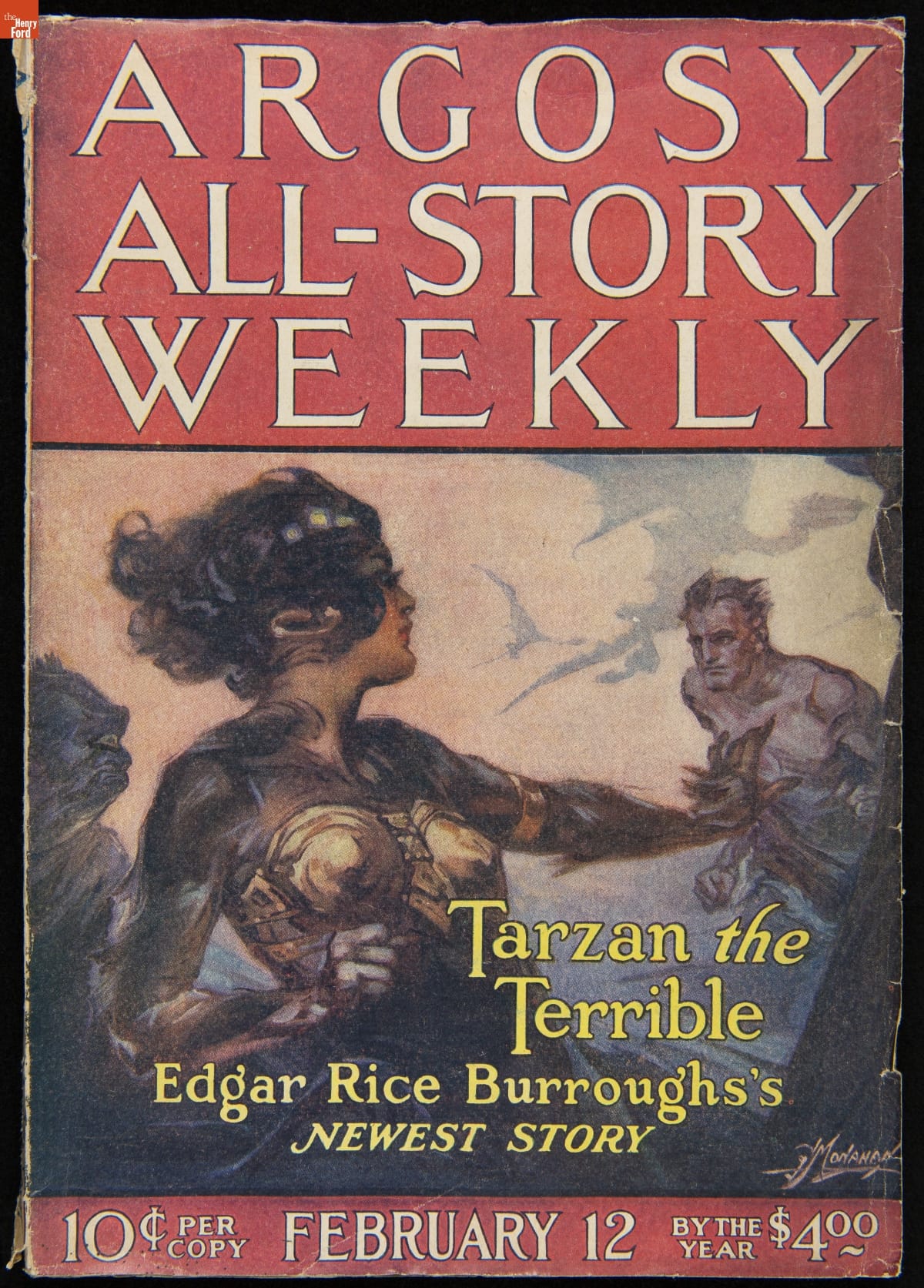
- Argosy All-Story Weekly, February 12, 1921 - Newspaper and magazine publisher Frank A. Munsey printed <em>Argosy</em> magazine with all fiction stories in 1896, launching a new form of popular literature--the pulp magazine. Named for the rough, inexpensive woodpulp paper they were printed on, "pulps" reached their peak of popularity in the 1920s. Readers could choose from action and adventure stories, like those published in <em>Argosy</em>, as well detective stories, love stories, and westerns.
- February 12, 1921
- Collections - Artifact
Argosy All-Story Weekly, February 12, 1921
Newspaper and magazine publisher Frank A. Munsey printed Argosy magazine with all fiction stories in 1896, launching a new form of popular literature--the pulp magazine. Named for the rough, inexpensive woodpulp paper they were printed on, "pulps" reached their peak of popularity in the 1920s. Readers could choose from action and adventure stories, like those published in Argosy, as well detective stories, love stories, and westerns.
- How the Farmer Can Save His Sweet Potatoes and Ways of Preparing It for the Table, January 1925 (2nd ed.) -
- January 01, 1925
- Collections - Artifact
How the Farmer Can Save His Sweet Potatoes and Ways of Preparing It for the Table, January 1925 (2nd ed.)
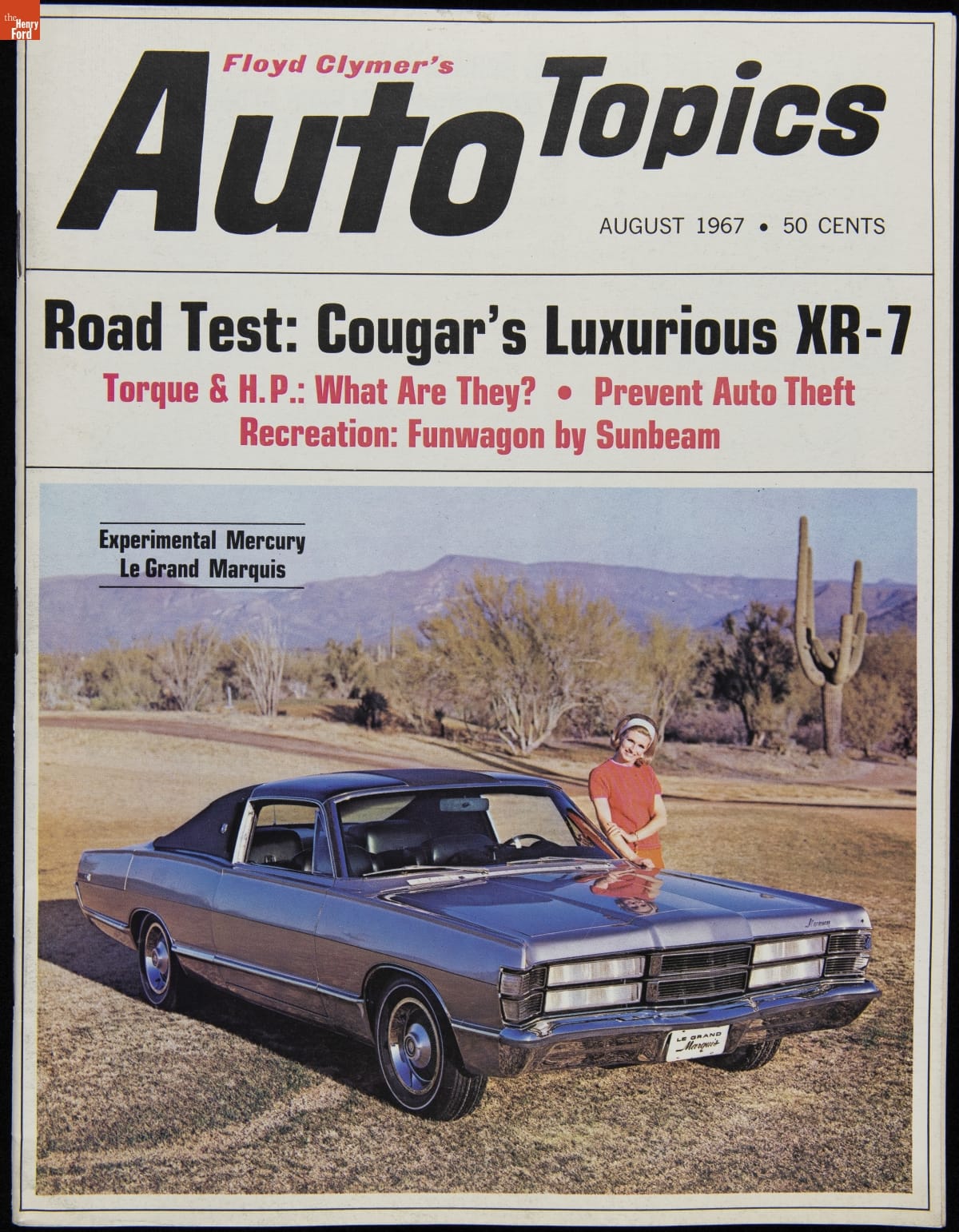
- Floyd Clymer's Auto Topics, August 1967 - Motorcycle racer and dealer Floyd Clymer published hundreds of books, magazines, and repair manuals related to motorcycles, automobiles, and racing. The November 1967 issue of Clymer's <em>Auto Topics</em> magazine featured an illustration that traced the development of Ford Motor Company's racing sports cars from the experimental Mustang I to the Le Mans-winning Mark IV.
- August 01, 1967
- Collections - Artifact
Floyd Clymer's Auto Topics, August 1967
Motorcycle racer and dealer Floyd Clymer published hundreds of books, magazines, and repair manuals related to motorcycles, automobiles, and racing. The November 1967 issue of Clymer's Auto Topics magazine featured an illustration that traced the development of Ford Motor Company's racing sports cars from the experimental Mustang I to the Le Mans-winning Mark IV.
- How to Make and Save Money on the Farm, Bulletin No. 39, 1927 -
- 1927
- Collections - Artifact
How to Make and Save Money on the Farm, Bulletin No. 39, 1927
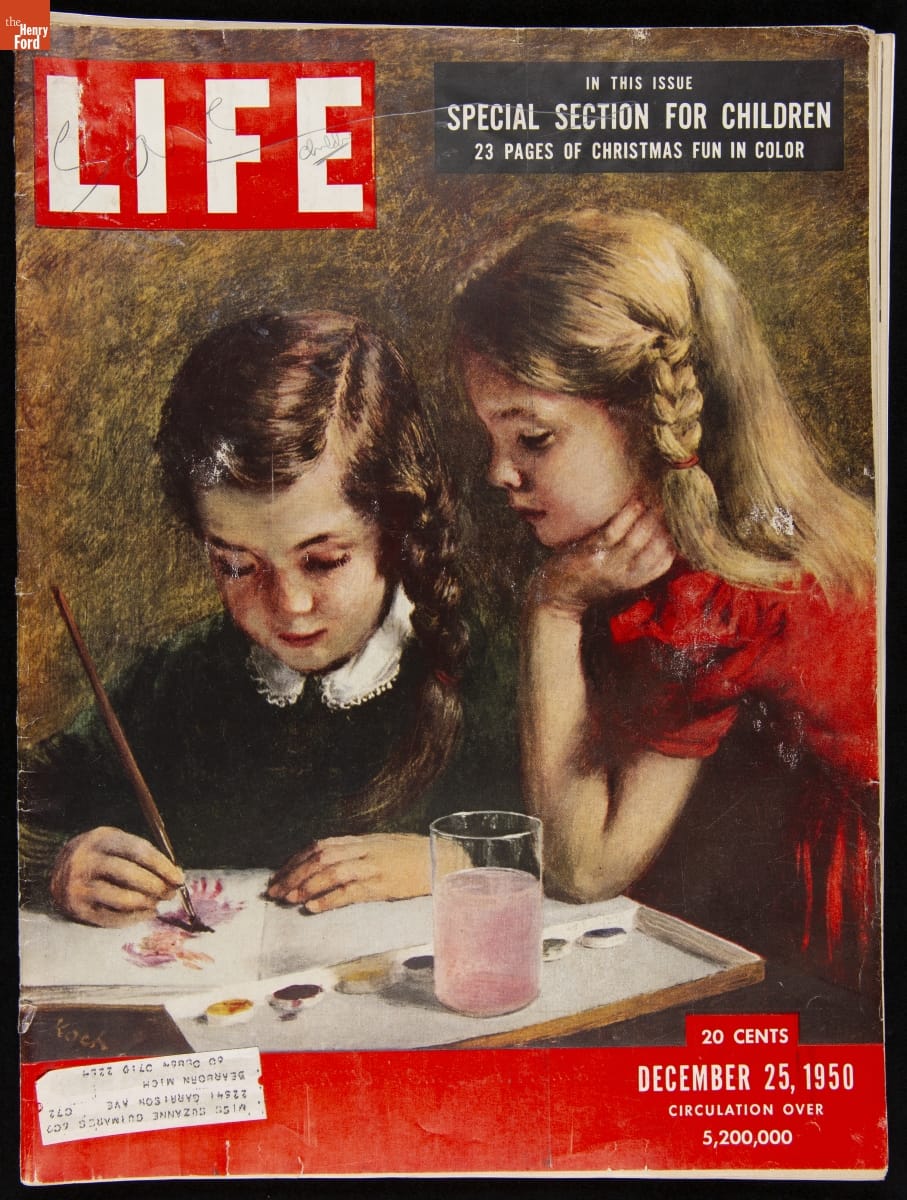
- "Life" Magazine for December 25, 1950 - <em>Life</em> magazine was one of the popular documenters of American life during the mid-20th century. This December 25, 1950, Christmas issue has a special section for children. One project included a cut-out paper Christmas tree with ornaments that, if you followed the directions carefully, "can be made in an hour."
- December 25, 1950
- Collections - Artifact
"Life" Magazine for December 25, 1950
Life magazine was one of the popular documenters of American life during the mid-20th century. This December 25, 1950, Christmas issue has a special section for children. One project included a cut-out paper Christmas tree with ornaments that, if you followed the directions carefully, "can be made in an hour."