
Search
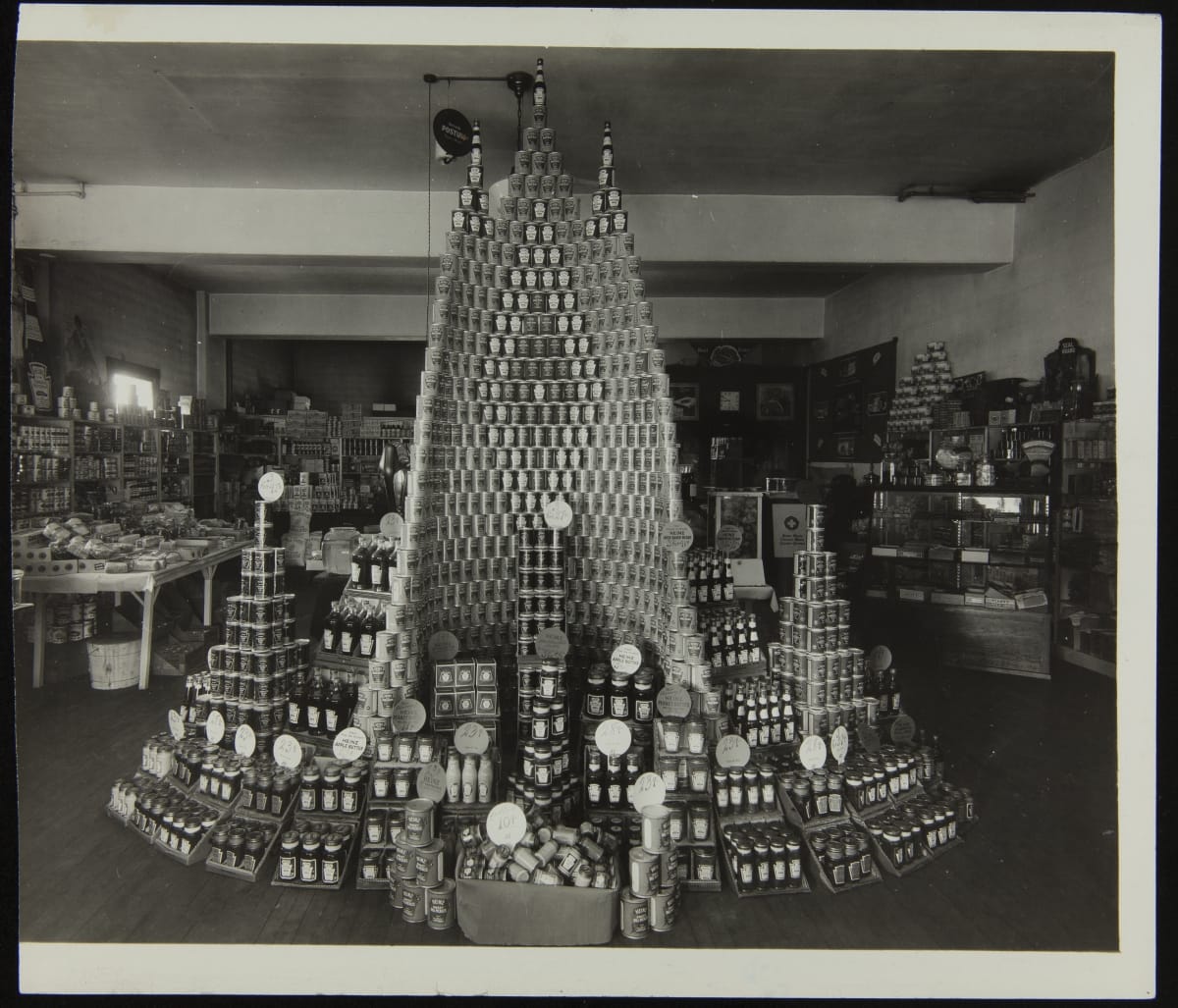
- O. C. Bedell Grocery Store, Floor Display of Heinz Products, Newton, Ohio, circa 1930 - H. J. Heinz was at the forefront of creative marketing in the manufactured food industry. He developed a comprehensive advertising strategy that included elaborate product displays in local grocery stores. Shoppers were greeted with colorful posters and meticulously designed floor-to-ceiling pyramids of canned and jarred products created by Heinz salespeople.
- circa 1930
- Collections - Artifact
O. C. Bedell Grocery Store, Floor Display of Heinz Products, Newton, Ohio, circa 1930
H. J. Heinz was at the forefront of creative marketing in the manufactured food industry. He developed a comprehensive advertising strategy that included elaborate product displays in local grocery stores. Shoppers were greeted with colorful posters and meticulously designed floor-to-ceiling pyramids of canned and jarred products created by Heinz salespeople.
- Sam Joseph Grocery Store Display of Heinz Products, Grand Rapids, Michigan, 1929 - "Pickle King" H. J. Heinz's confidence in his products prompted his extraordinary guarantee -- if you didn't find his food satisfactory, you could get your money back. His faith in his product established trust in his customers and provided them with zero financial risk in trying a new product. His guarantee is featured here in the middle of his other advertisements.

- 1929
- Collections - Artifact
Sam Joseph Grocery Store Display of Heinz Products, Grand Rapids, Michigan, 1929
"Pickle King" H. J. Heinz's confidence in his products prompted his extraordinary guarantee -- if you didn't find his food satisfactory, you could get your money back. His faith in his product established trust in his customers and provided them with zero financial risk in trying a new product. His guarantee is featured here in the middle of his other advertisements.
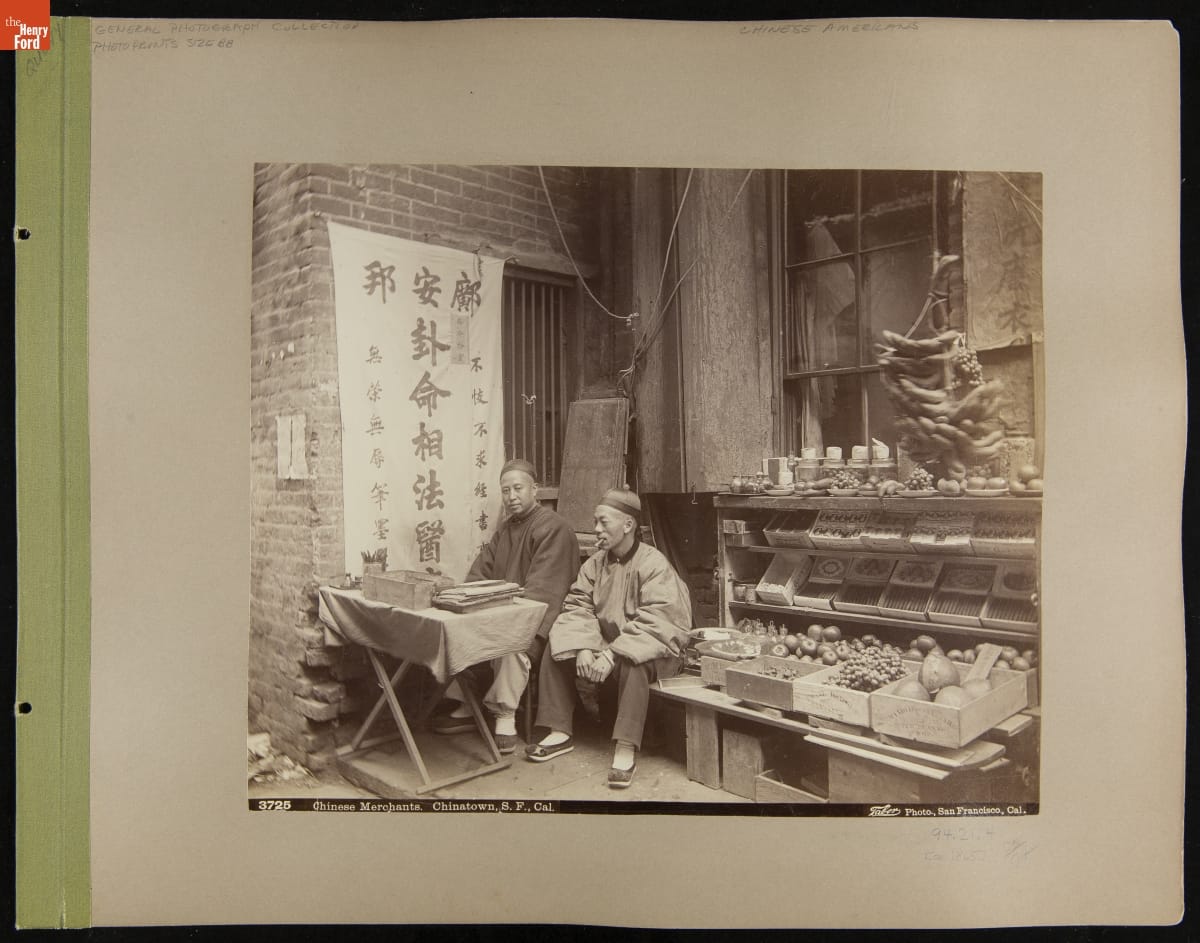
- "Chinese Merchants. Chinatown, S.F., Cal." -
- circa 1865
- Collections - Artifact
"Chinese Merchants. Chinatown, S.F., Cal."
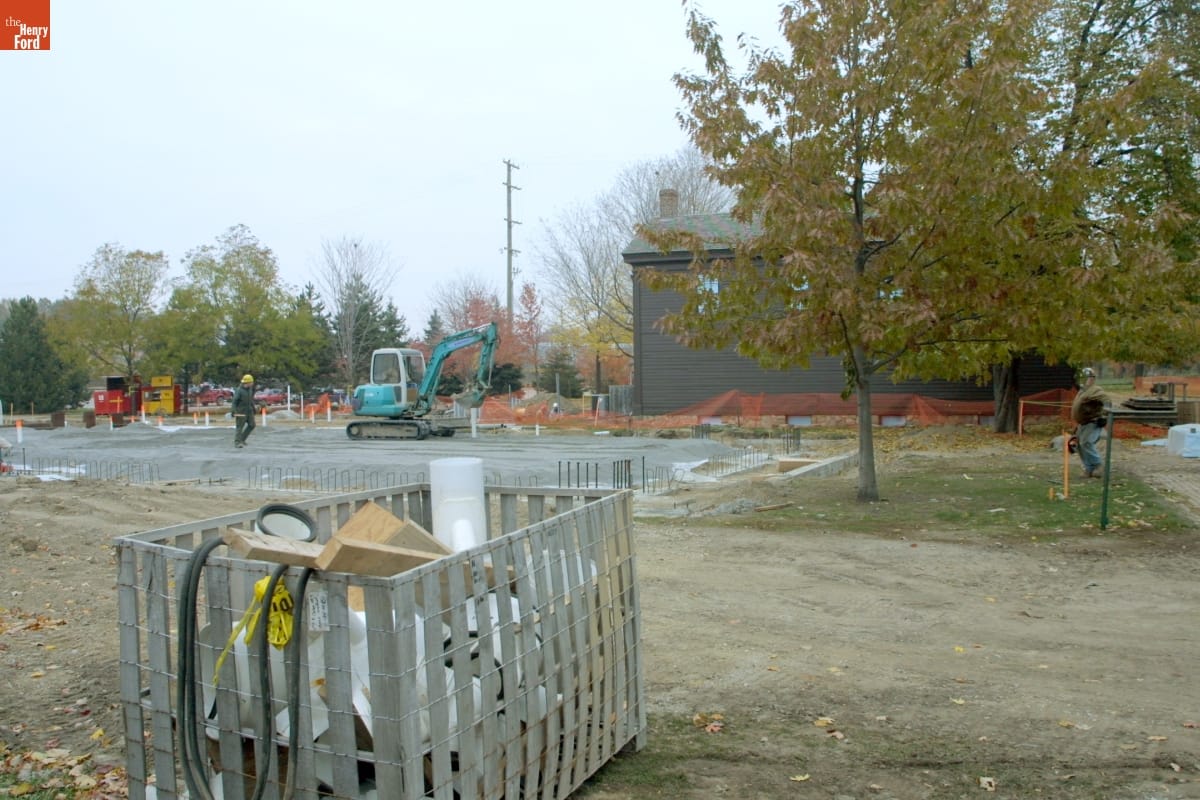
- Lodge at Christie & Main Construction Site, Greenfield Village Restoration Project, November 2002 - By 2000, Greenfield Village began showing its age. Buildings and crumbling infrastructure desperately needed repair. Museum planners envisioned a revitalized village. They relocated and refurbished the historic structures into themed "Historic Districts" and added new support buildings--shops, restaurants, and a special-event venue. In June 2003, nine months after restoration began, visitors passed through a new entrance into a reborn Greenfield Village.
- November 01, 2002
- Collections - Artifact
Lodge at Christie & Main Construction Site, Greenfield Village Restoration Project, November 2002
By 2000, Greenfield Village began showing its age. Buildings and crumbling infrastructure desperately needed repair. Museum planners envisioned a revitalized village. They relocated and refurbished the historic structures into themed "Historic Districts" and added new support buildings--shops, restaurants, and a special-event venue. In June 2003, nine months after restoration began, visitors passed through a new entrance into a reborn Greenfield Village.
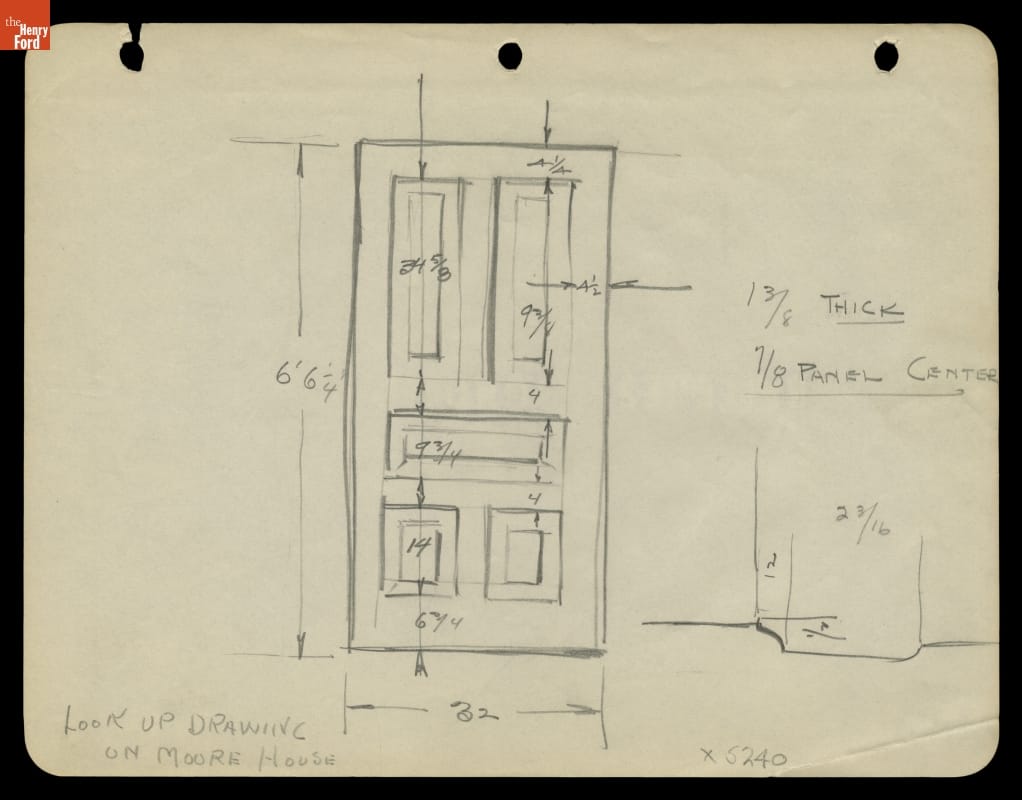
- Drawing, Wright Cycle Shop, Dayton, Ohio, 1936 - In October 1936, Henry Ford purchased the bicycle shop used by Wilbur and Orville Wright in Dayton, Ohio. Over the next 18 months, Ford relocated and reassembled the building at his Greenfield Village museum complex in Dearborn, Michigan. Before the move, architect Edward Cutler made detailed drawings of the shop to ensure the project's accuracy.
- 1936
- Collections - Artifact
Drawing, Wright Cycle Shop, Dayton, Ohio, 1936
In October 1936, Henry Ford purchased the bicycle shop used by Wilbur and Orville Wright in Dayton, Ohio. Over the next 18 months, Ford relocated and reassembled the building at his Greenfield Village museum complex in Dearborn, Michigan. Before the move, architect Edward Cutler made detailed drawings of the shop to ensure the project's accuracy.
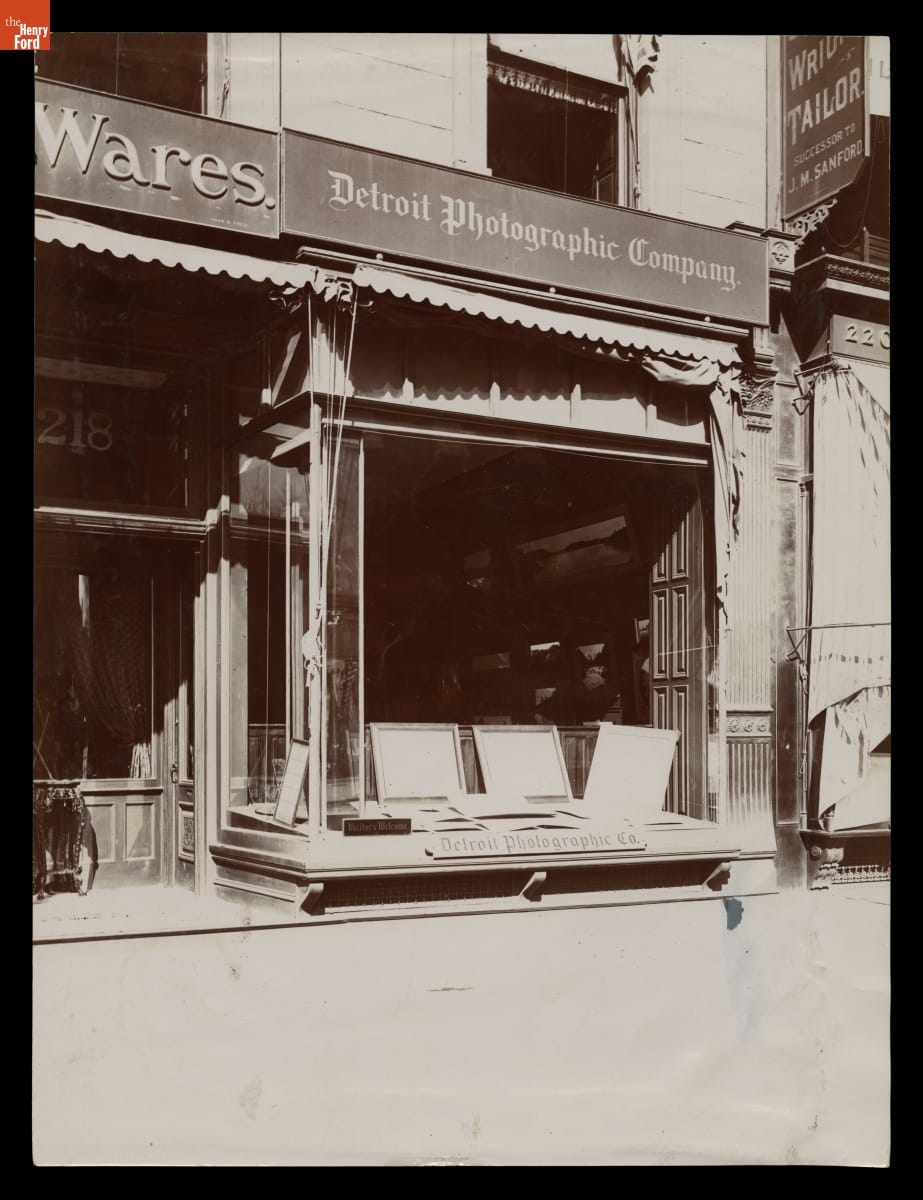
- Detroit Photographic Company Retail Outlet, New York City, 1900-1910 - From 1895 to 1924, the Detroit Publishing Company was one of the major image publishers in the world. The company's wide-ranging stock of original photographs documented life and landscapes from across the nation and around the globe. From the tens of thousands of negatives, the company created prints, postcards, lantern slides, panoramas, and other merchandise for sale to educators, businessmen, advertisers, homeowners and travelers.
- circa 1900
- Collections - Artifact
Detroit Photographic Company Retail Outlet, New York City, 1900-1910
From 1895 to 1924, the Detroit Publishing Company was one of the major image publishers in the world. The company's wide-ranging stock of original photographs documented life and landscapes from across the nation and around the globe. From the tens of thousands of negatives, the company created prints, postcards, lantern slides, panoramas, and other merchandise for sale to educators, businessmen, advertisers, homeowners and travelers.
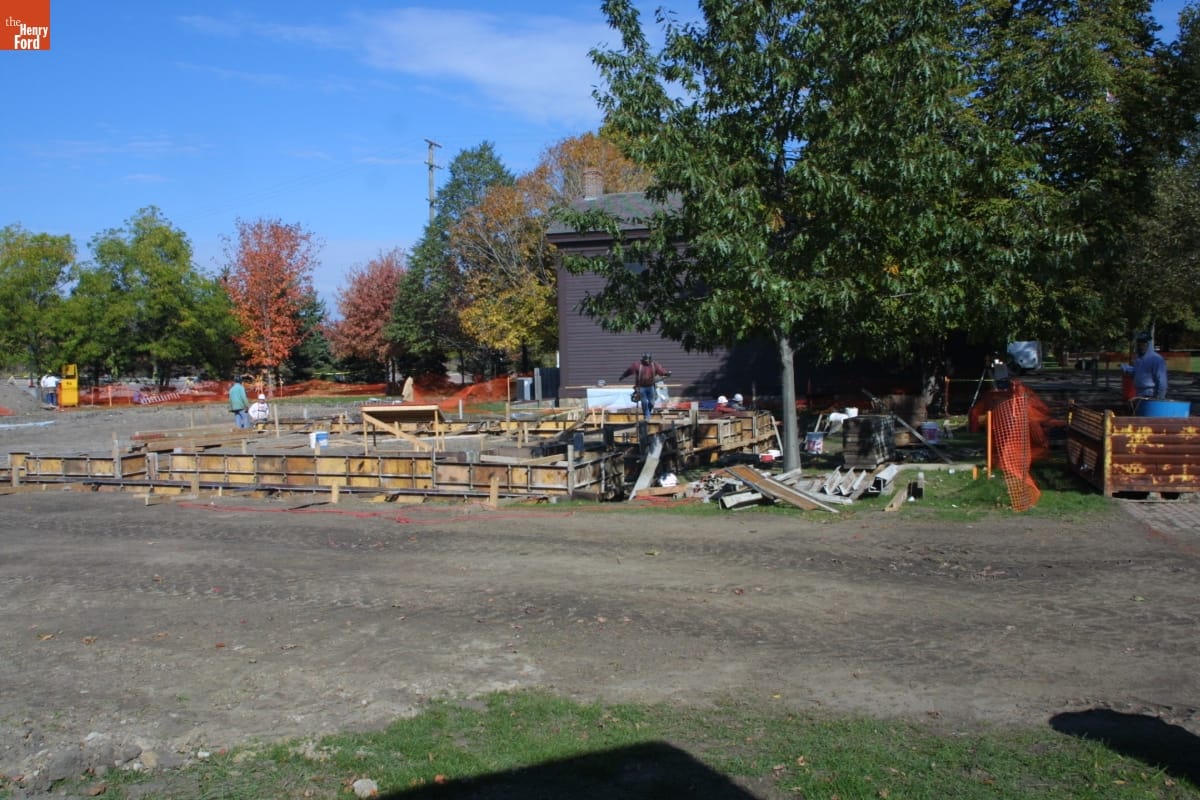
- Lodge at Christie & Main Site, Greenfield Village Restoration Project, October 2002 - By 2000, Greenfield Village began showing its age. Buildings and crumbling infrastructure desperately needed repair. Museum planners envisioned a revitalized village. They relocated and refurbished the historic structures into themed "Historic Districts" and added new support buildings--shops, restaurants, and a special-event venue. In June 2003, nine months after restoration began, visitors passed through a new entrance into a reborn Greenfield Village.
- October 01, 2002
- Collections - Artifact
Lodge at Christie & Main Site, Greenfield Village Restoration Project, October 2002
By 2000, Greenfield Village began showing its age. Buildings and crumbling infrastructure desperately needed repair. Museum planners envisioned a revitalized village. They relocated and refurbished the historic structures into themed "Historic Districts" and added new support buildings--shops, restaurants, and a special-event venue. In June 2003, nine months after restoration began, visitors passed through a new entrance into a reborn Greenfield Village.
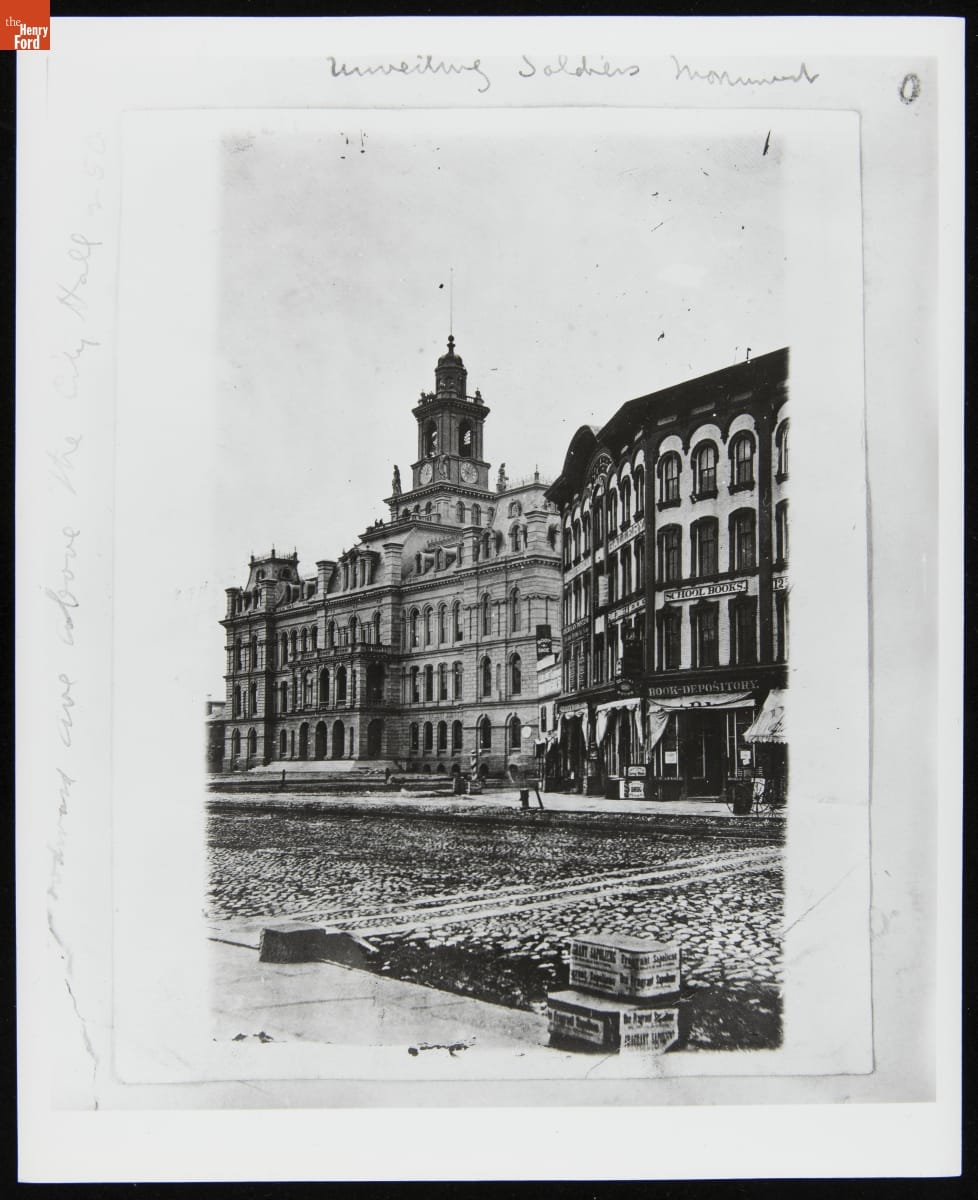
- Detroit City Hall at Woodward Avenue, 1871-1872 -
- 1871-1872
- Collections - Artifact
Detroit City Hall at Woodward Avenue, 1871-1872
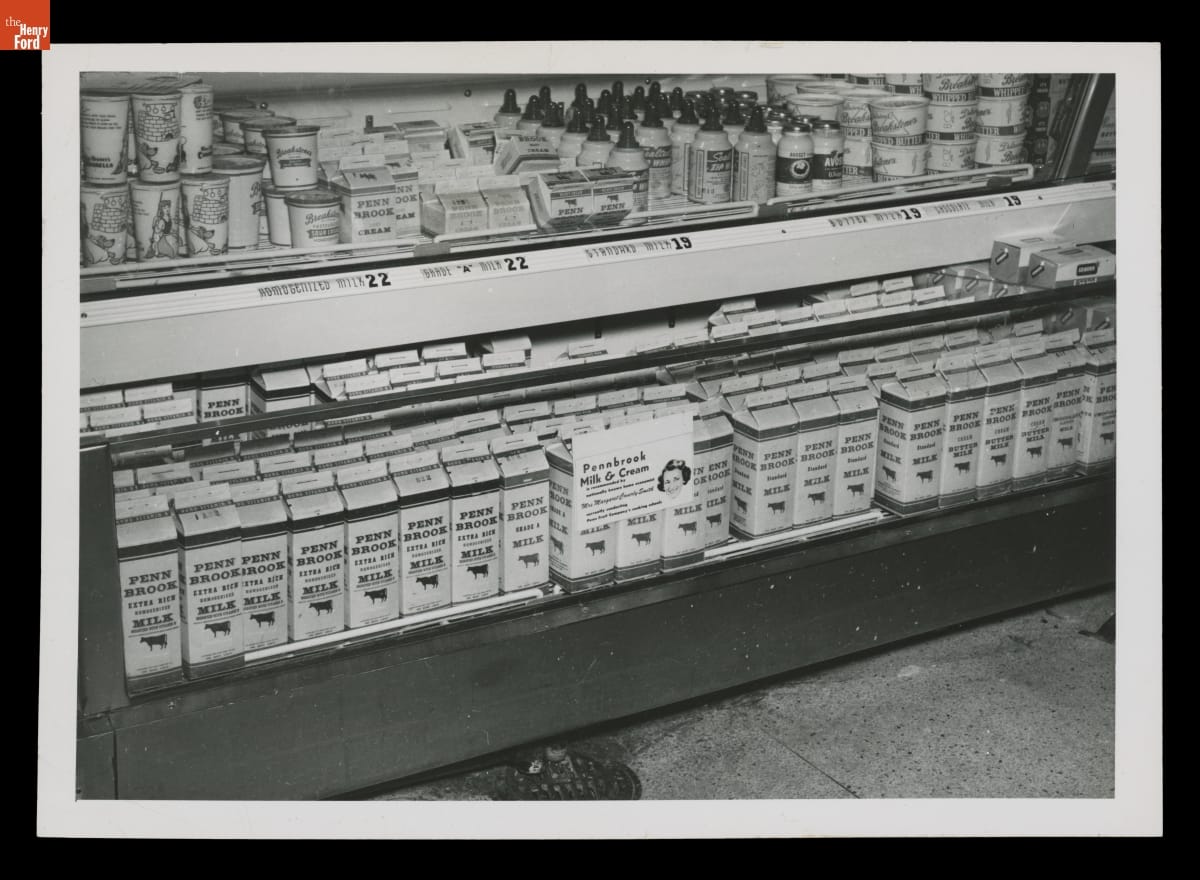
- Grocery Store Dairy Case Stocked with Pennbrook Milk Company Products, circa 1950 -
- circa 1950
- Collections - Artifact
Grocery Store Dairy Case Stocked with Pennbrook Milk Company Products, circa 1950
- Toy Shop in Henry Ford Museum "Street of Shops" Exhibit, circa 1941 - Henry Ford encouraged and appreciated the work of artist and illustrator Irving Bacon. In 1915, Bacon joined the Photographic Department of Ford Motor Company after he returned from studying art in Europe. Over the next thirty years, Bacon painted scenes depicting Ford's life, created portraiture, and illustrated articles for company publications. This drawing depicts the Street of Shops exhibit in the Henry Ford Museum.
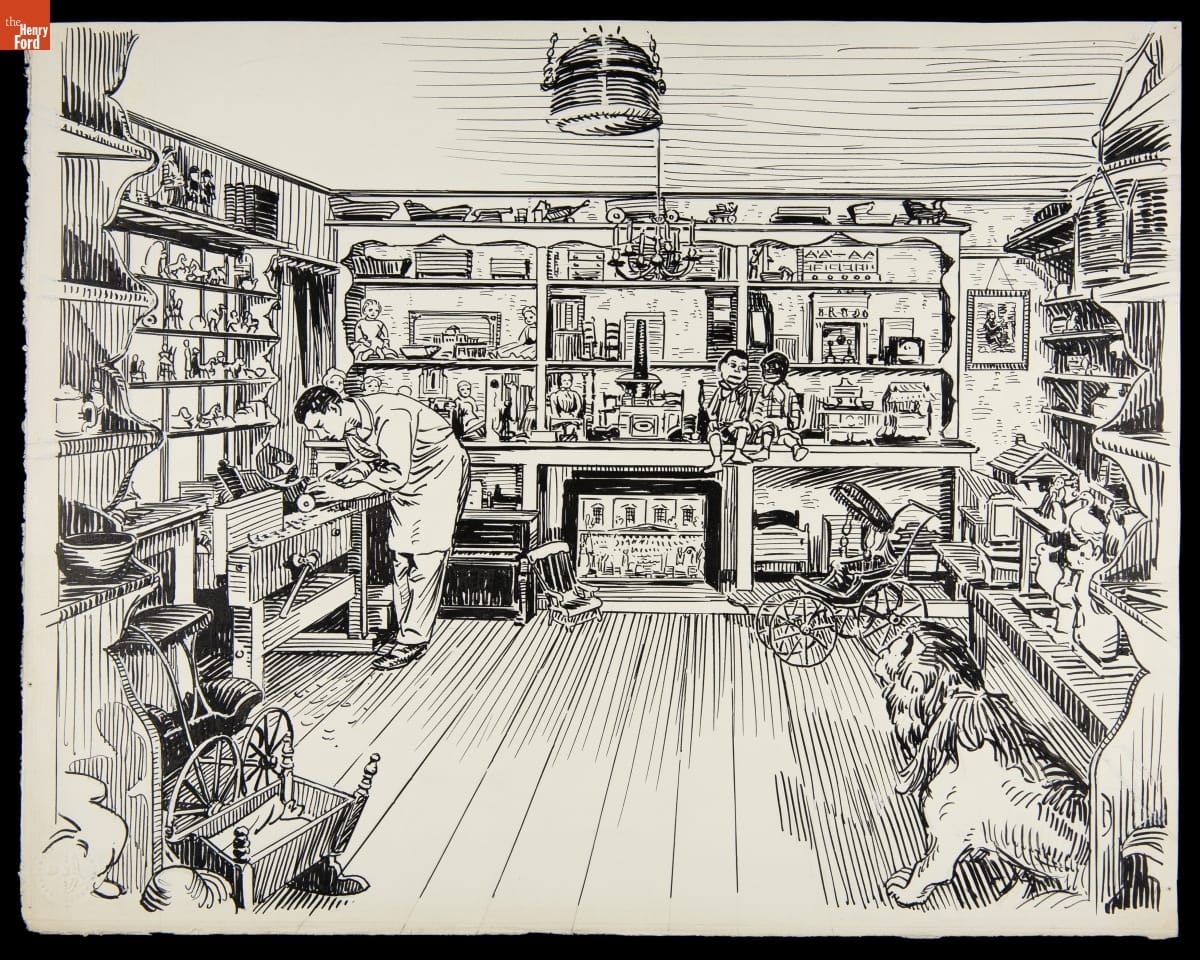
- circa 1941
- Collections - Artifact
Toy Shop in Henry Ford Museum "Street of Shops" Exhibit, circa 1941
Henry Ford encouraged and appreciated the work of artist and illustrator Irving Bacon. In 1915, Bacon joined the Photographic Department of Ford Motor Company after he returned from studying art in Europe. Over the next thirty years, Bacon painted scenes depicting Ford's life, created portraiture, and illustrated articles for company publications. This drawing depicts the Street of Shops exhibit in the Henry Ford Museum.