
Search
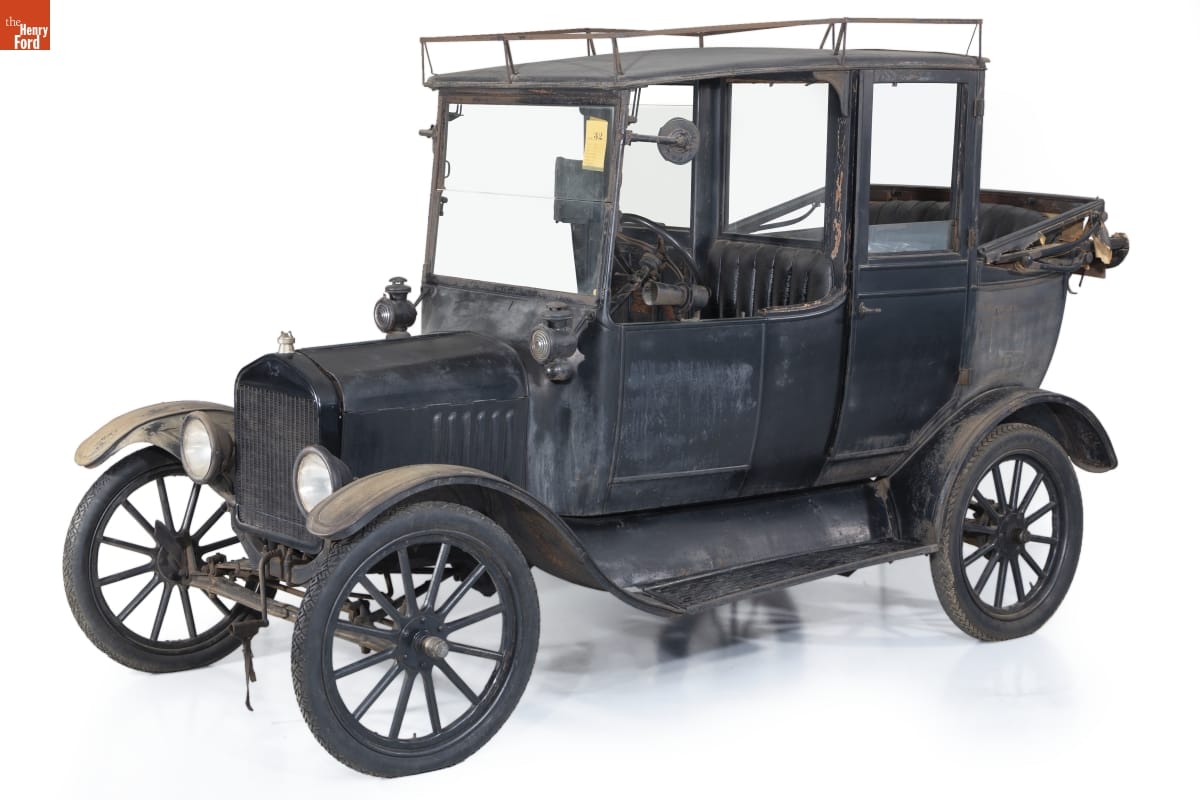
- 1917 Ford Model T Taxicab - The ever-versatile Ford Model T could be adapted for taxicab service. Taxi drivers appreciated the same qualities that made the Model T so appealing to private owners: its low price and modest operating costs. This cab features a landaulet body -- with a fixed roof for the driver and a convertible roof for the passengers.
- 1917
- Collections - Artifact
1917 Ford Model T Taxicab
The ever-versatile Ford Model T could be adapted for taxicab service. Taxi drivers appreciated the same qualities that made the Model T so appealing to private owners: its low price and modest operating costs. This cab features a landaulet body -- with a fixed roof for the driver and a convertible roof for the passengers.
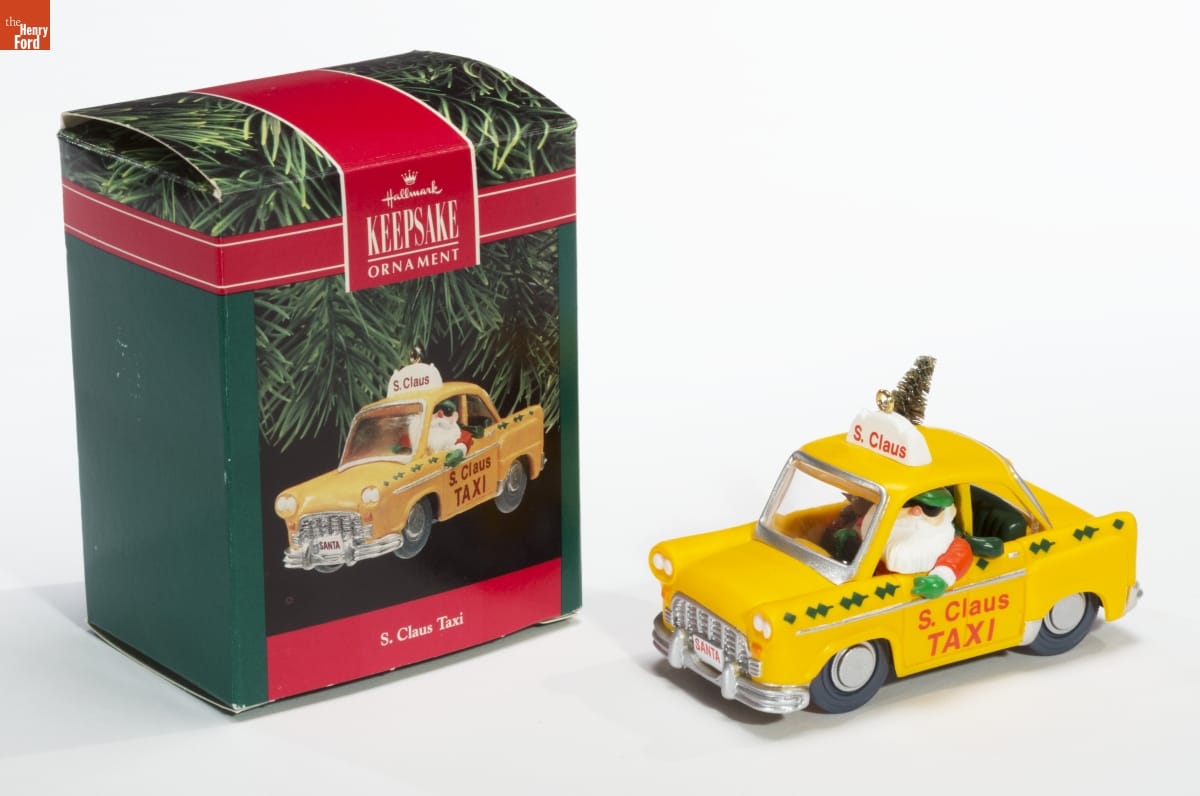
- Hallmark "S. Claus Taxi" Christmas Ornament, 1990 - Already known for greeting cards, Hallmark introduced a line of Christmas ornaments in 1973. The company's annual release of an increasing array of ornaments revolutionized Christmas decorating, appealing to customers' interest in marking memories and milestones as well as expressing one's personality and unique tastes.
- 1990
- Collections - Artifact
Hallmark "S. Claus Taxi" Christmas Ornament, 1990
Already known for greeting cards, Hallmark introduced a line of Christmas ornaments in 1973. The company's annual release of an increasing array of ornaments revolutionized Christmas decorating, appealing to customers' interest in marking memories and milestones as well as expressing one's personality and unique tastes.
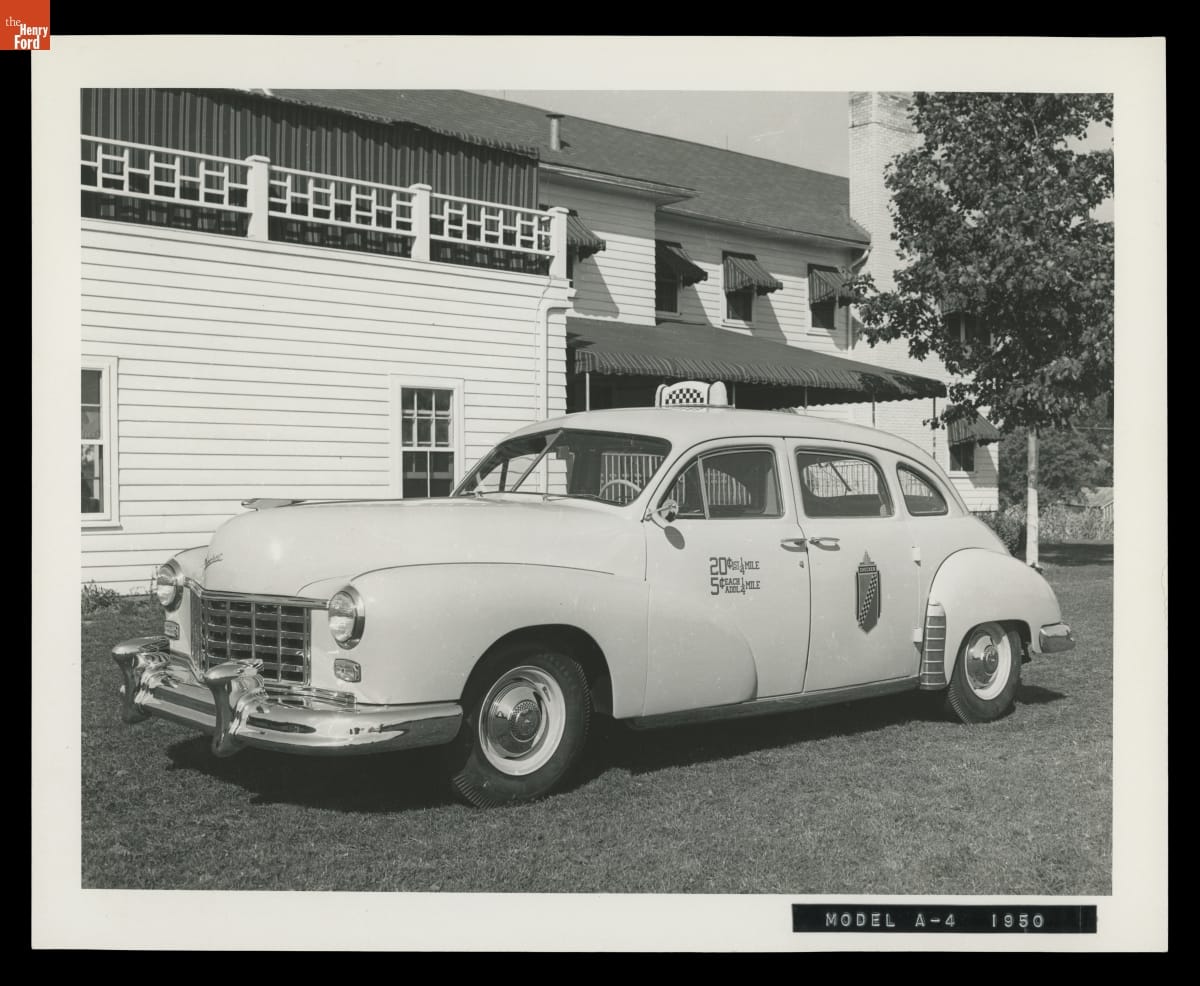
- Model A-4 Checker Taxicab, 1950 - Morris Markin formed Checker Motors Corporation in 1922. The company manufactured taxicabs at its plant in Kalamazoo, Michigan, until 1982. Its 1950 offering was the Model A-4, pictured here. Checker's purpose-built taxicabs were spacious, with roomy back seats and large trunks. They offered convenient point-to-point transportation to paying customers in cities around the country.
- 1950
- Collections - Artifact
Model A-4 Checker Taxicab, 1950
Morris Markin formed Checker Motors Corporation in 1922. The company manufactured taxicabs at its plant in Kalamazoo, Michigan, until 1982. Its 1950 offering was the Model A-4, pictured here. Checker's purpose-built taxicabs were spacious, with roomy back seats and large trunks. They offered convenient point-to-point transportation to paying customers in cities around the country.
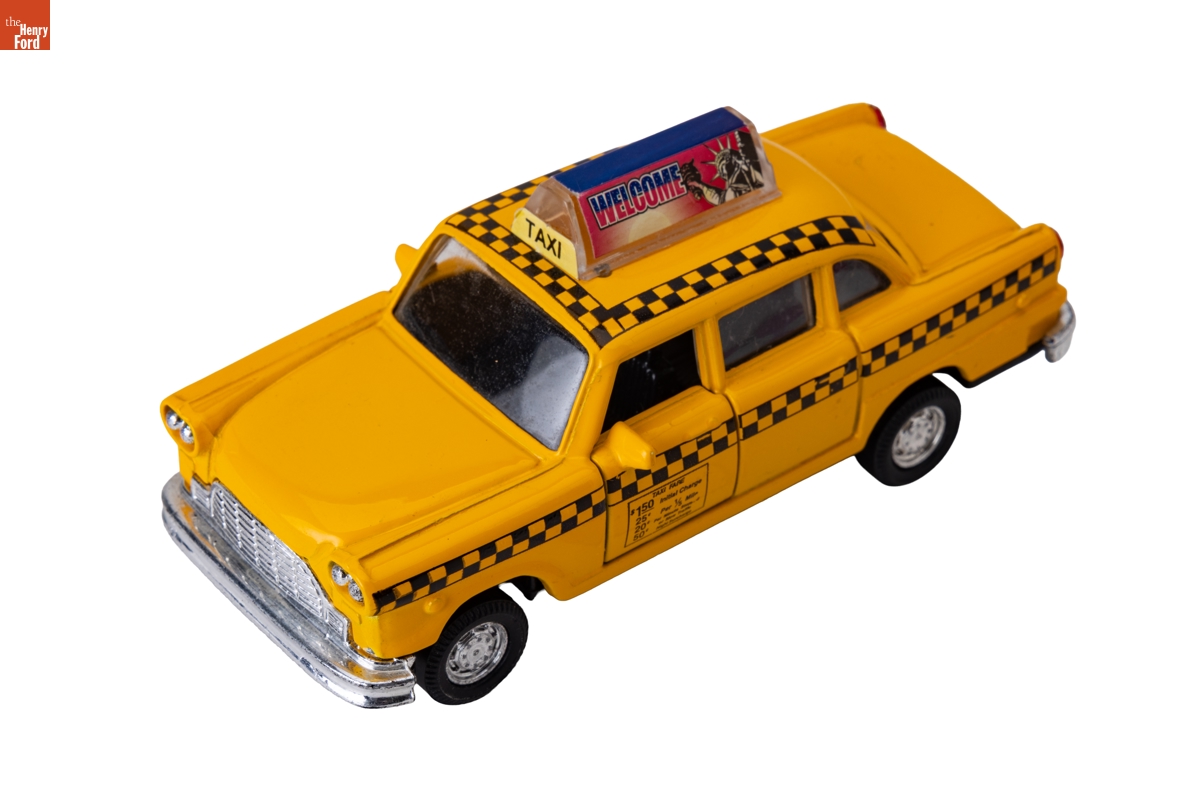
- Model Taxicab, 2000-2010 - Diane Beers joined TWA as a flight attendant in 1965 but left to marry Richard Hill a year later -- a time when many airlines employed only single women in that job. Beers Hill continued her interest in the airline industry and assembled an impressive collection of memorabilia, including models and toys representing various carriers' airplanes and vehicles.
- 2000-2010
- Collections - Artifact
Model Taxicab, 2000-2010
Diane Beers joined TWA as a flight attendant in 1965 but left to marry Richard Hill a year later -- a time when many airlines employed only single women in that job. Beers Hill continued her interest in the airline industry and assembled an impressive collection of memorabilia, including models and toys representing various carriers' airplanes and vehicles.
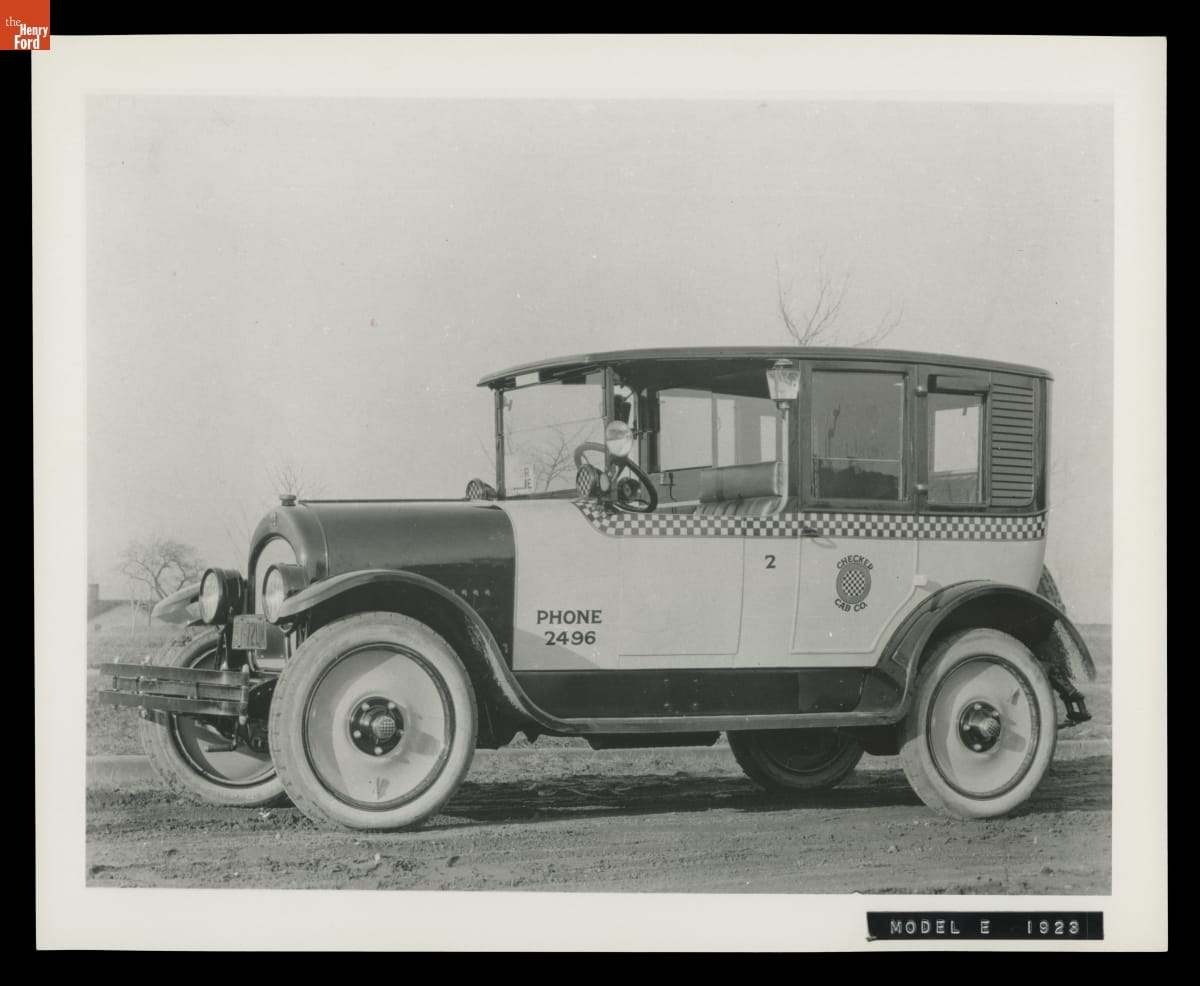
- Model E Checker Taxicab, 1923 - Morris Markin formed Checker Motors Corporation in 1922. The company manufactured taxicabs at its plant in Kalamazoo, Michigan, until 1982. Checker's Model E was available either as a five-passenger sedan, or as a landaulet with a convertible roof over the passenger compartment. Each version was powered by a four-cylinder engine supplied by Buda Engine of Illinois.
- 1923
- Collections - Artifact
Model E Checker Taxicab, 1923
Morris Markin formed Checker Motors Corporation in 1922. The company manufactured taxicabs at its plant in Kalamazoo, Michigan, until 1982. Checker's Model E was available either as a five-passenger sedan, or as a landaulet with a convertible roof over the passenger compartment. Each version was powered by a four-cylinder engine supplied by Buda Engine of Illinois.
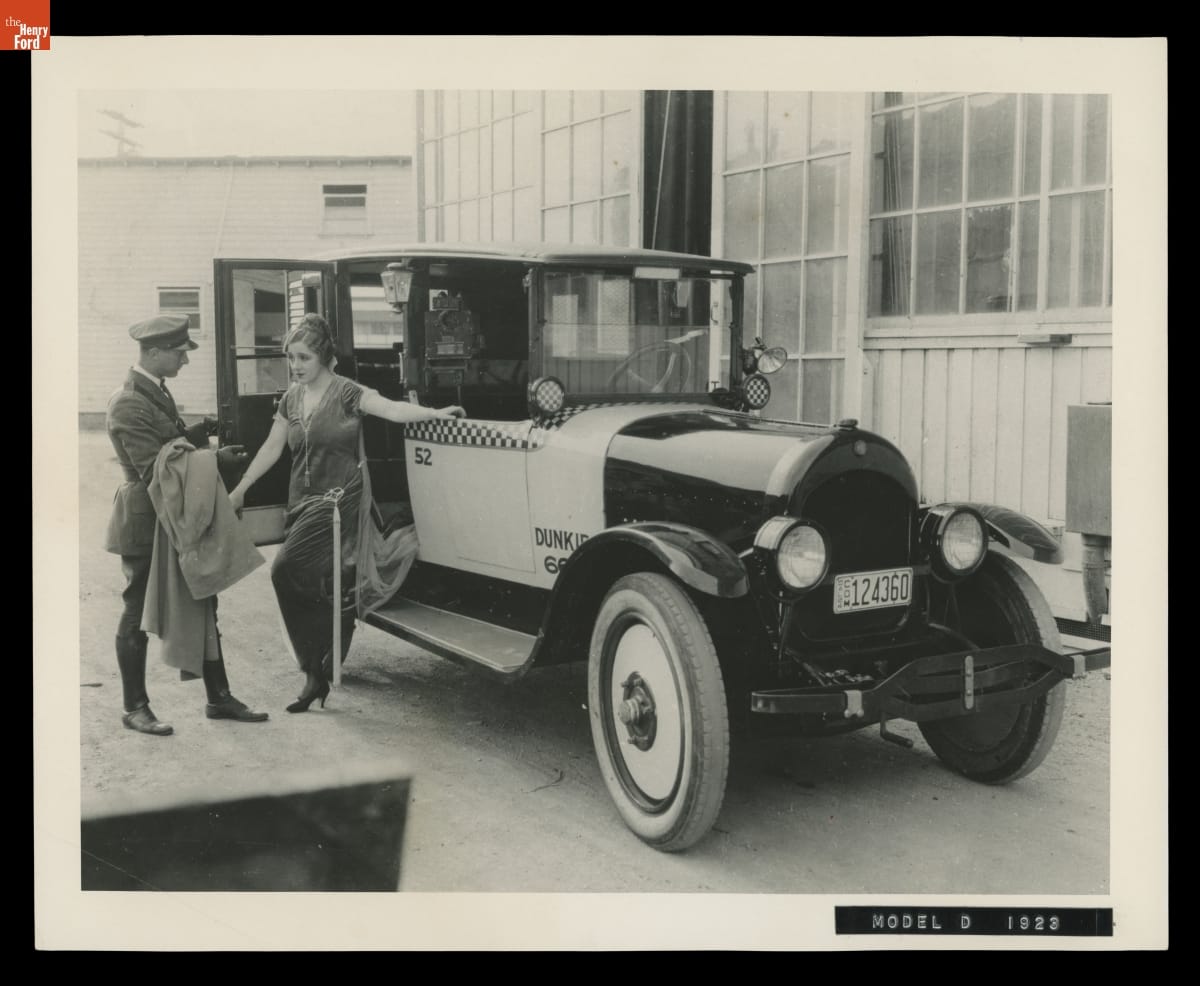
- Taxi Driver Assisting Woman out of Model D Checker Cab, 1923 - Checker Motors Corporation produced cabs in Kalamazoo, Michigan, from 1922 until 1982. Its 1923 offering was the Model D pictured here. Checker's purpose-built taxicabs were spacious, with accommodating back seats and big trunks for lots of luggage. They offered convenient point-to-point transportation -- whether between transit systems or simply around town -- to paying customers around the country.
- circa 1923
- Collections - Artifact
Taxi Driver Assisting Woman out of Model D Checker Cab, 1923
Checker Motors Corporation produced cabs in Kalamazoo, Michigan, from 1922 until 1982. Its 1923 offering was the Model D pictured here. Checker's purpose-built taxicabs were spacious, with accommodating back seats and big trunks for lots of luggage. They offered convenient point-to-point transportation -- whether between transit systems or simply around town -- to paying customers around the country.
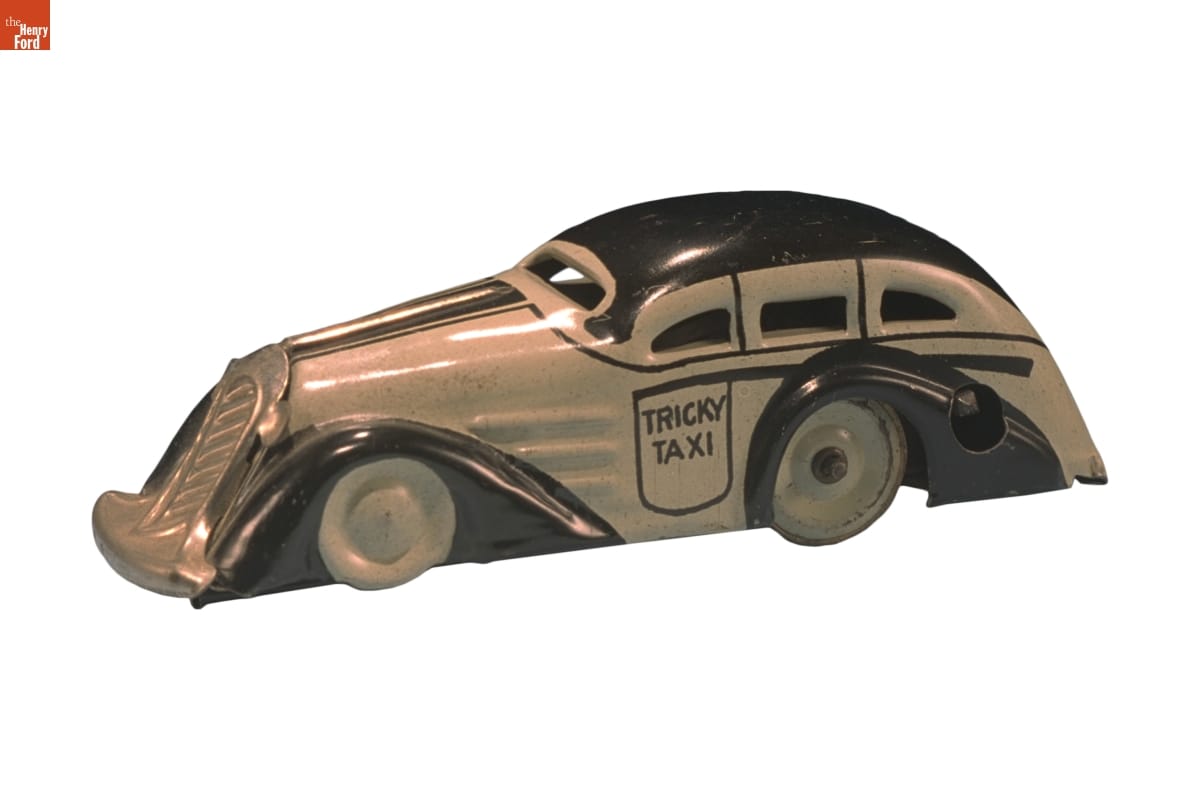
- Toy Taxicab, 1930-1940 - The automobile taxicab -- a familiar a sight on American streets by the 1930s -- inspired this toy from Louis Marx & Company. When its clockwork spring was wound with a key, the "Tricky Taxi" scooted around a tabletop or floor in random directions. The toy car's look mirrored the streamlined designs in vogue for real cars of the era.
- 1930-1940
- Collections - Artifact
Toy Taxicab, 1930-1940
The automobile taxicab -- a familiar a sight on American streets by the 1930s -- inspired this toy from Louis Marx & Company. When its clockwork spring was wound with a key, the "Tricky Taxi" scooted around a tabletop or floor in random directions. The toy car's look mirrored the streamlined designs in vogue for real cars of the era.
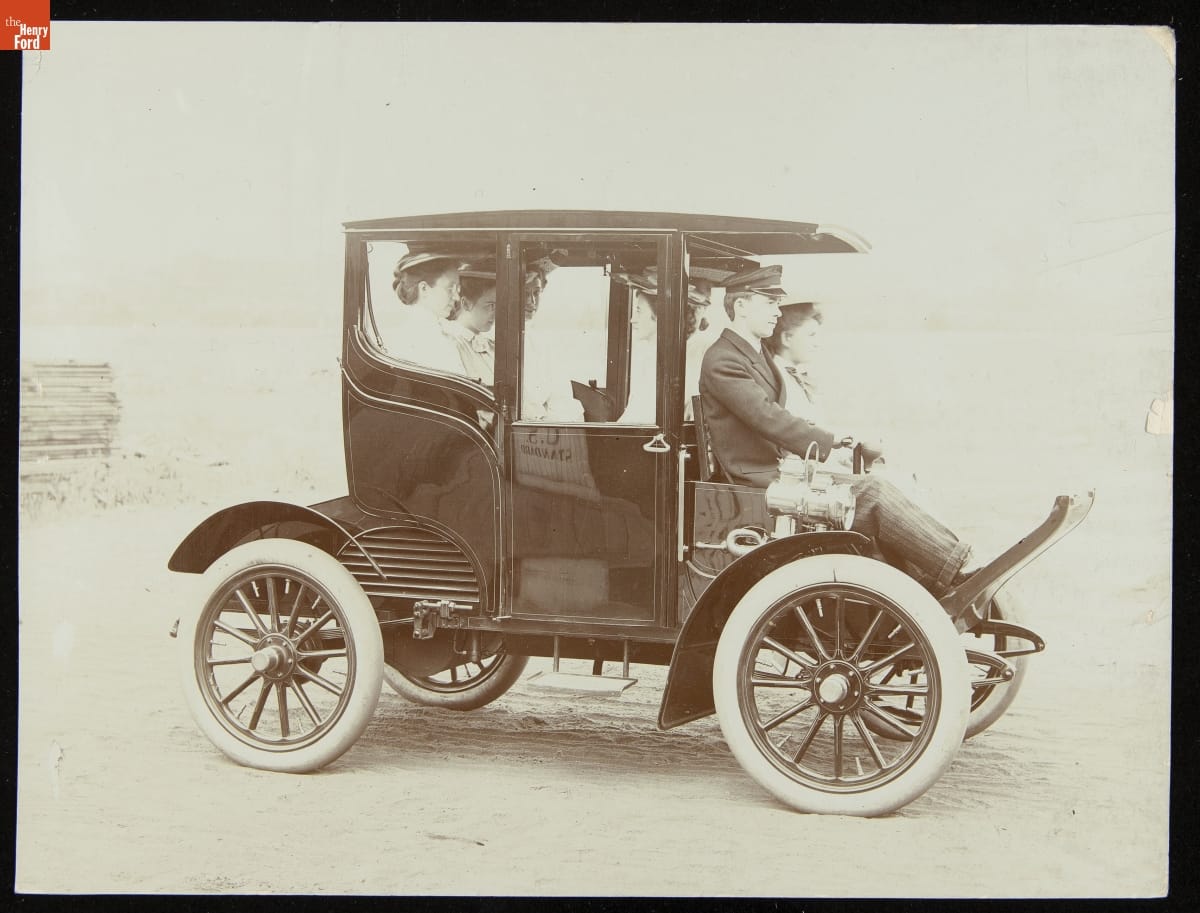
- Passengers Being Driven in an Adams-Farwell Taxicab, circa 1905 - Built in Dubuque, Iowa, from 1905 to 1912, Adams-Farwell automobiles were distinguished by rear-mounted rotary engines. The cylinders and crankcase revolved around a fixed vertical shaft, and power was sent to the gearbox via bevel gears. "It spins like a top," according to the company's slogan. Despite -- or perhaps because of -- its novelty, the Adams-Farwell was never a strong seller.
- circa 1905
- Collections - Artifact
Passengers Being Driven in an Adams-Farwell Taxicab, circa 1905
Built in Dubuque, Iowa, from 1905 to 1912, Adams-Farwell automobiles were distinguished by rear-mounted rotary engines. The cylinders and crankcase revolved around a fixed vertical shaft, and power was sent to the gearbox via bevel gears. "It spins like a top," according to the company's slogan. Despite -- or perhaps because of -- its novelty, the Adams-Farwell was never a strong seller.
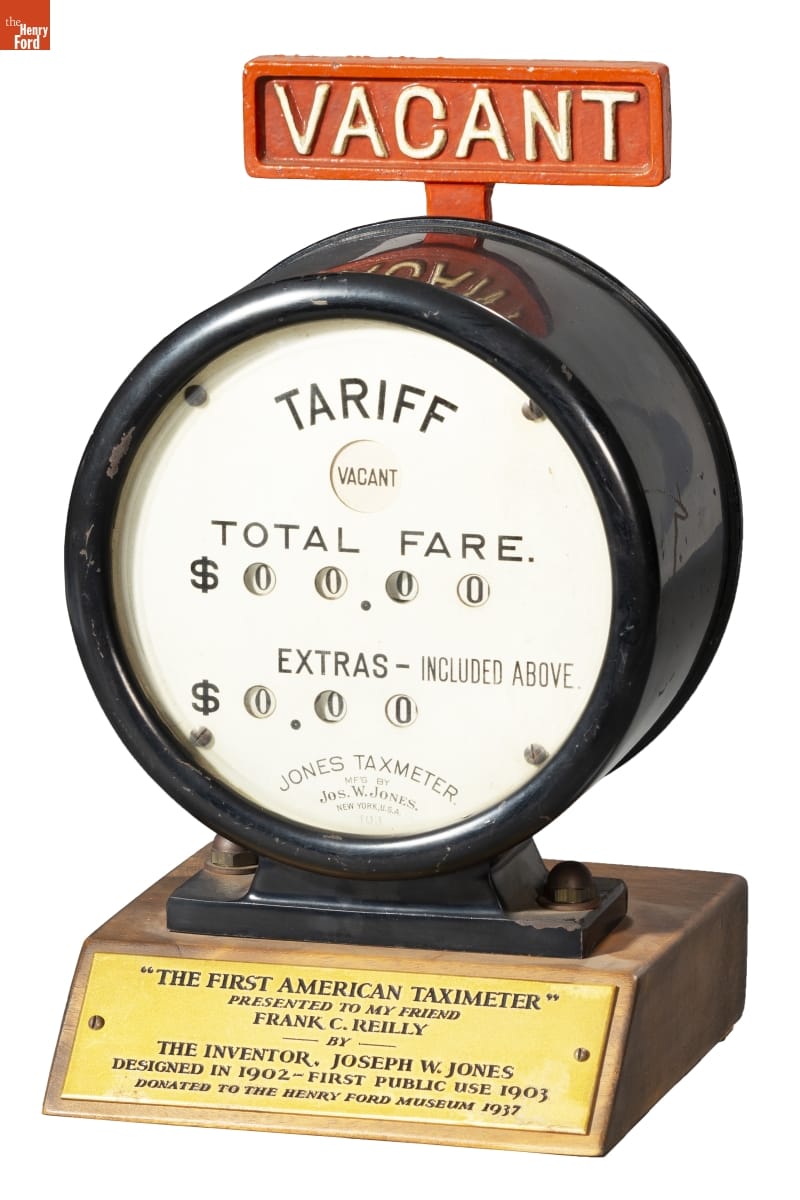
- Jones Taximeter, 1903 - The term "taxi" comes from "taximetre" -- the French word for a meter that measures distance and calculates a fare. Invented in 1891, these meters were widely used in European cabs by 1900. This example, designed by Joseph W. Jones and first used in 1903, is believed to be the first taximeter put into public use in the United States.
- 1902-1903
- Collections - Artifact
Jones Taximeter, 1903
The term "taxi" comes from "taximetre" -- the French word for a meter that measures distance and calculates a fare. Invented in 1891, these meters were widely used in European cabs by 1900. This example, designed by Joseph W. Jones and first used in 1903, is believed to be the first taximeter put into public use in the United States.
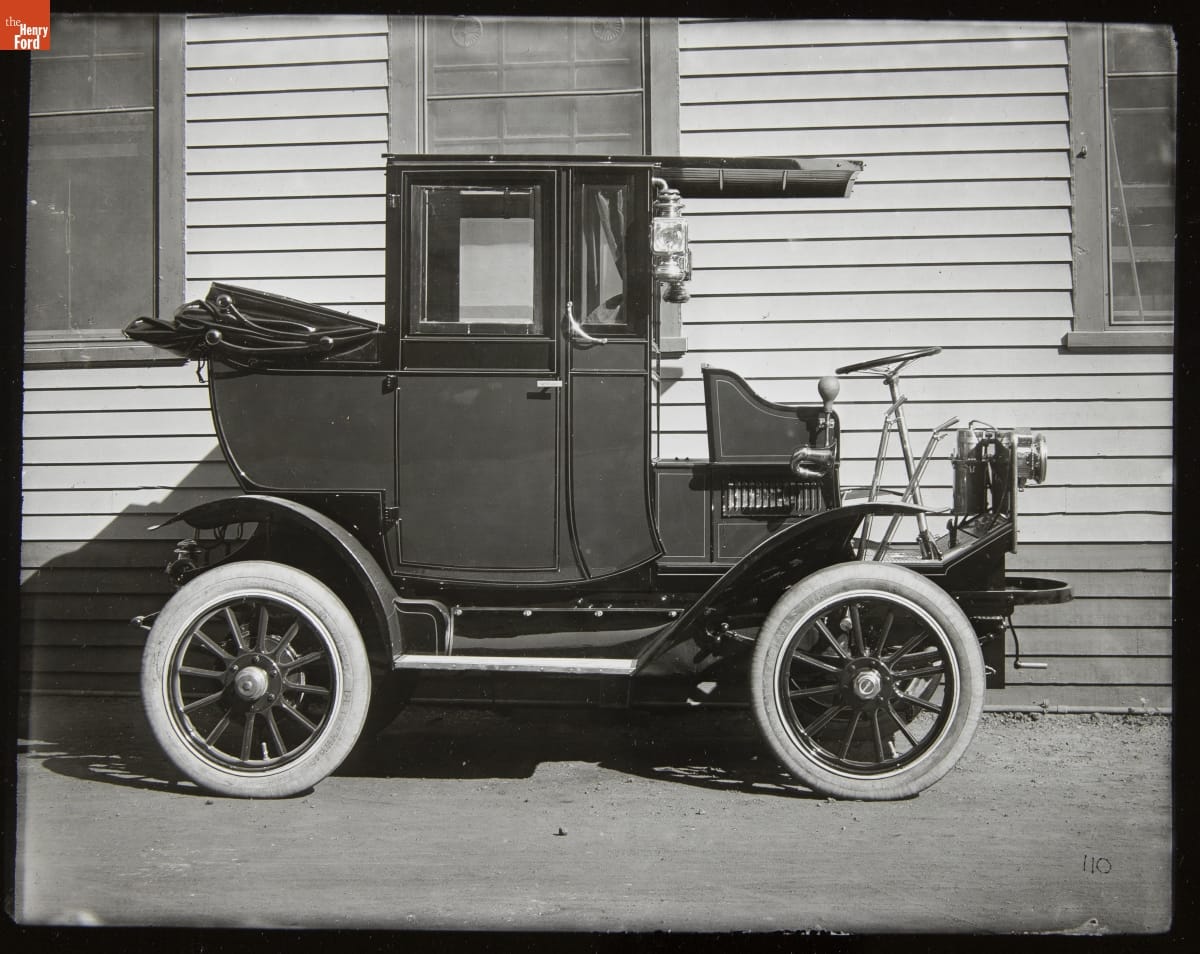
- Autocar Type XX Victoria Convertible Automobile Used as a Taxicab, 1909 - Founded in Pittsburgh in 1897, the Autocar Company built automobiles until 1911, when it changed over to building heavy-duty trucks. Autocar's Type XX automobile was suitable for commercial use in taxicab service. This example is seen outfitted as a taxi in 1909. Autocar was acquired by White Motor Corporation in 1953.
- 1909
- Collections - Artifact
Autocar Type XX Victoria Convertible Automobile Used as a Taxicab, 1909
Founded in Pittsburgh in 1897, the Autocar Company built automobiles until 1911, when it changed over to building heavy-duty trucks. Autocar's Type XX automobile was suitable for commercial use in taxicab service. This example is seen outfitted as a taxi in 1909. Autocar was acquired by White Motor Corporation in 1953.