
Search
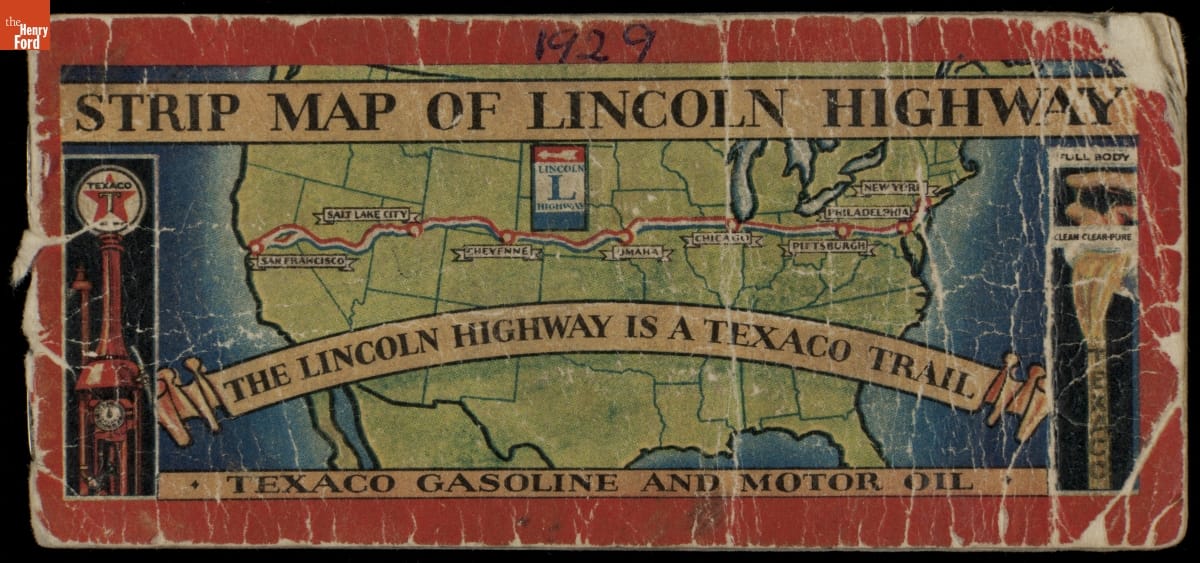
- "Strip Map of Lincoln Highway," 1929 - The Lincoln Highway, dedicated in 1913, ran from New York City to San Francisco, California. It was America's first cross-country highway. Using limited funds, it was mostly a patched-together series of existing dirt roads. But the publicity it generated raised public awareness of the need for better roads. Texaco included travel tips with this pocket map they published in 1929.
- 1929
- Collections - Artifact
"Strip Map of Lincoln Highway," 1929
The Lincoln Highway, dedicated in 1913, ran from New York City to San Francisco, California. It was America's first cross-country highway. Using limited funds, it was mostly a patched-together series of existing dirt roads. But the publicity it generated raised public awareness of the need for better roads. Texaco included travel tips with this pocket map they published in 1929.
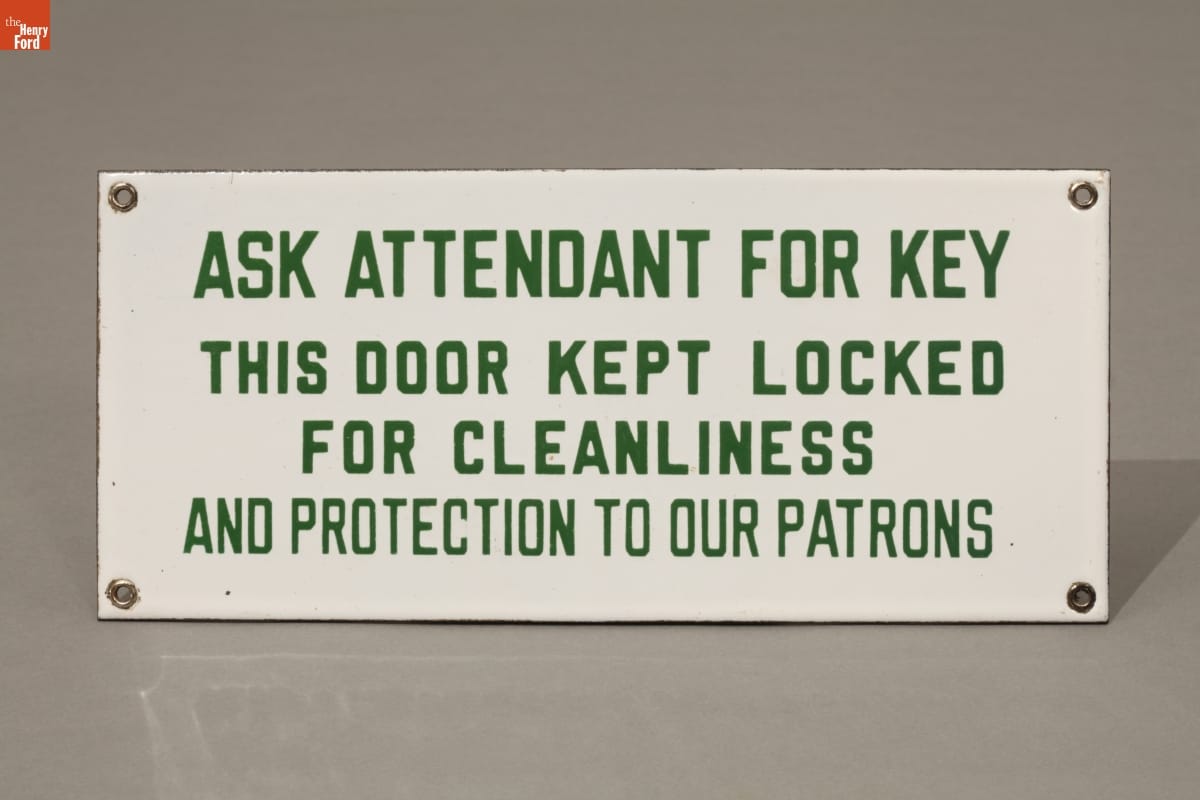
- Texaco "Ask Attendant for Key" Restroom Sign, 1940-1960 - Service stations provided restrooms for the traveling public. Patrons wanted clean and safe facilities. This sign from a Texaco station assured the traveler that the restrooms were well maintained.
- 1940-1960
- Collections - Artifact
Texaco "Ask Attendant for Key" Restroom Sign, 1940-1960
Service stations provided restrooms for the traveling public. Patrons wanted clean and safe facilities. This sign from a Texaco station assured the traveler that the restrooms were well maintained.
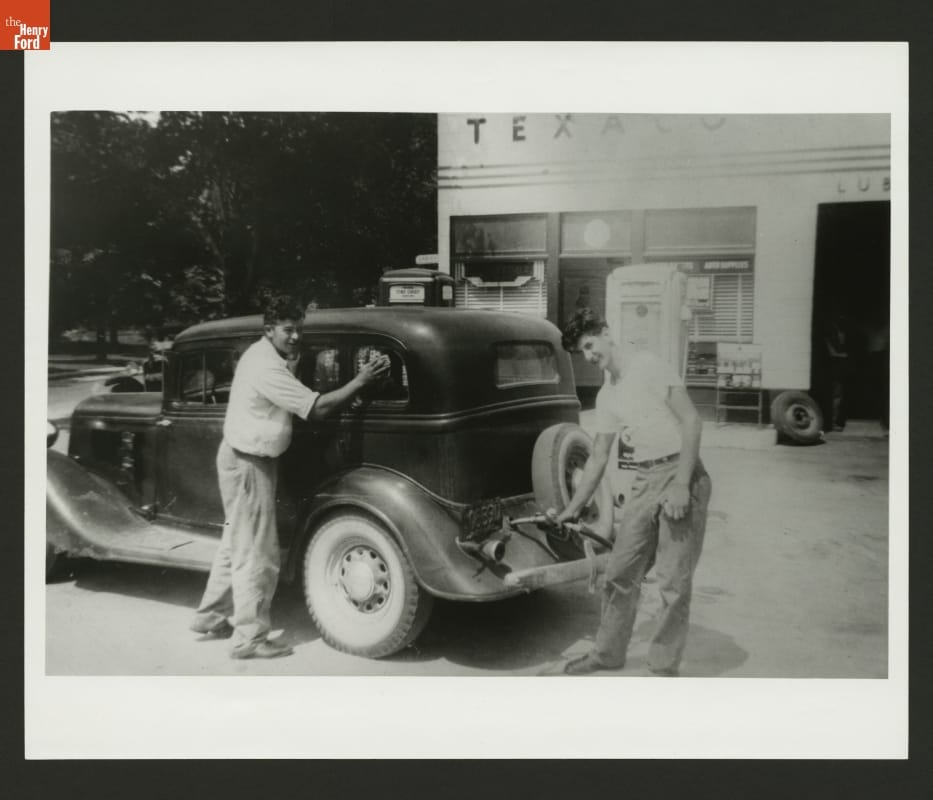
- Pumping Gas at a Texaco Station, Kingston, Massachusetts, 1940 - Two friendly attendants service a customer's automobile in front of a Texaco station in Kingston, Massachusetts. The Henry Ford acquired the service station in 1987 and it became part of the institution's collection.
- 1940
- Collections - Artifact
Pumping Gas at a Texaco Station, Kingston, Massachusetts, 1940
Two friendly attendants service a customer's automobile in front of a Texaco station in Kingston, Massachusetts. The Henry Ford acquired the service station in 1987 and it became part of the institution's collection.
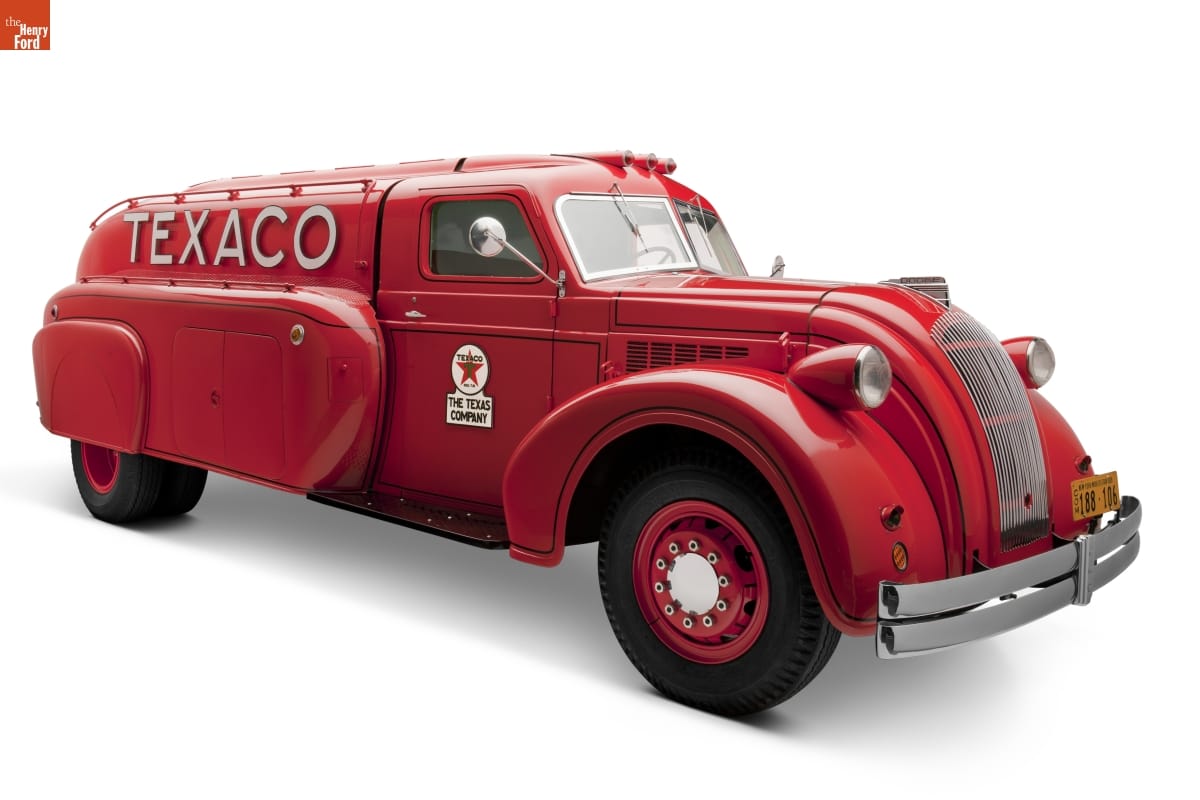
- 1939 Dodge Airflow Tank Truck - This streamlined tank truck connected local Texaco service stations to a larger national distribution network. Each of America's competing oil companies had a branded fleet of trucks that took gasoline from refineries to its retail service stations. Even independently operated stations had to buy gasoline from a big oil company's refinery. This truck's capacity is 1175 gallons.
- 1938
- Collections - Artifact
1939 Dodge Airflow Tank Truck
This streamlined tank truck connected local Texaco service stations to a larger national distribution network. Each of America's competing oil companies had a branded fleet of trucks that took gasoline from refineries to its retail service stations. Even independently operated stations had to buy gasoline from a big oil company's refinery. This truck's capacity is 1175 gallons.
- Playskool Texaco Station Play Set, 1975 -
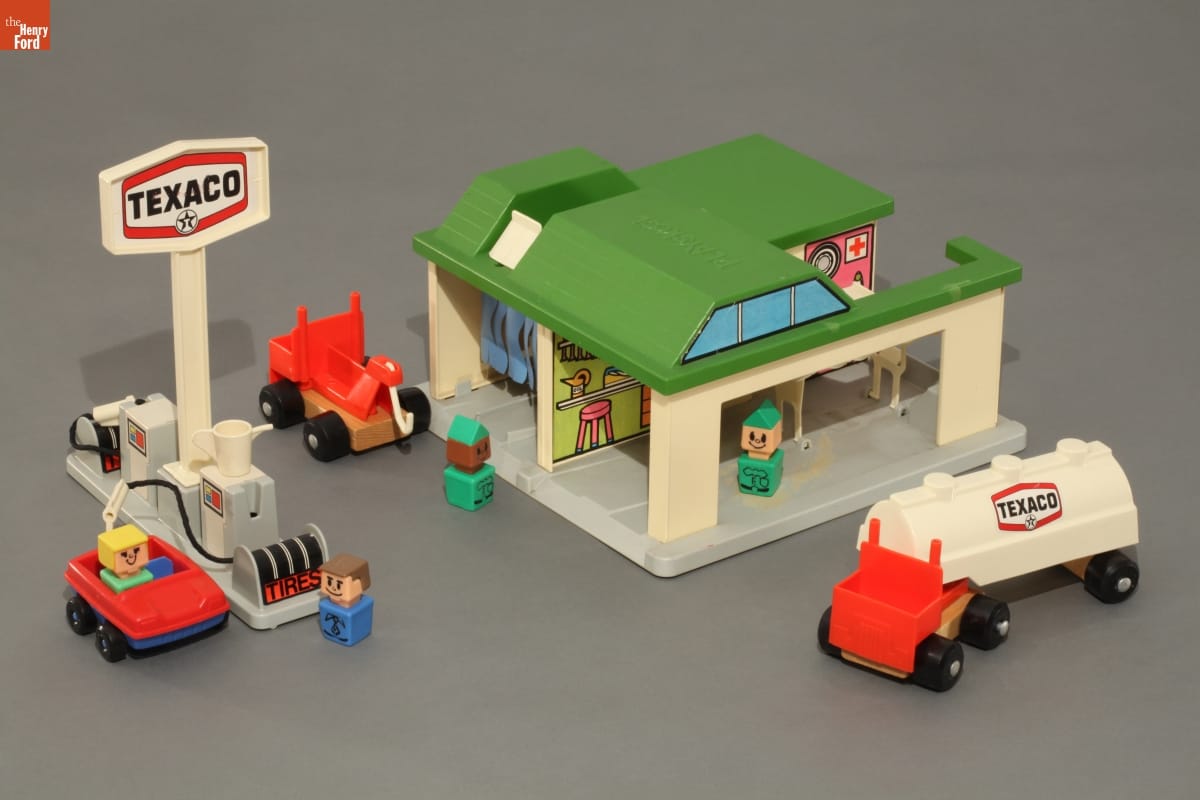
- 1975-1979
- Collections - Artifact
Playskool Texaco Station Play Set, 1975
- Mack Model AC Tank Truck Carrying Texaco Petroleum Products, 1925 - This 1925 photograph shows a Texaco tank truck at a Massachusetts refinery. Tank trucks transported gasoline from refineries to retail service stations.
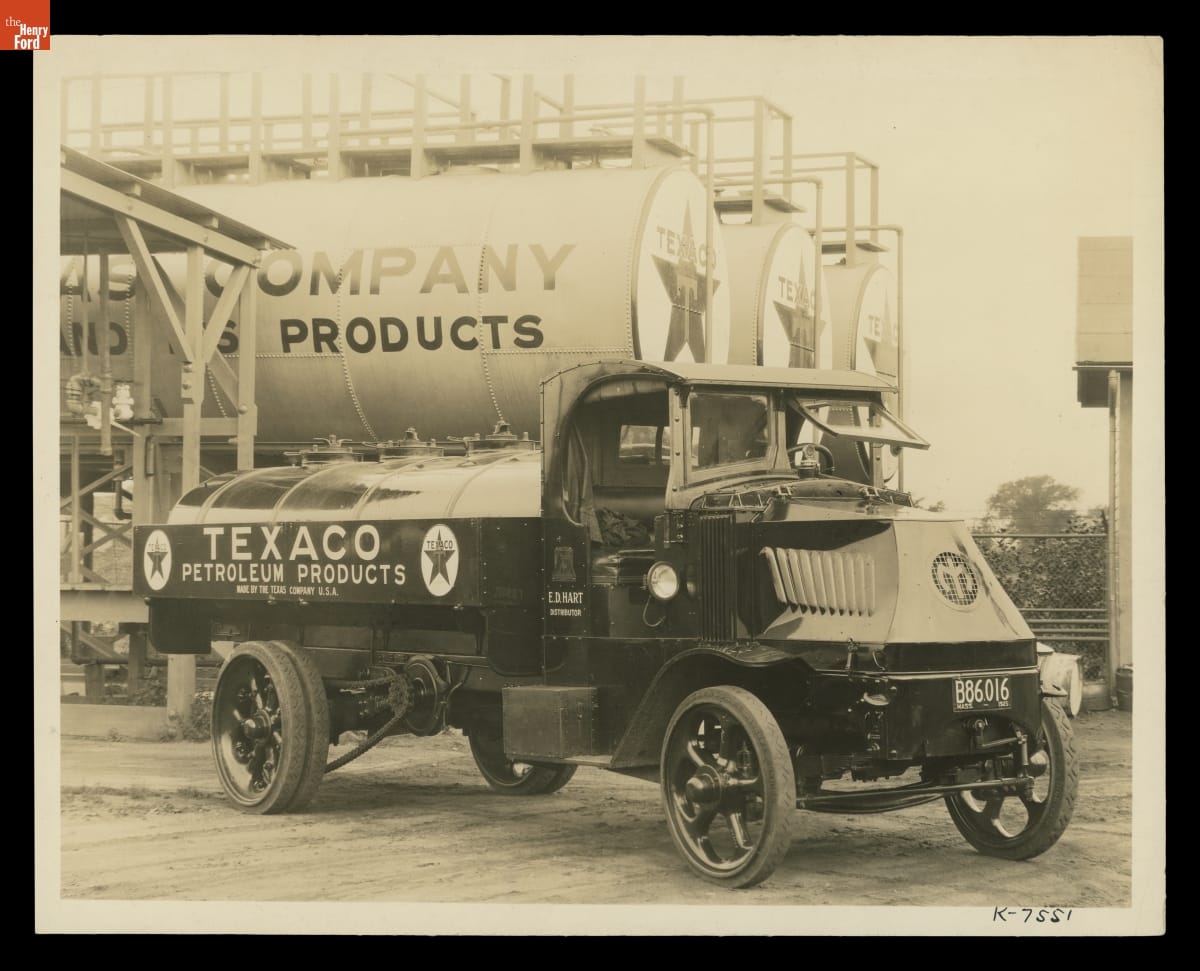
- 1925
- Collections - Artifact
Mack Model AC Tank Truck Carrying Texaco Petroleum Products, 1925
This 1925 photograph shows a Texaco tank truck at a Massachusetts refinery. Tank trucks transported gasoline from refineries to retail service stations.
- Photolithograph, Airplane with Texaco Star Logo, circa 1925 - On June 27, 1929, pilot Frank Hawks made a solo, nonstop flight from New York to Los Angeles in <em>Texaco 5</em>, a Lockheed Model 3 Air Express. After seven hours for rest and refueling, Hawks returned to New York on another solo, nonstop flight in the same airplane. His transcontinental round trip took less than 37 hours of flying time.
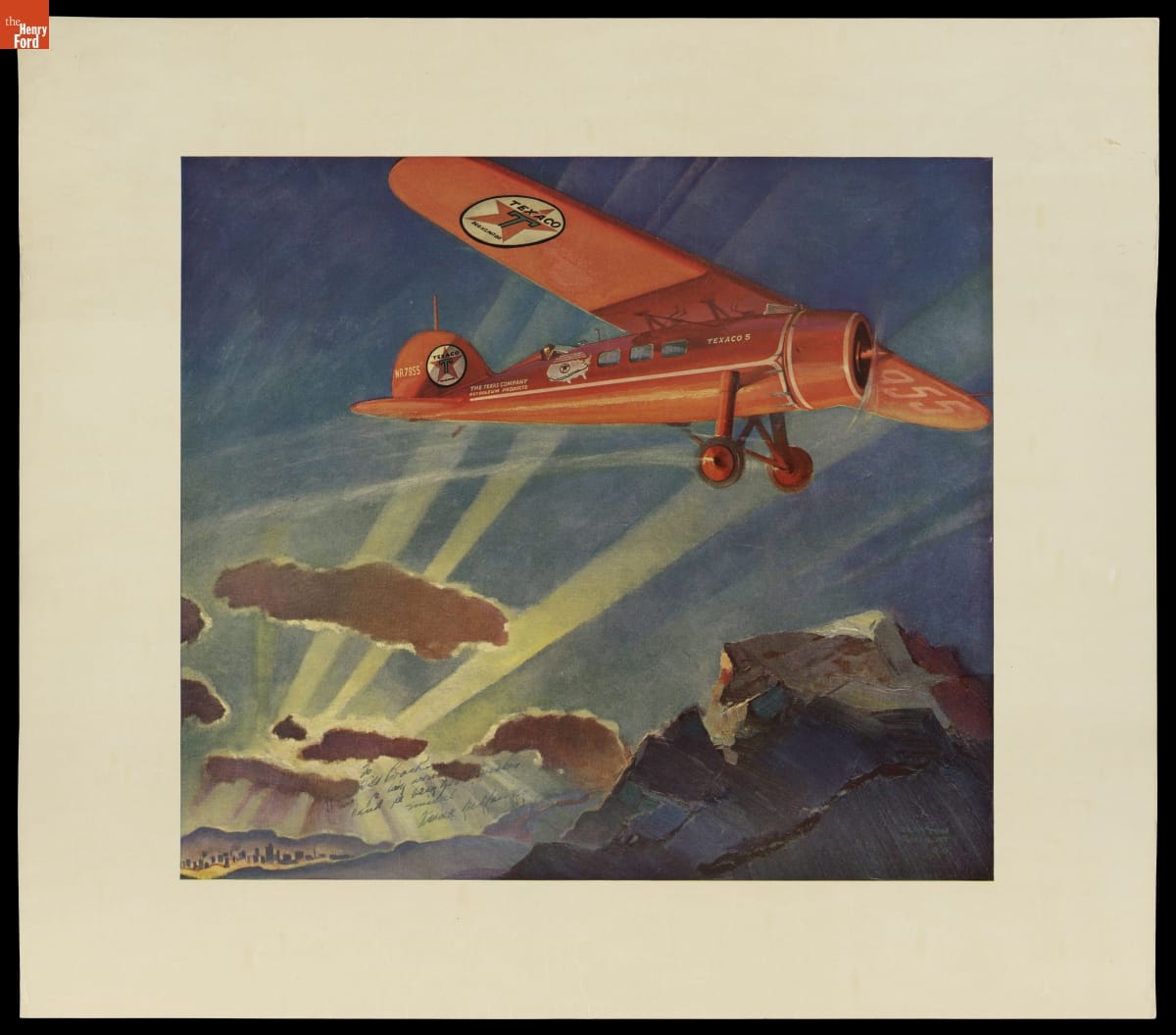
- circa 1925
- Collections - Artifact
Photolithograph, Airplane with Texaco Star Logo, circa 1925
On June 27, 1929, pilot Frank Hawks made a solo, nonstop flight from New York to Los Angeles in Texaco 5, a Lockheed Model 3 Air Express. After seven hours for rest and refueling, Hawks returned to New York on another solo, nonstop flight in the same airplane. His transcontinental round trip took less than 37 hours of flying time.
- 1984 March 84C-Cosworth Race Car - Tom Sneva set the fastest qualifying lap at the 1984 Indianapolis 500 with this car, but a broken rear suspension forced him out early during the actual race. The car's front and rear wings and underbody ground effects represent the aerodynamic advances that increasingly shaped race cars in the 1970s -- and continue to do so today.
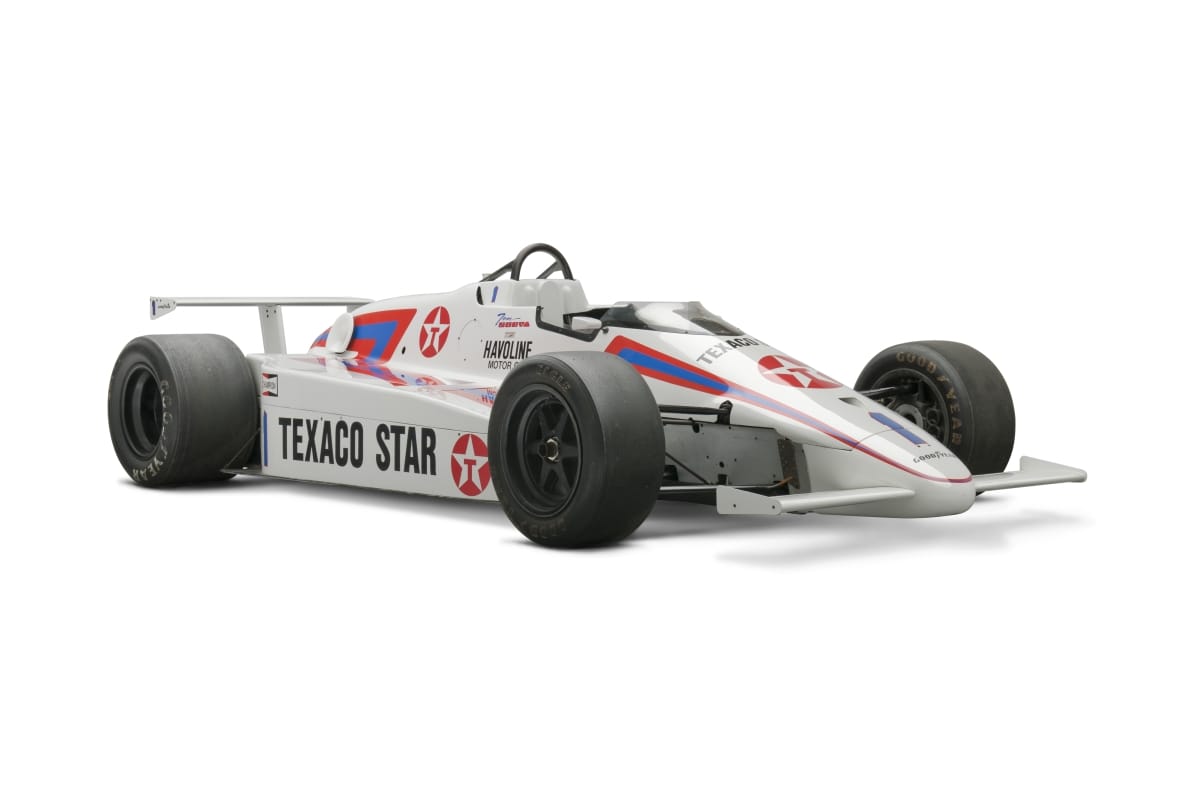
- 1984
- Collections - Artifact
1984 March 84C-Cosworth Race Car
Tom Sneva set the fastest qualifying lap at the 1984 Indianapolis 500 with this car, but a broken rear suspension forced him out early during the actual race. The car's front and rear wings and underbody ground effects represent the aerodynamic advances that increasingly shaped race cars in the 1970s -- and continue to do so today.
- Map of Alabama with a Special Map of the Southeastern United States, 1960 -
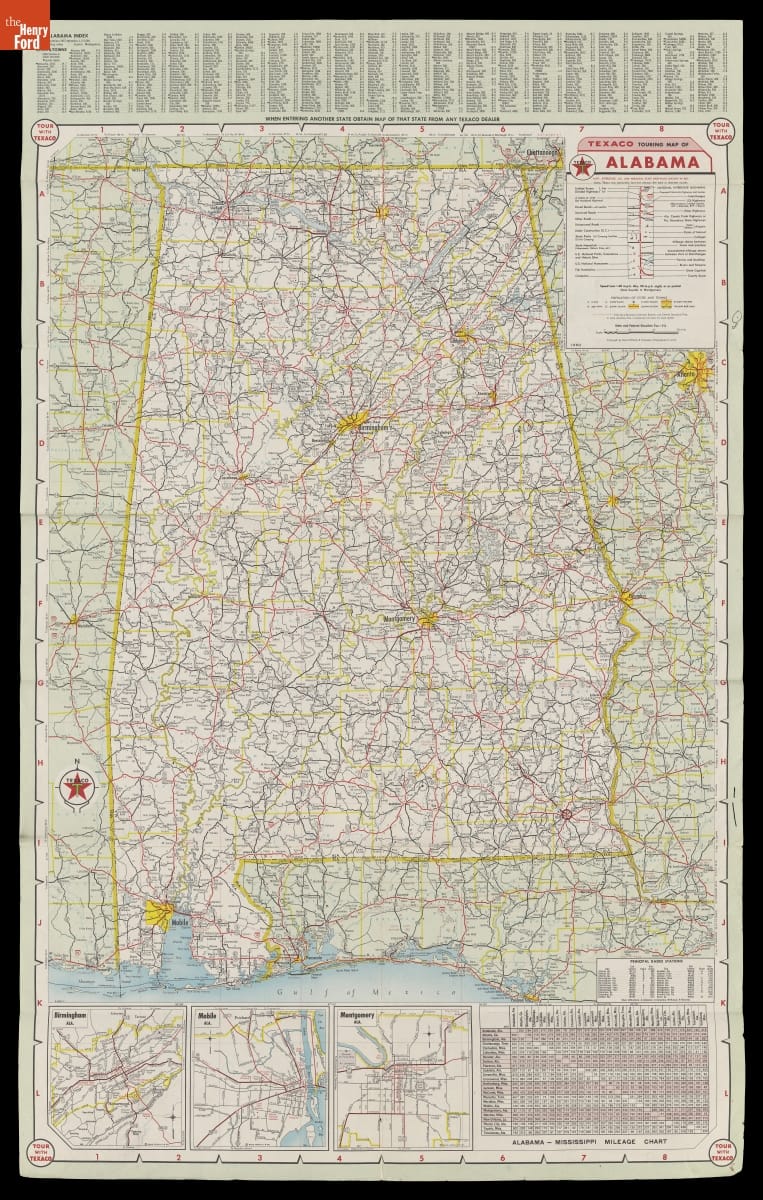
- 1960
- Collections - Artifact
Map of Alabama with a Special Map of the Southeastern United States, 1960
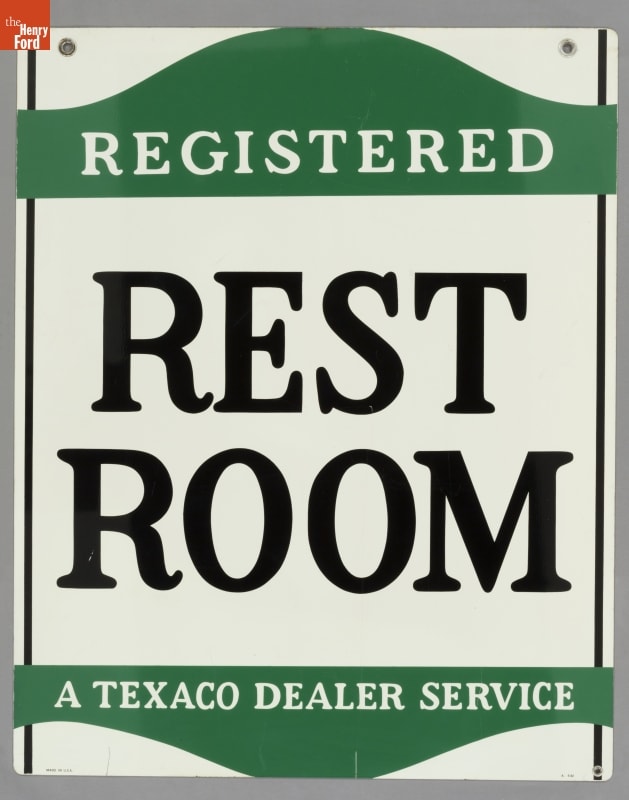
- Texaco Rest Room Sign, circa 1962 - This sign on a Texaco gas station would indicate to potential customers that the rest room had been "inspected and approved." Starting in 1939, Texaco was one of the first oil companies to ensure that restroom facilities at all its stations nationwide maintained a standard level of cleanliness for the motoring public.
- circa 1962
- Collections - Artifact
Texaco Rest Room Sign, circa 1962
This sign on a Texaco gas station would indicate to potential customers that the rest room had been "inspected and approved." Starting in 1939, Texaco was one of the first oil companies to ensure that restroom facilities at all its stations nationwide maintained a standard level of cleanliness for the motoring public.